
Law prof. Books: Implied Consent & Sexual Assault; Sovereignty, Restraint & Guidance; Tenth Justice.
Joined November 2011
- Tweets 6,692
- Following 480
- Followers 4,679
- Likes 17,945
418 Photos and videos










Pinned Tweet

22 Apr 2024
1. Get comfortable with statutes - and in particular the Criminal Code. You need to be able to sensibly parse statutory provisions even when no court has looked at them yet. And you will understand cases better when you independently examine the provisions they construe.
3
9
53
37,841
Michael Plaxton retweeted

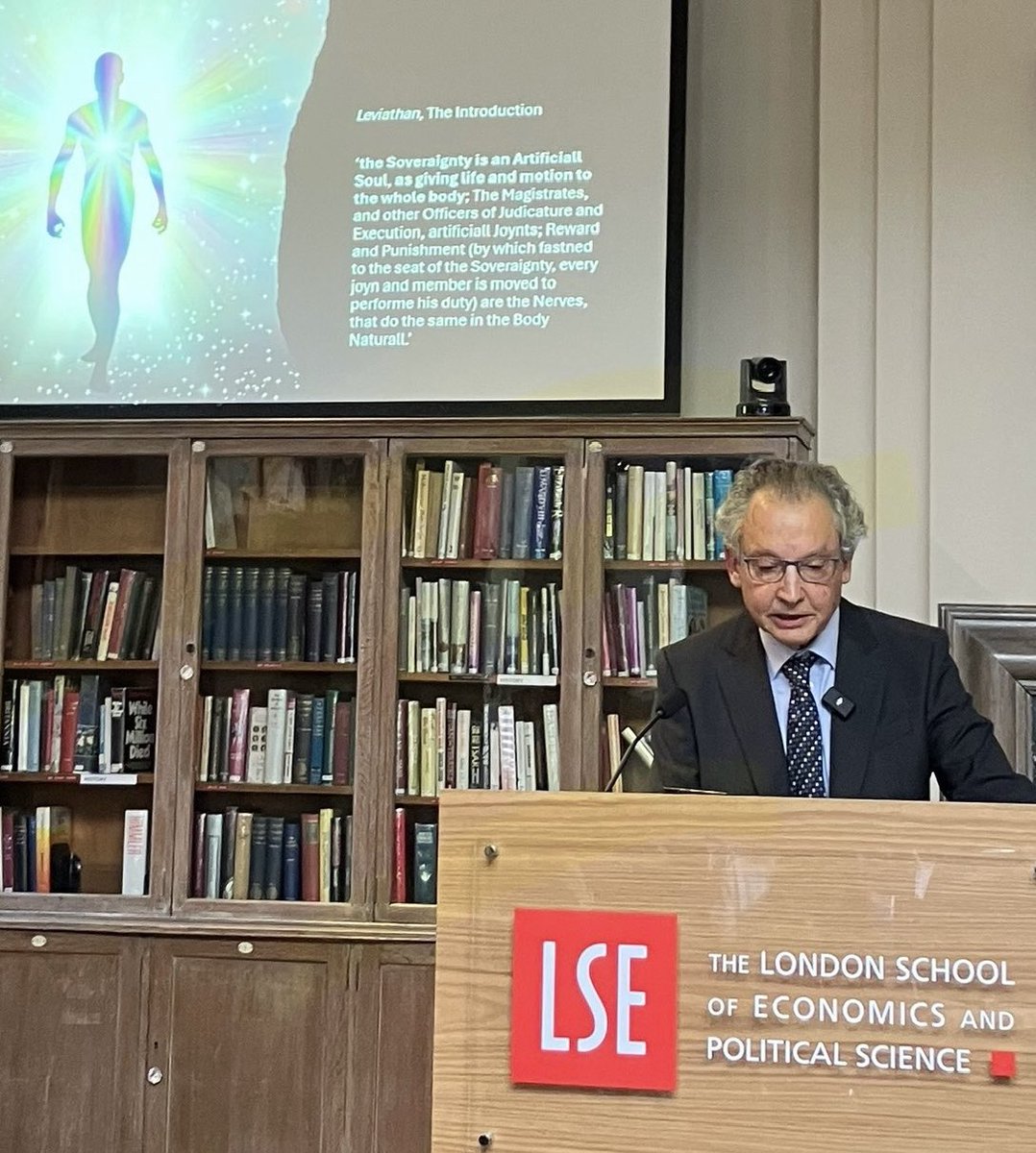
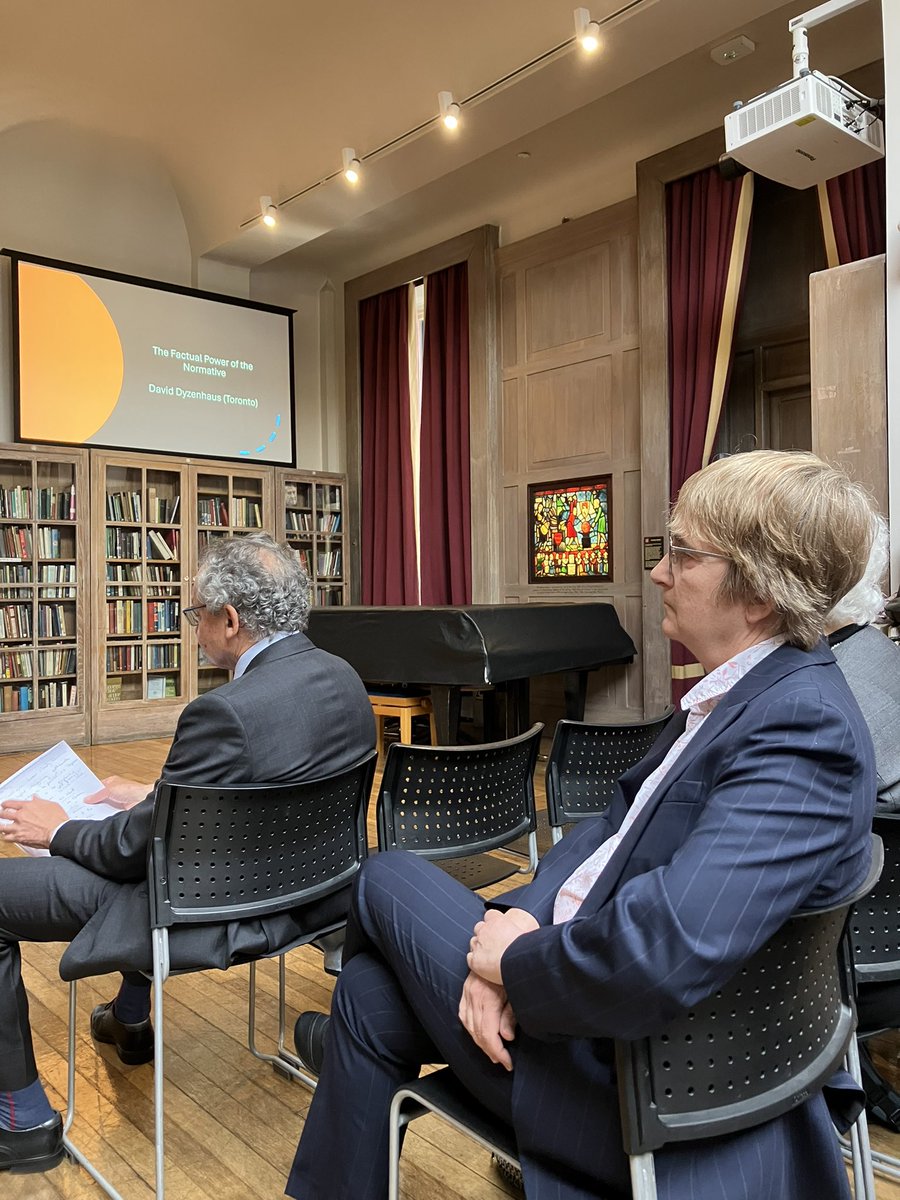
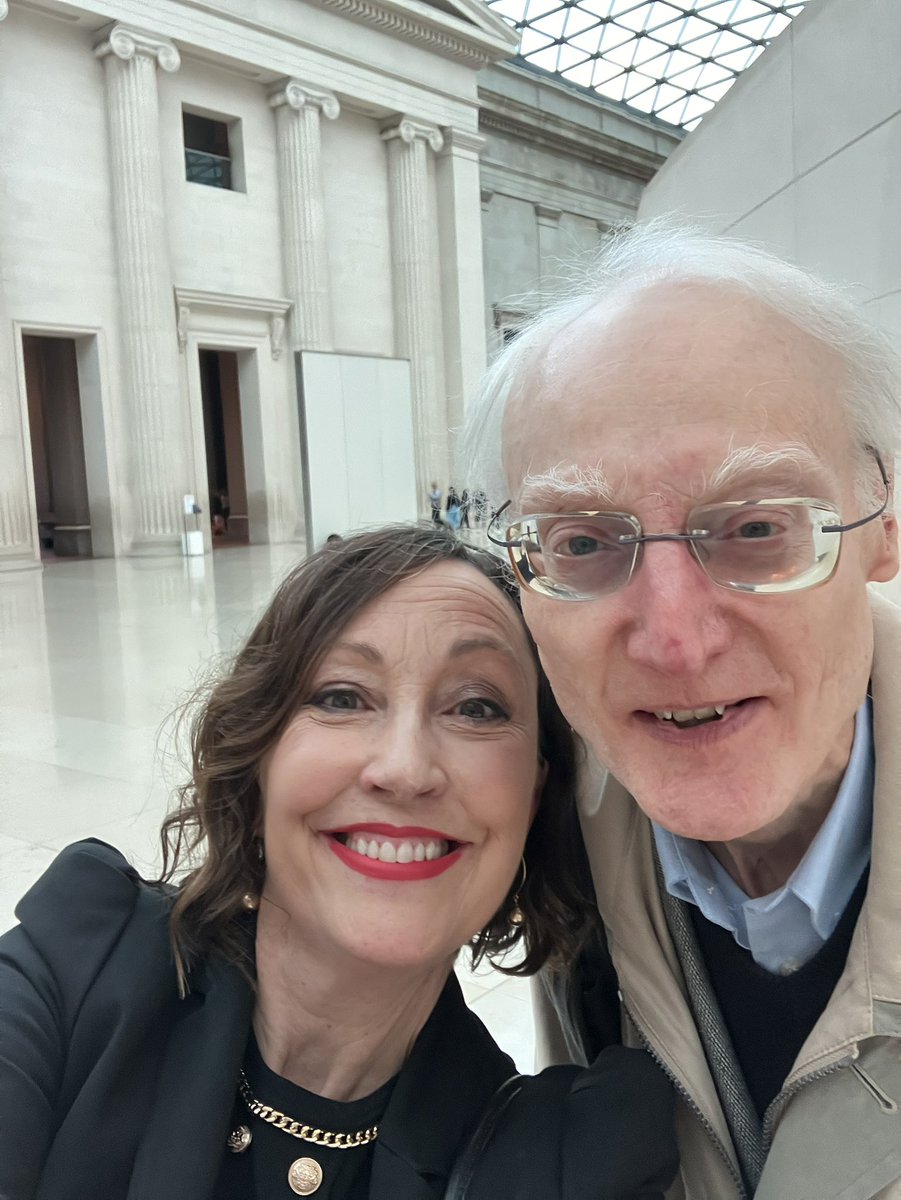
Great to see old friends and new at the MLR Chorley Lecture last night @LSELaw given by David Dyzenhaus.
Good to see you @MisakCheryl, @vmantouvalou, @ANNVYSHINSKY. I should have taken more photos.

5
6
33
3,336
Michael Plaxton retweeted

Jun 11
This is Orson Welles talking about his friendship with Ernest Hemingway. Imagine if people were still this articulate.
155
1,275
12,145
631,627
Michael Plaxton retweeted

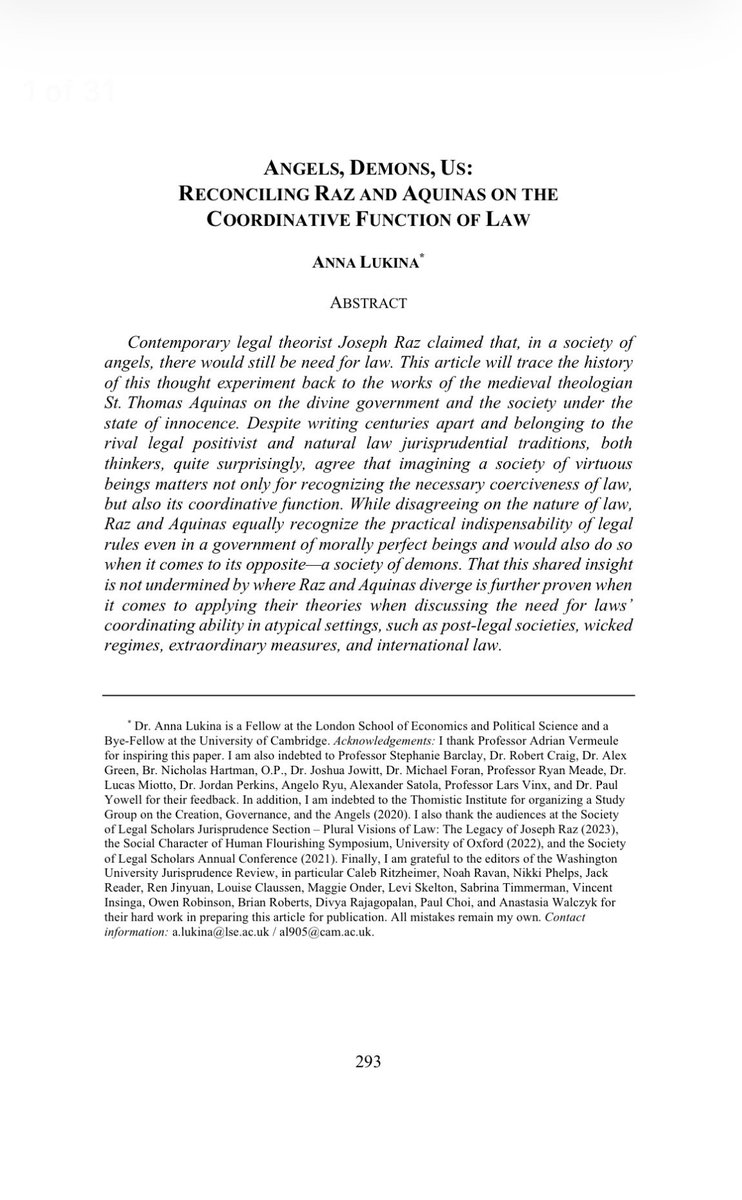
My paper, “Angels, Demons, Us: Reconciling Raz and Aquinas on the Coordinative Function of Law”, is finally out in Washington University Jurisprudence Review: journals.library.wustl.edu/j…
6
25
129
7,623
Michael Plaxton retweeted
Jun 10
I appreciate the attempt to find a middle ground, but I am curious where law fits into your schema. It's a tough case: law is very "life or death" but the legal academy and legal scholarship have been (with ebbs and flows) shot-through with "critical" perspectives for 40 years.
Jun 10

Modest proposal for a compromise on DEI hiring in universities:
Let all of the grievance / critical studies faculty posts be appointed according to identity quotas; but ensure that all faculty posts in professions dealing with potential life & death matters (e.g. medicine, engineering) be appointed strictly based on merit & competence.
Surely we can all agree that surgeons and bridge builders should be taught, assessed, hired & regulated only on the basis of merit & competence.
2
1
8
1,058
Michael Plaxton retweeted

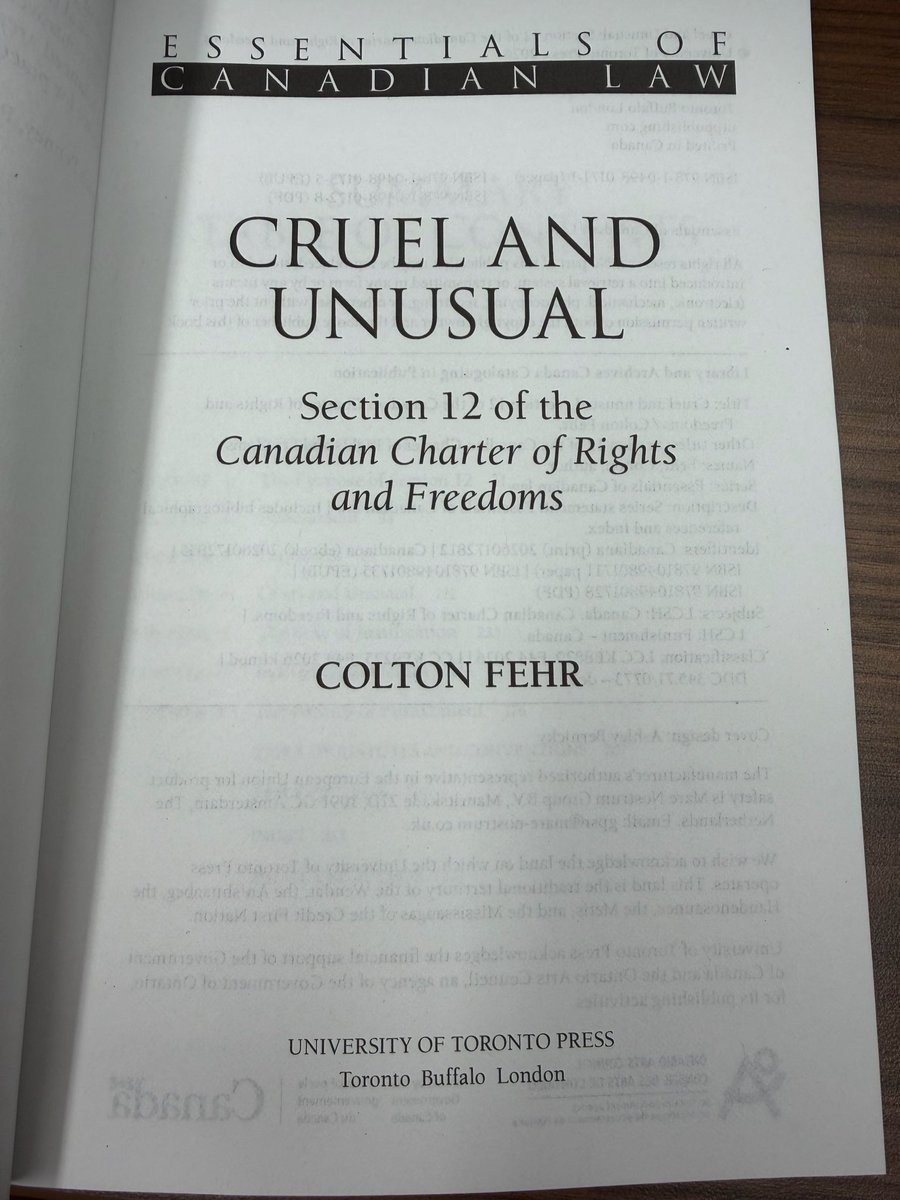
My @UsaskLaw colleague Colton Fehr just handed me a copy of his second book to come out in the last two weeks (but he says no book next week, the slacker…. jkjk… great to see colleagues being productive, and looking forward to reading it)
1
3
22
1,212
Michael Plaxton retweeted

Jun 5
I strongly endorse this outstanding report, commissioned by Daniel Diermeier, Chancellor of Vanderbilt University, and Andrew Martin, Chancellor of Washington University on the State of Scholarship. It is a cri de couer about the state of the humanities and the interpretive social sciences. The object of scrutinty is
"a deterioration in scholarly standards fueled by the substitution of political criteria for properly scholarly criteria in the assessment of research and a more general repudiation of longstanding ideals of rigor and objectivity."
The report is properly nuanced in identifying subfields in which the scholarly enterprise has been damaged and as opposed to blanket disciplinary condemnations because of problems in particular areas.
vanderbilt.edu/principles/st…
26
154
680
316,391
Further clarification on the @SSRN developments: open.substack.com/pub/profes…

Wow. @SSRN is over. This is quite unfortunate, and infuriating. Law profs, we need a replacement.
stephenbainbridge.com/p/the-…
502
Michael Plaxton retweeted

May 22
As evidenced by the unbridled promotion and implementation of technology at the expense of human dignity, we are truly experiencing an eclipse of the sense of what it means to be human. It is imperative to recover an understanding of the true meaning and grandeur of humanity as intended by God. It is in this sense that the challenge we currently face is not technological, but anthropological, and it is my hope that the Encyclical Letter to be published within a few days will contribute to answering this challenge.
1,061
4,925
26,213
1,309,303
Michael Plaxton retweeted

The Pope at it again
Also I have a paper on dignity and AI! tandfonline.com/doi/full/10.… (behind paywall pls dm if you want a copy)
May 22

As evidenced by the unbridled promotion and implementation of technology at the expense of human dignity, we are truly experiencing an eclipse of the sense of what it means to be human. It is imperative to recover an understanding of the true meaning and grandeur of humanity as intended by God. It is in this sense that the challenge we currently face is not technological, but anthropological, and it is my hope that the Encyclical Letter to be published within a few days will contribute to answering this challenge.
2
9
1,044
Michael Plaxton retweeted

May 18
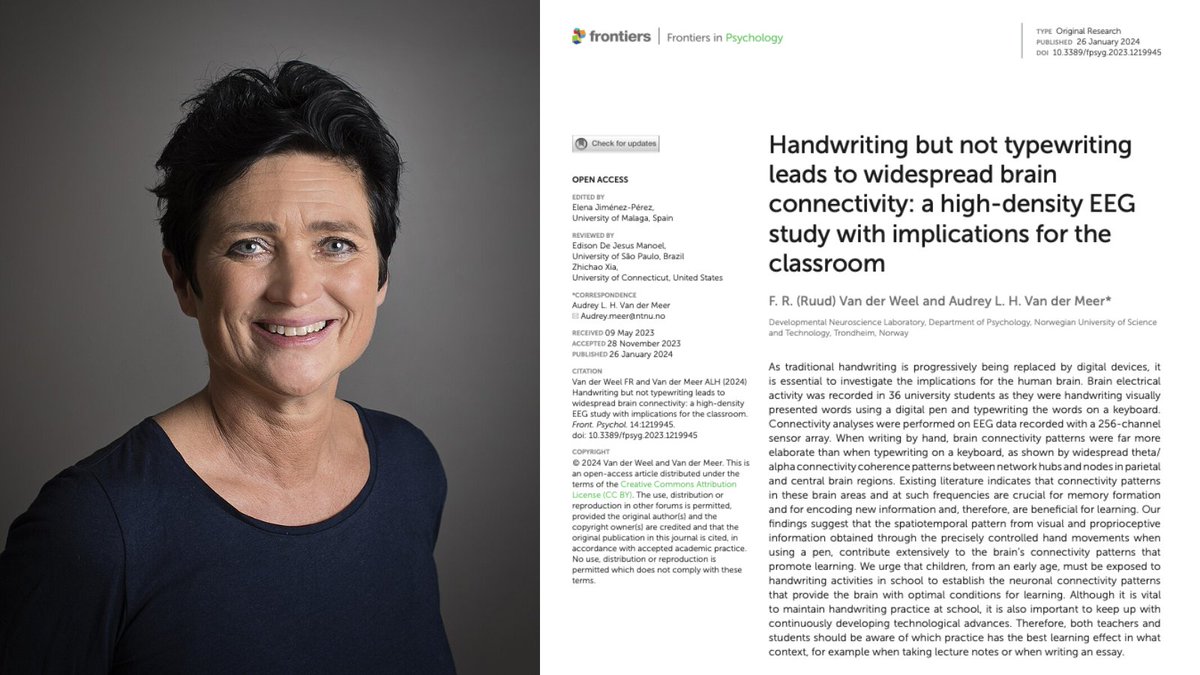
A Norwegian neuroscientist spent 20 years proving that the act of writing by hand changes the human brain in ways typing physically cannot, and almost nobody outside her field has read the paper.
Her name is Audrey van der Meer.
She runs a brain research lab in Trondheim, and the paper that closed the argument was published in 2024 in a journal called Frontiers in Psychology. The finding is brutal enough that it should have changed every classroom on Earth.
The experiment was simple. She recruited 36 university students and put each one in a cap with 256 sensors pressed against their scalp to record brain activity. Words flashed on a screen one at a time.
Sometimes the students wrote the word by hand on a touchscreen using a digital pen, and sometimes they typed the same word on a keyboard. Every neural response was recorded for the full five seconds the word stayed on screen.
Then her team looked at the part of the data most researchers had ignored for years, which is how different parts of the brain were communicating with each other during the task.
When the students wrote by hand, the brain lit up everywhere at once.
The regions responsible for memory, sensory integration, and the encoding of new information were all firing together in a coordinated pattern that spread across the entire cortex. The whole network was awake and connected.
When the same students typed the same word, that pattern collapsed almost completely.
Most of the brain went quiet, and the connections between regions that had been alive seconds earlier were nowhere to be found on the EEG.
Same word, same brain, same person, and two completely different neurological events.
The reason turned out to be something nobody had really paid attention to before her work. Writing by hand is not one motion but a sequence of thousands of tiny micro-movements coordinated with your eyes in real time, where each letter is a different shape that requires the brain to solve a slightly different spatial problem.
Your fingers, wrist, vision, and the parts of your brain that track position in space are all working together to produce one letter, then the next, then the next.
Typing throws all of that away. Every key on a keyboard requires the exact same finger motion regardless of which letter you are pressing, which means the brain has almost nothing to integrate and almost no problem to solve.
Van der Meer said it plainly in her interviews.
Pressing the same key with the same finger over and over does not stimulate the brain in any meaningful way, and she pointed out something that should scare every parent who handed their kid an iPad.
Children who learn to read and write on tablets often cannot tell letters like b and d apart, because they have never physically felt with their bodies what it takes to actually produce those letters on a page.
A decade before her, two researchers at Princeton ran the same fight using a completely different method and ended up at the same answer. Pam Mueller and Daniel Oppenheimer tested 327 students across three experiments, where half took notes on laptops with the internet disabled and half took notes by hand, before testing everyone on what they actually understood from the lectures they had watched.
The handwriting group won by a wide margin on every question that required real understanding rather than surface recall.
The reason was hiding in the transcripts of what the two groups had actually written down.
The laptop students typed almost word for word, capturing more total content but processing almost none of it as they went, while the handwriting students physically could not write fast enough to transcribe a lecture in real time, which forced them to listen carefully, decide what actually mattered, and put it in their own words on the page.
That single act of choosing what to keep was the learning itself, and the keyboard had quietly skipped the choosing and skipped the learning along with it.
Two studies. Two countries. Same answer.
Handwriting makes the brain work. Typing lets it coast.
Every note you have ever typed instead of written went into your brain through a thinner pipe. Every meeting, every book highlight, every idea you captured on your phone instead of on paper was processed at half depth.
You did not forget those things because your memory is bad. You forgot them because typing never woke the part of the brain that would have made them stick.
The fix is the thing your grandmother already knew.
Pick up a pen. Write the thing down. The slower road is the faster one.
2,473
44,652
120,845
10,370,518
Michael Plaxton retweeted

Thanks, @kurtlash1 , for the thoughtful review! This was a couple decades in the works!
May 11

"In essence, writing constitutions changed our
understanding of constitutions." Outstanding and fascinating paper by @TolerUpdike and Robert Capodilupo. Relevant to Gienapp's attempted assault on originalism, to applied corpus linguistics, to why the Va. Sup. Ct. was right to demand all Virginia residents be formally notified that a constitutional change is being proposed--and much more!
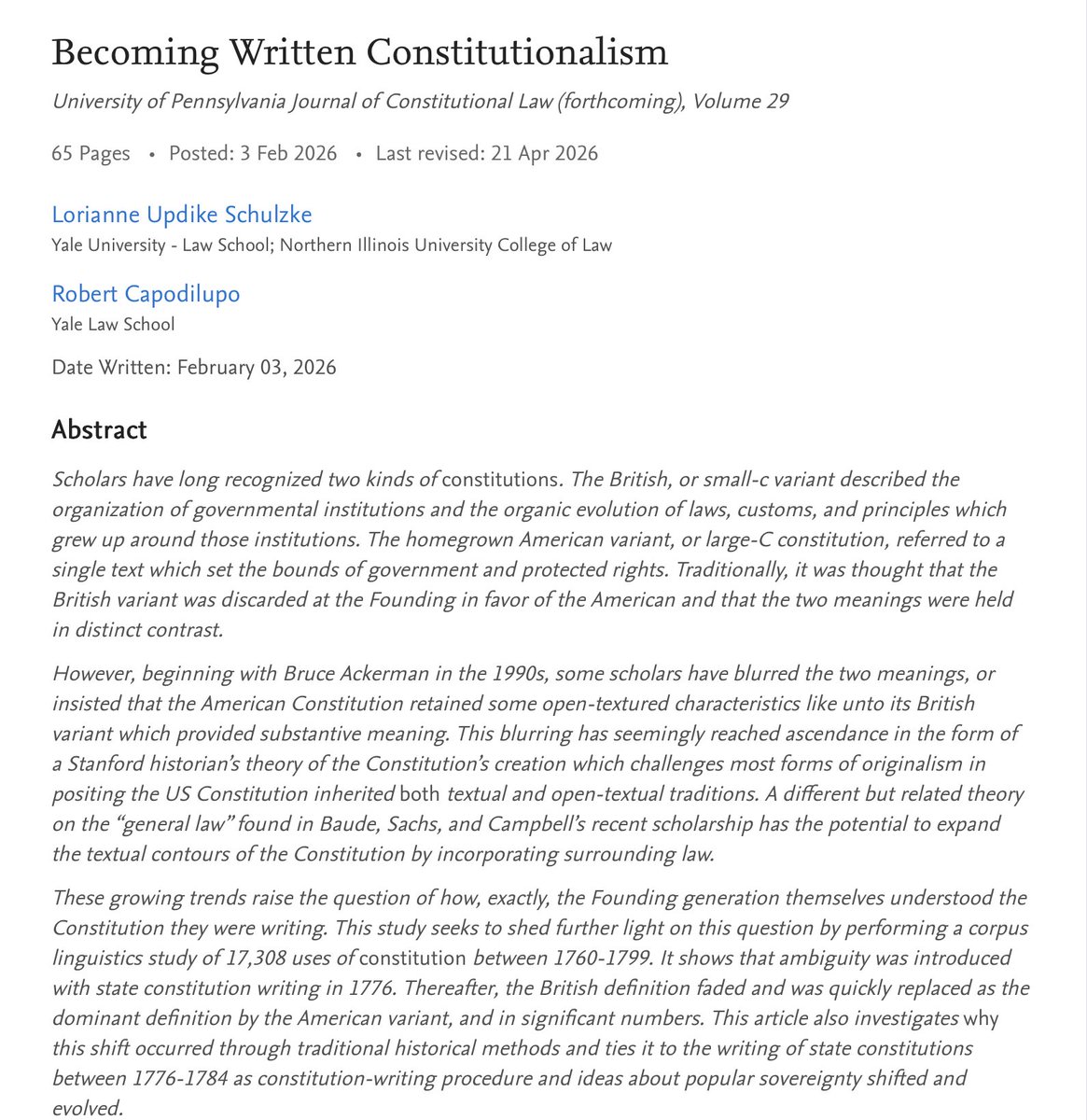
2
7
1,390
Michael Plaxton retweeted
May 16
1
345
Michael Plaxton retweeted
May 16
On Thursday and Friday, the Supreme Court hears oral arguments in Degale and Bilinski - both concerning the fault requirement for the offence of sexual assault. Here is my quick S*bst*ck primer, setting out the basic interpretive considerations. Link below.
1
1
3
436
Michael Plaxton retweeted

May 17
Very interesting stuff. Always worth reading @JTasioulas.
May 16

Introducing my new Substack "Setting Out for Ithaka".
I am kicking off with a piece on Alexander Karp and Nicholas Zamiska's book "The Technological Republic". It is one of the most important books I have read in recent years.
Please subscribe for posts on topics including human rights, liberalism, AI, democracy, and many more.
Link below.

1
3
9
1,776
May 16
On Thursday and Friday, the Supreme Court hears oral arguments in Degale and Bilinski - both concerning the fault requirement for the offence of sexual assault. Here is my quick S*bst*ck primer, setting out the basic interpretive considerations. Link below.
1
1
3
436
Michael Plaxton retweeted

May 16
When it comes to university and AI, the good thing is that original and creative thinkers can now truly shine. The bad thing is that number of such thinkers is dramatically smaller than what it should be.
2
5
56
3,093
May 16
"It is the first time a literary work has been found playing a functional, spiritual role in the mummification process. And it suggests that for a Roman-era Egyptian, the “Iliad” — specifically some lines from Book 2’s “Catalogue of Ships” — was perhaps as crucial for navigating the afterlife as a magical spell."
1
5
343