
Building scientific intelligence. past: founding team @cellaritybio, ML researcher @Cornell, investor @pillar_vc, advisor @nucleateHQ
Joined April 2011
- Tweets 4,889
- Following 999
- Followers 9,774
- Likes 15,171
106 Photos and videos


Michael Retchin retweeted

Jun 8
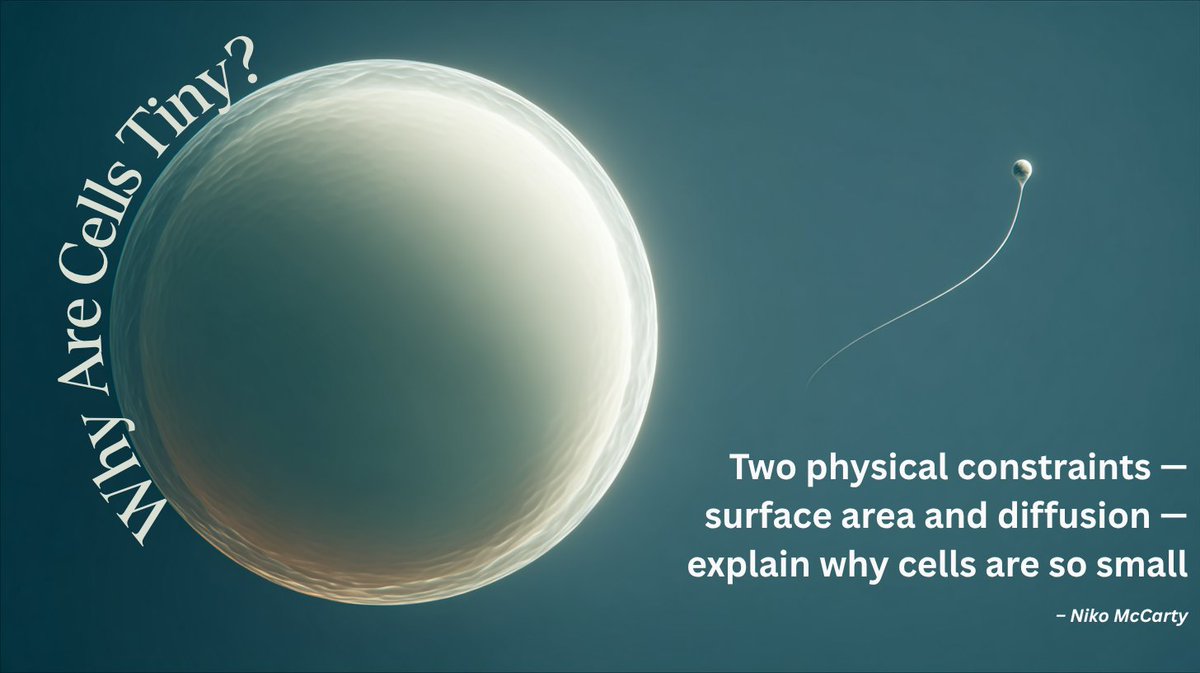
I'm writing an interactive book about the cell. My next chapter, "Why Are Cells Small?" is now live.
TL;DR: Cells are limited by two physical constraints; diffusion rates and their ratio of volume and surface area.
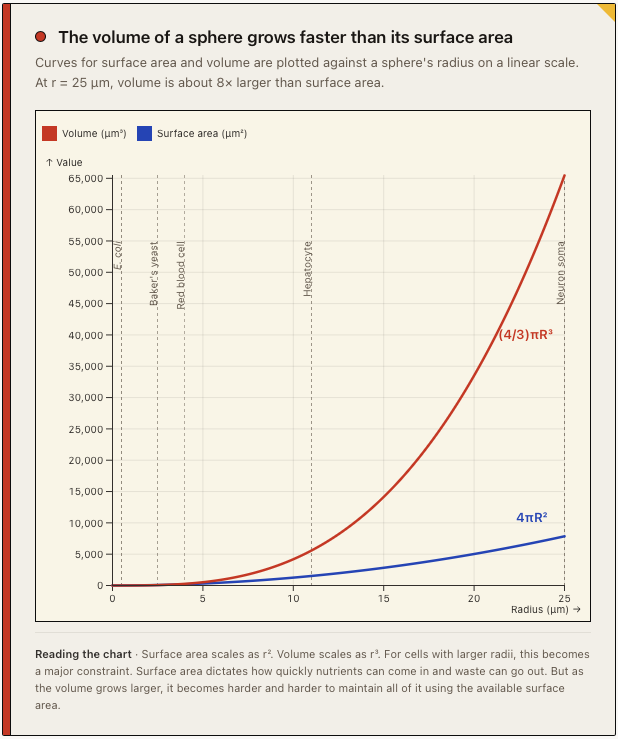
First, surface area: Assuming that a cell is roughly spherical in shape, its internal volume grows proportionally to the cube of its radius, whereas its surface area grows proportionally to the square of that radius. This means that the available amount of membrane (where nutrients come in, and waste goes out) grows much slower than the volume as a whole. So as a cell's radius goes up, it gets harder and harder to maintain cellular functions.
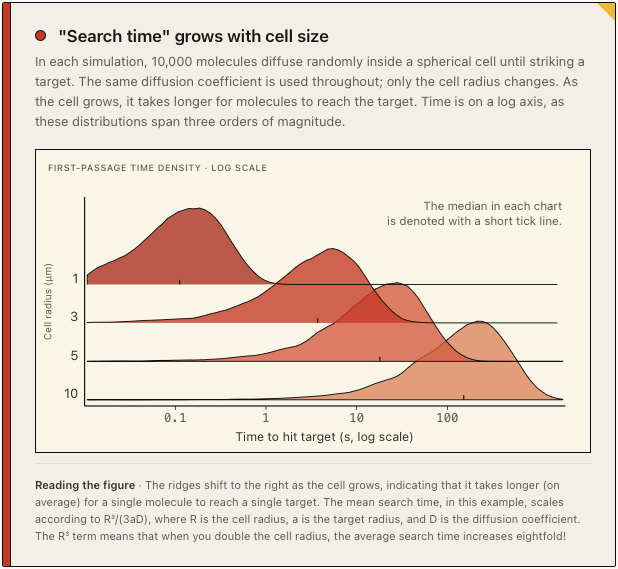
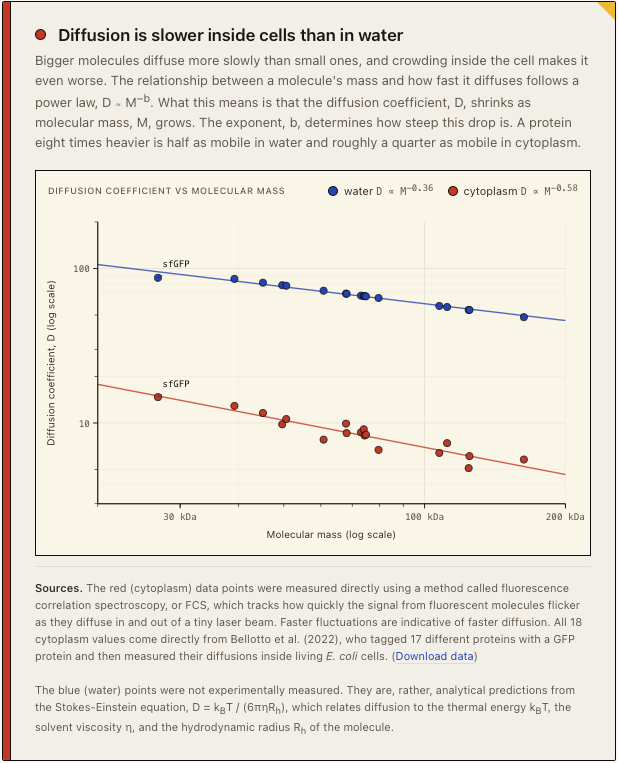
Second, diffusion: Molecules need to collide with each other for biology to work. Enzymes must find substrates, signaling molecules must reach receptors, and ribosomes must collide with messenger RNAs. Inside a cell, nearly everything happens by chance encounters amongst these molecules! As a cell’s volume grows, though, the chance that these encounters will happen decreases (assuming the total numbers of molecules stay constant).
With these constraints in mind, we can begin to speculate as to why various cells are shaped the way they are.
Red blood cells are tiny and shaped like biconcave discs to aid with diffusion; by abandoning a spherical shape and evolving more toward a ‘donut,’ they increase their surface area without compromising volume.
Human eggs are by far the largest cells in the body, growing to about 100 micrometers in diameter. They can do this because they are not so metabolically active, and thus don't require random collisions to occur frequently. Instead, they stockpile nutrients during oogenesis to wait out fertilization.
Finally, there is a giant bacterium, called Thiomargarita magnifica, that can extend about one centimeter in length, so large that it is visible to the naked eye. It does this by breaking the surface area-to-volume rule, filling between 65–80 percent of its internal volume with an empty vacuole. In other words, it pushes most of its molecules to the cell periphery, thus shortening diffusion distances.
14
46
330
16,276
Michael Retchin retweeted

Jun 7
In SF briefly next week and wanna try something new.
I'm reserving time to meet new folks working on AIxBio: new therapeutic and measurement modalities, harness design, boring-but-critical problems beyond discovery, etc. DM me.
4
7
47
5,620
Michael Retchin retweeted

May 19
We live in a golden age of biology. So why are people still dying from disease?
Because discovery and development move slower than they should.
Today, we’re partnering with Incyte to change that.
Kosmos is now the first agent that can compress months of drug development into weeks, from the earliest stages of scientific discovery through to FDA approval. @Incyte will be the first company to deploy it across their pipeline.
Work that used to take a team of scientists months now happens in weeks.
Patients can't wait, and neither can we.
116
490
2,282
7,021,148
Michael Retchin retweeted

May 14
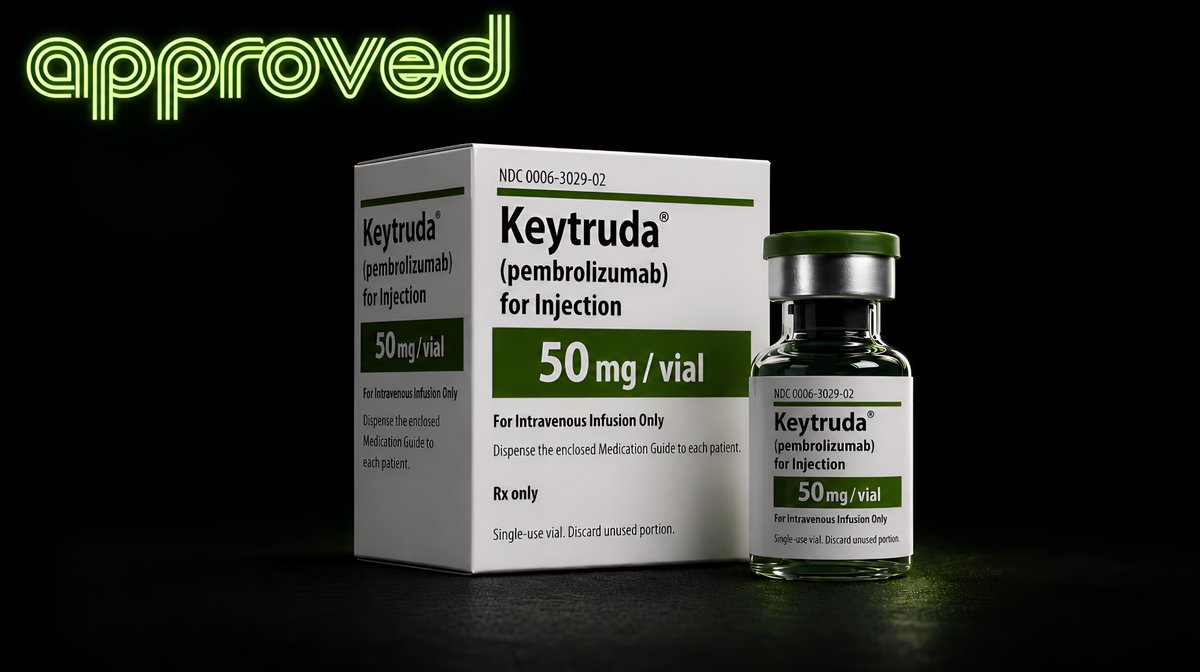
Keytruda transformed cancer care and made Merck more money than any drug in history. It was also discovered by accident, and nearly out-licensed in 2010 for pocket change.
New Approved exclusive interviews with the inventors and the Merck CMO who ran development:
5
19
141
38,966
Michael Retchin retweeted

Come build Amplify Bio with us!
Digital Biology is a generational opportunity. We couldn’t be more excited about the technical founders we’ve already partnered with.
Recently, we shared the advisors we’ve added to help support them. And we’ve got some exciting news to share about our investment team soon, too.
Now, we’re looking for an outlier person to help create even more asymmetry for our founders. Come build the connectivity layer between the best technical founders, scientific minds, and pharma leaders with us!
May 1

Amplify continues to build!
We're looking for 1 amazing person to drive our Bio platform effort. Reach out if you:
- Are unreasonably excited about AI x Bio
- Would build relationships with brilliant scientists, developers, and execs - even if it wasn't your job
- Have a talent for building community, content, and connection

7
9
97
15,623

Achira is on track to achieve a real turning point in our scientific understanding of the universe: atomistic foundation models.
One of the most important emerging technologies today.
Join this team!

Hiring AI/ML talent at @achira_ai to build world models for molecules
We're looking for scientists and research engineers who will join Achira's technical staff to join its mission to build microscopic world models.
As large scale AI models have matured and revolutionized our ability to intervene on the digital world, we are increasingly racing towards physical AI as the next frontier.
Achira builds foundation simulation models that will explictly model the microcosm on an atomistic level with a goal to deeply impact virtual chemistry in service of drug discovery and is marrying the best of deep learning/generative AI with physics, statistical mechanics, and quantum chemistry.
If you're up for the challenge to build at the frontier, come join us.
achira.ai/careers/
1
4
2,587
Michael Retchin retweeted

Hiring AI/ML talent at @achira_ai to build world models for molecules
We're looking for scientists and research engineers who will join Achira's technical staff to join its mission to build microscopic world models.
As large scale AI models have matured and revolutionized our ability to intervene on the digital world, we are increasingly racing towards physical AI as the next frontier.
Achira builds foundation simulation models that will explictly model the microcosm on an atomistic level with a goal to deeply impact virtual chemistry in service of drug discovery and is marrying the best of deep learning/generative AI with physics, statistical mechanics, and quantum chemistry.
If you're up for the challenge to build at the frontier, come join us.
achira.ai/careers/
12
34
390
154,821
Michael Retchin retweeted
Apr 29
I've started writing my book: "Biology is a Burrito & Other Essays." It is an interactive and highly visual look into the beauty, speed, and complexity of a living cell.
I'm planning to print hardcover books while serializing the essays online. The first essay is now available at burrito.bio.
This was inspired by Stewart Brand's latest book, "Maintenance of Everything," which he developed in serialized form with @WorksInProgMag. One cool thing about that book was that he improved each chapter with reader comments before printing the physical copies!
I'll be doing the same with this book. If you send me feedback that improves the text, I'll credit you online and in the final print version. You can also sign up to get email updates when a new essay launches. Hope you enjoy!
26
94
682
34,007
Michael Retchin retweeted

Apr 29
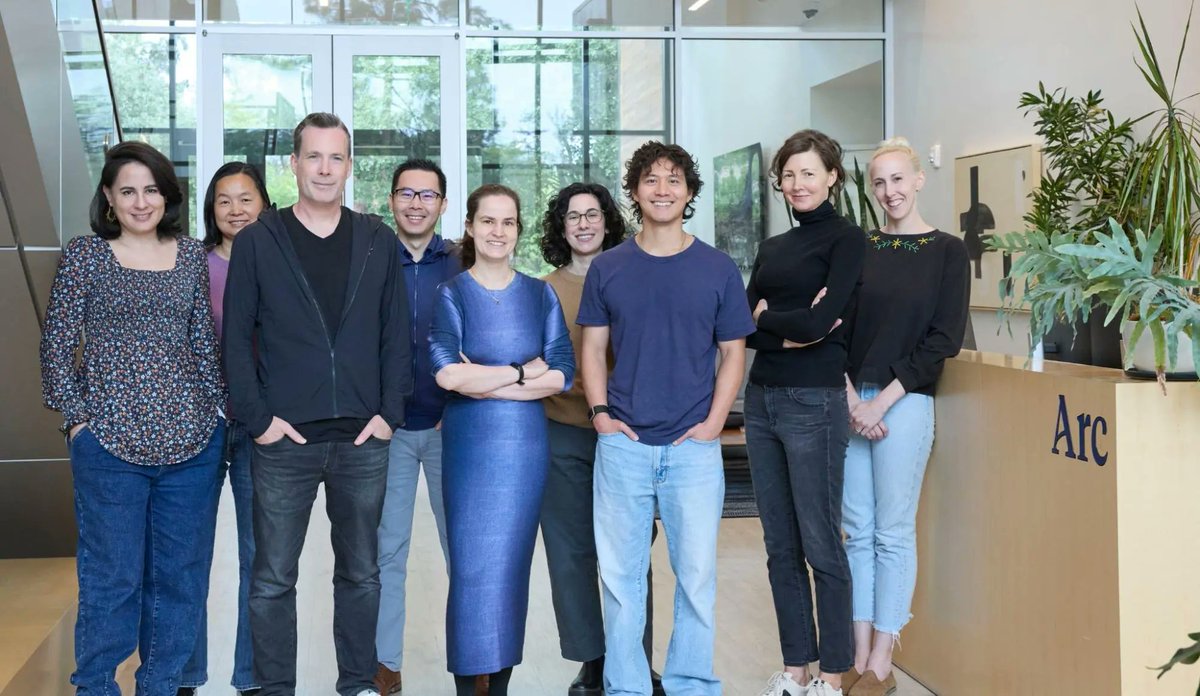
@arcinstitute is hiring a CTO. It may be the most important technical role in biology right now - and here's why I'm the one posting it.
This summer I'm transitioning from CTO to Strategic Advisor. When I left Android 18 months ago, I said I wanted to use AI to accelerate drug discovery. Joining Arc was how I put that into action - and the team has delivered: frontier AI x Bio models like Evo, STATE, and STACK, AI research agents like scBaseCount, the Virtual Cell Challenge, a TED Audacious grant, and world-class compute.
Given what my family has been through these past few years, a full-time operational role isn't the right fit right now. The mission still is, which is why I'm staying close as an advisor. Thanks to @skonermann, @pdhsu, and @patrickc for their partnership.
We need a cracked ML and technical leader - mission-obsessed, ready to architect the future of science. DMs open.
arcinstitute.org/jobs/cto
6
41
278
127,983
Michael Retchin retweeted

Apr 23
🚨New job alert!
I’m looking for a strong scientist and operator that wants to expand their efforts to work closely with me on … well everything!
This spans my work at @ArcadiaScience as well as @AsteraInstitute. If you’re excited by the mission of our orgs, thrive in a fast-paced environment, and have a passion for science/open science/metascience, apply now!
jobs.lever.co/arcadiascience…
2
23
46
10,157
Michael Retchin retweeted

Apr 21
We're launching Sleuth today.
The intelligence platform for biopharma's highest-stakes decisions, in use at top companies in the world.
To celebrate, we broke down the Chinese landscape: 18K assets & a map of the strategic white space. RT comment "Sleuth" for access.
165
60
256
447,047
Michael Retchin retweeted

Apr 17
pipeline-in-a-person (h/t @Prof_Oak_ for the concept) is one skilled biotech operator a bunch of Claudes running a virtual biotech company. reach out if you want to help build this or pilot it.
30
19
254
36,171
Michael Retchin retweeted

Apr 16
I’ve spent the past decade building bio AI models—until now, training them meant years, huge cost, and teams spanning AI, biology, and infra.
Not anymore.
Introducing a new capability at Biomni Lab: now any scientist can create, fine-tune, pre-train, and optimize bio foundation models on their own datasets, just by describing what they want.
This is powered by a new feature called GPU-as-a-tool where we let AI agents launch and orchestrate GPU sandboxes.
In the video, we show that you can use prompt to:
- Fine-tune Borzoi for MPRA regulatory activity prediction
- Fine-tune scGPT on a H1 hESC perturb-seq data
- Fine-tune ESM2 for protein subcellular localization prediction
- Pre-train a protein language model from scratch on UniRef
- Build a novel multi-task ADMET model across 22 endpoints
Another big challenge once you’ve trained or have access to a model is actually using it productively. As it is embedded within Biomni Lab, it bridges that gap, letting you “ask the model” to identify and prioritize relevant biological insights directly.
Another exciting direction is lab-in-the-loop: scientists can design models, generate predictions, interpret results, and send them to the wet lab—all within one integrated biology environment.
This is a preview capability and we’re looking for beta testers. Sign up here for early access: forms.gle/1yhCP6Vrc12DaS4q6
Learn more about opportunities and limitations in our blog: phylo.bio/blog/ai-agents-bui…
@phylo_bio
19
78
569
63,204

Michael Retchin retweeted

Apr 14
Really cool internship @OctantBio at the bleeding edge of building autonomous models to iteratively design, build, and test hundreds of thousands of small molecules to inhibit HPV, funded by the Gates Foundation. Apply now! octant.bio/jobs?gh_jid=58500…
2
22
68
9,399
Michael Retchin retweeted

Apr 13
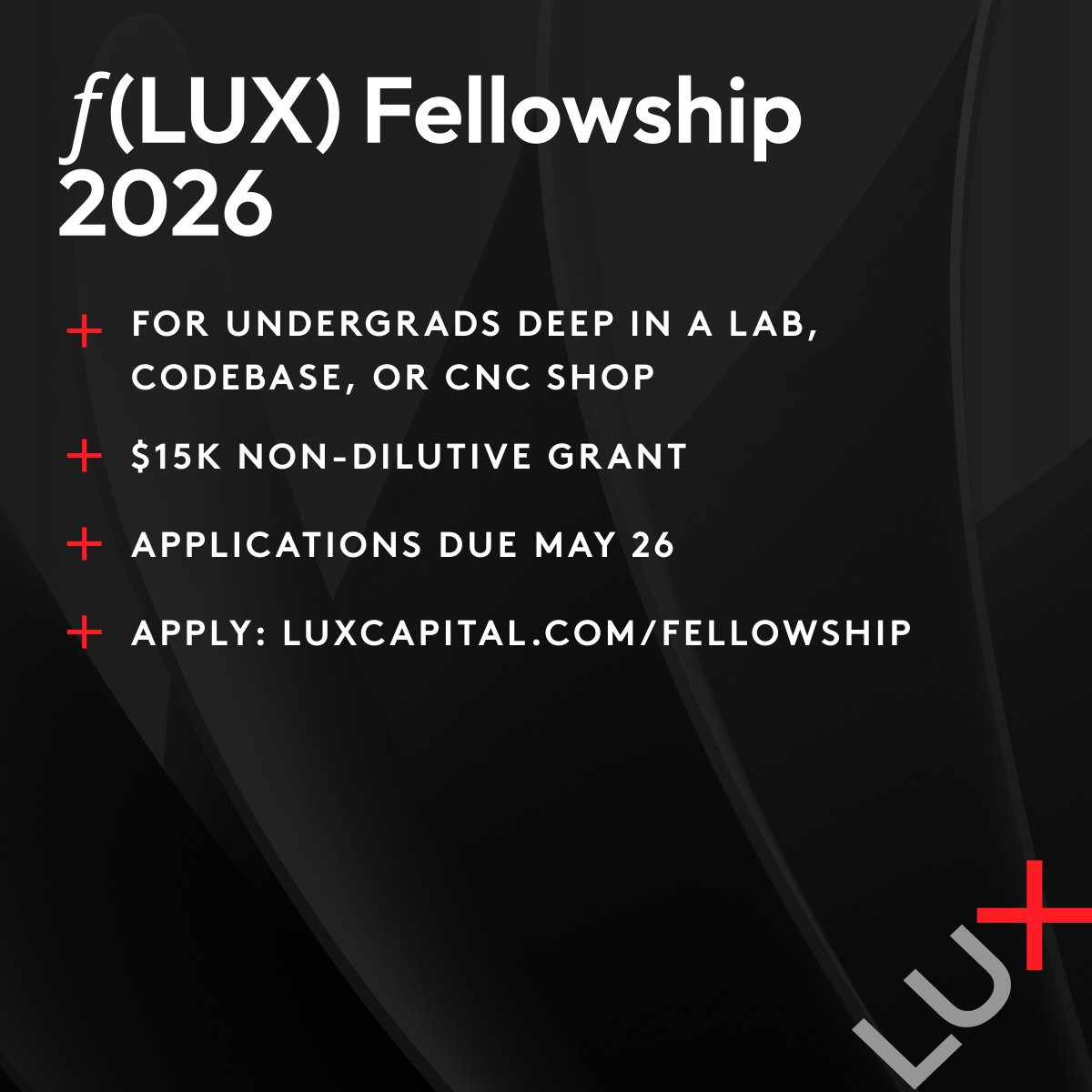
It’s time to apply for the 2026 f(Lux) Fellowship.
The best ideas for a new approach to an old problem sometimes show up in dorm rooms, campus labs, and late-night group chats. Raw, ambitious, and years ahead of what most people are willing to fund.
Last year, through the first f(Lux) Fellowship, we took a bet on 13 undergrads building at the edges of what's possible. They came from @UCBerkeley, @UWaterloo, @Stanford, @MIT, and @Harvard. Our fellows spanned freshman to senior, with nearly half international.
Four have founded companies, four are early or founding employees at startups, and multiple fellows who met through f(Lux) are now building together.
The fields reshaping our future – computational biology, AI infrastructure, advanced materials, aerospace and defense – do not respect departmental boundaries, and neither do the best people building in them. They’re the ones turning sci-fi into sci-fact.
If you’re an undergrad running experiments nobody assigned you to, building tools to unblock your own research, or working on something your professor thinks is too early… this Fellowship is for you.
You’ll receive a $15,000 non-dilutive grant, dual mentorship from the Lux investment team and portfolio, and two all-expenses-covered retreats: a kickoff in New York and a closing Fellows Summit in September.
No incorporation needed. No polish required. Just genuine obsession and a problem worth solving.
Applications due by May 26th, 2026: luxcapital.com/fellowship
8
28
339
103,635
Michael Retchin retweeted

Apr 3
We are hiring a lot of former founders at @fleet_ai!
So much, that we have our own application. just hit me up if you are looking for your next big swing
fleetai.com/careers/former-f…

Startups best known for hiring former founders:
Cursor, Notion, Rippling, Applied Intuition, Supabase, Ramp, Exa, Chroma, Corgi, Lovable, Mintlify, Browserbase, Instawork
Who else? Refreshing my shortlist.
11
12
259
199,858
Michael Retchin retweeted

Apr 2
I trained an LLM from scratch on pre-1900 text to see if it could come up with quantum mechanics and relativity.
While the model is too small to do meaningful reasoning, it has glimpses of intuition.
When given observations from past landmark experiments, the model can declare that “light is made up of definite quantities of energy” and even suggest that gravity and acceleration are locally equivalent.
I’m releasing the dataset models and leave this as an open problem to the research community.
I also include what this project has taught me about intelligence in a mini essay linked below.
🧵(1/n)
118
260
2,023
314,712
Michael Retchin retweeted

Mar 27
@AsteraInstitute is launching an essay competition to identify systemic bottlenecks to today's science. We're looking to hear from currently practicing scientists first-hand: what is broken?
Deadline is May 1st. More below 👇
7
36
99
14,000
Michael Retchin retweeted

Mar 24
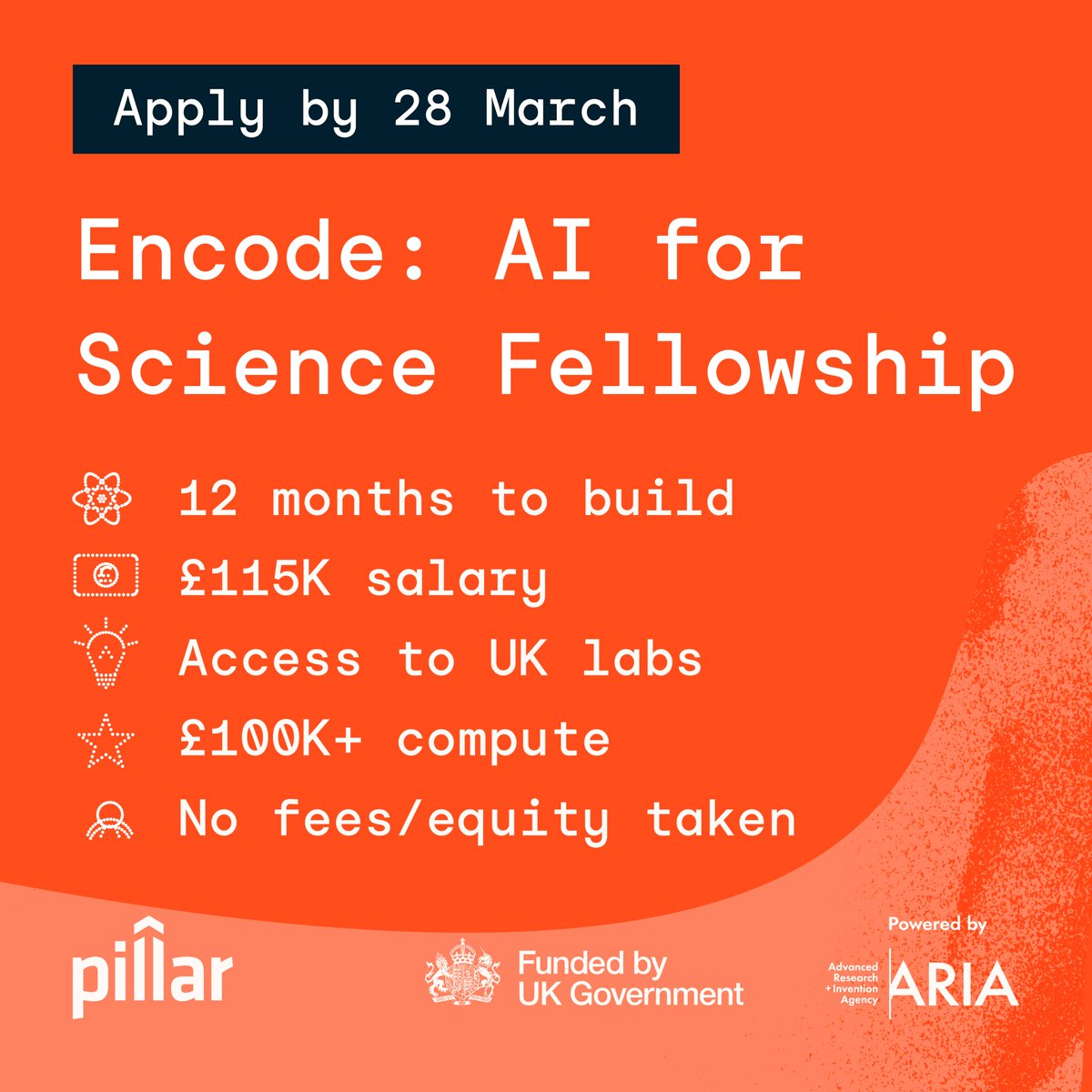
Start a company in AI for Science.
The Encode: AI for Science fellowship offers a year of freedom to build what matters -- salary, 100k GBP of compute, and partnership with the top scientists in the UK.
No equity or fees, it's a fully funded fellowship!
Apply by March 28
28
168
947
152,595