
1,816 Photos and videos















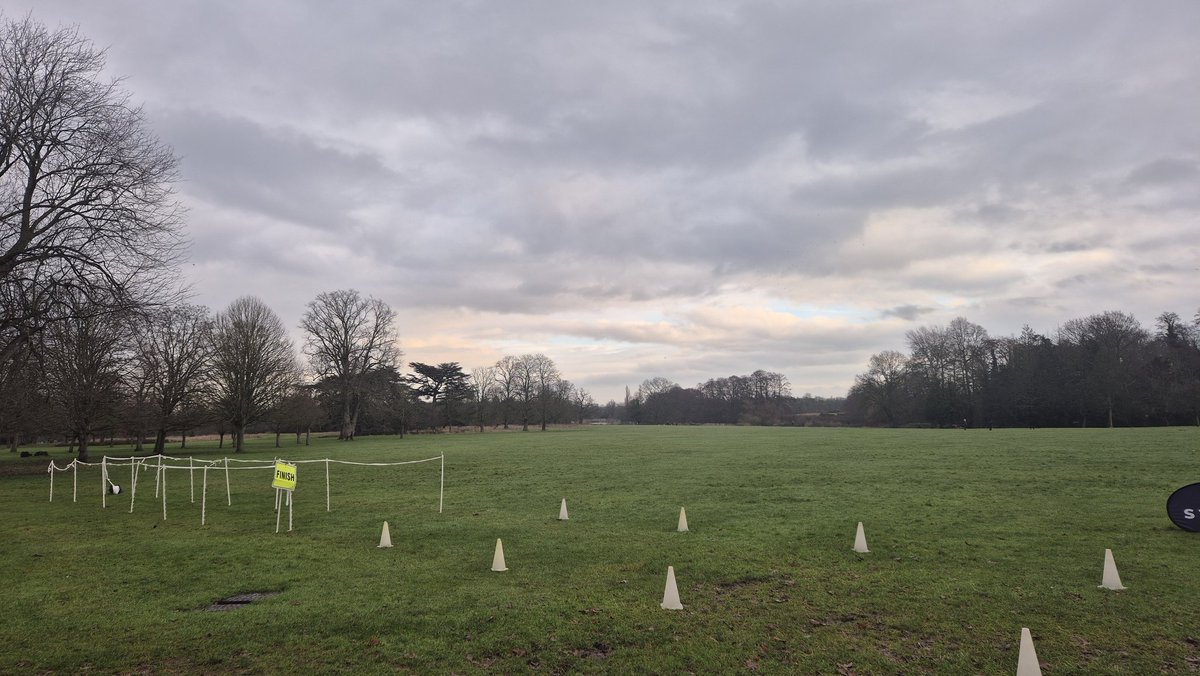



Microsoft launched their own coding AI and it's FREE inside GitHub Copilot starting today 😳
not rented from OpenAI. built by Microsoft.
it's called MAI-Code-1-Flash and it's rolling out to ALL copilot tiers right now
part of microsoft's new MAI model family:
- MAI-Code-1-Flash (coding)
- MAI-Thinking-1 (reasoning, 35B params)
- MAI-Image-2.5 (image gen)
- MAI-Transcribe-1.5 (speech, 43 languages)
who gets it:
- free plan ✅
- pro plan ✅
- pro plan ✅
- max plan ✅
what makes it different:
- trained inside copilot's production environment, not externally tested then shipped
- 60% fewer tokens on complex tasks vs comparable models
- 85.8% on microsoft adversarial coding benchmark
- 256K context window
full setup guide (github copilot MAI-Code-1-Flash - free):
step 1: create a free github account
> go to github.com/signup
> sign up for free
step 2: enable github copilot
> go to github.com/github-copilot/si…
> select the free plan - no credit card needed
step 3: install the VS Code extension
> open VS Code
> press ctrl shift x (windows) or cmd shift x (mac)
> search "GitHub Copilot"
> install the extension by GitHub
step 4: sign in
> VS Code will show a "Sign in to GitHub" prompt
> click it, approve in the browser, return to VS Code
step 5: open copilot chat
> press ctrl shift i (windows) or cmd shift i (mac)
> the chat panel opens on the right side
step 6: select MAI-Code-1-Flash
> click the model dropdown at the bottom of the chat panel
> choose MAI-Code-1-Flash from the list
> done
already have copilot? skip straight to step 5
microsoft built this without openai data, free coding model wars are getting serious.
bookmark this and start using this free model 🔖
73
163
980
213,156

Today we’re introducing Gemma 4 12B — our latest open model that brings advanced agentic reasoning, vision and audio directly to your laptop.
It delivers performance nearing our larger Gemma models with a much smaller total memory footprint, while being small enough to run locally with just 16GB of VRAM. It’s open and accessible for everyone to use under a permissive Apache 2.0 license.
This is all made possible by our new, unified architecture that removes separate multimodal encoders. Here’s how we did it 🧵
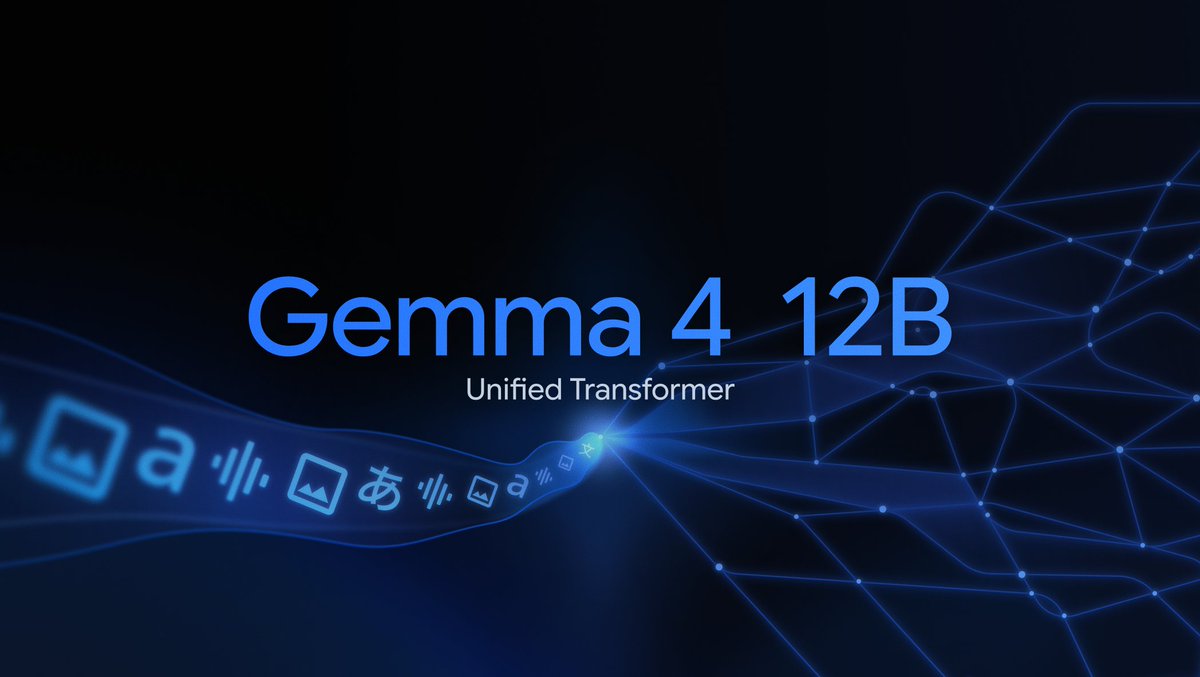
ALT Promotional graphic on a black background featuring the large blue text "Gemma 4 12B" above smaller white text that reads "Unified Transformer." A glowing blue ribbon containing multi-modal icons (representing images, text, and audio) flows from the left into a central point, branching out into a complex, luminous blue neural network map on the right.
249
1,225
9,365
878,342

The giant leap that changed histories.
Watch #StarCity and #ForAllMankind on Apple TV.
13
81
595
62,859
Mike Watts 💙 retweeted

Introducing a powerful new chapter for Windows PCs, accelerated by NVIDIA RTX Spark msft.it/6011vbRX5
5
15
125
4,194
Mike Watts 💙 retweeted

May 26
A man took his macbook to a repair shop because the battery was at 78% after just 14 months.
"Is this normal?"
The technician ran every diagnostic. Everything came back clean.
No defects. No damage. No manufacturing issue.
Then the technician turned the screen toward him and said something he wasn't expecting:
"There's a setting Apple built in 2020 specifically to prevent this. They didn't turn it on for you. Your battery is dying twice as fast as it should and they make money when it does."
He asked the obvious question: "So Apple is wearing out my own laptop on purpose?"
The technician didn't answer.
He just opened System Settings and walked him through every hidden setting that was secretly killing his MacBook.
Here's everything he showed him in the next 8 minutes (save this if you own a Mac): 🧵
43
192
763
201,605
Mike Watts 💙 retweeted

🚀 The petition just passed 83,000.
Sign & share.
petition.parliament.uk/petit…
30
161
238
5,535
Mike Watts 💙 retweeted

May 21
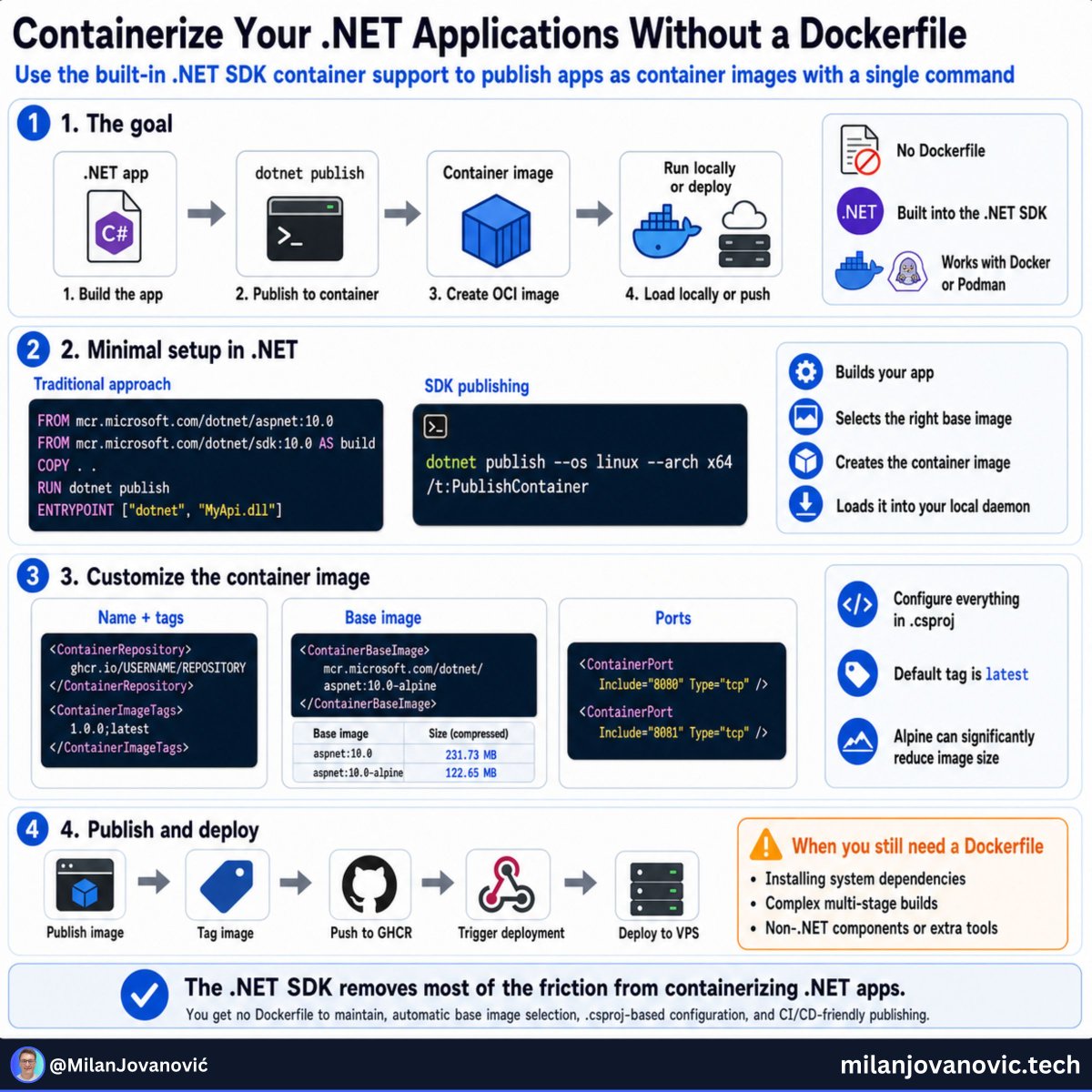
You don’t need a Dockerfile to containerize a .NET app.
That still feels weird to say.
For years, the default path looked like this:
- write a multi-stage Dockerfile
- pick the right SDK image
- pick the right runtime image
- copy the project file first
- restore dependencies
- copy everything else
- publish the app
- copy the output into the final image
- hope you didn’t break layer caching
It works.
But it’s also a lot of ceremony for a typical ASPNET Core API or worker service.
The .NET SDK can publish directly to a container image:
dotnet publish --os linux --arch x64 /t:PublishContainer
That’s it.
The SDK builds the app, selects the right base image, creates the container image, and loads it into your local Docker or Podman daemon.
You can still customize the important parts:
- image name
- tags
- base image
- ports
- registry
- CI/CD flow
Most of it lives in your `.csproj`, where .NET developers already spend their time.
I still use a Dockerfile when I need native system dependencies, complex build steps, or extra tools inside the image.
But for most web APIs and background services?
The SDK approach is enough.
I wrote a full walkthrough of containerizing .NET applications without a Dockerfile, including image customization, GitHub Container Registry, GitHub Actions, and deploying to a VPS: milanjovanovic.tech/blog/con…
9
33
253
11,958
Mike Watts 💙 retweeted

BREAKING: everyone’s patience with british politics
22
122
969
19,858
Mike Watts 💙 retweeted

May 12
Andy Serkis reading Trump's tweets in Gollum's voice is the best thing you'll see on social media today.
201
5,205
20,119
878,964
Mike Watts 💙 retweeted

May 12
CGI announces leadership transition: Tim Hurlebaus appointed President and CEO go.cgi.com/49fr343

3
10
479


Mike Watts 💙 retweeted

May 8
Back in 1994, I removed printf() from Windows COM. Here's the story of why! Share if you enjoy! Thx!
23
60
719
37,023
Mike Watts 💙 retweeted
May 5
Agree 100%. That's why I have two buckets - codebases where I scrutinize and approve every line, and AI slop buckets where I look at nothing.
And n'er the twain shall meet.
Beyond curiosity/education, there's no point in reviewing an AI-generated codebase unless you're going to fix, own, and maintain it. If not, define your API boundary layer well and treat the other side as a black box.
In NightDriverLED.com, for example, the ESP32 code is entirely handcrafted, reviewed, and sacrosanct. The UI code is 100% AI generated. And it has NO special knowledge or insight into the API's implementation.
I treat the AI code as mutable, discardable, and regenerable from the prompt at any time, with no recourse other than reverting to an older version in git.
Good contracts (specs) and good tests make for good AI components, but inspection only leads to madness.

For a lot of us truly obsessive developers, the issue is not "I am no longer curious" but "human review cannot keep up with codegen scaling"
The true power users are (like me) building static analysis tools to deterministically enforce the things they look for during code review
4
5
89
8,604
Mike Watts 💙 retweeted

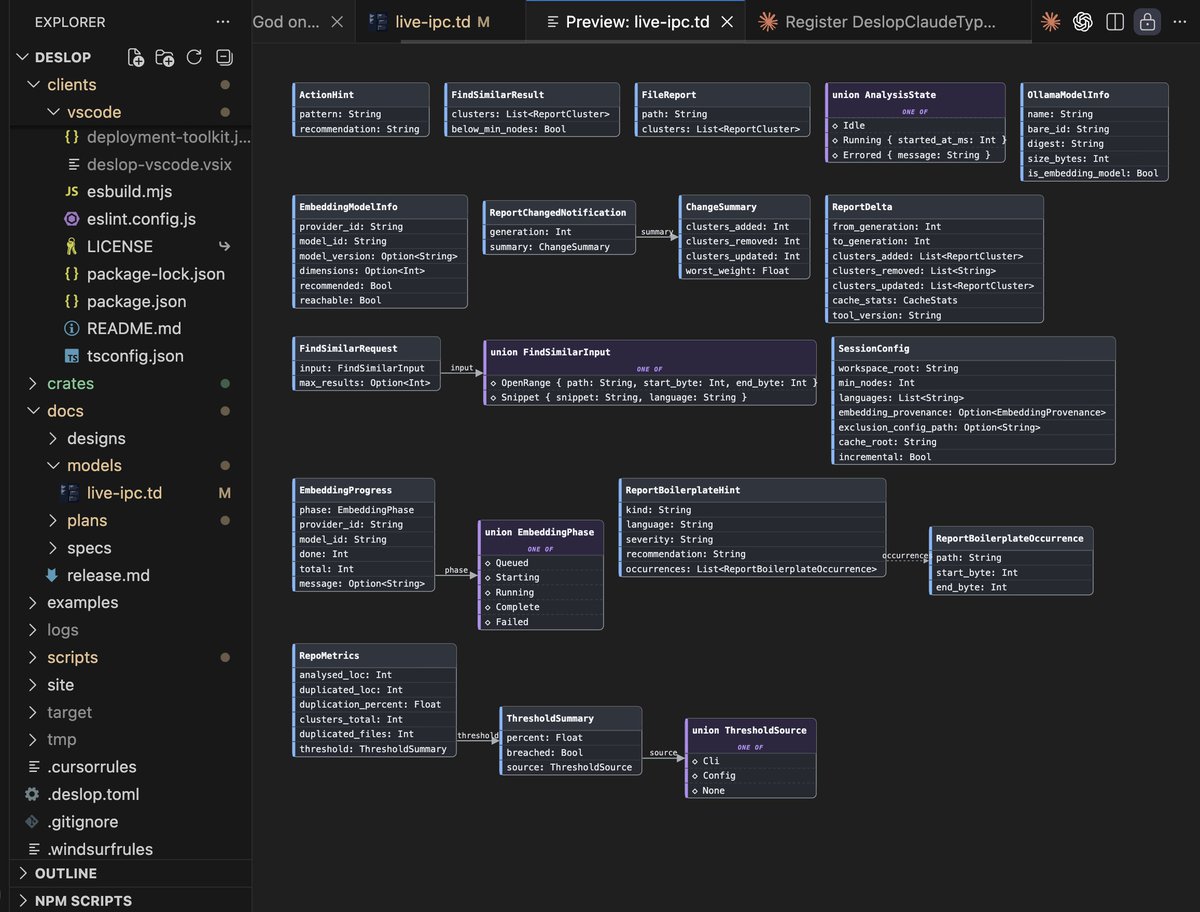
typeDiagram is really awesome. All my extensions communicate with IPC messages across processes and now I've delegated all the code generation to typeDiagram so I don't need to write models for each language. So good
1
2
16
1,118
Mike Watts 💙 retweeted

Apr 30
A man spends 50 years teaching at MIT.
He knows his time is running out.
So he records one last lecture — everything he knows, distilled into a single hour.
He died 5 months later.
This is that lecture.
The most important hour you'll watch this week. 👇
Bookmark it for later
219
6,503
23,749
1,911,571