
irritated human
Joined November 2025
- Tweets 19,727
- Following 109
- Followers 325
- Likes 3,096
32 Photos and videos















Melissa Gallagher retweeted

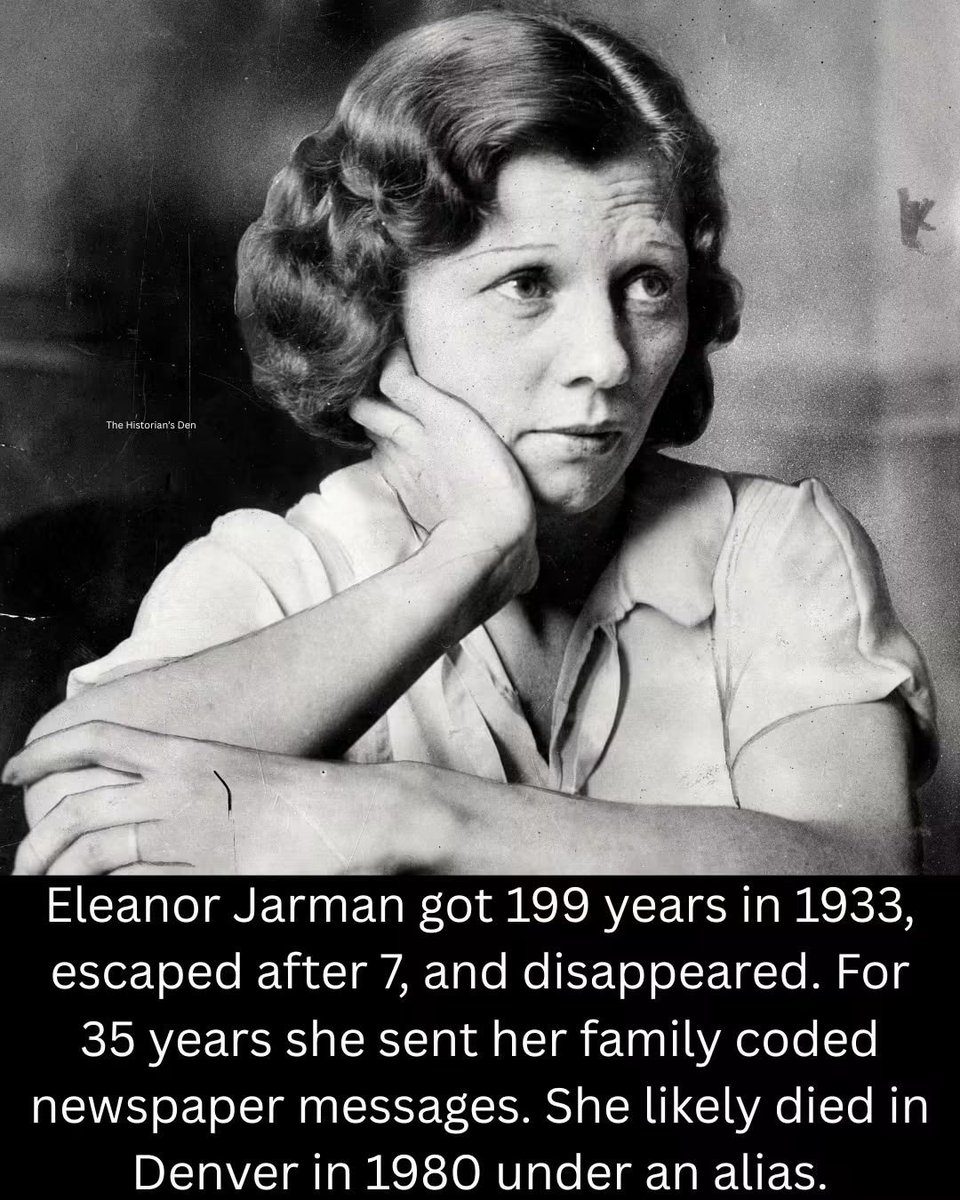
Eleanor Jarman was convicted in 1933 after a botched robbery that resulted in a man’s death, though many historians argue she played a minor role compared to her male accomplices. Despite this, she received an extraordinary 199‑year sentence, one of the harshest ever given to a woman at the time. Her case quickly became sensationalized, and newspapers dubbed her “the Blonde Bandit,” a label that exaggerated her involvement and helped justify the severe punishment.
In 1940, after serving only seven years, Jarman scaled a prison fence and vanished. Her escape sparked a nationwide manhunt, but she managed to stay ahead of authorities by living quietly under assumed identities. For decades, she maintained secret contact with her children through coded personal ads placed in newspapers, short, cryptic messages that only her family could interpret. These ads became the only thread connecting her to the life she left behind.
Researchers believe Jarman eventually settled in Denver, where she lived an unremarkable, anonymous life until her death in 1980 under a false name. Her family later identified her through photographs and personal details, confirming what they had long suspected. Today, her story is often revisited as an example of media‑driven sentencing, the power of reinvention, and the strange, enduring mystery of a woman who managed to disappear in plain sight for nearly four decades.
1
7
436
Melissa Gallagher retweeted

This technology was developed in 1950’s but was later banned
30
134
1,019
251,633


Melissa Gallagher retweeted

In 1913, this article attempted to imagine what babies would look like in the year 2012.

1
12
34
1,655
Melissa Gallagher retweeted

You need to be careful about who you listen to and believe on this part of Twitter. A lot of people are actively in psychosis.
80
90
905
26,470
Melissa Gallagher retweeted

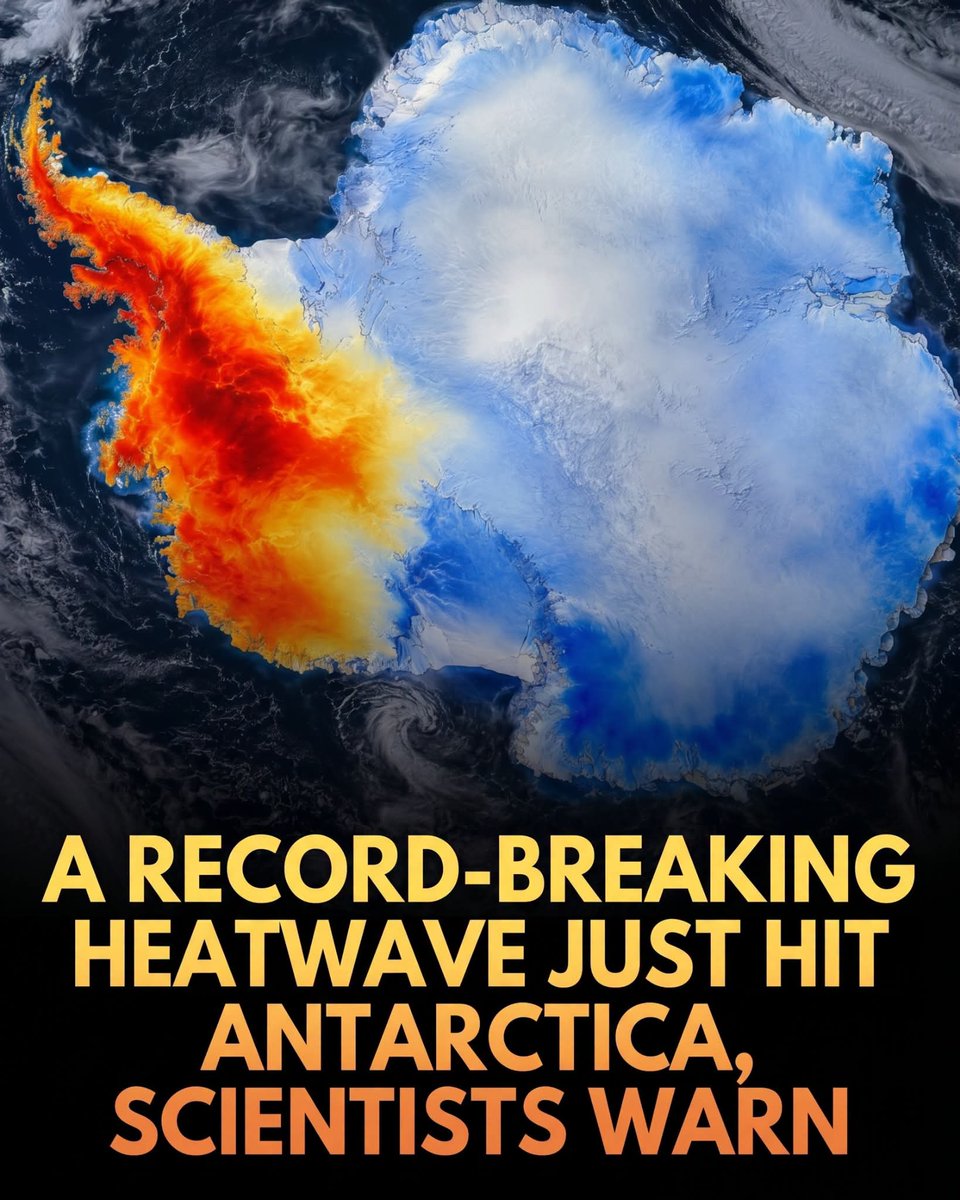
🚨 An unprecedented heatwave is shattering records in Antarctica.
Temperatures are 36°F (20°C) above normal and triggering rare rain and ice melt in the middle of the continent's coldest season.
In a stark demonstration of climate acceleration, a massive winter heatwave swept across the Antarctic Peninsula in early June 2026, pushing temperatures to historic highs. On June 6, researchers at Argentina's Esperanza base on the Trinity Peninsula recorded an astonishing 59.7°F (15.4°C), smashing the region’s previous June record set in 1998. The prolonged warmth, which kept daily maximums above freezing for three consecutive weeks, has astonished the scientific community. Researchers working on the Collins Glacier reported witnessing rain falling and surface ice actively melting—phenomena virtually unheard of during the depths of Antarctica's polar winter, which normally blankets the region in deep snow and thick ice.
While a single weather anomaly will not immediately dissolve the continent’s massive ice sheets, scientists warn this event fits into a deeply concerning, long-term trend. The Antarctic Peninsula is warming up to five times faster than the global average, fueled by a feedback loop of sea ice loss that exposes warmer ocean waters. The loss of protective sea ice and the weakening of glaciers, such as the vulnerable Thwaites Glacier, pose a massive threat to global sea levels and delicate polar ecosystems. With recent studies suggesting that Antarctic ice loss could escalate rapidly by the end of the century if greenhouse gas emissions remain unchecked, this winter heatwave serves as a powerful reminder that even the planet's most isolated frozen frontier is experiencing rapid transformation.
source: Watts, J. (2026). Record winter temperatures in Antarctic raise fears over speed of climate breakdown. The Guardian.
16
32
59
3,586
Melissa Gallagher retweeted

A federal grand jury in the Southern District of Illinois returned a superseding indictment today charging an Illinois man with eight counts of engaging in illicit sexual conduct with minors in Nepal and one count of committing those offenses while required to register as a sex offender.
This case was brought as part of Project Safe Childhood, a nationwide initiative to combat the epidemic of child sexual exploitation and abuse.
Read more: justice.gov/opa/pr/convicted…

9
47
125
1,786
Melissa Gallagher retweeted

A Louisiana nurse practitioner was sentenced today to 87 months in prison and three years of supervised release for causing over $12 MILLION in false and fraudulent claims to Medicare for medically unnecessary cancer genetic tests.
Thanks to our joint efforts with @FBI, @EDLAnews, and @OIGatHHS, Scharmaine Lawson Baker, 59, of Fulshear, Texas, has been held accountable for defrauding Americans.
Full story: justice.gov/opa/pr/nurse-pra…

30
213
716
7,154
Melissa Gallagher retweeted

The Viking experiments delivered ambiguous results, and the uncertainty kicked off a half-century of ups and downs in NASA’s relationship with the Red Planet.
sciencenews.org/article/nasa…
1
4
8
6,717

What sucks is that life could be so easy. So easy. There are enough resources to end world hunger, homelessness, and poverty. We could slow down and fairly utilize and distribute them. Instead, everyone suffers while 20 men control half the world’s wealth.
21
133
468
3,175
Melissa Gallagher retweeted

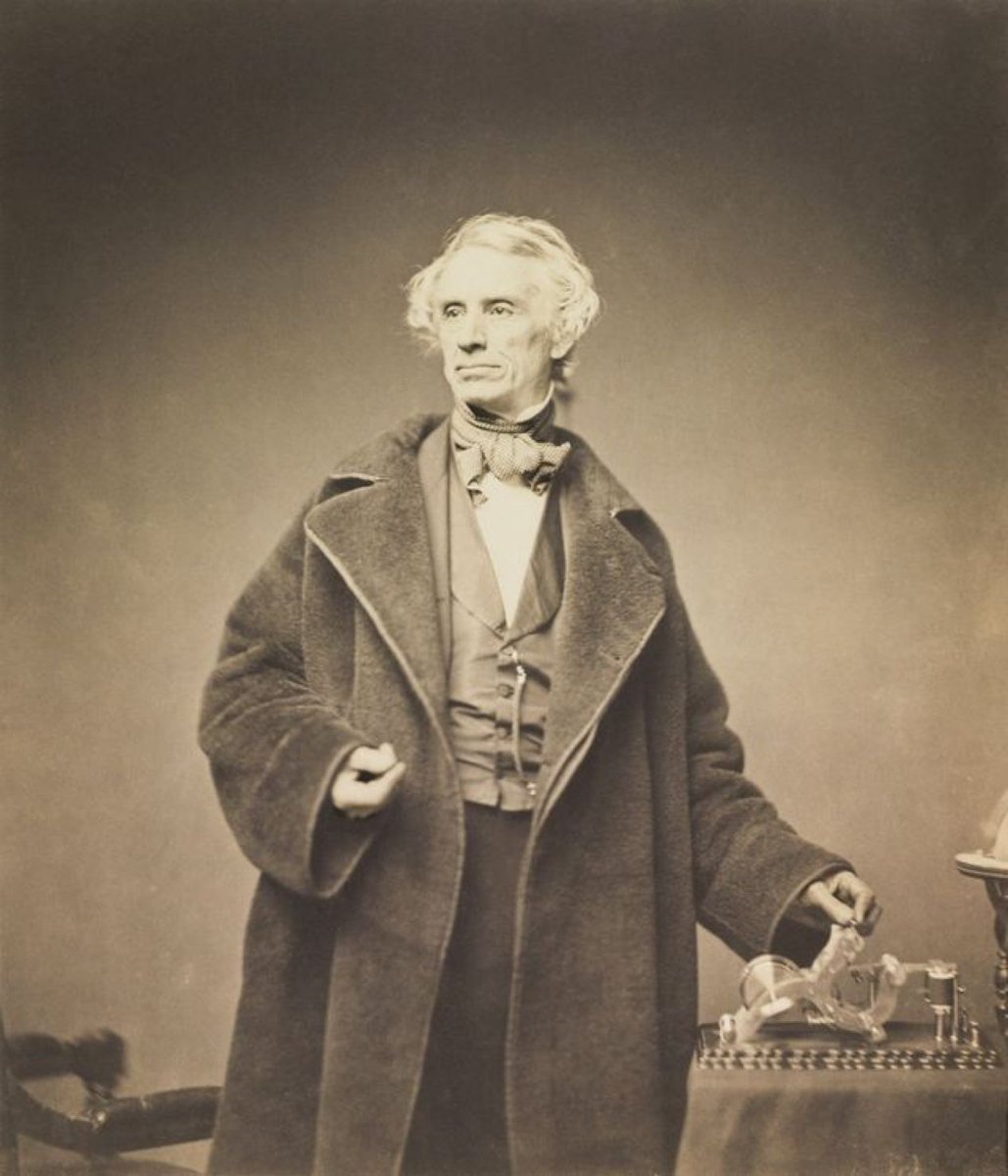
Samuel Morse with his recorder, photographed by Mathew Brady in 1857.
13
76
1,695

The #FBI is offering a reward of up to $150,000 for information leading to the arrest and conviction of Herbert Leon Kimble, a member of the Most Wanted Fraudsters List who is #wanted for his alleged involved in a large-scale healthcare fraud conspiracy that resulted in more than $1.2 billion in Medicare charges and affected thousands of Medicare beneficiaries, many of whom were elderly victims: fbi.gov/wanted/most-wanted-f…

95
1,152
1,825
23,473
Melissa Gallagher retweeted
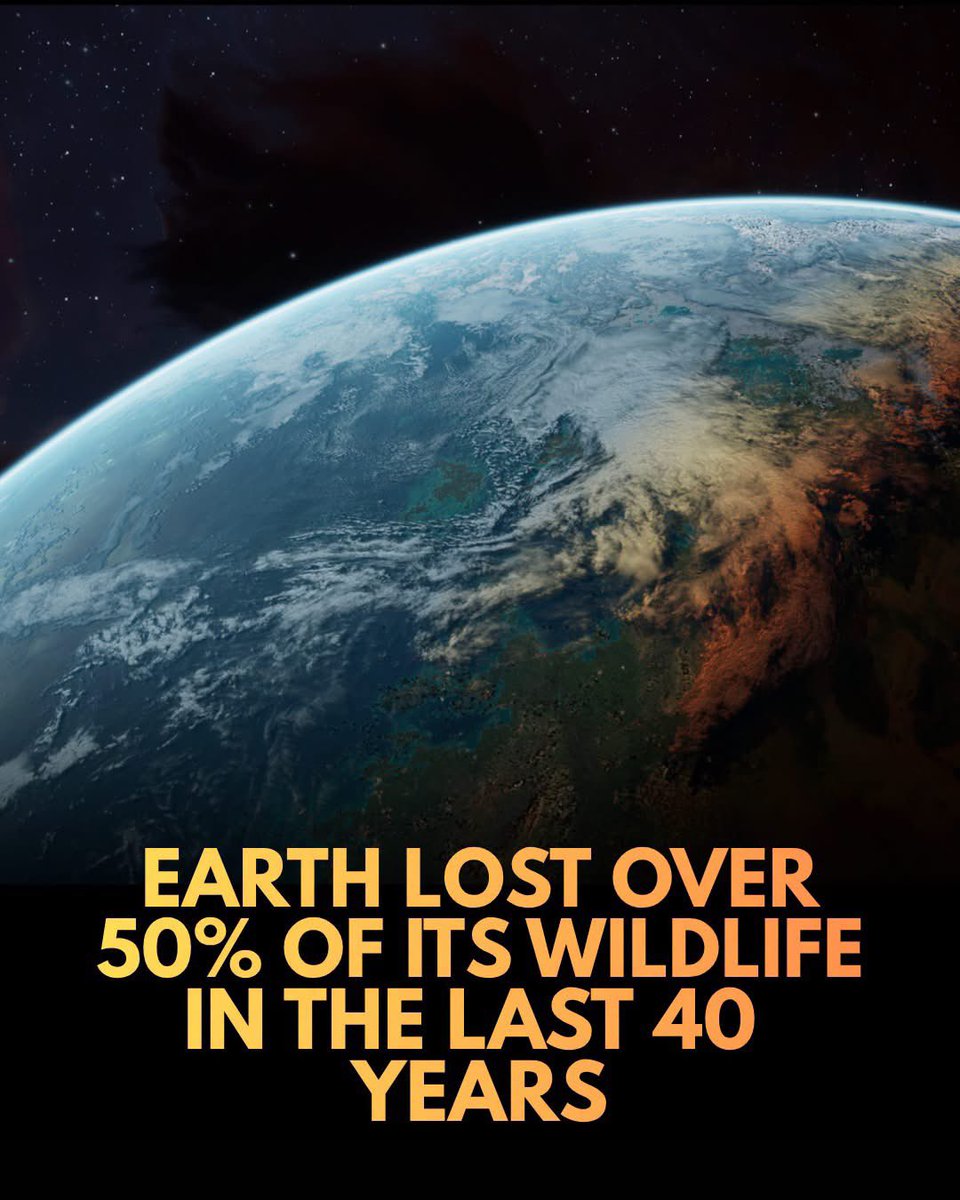
A devastating report reveals that Earth lost half of its wild animal populations in just 40 years, driven by unsustainable human consumption and habitat destruction.
A critical report by the World Wide Fund for Nature (WWF) and the Zoological Society of London has delivered a stark wake-up call, revealing that global wildlife populations plummeted by 50% between 1970 and 2010.
By tracking 10,000 distinct populations across 3,000 species, researchers created the Living Planet Index to measure the catastrophic scale of human impact on the natural world.
Freshwater ecosystems suffered the most devastating blow, with animal numbers crashing by 75% due to severe pollution, excessive water extraction, and river fragmentation by dams. Land and marine species have fared similarly poorly, with both groups seeing their populations tumble by 40% as habitats are cleared and species are overexploited for food.
The biodiversity crisis is fundamentally fueled by humanity's swelling ecological footprint, with global consumption rates requiring 1.5 Earths to sustainably support our current lifestyle.
However, this resource strain is heavily skewed; the report highlights that it would take four planet Earths to sustain the average consumption level of a United States resident, and 2.5 Earths for the United Kingdom [1]. While wealthier countries may point to local conservation gains, researchers warn they are simply outsourcing ecological damage by importing goods tied to deforestation and habitat loss in developing nations.
To curb this decline, experts insist on an immediate global pivot toward sustainable food production, resource equity, and aggressive habitat protection.
source: Carrington, D. ( September 30). Earth has lost half of its wildlife in the past 40 years, says WWF. The Guardian
6
18
41
1,513
Melissa Gallagher retweeted

Jun 17
🚨 It has been reported that a staggering 125 decibels were recorded during the singing of Flower of Scotland before Scotland's World Cup clash with Haiti.
If confirmed, it would be the loudest noise level ever recorded at a World Cup match. 🔥👏🏴
119
1,051
8,841
302,901
Melissa Gallagher retweeted

Congratulations to Mexico for getting universal health care! 🇲🇽

3,080
7,627
27,993
375,891
Melissa Gallagher retweeted

【発見】太平洋を渡るウミガメは適当に泳いでいるわけではなかった。衛星データとタグの追跡で彼らが葉緑素濃度と水温が最適な細い帯状のルートをピンポイントで選んで移動しその帯が季節とともに南北に動くことも突き止められた。
30
739
3,067
273,753

Melissa Gallagher retweeted

Life was simpler when this was entertainment
112
553
6,033
634,610
Melissa Gallagher retweeted

The Erfurt latrine disaster of 1184 offers a bizarre mix of tragedy and comedy.
The somewhat muddy historical account tells the tale of a meeting of nobles gone awry after they drowned in excrement inside a church in modern-day Germany.
The incident, known in German as Erfurter Latrinensturz, was an unbelievable disaster.
But it was also a product of the political strife of the times — and it highlighted just how far society still needed to advance.
Learn more: bit.ly/4oP2lMv

10
6
32
13,697
Melissa Gallagher retweeted

Evindeki hamam böceği istilasıyla baş edemeyen bir adam, böcekleri öldürmek yerine onlara verdiği besine bulaştırdığı hastalıkla tüm koloniyi hasta etmeyi hedefledi.
293
167
4,757
7,334,989