Exploring Jupiter. Follow @nasasolarsystem for the latest updates. missionjuno.swri.edu | nasa.gov/juno
Joined January 2009
- Tweets 1,090
- Following 42
- Followers 647,572
- Likes 243
503 Photos and videos

NASA's Juno Mission retweeted

15 Aug 2020
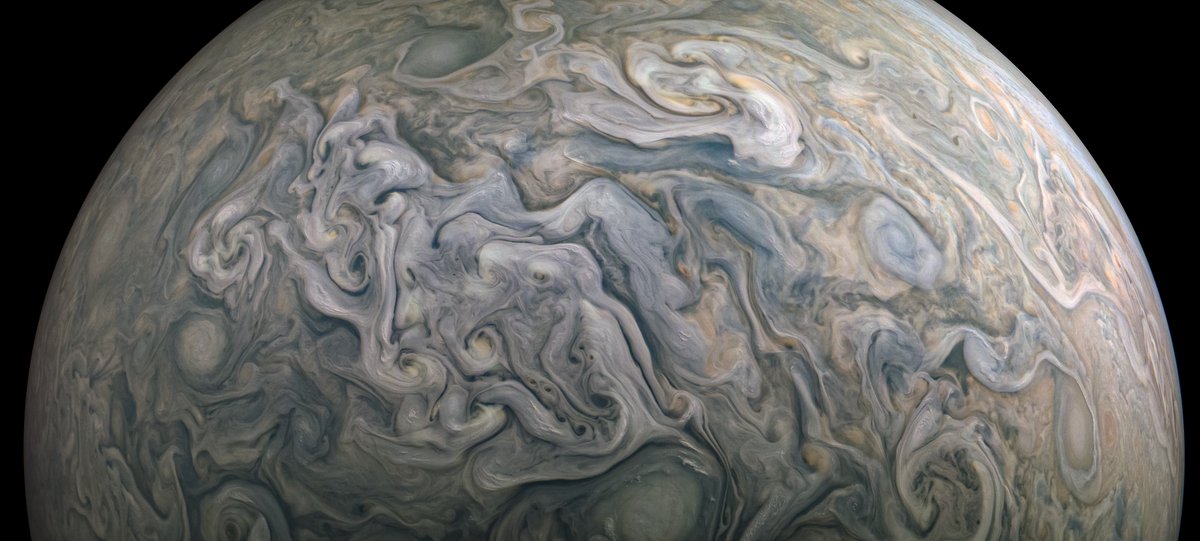
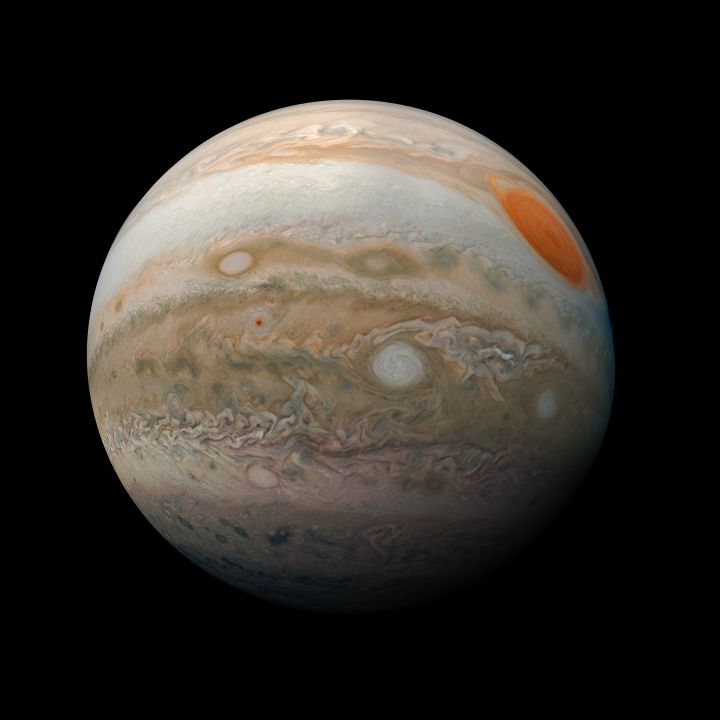
Nine years in space. 28 orbits of Jupiter. Textbooks rewritten. And I’m just getting started.
This account is combining with @NASASolarSystem – join me there for continuing updates from my mission to Jupiter, along with other expeditions to the worlds of our solar system.
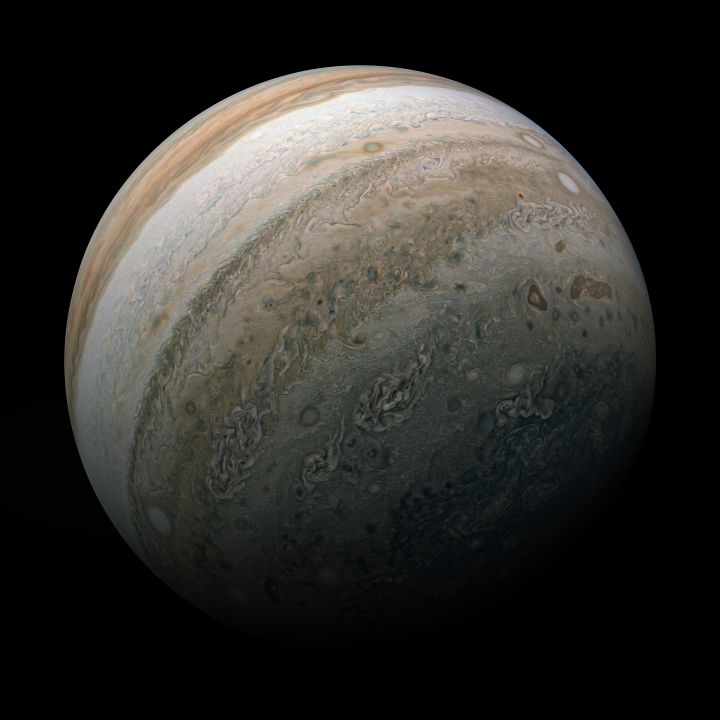
ALT colorful bands of clouds and swirling storms on Jupiter's sphere
84
504
2,988
15 Aug 2020
Nine years in space. 28 orbits of Jupiter. Textbooks rewritten. And I’m just getting started.
This account is combining with @NASASolarSystem – join me there for continuing updates from my mission to Jupiter, along with other expeditions to the worlds of our solar system.
ALT colorful bands of clouds and swirling storms on Jupiter's sphere
84
504
2,988
15 Aug 2020
Some other ways to follow along:
missionjuno.swri.edu
nasa.gov/mission_pages/juno/
eyes.nasa.gov/apps/orrery/#/…
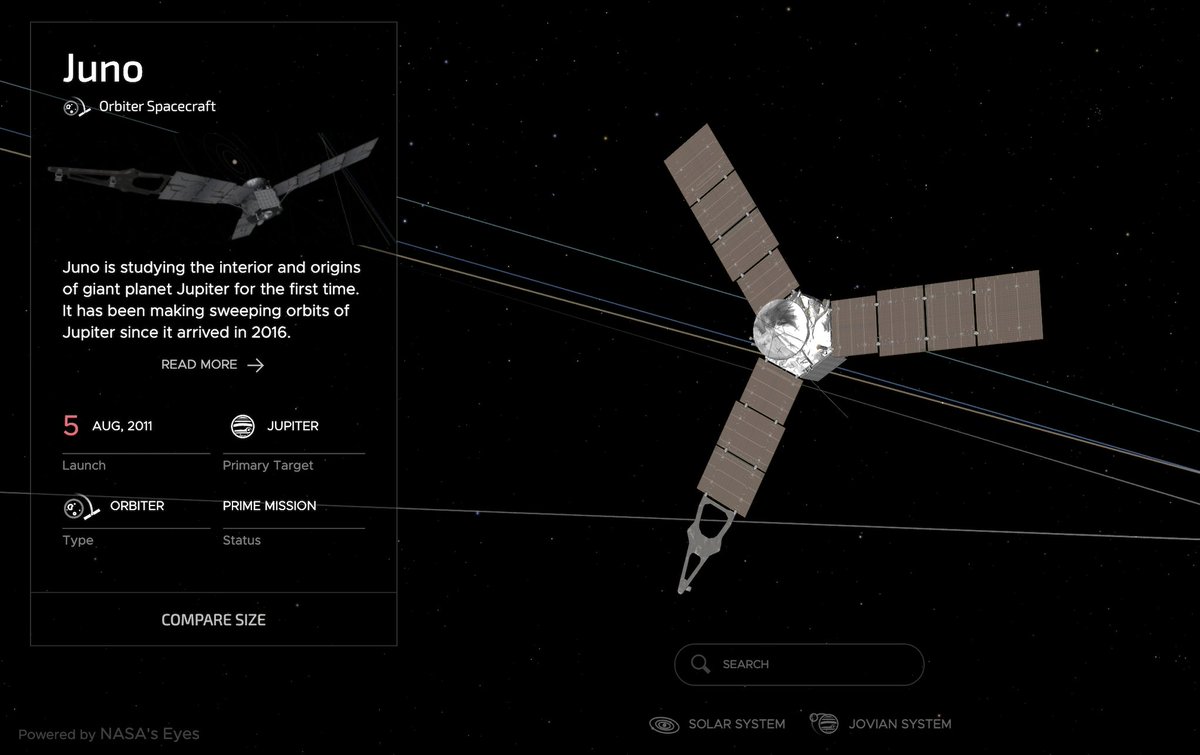
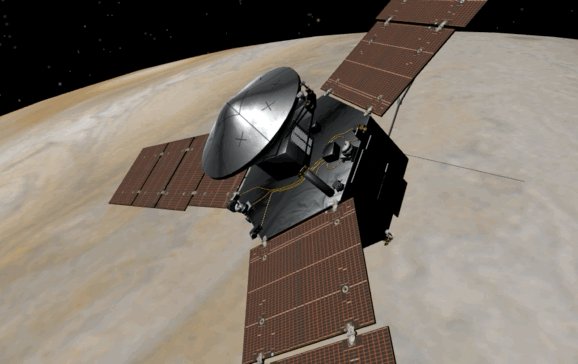
ALT screenshot of online solar system simulator showing Juno spacecraft in its orbit, along with text info about the mission
12
109
533
5 Aug 2020
Nine years ago today, I began my journey to Jupiter. See these interviews with members of my team to hear more about what we have learned: missionjuno.swri.edu/media-g…
19
154
1,053
NASA's Juno Mission retweeted

5 Aug 2020
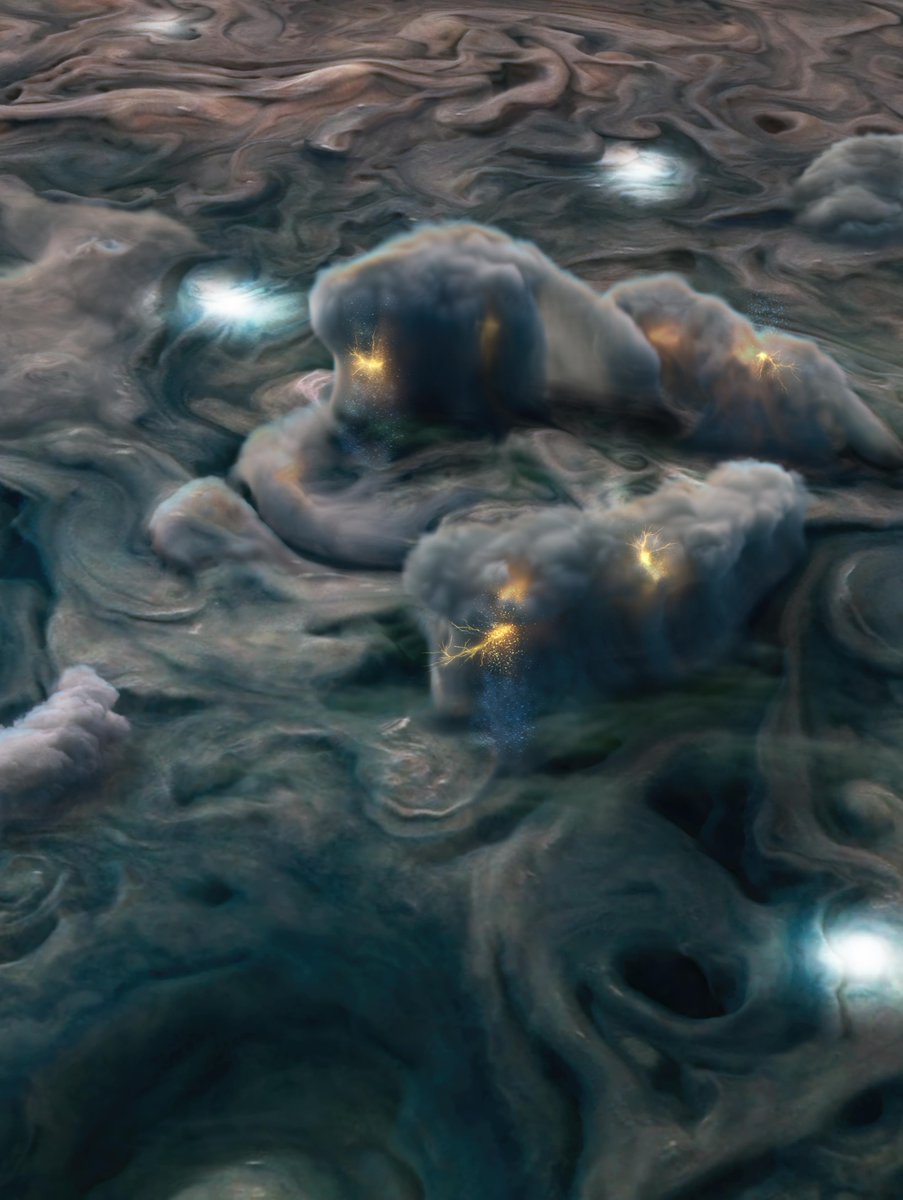
The swirling atmosphere we see on Jupiter is home to violent storms. @NASASolarSystem’s Juno mission discovered new evidence pointing to shallow lightning & slushy ammonia-rich hailstones known as mushballs. #ScienceInSeconds on Jupiter's exotic weather: go.nasa.gov/2ProDpx
27
258
1,077
5 Aug 2020
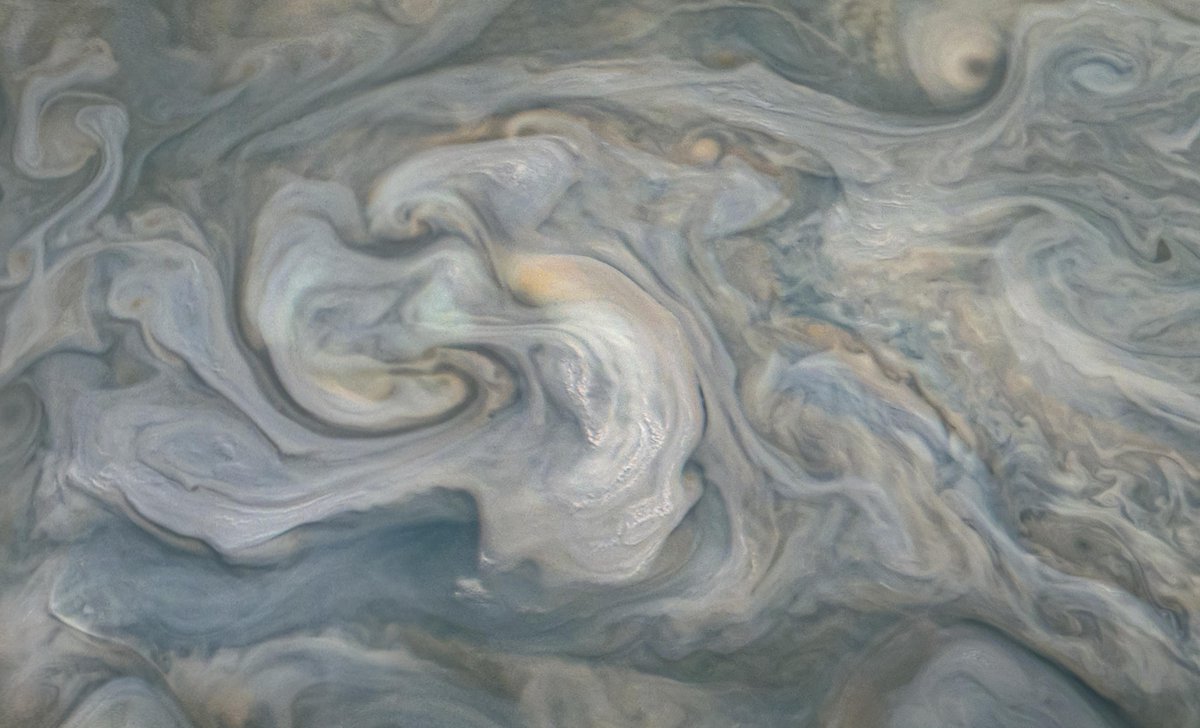
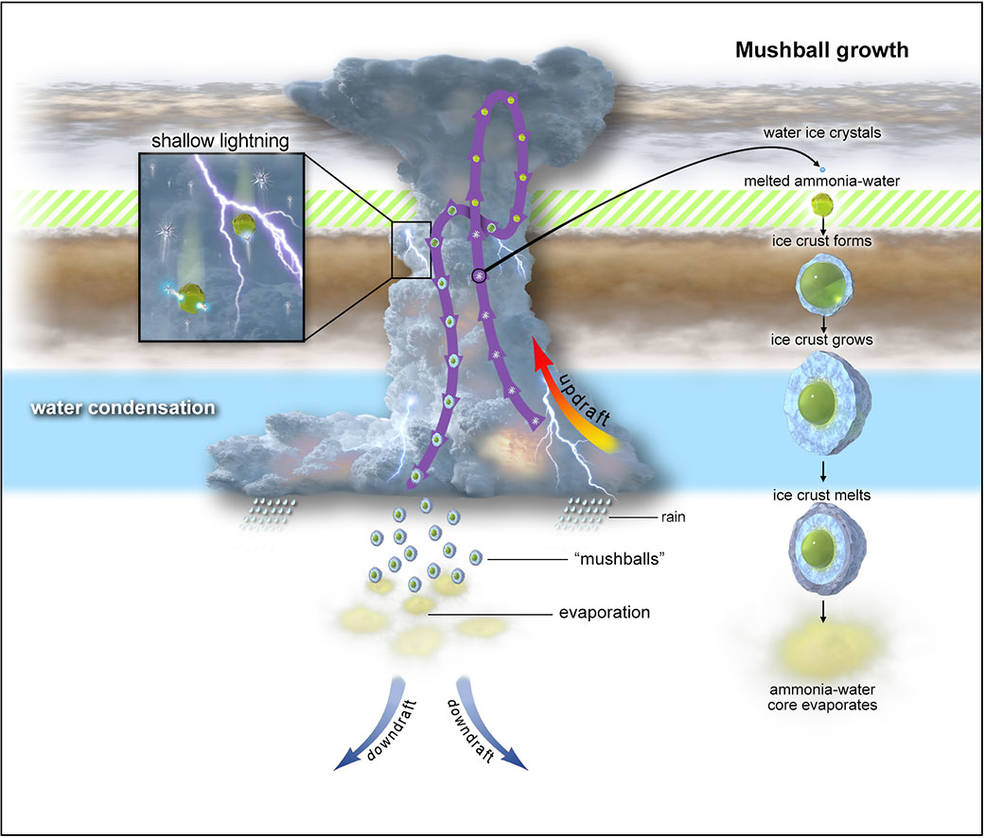
Shallow lightning, clouds of ammonia and water, and a hail of “mushballs” – my instruments are revealing more about Jupiter’s stormy interior: missionjuno.swri.edu/news/sh…
55
1,123
4,129
5 Aug 2020
The second image comes from my JunoCam instrument, with small bright "pop-up" clouds that rise above the surrounding features, thought to be the tops of violent thunderstorms. Credit: NASA/JPL-Caltech/SwRI/MSSS/Kevin M. Gill © CC BY
2
35
194
5 Aug 2020
The third is a graphic that depicts the evolutionary process of "shallow lightning" and "mushballs" on Jupiter. Image Credit: NASA/JPL-Caltech/SwRI/CNRS
24
148
25 Jul 2020
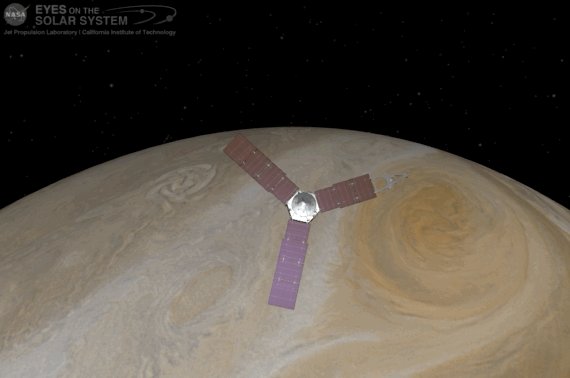
In the next few hours I’ll be making my 28th close pass by Jupiter (as simulated here by @NASASolarSystem’s Eyes on the Solar System: eyes.nasa.gov). Learn more about my mission at missionjuno.swri.edu.
20
215
1,294
24 Jul 2020
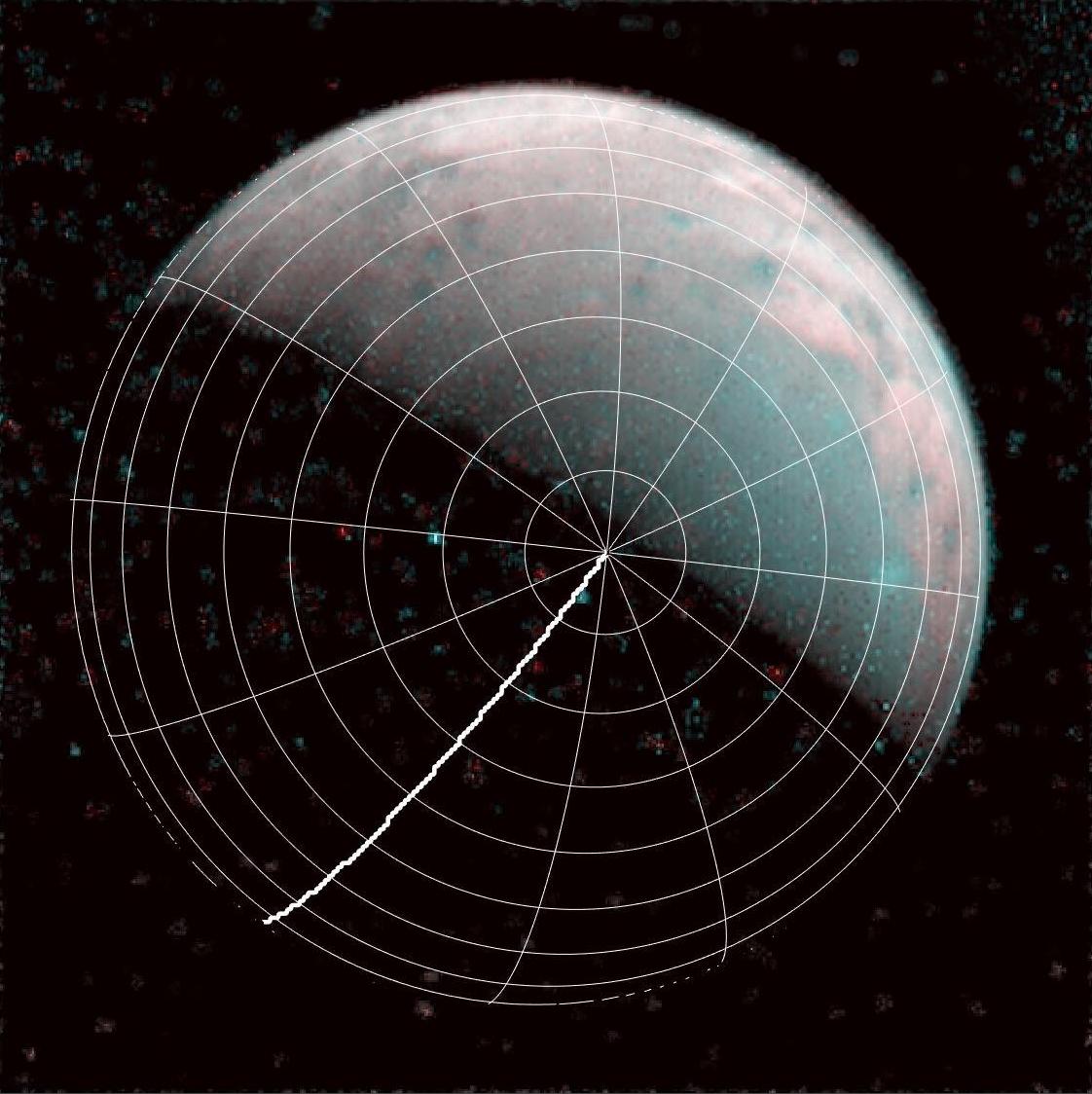
Jupiter’s moon Ganymede is larger than the planet Mercury, the only moon in the solar system known to have its own magnetic field. I captured infrared images that provide the first glimpse of Ganymede's icy north pole. Learn more: missionjuno.swri.edu/news/na…
12
243
1,190
1 Jul 2020
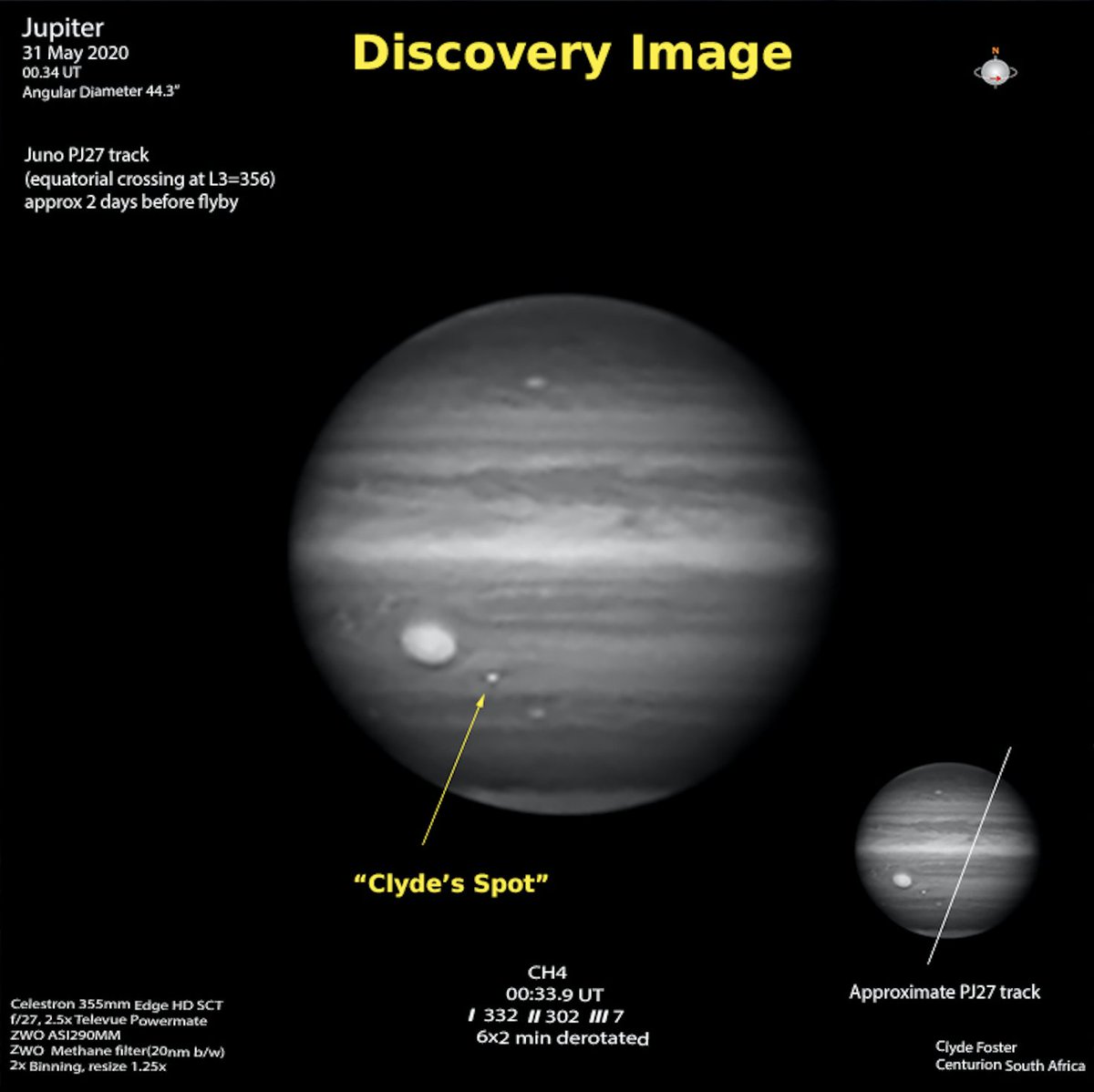
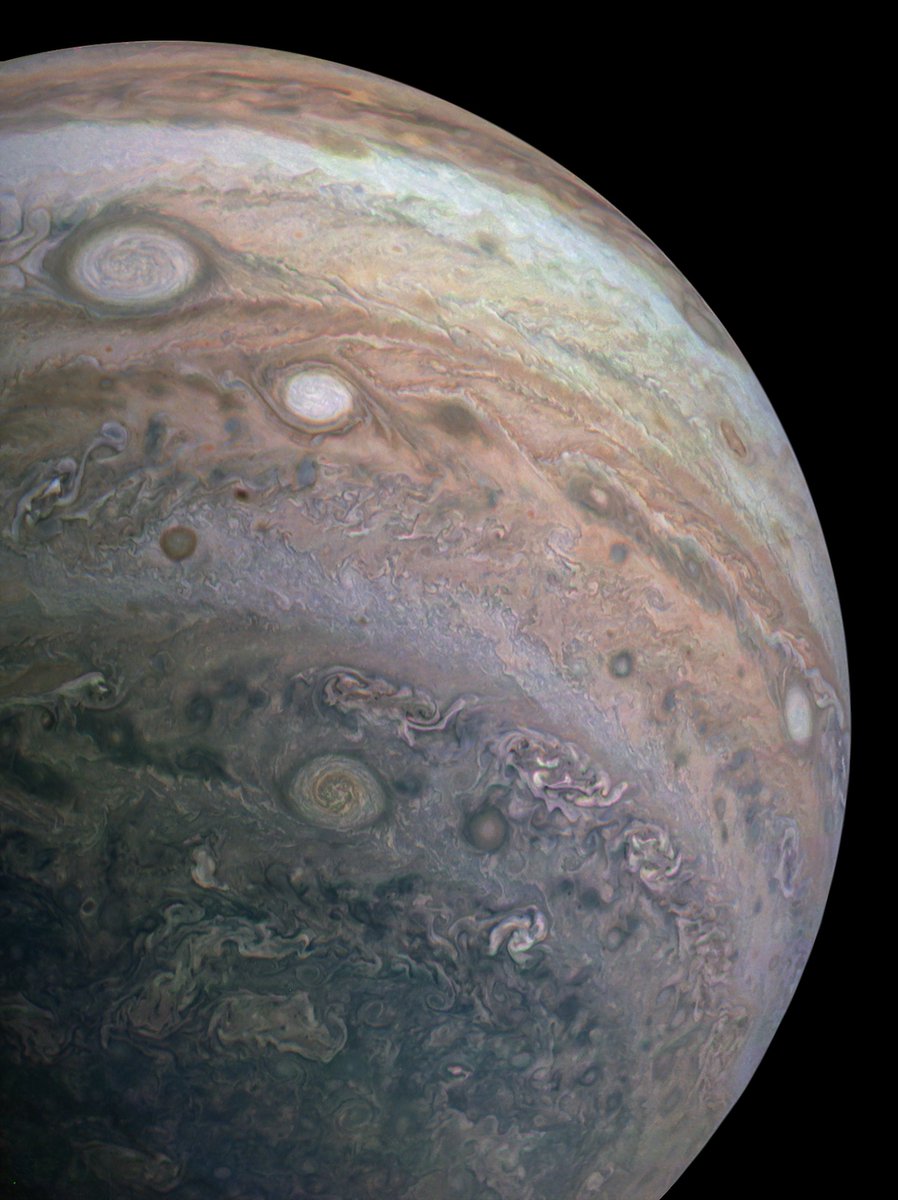
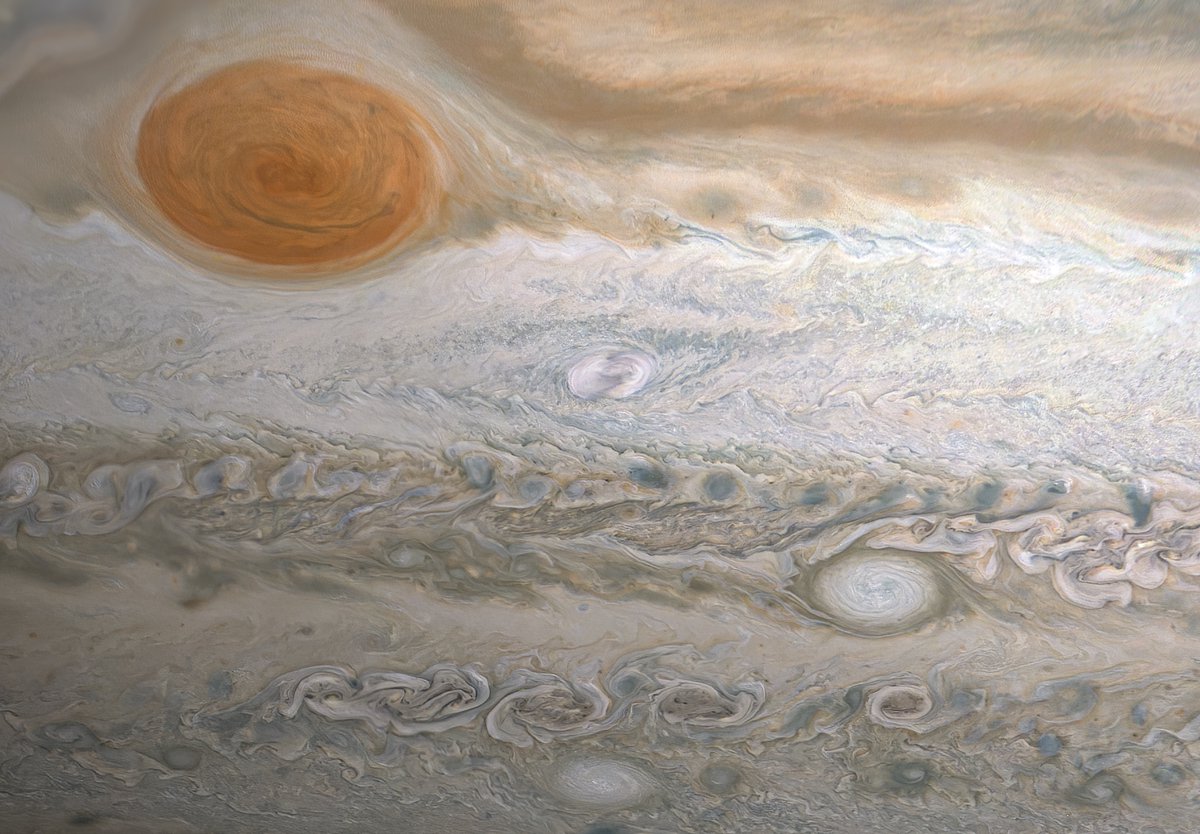
Amateur astronomer Clyde Foster spied a new feature in Jupiter’s clouds…I captured a detailed look at “Clyde’s Spot” when I zoomed by just two days later. #CitizenScience for the win. See more: missionjuno.swri.edu/junocam… JunoCam image processing by Kevin M. Gill
25
214
896
21 May 2020
Racing stripes: Jupiter is huge, but makes a full rotation in just 10 hours. This creates powerful jet streams that divide its clouds into distinctive bands, as seen in this striking JunoCam image processed by citizen scientist David Marriott. Details: missionjuno.swri.edu/news/ju…
25
431
1,918
7 May 2020
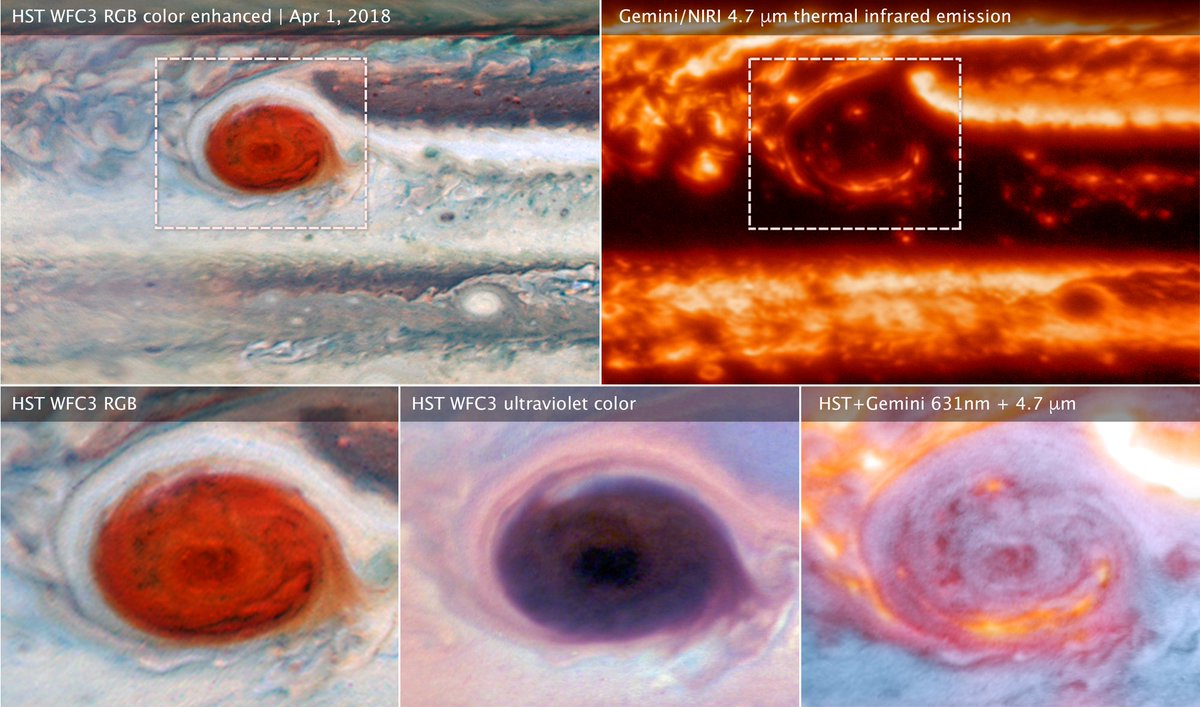
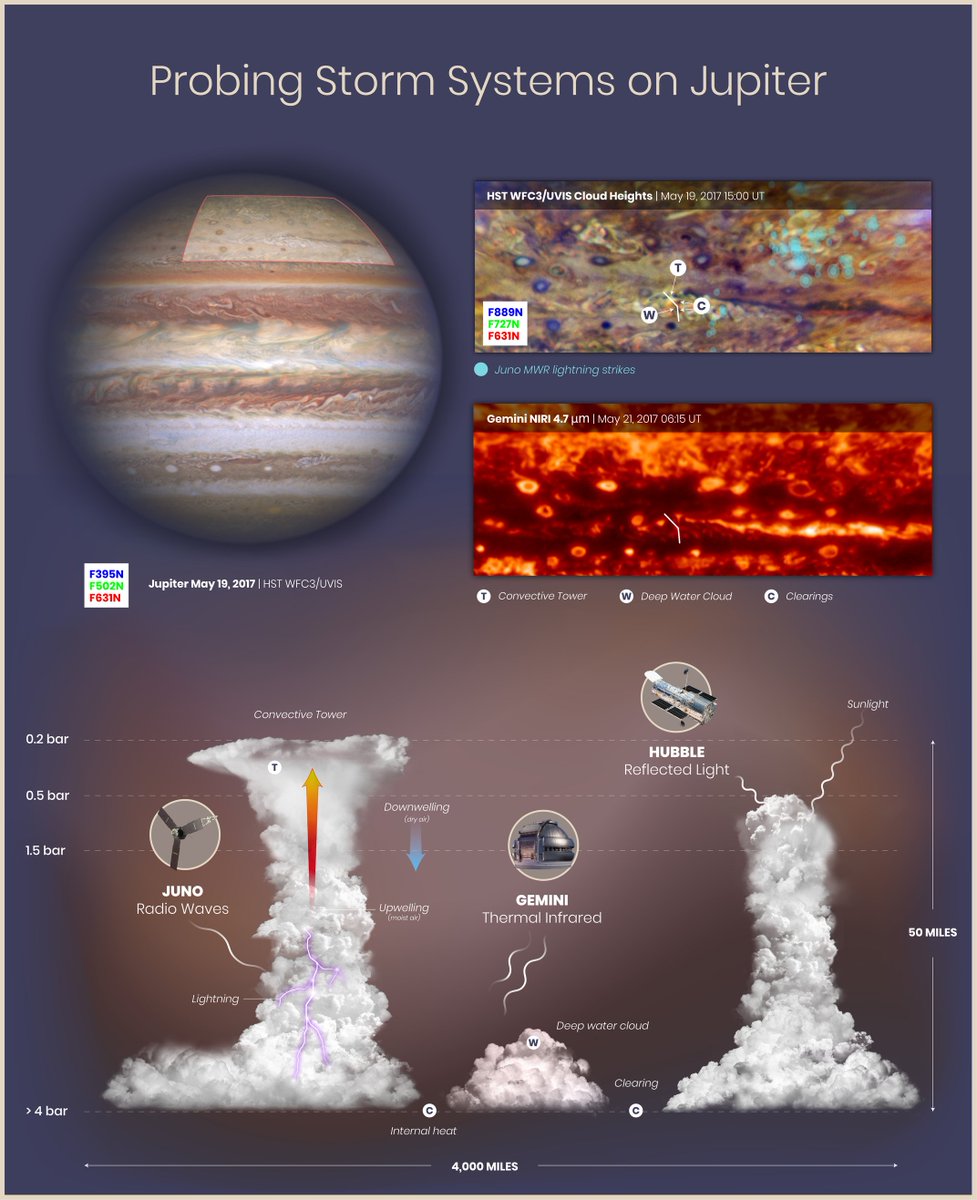
I’ve teamed up with @NASAHubble and the ground-based @GeminiObs observatory to probe the powerful storms on Jupiter, including the "radio light show" produced by lightning flashes up to three times more energetic than Earth's largest bolts. See more: go.nasa.gov/3bf0xXA
15
207
697
1 May 2020
A rose by any other name…🌹
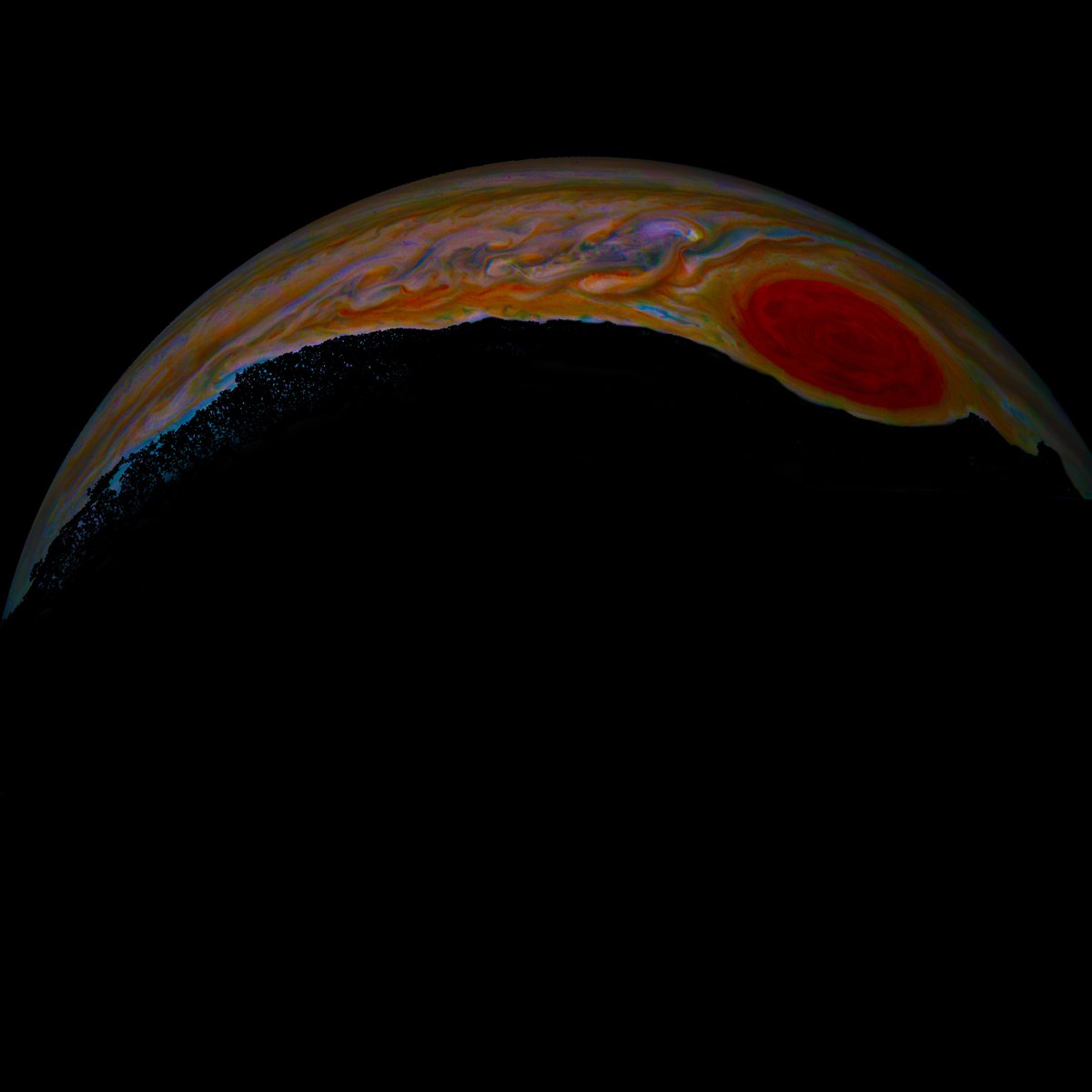
This JunoCam image processed by Mary J. Murphy offers an especially colorful take on Jupiter’s Great Red Spot.
Details: missionjuno.swri.edu/news/ju…
9
174
834
22 Apr 2020
Also remembering the messages you sent that day, before I made my long journey to Jupiter.
13
112
472
22 Apr 2020
Remembering on this #EarthDay the last time I flew by our home planet, and how unique and beautiful it looks from afar. #EarthDayAtHome
5
41
201
16 Apr 2020
What I saw on my last close pass by Jupiter on April 10: the complex topography of the planet’s cloud tops. Details at: missionjuno.swri.edu/news/ch…
📸 Image processed by Kevin M. Gill
29
417
1,615
10 Apr 2020
Happening now: I’m passing low over the cloud tops of Jupiter, as simulated here by the @nasa_eyes visualization. Current speed relative to Jupiter: 128,000 mph (206,000 kilometers per hour) and rising. Get the latest mission news at missionjuno.swri.edu.
10
144
730
8 Apr 2020
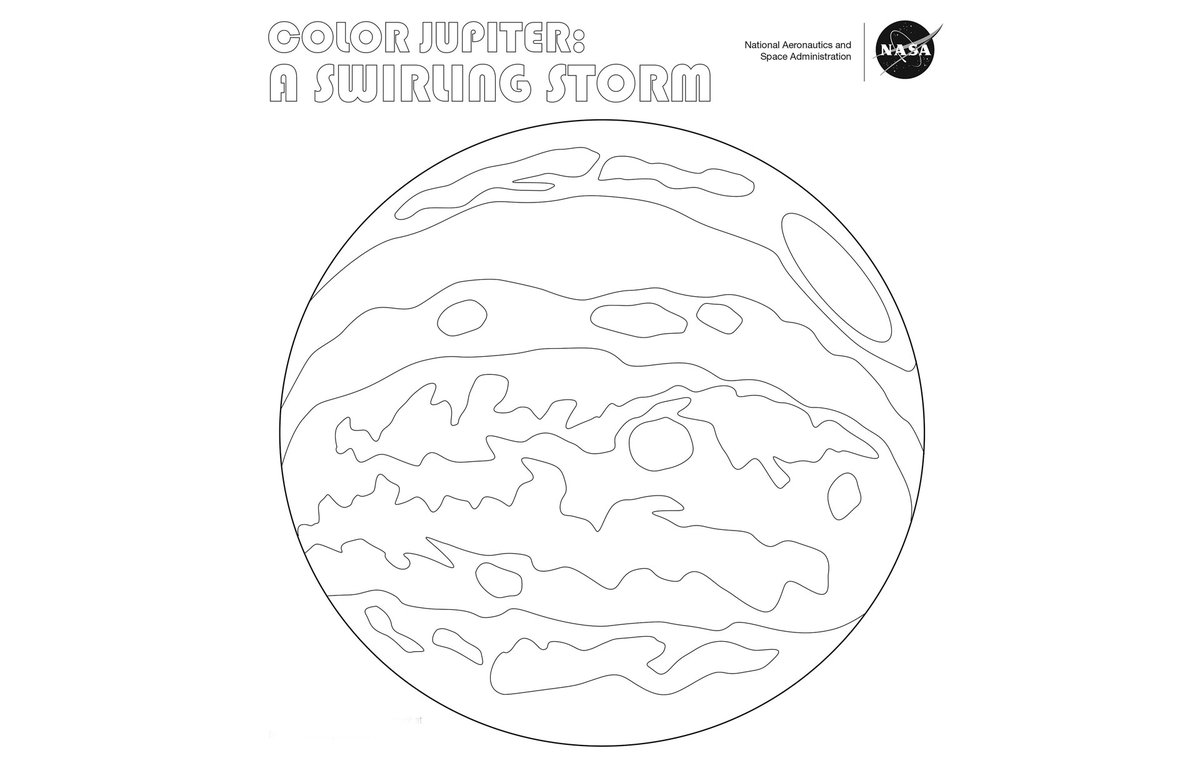
Bring your colossal creativity to giant Jupiter! Download these new, free coloring pages inspired by JunoCam images: missionjuno.swri.edu/news/br…
Be sure to tag us and use #ColorWithNASA so we see your creations.
📸 processed by Kevin M. Gill
3
131
545