
Joined April 2009
- Tweets 971
- Following 246
- Followers 8,085
- Likes 18,200
67 Photos and videos

Pinned Tweet

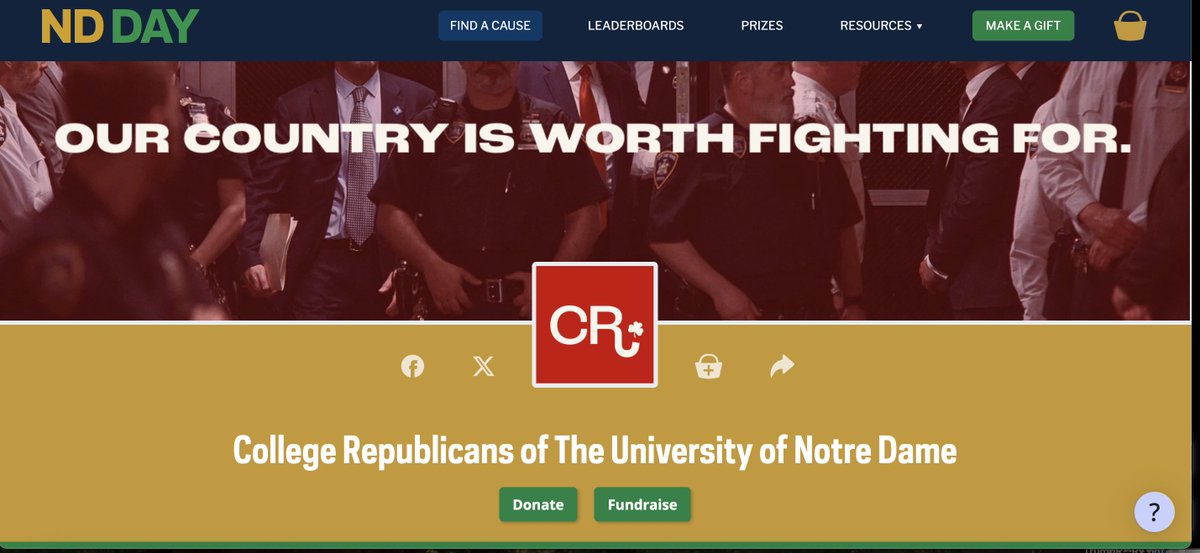
If you support the work of the ND College Republicans, please consider making a donation for Notre Dame Day! The link is attached in the following tweet
1
6
28
10,519
Correct. Musk has created literally thousands of novel technologies that actively improve my life. SNAP recipients have built nothing, while taking billions in taxpayer dollars.
Jun 13

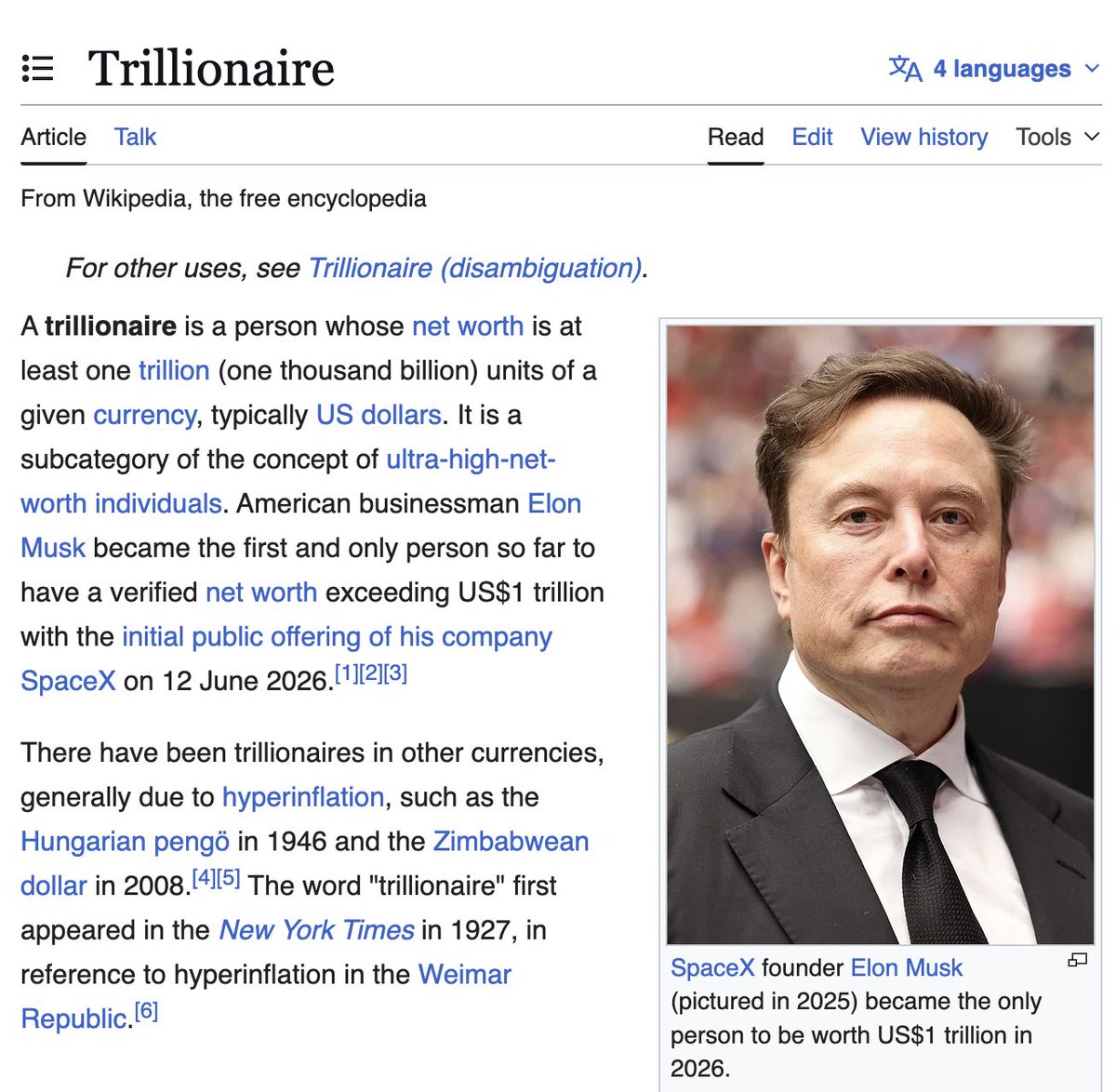
Elon Musk is a trillionaire but it’s def the people on SNAP ruining your life
19
83
1,801
23,595
Notre Dame College Republicans retweeted

Jun 12
I am filled with optimism at the fact that the world's first trillionaire was made not by hedge funds or market manipulation, but by building the infrastructure to take America to the stars.

693
2,558
36,915
1,111,036
But think of the jobs and growth that could've been created if we placed a wealth tax on SpaceX and redistributed this to Somali day cares, boomer entitlements, or EBT!
Jun 12

The right wants more trillionaires because naturally that means more billionaires, millionaires, and the uplifting of thousands of people.
The left wants less trillionaires because they want everyone poor and subservient to government programs.
Understand this as you see the crying about SpaceX
1
12
524
Notre Dame College Republicans retweeted

Jun 12
He's not just celebrating immigration, but specifically people who bypass the immigration system and invade Europe by boat.
He's glorifying an industry run by human traffickers, men putting their families' lives at risk for gibs, and NGO's dedicated to European erasure. Vile.
Jun 11

At a meeting with migrants and the organisations that rescue and accompany them in Gran Canaria, Pope Leo urged the world not to grow indifferent to their suffering and called for legal and safe migration pathways, denounced human trafficking and exploitation, and insisted that “human dignity has no passport and does not lose its value when crossing a border.”
124
425
3,313
84,130
When the state repeatedly refuses to act to protect its people, vigilante justice becomes inevitable. These scenes are the fault of no one but the failed UK political class.
6
27
141
3,043
35 years with the possibility of parole is not justice. Anthony should receive the death penalty.
Jun 10

A Collin County jury has sentenced Karmelo Anthony to 35 years in prison for the murder of Austin Metcalf
6
2
39
1,499
The rush to determine the migrant's exact nationality is somewhat pointless. Whether from Somalia, Sudan, or anywhere else, this savage's country of origin ultimately does not matter. Even if he were born in Belfast, he would never belong in the UK or in Europe.
British voters should have listened to Enoch Powell. With every decade, the Rivers of Blood speech has only been vindicated. Remigration cannot come soon enough.
Jun 9

🚨 BREAKING: Police say the suspect in the Belfast attempted beheading is Sudanese, not Somalian as initially believed

4
7
90
3,871
I’ve seen enough. Keiko Fujimori (FP) has been elected president of Peru, defeating far left communist Roberto Sanchez. The Fujimori family returns to power in Peru for the first time since 2000, and another Latin American country elects a far-right, pro-U.S. government. One step closer to the domination of the hemisphere.
Jun 9

🇵🇪 Peru - Vote Abroad (17% in)
Fujimori: 36.494 (65.2%)
Sánchez: 19.450 (34.8%)
——
Total votes (95.6% in)
Sánchez: 8,897,961 (50.081%)
Fujimori: 8,869,143 (49.919%)
Margin: Sánchez 28,108
——
@Polymarket odds
Fujimori (FP, right): 94% (new high)
Sánchez (JPP, left): 6%

15
20
316
22,675
Coming absolutely down to the wire in Peru. The abroad vote should help Fujimori overcome the massive fraud in the rural areas, but it's still unclear whether or not this will be enough. The CIA must stand ready to remove Sánchez ASAP.

Peruvian presidential election results
Fujimori 50.2% (right-wing)
Sanchez 49.8% (left-wing)
92.4% reported

3
1
57
4,337
This is fraud. The CIA must immediately be on standby to intervene against this Marxist-Leninist threat in our hemisphere.
Jun 8

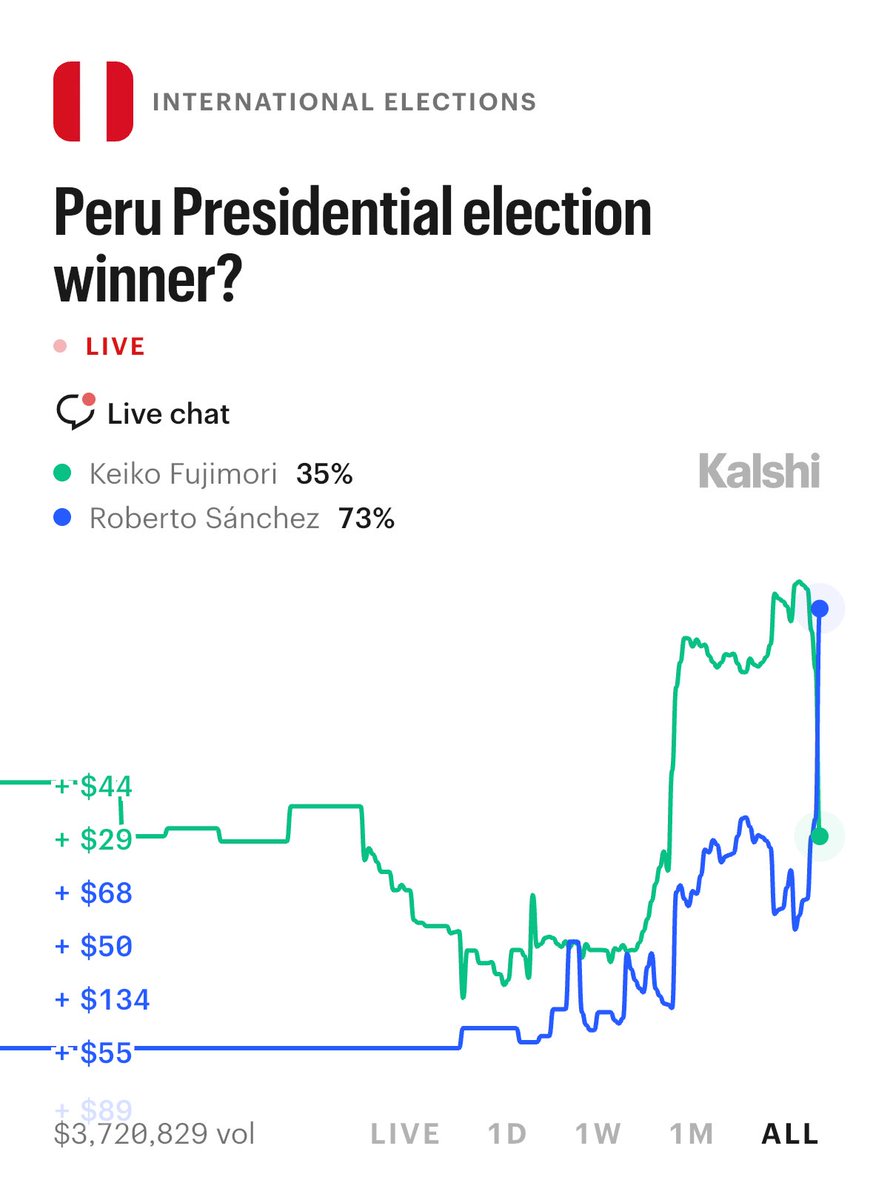
Keiko Fujimori odds of winning the Peru presidential election collapse
1 Hour Ago: 🟢 78%
Now: 🔴 35%

8
6
245
20,341
We need to wait for the Conteo Rápido but so far a very promising exit poll in Peru.
Peruvian presidential election exit poll from Ipsos
Keiko Fujimori: 50.7% (right-wing)
Roberto Sánchez: 49.3% (left-wing)

1
13
2,592
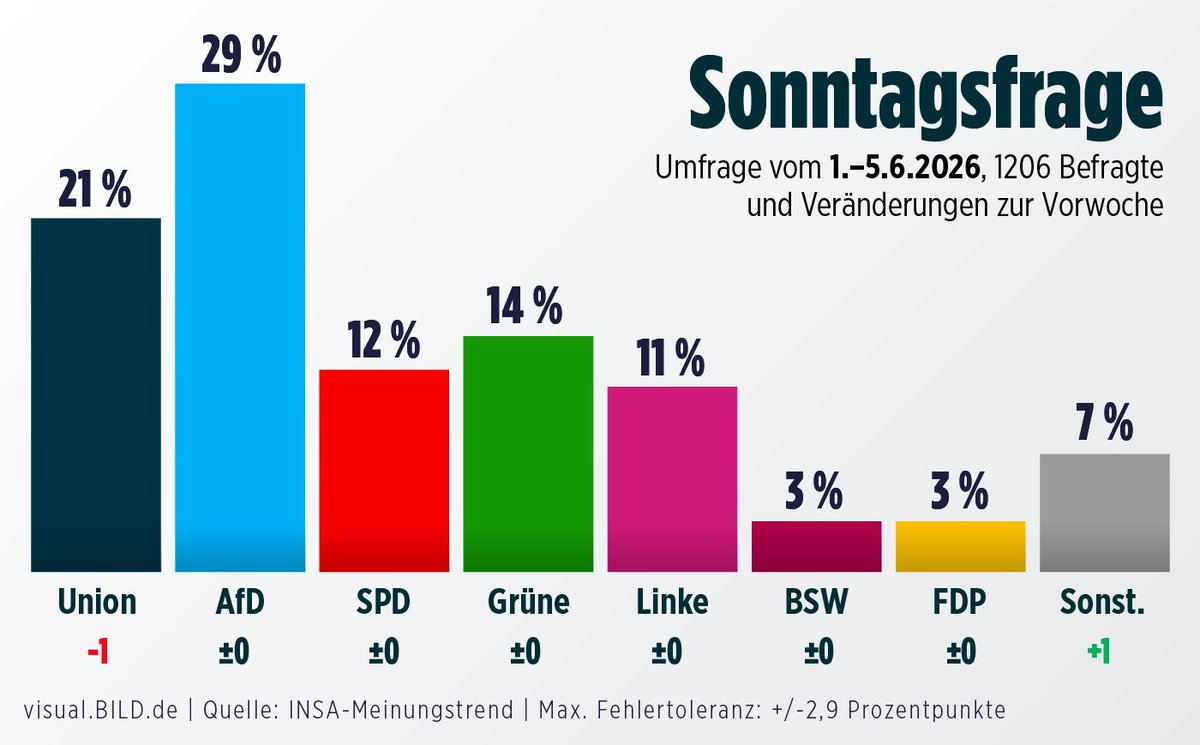
AfD to 29% in Germany
Bardella up nearly 20 points in France.
Restore and Reform crushing Labour in the UK.
After the murder of Henry Nowak, remigration is inevitable.
Jun 6

77% der Bürger sind unzufrieden mit Merz' Kanzlerschaft, nur noch 21% würden CDU wählen. Wir sind bereit für einen Neustart für Deutschland.
2
3
28
1,617
The praise of Russia by the Slopulist Right in recent years is not just concerning but deeply cringe. Between Tucker pretending (?) not to understand purchasing power in a Russian supermarket and Candace appearing to celebrate the Russian seizure of an American-owned company, it is hard to avoid the conclusion that something strange is going on. None of this proves that these figures are Russian assets, but it certainly does not help their case.
Many will object that this is simply a revival of the Russia Collusion Hoax, but it is not. The fact that Russiagate was made up of largely baseless garbage does not mean Russia has no interest in influencing American politics. Great powers routinely use intelligence agencies, money, media, and other proxies to shape opinion abroad. Even middle powers with outsized wealth, like Qatar, have demonstrated a remarkable ability to cultivate influence among American politicians, academics, and commentators.
Russia is not our friend. Even if Russia were "based and trad"— which it most certainly is not— American right-wingers must completely reject foreign influence and put America first.
Jun 6

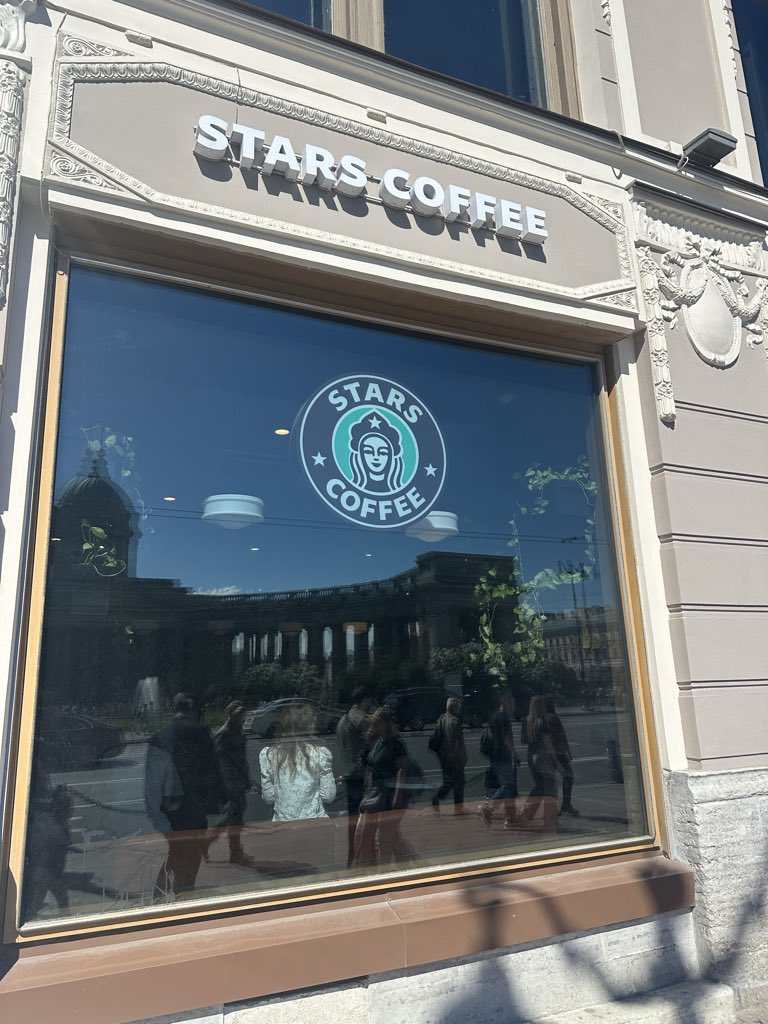
We told Russia they couldn’t have Starbucks and they really said, “okay—now we own it, and we call it “Stars coffee”.
Same great taste, no American demands met. 😂
They did this for virtually every brand that got sanctioned btw. Just made it their own.
11
6
68
4,320
The deliberate mischaracterization of this post is genuinely incredible. The point here is that if Christians want to have any hope of carrying out justice and defending their own belief system, then it is important that they cultivate traits such as strength, agency, etc, not that these are ends in of themselves or replace being need of God’s ultimate grace.
Christians wonder why they’re quickly losing any power to actually enforce their moral precepts and then tell you with a straight face it’s virtuous to be as weak, helpless, and unaccomplished as possible. Just total self-immolation disguised as sanctimony.

It is a little strange how many Christians respond significantly more viciously to those who choose to abort a down syndrome child as compared to a normal one. Obviously neither is justified but one can understand why the former situation is more difficult for the parents.
Nietzsche was absolutely correct when he pointed out that many modern Christians have turned the real obligation to care for the sick, poor, disabled, etc, into a quasi-veneration or idealization of those traits. But in reality there’s no virtue in weakness or helplessness. The real Christian path is to strive to maximize one’s human potential, cultivating strength, vitality, agency etc, while still acting justly to protect the weak and the vulnerable. Neopagans and atheists calling to abort down syndrome children neglect the latter, while many modern Christians, in their bizarre virtue signalings about the joys of a genetic disorder, reject the former.
8
2
24
3,033
PERU — GET OUT AND VOTE FUJIMORI TODAY!

Few politicians carry quite as much baggage as Keiko Fujimori.
Yet polls give the right-wing former congresswoman and party boss a strong chance, on her fourth attempt, of winning the presidency of Peru in its runoff election Sunday. wapo.st/3S84IPU
1
1
9
1,493
Notre Dame College Republicans retweeted

Jun 6
My sister was born with profound disabilities, a lot more severe than Down’s. She was non-verbal all her life. I don’t think she could even recognize our mother when she walked into a room.
Growing up around the special ed system, I was taught the standard line on children with disabilities: we should cherish their special qualities, the purity of their happiness and the innocence of their love. There is nothing wrong with them, they’re just different.
I repeated this line for years, but eventually I started to wonder if I believed any of it.
When my sister died at age 26, I figured it was time to look back over her life in full. Did she make anyone’s life better? To be blunt, I could not think of any way that she did. How could she, when she didn’t have the capacity to act in any meaningful sense.
On the other side of the ledger, she made a lot of people’s lives worse. Another member of our family was in and out of institutions for years later in life, and part of me thinks the strain of caring for my sister was too much for this person and drove them mad.
Of course people loved my sister. My parents did. But people can project love onto lots of things, the way pet owners project love onto their cats or a stalker projects love onto a celebrity. If the object of your love doesn’t know you exist and never will, is it even real? Try to answer honestly even though it’s a difficult thing to ask about a member of your own family.
I’m not trying to make a case for selective abortion. Once a life exists, we have duties toward it that can’t be shrugged off for utilitarian reasons. I just wanted to counterbalance the rosy picture being put out there.
My sister was an extreme case. Other disabled people can talk, recognize faces, and form relationships, which I assume makes things different for their families.
My only message is: It’s hard. It’s really hard. The best thing my sister did in her life was give the people around her the opportunity to show their best selves. But the reason she was able to do that was because it’s really hard.

I think that part of the reason why Christian messaging related to this subject is falling on deaf ears is that they don’t realize what they’re asking for and who they’re asking it of.
However sanctifying and fulfilling the life of a parent raising a mentally disabled child is, it requires radical self-denial and sacrifice. How can we expect to ask twenty-first-century man—who’s been taught nothing but self-fulfillment since the day he was born—to dedicate his life to self-sacrificial love without the cultural and moral education that such a decision requires?
Modern man has no conceptual framework for making a gift of himself. Today’s rewards are for those who can take all they can. Why would you empty yourself out?
It’s a radical ask. Christians make the mistake of assuming it’s common sense. For Christian morality to make sense and for people to act in accordance with it, you need either for everyone to be saints or for there to be massive social and legal incentives for making the right choice and harsh disincentives for failing to do so. Anything else is useless signaling.
201
353
6,198
708,816
It is a little strange how many Christians respond significantly more viciously to those who choose to abort a down syndrome child as compared to a normal one. Obviously neither is justified but one can understand why the former situation is more difficult for the parents.
Nietzsche was absolutely correct when he pointed out that many modern Christians have turned the real obligation to care for the sick, poor, disabled, etc, into a quasi-veneration or idealization of those traits. But in reality there’s no virtue in weakness or helplessness. The real Christian path is to strive to maximize one’s human potential, cultivating strength, vitality, agency etc, while still acting justly to protect the weak and the vulnerable. Neopagans and atheists calling to abort down syndrome children neglect the latter, while many modern Christians, in their bizarre virtue signalings about the joys of a genetic disorder, reject the former.
Jun 4

This is the most evil thing I’ve ever read on this platform. Bone chilling.
105
14
212
58,911