77 Photos and videos




Pinned Tweet

27 Dec 2022
Being a pharmacist
27 Dec 2022

what's something that's harder than it looks?
9
51
256
30,817
Nick Panos retweeted

9h
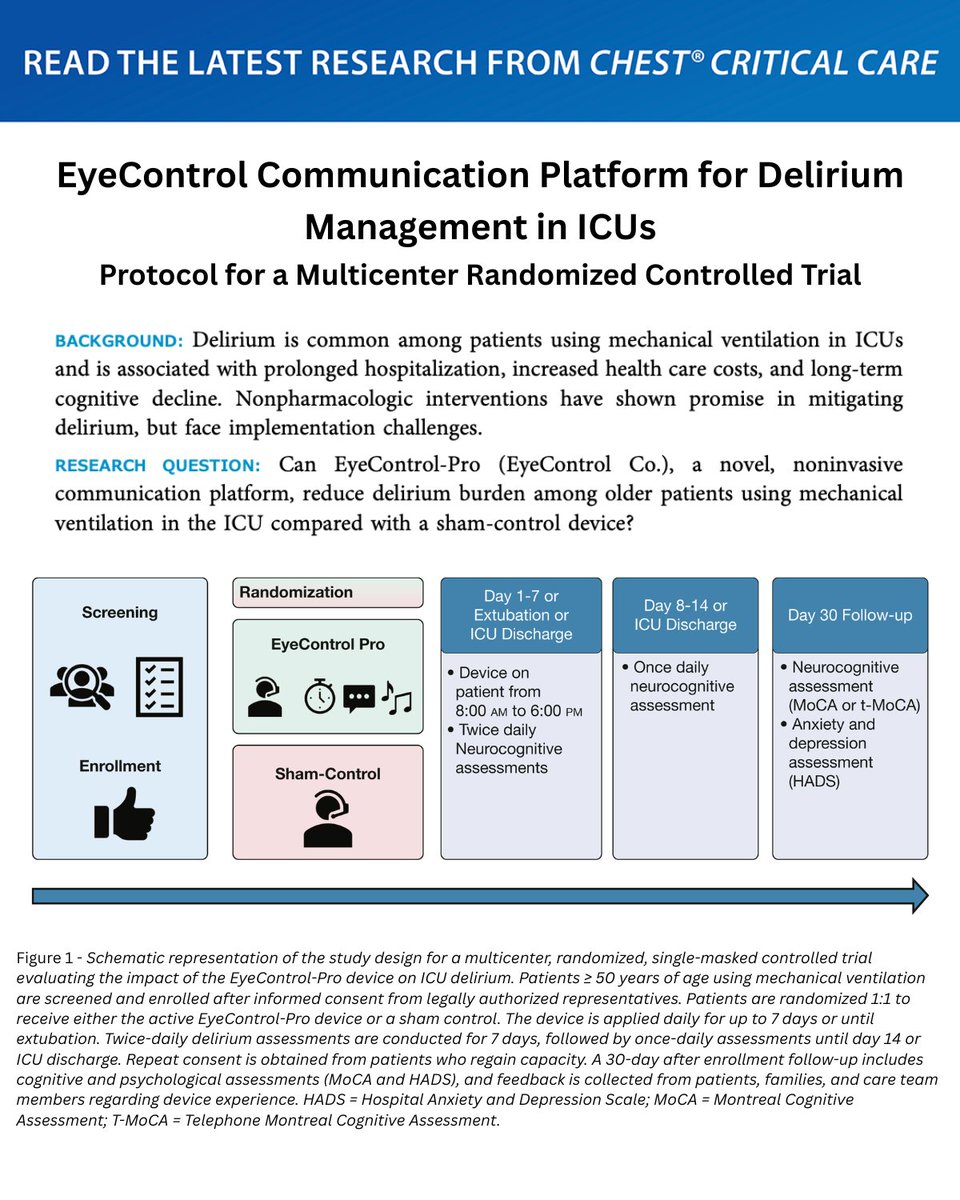
Original research finds that the implementation of a clinical decision support tool and education was associated with a shorter cumulative sedation gap in paralyzed critically ill patients during bedside procedures.
Read more in #journal_CHESTCritCare: hubs.la/Q04jMZFw0
#MedEd #JournalCHEST #CriticalCare #CritCare
1
2
301
Jun 9
Showing up and doing your job

I always wonder what “boring” skill actually gives people a massive edge in life without anyone noticing.
78
Jun 7
You forgot pharmacists, pharmacy techs, nurses, PCTs, respiratory therapists, social workers, physical therapists, and occupational therapists
Everyone who works in healthcare is underpaid
Jun 6

All doctors are underpaid.
102
Jun 5
This is hanging on my wall at work
Should it stay on or should I take it down? 🤔
2
117
May 24
I thought extortion was illegal?
May 24
Let me give you an example of where there is no gov intervention, and the impact on brand drug pricing.
When a brand manufacturer sells a drug to one of the big 3 drug distributors that control more than 90 pct of their market, those multi hundred billion dollar distributors DONT negotiate the lowest price they can get. They literally pay retail price.
Then, in exchange for paying promptly, and providing some data, they get a discount of a whopping 5 pct. For a $600 drug, their net cost is $570
For obvious reasons, that distributor can’t sell to your local pharmacy for less than $570.
So when you go to buy that drug, and have no insurance, or a deductible of more than $600, that’s why you pay the full $600.
The question is “why would multi hundred billion dollar distributors only negotiate a 5% discount on brand drugs?”
I asked this very question to several CEOs of brand drugs companies
First you have to know that the pharma companies don’t keep that full $570. Because they pay rebates and fees to the big insurance company PBMs , they end up netting about 50% , or $300 in this example
I asked them why they didn’t sell to the big distributors at a little more than their net price, which would allow them to make more money. And it would also allow the distributors to sell to pharmacies at say $350 (so the distributors make more money ), and the pharmacies could sell to the uninsured and those during their deductible phase for $375. Meaning more patients could benefit from their drugs.
This doesn’t mean every patient could afford their meds, but it means that more could. Saving $225 is not nothing.
The CEOs each told me that they would like to, but can’t. Why?
Because the ins company PBMs have told them that if they did this , they would reduce their position on their formularies. Which could cost them billions of dollars across all their drugs.
None of this is against the law.
It’s become standard industry practice.
Until we break up these conglomerates , it will only get worse.
1
174
May 9
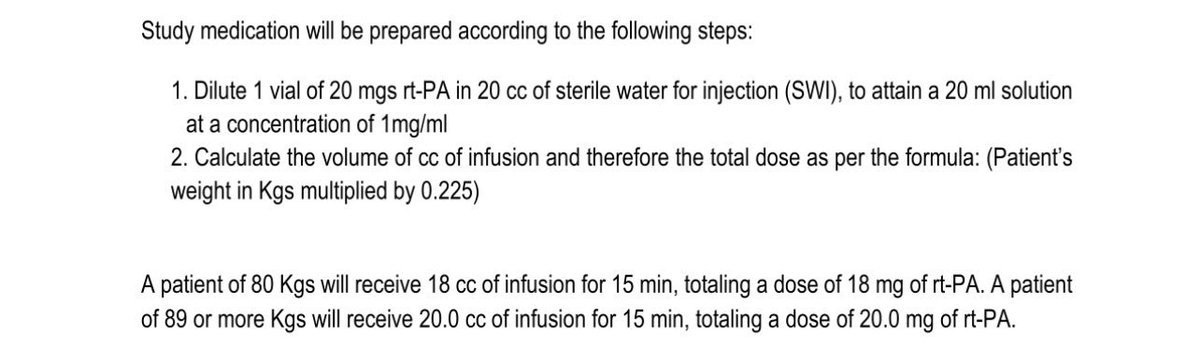
The study states a max IA dose of alteplase 20 mg/kg 🧐🤔🤨
My friends, that is a very high dose
In the trial protocol supplement, patients 89 kg or more received a maximum dose of IA alteplase 20 mg
May 7

Among patients with acute #ischemicstroke and successful endovascular thrombectomy, adjunctive intra-arterial #alteplase increased the proportion achieving excellent functional outcome at 90 days compared with thrombectomy alone. 🧵
ja.ma/4nfnK2t
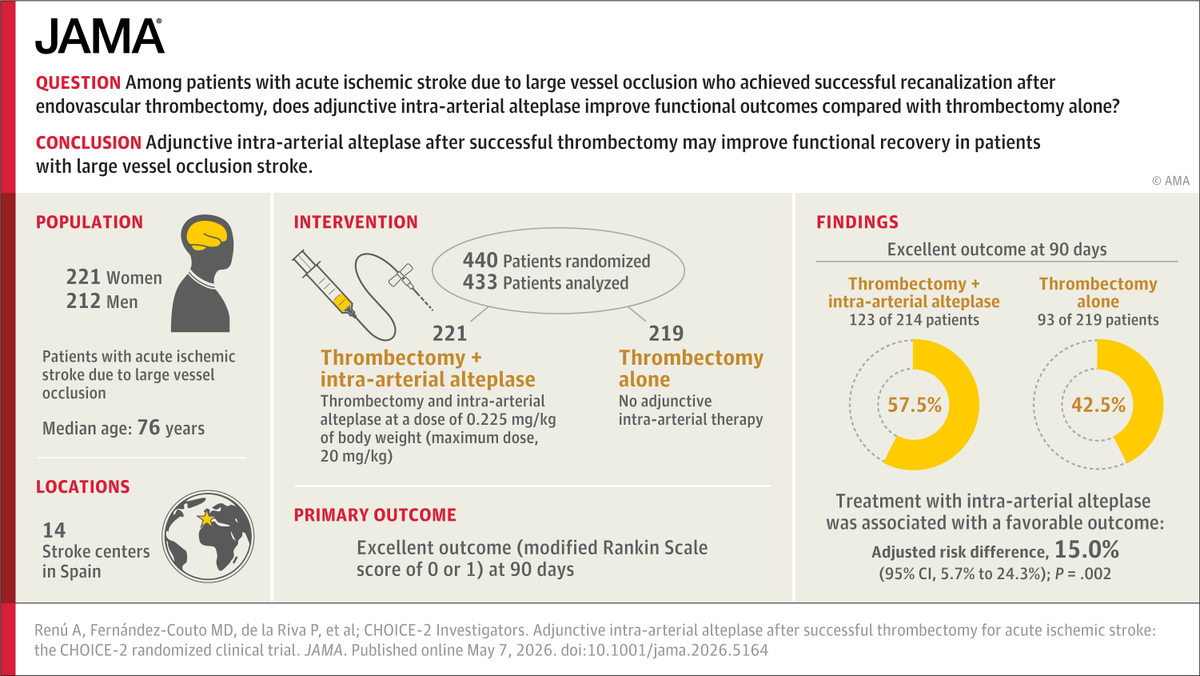
188
Nick Panos retweeted

It's always bothered me that medical research papers are static. A PDF, showing you what the authors thought were the important findings.
I think we're ready for a paradigm shift and I did a little proof of concept...
10
12
84
25,151
Nick Panos retweeted

Mar 24
Only following people who agree with you is a recipe for confirmation bias and groupthink.
Critical thinking depends on listening to people who question your assumptions and challenge your conclusions.
Learning is the product of engaging with a range of thoughtful views.
142
325
1,124
70,720
Mar 20
“if a pharmacist, pharmacy”
Mar 20

"If you would be a good reader, read; if a writer, write." -Epictetus
4
563
Mar 20
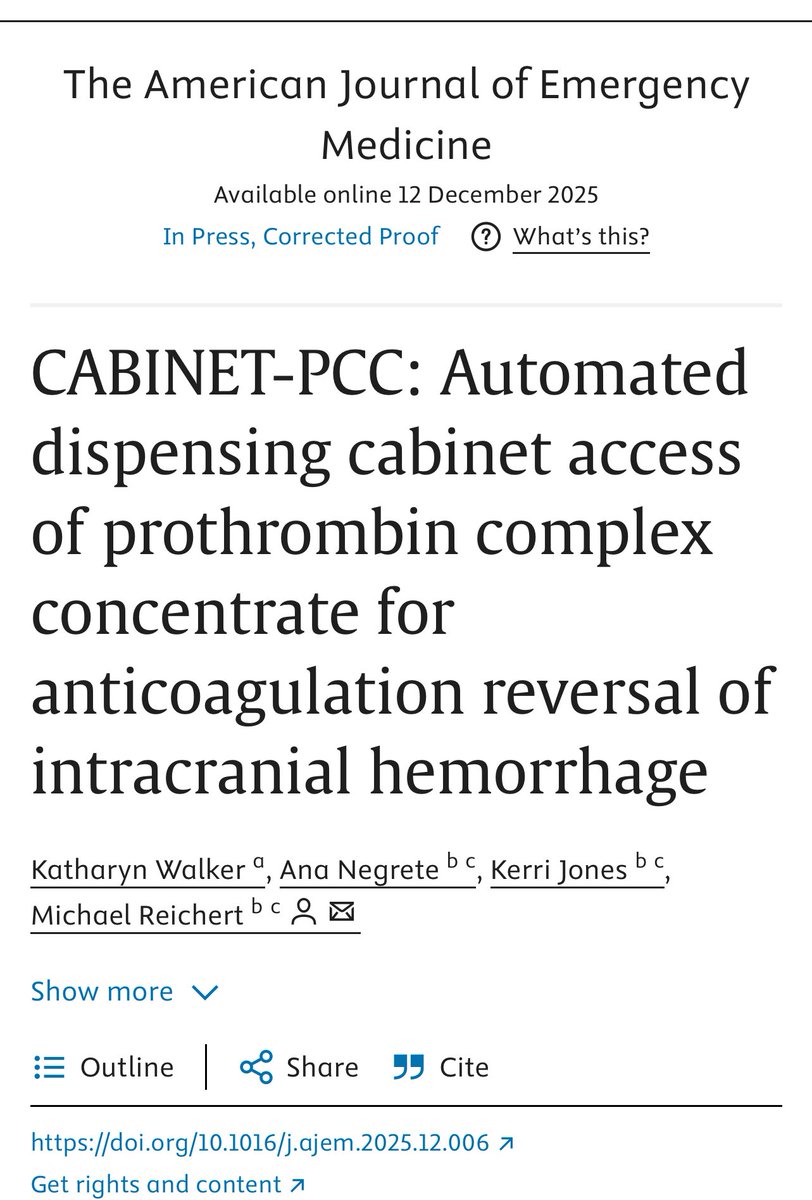
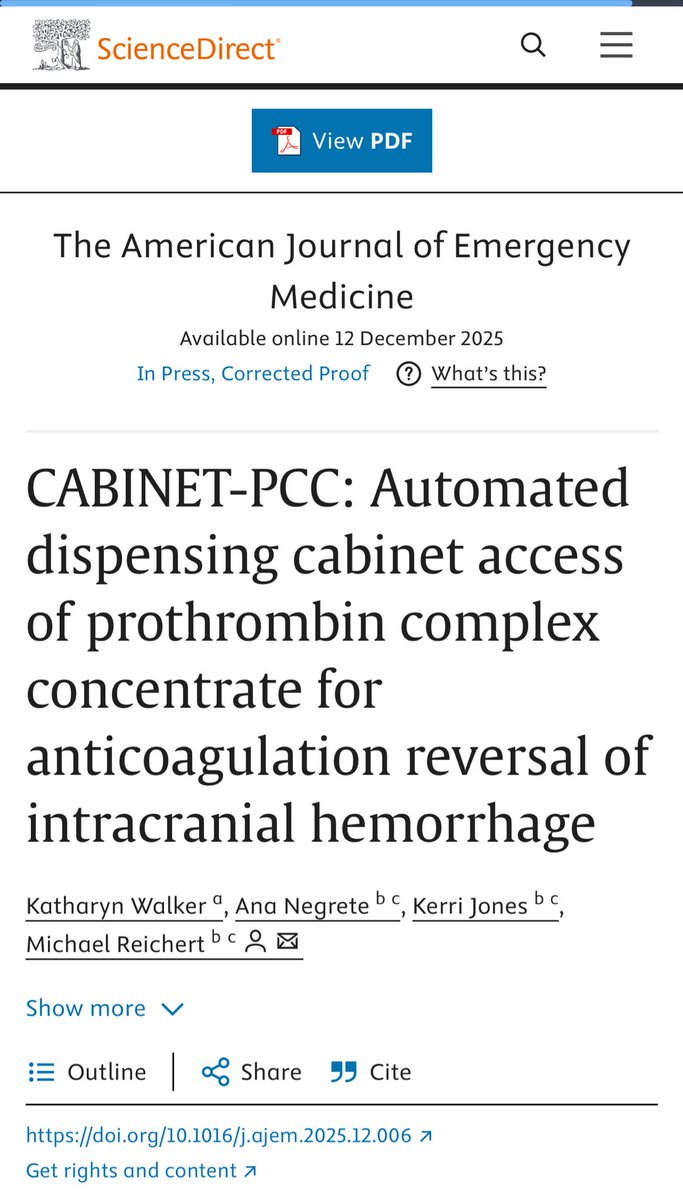
I’m sure pharmacists can help reduce times by about 30 minutes if PCCs were moved to dispensing cabinets in the ED
Mar 20

More evidence that door-to-needle times for emergency reversal of AC for ICH lag far behind DTN times for IV lytic therapy for AIS (median 49 vs 28 mins).
Lots of room for improvement. The #CodeICH train keeps rolling, and it can't be stoppoed.
Beating the clock: comparing the speed of AC reversal for ICH to thrombolysis for AIS
academic.oup.com/esj/article…
1
3
16
1,946

Most Americans are too busy for social media, too normal for politics, too rational to tweet. They work, raise kids, coach Little League — and never post a word about any of it.
This isn't a small minority. It's a monstrous, if silent, majority. axios.com/2026/03/11/america…
157
365
2,138
1,193,744
Nick Panos retweeted

Mar 10
#JournalWatch Tenecteplase in stroke mimics, safe or not? This single-center retrospective study of 250 pts found ICH in 11.5% of AIS vs 0% of mimics (p=0.0021). Symptomatic rates similar between groups. Reassuring data for rapid treatment decisions. doi: 10.1002/phar.70112
3
6
1,027
Nick Panos retweeted

Mar 5
The 5 Virtues of Good Leadership:
1. Courage
2. Temperance
3. Dignity
4. Humility
5. Wisdom
23
56
385
20,757
Feb 20
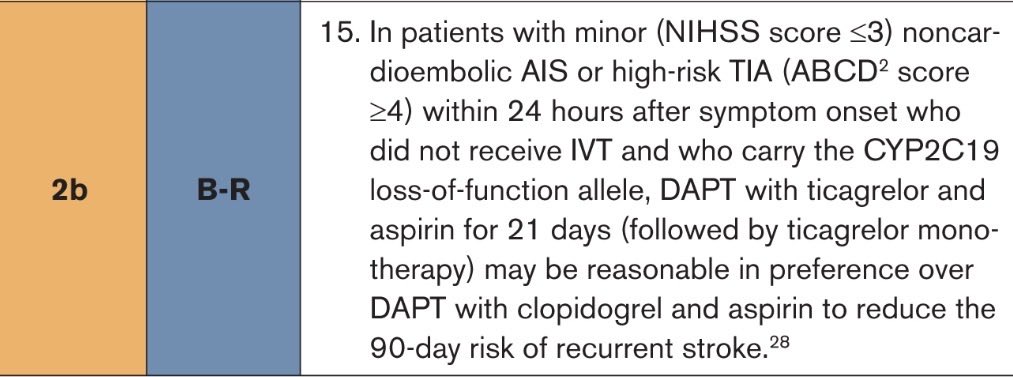
I’m starting to see more pharmacist involvement on major guideline updates. Happy to see this! ahajournals.org/doi/10.1161/…
1
2
11
673
Feb 20
We should be investing in ourselves
Feb 20

The math on this project should mass-humble every AI lab on the planet.
1 cubic millimeter. One-millionth of a human brain. Harvard and Google spent 10 years mapping it. The imaging alone took 326 days. They sliced the tissue into 5,000 wafers each 30 nanometers thick, ran them through a $6 million electron microscope, then needed Google’s ML models to stitch the 3D reconstruction because no human team could process the output.
The result: 57,000 cells, 150 million synapses, 230 millimeters of blood vessels, compressed into 1.4 petabytes of raw data. For context, 1.4 petabytes is roughly 1.4 million gigabytes. From a speck smaller than a grain of rice.
Now scale that. The full human brain is one million times larger. Mapping the whole thing at this resolution would produce approximately 1.4 zettabytes of data. That’s roughly equal to all the data generated on Earth in a single year. The storage alone would cost an estimated $50 billion and require a 140-acre data center, which would make it the largest on the planet.
And they found things textbooks don’t contain. One neuron had over 5,000 connection points. Some axons had coiled themselves into tight whorls for completely unknown reasons. Pairs of cell clusters grew in mirror images of each other. Jeff Lichtman, the Harvard lead, said there’s “a chasm between what we already know and what we need to know.”
This is why the next step isn’t a human brain. It’s a mouse hippocampus, 10 cubic millimeters, over the next five years. Because even a mouse brain is 1,000x larger than what they just mapped, and the full mouse connectome is the proof of concept before anyone attempts the human one.
We’re building AI systems that loosely mimic neural networks while still unable to fully read the wiring diagram of a single cubic millimeter of the thing we’re trying to imitate. The original is 1.4 petabytes per millionth of its volume. Every AI model on Earth fits in a fraction of that.
The brain runs on 20 watts and fits in your skull. The data center required to merely describe one-millionth of it would span 140 acres.
1
1
269
Nick Panos retweeted

Feb 20
Another one. These trials are becoming a waste of time.
24 Nov 2025

🧵 Albumin in Critical Care: 70 Years, 700 Papers… Zero Benefit
1/
Albumin is the most studied fluid in critical care.
Decades of trials. Endless meta-analyses.
And yet – not a single clinically meaningful benefit.
Here’s why the entire theory collapses once you understand Extended Starling. 👇
3
6
28
4,593

Albumin (A) replacement therapy in septic shock
In a multicenter RCT, 440 pts w septic shock were treated w A aiming to keep serum A >3.0 g/dL or w standard fluid therapy. 90-day mortality did not differ between the A group (43.3%) & controls (45.9%)
jamanetwork.com/journals/jam…
8
40
146
17,410
Nick Panos retweeted

Is med twitter/X officially cooked? I look at bluesky and other alternatives and don’t see the same community that it was here years ago despite more people online. Interesting few years
4
1
11
1,749