
Building for a more secure crypto ecosystem @nascentxyz
Joined September 2023
- Tweets 36
- Following 2
- Followers 704
- Likes 41
5 Photos and videos


Pinned Tweet

8 May 2024
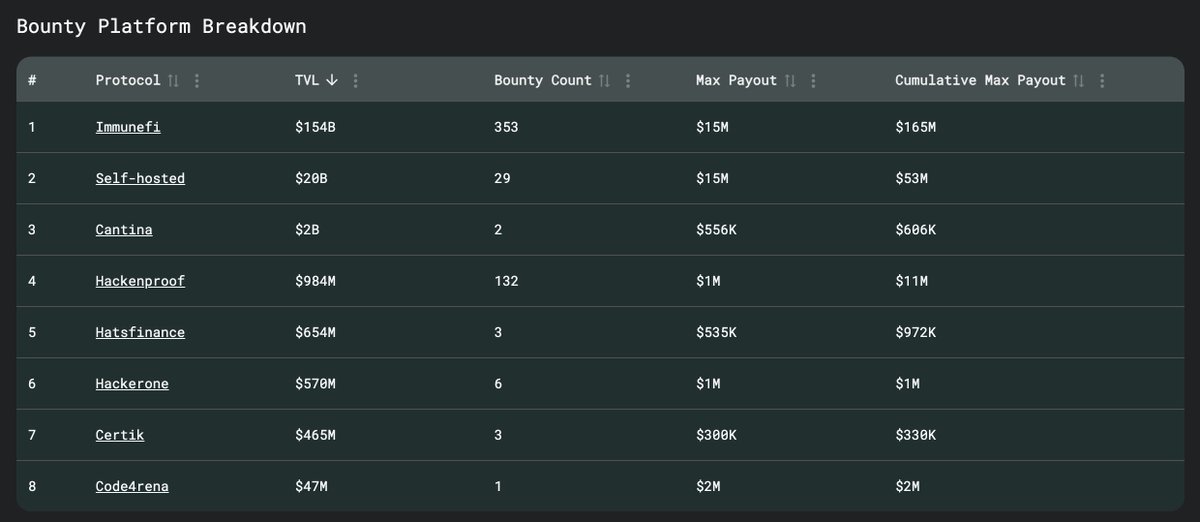
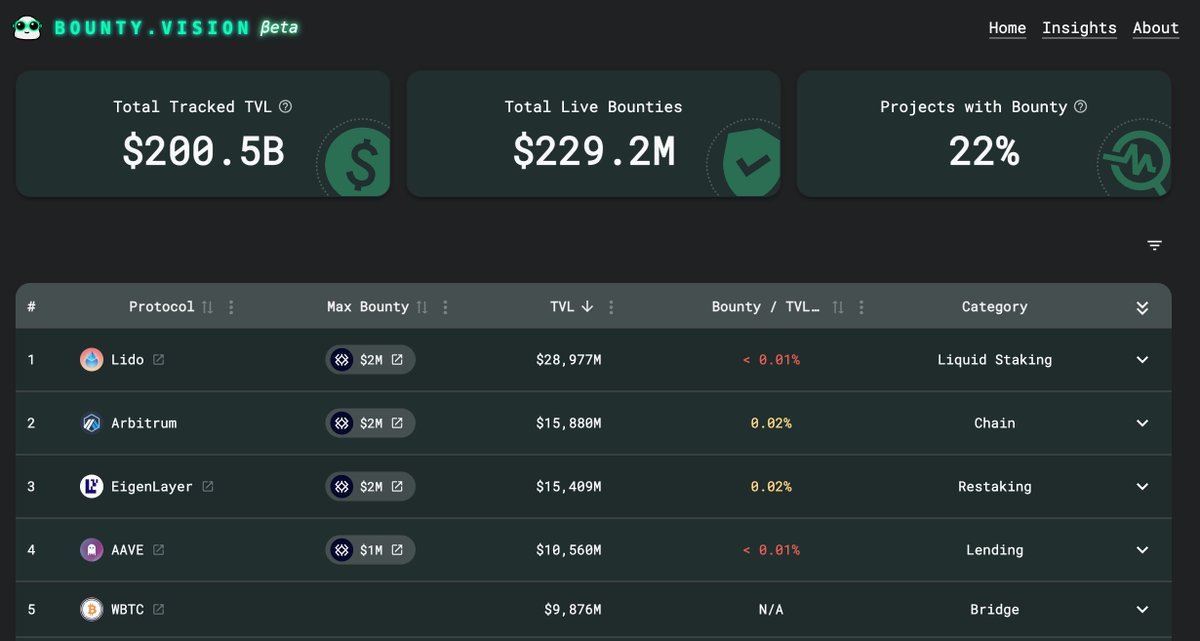
Today we're releasing @bountyvision
Here we aggregate bug bounty insights across platforms to:
1. Show the state of bug bounties across the ecosystem
2. Assess bounty sizes relative to funds at risk
3. Aid whitehats in finding bounty information (including in-scope assets)
5
21
88
14,601
Nascent Security retweeted

26 Nov 2024
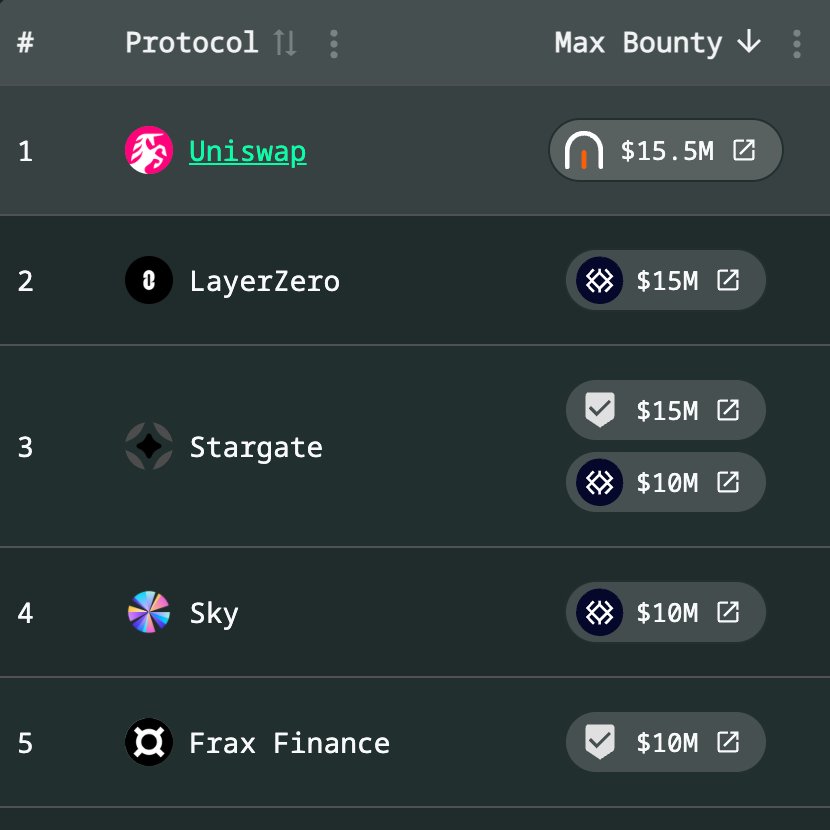
There's a new top bounty in town!
🫡 @Uniswap
26 Nov 2024

The biggest bug bounty in history is now live. @Uniswap just raised the standard of building in public 🪐
With $15.5M on the line, it's an unprecedented testament to the rigorous security of v4. Think you can find a critical bug? Give it a shot.
🔗 Bounty link below
2
2
41
3,072
Nascent Security retweeted

31 Oct 2024
Security is the #1 problem we need to solve for crypto and DeFi to reach their potential
That's why I couldn't be more proud to have @nascentxyz co-lead this round for @phylaxsystems
We have looked at a lot of security solutions, but here's why we believe this team is unique 🧵
31 Oct 2024

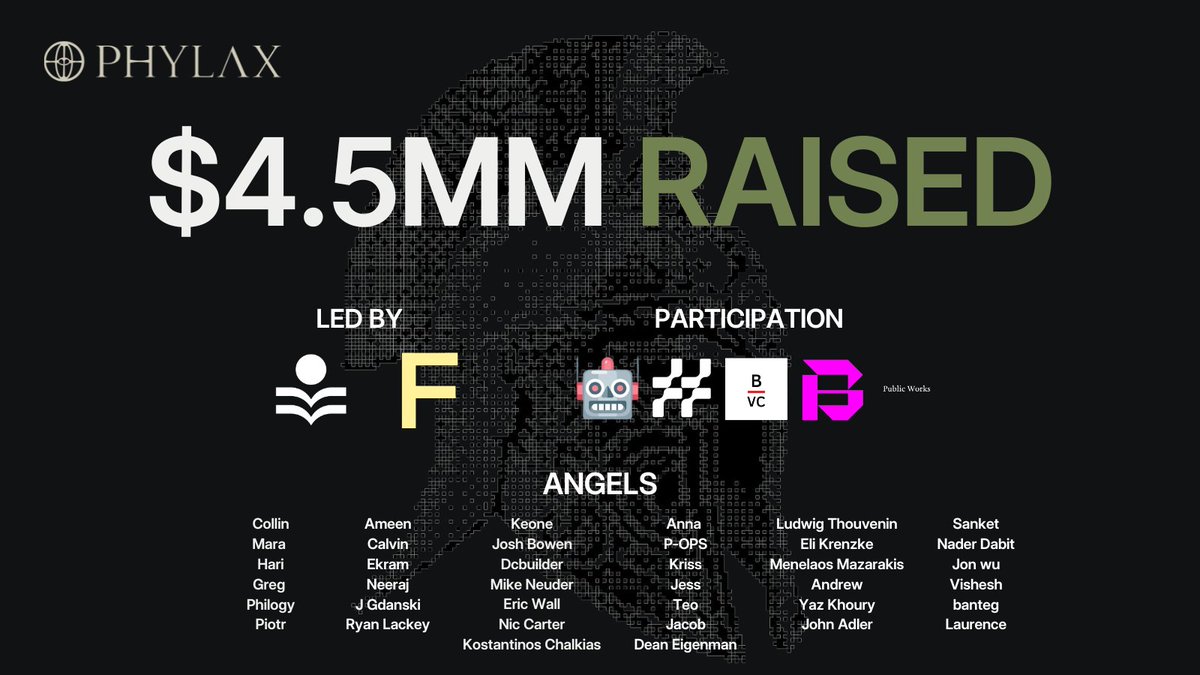
Today, we are announcing our $4.5m pre-seed, led by @FigmentCapital and @nascentxyz with support from @robotventures, @hash3xyz, @BanklessVC, @breed_vc, and @publicworksfm.
We will use these funds to develop The Credible Layer, a hack prevention protocol.
Here's the story (there are some twists and turns):
On August 1st, 2022, Nomad lost $190 million in one of crypto’s largest hacks—a turning point for @odysseas_eth, a protocol engineer at Nomad.
Conversations with users, founders, and engineers revealed a sobering truth:
Many can’t sleep for fear of being hacked; some have even left the space entirely. We’re not just losing the best builders and teams to hacks—we’re losing them to the fear of hacks.
Read the full announcement here: phylax.systems/blog/phylax-s…
It should be obvious at this point, that one of the primary hurdles to adoption en masse is the BILLIONS of dollars of hacks that occur every year.
Current solutions, like fuzzing, next block mitigation, and frontrunning protection, are valuable but by no means a silver bullet. They patch the problem—they don’t solve it. We need security that can’t be bypassed and is verifiable.
This is what Phylax Systems is on a war path to deliver.
We’re building the Credible Layer, a proactive security layer that allows dApps to define hack-prevention rules and communicate them to the block builder, specifying states they want to prevent. The assertion enforcer checks each transaction against these rules, stopping hacks before they happen.
It is non-invasive and is functionally a coordination mechanism between dApps and the base layer, keeping dApps sovereign and secure.
The Credible Layer is also fully transparent—anyone can view a dApp’s security rules and verify their enforcement. dApps pay fees for this validation, ensuring their assets remain safeguarded.
Some may question the reliance on trusted entities to enforce these rules. However, this model builds on the trust assumptions that already underpin much of blockchain infrastructure; for example, a small number of entities currently support over 90% of Ethereum’s block production.
We’re not advocating for increased centralization but rather creating new security mechanisms on top of existing, industry-tested trust structures.
Regulators have scrutinized our industry due to high-profile hacks, and while their intentions may not always be entirely impartial and fair, this particular concern is valid. The recent $53MM Radiant hack underscores just how far we still have to go.
It’s up to us to prove that security isn’t an afterthought but a core component of every crypto project. As an industry, we must prioritize security in our designs, our products, and how we position ourselves to users—it can no longer be secondary.
As @nic_carter said:
“We’re long overdue for moving DeFi hack mitigation from reactive to proactive, and Phylax is leading the charge.”
We don't want to scar the mainstream as soon as we onboard them. We need security that makes them feel safe. We intend to make this a reality with the Credible Layer.
To get the full picture of the Credible Layer, read the Whitepaper (we just released it): github.com/phylaxsystems/cre…
And if you are interested in joining the waitlist for the Credible Layer please reach out here: phylax.systems/credible-laye…
7
4
43
7,293
Nascent Security retweeted
9 Sep 2024
🚨 "Recent Updates" is live! 🚨
We aggregate bounties across every platform and showcase those with the latest changes 🎯
Spot fresh code in bounties—prime targets for new bugs 🐛🔍
Stay up to date on Twitter and in our new Telegram channel 📢
t.me/bountyvision
1
5
89
1,461,426

The onchain game @kamigotchiworld has pulled me in like none before
It's both a fun game and an onchain way to prove your hacker skills
Here's how I've used my technological superiority to dominate 🧵👇

16
20
156
54,499
Nascent Security retweeted
27 Jun 2024
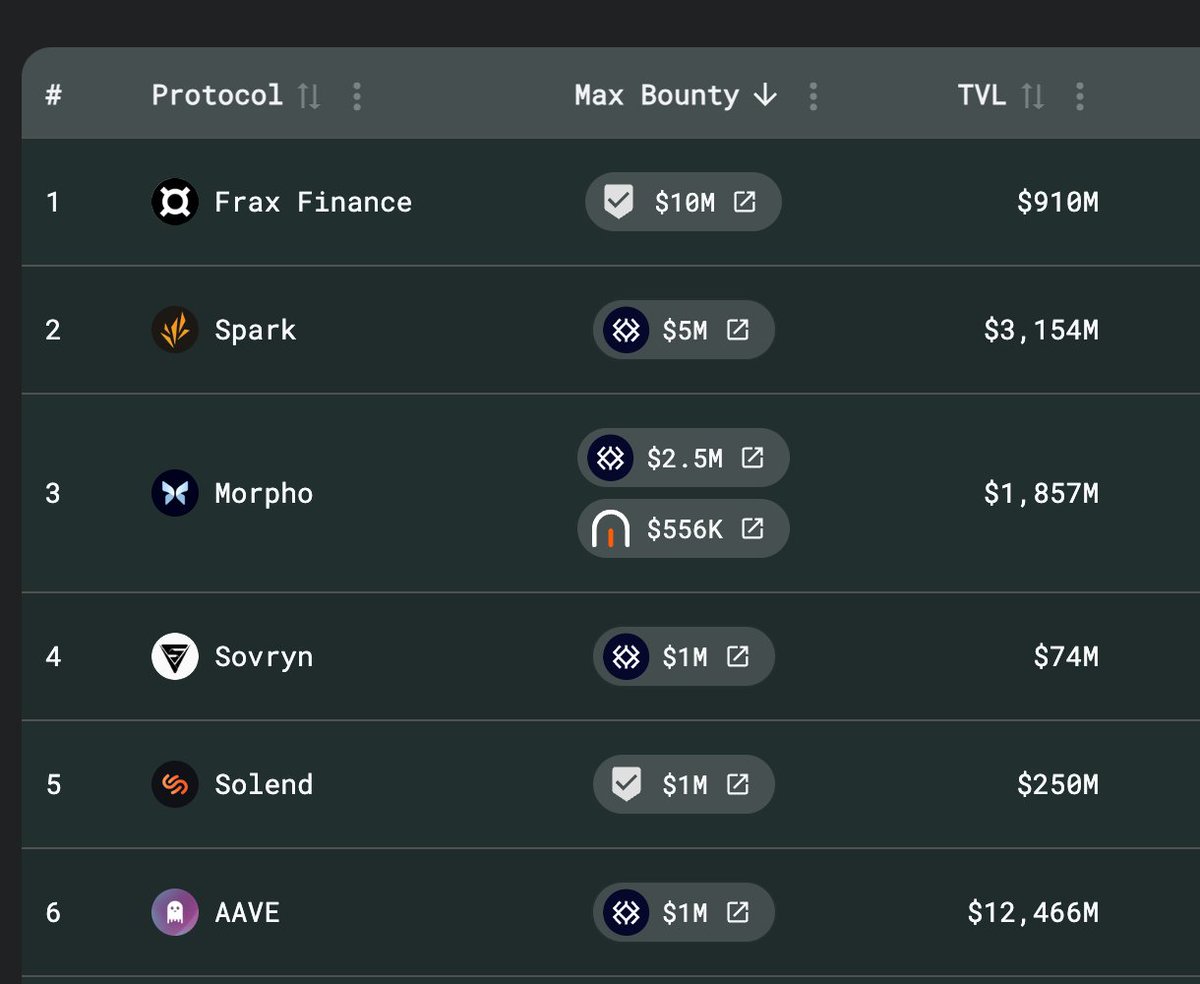
Morpho's massive new max bounty of $2.5M makes them leapfrog 3 other protocols in the lending space.
Here's the new lending leaderboard 🏆💵👀
1. @fraxfinance ($10M)
2. @sparkdotfi ($5M)
3. @MorphoLabs ($2.5M) ⬆️⬆️⬆️
4. (tied) @aave ($1M) ⬇️
4. (tied) @solendprotocol ($1M) ⬇️
4. (tied) @SovrynBTC ($1M) ⬇️
Find where you stack up at bounty.vision
1
3
9
2,473
Nascent Security retweeted
26 Jun 2024
When starting on a new bounty, one of the first thing to do is find which contracts hold funds.
Usually this requires opening every explorer page in the bounty and making a mental note of the high-value contracts.
We make it easy!

6
22
4,346
Nascent Security retweeted
26 Jun 2024
If you're in the market for a bug bounty aggregator that doesn't support shady platforms, check out bounty.vision - we have the good ones.
25 Jun 2024

The CertiK rabbithole seems to go deeper and deeper.
OpenBounty, a bug bounty platform "incubated" by Shentu (the new name of Certik Chain), appears to be attempting to front run bug bounty reports.
This is a direct violation of many large protocol's bug bounty terms (including one's that OpenBounty lists).
The more suspicious thing, is that their website makes requests to a domain with CertiK in the name when you report a bounty...
Does it seem safe to report a critical vulnerability to CertiK before notifying the protocol themselves...? Especially considering CertiK exploited Kraken last week.
If you find a bug, report it to the protocol directly. Not some shady website associated with CertiK. Who is to know if they're going to:
A) steal your bounty
B) exploit the protocol
Every day that passes I truly believe more and more that CertiK is a front for a North Korean black hat organization.


5
11
1,370
Nascent Security retweeted
22 May 2024
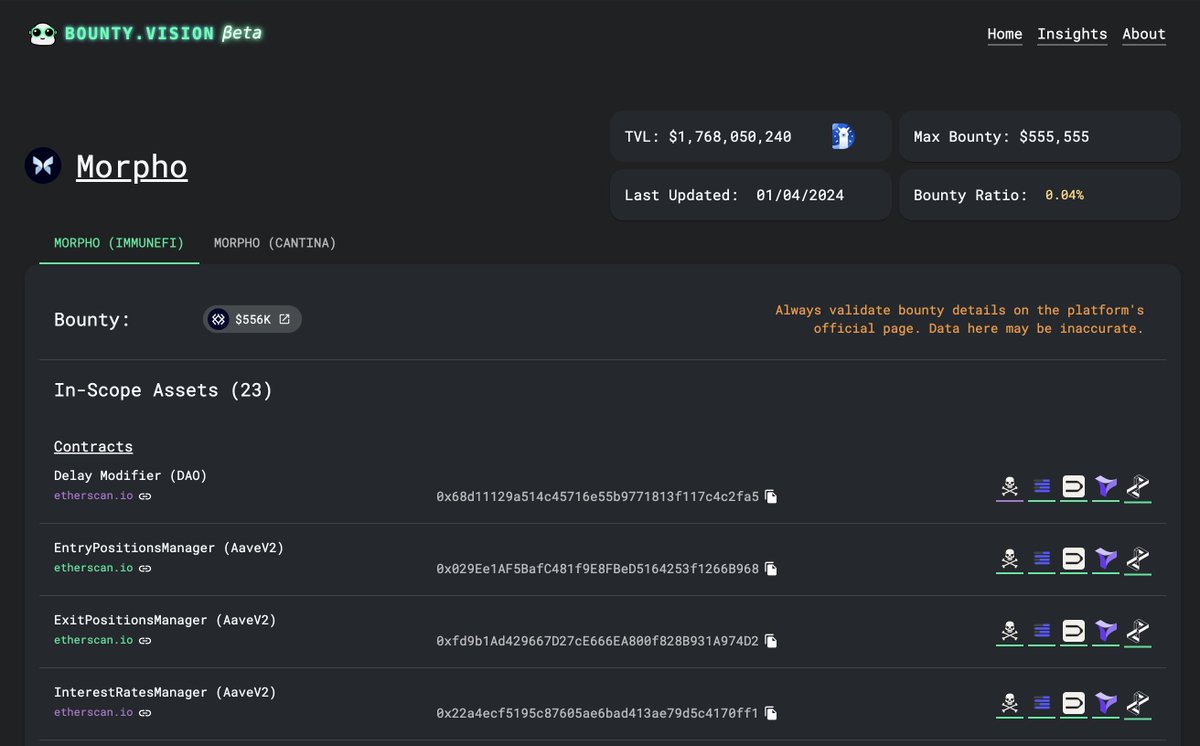
Protocol pages are live!
Our goal for BV is to be great at both:
1. Providing insights into the overall bug bounty landscape
2. Giving security researchers what they need to quickly find bugs in live contracts
Protocol pages will be our main hub for #2
3
2
8
2,538
Bounty-size / TVL tracks how a protocol incentivizes whitehats or blackhats
Bounty-size / LoC tracks the reward vs effort of digging
LoC in scope / Total LoC tracks if a bounty is bullshit or real
10 May 2024

A couple important metrics pop in my head:
1. bounty $s / bountied line of code
2. bountied lines of code / protocol lines of code
3. bounty $s / TVL
@BountyVision takes the first step to helping measure the quality of bug bounties via Bounty $s / TVL
2
9
2,244
Nascent Security retweeted

10 May 2024
With the release of bounty.vision from @NascentSecurity, something has popped into my head:
does "Bigger Number == Better Security"?
and I've come to the conclusion: a resounding NO*
*in isolation
let explore what makes a good bug bounty 👇
4
7
45
7,688
Nascent Security retweeted
8 May 2024
No one outside of North Korea is happy with the current state of DeFi security
Fortunately, there is something we can do about it:
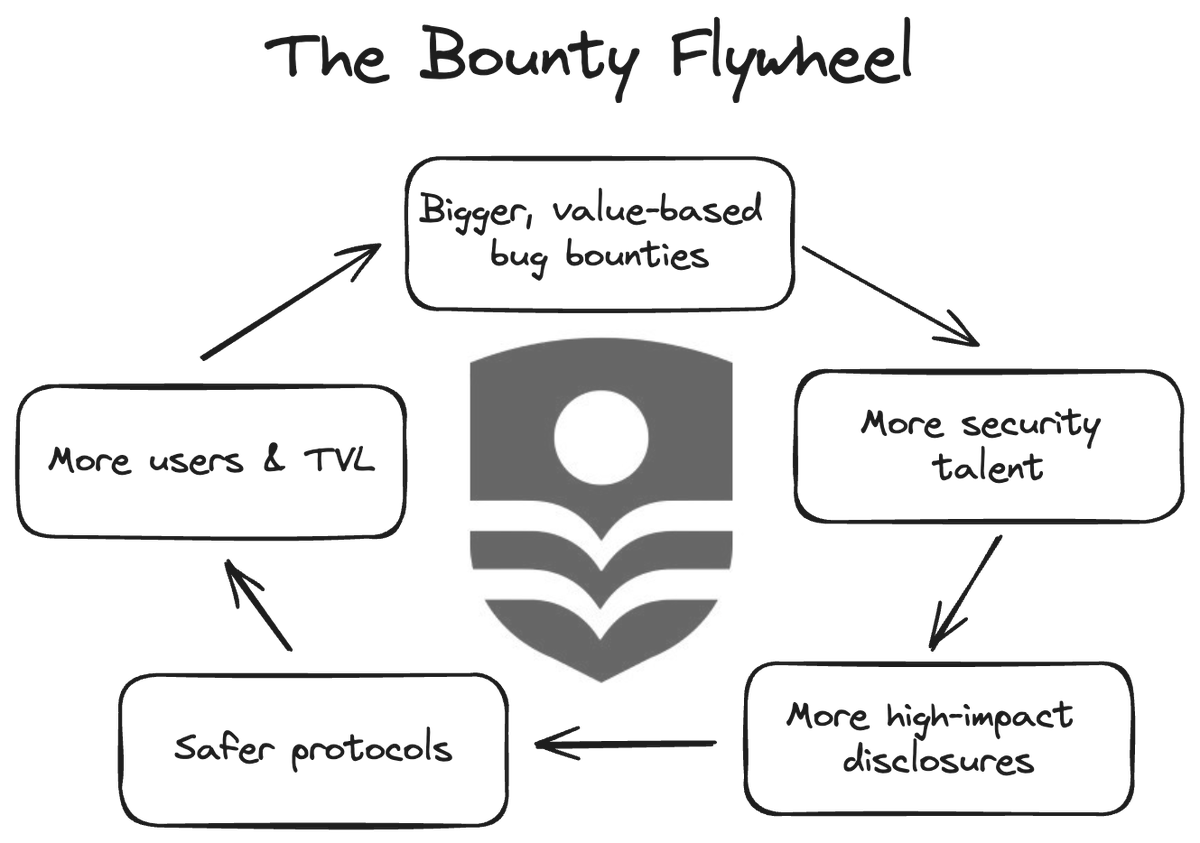
SPEND MORE ON SECURITY!
Strap in for a discussion of security budgets, bounty flywheels, and a new tool from @NascentSecurity...

15
13
114
34,293
Nascent Security retweeted

8 May 2024
Pleased to release the beta version of our bounty aggregator, @BountyVision!
Quoted is a great explainer on our goals for the platform - however, I wanted to comment a bit on the benefits for security researchers:
8 May 2024

No one outside of North Korea is happy with the current state of DeFi security
Fortunately, there is something we can do about it:
SPEND MORE ON SECURITY!
Strap in for a discussion of security budgets, bounty flywheels, and a new tool from @NascentSecurity...
1
4
14
2,246
Nascent Security retweeted

8 May 2024
🪅 🙌
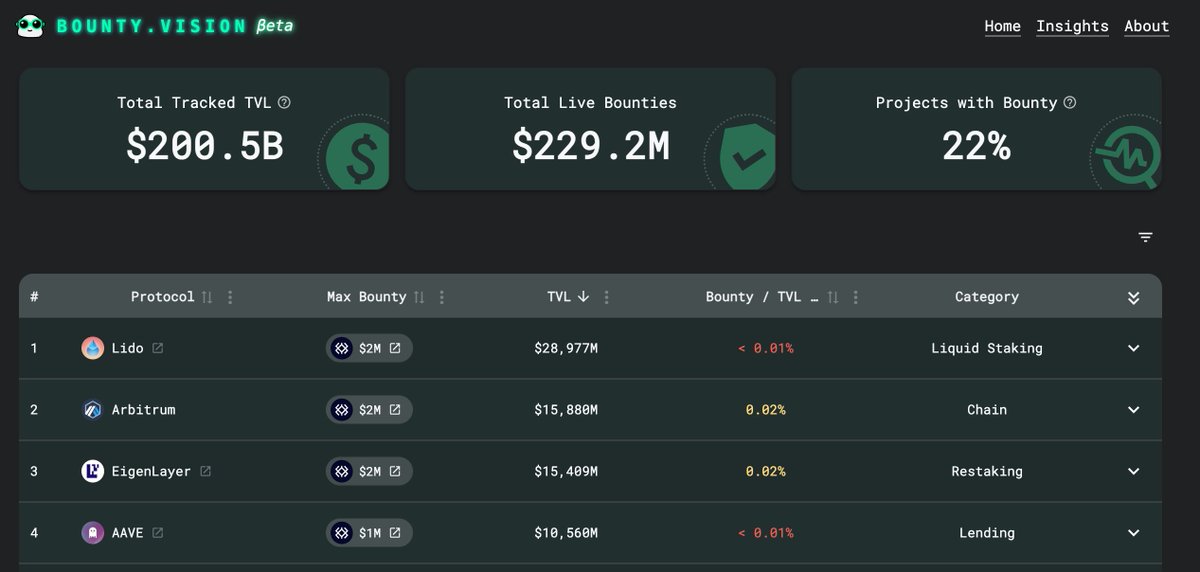
Excited to announce the release of @BountyVision built by our team @NascentSecurity
If you are a bug huntoor this tool should be super helpful for you to find next interesting and valuable project to work on
bounty.vision/

2
8
21
2,612
8 May 2024
Today we're releasing @bountyvision
Here we aggregate bug bounty insights across platforms to:
1. Show the state of bug bounties across the ecosystem
2. Assess bounty sizes relative to funds at risk
3. Aid whitehats in finding bounty information (including in-scope assets)
5
21
88
14,601
8 May 2024
To read more on our thesis of security budgets and the bounty flywheel, check out our blog:
nascent.xyz/idea/security-bu…
1
4
217
8 May 2024
Interested in security or bug bounties? DM us on here or use our feedback form (bounty.vision/feedback). We appreciate your input!
5
184