
Pendie at @pendle_fi in Vietnam (TG group: t.me/PendleFinance_VN)
Joined October 2021
- Tweets 6,048
- Following 1,693
- Followers 2,984
- Likes 7,326
663 Photos and videos



Neo Nguyen retweeted

Jun 13
Pendle has been named to @FortuneMagazine Crypto Innovators list, recognized among 30 companies and projects selected from more than 150 nominations, including TradFi institutions such as State Street, DBS Bank, and SBI Holdings.
For most of crypto's history, fixed income had no real equivalent onchain. Variable yield was everywhere, but locking in a known rate or taking a defined view on duration didn't exist at scale.
Pendle was built to close that gap, and that work now supports billions of dollars of TVL, with a growing share coming from stablecoin yield markets and institutional allocators.
Job's not done!

38
27
189
10,615
Neo Nguyen retweeted

Jun 12
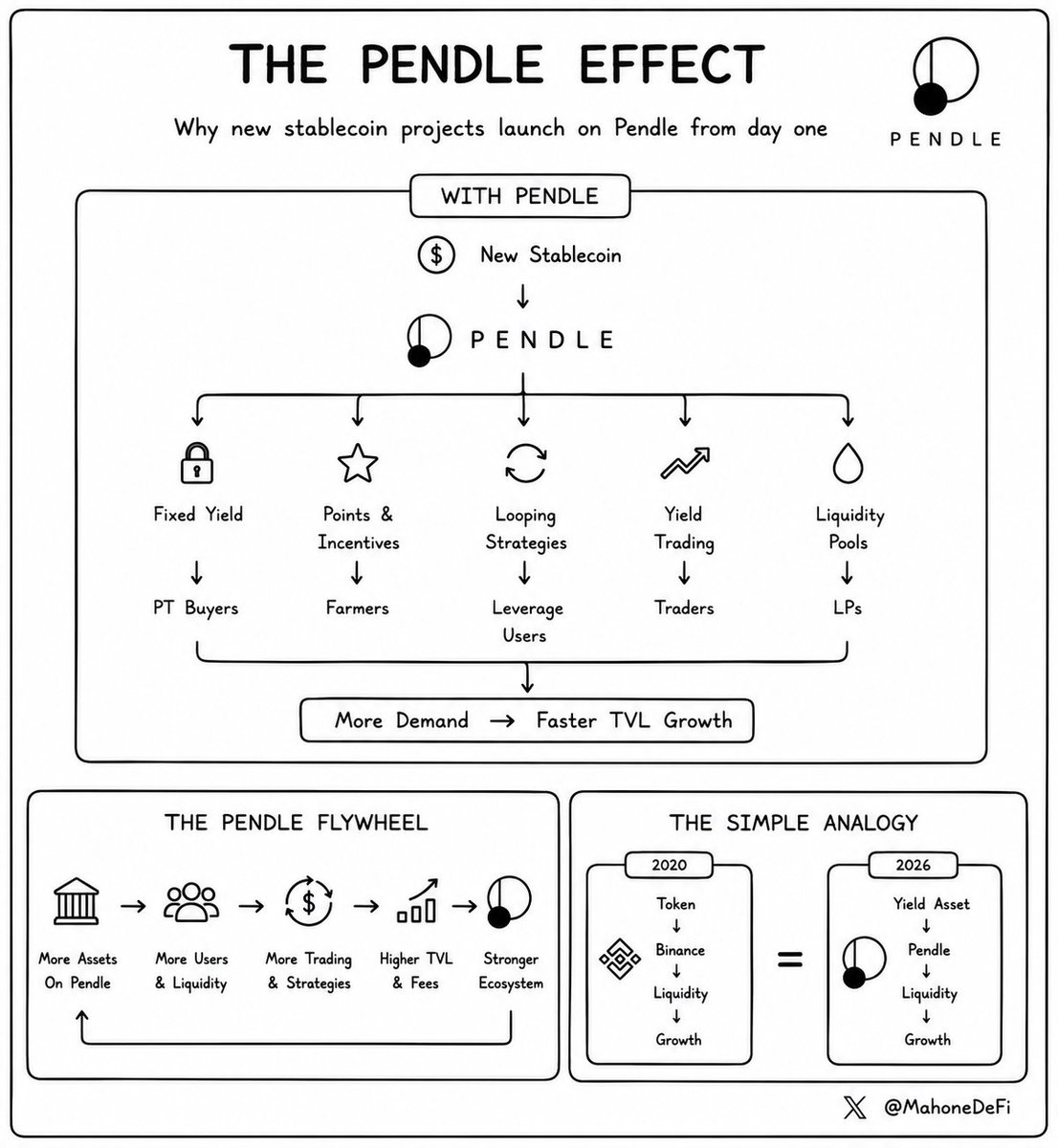
Why are so many new stablecoin projects launching on Pendle from day one?
The answer is what many people now call: The Pendle Effect.
When a team launches a new stablecoin, the biggest challenge is not building the product.
The biggest challenge is attracting liquidity.
A stablecoin can offer:
▸ 5% yield
▸ 10% yield
▸ Treasury-backed yield
▸ RWA-backed yield
But without users depositing capital, TVL will not grow.
This is why many projects now see Pendle as part of their growth strategy, not just another integration.
Once a stablecoin is listed on Pendle, it becomes more than just a stablecoin earning yield.
Users can:
▸ Buy PT to lock in fixed yield.
▸ Buy YT to leverage yield or points.
▸ Farm incentives.
▸ Build looping strategies through Aave or Morpho.
▸ Trade future yield expectations.
As a result, one asset can attract many different types of users at the same time.
And that usually leads to much faster TVL growth.
The best example is USDG. Even though USDG was already a large stablecoin, Pendle quickly attracted nearly 28% of its Ethereum supply into Pendle markets.
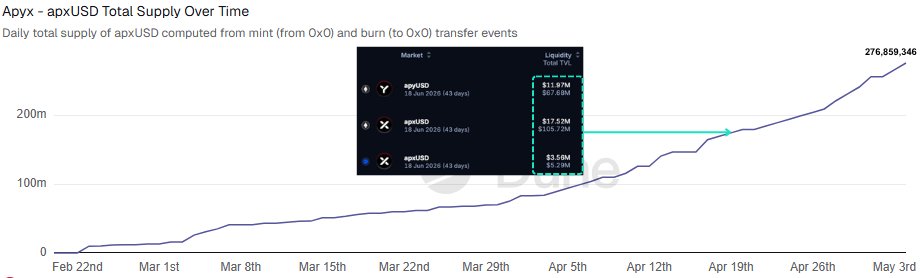
For Apyx, Pendle at one point accounted for the majority of the protocol's TVL.
This is why many teams now launch Pendle markets almost immediately after launching a new yield-bearing asset.
A simple way to think about it:
In 2020, Projects wanted to be listed on Binance because Binance brought liquidity.
In 2026, Projects want to launch on Pendle because Pendle brings liquidity to yield.
That is why so many new stablecoins are benefiting from what the market calls the "Pendle Effect"
Jun 11

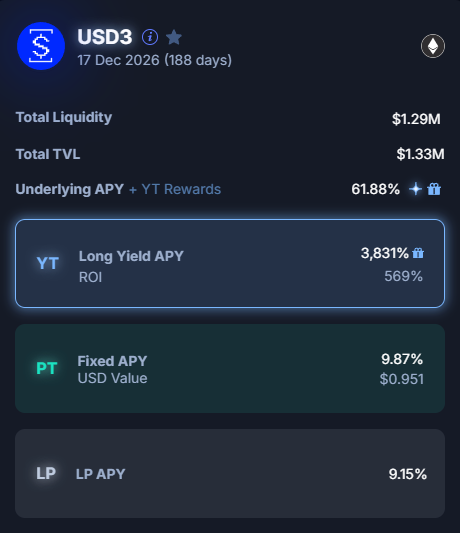
In short, @3janexyz YT-USD3 (Dec 2026) will now be earning:
• USD3 native yield
• 8,643 USD3 weekly rewards
• Additional 200,000 $JANE weekly rewards
12
13
51
6,155

Neo Nguyen retweeted
Jun 9
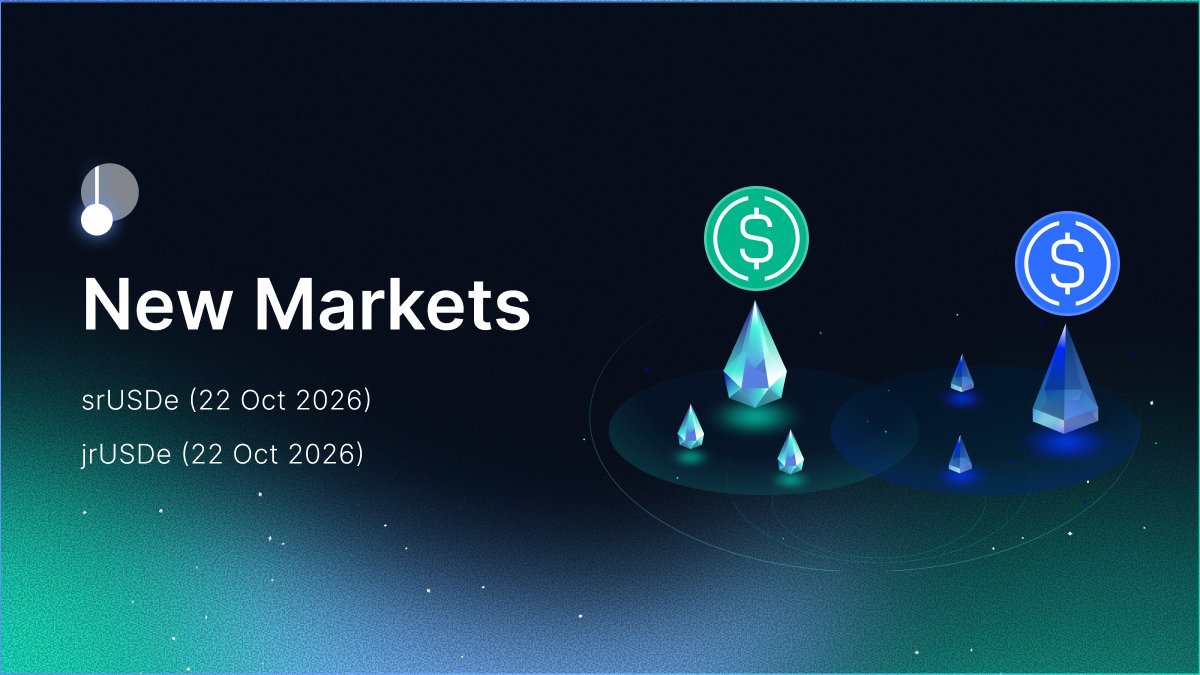
New maturities for @strata_markets x @ethena pools:
🔹srUSDe (Oct 2026)
🔹jrUSDe (Oct 2026)
srUSDe for downside protection on sUSDe yields, jrUSDe to earn a risk premium as the insurance pool
Speculate, trade and fix their yields with Pendle
10
4
60
8,320
Neo Nguyen retweeted

Jun 9
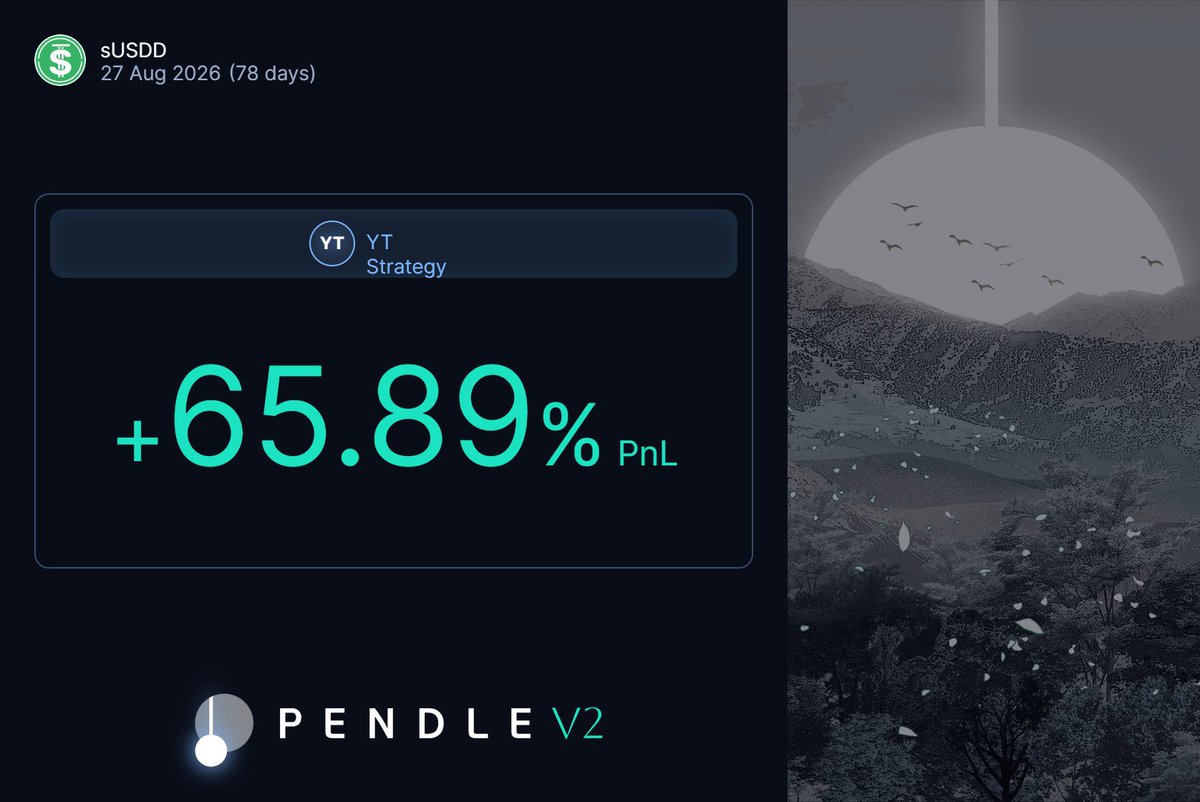
The power of YT with the right entry and the right read:
> Buy YT at 4.61% Implied APY
> Collecting 11.83% APY of yield
> YT priced at 7.78% now, so they can also sell YTs for immediate profit
Hold or sell, dude's already won.
Here's how you can do the same 👇🏻
8
10
51
5,880
Neo Nguyen retweeted

Jun 10
🔥 事实证明,只要眼光够准,#sUSDD × @pendle_fi 市场就是DeFi玩家的收益发动机。
📈 依托sUSDD底层真实收入,再加上目前的 $TRX 空投和USDD加码红利,YT 的爆发力才刚刚开始。
Hold 还是 Sell?怎么选都是赢家 👇
Jun 9

The power of YT with the right entry and the right read:
> Buy YT at 4.61% Implied APY
> Collecting 11.83% APY of yield
> YT priced at 7.78% now, so they can also sell YTs for immediate profit
Hold or sell, dude's already won.
Here's how you can do the same 👇🏻
2
4
1,474
Neo Nguyen retweeted

Jun 9
two years ago, @pendle_fi was a hidden gem at $230M.
last year, it settled a whopping $58B in yield and raked in $44M in fees.
yet, the token is still around 80% below its 2024 high.
the journey of Pendle is even wilder than the numbers show 🧵 ↓

9
6
40
2,031
Neo Nguyen retweeted

Jun 8
NEW ASSET LISTING: Pendle PT-kHYPE 24 September 2026 by @pendle_fi & @Kinetiq_xyz
Designed for those looking to lock in a fixed rate APY on their HYPE, PT-kHYPE presents significant yield opportunities for those looking to deploy with size.
gLend.
12
17
91
17,598
Neo Nguyen retweeted

Jun 9
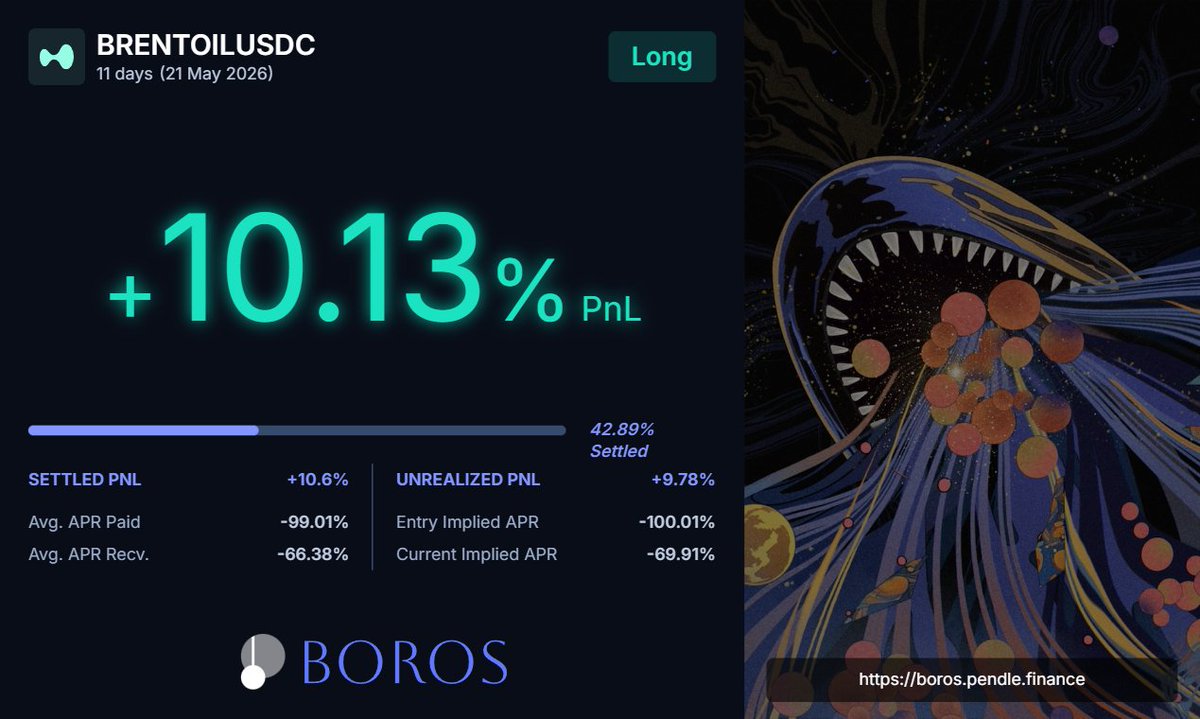
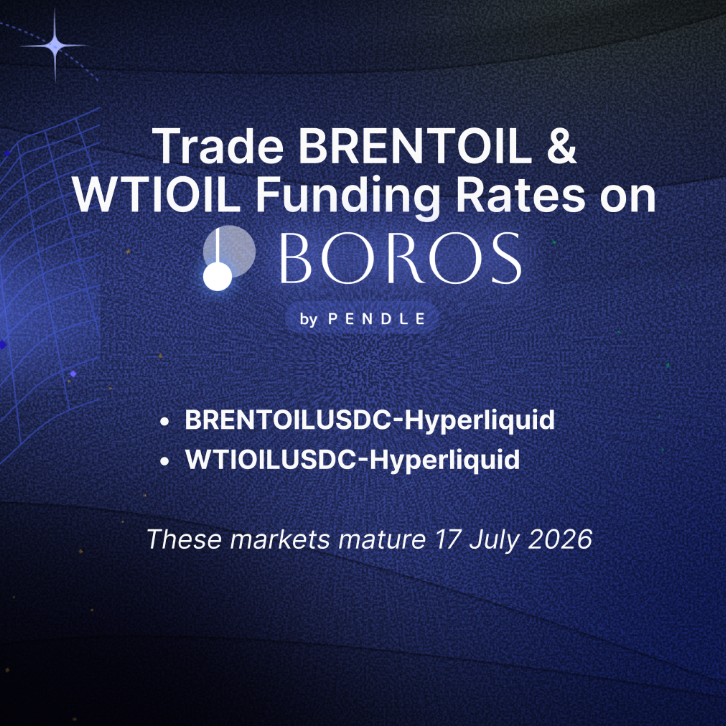
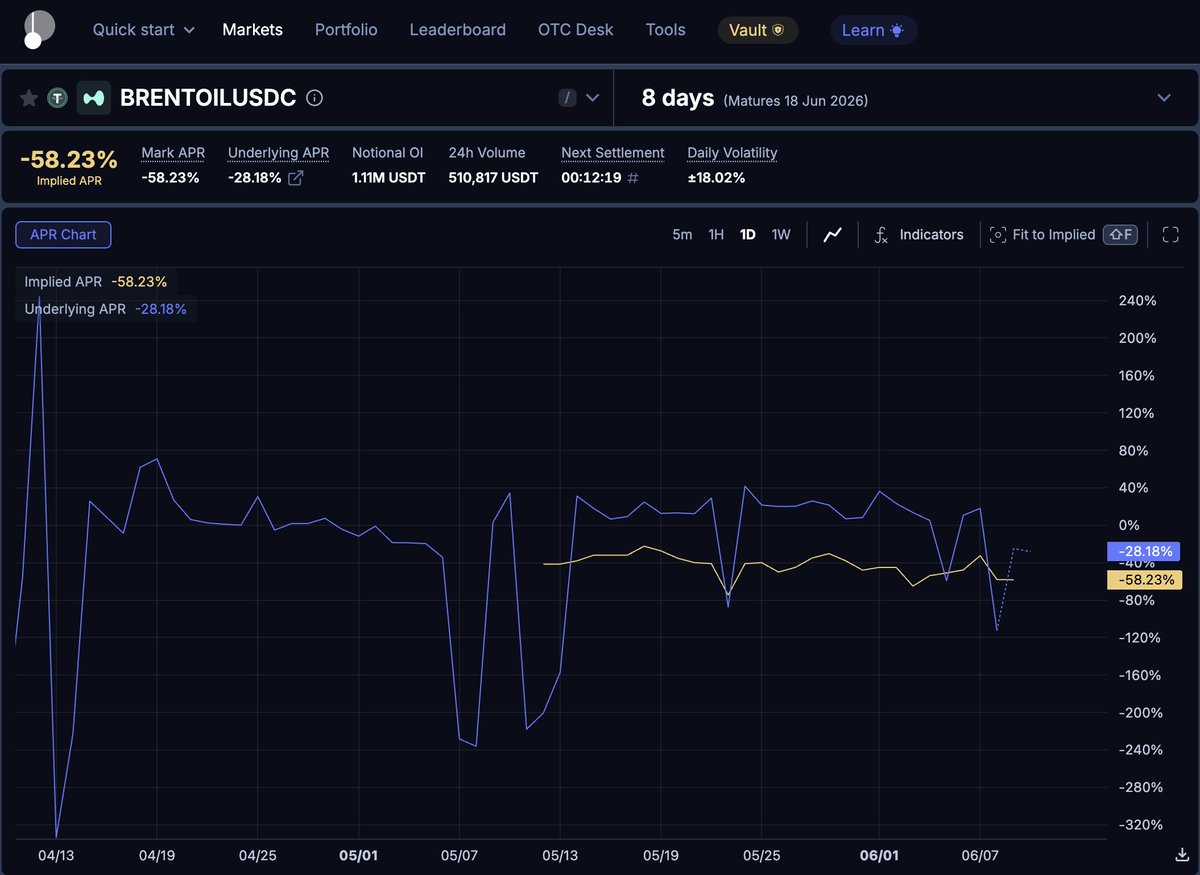
Long YU Brent Oil (HL) on Boros seems pretty nice
1. You pay the implied (-58.23%) and receive floating funding paying a negative = you receive 58.85%.
2. floating has averaged 22% over the past 7 days
3. The oracle roll of oil on trade.xyz (Q6→U6 contract transition) started Jun 5 and should be wrapping up. rolls create massive temporary funding spikes that inflate the implied.
if funding normalizes post-roll, you capture the spread between the depressed implied and recovering floating
4
4
21
1,345
Neo Nguyen retweeted
Jun 8
Pendle Print #117
• $PENDLE goes live on Revolut (UK & EEA)
• YT-sUSDD gets buffed with $TRX on top of existing $USDD rewards
• Sky sUSDS (Nov 2026) goes live with $30k weekly rewards across whole maturity
• PT-sUSDS has also been natively integrated into Sky's UI, opening direct access to Fixed Yield powered by Pendle
• Incentives for YT and LP for Altura AVLT
• PT-sUSDD goes live as collateral on Morpho
23
12
89
6,899
Neo Nguyen retweeted

Jun 7
one of the most relentless founders i’ve ever met is @tn_pendle of @pendle_fi
most don’t know because it isn’t performative or driven by hype or status:
- pendle sees incredible success -> jobs not done
- consistently foresaw next major narratives and positioned pendle accordingly
- approaches any issues calmly and simply as a challenge
- doesn’t waste money on flashy parties
- very high focus on security and core team quality
- long term thinking and ambition that is backed up by huge work ethic
never bet against relentless founders
pendle

33
14
151
9,905
Neo Nguyen retweeted
Jun 3
PENDLE is now live on @Revolut, the largest fintech in Europe.
20 million crypto traders in the UK, EU, Norway, Iceland and Liechtenstein now have direct access from their everyday banking app, reaching $PENDLE through regulated rails rather than DeFi frontends 🏦
27
39
269
17,006
Neo Nguyen retweeted
Jun 3
Fixed yield for @SkyMoney sUSDS, powered by Pendle ⚡
Sky Savings Rate has always been one of the bluechip yield sources in DeFi, but it remains variable.
Treasury desks, institutions and HNW users need to know their return in advance to deploy in size.
With this, they can now lock in a fixed 5.3% APY - above the current SSR of 3.6%.

Jun 2
Reach for the sky with @SkyMoney sUSDS (Nov 2026) ⛅
Exclusive incentives starting with $30k weekly from Sky, across the full maturity
Learn more 👇🏻


10
12
77
10,545
Neo Nguyen retweeted
Jun 3
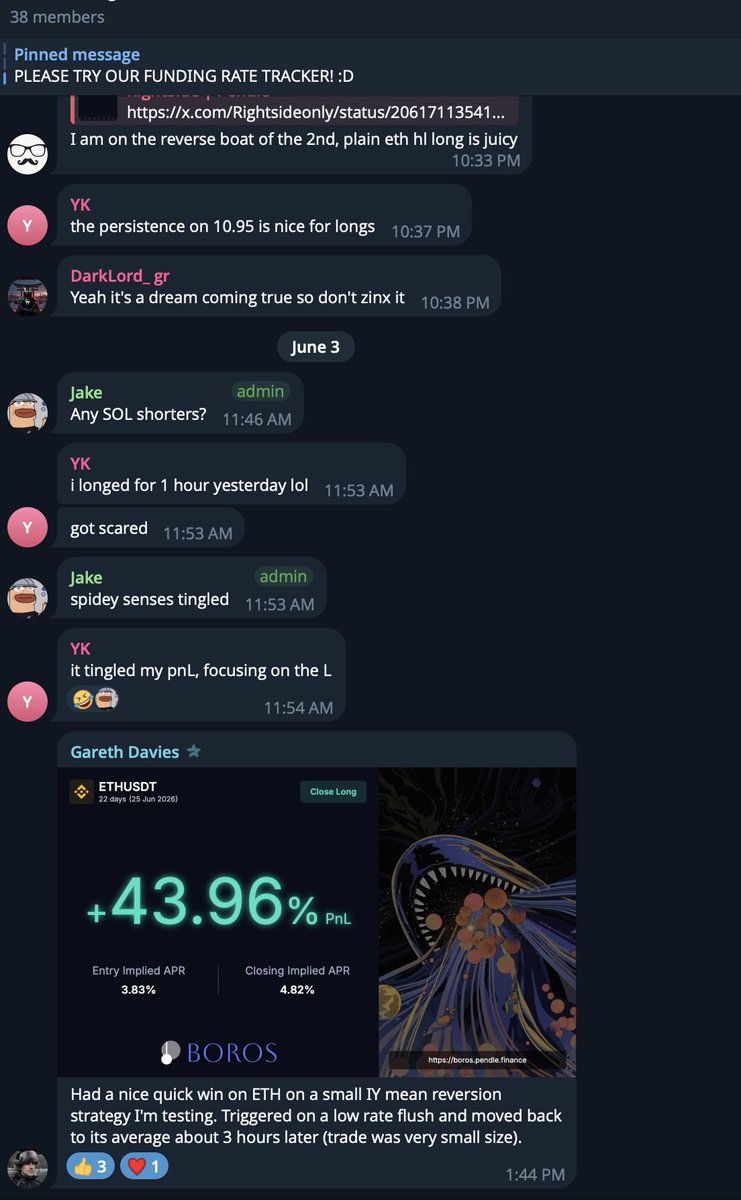
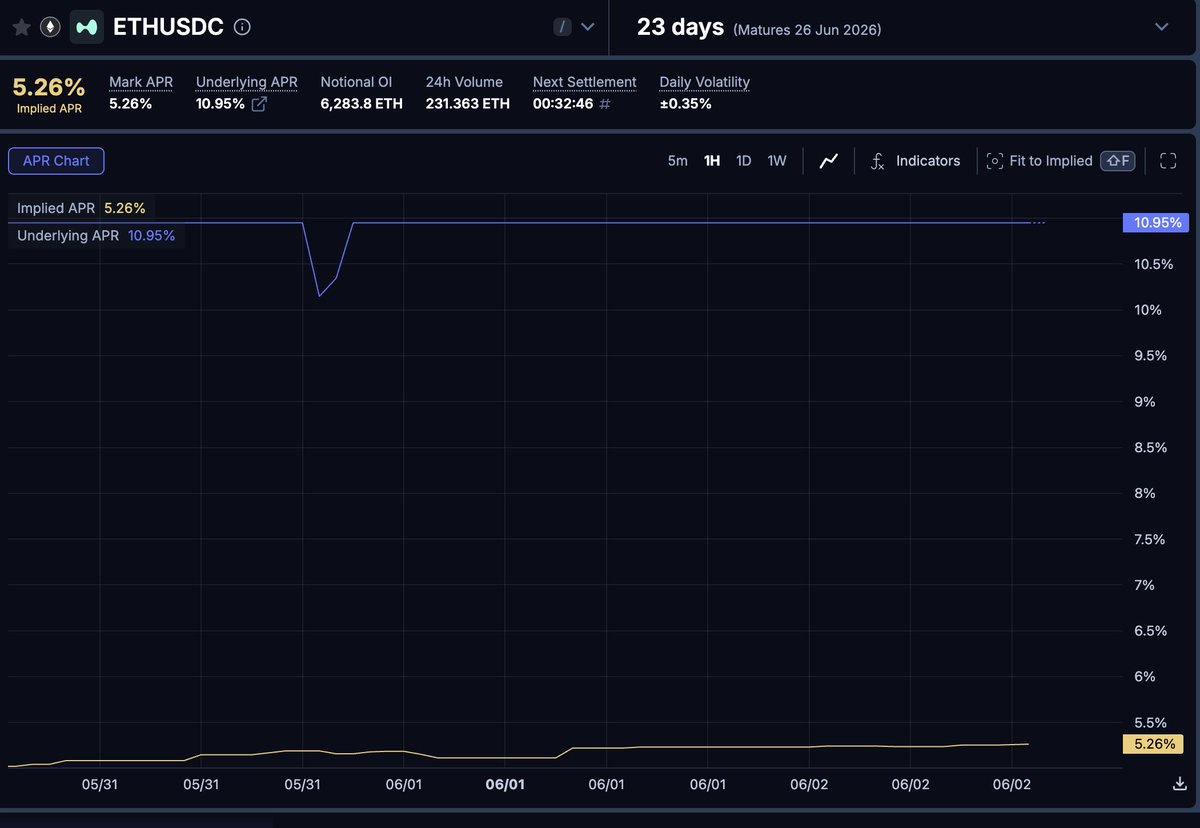
The ETH cash and carry trade doing ok, nothing fancy, 5.26% APY and going
I do want to share that the Boros Trading group in telegram is doing good! A lotta folks sharing their strats and winning :O
Are you a Boros trader? DM me let's talk strats
Jun 2

So I did a limit order and someone front ran this trade. If during that time he/she is now 25 of 25 in the settlement wins, with a realized APR of ~75%
Despite the underlying yield dumping, it still averages above 40% meaning
1. Paying -44.14% APR (this means you are earning)
2. receiving ~40% floating APR
win-win but my LO did not trigger aaaahhh!!
Putting a new one here!
ETH hyperliquid market cash and carry strat
1. Long spot ETH
2. Short ETH on Hyperliquid (no exposure to price, only funding at 10.95% APR)
3. short YU on Boros at 5.26% where you pay floating (10.95% APR) that cancels out, you receive 5.26% APR
5
5
19
2,188
Neo Nguyen retweeted

Jun 2
Asian credit is now a tradeable fixed-income asset onchain.
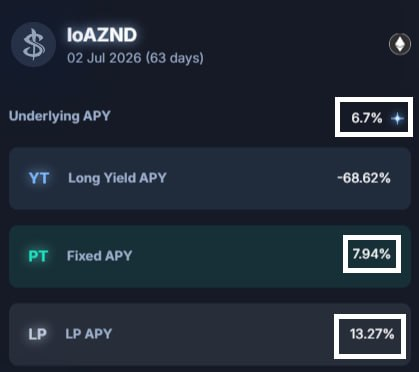
In this article, we break down how Mu Digital's $AZND tokenizes Asian sovereign and corporate credit, while @Pendle_fi unlocks yield trading and fixed-rate strategies.
Read the full guide 👇
coingecko.com/learn/mu-digit…
16
24
61
11,262
Neo Nguyen retweeted

Jun 2
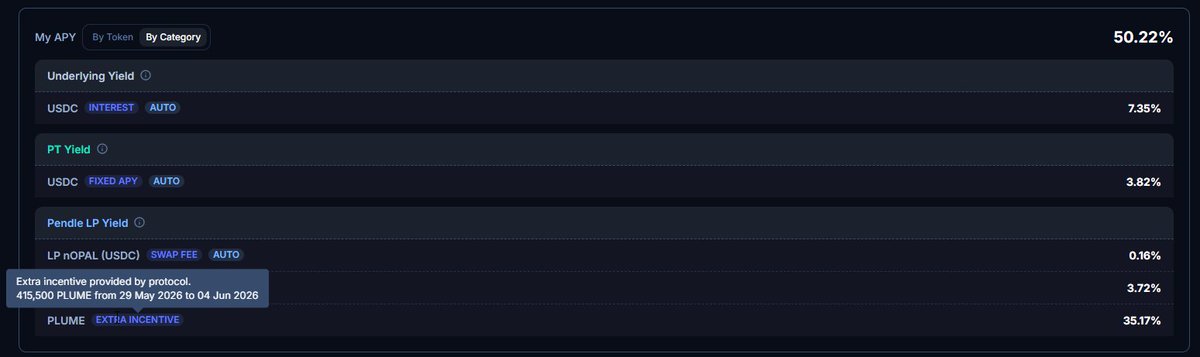
FYI, nOPAL isn't another tokenized T-bill; it's a tokenized vault issued by @blackopal_fi, backed by Brazilian credit card receivables.
To be clear, @blackopal_fi (LATAM's Global Payments Finance Platform) will buy future receivables from merchants at a discount.
And if you want to get exposure with nOPAL, here's the flow:
1⃣mint nOPAL directly with pUSD on @NestCredit with no KYC on @plumenetwork: nest.credit/vaults/nest-opal…
2⃣Once complete, bridge nOPAL to @ethereum
And with the listing on @pendle_fi, here are some juicy yields you guys might want to check:
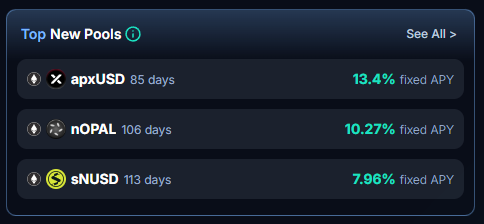
🔹PT: 10.27% fixed APY 🤤 (106 days till maturity)
🔹LP: LP: 50.22% APY (with the $PLUME incentive till Jun 4)
RWA full send on Pendle!
May 29

Our nOPAL Market is live on @pendle_fi.
Lock in fixed RWA yield until September 16, 2026, backed by Brazilian payment-network receivables working with Visa and Mastercard.
Read the blog for details, and access the live market today.
plume.org/blog/nopal-is-now-…
6
6
42
3,383
Neo Nguyen retweeted
Jun 1
My Boros adventure has started!
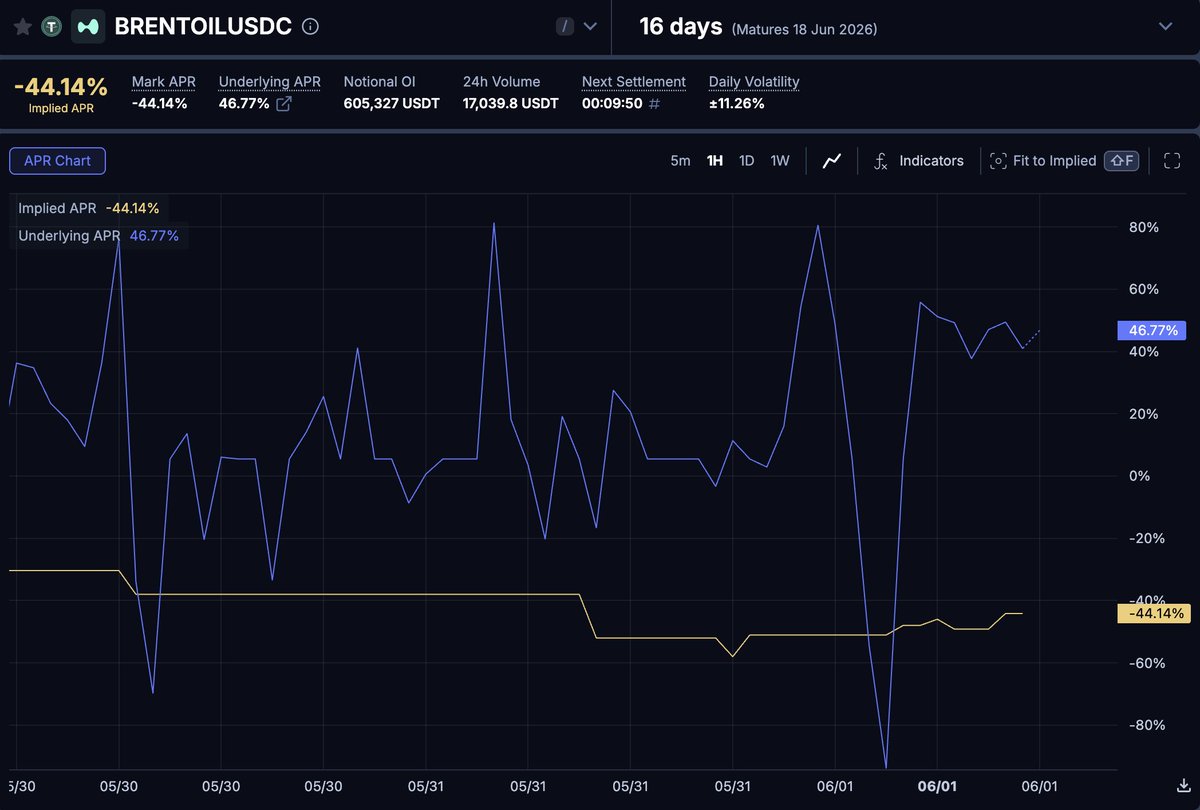
Le Brent Oil funding rate is absurd:
Floating: 46%
Implied: -44.3%
Edge: 90 percentage points
Long YU, you get paid the floating AND the negative implied. Both sides printing. BUT the oracle roll starts Jun 5 :O
What's the roll my good man? Hyperliquid's BRENTOIL perp doesn't track spot oil. It tracks futures contracts. Right now it's on Q6 (August 2026 Brent). Starting Jun 5 it transitions to U6 (September 2026 Brent)
The transition isn't instant tho as it blends over 5 business days:
Jun 5: 80% Q6 / 20% U6
Jun 6: 60/40
Jun 8: 40/60
Jun 10: 20/80
Jun 11: 100% U6 (roll complete)
If Brent is in backwardation (Aug > Sep), the oracle price mechanically drifts lower each step. This pushes perp funding violently negative
Pretty nice long YU, ~88% historical long win rate on this market. Maybe i'm smart enough to do this, i don't know, let's see
5
2
25
5,516
Neo Nguyen retweeted

"Low IL like Uniswap V2, high yield like Uniswap V3" sounds too good to be true, but that is exactly what we are building toward at @brownfiamm .
Our latest version is almost ready to launch. Before we do, we want to make sure the pools are set up in a way that actually fits what LPs need. So we are running a short survey to understand your experience, your pain points, and what you look for when providing liquidity.
It takes 2–3 minutes and is fully anonymous:
forms.gle/e2xzhCkrzK2hzkYAA
If you know other LPs who would have useful input, please pass it along. 🙏
Thanks for your help @Neoo_Nav @itsvietquoc @0xcarnation @crypto_linn @jarvisnnn @lochie_sol @meta_world_peas @DeFiVoyager_X @NaveenCypto @DeFi_Perryy @DeFi_Ted @SpotWiggum @ruwaiting4 @ayvee_bera @Joedark01 @0xDevinG @0x_vikt0r
2
5
25
1,589
Neo Nguyen retweeted

May 29
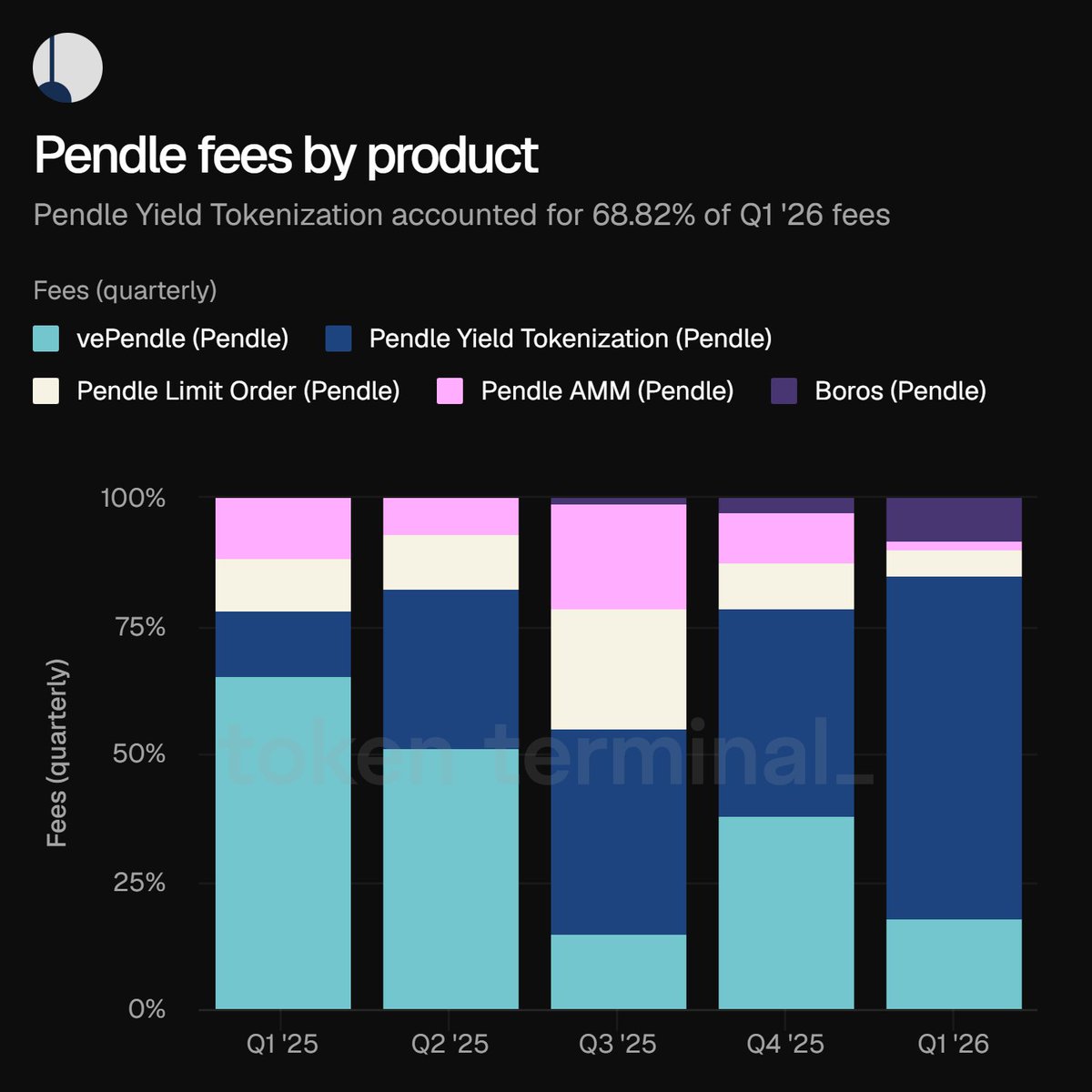
Betting on @pendle_fi for its TVL is like buying $AAPL for its hardware business.
Technically accurate but completely misses the point.
Apple's real value is in Services (high-margin, recurring, compounding).
Pendle's real value is in fees and, more importantly, where their future earnings will come from.
Pendle is a Tokenization and Funding Rates ( @boros_fi) growth story.
22
12
89
10,893