
DeFi researcher | On-chain data analyst
Joined November 2022
- Tweets 2,834
- Following 173
- Followers 2,357
- Likes 2,736
17 Photos and videos
After reading "How Crypto Businesses Turn Products into Platforms"
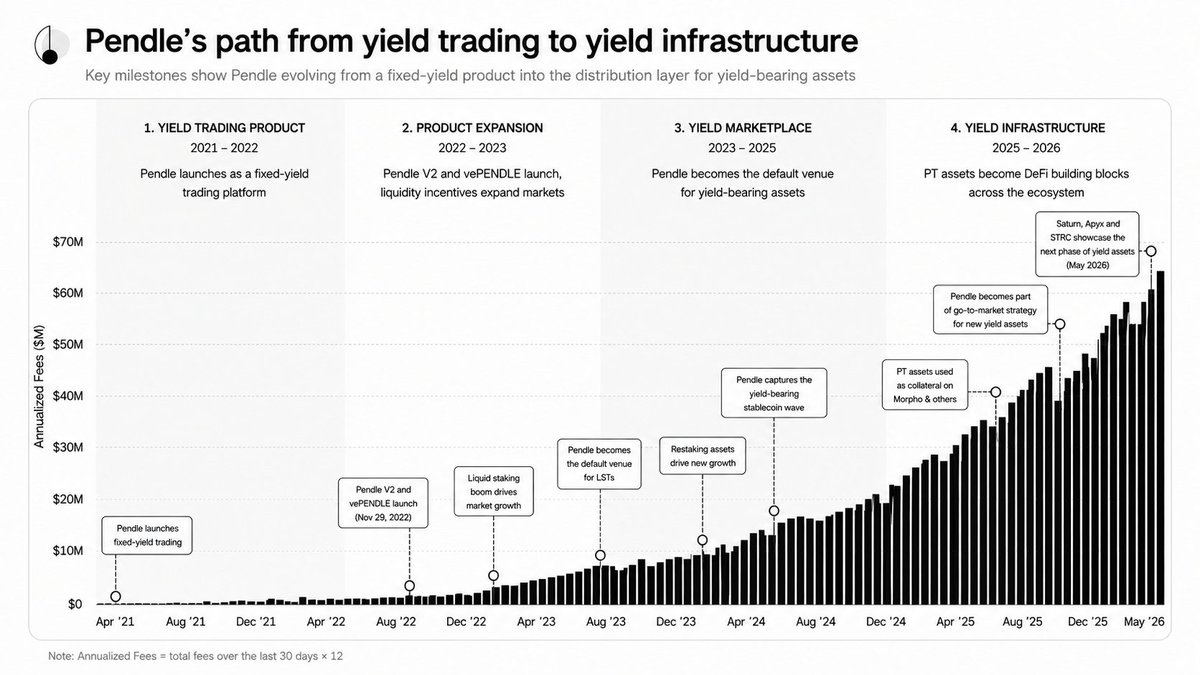
I realized that @pendle_fi may be one of the clearest examples of this evolution in DeFi
⤷ Product → Platform model
In the beginning, Pendle was simply a product.
A place to trade yield.
Users came to Pendle to:
• Lock fixed yield
• Go long yield
• Go short yield
That was the product, but over the last two years, Pendle's role has changed dramatically.
• Restaking emerged.
• Yield-bearing stablecoins emerged.
• Tokenized assets started gaining traction.
And almost every major DeFi yield narrative ended up passing through Pendle.
From restaking assets like eETH and rsETH, to yield-bearing stablecoins such as sUSDe, sUSDS, USD3, USDat, and apxUSD, and more recently the STRC, Saturn, and Apyx ecosystem, nearly every major yield narrative has found its way to Pendle.
The interesting part is that Pendle did not create these narratives.
But it became the place where these narratives were amplified.
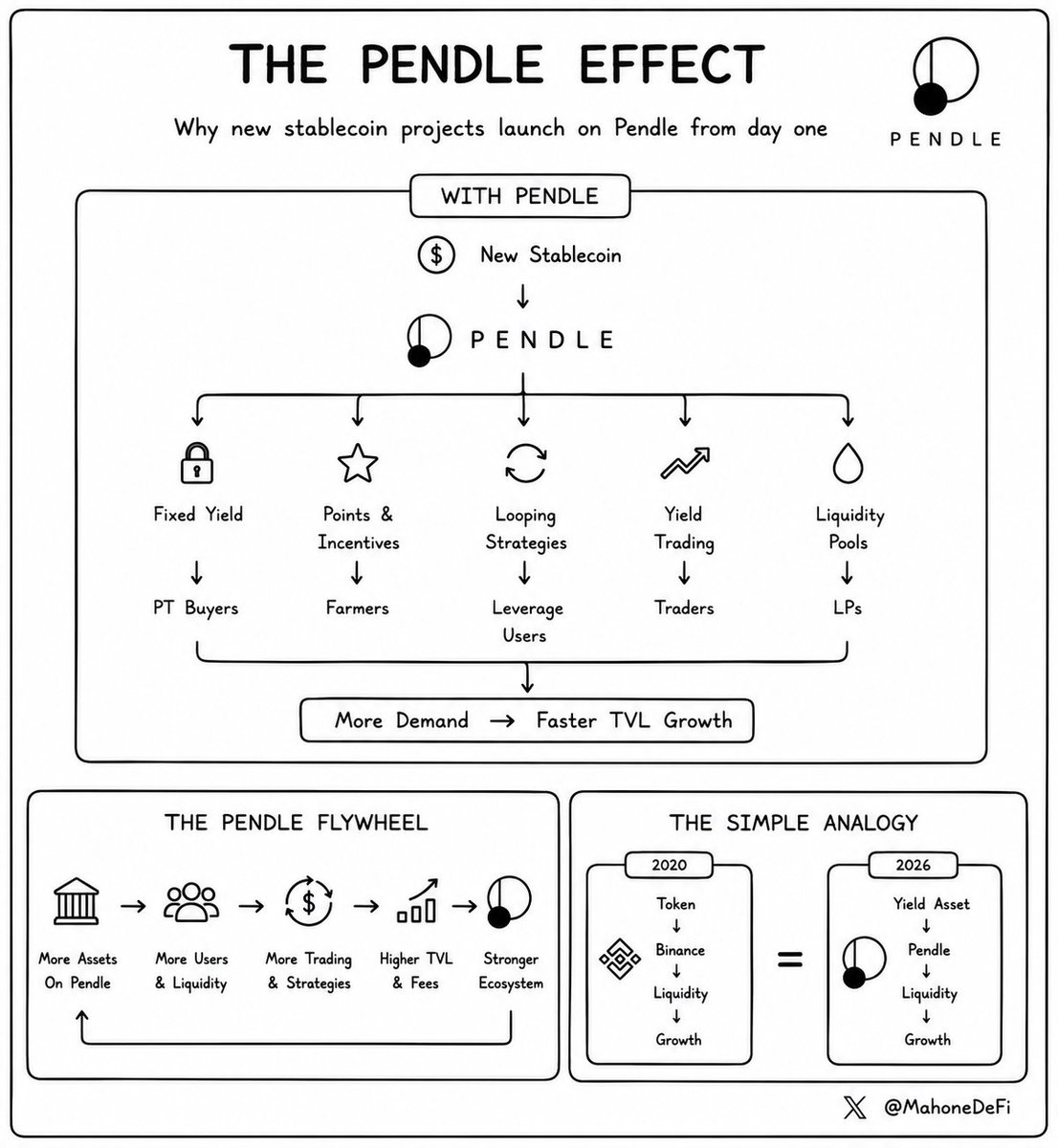
In the past, projects launched an asset and then tried to attract liquidity.
Today, many projects launch an asset and a Pendle market almost at the same time.
Because Pendle immediately provides:
• Fixed yield
• Yield speculation
• Leverage strategies
• Liquidity
• Distribution
In other words, Pendle is increasingly becoming part of the go-to-market strategy for new yield assets.
That is the moment when a product starts becoming a platform.
And the story does not stop there.
Today, PTs are starting to appear outside of Pendle itself.
• PTs are being used in lending markets.
• PTs are being integrated into vaults.
• PTs are being accepted as collateral.
This shows that the value of Pendle is no longer limited to its yield trading interface.
The value is increasingly embedded in PTs themselves.
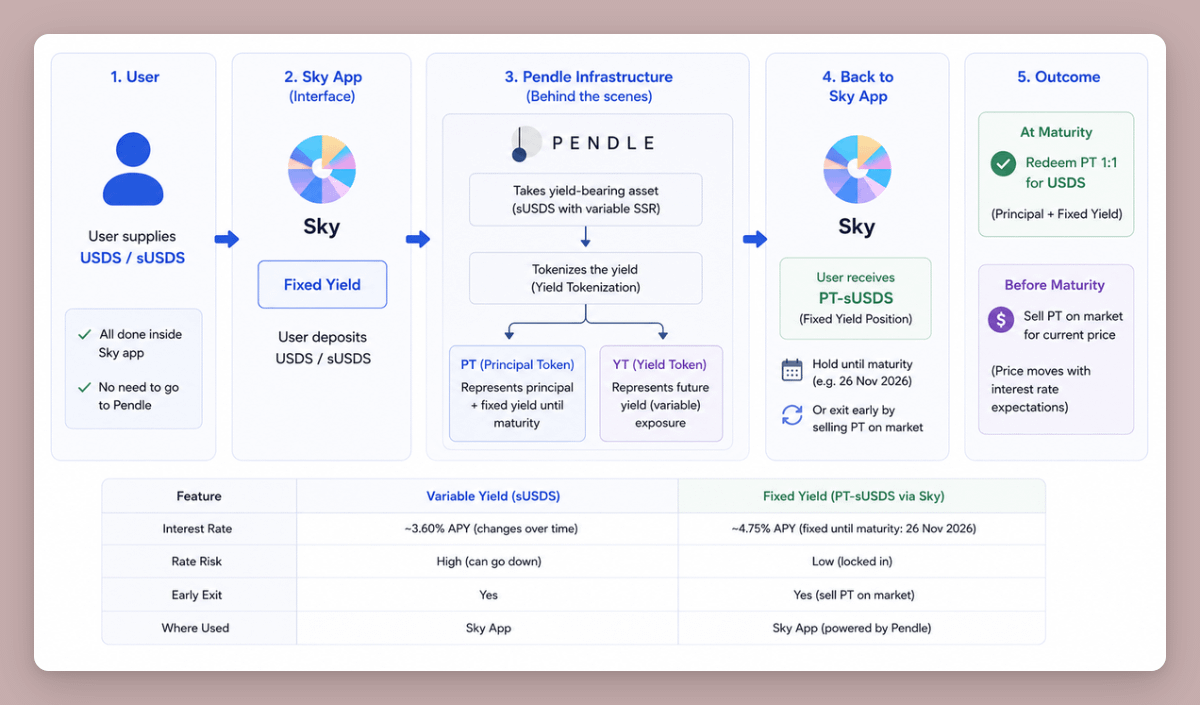
One of the strongest signals of this shift is seeing protocols like Sky use PTs as backend infrastructure for yield strategies built on top of them.
When one protocol begins using another protocol's product as a building block for new products, that is often the clearest sign that the Product → Platform transition is underway.
2
1
4
147
Shout out Pendle Maxi
@Rightsideonly
@Jonasoeth
@crypto_linn
@0xCheeezzyyyy
@DeFi_Andree
@thelearningpill
@Kaffchad
@_dedanny_
@SachinHMx
1
37
People saw @saylor sell 32 $BTC and immediately jumped to the collapse scenario.
I think that reaction misses the bigger point. @Strategy is not a “weeks away from failure” story.
The real question is how much runway the balance sheet still has.
And that runway is exactly why @saturn_credit becomes interesting.
Jun 13

Everyone is focused on STRC's discount.
@saturn_credit is focused on what can be built on top of it.
Over the past few weeks, much of the discussion around STRC has centered on one question:
Will it return to par?
It's a reasonable question. STRC has been trading below its $100 par value, and naturally, many investors are focused on the risks and volatility surrounding the asset.
But there is another way to look at what's happening.
While the market debates STRC itself, Saturn is building a product on top of the cash flow STRC generates.
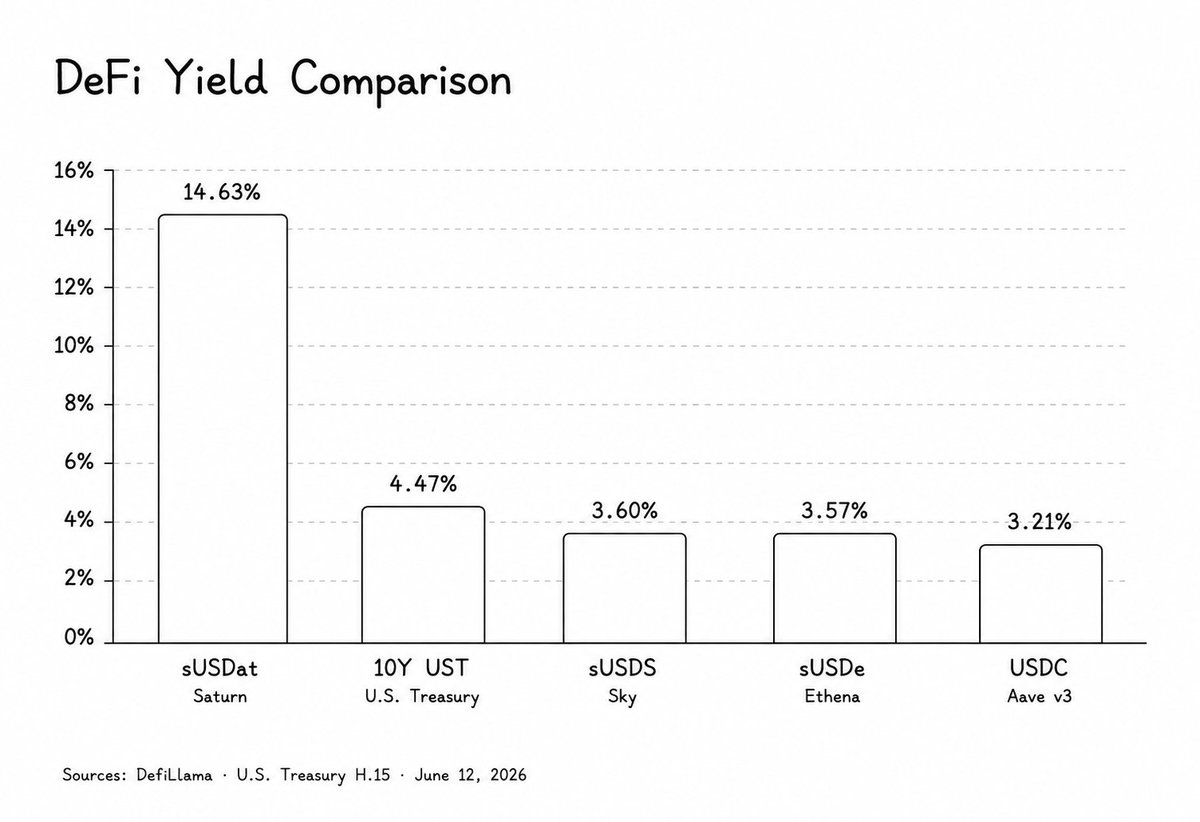
Today, sUSDat is offering 14.63% APY, making it one of the highest-yielding stablecoin products in DeFi.
That doesn't mean the risks around STRC disappear.
It means Saturn is taking an asset many investors view as a controversial credit instrument and transforming its underlying yield into something that can be used across DeFi.
- A stablecoin.
- A collateral asset.
- A source of on-chain yield.
This is what makes the story interesting.
3
2
5
167
7/ My view is simple:
If Strategy has years of runway, not weeks or months, then Saturn gives DeFi users a way to harvest that window.
Earn stablecoin yield in a hard market.
Build dry powder and stay positioned for the next bull cycle instead of forcing bad trades
1
29
8/ That is why Saturn is interesting to me.
> It is not just giving users a high APY.
> It is turning Strategy’s digital credit into a usable DeFi primitive.
> If this works, Saturn will not be remembered as “another yield farm.”
It will be remembered as one of the first protocols to make Bitcoin-backed digital credit useful onchain.
26
Mahone Defi retweeted

Capital efficiency sounds like DeFi buzzword until u realize Goldman Sachs built a huge business around the exact same thing:
➥ getting more out of the same dollar
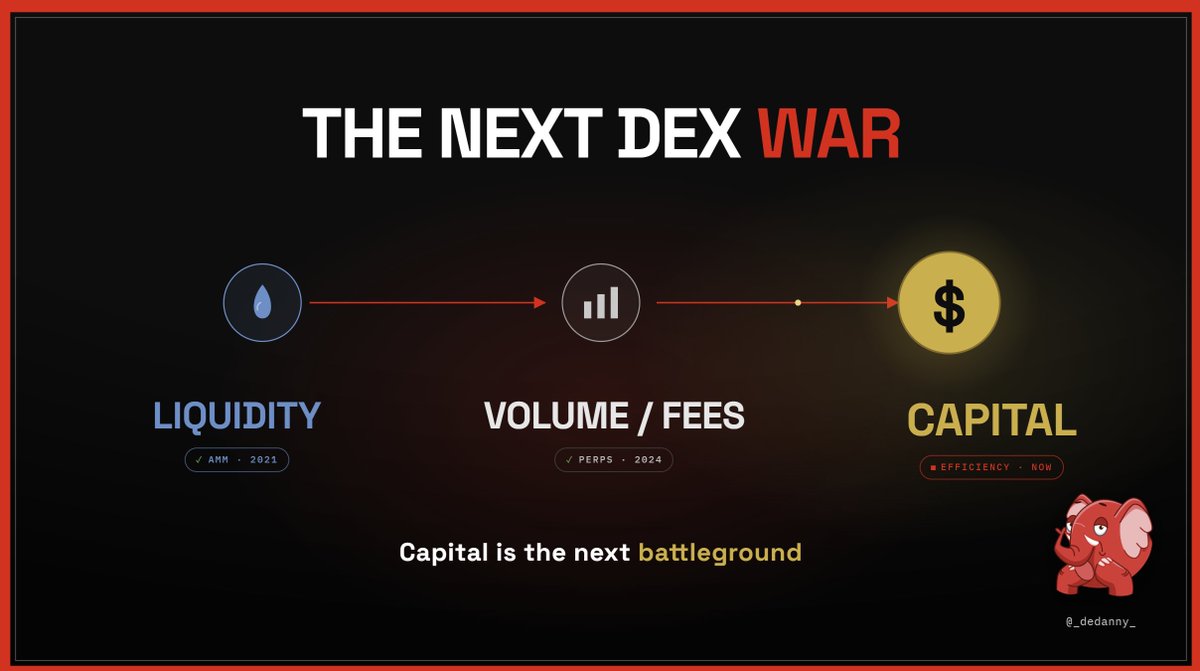
the DEX war is entering the same chapter
~ chapter 1 was liquidity or TVL
~ chapter 2 was volume and fees
~ chapter 3 is capital
and chapter 3 is just getting started ↓
7
2
6
297
Mahone Defi retweeted

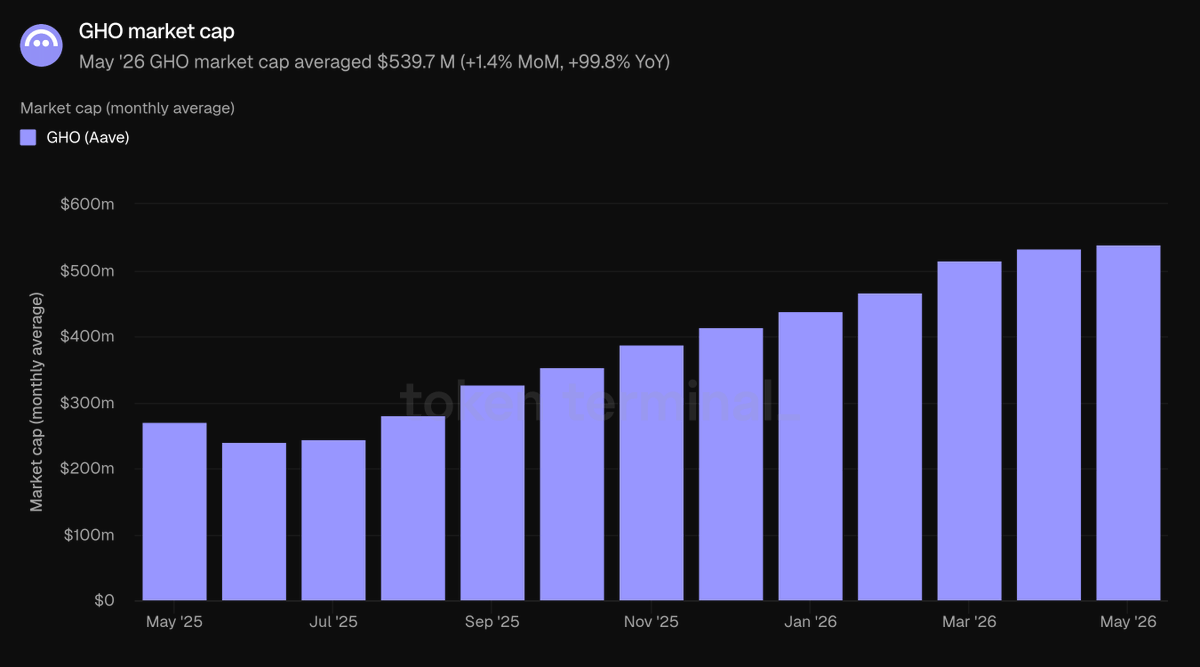
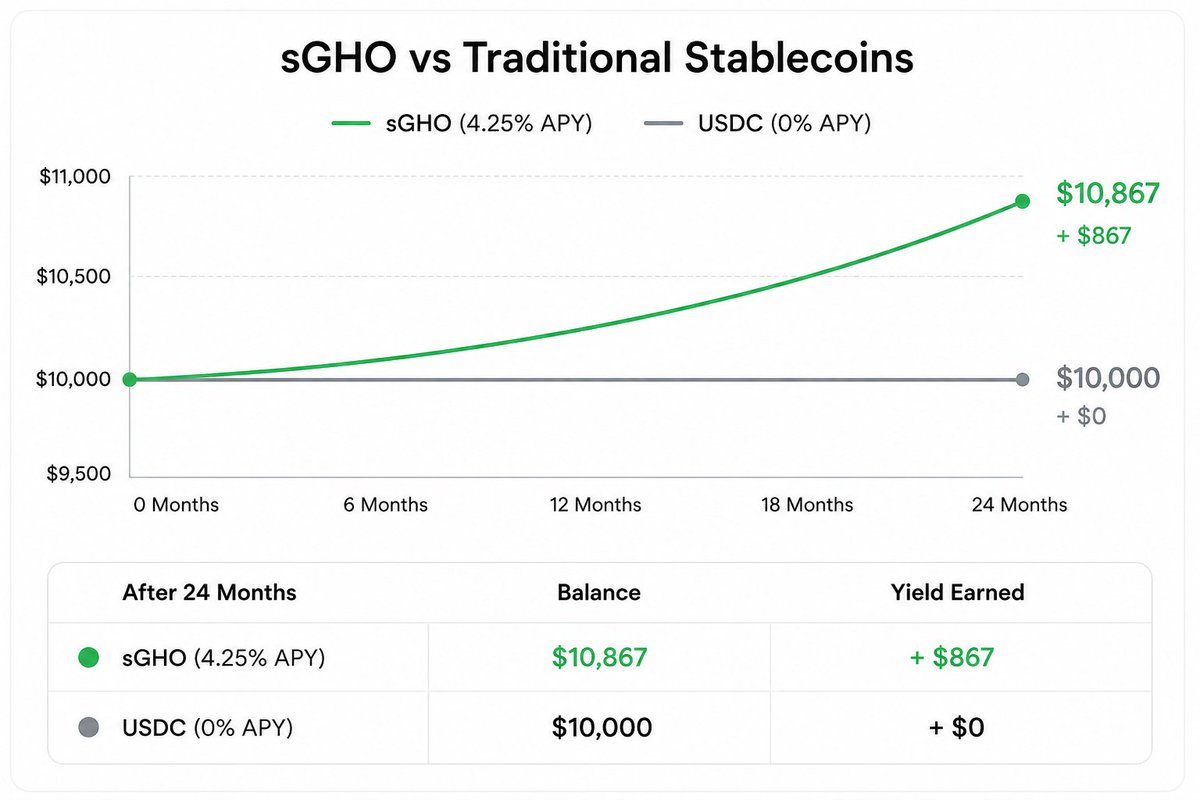
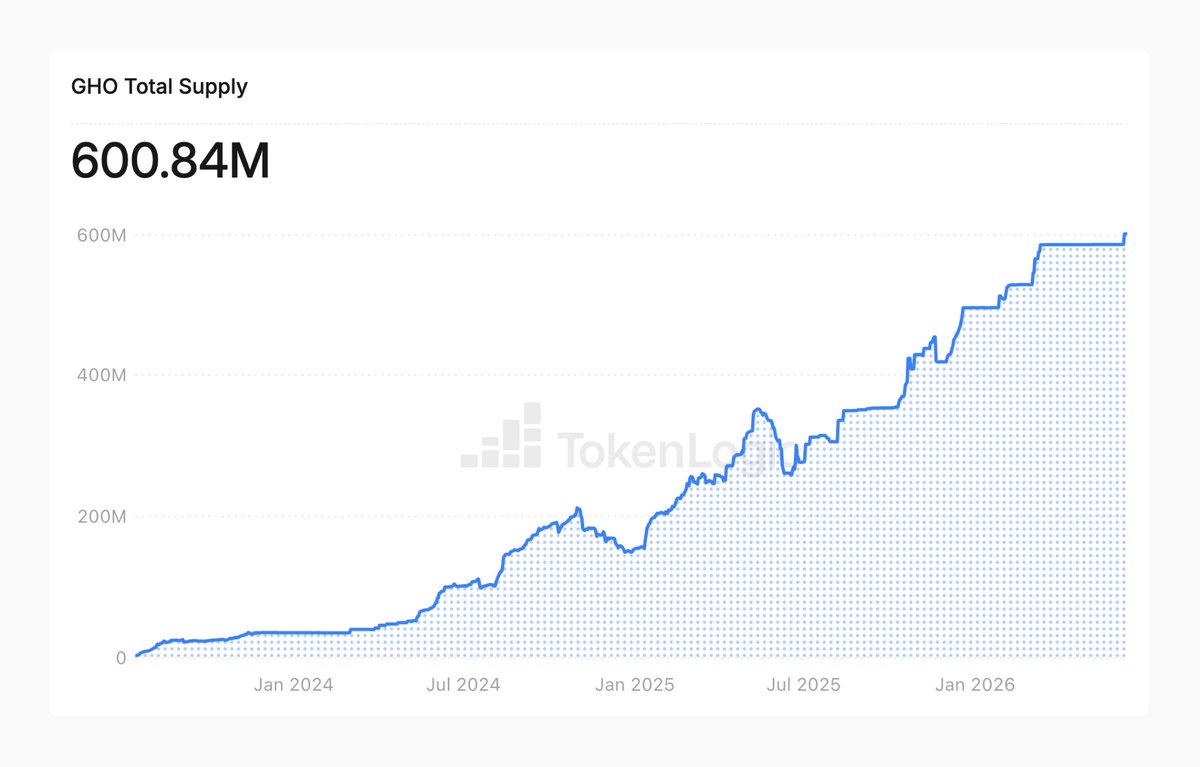
GHO has crossed 600M supply.
This is one of the most important signals for Aave right now. It is not a short-term spike. It is a multi-year expansion of Aave-native stablecoin liquidity.
GHO is more than another stablecoin. It is the monetary layer of the Aave economy.
Every new unit of GHO strengthens the system: more collateral utility, more borrowing demand, deeper liquidity, and more value flowing through Aave.
The key part is where this growth happens. GHO is scaling inside the largest DeFi lending network, backed by real credit demand, collateral depth, risk infrastructure, and governance-controlled expansion.
That is a very different foundation from a stablecoin relying only on temporary incentives.
@aave is no longer just building lending markets. It is building an onchain financial system where credit, stablecoin liquidity, and future payments can compound around the same network.
GHO crossing 600M supply is not the final milestone. It is proof that Aave’s stablecoin strategy is starting to scale.
21
10
74
2,735
Mahone Defi retweeted

Jun 13
Everyone is focused on STRC's discount.
@saturn_credit is focused on what can be built on top of it.
Over the past few weeks, much of the discussion around STRC has centered on one question:
Will it return to par?
It's a reasonable question. STRC has been trading below its $100 par value, and naturally, many investors are focused on the risks and volatility surrounding the asset.
But there is another way to look at what's happening.
While the market debates STRC itself, Saturn is building a product on top of the cash flow STRC generates.
Today, sUSDat is offering 14.63% APY, making it one of the highest-yielding stablecoin products in DeFi.
That doesn't mean the risks around STRC disappear.
It means Saturn is taking an asset many investors view as a controversial credit instrument and transforming its underlying yield into something that can be used across DeFi.
- A stablecoin.
- A collateral asset.
- A source of on-chain yield.
This is what makes the story interesting.
2
1
9
914
Mahone Defi retweeted
Jun 13
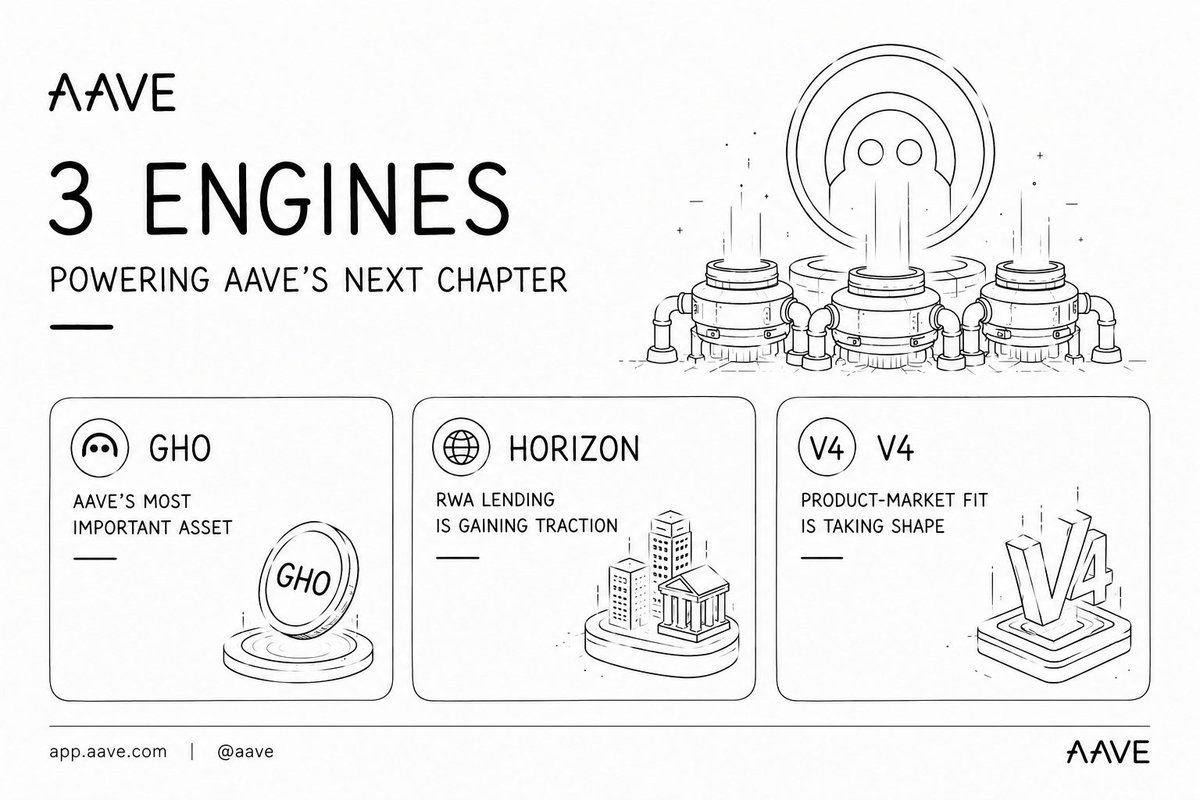
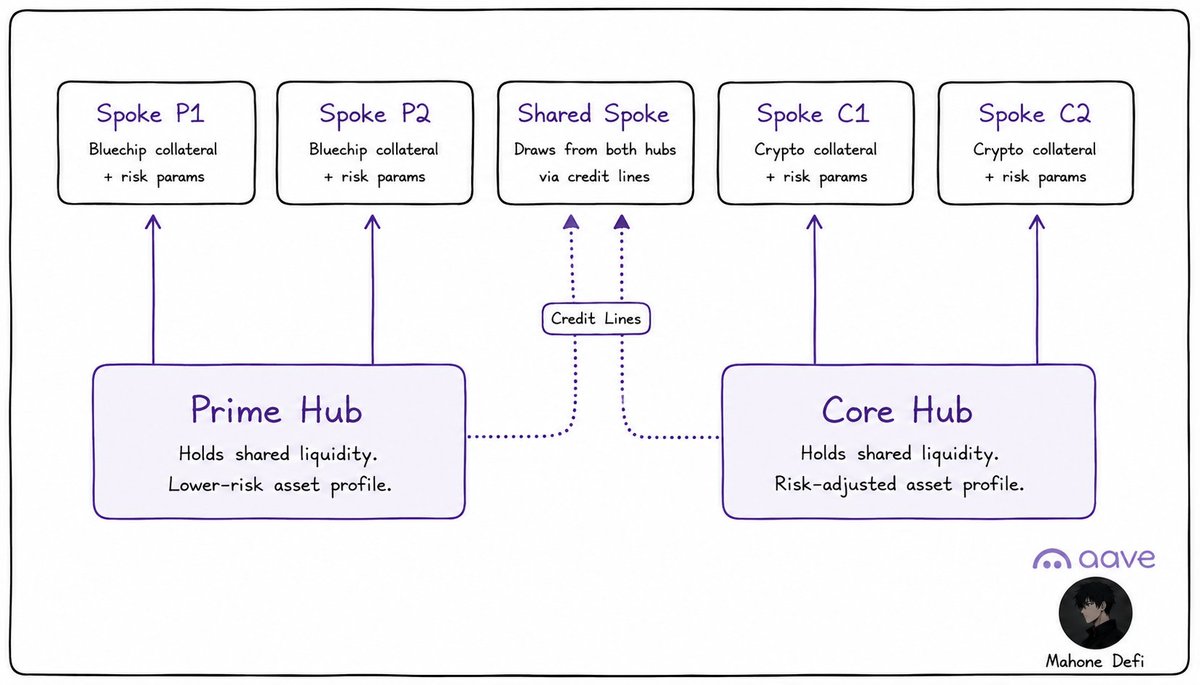
May was an important month for Aave.
The protocol returned to normal operations after the rsETH incident and, while the recovery is still ongoing, the report highlighted three growth engines that are becoming increasingly important:
- GHO as a native monetary asset
- Horizon as Aave's RWA lending business
- V4 as the next generation of lending infrastructure
Each of them points to a future where @aave is much more than just a lending protocol.
Source: @tokenterminal

2
5
18
886

Mahone Defi retweeted
We don't need more perps. We need one Credit Account

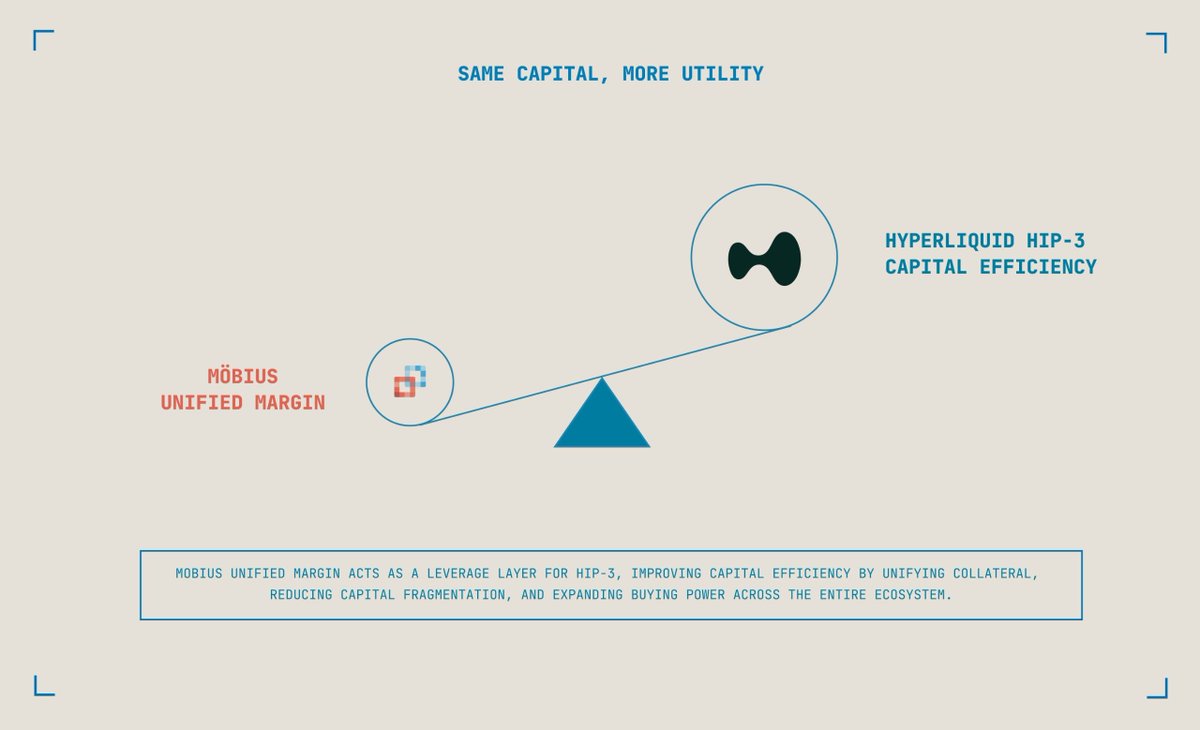
HIP-3 may need Unified Margin to truly scale
HIP-3 is quickly becoming one of the biggest growth stories on @HyperliquidX. HIP-3 markets now account for roughly 35–45% of total volume, with cumulative volume already surpassing $300B
More builders are launching new markets every month.
At first glance, this looks like a resounding success.
But success at this scale is creating a new, deeper challenge.
In TradFi, when financial products exploded through stock futures, index futures, commodities, and options, the industry did not solve the problem by building more exchanges.
It solved it through Prime Brokers, a unified layer that allowed traders to access hundreds of products through a single margin account.
It is the core thesis behind Mobius.
Hyperliquid's HIP-3 is beginning to follow a similar path.
5
1
13
726
Mahone Defi retweeted

Jun 13
Too many perp DEX?
Maybe, because everyone wants to build the next Hyperliquid, so seeing a new perp DEX every week is almost inevitable.
So, instead of trying to pick the right perp DEX, I'd rather have a single Credit Account that lets me trade across all perp venues from one account.
Jun 12

have you seen that we have so many perp dex right now:
ondo perps
varitional
risex
extended
cascade
dango
bulk
tradehotstuff
reya
standx
ostium
ethereal
nado
and others
too many perp dex, and i really believe that only 3 of them will give the really good tge to their community.
can you guess what perp dex i think?
4
2
17
1,132
Mahone Defi retweeted
HIP-3 may need Unified Margin to truly scale
HIP-3 is quickly becoming one of the biggest growth stories on @HyperliquidX. HIP-3 markets now account for roughly 35–45% of total volume, with cumulative volume already surpassing $300B
More builders are launching new markets every month.
At first glance, this looks like a resounding success.
But success at this scale is creating a new, deeper challenge.
In TradFi, when financial products exploded through stock futures, index futures, commodities, and options, the industry did not solve the problem by building more exchanges.
It solved it through Prime Brokers, a unified layer that allowed traders to access hundreds of products through a single margin account.
It is the core thesis behind Mobius.
Hyperliquid's HIP-3 is beginning to follow a similar path.
7
7
19
1,983
Jun 13
May was an important month for Aave.
The protocol returned to normal operations after the rsETH incident and, while the recovery is still ongoing, the report highlighted three growth engines that are becoming increasingly important:
- GHO as a native monetary asset
- Horizon as Aave's RWA lending business
- V4 as the next generation of lending infrastructure
Each of them points to a future where @aave is much more than just a lending protocol.
Source: @tokenterminal
2
5
18
886
Jun 13
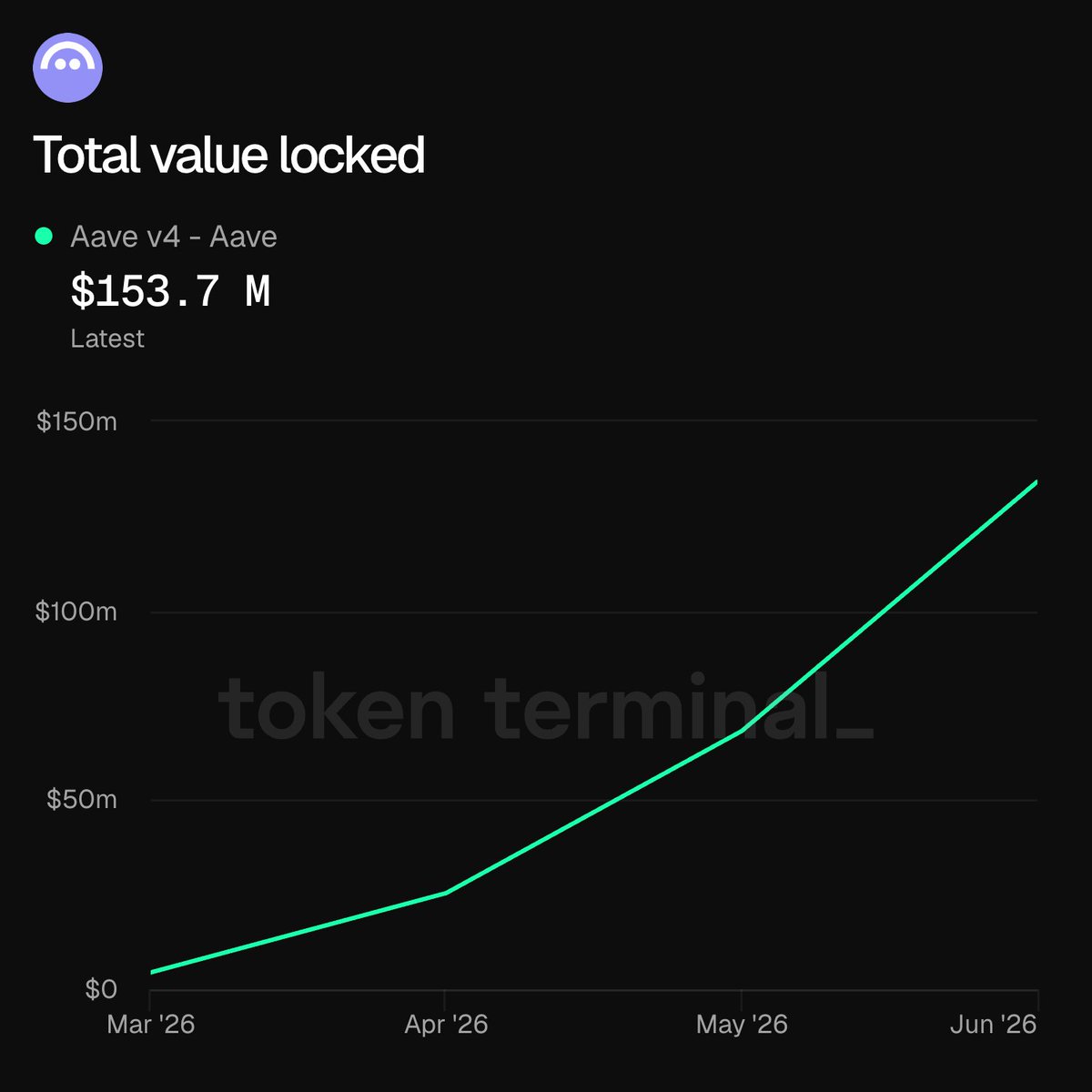
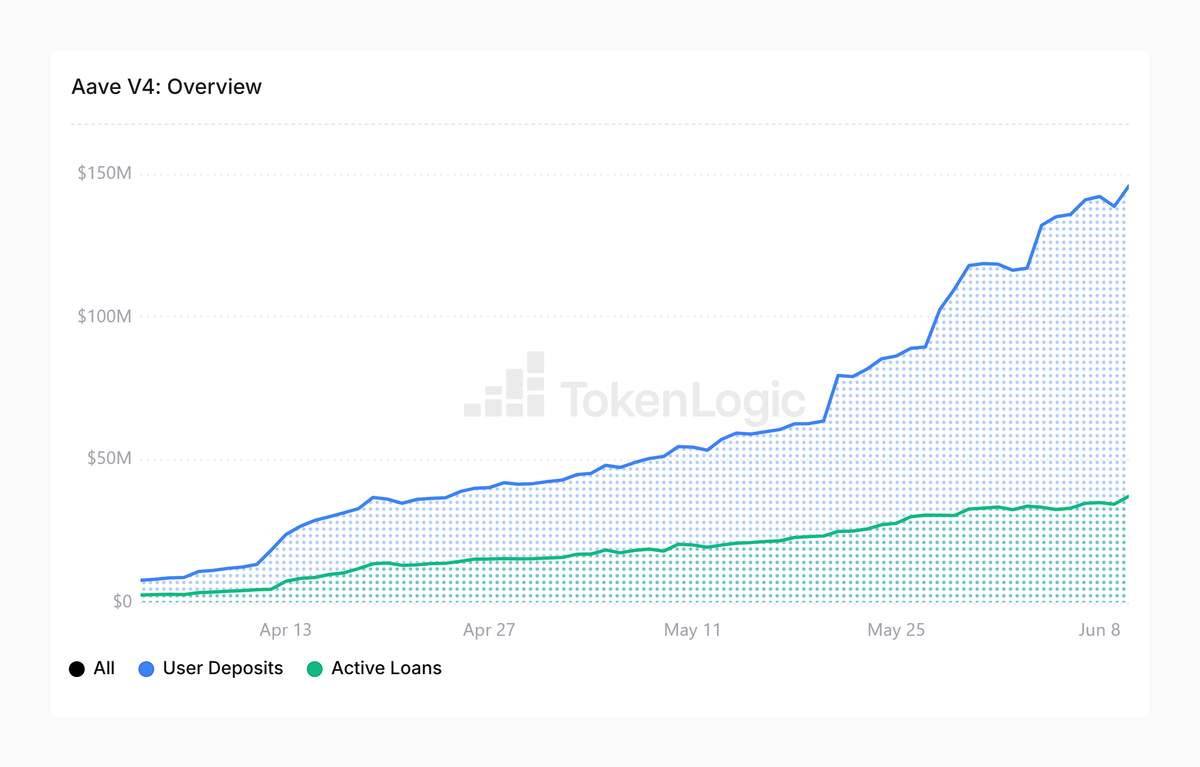
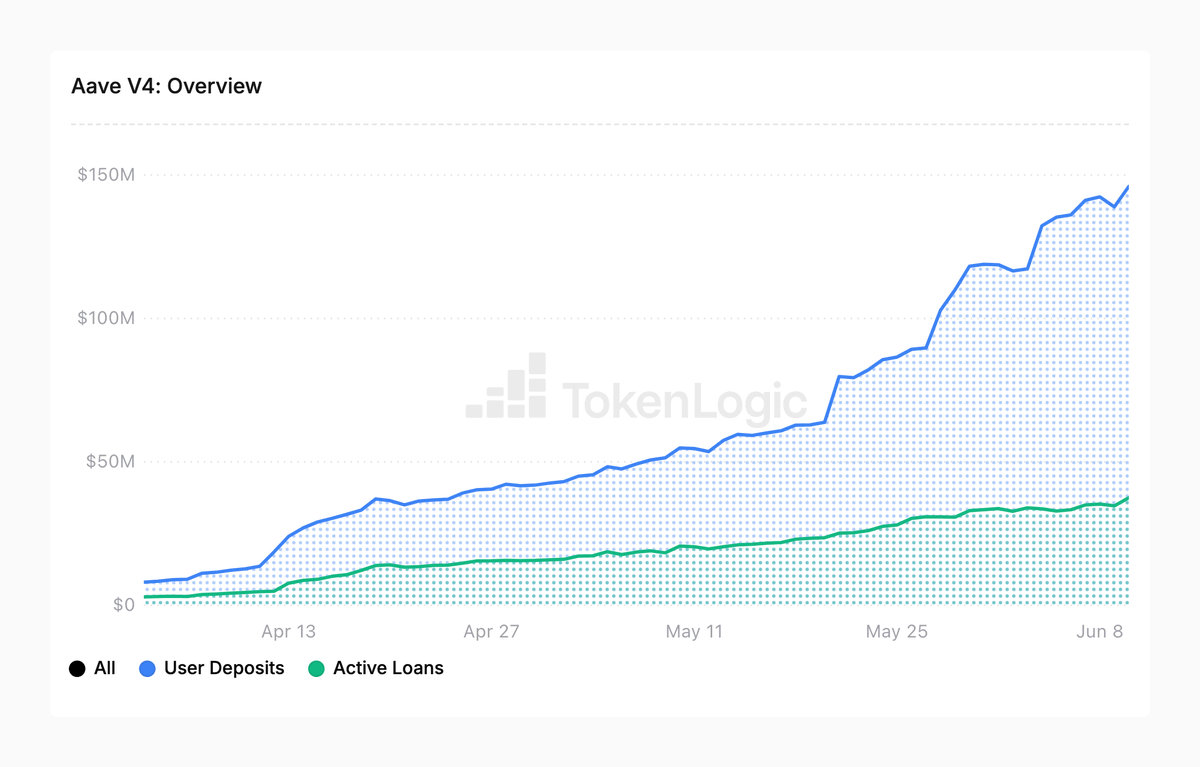
Is V4 starting to show Product-Market Fit?
Aave V4 TVL grew 168% month-over-month.
The number is still small compared to the scale of V3.
But the important signal is that capital continues moving into the new architecture.
Capital is willing to migrate to the new architecture.
That may be one of the most important observations in the entire report.
The question is no longer whether V4 works.
The question is whether V4 can become the foundation of Aave's next phase of growth.
2
1
77
Jun 13
Viewed through this lens, May was not simply a month of recovery.
It was a month that highlighted three emerging growth engines:
• GHO as a monetary asset
• Horizon as an institutional and RWA lending business
• V4 as the next generation of lending infrastructure
The recovery may still be ongoing.
But Aave is already building what comes next.
1
62