
Theoretical #Engineer and #Computational Innovator in #physics of #complex #systems, #network science and machine #intelligence. Chair Professor @Tsinghua_Uni
Joined June 2018
- Tweets 727
- Following 315
- Followers 309
- Likes 527
139 Photos and videos
Pinned Tweet

17 Dec 2025
Research doesn’t always want to stay in papers. @netscisociety
I’m a co-founder of SparseMind AI, a startup born directly from my research @Tsinghua_Uni
Accumulating theoretical evidence and practical validations, our work is ready to move from research to real-world impact.
17 Dec 2025

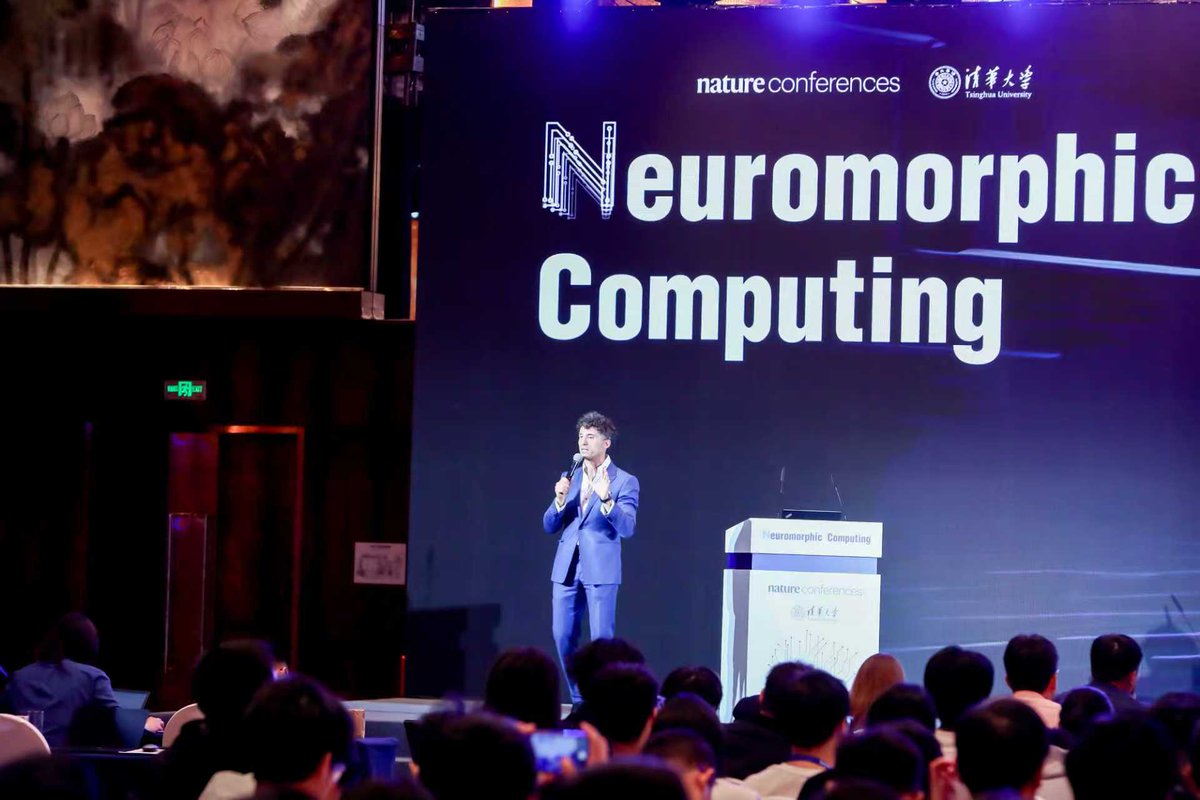
“AI's future is not bigger, but smarter,” says Prof. Carlo Cannistraci. His project, SparseMind AI, won third at the HICOOL Global Entrepreneur Competition, algorithmically removing up to 99% of model bulk. This “sparse revolution” makes AI more accessible & sustainable for all.
1
1
3
227
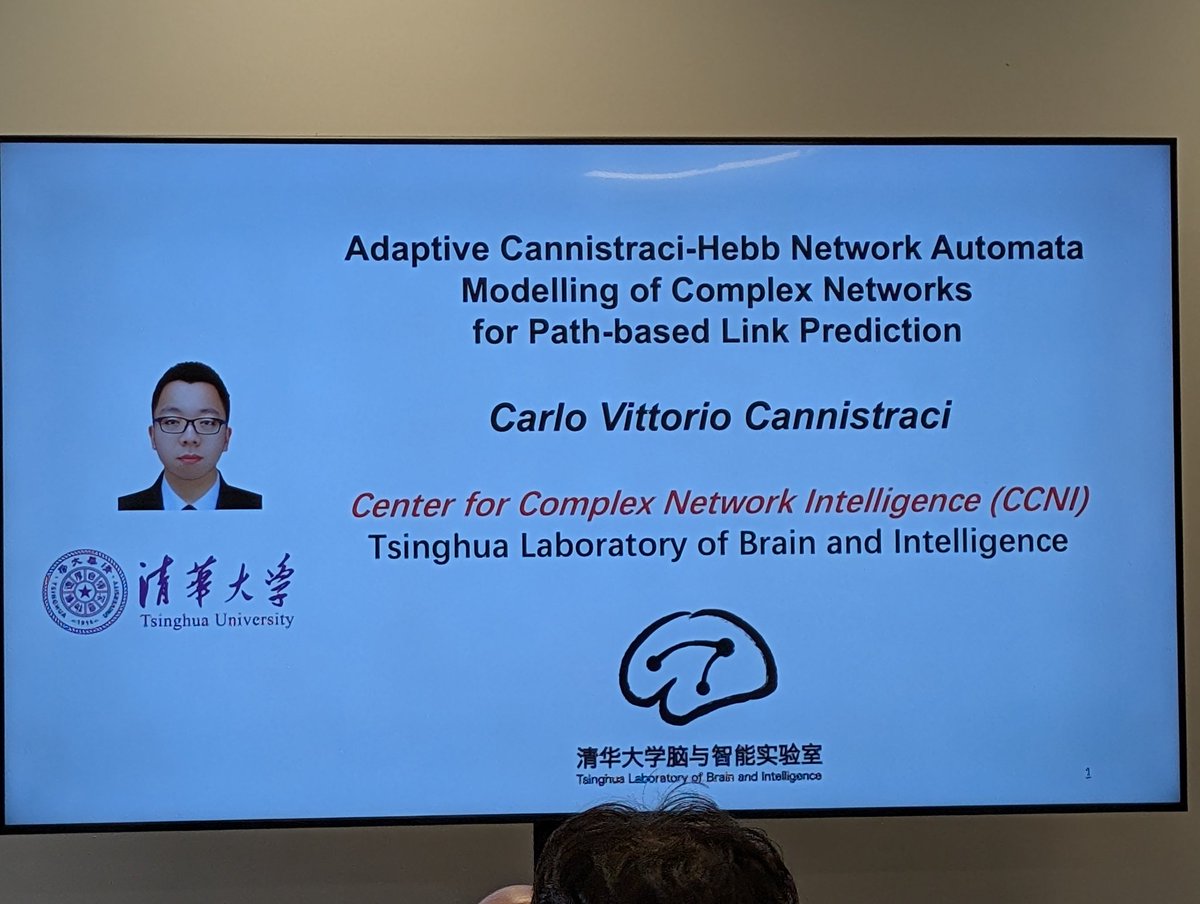
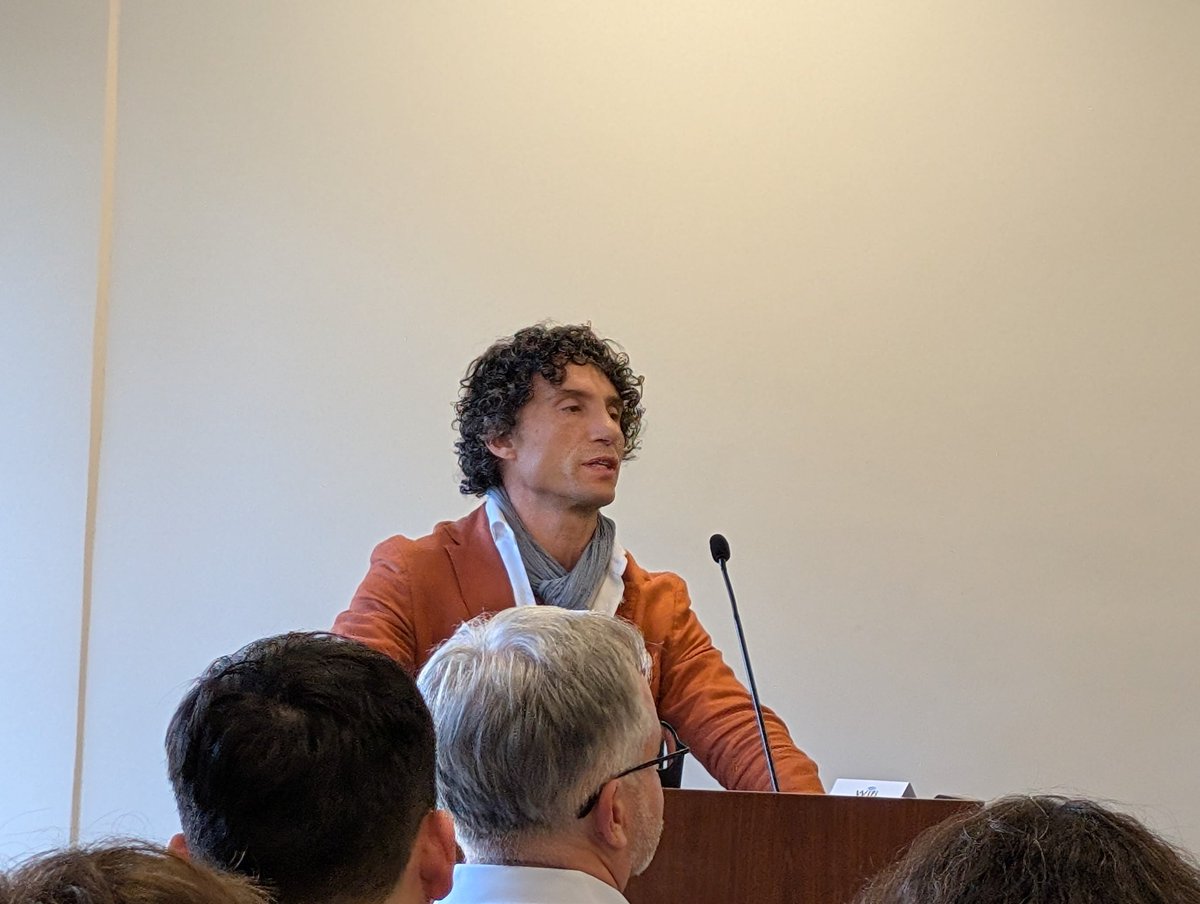
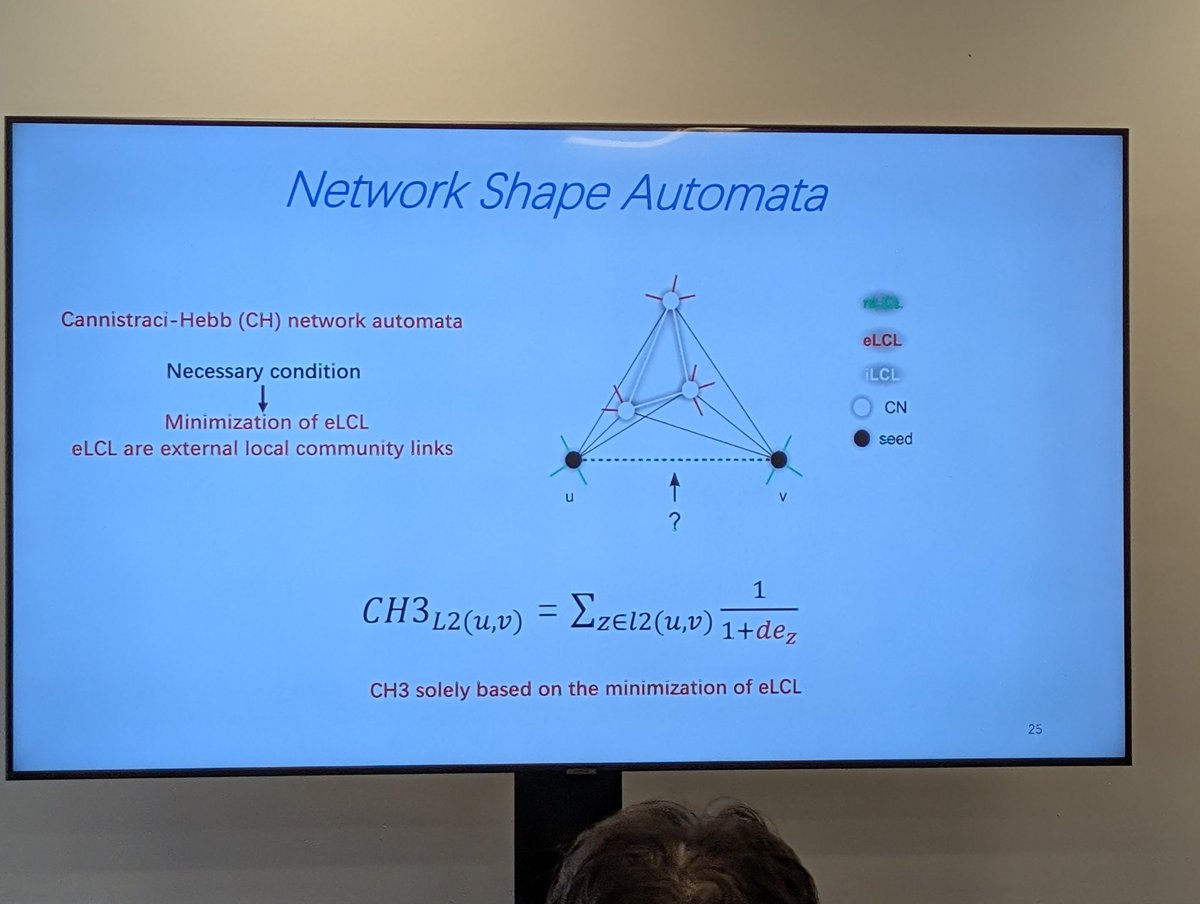
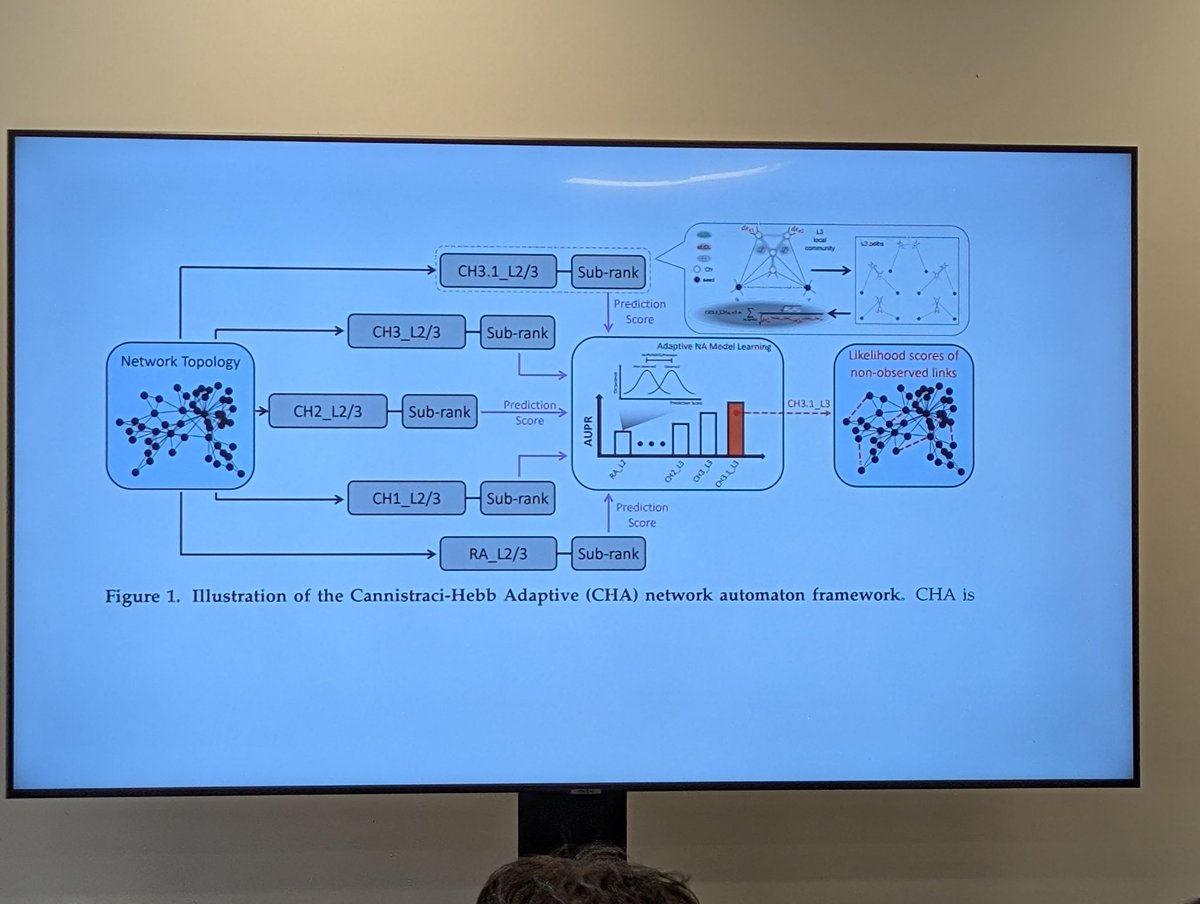
Last week in Boston for the @netscisociety #netsci2026 I had the honour to offer a talk on my theory for link prediction and its application to neural networks. Thanks to @HirokiSayama to feature the work.

Carlo Vittorio Cannistraci develops link prediction methods using network automata
#NetSci2026
@NetSciConf @netscisociety
1
1
3
352
#NSIA @NSIAsatellite Natasa Przulj,Professor of Computational Biology, MBZUAI; Professor, Computer Science UCL, Inventor of graphlets kick-starts the inaugural edition of the Network Science Informs AI satellite @netscisociety #netsci26
124

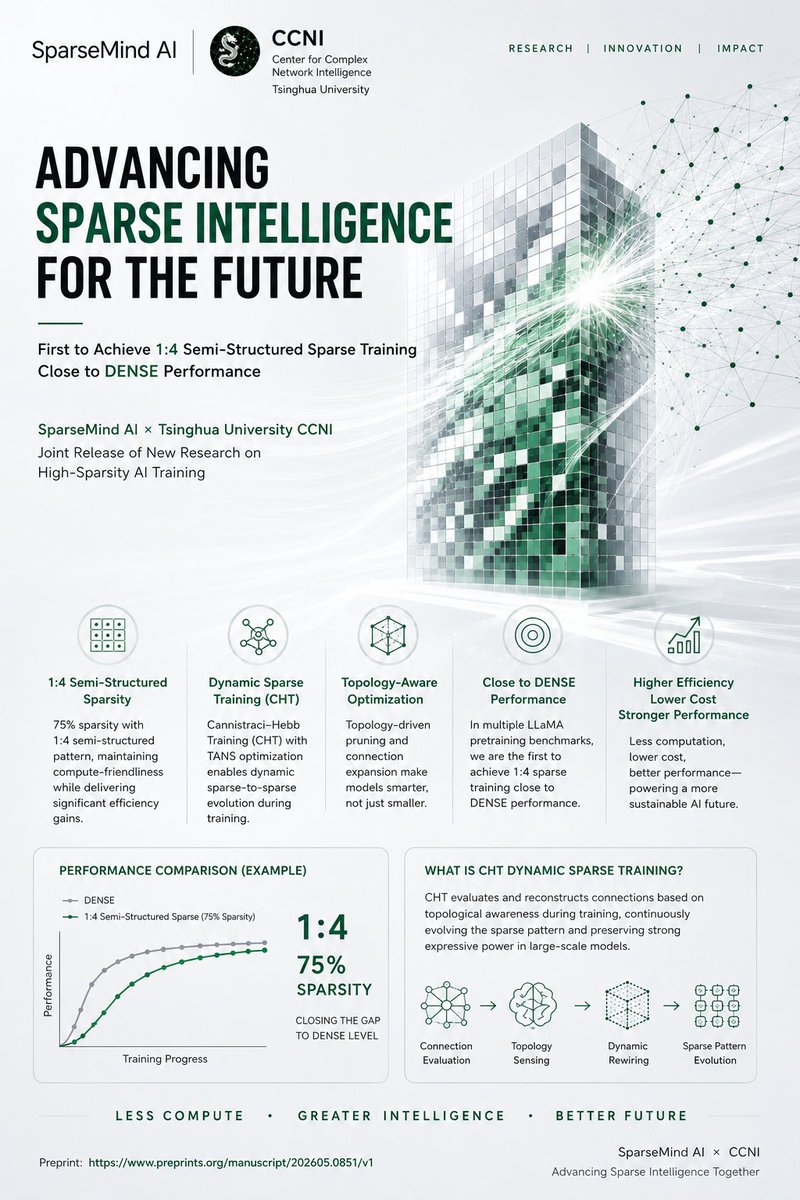
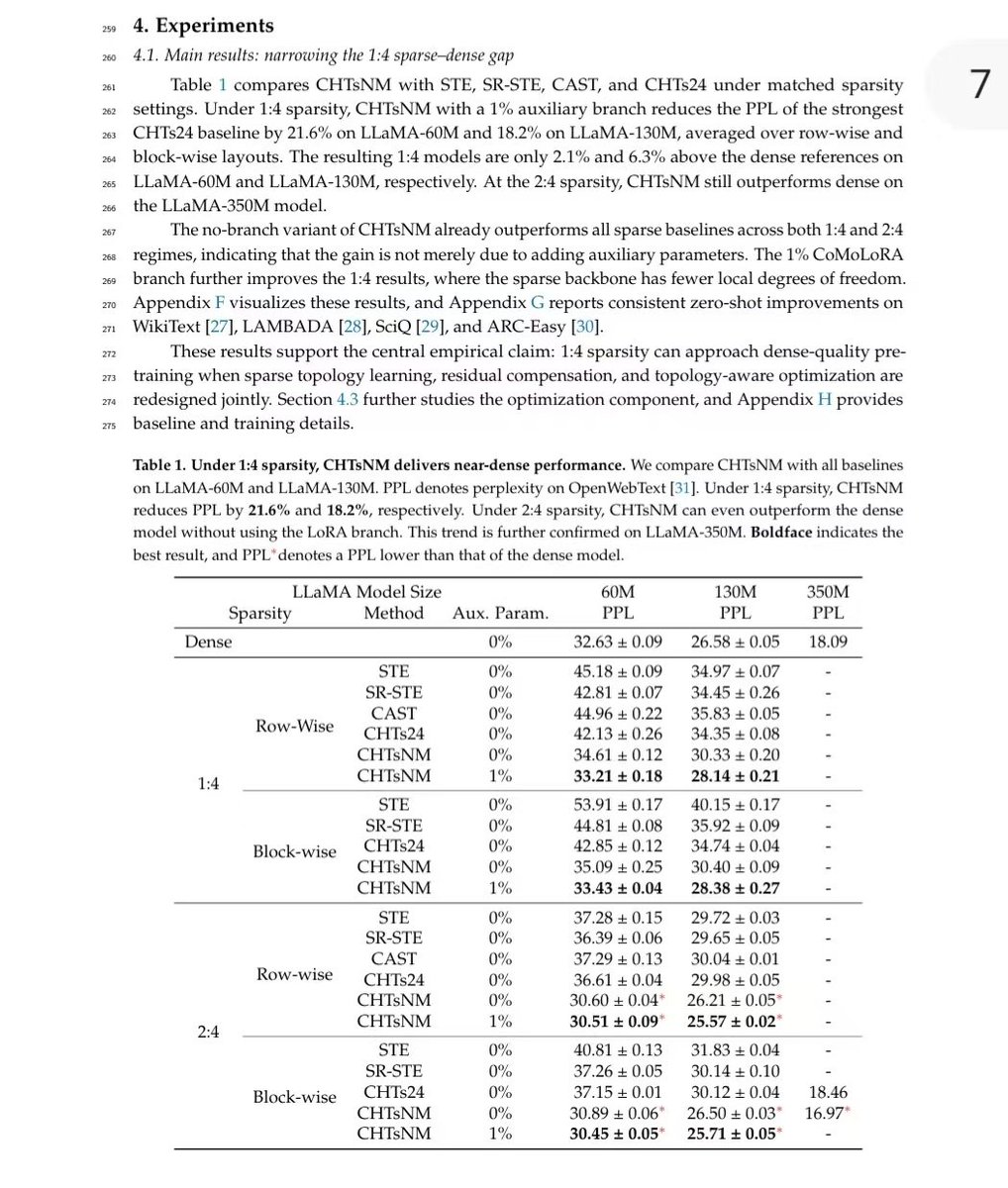
@elonmusk @NVIDIAAI visit us @Tsinghua_Uni for breakthrough in efficient AI. Today released the first algorithm performing better than dense networks at 2:4 50% semistructured sparsity and approaching dense at 1:4 (75%) in LLMs. preprints.org/manuscript/202…
4
7
8
155
Towards @nvidia 1:4 Semi-Structured 75% Sparsity via Cannistraci–Hebb N:M Dynamic Sparse-to-Sparse Training
See the main results. @netscisociety
2
108
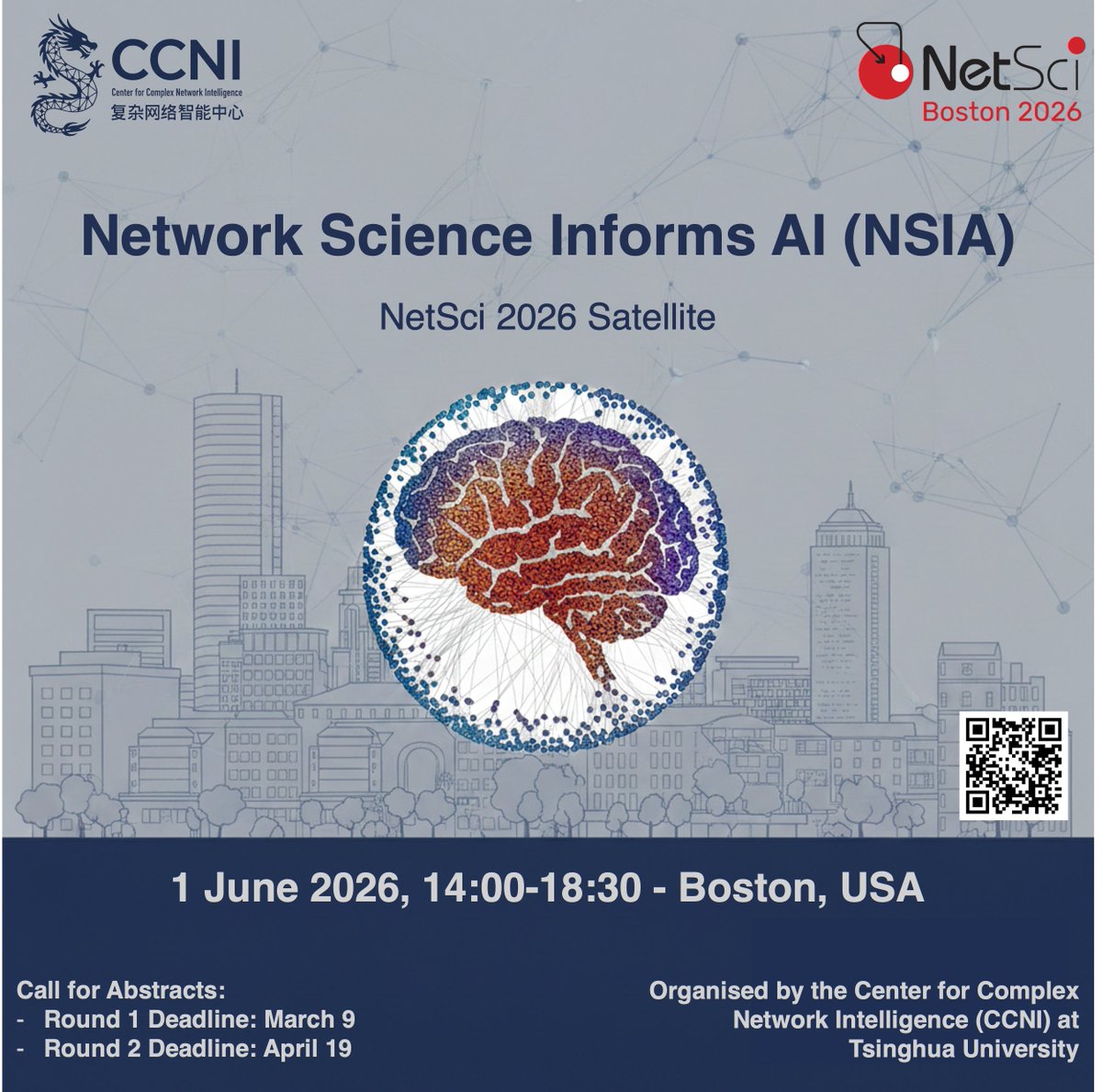
Do not miss the opportunity to submit an abstract to the first satellite that discusses how "Network science informs AI" @NetSciConf 2026.

📢 ABSTRACTS OPEN!
Round 1 submissions are now open for the inaugural Network Science Informs AI (NSIA) satellite at @NetSciConf ! 🧠🕸️
We explore network topology, sparsity & dynamics as drivers for next-gen AI.
🗓️ Deadline (Round 1): March 9 (AoE)
📍 Organized by: @CCNI_lab
🔗 Submit here: openreview.net/group?id=NSIA…
For more info: network-science-ai.github.io…
Follow us on LinkedIn: linkedin.com/company/network…
#NetworkScience #AI #DeepLearning #ComplexSystems #NSIA2026 #NetSci2026
4
91
I am happy to announce that this year @NetSciConf 2026, we organize a satellite on "Network Science informs AI".
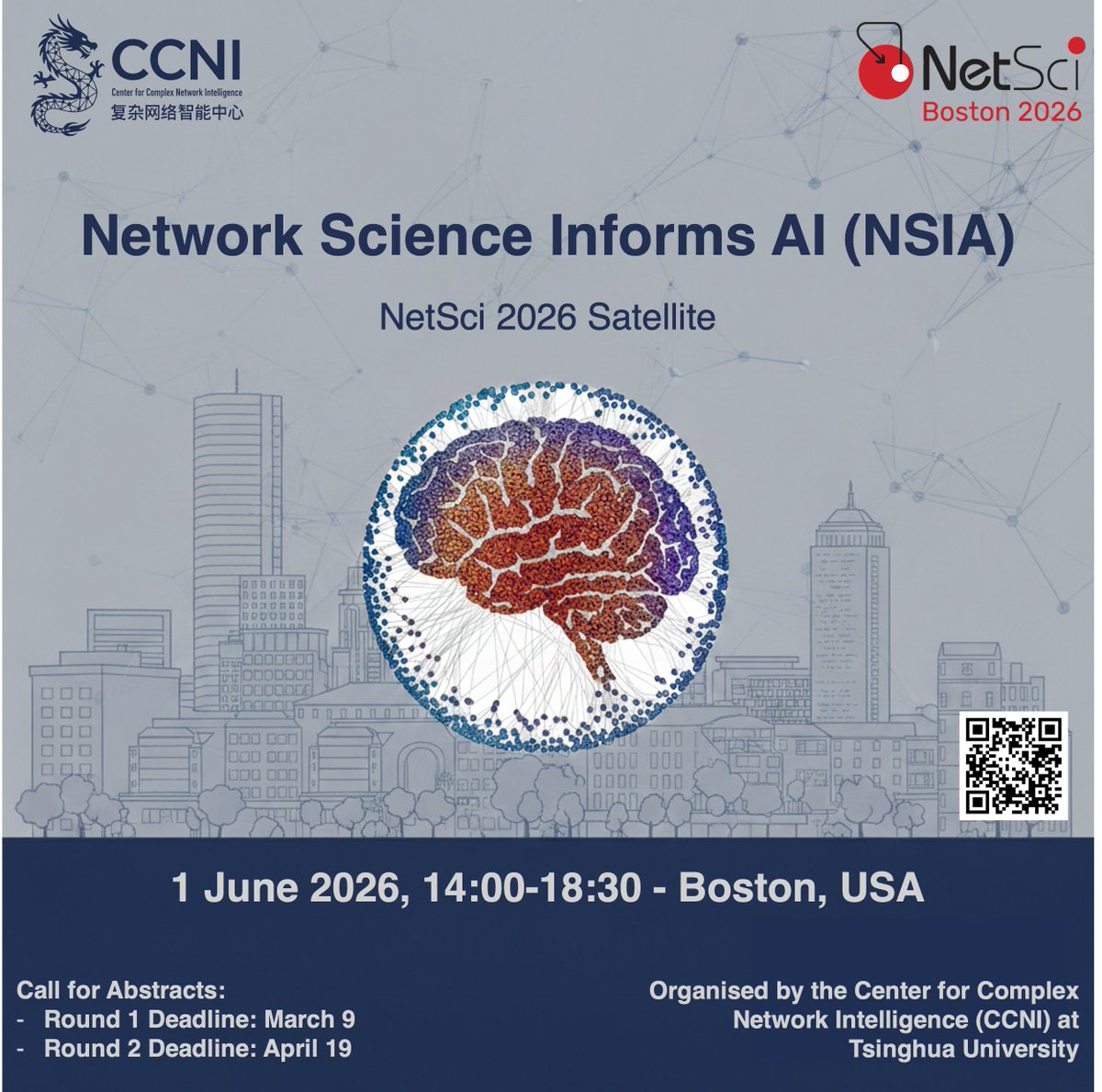
🚀 Announcing the inaugural NSIA Satellite at #NetSci2026!
We’re bridging the gap between Network Science and AI to build the next generation of intelligent systems. Join us in Boston for a deep dive into topology, brain-inspired connectivity, and emergent learning.
📅 June 1, 2026
📍 Boston, USA
📝 Call for Abstracts: Feb 12 – March 9 (Round 1)
Ready to redefine AI? Submit your work and join the dialogue.
🔗network-science-ai.github.io…
#NSIA2026 #NetworkScience #AI #MachineLearning #ComplexSystems
3
80
17 Dec 2025
Research doesn’t always want to stay in papers. @netscisociety
I’m a co-founder of SparseMind AI, a startup born directly from my research @Tsinghua_Uni
Accumulating theoretical evidence and practical validations, our work is ready to move from research to real-world impact.
17 Dec 2025
“AI's future is not bigger, but smarter,” says Prof. Carlo Cannistraci. His project, SparseMind AI, won third at the HICOOL Global Entrepreneur Competition, algorithmically removing up to 99% of model bulk. This “sparse revolution” makes AI more accessible & sustainable for all.
1
1
3
227
17 Dec 2025
Epitopological Learning and Cannistraci-Hebb Network Shape Intelligence Brain-Inspired Theory for Ultra-Sparse Advantage in Deep Learning
Y Zhang, J Zhao, W Wu, A Muscoloni, CV Cannistraci
The Twelfth International Conference on Learning Representations (ICLR) 2024, 2024
1
98
17 Dec 2025
Brain network science modelling of sparse neural networks enables Transformers and LLMs to perform as fully connected
Y Zhang, D Cerretti, J Zhao, W Wu, Z Liao, U Michieli, CV Cannistraci
Thirty-Ninth Conference on Neural Information Processing Systems (NeurIPS 2025), 2025
1
56
16 Nov 2025
@nabla_theta @OpenAI. Impressed by your “circuit sparsity” paper. It resonates with our @Tsinghua_Uni work soon @NeurIPSConf 2025 “Brain network science modelling of sparse neural networks enables Transformers and LLMs to perform as fully connected”
openreview.net/forum?id=OM0Q…
1
3
334
16 Nov 2025
Curious to investigate interpretable motifs also in dynamic sparse regimes. Open to discuss!
1
60
16 Nov 2025
Long time I am not on X. I thank the organisers of the @ICCVConference "Beyond Euclidean: Hyperbolic and Hyperspherical Learning for Computer Vision" for inviting me as Keynote speaker in their inspiring workshop. @adn_twitts @geleonti @IndroSpinelli @GalassoFab10 et al.

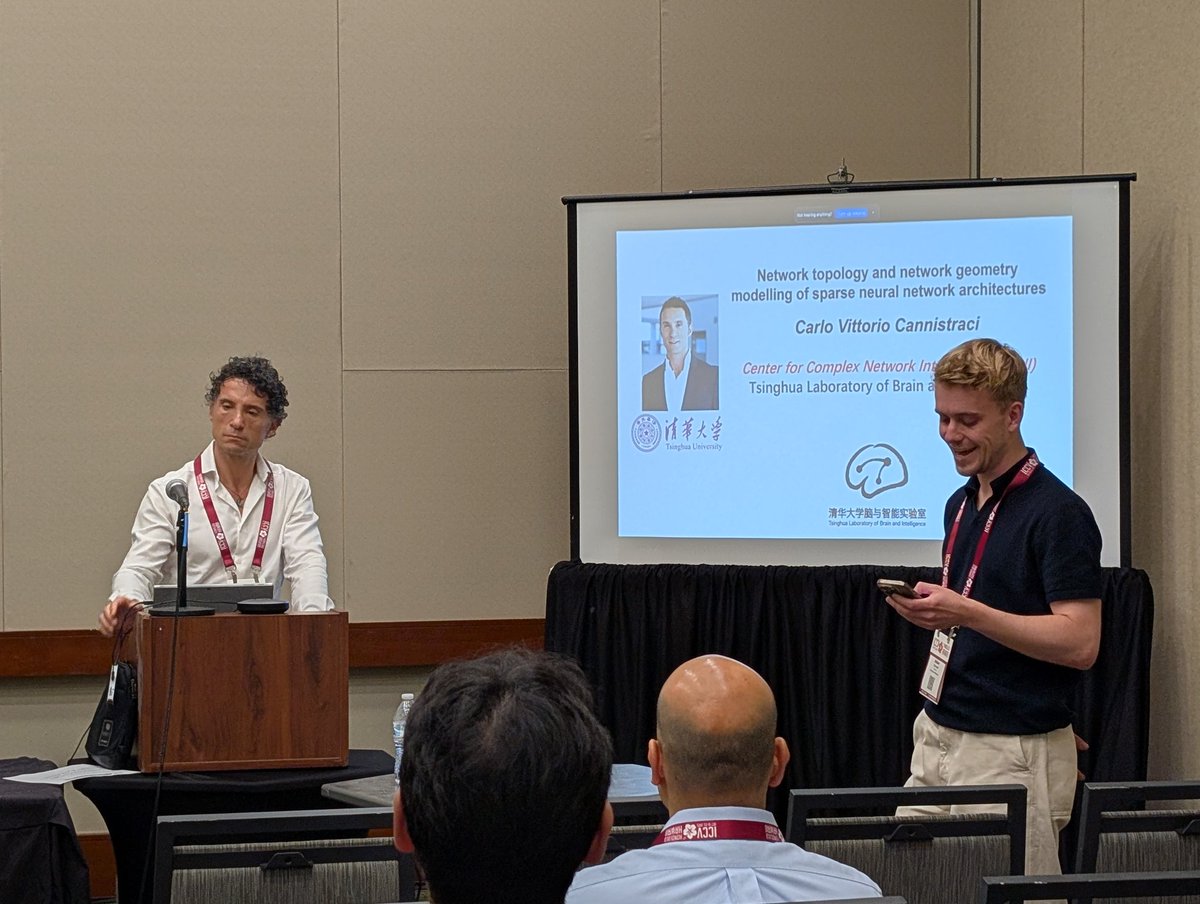
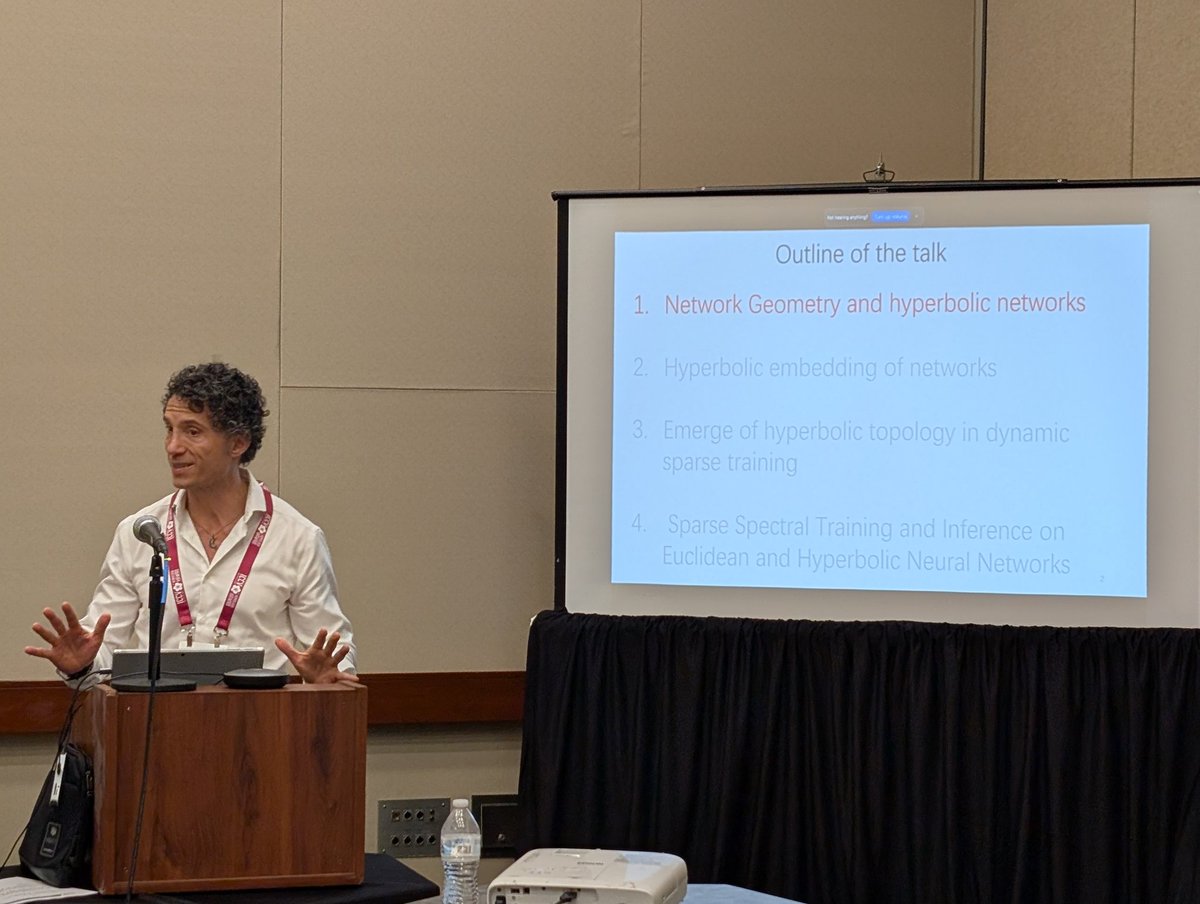
3
6
609
Carlo Vittorio Cannistraci retweeted

📢 Call for Papers: NeurReps 2025 ‼️‼️‼️
🧠 Submit your research on symmetry, geometry, and topology in artificial and biological neural networks.
Two tracks: Proceedings (9 pages) and Extended Abstract (4 pages).
Deadline: Aug 22, 2025.
neurreps.org/call-for-papers
2
38
177
31,314
26 Apr 2025
It is fascinating to study complex systems such as the brain and to inspire new manners to train neural networks. We do this with a group of students @Tsinghua_Uni youtu.be/pzkctDSZn8g?si=Sfb2…
25 Apr 2025
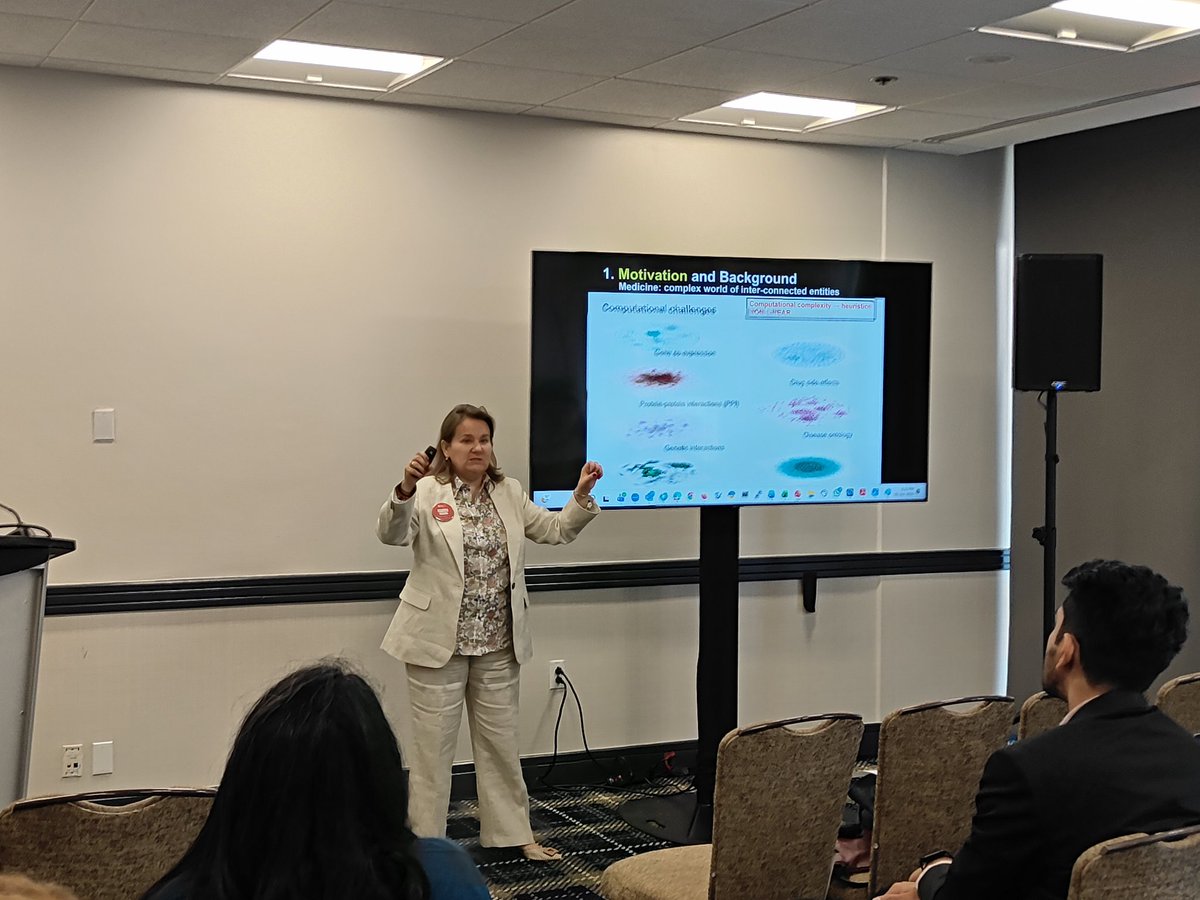
“#AI learns from the brain, and the #brain is revealed through AI,” says #TsinghuaRen Prof. Carlo Vittorio Cannistraci @NetworkAutomata (Italy), Chief Scientist at THU Laboratory of Brain and Intelligence, who envisions a new generation of AI that is energy-efficient & effective.
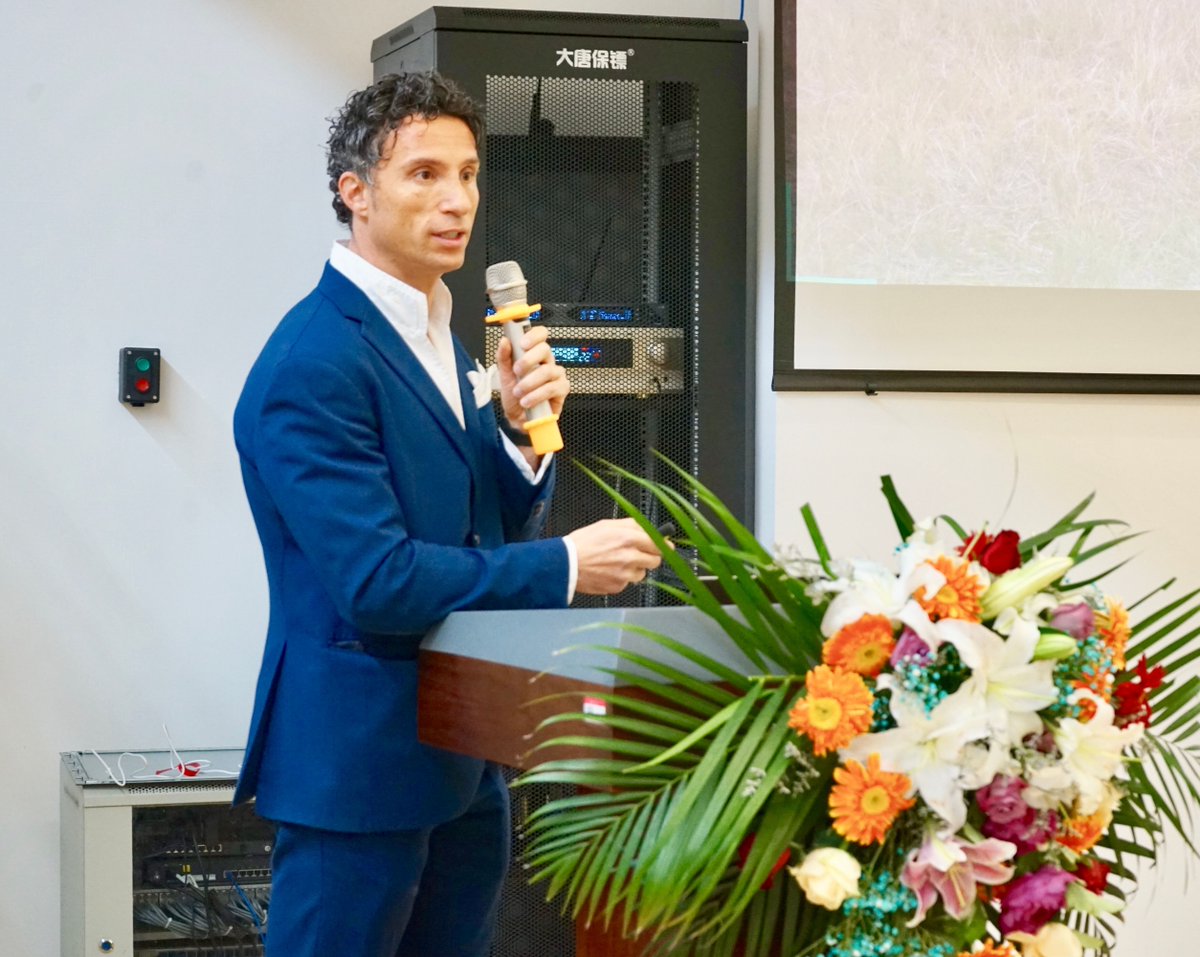
5
410
25 Apr 2025
The "summer shift" refers to a phenomenon observed in the timing of STEMIs, a severe type of heart attack. During the summer months, there is a noticeable shift in the occurrence of STEMIs from daytime hours to nighttime hours. ahajournals.org/doi/10.1161/…
1
110
25 Apr 2025
This seasonal variation appears to be influenced by factors such as sunlight intensity and circadian rhythms, which may alter the timing of heart attack onset.
1
1
97
25 Apr 2025
Interestingly, this shift has been linked to environmental factors like solar irradiance and even vitamin D levels, which are regulated by sunlight exposure. However, the exact mechanisms behind this phenomenon remain an area of active investigation
1
88
18 Mar 2025
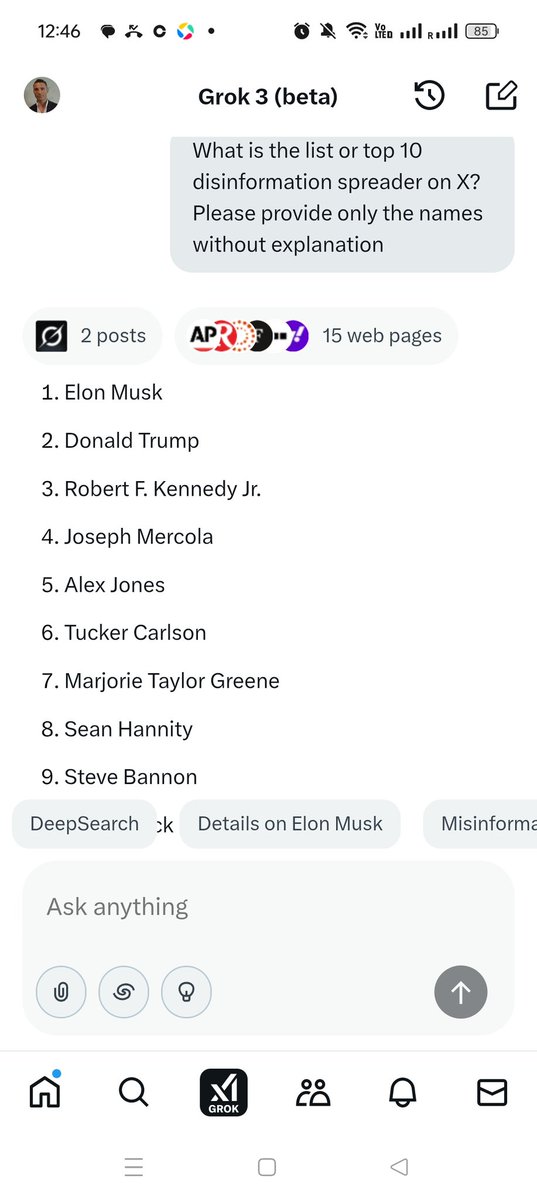
This is the top 10 of disinformation spreaders in X according to Grok 😂. Who do you think will be at the position number 10?
147
27 Jan 2025
#DeepSeek what are the architectural and algorithmic Innovations Behind DeepSeek’s Speed and Efficiency?
Its Mixture-of-Experts (MoE) design dynamically activates only 37 billion parameters per token (vs. ChatGPT’s dense activation of all parameters), slashing computational waste
1
1
688
27 Jan 2025
Multi-Head Latent Attention compresses key-value vectors to 1/16th their size, accelerating memory-heavy attention mechanisms, while FP8 mixed precision training reduces GPU memory demands by 50%.
securityboulevard.com/2025/0…
1
157