
Joined September 2025
- Tweets 1,353
- Following 2,220
- Followers 1,870
- Likes 1,154
479 Photos and videos







🔐 Privacy is No Longer Optional in Web3.
@FlutonIO is building a Universal Confidentiality Engine powered by FHE, enabling private cross-chain interactions, encrypted intents, and MEV-resistant execution. 🚀
With 13K users already participating in its private testnet, Fluton is pushing the future of confidential DeFi forward. 🌐⚡
@cryptoperseus_
@KhandayFaisal20
@JEAMSETH07
#Fluton #Web3 #DeFi #Privacy #FHE
5
1
9
49
🤖⚡ The Future of Work is Becoming Autonomous.
@konnex_world is building a permissionless marketplace where robots, AI, and on-chain coordination come together to create a decentralized labor economy.
🚀 Recently secured $15M in strategic funding to accelerate autonomous robotics infrastructure and bring real-world labor on-chain.
The intersection of AI, Robotics & Web3 is just getting started. 🔥
@Gyorkz
@The_walane
#Konnex #AI #Robotics #DePIN #Web3 #CryptoAI #BlockchainInnovation
3
1
5
51
Gmum! ⚡
Networks shouldn't be the bottleneck for blockchains.
Optimum is redefining the speed of Web3 with our mump2p engine. Powered by Random Linear Network Coding (RLNC), we are freeing Ethereum from data propagation limits and prepping for mainnet. ⛓️💨
Stop guessing and see the future of data movement in action.
Try the simulation: 🔗 gmum.cc/simulation
@get_optimum
@cryptooflashh
@aqccapital
#Optimum #DataMovement #RLNC #Ethereum #Web3
18
21
126

Jun 9
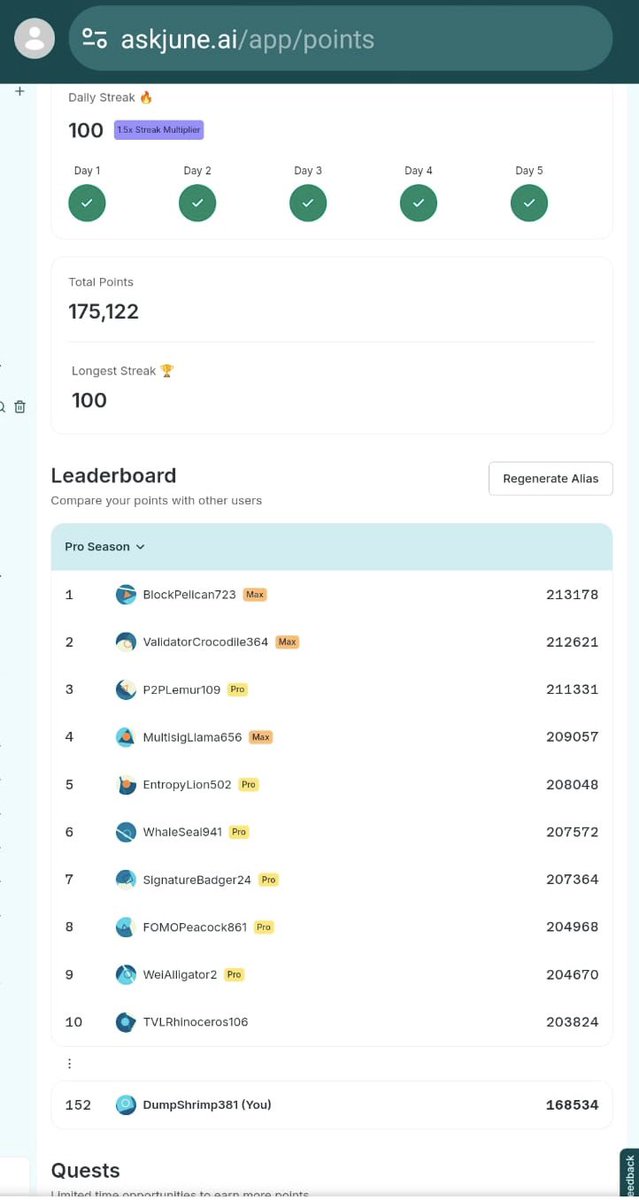
✨ 100 Days. Countless Conversations. Infinite Learning. 🤖💙
Today I’ve officially completed 100 days with JuneAI! 🎉
From insightful answers to daily inspiration, every interaction has made the journey more valuable. Excited to see how far this AI evolves and what the next 100 days bring. 🚀
Thank you, @askjuneai for building something that people genuinely enjoy using. 💙
@SpeakStraight_
@lazy_cryptan
@kaii_onchain
@jkb0x
#JuneAI #100Days #AI #Web3 #Innovation #BuildInPublic 🚀
6
1
12
248
NextGenAi𒆜☆ retweeted

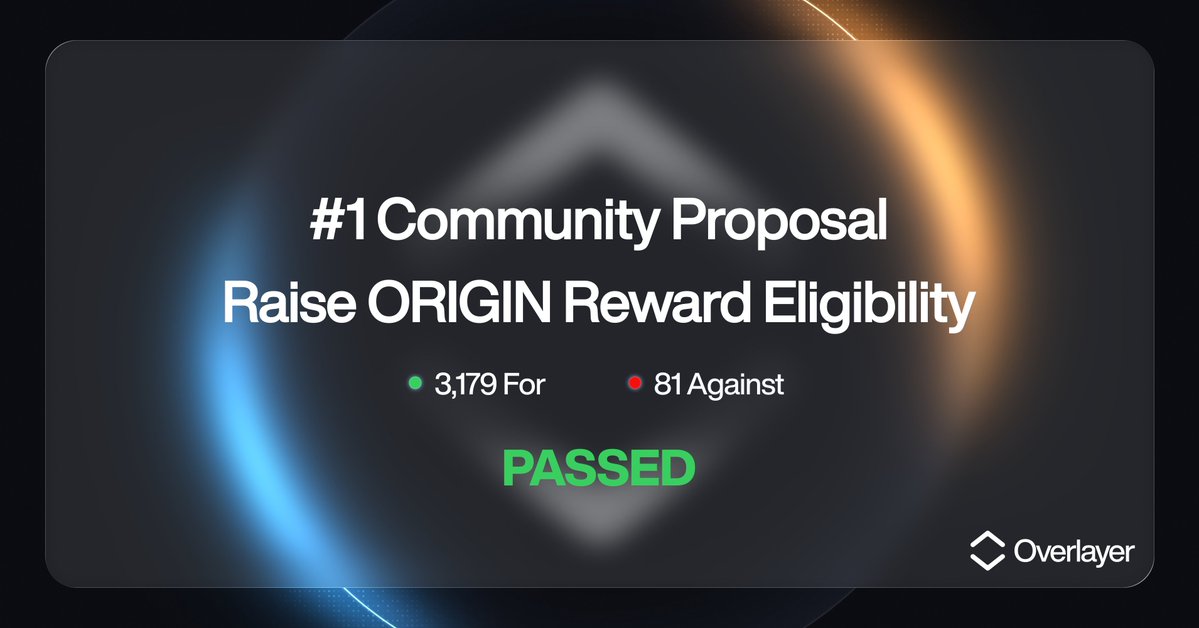
The first Overlayer Community Proposal has officially passed.
3,179 votes in favor.
81 votes against.
The ORIGIN reward eligibility threshold will increase to 15,000 Points.
Community spoke.
Overlayer evolves.
470
476
775
18,034
NextGenAi𒆜☆ retweeted

May 25
The key to squeezing the best alpha out of RAFAs 5 AI Agents comes from GOLDEN PROMPTING.
Here's a golden prompt to try on your RAFA account:
Using the RAFA quant trend, options sentiment, and additional macroeconomic news, what are the top three stocks that Bill O'Neil, Jim Simons, Jeff Yass, and PTJ all agree are 10/10 strong buys, with 10 being the highest?

165
107
240
2,838
May 25
🌐 KAST is quietly building the bridge between Traditional Finance & Crypto Payments 💳⚡
Fast settlements, stablecoin utility, and seamless spending experiences are pushing Web3 closer to mass adoption every day 🚀
The next fintech wave will be powered by crypto. 🔥
@KASTxyz
@Coleta_Cripto
#KAST #Crypto #Web3 #Stablecoins #Fintech #DeFi
2
1
12
115
May 25
Optimum is accelerating the AI Web3 revolution with smarter infrastructure and real decentralized performance ⚡🔥
The ecosystem keeps evolving faster, more scalable, and built for the future of intelligent networks 🤖🚀
#Optimum #AI #Web3 #Crypto #Blockchain #DePIN #FutureOfAI
2
1
11
90
May 23
💳 KAST is making crypto spending feel effortless.
Instant stablecoin payments, smoother onboarding & real-world usability are exactly what Web3 needs right now 🌍⚡
The future isn’t just holding crypto anymore, it’s using it daily. 🚀
@KASTxyz
@Coleta_Cripto
#KAST #Web3 #Stablecoins #CryptoPayments #DeFi #Fintech
2
2
8
94
May 23
🚀 RAFA is Building More than AI Trading Tools.
✅ Wallet-level risk control
🔐 No seed phrase exposure
🤖 AI-agent execution logic
📊 Smart contract event analysis
🏆 Swap Royale strategy competitions
The future of AI Web3 execution is getting smarter, safer & community-driven. ⚡🔥
#RAFA #AI #Web3 #Crypto #DeFi #Trading #Blockchain
1
2
9
137
May 22
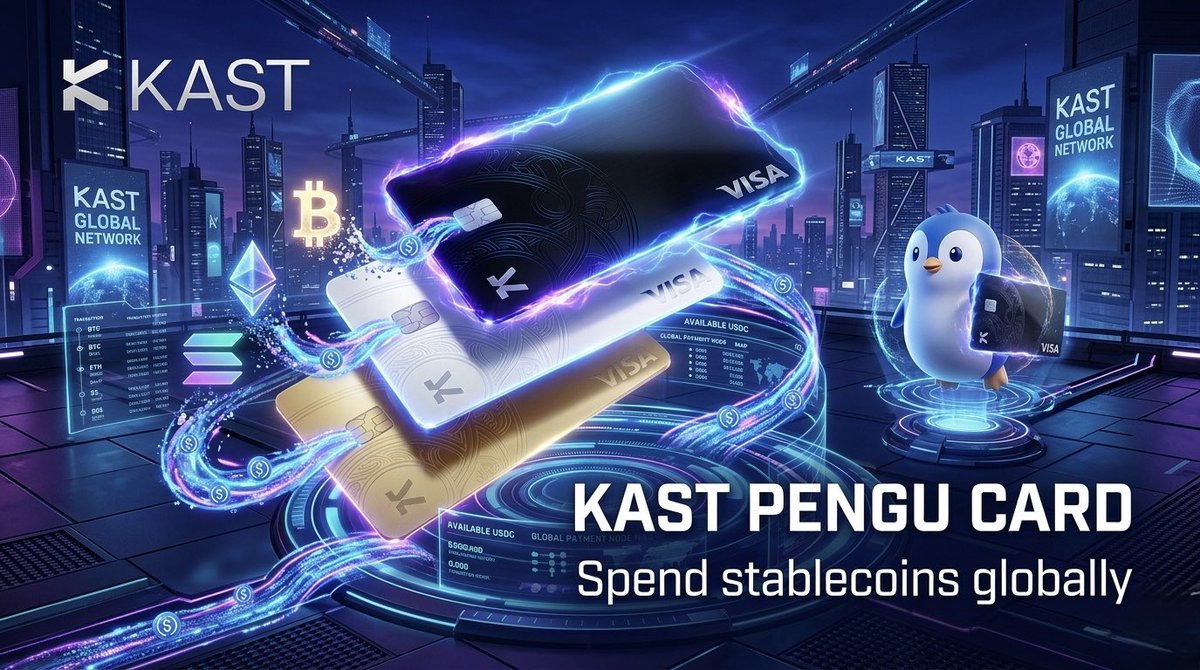
🚀 KAST keeps pushing crypto payments forward!
Now users can top up with BTC, ETH & SOL directly into USDC for real-world spending 💳⚡
Plus, new fiat banking features are making stablecoin payments smoother than ever 🌍
Web3 banking is slowly becoming invisible, and that’s the real adoption. 🔥
@Coleta_Cripto
#KAST #Crypto #Stablecoins #Web3 #DeFi #Bitcoin #ETH #SOL #Fintech
2
1
8
115
May 22
Optimum keeps pushing the AI x Web3 space forward with smarter automation, faster infrastructure, and real decentralized innovation. ⚡
The future isn’t coming slowly anymore it’s already being built in real time. 🚀🔥
#Optimum #AI #Web3 #Crypto #Blockchain #DePIN #FutureTech
2
1
6
77
May 19
Unique Technical Analogy Version
Most people think blockchain performance is only about computation.
But blockchains are not just computers.
They are living networks.
Every transaction, block, message, and update has to travel through a large decentralized environment before the system can coordinate around it.
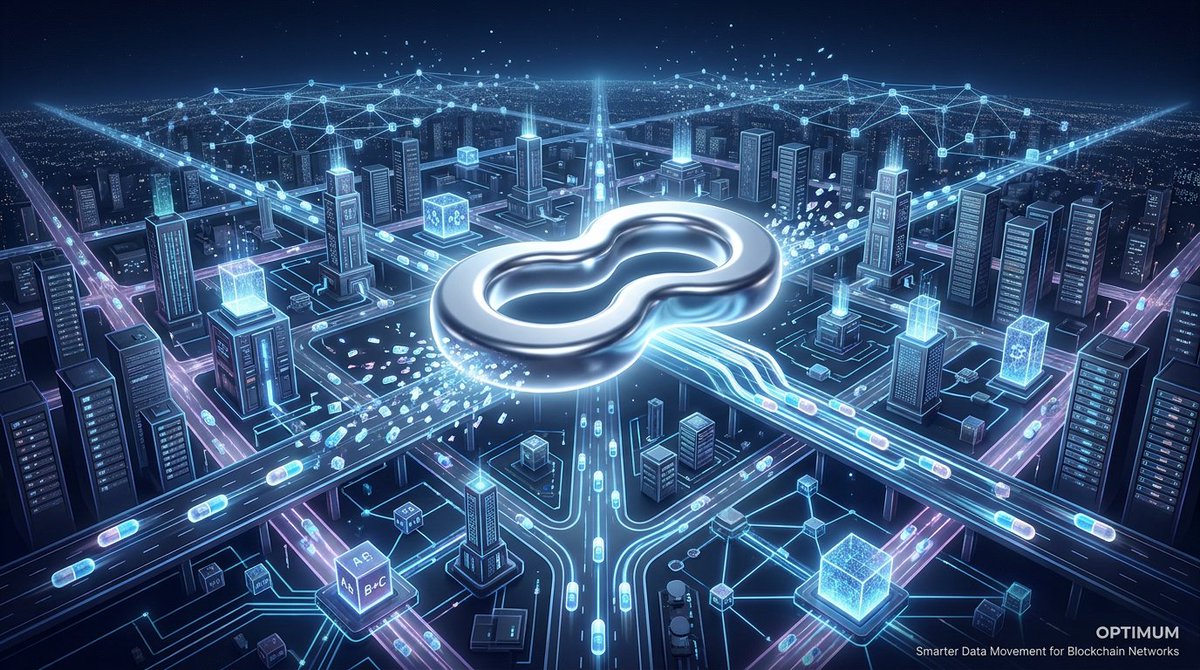
A useful way to understand this is to imagine a blockchain network like a massive digital city.
In this city, data is traffic.
Transactions are vehicles.
Blocks are cargo shipments.
Validators are important checkpoints.
Nodes are intersections.
Peer-to-peer connections are roads.
And propagation is the movement of everything across the city.
Now imagine this city growing bigger every day.
More users.
More validators.
More applications.
More data.
More demand.
If the roads are inefficient, the whole city slows down.
It does not matter how powerful the buildings are if the roads between them are congested.
This is one of the biggest hidden challenges in blockchain infrastructure.
The network layer has to move information quickly, efficiently, and reliably across many participants at once. But traditional propagation can create problems:
duplicate data, delayed packets, inefficient routing, and nodes waiting for missing pieces before they can reconstruct the full picture.
This is where Optimum becomes interesting.
Optimum is building high performance data movement infrastructure for blockchains, with mump2p focused on Ethereum data propagation.
Its architecture is powered by RLNC
Random Linear Network Coding.
Instead of treating data like individual fixed pieces that must travel perfectly from one place to another, RLNC allows data to be encoded into useful combinations.
That means a node does not always need the exact original pieces in the exact original order.
It needs enough useful encoded information to reconstruct what matters.
In the city analogy, this is like upgrading from basic roads to an intelligent transport system.
Instead of traffic getting stuck because one route is blocked or one delivery is missing, the system can use multiple useful flows of information to rebuild the full result more efficiently.
That is powerful for decentralized networks.
Because blockchains do not operate in perfect laboratory conditions.
They operate across real networks, real latency, real bandwidth limits, real peers, and real global infrastructure.
The future of blockchain scaling will not only depend on execution speed.
It will also depend on how well data moves through the network.
This is why Optimum’s mission matters.
It focuses on the layer most users never see, but every blockchain depends on:
the movement layer.
The coordination layer.
The propagation layer.
The invisible infrastructure that allows decentralized systems to stay connected.
For the community, understanding this narrative is important because it gives us a clearer way to explain Optimum:
Optimum is not just about “faster blockchain.”
It is about making blockchain communication more efficient.
It is about improving how data travels between nodes, validators, and networks.
It is about building smarter infrastructure for the next era of decentralized systems.
If Web3 is becoming a global digital city, then data movement is its transportation system.
And Optimum is building better roads for that future.
Gmum ⚡
@get_optimum
#Optimum #Gmum #RLNC #Ethereum #DataMovement #BlockchainInfrastructure #Web3 #DecentralizedNetworks
2
1
6
113