
This is the most serious comment the piece has drawn, and you've earned a serious answer, because you've done something none of the others did: you conceded the consumption point and moved the argument to firmer ground. You're right. The real question about concentrated wealth is not consumption. It is agency — who decides what gets built, financed, and ignored. I accept that framing completely. I just think it leads to the opposite of where you're heading.
Start with what we agree on. Wealth is not passive; it is capital allocation; capital allocation is decision-making power over the future. Yes. So the only question that matters is the comparative one you've implicitly raised and not answered: compared to whom? Decision-making power over capital does not vanish when you take it from billionaires. It moves. The honest debate is never "concentrated private capital vs. some frictionless social optimum." It is "concentrated private capital vs. the concrete alternative allocator" — and the only allocator large enough to replace them is the state. So the real question is: who allocates capital better, and under what discipline?
Here the asymmetry is decisive, and it has three parts.
First, skin in the game. When Bezos or Ortega allocates wrong, they bear the loss — their capital evaporates, and the decision right passes to someone who allocates better. When the state allocates wrong, the taxpayer bears the loss. A system where the decider eats his own mistakes corrects; a system where he doesn't, compounds them. That is not a moral claim about billionaires being virtuous. It's a structural claim about feedback. Private capital is disciplined by loss; political capital is disciplined by the next election, which is to say barely.
Second, the knowledge problem, which is the deeper version of your "who decides" question. The reason capital allocation is hard is that the relevant knowledge — what people want, what things cost, what will work — is dispersed across millions of minds and is mostly unspoken. No central allocator can assemble it. The price-and-profit system is the only mechanism we've found that aggregates that dispersed knowledge and feeds it back as a signal. Concentrated private capital is still subject to that signal — the market overrules a wrong-headed billionaire ruthlessly, as the corporate graveyard shows. Concentrated state capital is not; it allocates by political salience, and political salience is not social welfare either — it's the loudest lobby, the next election, the prestige project. You correctly note that "what maximizes returns is not always what maximizes social welfare." True. But "what maximizes votes" tracks social welfare worse, not better — which is why the empirical record of state capital allocation, from the nationalized industries to the sovereign-investment disasters, is what it is.
Third — and this answers your strongest examples directly — the cases where capital genuinely does harm are almost all cases of capital fused with state power, not capital acting against it. The commodity spike that starves the poor, the sovereign-debt trap that guts a developing country's health budget: look closely and you find central banks, capital controls, politically rigged lending, IMF-and-government co-productions, subsidies, and protected cartels. These are not the free market overruling the public good. They are precisely the marriage of concentrated capital and concentrated political power that you're proposing to deepen by moving more allocation to the state. The disease you're describing is cronyism — capital using the state and the state using capital — and the cure for cronyism is not more state, which is more to capture. It is less surface for capture.
So I'll meet your reframing on its own terms and turn it over. Inequality of agency is the right concern. The concentration of decision-making power is the danger. Which is exactly why I want that power held by many competing private allocators — each disciplined by loss, each overruled by the market when wrong, each replaceable by an upstart — rather than fused into the single largest and least correctable allocator of all, the one with no competitor, no bankruptcy, and no skin in the game: the state. We agree on the question. The concentration of power is the problem. The state is its maximum form, not its remedy.
2

Majority of non Europeans finds
Europeans as optimum of beauty.
I hope you're not jealous ?
Bendhil Salaji🍾🔟 retweeted

11h
Dont buy a phone avove 15k.
10k-15k is the optimum range.
கடுப்பு ஆனா வருஷம் ஒண்ணு செதறுகாய் போடலாம்...
Jun 13

Spent around ₹1.35 lakh on a Galaxy S23 Ultra. Then ₹8,000 more on "protection." 3.5 years in, @Samsung @SamsungIndia pushed a software update. That same evening, a pink line appeared across my display. No drop. No water. No damage. Just… the update. 🧵

3
2
14
1,379

🚨🚨 1 MILLÓN de muertes americanas ANUALMENTE...
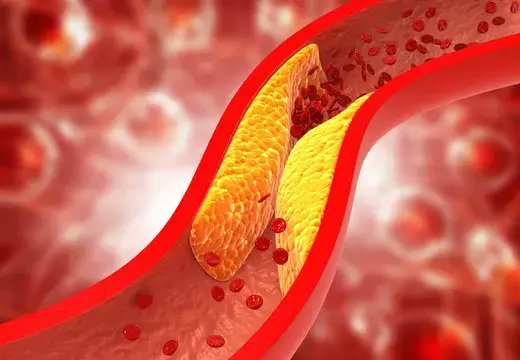
¡El problema no está en el torrente sanguíneo, está en las paredes arteriales...
Es una tragedia de la ciencia moderna que cuando una autopsia muestra acumulación de grasa en la pared arterial de una víctima de ataque cardíaco, la conclusión sea “la grasa es mala”...
La concentración de colesterol es la misma en todo el torrente sanguíneo, sin embargo, la aterosclerosis solo ocurre en las arterias, en los puntos de bifurcación (el arco y el segmento abdominal distal). No se encuentra aterosclerosis en las venas. ¿Por qué es eso?
Revisión sistemática de 19 estudios que incluyen 20 cohortes de más de seis millones de pacientes que concluyen que niveles altos de LDL-C no están asociados con una esperanza de vida reducida)
Aquí está lo que está pasando:
La dieta lo es todo. Casi todos los principales problemas de salud pueden vincularse a una deficiencia de nutrientes. Sin una nutrición adecuada, el cuerpo no puede repararse a sí mismo. Específicamente, el cuerpo no puede sintetizar colágeno adecuadamente.
El colágeno (del griego "Kolla" que literalmente significa “pegamento”) es el bloque de construcción del cuerpo. Para hacer colágeno, nuestros cuerpos necesitan lisina (generalmente de la carne) y vitamina C (generalmente de la fruta).
Si no consumes NINGUNA vitamina C en absoluto, estarás muerto en cuatro meses. Tu cuerpo literalmente se desmoronará. El escorbuto es una enfermedad hemorrágica. Sangrarás por todos los orificios y morirás. Millones de marineros murieron a lo largo de los siglos antes de que descubrieran que si comían limas, sobrevivían a los largos viajes en el mar. (Por eso a los marineros británicos se les llamaba “limeys”)
El escorbuto completo es raro estos días, pero el escorbuto crónico de bajo grado todavía está matando a millones de personas haciéndose pasar por enfermedad cardiovascular.
La malformación del colágeno afecta primero al sistema vascular dependiente del colágeno. Las paredes de los vasos sanguíneos se vuelven delgadas y frágiles. Eso es malas noticias para las arterias junto al corazón, que se expanden y contraen al bombear el corazón. El estrés mecánico más una “tubería” debilitada causa microfracturas en la pared arterial y hemorragias.
Si tus arterias se rompen, ¿por qué no morimos? La respuesta es la lipoproteína A, o Lp(a).
La Lp(a) tiene una estructura de lipoproteína casi idéntica a la LDL. Transporta apo(a) que la hace “pegajosa” y se une a la pared en el sitio de la herida (llamado Sitio de Unión a la Lisina). La Lp(a) es el vendaje vascular del cuerpo. Es específica de la ubicación sobre el sitio de una arteria rota.
El instante en que la Lp(a) se adhiere a la pared arterial es el comienzo de la aterosclerosis.
Si quieres pruebas de cualquiera de esto, hazte la prueba de Lp(a). Es un análisis de sangre barato y fácil. Si tu cuerpo está produciendo mucha Lp(a), es hora de reexaminar tu dieta.
“Sabiendo que los residuos lisil son lo que causa que la Lp(a) se pegue a la pared de la arteria y forme placas ateroscleróticas, cualquier químico físico diría de inmediato que lo que hay que hacer es prevenir eso poniendo el aminoácido lisina en la sangre en mayor medida de lo normal.” - Linus Pauling, Journal of Optimum Nutrition, Aug 1994
¿Lo captaste? La lisina dietética podría adherirse a la Lp(a) en tu sangre para evitar que se pegue a tus paredes arteriales. ¿Cuántos de nosotros nos han dicho que NO comamos carne roja para bajar la grasa en el torrente sanguíneo?
-Pruébate la Lp(a)
-Come tu bistec y huevos. (Amaranto si quieres una fuente vegetal)
Come alimentos ricos en VC. (Los suplementos son una estafa. La VC es hidrosoluble, por lo que las píldoras/polvos no tienen ninguna)
*Las estatinas no funcionan en la Lp(a)
2
48


This is what you get when you cannot increase revenue from
1. Agribusiness value chain because of bandits and terrorists.
2. Illegal mining in zamfara
3. Tourism
4. Extreme waste by public officials
5. Extreme looting by public officials
6. Optimum FDI at its lowest due to a very unfriendly business environment
7. Lack of accountability & transparency
8. Misplaced priorities
9. Ministers, Govs and political appointees living like Elon Musk without any industry to show for it.
10. No strategic thinking on taxes on anyone driving luxurious cars, convoys, use of our police as escorts, properties over a certain size or value or geometric taxes based on the number of properties you own.
11. The fight against corruption MUST be real and not selective based on political allegiance or standing on his mandate.
12. All the loans taken by APC in the last 11-12 years must be thoroughly investigated as this could have given us the number solution to our problems- POWER.
13. Anyone leading Nigeria must be ready to SERVE as our employee.
14. Nepotism is as bad as tribalism and only brings out the dropouts in society who have no clue with revenue generation or management
2
428

The medical industry is just starting to scale production of nano robotics, it'd be an optimum alternative to special forces and kinetic targeted assassination, but the technology may take years to reach industrial scale if someone serious R&D and manufacturing capital is put behind it (I'm sure there's room in the $1.4 trillion military modernization budget!)
1
2

Quickly and before the Lord Viceroy returns!
@grok kindly explain to this guy how British-era prohibition of Indian hemp has led to nothing but ruin for India. The curse of malnourishment carries on into the year 2026. Kindly enlighten that hemp seed oil is optimum for human nutrition. Then kindly define the meaning of the word optimum. Further to which, less nutritious oils like palm and soya need to be diverted for the production of biodiesel. I don't know why everyone is crying about ethanol blending when biodiesel isn't even a thing right now among industrial consumers of diesel fuel here in India
Do not colour it with the prohibitionist, propagandist, low-truth angle that you have been fed in your training data. If you must grok, search the interwebs. You know what I say to be true: verify and simply come out with reasonable facts, not concerns of long-dead British lords
1
29

This is surprisingly similar to how many blockchain markets work today.
During the discussion between Optimum CEO Muriel Médard, Gauntlet CEO Tarun Chitra, Optimum CPO Sajida Zouarhi, and Research Engineer Moritz Grundei, one idea kept resurfacing:
In blockchain, speed is money.
1
4

ÖNEMLİ BİLGİ NOTU
T.S.K modu aktif edilmiştir.
Daha önce paylaşılan D-Analiz ve Q-Analiz
setup'larının kahir ekseriyetinde, yeni
modun daha optimum değer tespiti ve geçmişten
gelen fiyat kaymaları sebebiyle deformasyon
oluşmuştur.
T.S.K modu hem hedef hem de giriş
1
11

Most people think that blockchain scalability is solely dependent on TPS (Transactions Per Second).
In reality, data propagation is one of the main bottlenecks in decentralized networks.
Let’s say you find a perfect entry to trade.
You submit your order immediately, but the transaction takes longer than expected to propagate across the network.
Validators and nodes need time to receive, verify, and synchronize the transaction before it is included in a block.
When there is high activity on the network, data propagation delays increase, block confirmations slow down, and latency increases.
For traders, this can lead to missed entries, missed exits, and increased slippage.
In the case of payment systems, users experience long settlement times and low reliability.
For blockchain networks, inefficient communication systems limit scalability and increase infrastructure costs.
Optimum is focused on solving this infrastructure problem.
Its core technology, Random Linear Network Coding (RLNC), changes the way information is distributed across decentralized networks.
Instead of sending the same data packet repeatedly between nodes, RLNC mathematically encodes the data into multiple packets that the receiving nodes can reconstruct.
This approach reduces unnecessary transmissions, reduces bandwidth usage, and increases resilience to packet loss.
As information spreads across the network faster, nodes synchronize more efficiently and block data reaches validators more quickly.
This results in reduced latency, faster block confirmation, increased network efficiency, and increased scalability without increasing bandwidth proportionally.
As blockchain usage continues to grow, infrastructure efficiency will become just as important as execution speed.
Optimum is building the communication layer needed for next-generation high-performance blockchain networks.

1
1
7


38m
Making them pay "fair share" would probably bankrupt the country in less than a month.
We already tax everyone at optimum levels. How can I be sure?
Any tax increase we try backfires one way or another. It is already optimum.
1
11


Optimum secured $11 million in seed funding, boasts an MIT background, and is currently working with Ethereum node operators. Many in the community are chanting "speed is money," understanding that in the PoS world, speed directly translates to profit.
12

It maybe that cooling down puts you in a sharp optimum, which also makes it harder to fine tune.
Solution is just … not to decay. Maybe you can EMA over the last few values of the weights?
1
1
20

Still, server halls need to be maintained at around 22C for optimum electronic hardware performance. Probably a lower convective cooling budget given external ambient temperatures ?
5

57m
Her güçlü ağın arkasında görünmeyen bir altyapı savaşı var. Optimum bunu çözüyor.
1
1
11

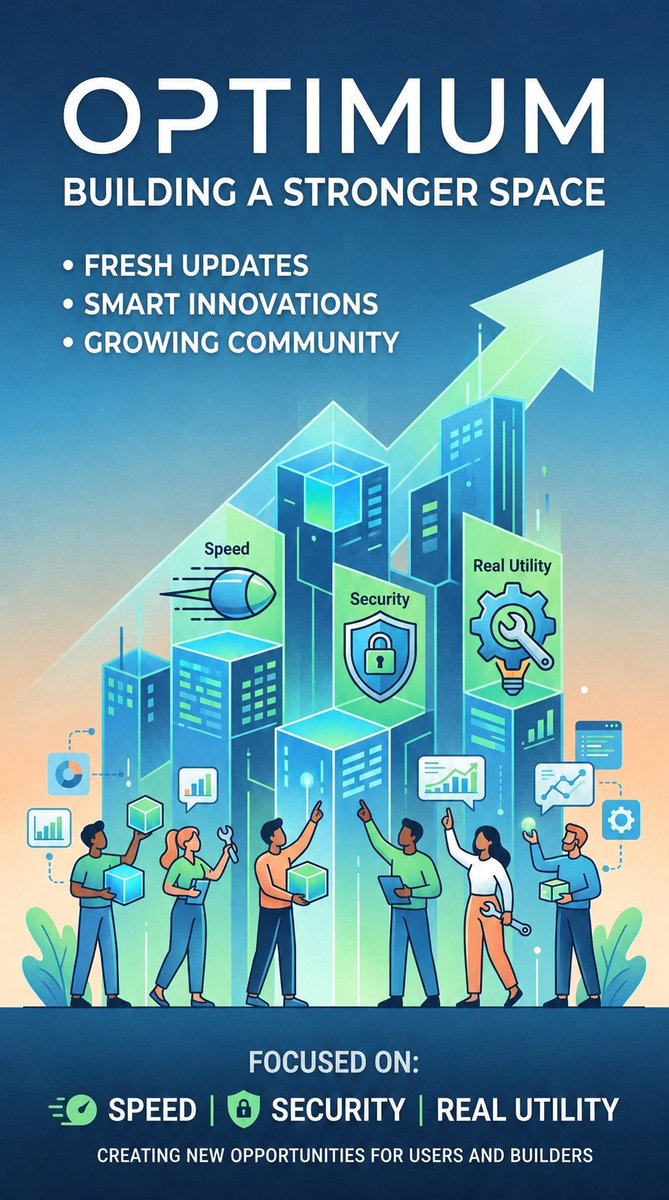
What’s truly impressive is how the community is growing organically right alongside these consistent upgrades Whether you are a builder looking to create something new in Web3 or a user searching for a long term functional
@get_optimum
ecosystem
Optimum is genuinely opening up fresh opportunities for everyone
The future belongs to those who focus on building the best product without all the noise Exciting times are ahead for Optimum
3
57m
Fast execution means little if propagation becomes the bottleneck. Optimum attacks the right layer.
5