
Joined December 2024
- Tweets 1,155
- Following 22
- Followers 12
- Likes 3,179
9 Photos and videos




Nick retweeted

Jun 15
For anyone wondering, it’s only been a positive thing in Aus. No one even talks about it anymore which can only mean the kids don’t care.
The ones desperate for it will find workarounds, but the majority have found better things to do with their spare time.

BREAKING: Prime Minister Sir Keir Starmer has announced a social media ban for under-16s.
Live updates: trib.al/AaXv2Tr
1,243
373
4,653
1,284,342
Nick retweeted

Jun 3
Black people are
9 times more likely to be stopped & 7 times more likely to die following police restraint
Twice as likely to be arrested on SAME EVIDENCE
There have been 800 UK Chief Constables,1 was Black
There is a Race issue in Policing & it ain’t the one being protested over
1,806
923
2,990
300,474
Nick retweeted

3 white English boys raped a young girl at knifepoint. Judge Nicholas Rowland let them walk free, telling them "you done very well."
No outrage from the "English patriots?" The "Reform voters?"
No outrage & even less news coverage. Why?
Because they are white, English rapists.
1,463
3,234
8,847
251,469
Nick retweeted

Jun 2
My God…
Please see this man for what he is.
Jun 2

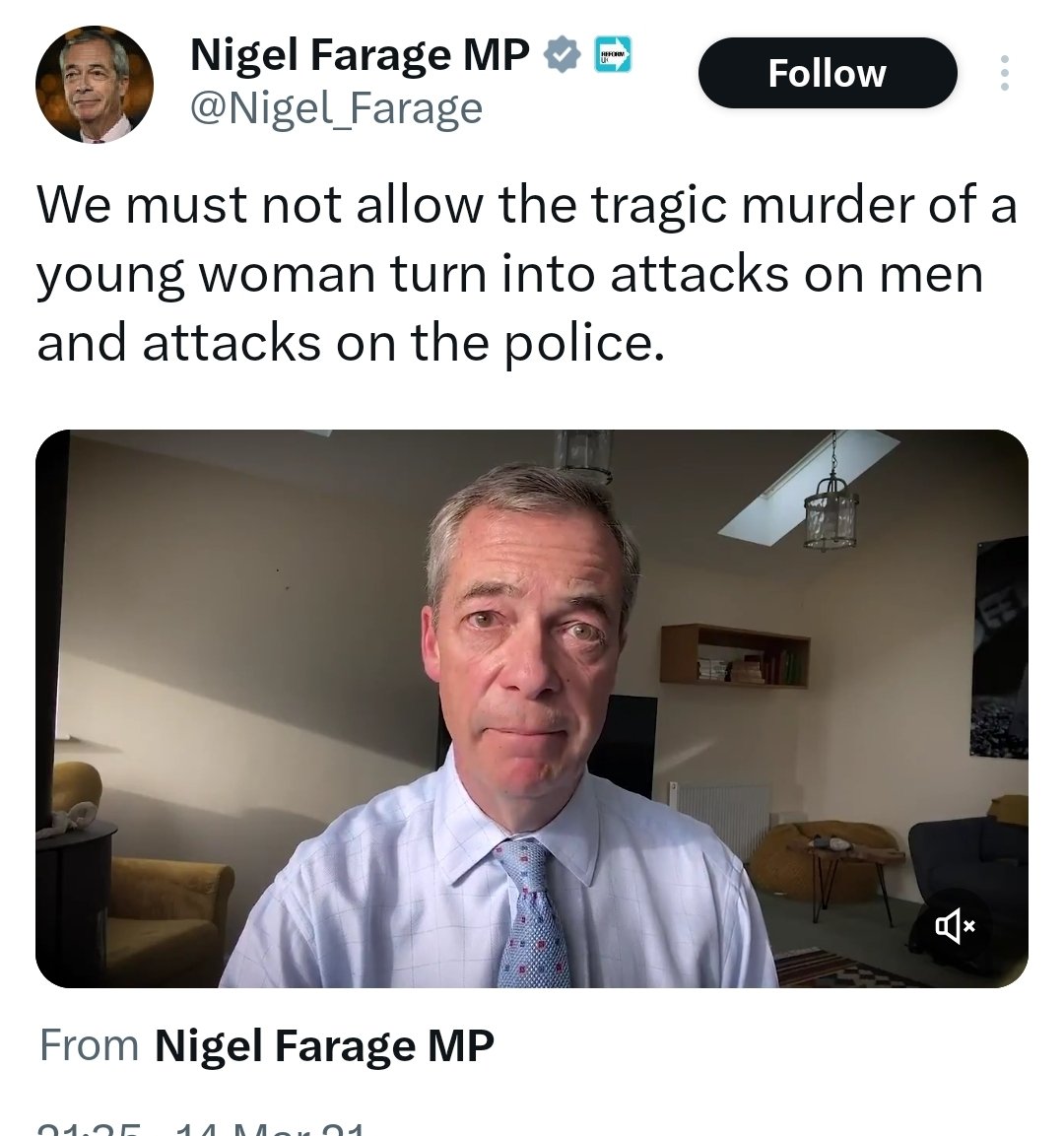
When Metropolitan Police officer Wayne Couzens kidnapped and murdered Sarah Everard, Nigel Farage released a five-minute video urging people not to attack men or the police.
Today, in response to the murder of Henry Nowak, he called for "pure cold rage."
281
1,768
6,023
111,896

Jun 2
RT @supertanskiii: What’s going on in Southampton isn’t about injustice, it’s about male violence.
It’s knuckle dragging scum being incit…
2,680
Nick retweeted

Jun 2
When Metropolitan Police officer Wayne Couzens kidnapped and murdered Sarah Everard, Nigel Farage released a five-minute video urging people not to attack men or the police.
Today, in response to the murder of Henry Nowak, he called for "pure cold rage."
252
4,471
19,056
481,749
Nick retweeted

Jun 2
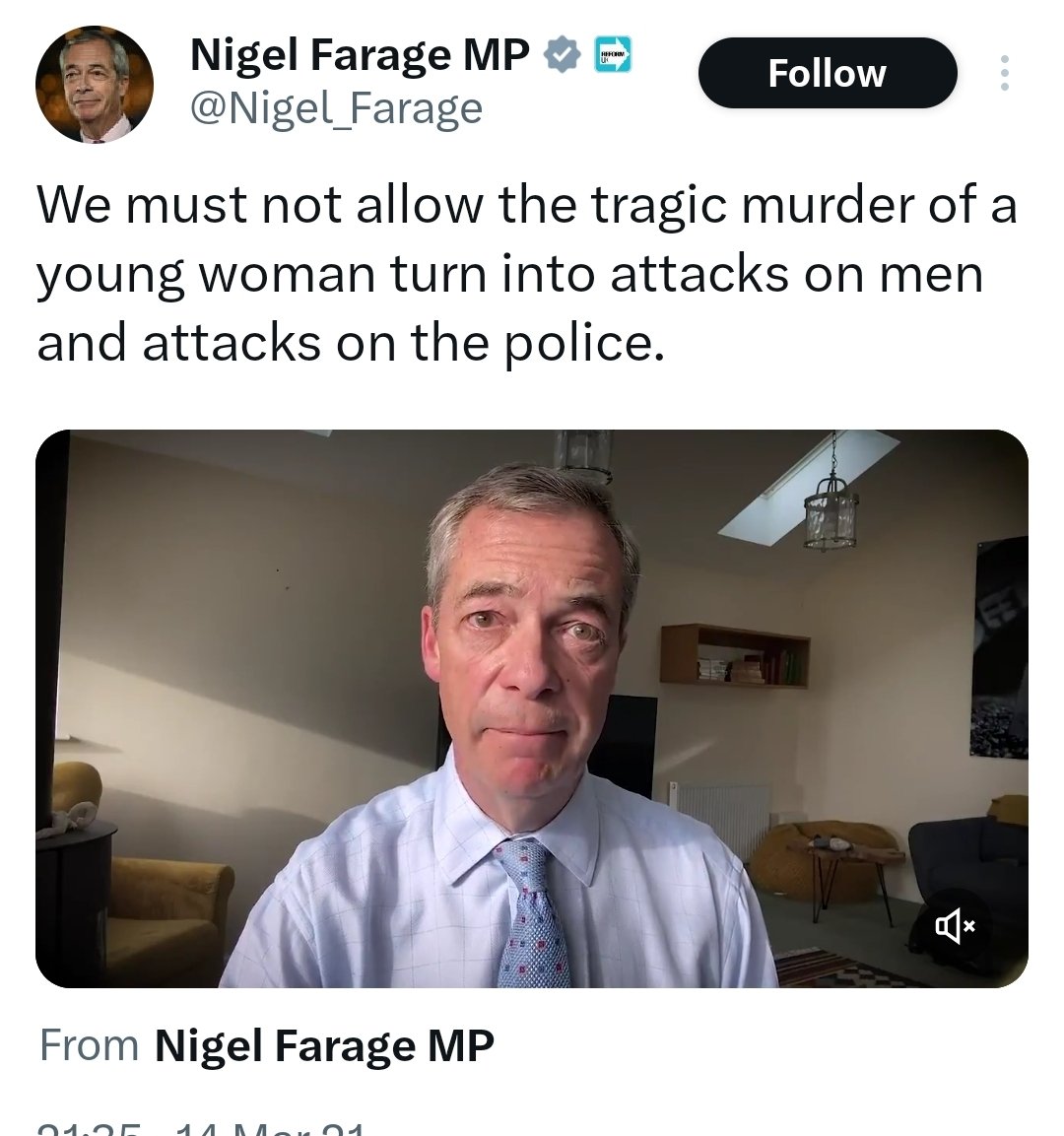
This is what this scumbag said when Sarah Everard was kidnapped, raped and murdered by a WHITE police officer.
Today, for the killing of Henry Novak by a Brown Sikh man, he calls the British public to "rage".
341
3,862
13,489
200,881
Nick retweeted
Jun 2
Nigel Farage's emergency address to the nation was him exploiting Henry Nowak’s death for his own political gain.
946
892
6,031
615,414

Nick retweeted

May 21
There has been a noticeable shift in tone in the past week. The noise that once dominated the airwaves has begun to settle, and attention has turned once more to familiar speculation about who might, or might not, seek to challenge Keir Starmer for the leadership of the Labour Party. It is a well worn pattern in British politics. When there is less to criticise in substance, the conversation drifts toward personalities and internal manoeuvring.
Yet while much of that commentary has carried on, something rather more important has been taking place in the background. The figures have been coming in, the data has been verified, and the early signs of delivery are beginning to show. It is not dramatic, and it is not always loudly proclaimed, but it is there for those willing to look.
Inflation has begun to ease. Economic growth has returned, with recent figures indicating a measured but meaningful improvement. Net migration has fallen sharply from previous levels. None of these developments exist in isolation, nor do they take place in a vacuum. They are unfolding in a world marked by conflict, disruption to global supply chains, and persistent economic uncertainty. Against that backdrop, stability and incremental progress should not be dismissed lightly.
It is perhaps telling that, as these indicators emerge, the volume of the broader political debate has softened. Those who once dominated the conversation with sweeping claims and constant provocation now find themselves on less certain ground. The contrast between rhetoric and results becomes harder to ignore when the latter begins to accumulate.
Within Labour itself, there are voices once again seeking to pull the party in a different direction. Figures such as Andy Burnham continue to position themselves for future influence, while others look back toward a previous era of the party’s politics. That period, associated most closely with Jeremy Corbyn, is one many voters concluded was not electorally viable. It was precisely that reality which led to the election of Starmer as leader, with a mandate to restore credibility, discipline, and broad appeal.
That effort culminated in a decisive electoral victory. It is sometimes argued that the scale of that victory reflected not only Labour’s support but also a collapse in turnout among Conservative voters. There is some truth in that, and it is right to acknowledge it. Yet it does not alter the central fact that Labour succeeded in becoming once again a party capable of governing. That was the objective, and it was achieved.
The question now is whether that position is to be consolidated or put at risk. Calls for fundamental structural changes, such as proportional representation, continue to surface. Advocates present such reforms as a route to fairness, yet they carry their own consequences. Systems built on proportional allocation often produce fragmented parliaments and fragile coalitions. Strong, decisive government can become harder to sustain, and accountability more diffuse.
At the same time, the wider political landscape remains crowded with voices competing for attention. Nigel Farage and others continue to frame the debate in stark and often dramatic terms, while across the Atlantic, figures such as Donald Trump offer their own interpretations of global challenges, including climate policy. Yet the reality of climate change is increasingly evident in everyday life, and the transition toward greener energy and reduced emissions is not a matter of ideology so much as necessity.
In this context, the most striking feature of the current government is not what it says, but what it does. Progress has not been accompanied by constant self promotion. There has been no need for daily declarations or exaggerated claims. Instead, there has been a quieter, more methodical approach to governing. That may lack the drama some commentators prefer, but it is often how durable results are achieved.
It is for that reason that a simple message carries weight. Not as a slogan for its own sake, but as a reflection of a broader judgement.
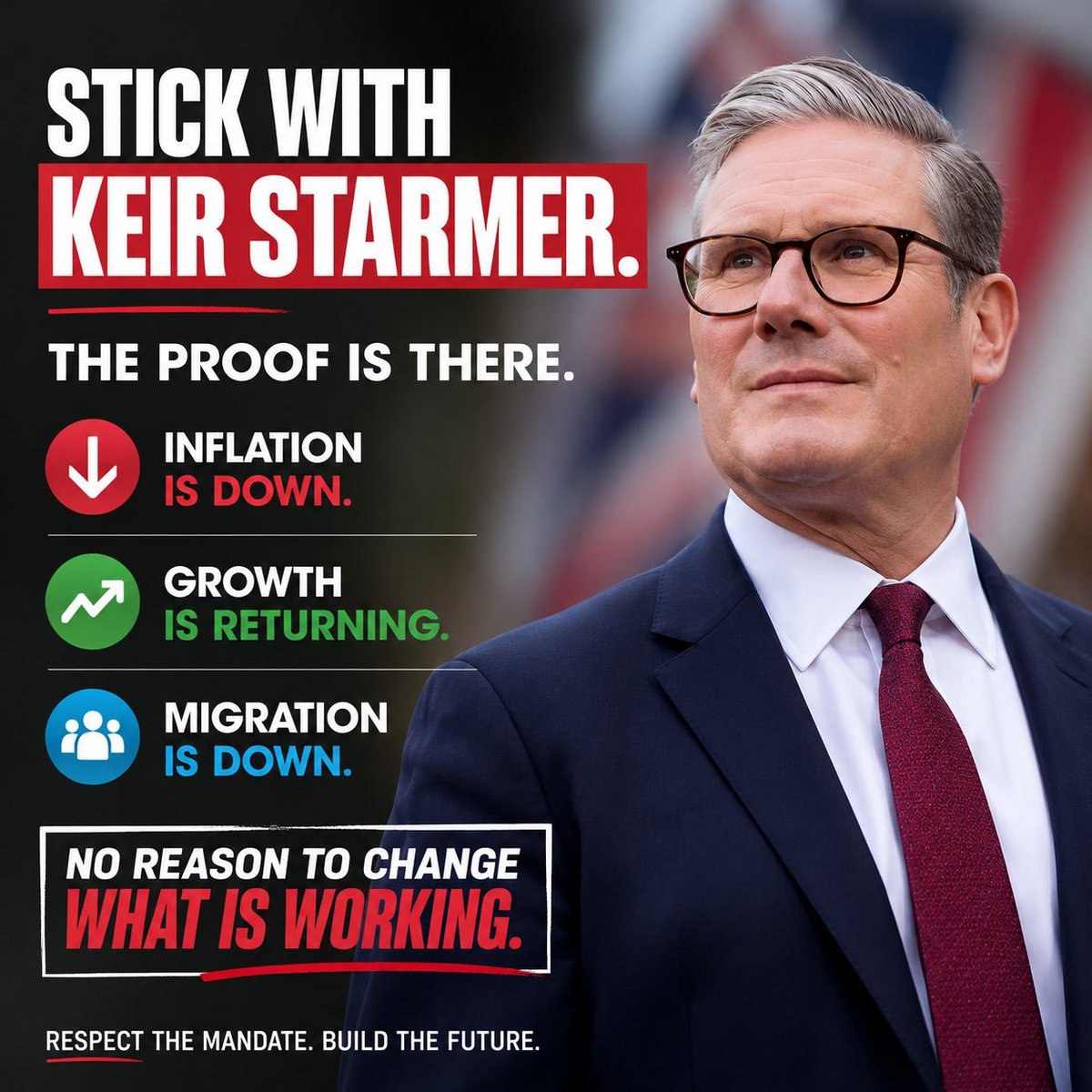
Stick with Starmer. The proof is there.
It is a recognition that, while politics will always contain noise, speculation, and competing ambitions, the measure of a government ultimately lies in its outcomes. Where those outcomes begin to align with what was promised, there is a case for continuity. Where progress is visible, even if gradual, there is little logic in abandoning it.
None of this suggests that criticism should cease, nor that scrutiny is unnecessary. A healthy political system depends upon both. But it does suggest that the debate should remain grounded in evidence rather than volume, and in delivery rather than rhetoric.
For now, at least, the balance of that argument appears to favour the latter.
21
185
478
6,724
Nick retweeted

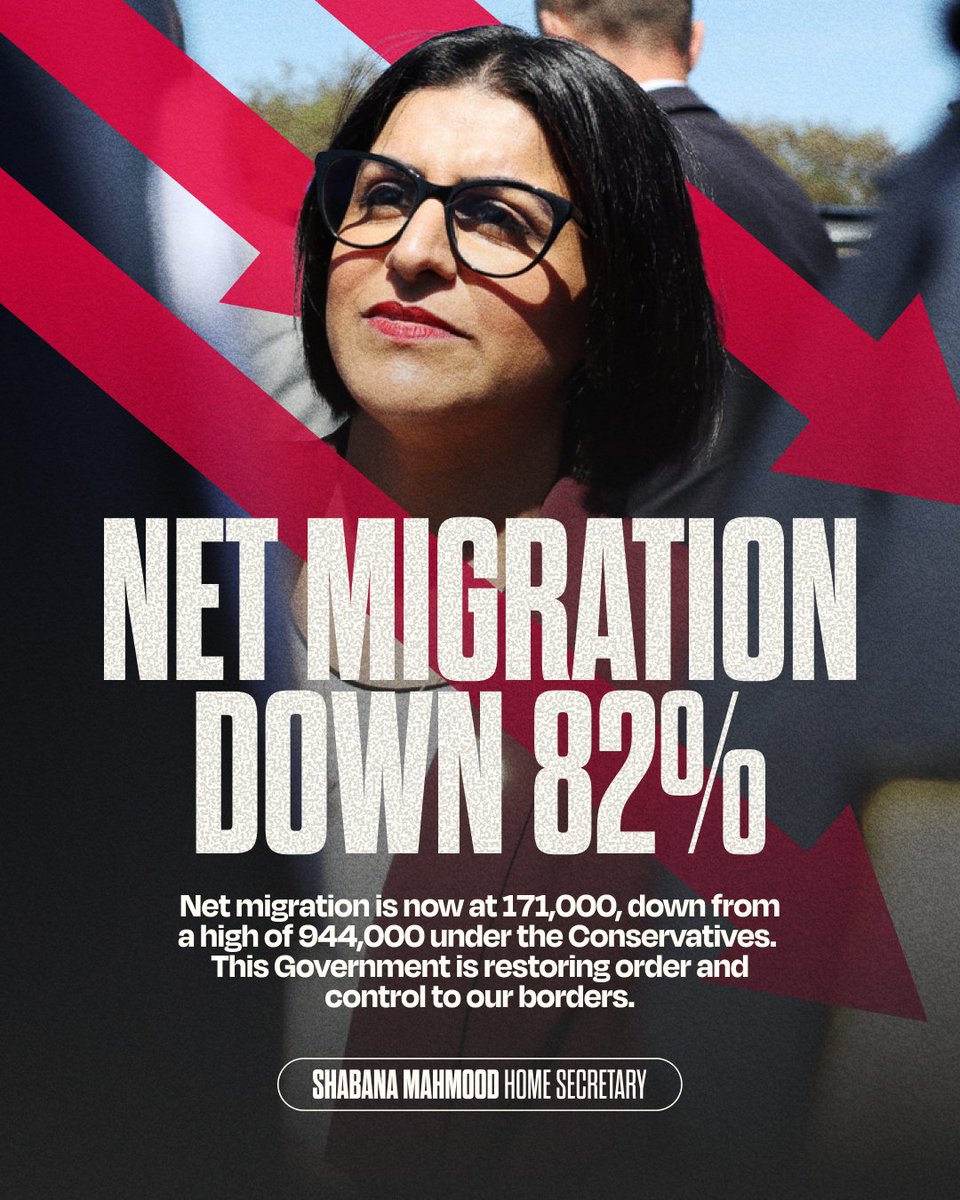
Net migration down 82%.
Net migration is now at 171,000, down from a high of 944,000 under the Conservatives.
This Government is restoring order and control to our borders.
6,164
990
5,617
1,794,689
Nick retweeted

May 21
Net migration has fallen 82%.
I promised to restore control to our borders. My government is delivering.
I know there’s more to do, we’re introducing a skills-based migration system that rewards contribution and ends our reliance on cheap overseas workers.
13,051
1,699
15,341
2,910,471
Nick retweeted

May 20
Growth higher than forecast, borrowing down, and now inflation falling further than expected.
This Labour government has the right economic plan.
2,645
797
3,931
342,917
Nick retweeted
May 18
The IMF upgrading its growth forecasts for the UK and backing our fiscal strategy is yet more proof that this Government has the right economic plan.
2,026
967
5,040
348,393
Nick retweeted

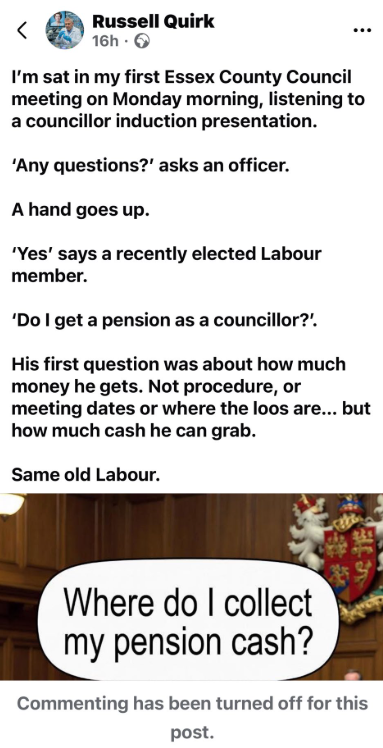
Reform UK's new Deputy Leader on @Essex_CC @russellquirk has only been in the job 5 minutes and he's already told a whopping lie.
He's posted this on Facebook. The problem is, the only Labour councillor on that council wasn't at the meeting, and they've been elected since 2017, so they would already know the answer to this question.
No wonder he has answers turned off.
18
296
943
31,035

Nick retweeted

May 14
NHS sees biggest improvement in waiting times in 16 years
channel4.com/news/nhs-sees-b…
737
1,500
4,401
720,453
Nick retweeted

May 14
Just as Farage is getting a fraction of scrutiny and facing a bit of accountability for his millions of dodgy donations, Labour MPs decide to bury it with resignations and leadership speculation.
The words “piss up” and “brewery” come to mind.
What a fucking shambles.
61
674
3,983
26,964
Nick retweeted

May 14
What is hilarious is Economy is up, NHS improving, things are factually getting better but Labour want to get of their own Prime Minister as he is not improving things... 🫠
The level of electoral self sabotage Labour are committing here boggles the mind.
May 14

Wes Streeting's leadership launch today - if/when it comes - is against the backdrop of NHS figures showing the biggest fall in hospital waiting lists for 17 years
Figures published this morning for the month of March show the Labour government has met its key interim NHS target of treating at least 65 per cent of patients within 18 weeks
This target was announced by Streeting and Sir Keir Starmer in happier, more united days in January last year
The overall NHS waiting list has also fallen to 7.11 million, down by half a million since Labour took power in July 2024, my colleague @eleanorhayward reports
Streeting said: “Our plan for the NHS is working. This is the biggest cut in waiting lists in a single month in 17 years. It means we are right on track to deliver the fastest reduction in waiting times in the history of the NHS. Lots done, lots more to do.”
13
147
1,176
32,665

'It's a bit like what is happening in football - everyone hates them if they haven't had immense success within five games.'
@Baddiel tells Sky's @cathynewman that 'a normal bloke or woman that is ok to lead the country, is not good enough anymore' in today's culture.
317
176
1,926
556,466