
CEO at @suttontrust, campaigning for social mobility. Ex- business leader and consulting global practice lead. Proud father of three.
Joined May 2023
- Tweets 676
- Following 344
- Followers 574
- Likes 219
126 Photos and videos
Pinned Tweet

18 Sep 2025
Private schools still have a vice-like grip on Britain’s elite. We need many more pathways to the top of our society to level the playing field and stop wasting talent.
New @suttontrust research. 👇
18 Sep 2025

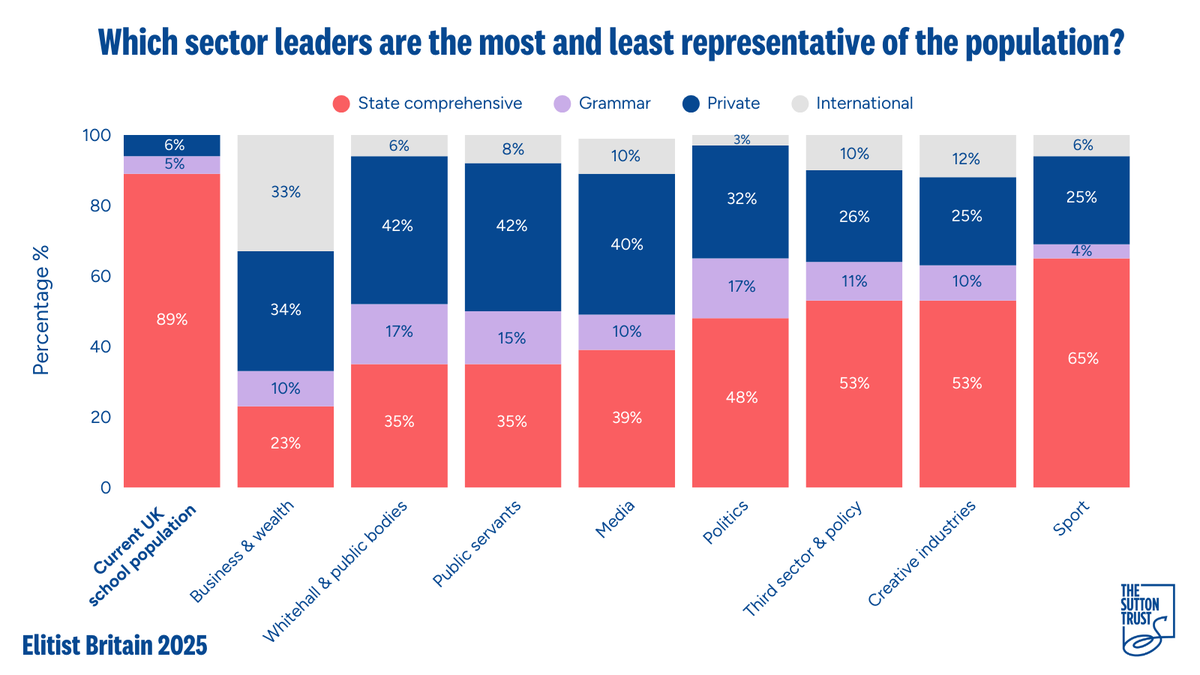
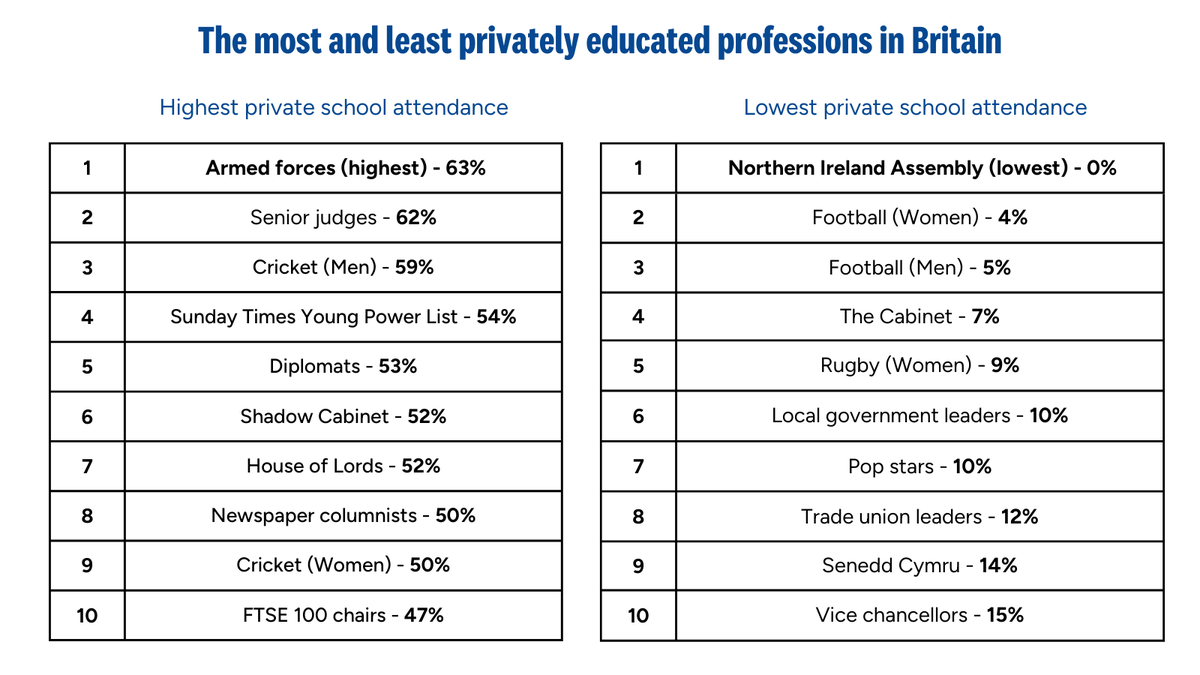
🚨 NEW: Britain’s most powerful people are still 5x more likely to have been privately educated than the general population.
Our brand-new research reveals that jobs in the media, business, charity, creative and public sectors remain dominated by those from private schools ⤵️🧵
10
6
8
4,191
Nick Harrison retweeted

Jun 11
✍️ “I was working-class and received free school meals; so it seemed entirely reasonable — unquestionable, even — that I should pursue a financially lucrative career.”
Our alum, Molly, writes a guest blog about her journey on Social Mobility Day ⤵️
suttontrust.com/news-opinion…
1
1
327
Nick Harrison retweeted
Jun 4
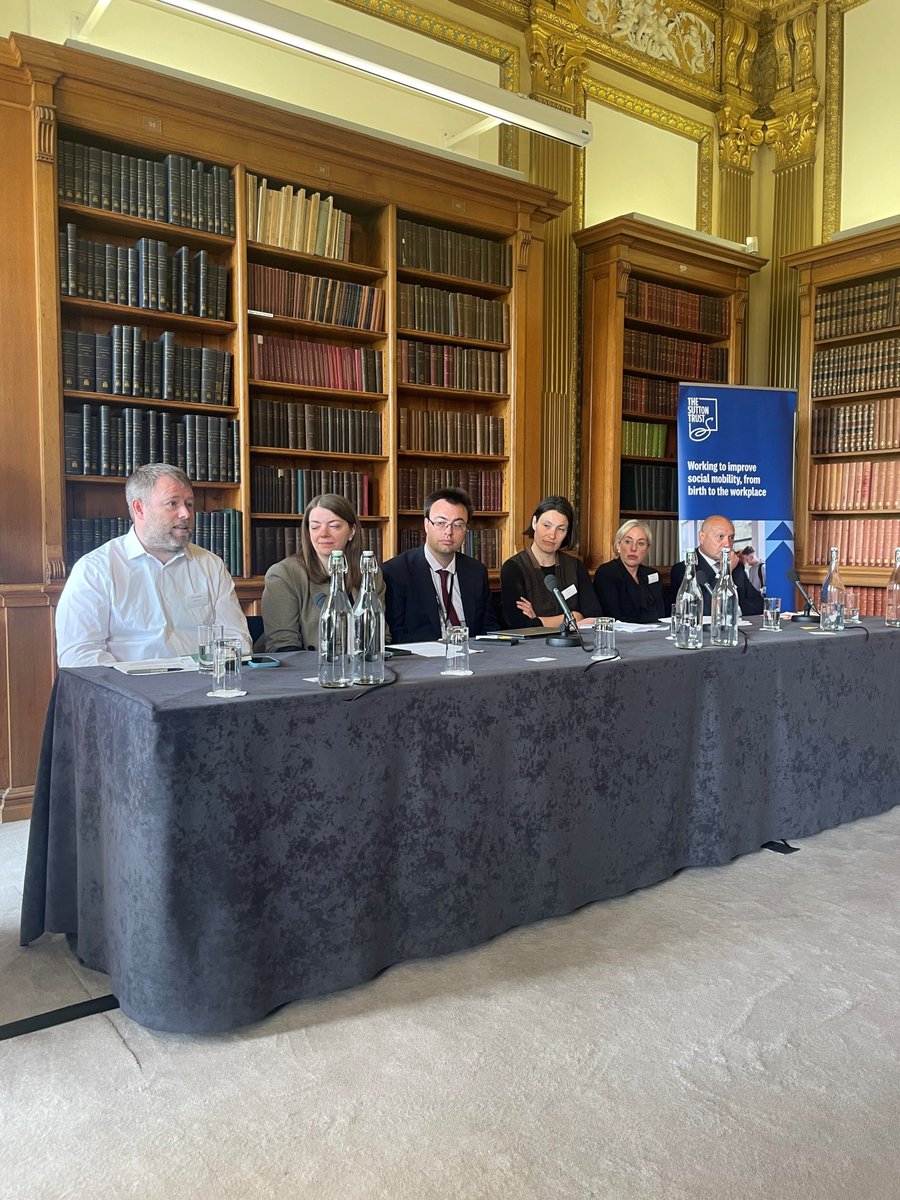
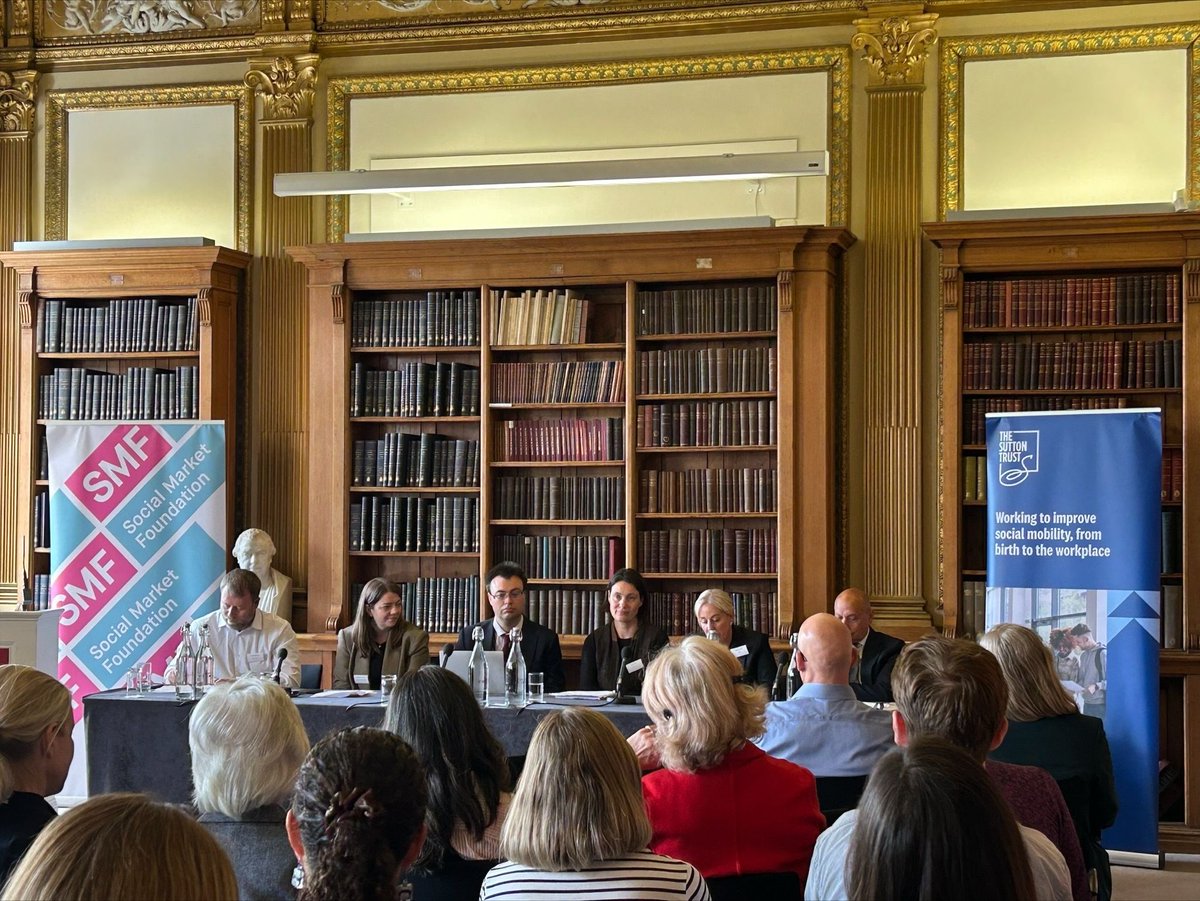
Thanks to everyone who braved the tube strikes and joined us at our panel event this morning to discuss our recent report with @SMFthinktank, Room to Grow!
1
1
2
1,008
Nick Harrison retweeted

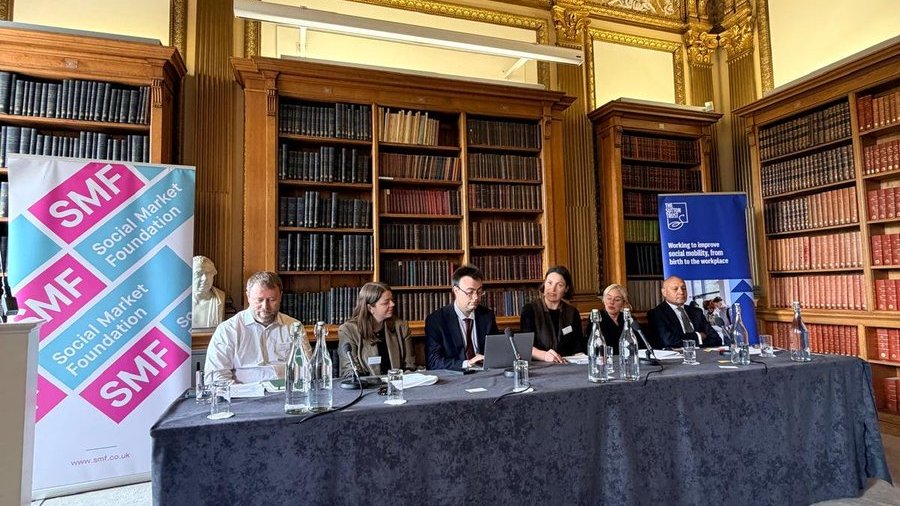
Thanks to everyone who joined our discussion today with @suttontrust on the School-Based Nursery programme.
Our latest research with the Sutton Trust explored the barriers to the policy's success: smf.co.uk/publications/room-…
A huge thank you to the panel for a great discussion!
2
1
746
Nick Harrison retweeted
The School-Based Nursery Programme could be Labour's early years legacy - but changes are needed.
Research Director @beckymontacute and the @suttontrust's @Erica_HoltWhite
write in @politicshome on the policy ⬇️
politicshome.com/opinion/art…
1
1
219
Nick Harrison retweeted

I really like this. All those small daily irritations which aren’t important enough to bother fighting but add up to a worse texture of life.
Jun 1

Hello, we are Jonathan and Abigail - unashamed pedants who want to bring this affliction to bear on all things public policy and practice.
We believe that details matter, especially in public administration. This is why today we are founding quibble: a campaign to fix the small stuff.
Think, for example, about the cookie banner that we click on every webpage. Each instance is not a big deal, so we just put up with it. But its cumulative impact adds up - on average we press it 5 times per day. The European Commission estimates that it costs EU citizens 343 million hours per year.
And who is there to represent the impacts of seemingly minor issues like this in a systematic way? We want quibble to be the answer. In the case of the cookie banner, lots of advocacy has rightly focused on privacy, but has this meant that user experience has taken a backseat? We believe there are ways to improve user experience without compromising on privacy. We will share more about this soon.
Consider another example. Did you know that in some government-run car parks you can be fined for a minor keying error, such as accidentally typing a zero instead of an “o”? Again, we will come to the detail of this quibble in the coming weeks, but for now just consider again the question: who? Who is there currently to systematically represent the interests of the parker who is given an unfair ticket?
An inherent feature of consumer interests is that those who have them rarely have enough other things in common to make collective organisation and representation feasible. This is the gap that quibble seeks to fill. Now of course excellent consumer interest groups exist. But understandably quibbles might not be at the top of their lists. Our hope is that quibble will be complementary; picking up the bottom-of-the-list issues faced by various groups - the stuff they are almost too embarrassed to raise because they are too small.
We are not embarrassed about detail. If you’ve ever had a splinter, you know small things can have a big impact. This is what quibble is committed to tackling, and our wider hope is that by doing so we will also incentivise policy makers to be even more careful about detail.
Check out our website here, including our first four campaigns: quibble.org.uk
1
2
713
May 27
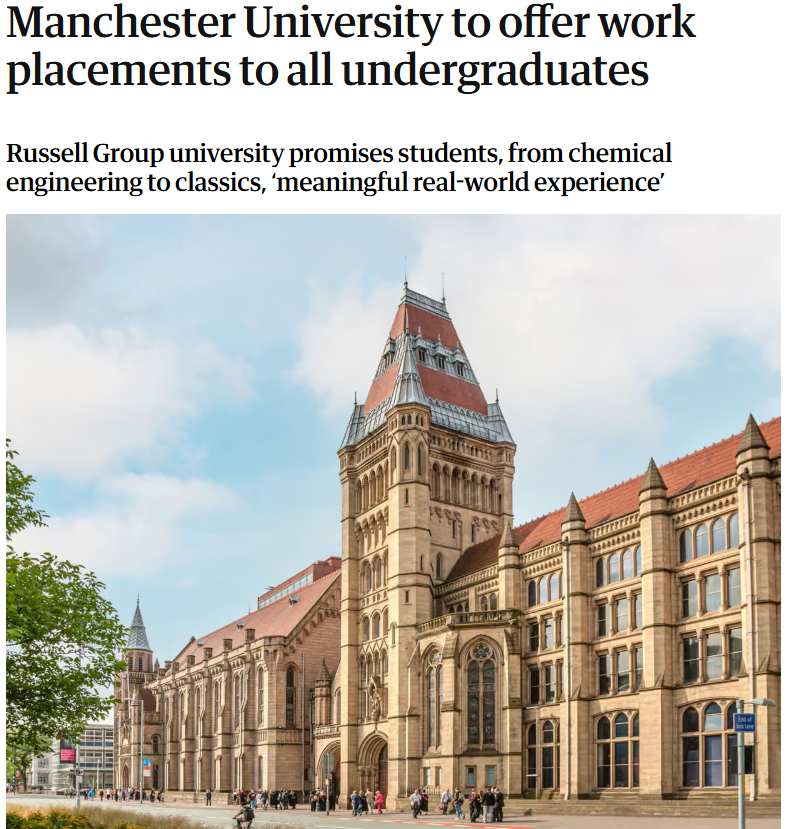
Interesting initiative from @OfficialUoM - would help all undergraduates, and particularly those from less advantaged backgrounds (who often have fewer connections / networks), as they move forward into the jobs market.
@suttontrust
1
99
May 27
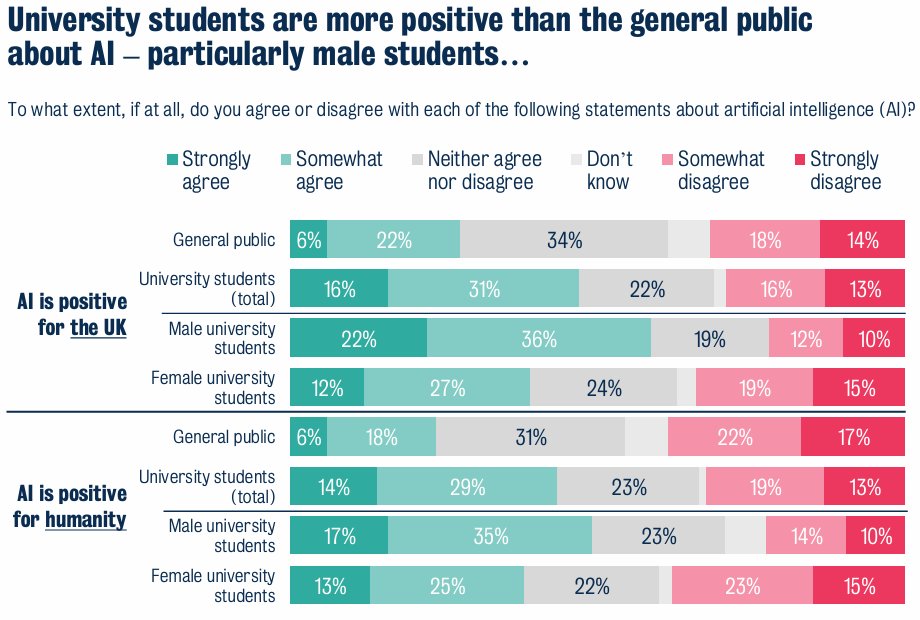
Most people in the UK are pessimistic about the impact of AI.
But, interestingly, university students are more positive, and there is a gender split with male students more positive than female. (second graph below).
Fascinating research from @KingsCollegeLon - well worth reading the full report.
@suttontrust
1
1
77
Nick Harrison retweeted
May 26
Great to see our latest research on school-based nurseries covered on @BBCBreakfast by Education Reporter Vanessa Clarke at the weekend 📺
2
3
3
2,658
May 26
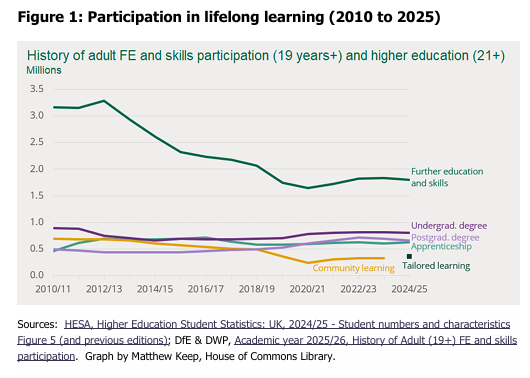
Adult participation in lifelong learning has almost halved in the last decade. No one cause, but cost barriers increasing and less employer investment in skills training (down almost 20% in a decade) part of the story. Ongoing squeeze on FE college budgets won't have helped either.
This matters, because (i) the economy needs skilled workers; (ii) lifelong learning is particularly important for disadvantaged groups who may not continue with education first time round.
@suttontrust
1
1
245
May 26
We would probably all agree we want the best talent leading our biggest companies.
But our Elitist Britain research found only around a third of FTSE 100 CEOs educated in the UK attended a state comprehensive school, and around 1 in 10 Chairs did - despite the fact that 90% of us went to a state comp!
This isn’t just about who gets through the door early in life. Class bias appears to persist all the way to the top.
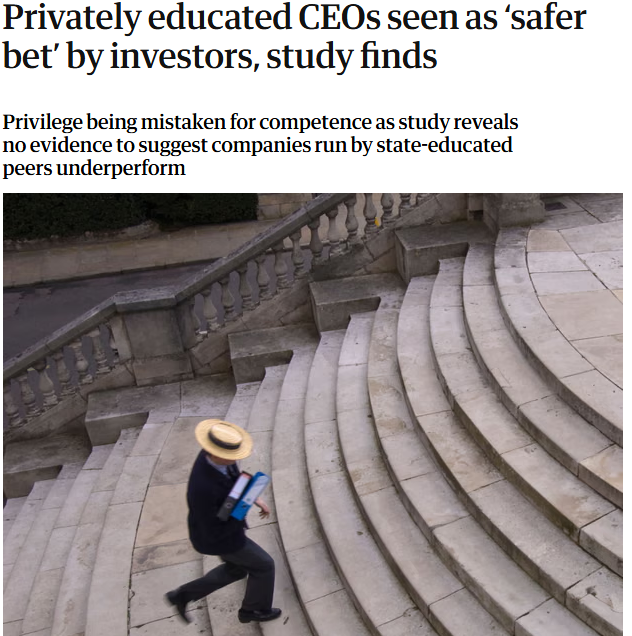
A recent US study found investors viewed privately educated CEOs as more stable and competent — despite no meaningful difference in company performance or risk.
The advantage came from perception, not evidence. And the gap narrowed when investors had longer track records and more scrutiny to rely on.
That should concern anyone who cares about fairness or economic performance.
If boards, investors and head-hunters systematically overrate privately educated candidates, we are wasting leadership talent on a huge scale.
@suttontrust
10
402
May 26
Class bias still shapes business:
Only around a third of FTSE 100 CEOs educated in the UK went to a state comprehensive. For Chairs, it’s closer to 1 in 10 - despite 90% of us going to a state comp!
New US research offers a clue why. Investors perceived privately educated CEOs as more competent and “safer”, even when performance and risk profiles were no different.
Interestingly, the bias weakened once investors had more actual evidence about performance. In other words, where information is limited, social signals (aka class bias!) still dominate judgement.
How many talented leaders are still overlooked because confidence, polish and private education are still read as proxies for competence?
@suttontrust
16
6
11,081
May 25
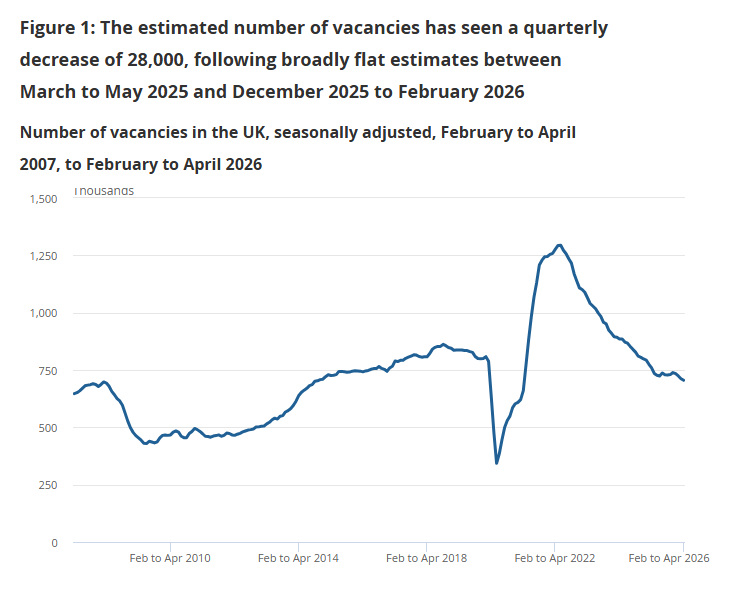
Job vacancies down to their lowest level since 2014 (ignoring the Covid period) - one of the reasons young people are struggling to get jobs, at both graduate and entry level.
@suttontrust
83
May 25
Good if this happens - would fix an edge case in the benefits system which discourages apprenticeships. 👇
May 25

Exc: Families on benefits could be paid hundreds of pounds a month to stop them discouraging their teenage children from taking apprenticeships
Ministers are considering grants in cases where those aged 16 and 17 can cause their parents to lose money by leaving education
1
197
May 24
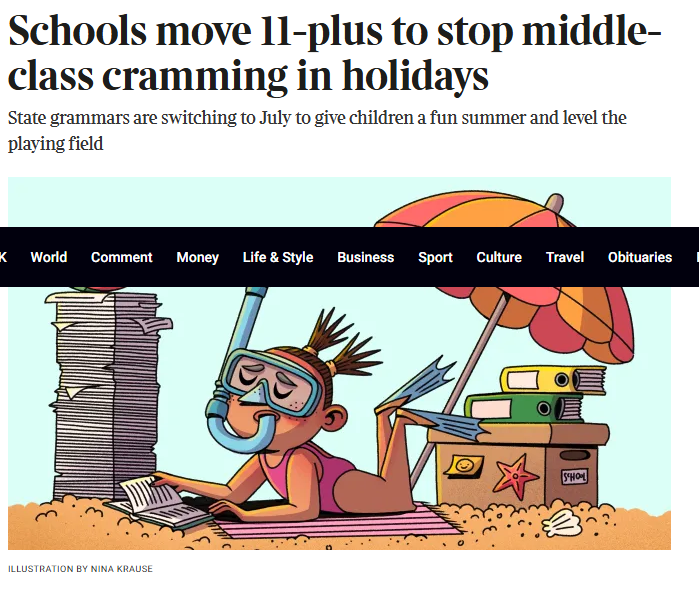
Probably a good thing: Gives all kids a proper summer holiday, and also levels the playing field for those (disadvantaged kids) who's parents can't pay for tutoring over the summer.
@suttontrust
10
1
505
May 24
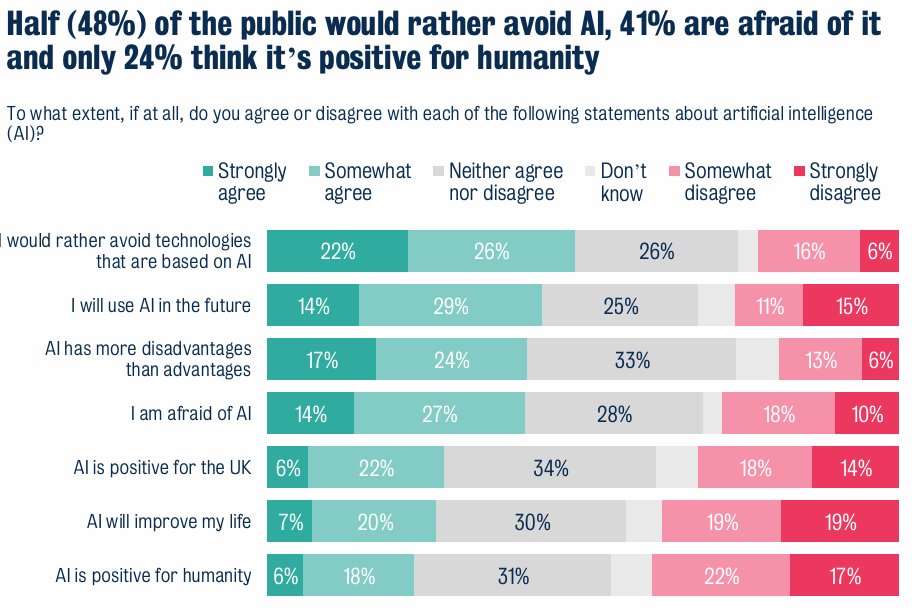
Fascinating study on attitudes to AI - showing more fear than excitement. Well worth reading the full report from @KingsCollegeLon
@suttontrust

Seven in 10 in the UK worry about AI’s economic impact - and six in 10 think it will cut more jobs than it creates.
These findings come from a new study on attitudes to AI & the future of work, launched at the first King’s AI Summit: Workforce Futures.
kcl.ac.uk/news/one-in-five-b…
130
May 23
Sure Start was indeed a proven intervention which significantly helped less advantaged kids - and saved money over time. 👇
May 22

Every child deserves the best start in life, but the next generation face worse prospects than the last.
That’s why I’d restore Sure Start - with an extra £1.7bn funded by the wealth tax that actually works - to help close the gap between the richest and poorest backgrounds.
102
May 23
The poorest non- pensioner households have lost the most income over the last few years. 👇

Living standards for lower-income households were especially hard hit in the last few years.
For poorer families, annual incomes have sunk, on average, since the end of the pandemic, and truly plunged at the very bottom.
Read how to reset Britain’s economic policy buff.ly/EIq0o5n
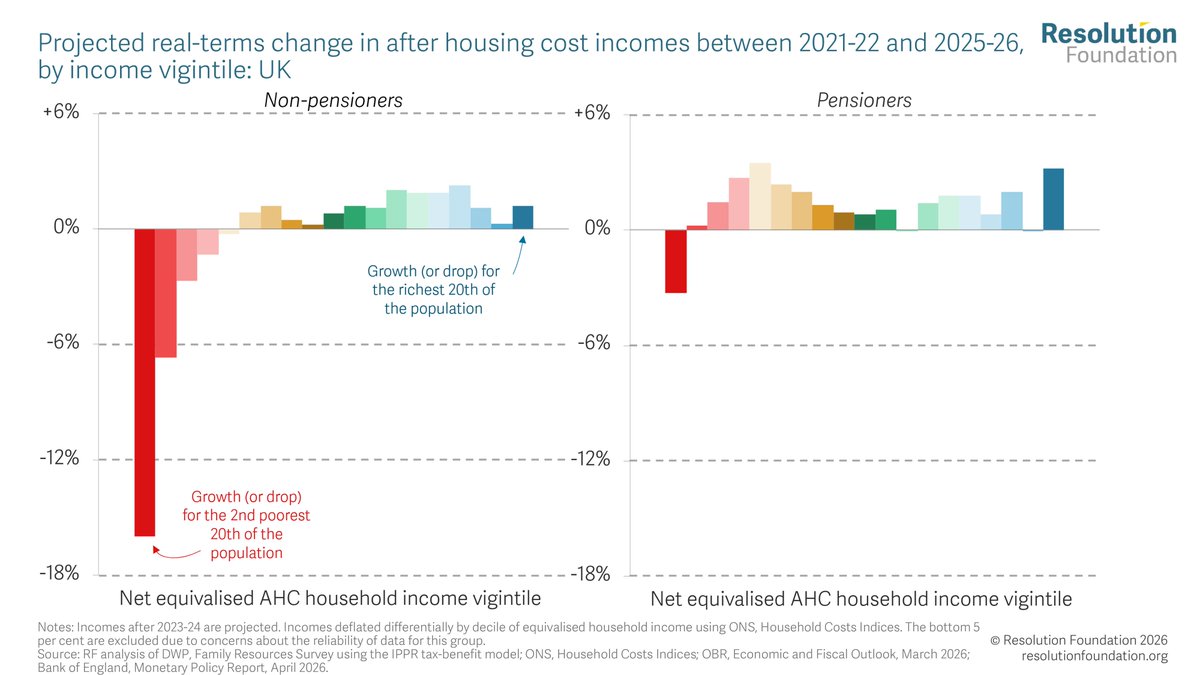
ALT Chart showing projected real-terms change in after housing cost incomes between 2021-22 and 2025- 26, by income vigintile: UK The chart shows average annual growth in typical incomes between 2021-22 and 2025-26 was just 0.2 per cent, compared to an annual average of 1.3 per cent for the 20 years before the pandemic. For poorer families, annual incomes have actually sunk, on average, since the end of the pandemic, and truly plunged at the very bottom, where the proportional fall of 16.0 per cent cashes in at almost £1,800.
59
Nick Harrison retweeted
May 22
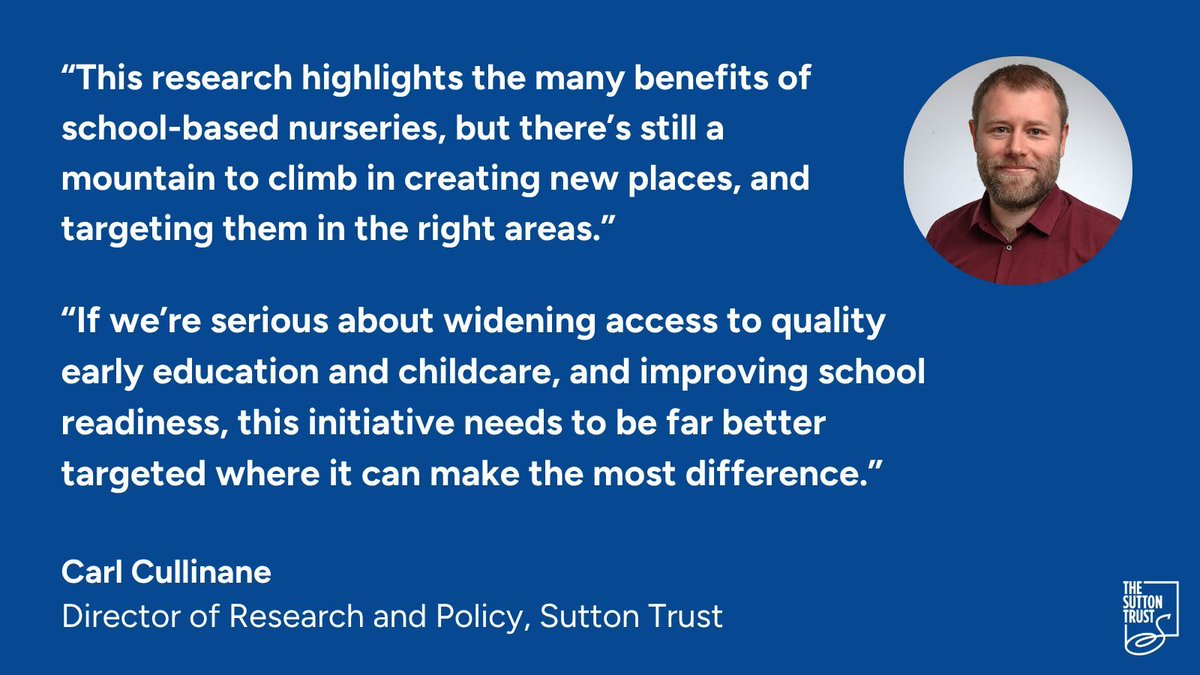
💬 "To harness the benefits of this policy, the government needs to provide more support to schools, both financial and in terms of guidance on best practice." @CullinaneCarl
Our new major research on the government's school-based nursery expansion ⤵️
suttontrust.com/our-research…
3
2
678
Nick Harrison retweeted
May 21
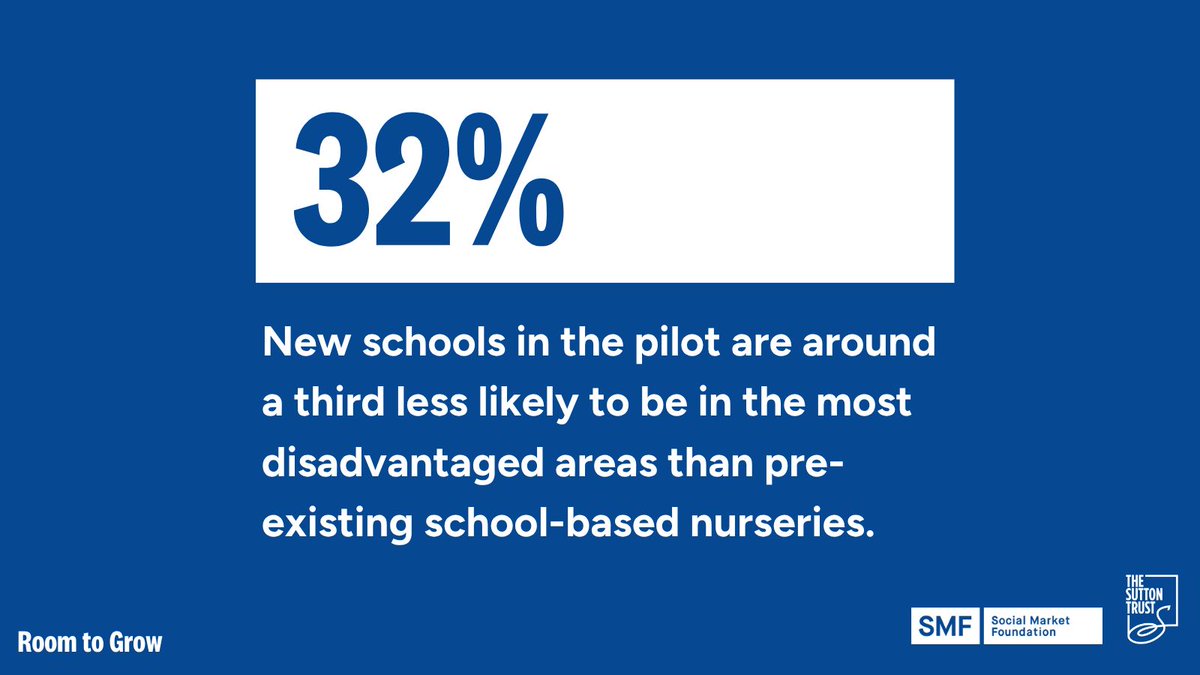
📣 Today we have published new research on school-based nurseries with @SMFthinktank and funded by @NuffieldFound.
The research shows that progress on opening new school-based nurseries is far behind the government’s original plans 🧵⬇️
2
5
1
1,910