
Head of Product at Zenith
Joined March 2022
- Tweets 569
- Following 508
- Followers 730
- Likes 1,271
14 Photos and videos
Norbert Vadas retweeted

Jun 9
There seems to be some confusion about what @ZenithFdn actually is, so let me clarify.
For a start, Zenith is not a Layer 2 and it is not a sidechain. Zenith is an EVM environment built on @CantonNetwork.
A Zenith instance consists of a set of Canton participants running Zenith EVM nodes, receiving EVM transactions through Canton, synchronizing EVM state through Canton’s synchronization protocol and recording the agreed state root in Canton smart contracts.
Canton was designed around the idea that applications can operate as independent, privacy-preserving domains while still being able to communicate with one another. Zenith EVM instances are one example of such applications within the Canton ecosystem.
Most importantly, Zenith instances can interoperate atomically with other Canton applications. This creates a gareway between traditional Web3 applications and the institutional assets, workflows, and financial products being deployed on Canton.
As a trillion dollars of tokenized assets move on-chain over the coming years, Zenith will connect existing on-chain infrastructure with these institutional assets.
2
8
168
See you in NY next week. My DMs are open, happy to chat about all things Canton x EVM.
Jun 5

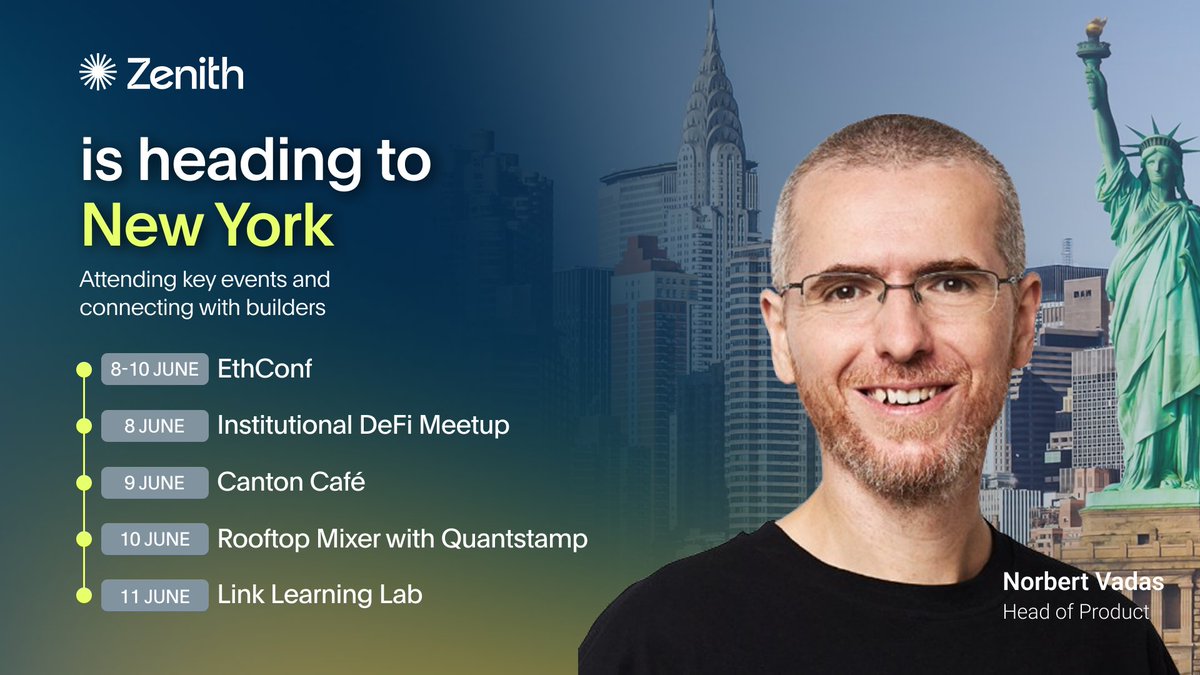
ETHConf week in New York is one of the best moments in the calendar to have the conversations that actually move things forward.
@NorbertVadas, our Head of Product, will be there across the full week: @ethconf June 8-10, Canton Café by @CantonNetwork on June 9, the Rooftop Mixer with @Quantstamp on June 10, the Institutional DeFi Meetup, and the Link Learning Lab on June 11.
If you're thinking seriously about where DeFi and institutional infrastructure converge, come find us. Zenith is building the native execution layer on Canton that connects EVM (and soon SVM) developer ecosystem to Canton's institutional infrastructure.
Zth.
3
53
Norbert Vadas retweeted

Jun 4
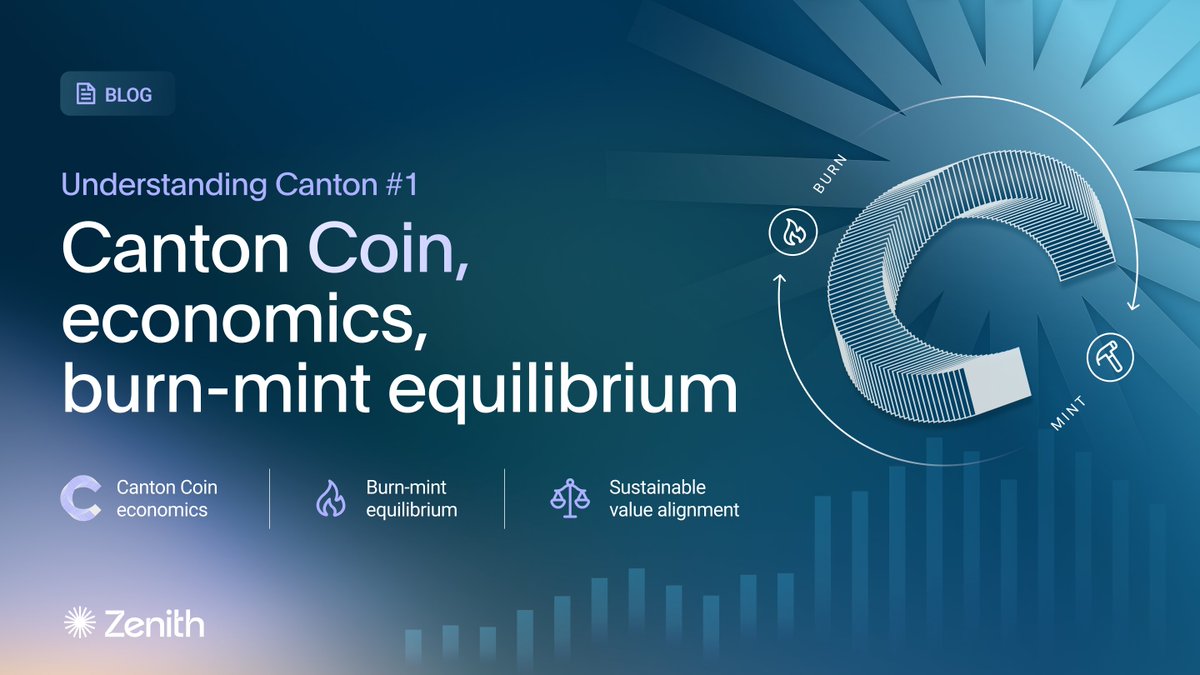
JUST IN: The first piece of Understanding Canton series is out! If you've been trying to wrap your head around how @CantonNetwork's tokenomics actually work, this is the place to start.
Canton Coin has no pre-mine, no founder allocation, and no VC distribution. Every $CC in circulation was minted through active network participation after the Global Synchronizer went live. The mechanics behind that model, how burns and minting work, who earns what and why, how the minting curve has shifted from infrastructure bootstrapping toward application rewards, and how Zenith's EVM activity feeds into the same economic loop, are covered in full in Blog #1.
zenith.network/resources/blo…
Zth.
7
10
46
14,343

May 20
Designing DeFi just started in NYC. If you are around and interested in how at @ZenithFdn we are connecting TradFi and DeFi, by bringing EVM compatibility to Canton, drop me a message! I'd be happy to chat!

D² brings together research on DeFi protocol design, incentives, and market behavior
Across two days, the program spans:
→ DeFi Microstructure
→ Perpetual Futures & Derivatives
→ Mechanism Design
→ Prediction Markets
→ AMMs
Learn more: designingdefi.xyz

3
1
9
503
Norbert Vadas retweeted

May 8
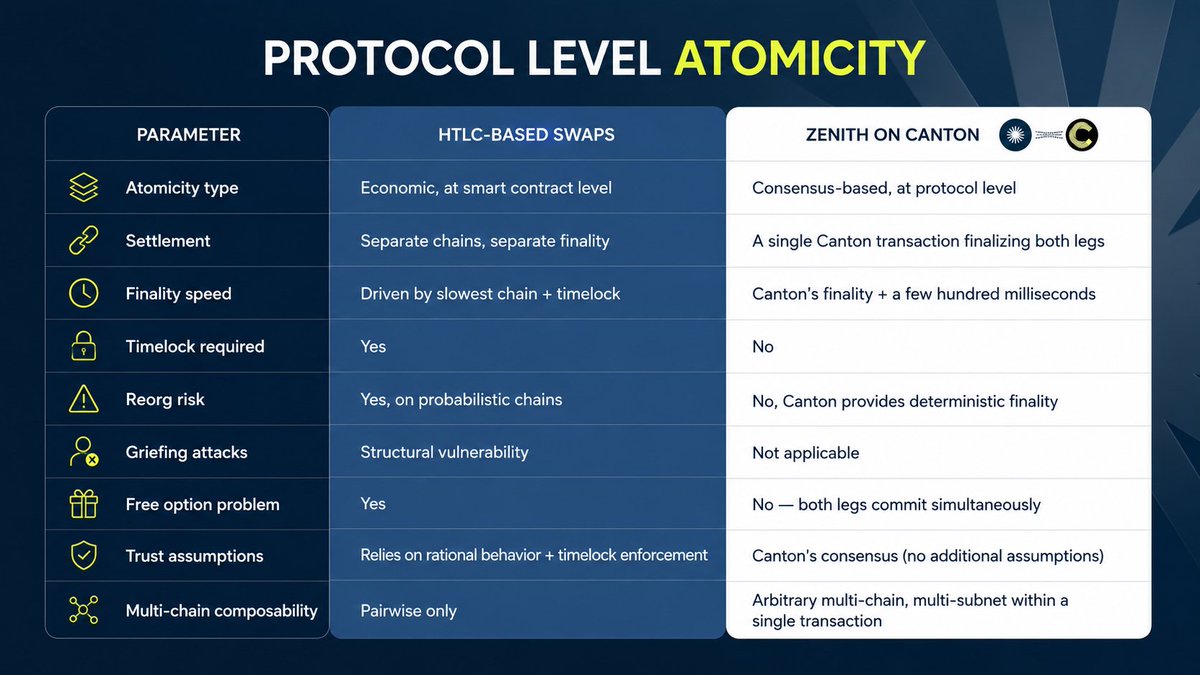
Not all atomic swaps are created equal. When someone says "atomic", it’s worth asking: atomic at what layer?
This is not a minor semantic distinction. It has significant implications for finality, latency, security, and composability.
The answer determines whether you're getting a promise that depends on both parties behaving rationally within a set of timelock-enforced rules, or a genuine, protocol-level guarantee that your transaction either fully executes or never happens at all.
@ZenithFdn provides consensus-level atomicity with @CantonNetwork, everyone else is pitching economic atomicity.
Take a deep dive and read more in our recent blog post to learn more.
Zth.
May 7
Cross-chain infrastructure has a vocabulary problem. The word "Atomic" appears in bridge protocols, HTLC swaps and interoperability solutions of every kind. It's being used to describe mechanisms that deliver fundamentally different guarantees, and the industry isn't being precise enough about the difference.
> Economic atomicity is what most bridges and cross-chain swaps deliver. The smart contract guarantees an all-or-nothing outcome at the application layer, but both legs still settle on separate chains through separate consensus mechanisms. The guarantee depends on both parties behaving rationally within timelock windows that are measured in hours. When a validator gets compromised, a chain reorgs, an attacker locks counterparty capital and simply waits, the smart contract can't protect against any of it. The window of exposure between two separate settlement events is where the damage happens.
> Consensus-level atomicity is what Zenith delivers. Both legs of a transaction are processed within the same single consensus mechanism as one indivisible operation. There is no window and no timelock. The protocol itself guarantees that both legs commit together or neither does, regardless of what either party does or what the infrastructure beneath them does.
For consumer applications that distinction is manageable, but for institutional finance moving real capital across chain boundaries, it's the difference between infrastructure you can depend on and infrastructure that works until something goes wrong.
The EVM execution adds a few hundred milliseconds to Canton's native finality time, that's the entire overhead. Compared to timelock windows measured in hours, the latency difference alone changes what's possible to build.
We wrote the full breakdown about two flavours of atomic that are worth understanding clearly before you build on either: zenith.network/resources/blo…
Zth.
10
5
40
6,982
Norbert Vadas retweeted
May 7
Cross-chain infrastructure has a vocabulary problem. The word "Atomic" appears in bridge protocols, HTLC swaps and interoperability solutions of every kind. It's being used to describe mechanisms that deliver fundamentally different guarantees, and the industry isn't being precise enough about the difference.
> Economic atomicity is what most bridges and cross-chain swaps deliver. The smart contract guarantees an all-or-nothing outcome at the application layer, but both legs still settle on separate chains through separate consensus mechanisms. The guarantee depends on both parties behaving rationally within timelock windows that are measured in hours. When a validator gets compromised, a chain reorgs, an attacker locks counterparty capital and simply waits, the smart contract can't protect against any of it. The window of exposure between two separate settlement events is where the damage happens.
> Consensus-level atomicity is what Zenith delivers. Both legs of a transaction are processed within the same single consensus mechanism as one indivisible operation. There is no window and no timelock. The protocol itself guarantees that both legs commit together or neither does, regardless of what either party does or what the infrastructure beneath them does.
For consumer applications that distinction is manageable, but for institutional finance moving real capital across chain boundaries, it's the difference between infrastructure you can depend on and infrastructure that works until something goes wrong.
The EVM execution adds a few hundred milliseconds to Canton's native finality time, that's the entire overhead. Compared to timelock windows measured in hours, the latency difference alone changes what's possible to build.
We wrote the full breakdown about two flavours of atomic that are worth understanding clearly before you build on either: zenith.network/resources/blo…
Zth.
3
8
33
21,334
Norbert Vadas retweeted
Apr 22
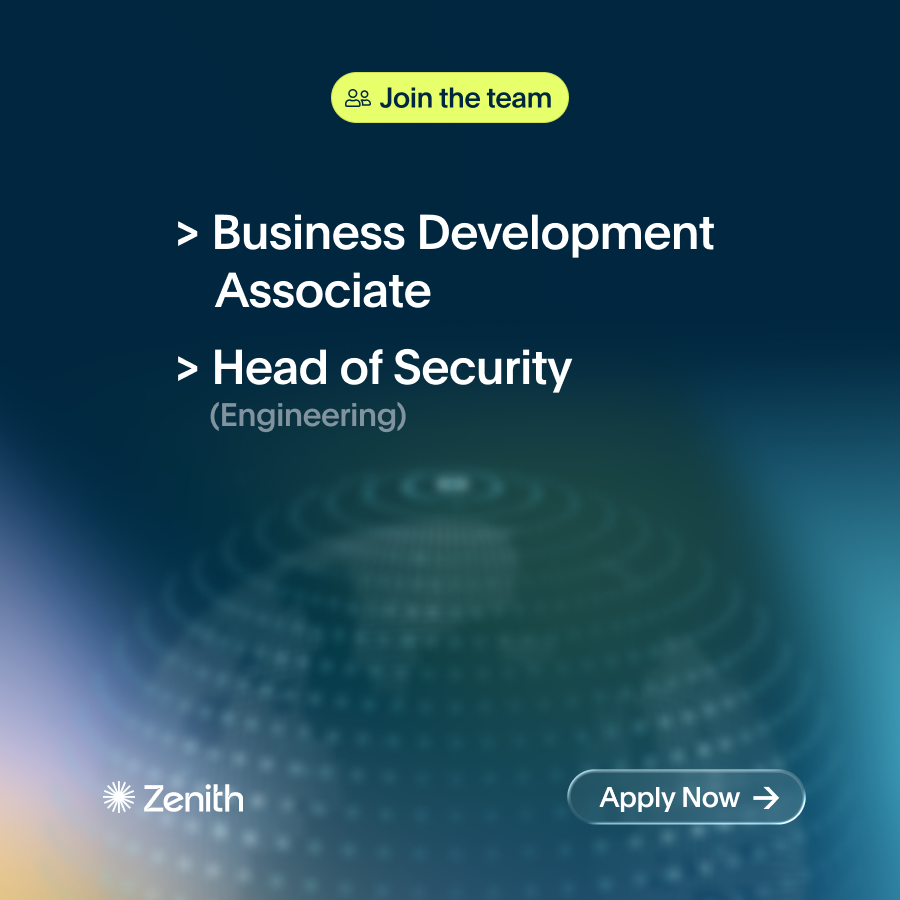
We are hiring a Head of Security and a BizDev Associate.
We’re a small team who need to punch way above our weight. Every single person owns their section of the business and has full authority to figure out how we can reach our goals.
If that sounds like you go ahead and apply.
Apr 22
Zenith is expanding and we're hiring two people to grow with us.
> Business Development Associate: shape Zenith's launch by managing inbound client relationships, qualifying partnerships, and building the workflows that keep everything moving. You're organized, relationship-driven, and fluent in both Web3 and institutional finance conversations.
platform.zenith.network/appl…
> Head of Security (Engineering): own security end-to-end across our full stack. This is a deeply technical role: threat modeling, vulnerability research, incident response, secure architecture from blockchain protocol layer to cloud infrastructure.
platform.zenith.network/appl…
If you want to work at the forefront of where DeFi meets institutional finance with an ambitious team playing the long game, we'd love to hear from you.
Zth.
1
2
6
814
Norbert Vadas retweeted
Apr 16
Nice design that has already been done by @CantonNetwork @ZenithFdn & @zksync with slight differences.

Blockchains still broadcast every transaction publicly. Every stablecoin payment leaks the amount, the sender, and the recipient.
We’re excited to share that Tempo is building Zones for businesses that need privacy: private blockchains that are interoperable with the rest of Tempo for stablecoin use cases like payroll, treasury, and settlement.
1
3
349
Norbert Vadas retweeted

Apr 17
13
13
76
22,449
Norbert Vadas retweeted
Apr 14
This is what many people seem to misunderstand. Every Zenith EVM transaction is a @CantonNetwork transaction. Every transaction burns $CC and grows the collective pie.
Apr 14
Every design decision at Zenith comes back to one core principle: execution should reinforce the base layer, not fragment it.
That’s why every EVM (and soon SVM) transaction on Zenith is routed through Canton and executed as part of Canton's native transaction flow. All sub-operations succeed together or revert together. $CC burned at the base layer.
When you ship on Zenith, you ship on Canton.
Not a layer on top of it. Not a sidechain extracting from it. @CantonNetwork itself, extended with EVM and SVM execution while keeping the economic loop completely intact.
The end game was always atomic composability.
Zth.
1
3
237
Norbert Vadas retweeted
Apr 13
🚨HSBC SUCCESSFULLY COMPLETES TOKENIZED DEPOSITS ON CANTON NETWORK
This full-stack solution by @HSBC was used for the issuance, transfer, and atomic settlement of its Tokenised Deposit Service (TDS) with other digital assets.
This marks the first time HSBC’s tokenized deposits were issued and used on a public blockchain network, demonstrating seamless interoperability and 24/7 programmable settlement while maintaining full regulatory compliance and privacy controls.
HSBC is locked and loaded with:
➜ ~$300B market cap
➜ $71B annual revenue (FY 2025)
➜ $1.787 trillion in customer deposits
➜ operations in 56 countries and territories
➜ leadership as one of the world’s largest banking and financial services organizations
HSBC continues advancing real-world tokenized finance at a global scale. The pilot highlights how tokenised deposits can move atomically alongside digital assets on Canton’s privacy-enabled network of networks.
This is a significant step toward mainstream institutional adoption of programmable money and tokenized cash on @CantonNetwork.
Zth.
10
19
111
2,623
Norbert Vadas retweeted
Apr 12
🚨 ATOMIC COMPOSABILITY IS THE END GAME
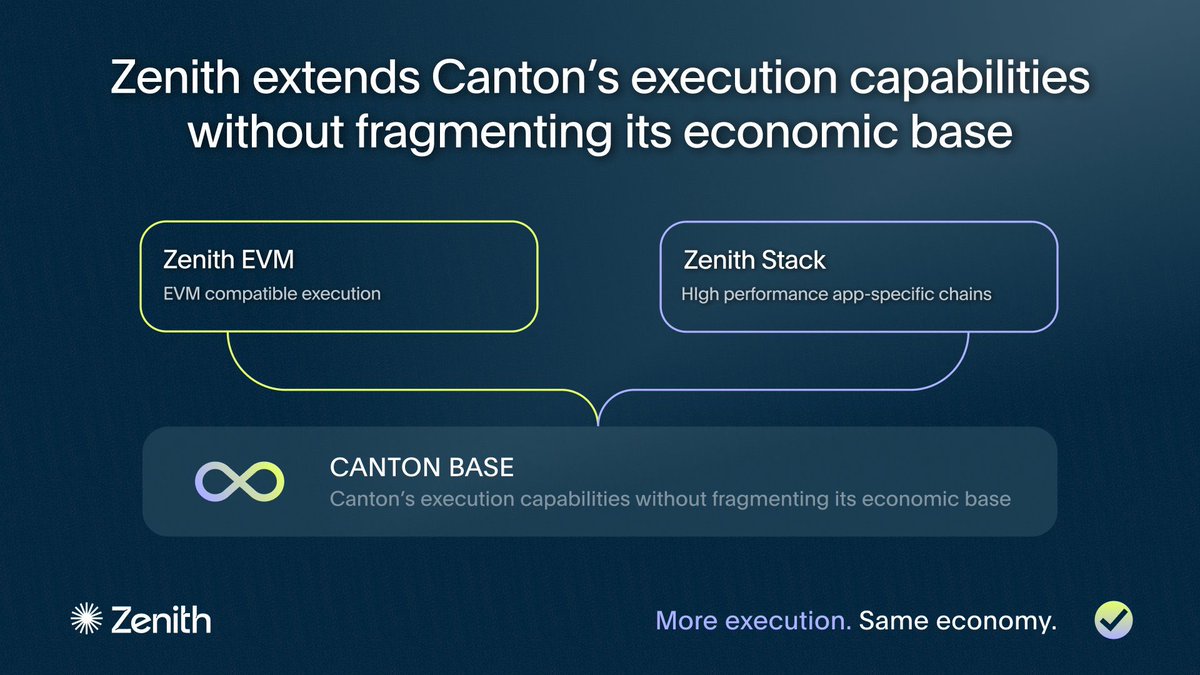
In almost every blockchain architecture, as users interact with L2s/subnets/parachains, transaction volume, fee capture, and gas token utility moves away from the base layer, gradually fragmenting what was once a single economic system.
This is why $ATOM failed, $DOT faltered, $AVAX tapped out, and $ETH has hit a ceiling.
We drafted our architecture and made it public over a year ago. EEZ and others are now bringing that to Ethereum, and it’s clear why. The end game should always focused on burning your native token. For us, that is $CC.
Zenith approaches network success by ensuring that execution does not pull value away from @CantonNetwork, but continues to flow entirely through it.
When users interact with Zenith, EVM / SVM transactions are routed through Canton and atomically executed as part of Canton’s native transaction flow, while also preserving settlement and verification at the base layer.
- An institution on Canton can initiate a transaction that locks tokens or stablecoins on the Canton side.
- The Canton leg executes sub-operations including an external_call() that directly invokes the Zenith EVM application.
- The Zenith leg performs the corresponding actions (e.g., minting, swapping into an RWA asset, depositing into a @Morpho-like or @aave-style vault).
- Confirmation flows back to Canton atomically.
- All sub-operations across Canton and Zenith succeed together or revert together in a single unified transaction.
When you deploy with @ZenithFdn you inherently are deploying to Canton.
It’s canonical.
It’s Canton.
Zth.
4
5
31
2,758
Norbert Vadas retweeted
Apr 9
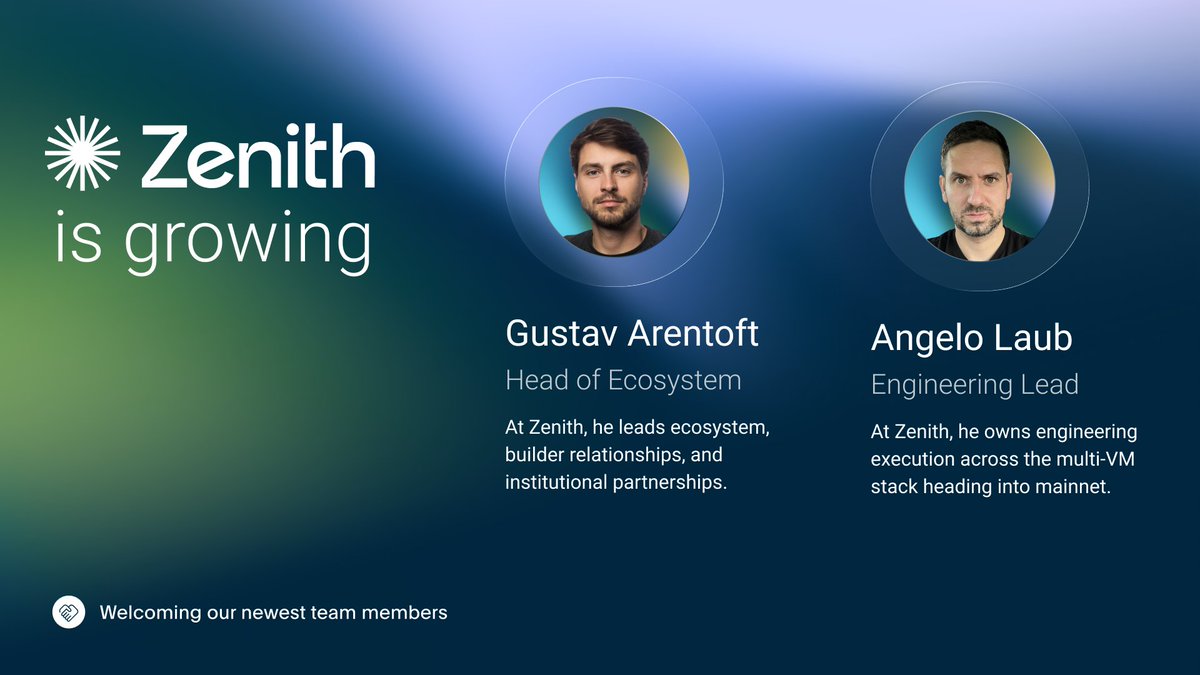
Zenith Team is growing!
Two people joined Zenith lately worth knowing about ↓
Gustav Arentoft (@GArentoft) | Head of Ecosystem
8 years in DeFi. BD Lead at MakerDAO from 2018-2021, closed SocGen first tier 1 bank integrated into DeFi. Head of Product for @1inch’s institutional product. Founder of @StableLab, running governance for major L1/L2s, and DeFi protocols with a 30-person team.
At Zenith, he leads ecosystem, builder relationships, and institutional partnerships.
Angelo Laub (@angelol) | Engineering Lead
20 years building production systems across cryptography, blockchain, and AI infrastructure. Lead smart contract engineer for Alien Worlds (100k DAU). Creator of Tunnelblick, a widely used macOS OpenVPN client.
At Zenith, he owns engineering execution across the multi-VM stack heading into mainnet.
The right people, at the right time. Q3 mainnet is approaching, with 31,800 Ethereum developers about to get direct access to Canton's institutional rails for the first time. The team is evolving to meet that moment.
We’re also hiring: zenith.network/careers/
Welcome Gustav and Angelo!
Zth.
8
5
46
4,218
Norbert Vadas retweeted
Apr 8
Episode 50 of The Spelunking Podcast w/ Ricardo Mendez and @mhonkasalo is here.
We try to answer one question: is this the bottom of the bear market?
Tune in:
youtube.com/watch?v=0WWlOFS8…
1
3
183
Norbert Vadas retweeted
Mar 29
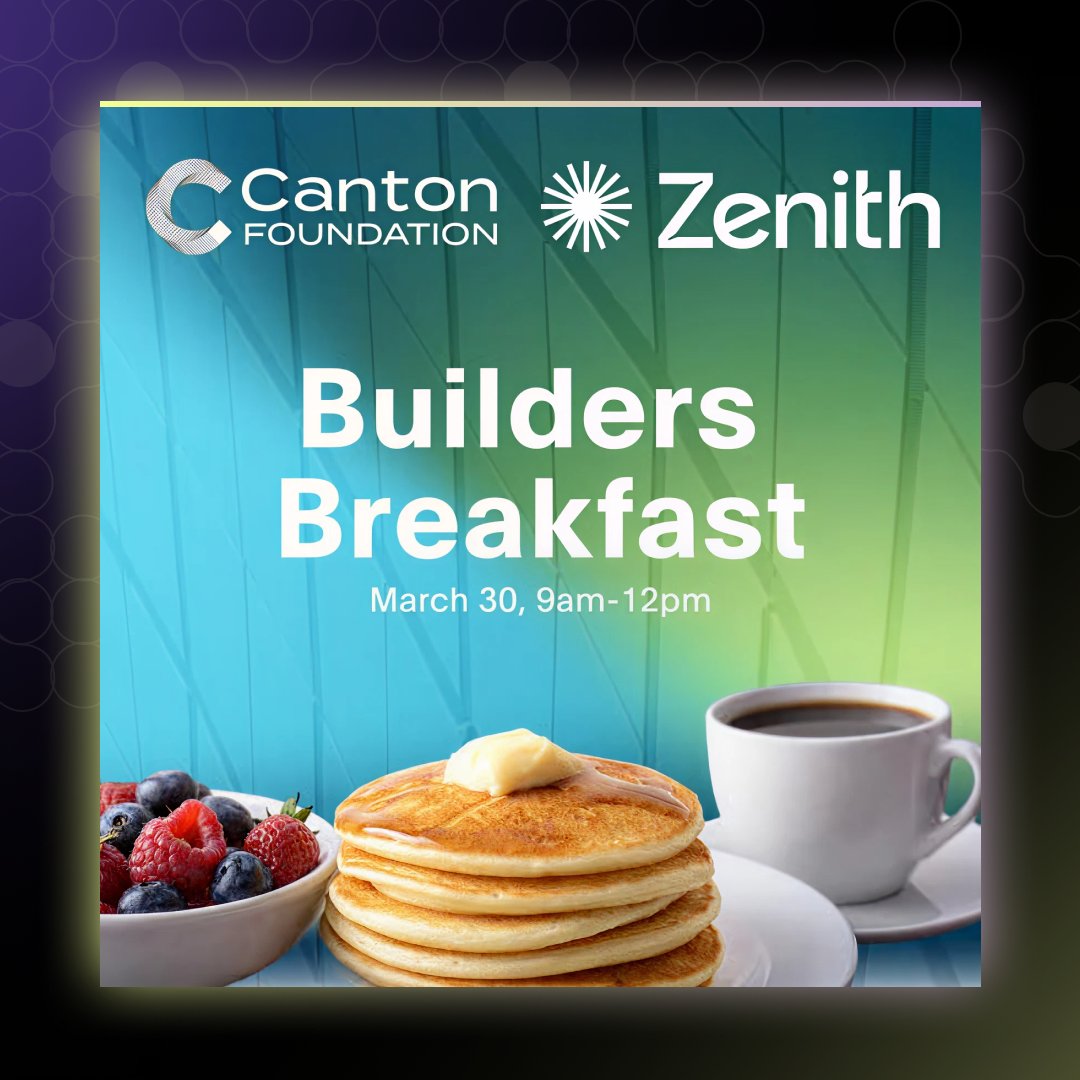
Starting @EthCC with a Builders Breakfast. ☕🥞
@CantonFdn and @ZenithFdn are hosting an intimate morning for builders at the intersection of Ethereum and institutional finance, just coffee and real conversations.
Zenith brings EVM and SVM execution to Canton, so Solidity and Rust developers can now build on the same network
March 30, Cannes.
RSVP below 👇
13
7
62
2,046
Norbert Vadas retweeted
Mar 27
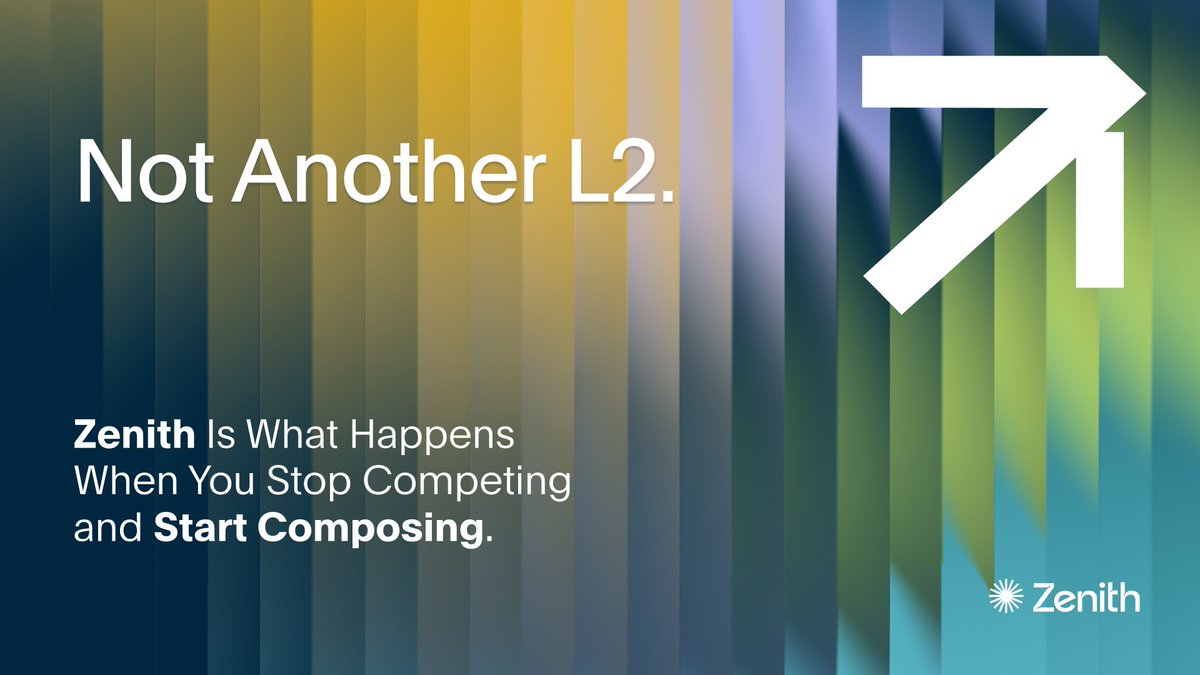
Most people try to fit Zenith into existing categories: L1? L2?
It’s neither.
Zenith is built as the EVM execution environment for @CantonNetwork, and behaves differently from traditional L2s. It doesn’t compete with the base layer. It reinforces it.
8
6
33
3,320
Norbert Vadas retweeted
Mar 26
Visa’s @CantonNetwork Super Validator is rated as a Weight of 10, the maximum given in the network. That’s the same as Nasdaq and the DTCC.
That’s the same as @ZenithFdn.
Let that sink in for a minute.
Zth.
Mar 21

🚨 VISA JOINS CANTON NETWORK AS SUPER VALIDATOR 🚨
Visa is deepening its roots in blockchain industry, from launching the Visa Tokenized Asset Platform (VTAP) and expanding stablecoin settlement capabilities to milestones on @CantonNetwork.
@Visa is one of the most important financial institutions in the world, operating at the center of global payments with unparalleled scale, reliability, and trust. As the backbone of electronic payments for consumers, merchants, financial institutions, and governments, Visa enables trillions of dollars of value exchange annually across borders, currencies, and use cases.
Their stats are staggering:
➜ $595B market cap
➜ ~$40B annual revenue
➜ >$16.7 TRILLION in total volume processed (payments cash) in FY 2025
➜ 4.9 BILLION payment credentials (cards/accounts) in circulation worldwide
➜ >220 countries and territories covered, and peak capacity of 65,000 transactions per second
We can only imagine with this integration to the global synchronizer Visa may be bridging the world’s largest payment rails at massive global scale to @CantonNetwork. Their Super Validator is set a weight of 10. They now will sit at the same table as @The_DTCC, @Nasdaq, and @zenithfdn.
The future of money flows is programmable, instant, truly global, and clearly blockchain bound.
As Cuy Sheffield, @cuysheffield, Head of Crypto at Visa, stated: “Visa is committed to meeting businesses where they operate, and increasingly, that’s onchain.”
Where do we see the congregation of businesses meeting onchain?
@CantonNetwork
Zth.
This is what public governance looks like in practice: lists.sync.global/g/cip-disc…

4
8
75
3,282
Mar 24
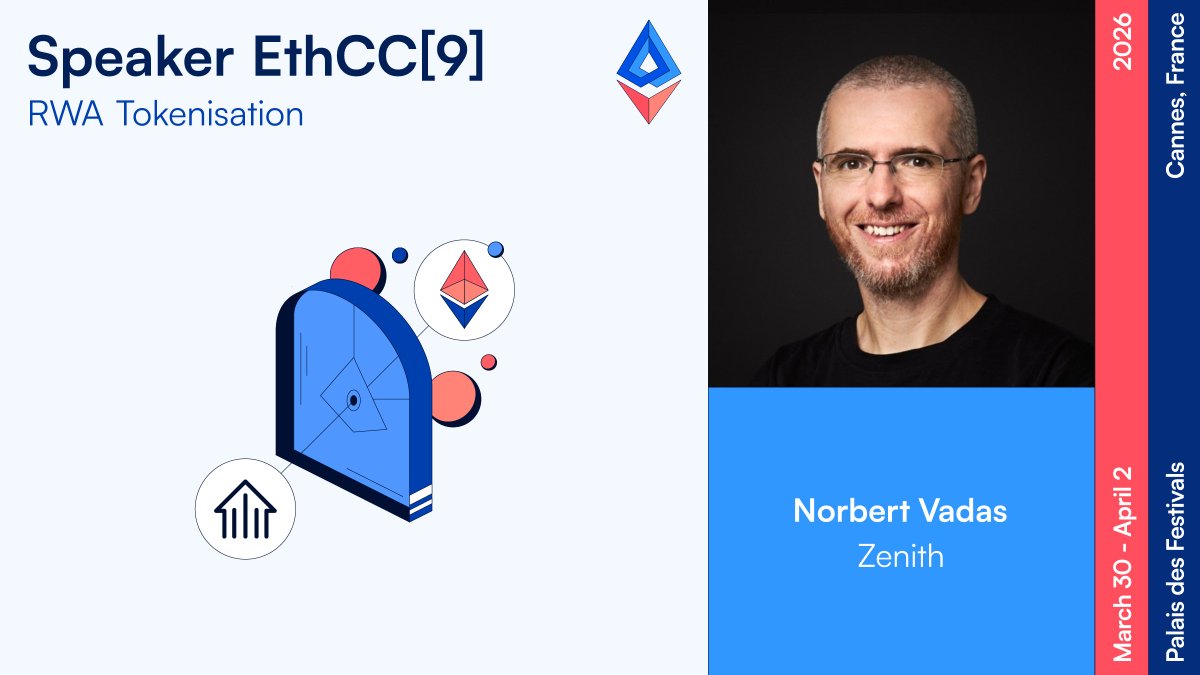
If you are curious how Zenith connects Ethereum applications to Canton, let's meet up in Cannes.
I'll dive into the details in my presentation at the main event, on 30 March.

Blockchain infrastructure expert Norbert Vadas takes the stage to explore "Zenith: connecting the Ethereum ecosystem with Canton" at the RWA Tokenisation track.
This connection could unlock new possibilities for real-world asset tokenization across previously siloed blockchain networks.
1
3
152
Norbert Vadas retweeted
Mar 23
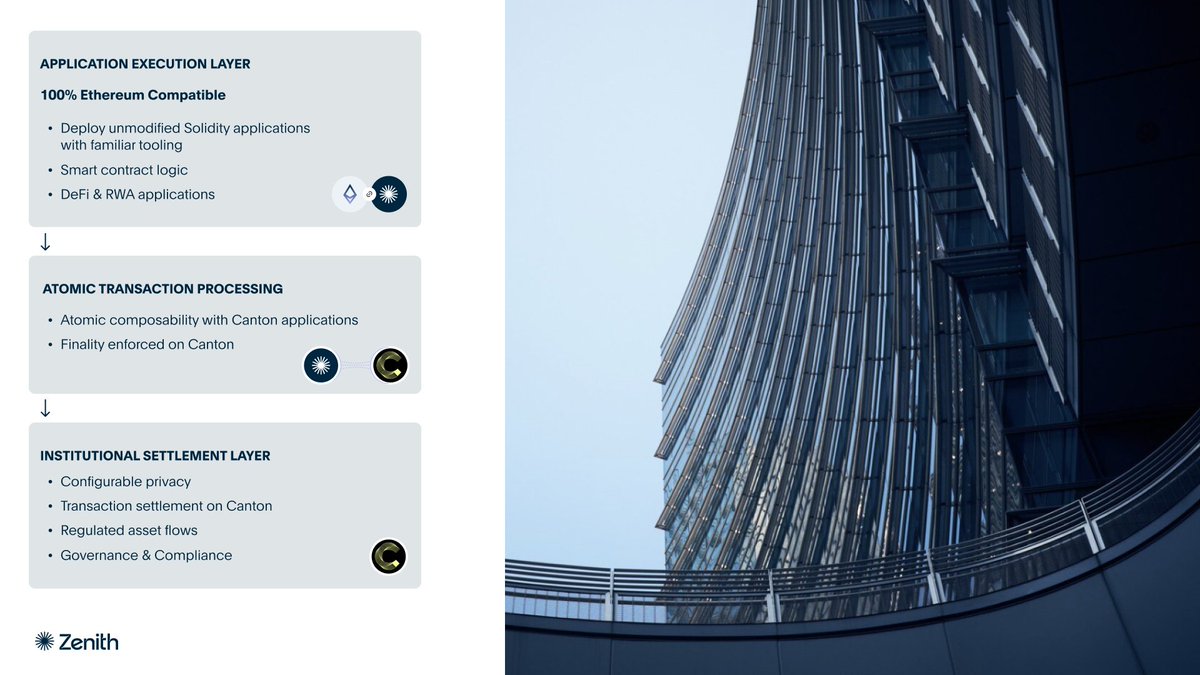
JUST IN: Zenith CBO & Co-Founder @HeslinKim nailed it in this guest post on @CantonNetwork
"For Ethereum developers and projects, Zenith offers the ideal onramp to this next-generation infrastructure. Teams can deploy applications directly on Zenith EVM, launch dedicated Zenith Stack instances on Canton for full privacy, institutional-grade scale, and regulatory alignment, or maintain flexible dual-chain architectures that combine Ethereum's deep liquidity with Canton's unparalleled compliance and synchronized finality."
Full read: canton.network/blog/ethereum…
Zth.
8
15
57
13,173