
Who’s to say? / Wie mag het zeggen?
Joined June 2007
- Tweets 34,098
- Following 2,122
- Followers 1,803
- Likes 4,926
689 Photos and videos



Stephan Verveen 💬 retweeted

May 26
Goed gedaan, @StasDigi: klassieke overheidstaken moet je niet uitbesteden. Technologie uitbesteden aan derde landen betekent bovendien dat je toekomstige (geo)politieke drukpunten creëert. Goed dat er ook vanuit die bril wordt nagedacht. Van 30-11-2025 @Buitenhoftv youtu.be/tyr95KOn2jE?is=zmcq…

De staatssecretaris van Economische Zaken en Klimaat neemt het advies van het Bureau Toetsing Investeringen over en besluit tot een verbod van de overname van Solvinity door Kyndryl.
Kamerbrief ⤵️
open.overheid.nl/details/ec6…
2
13
46
3,450

True
May 20

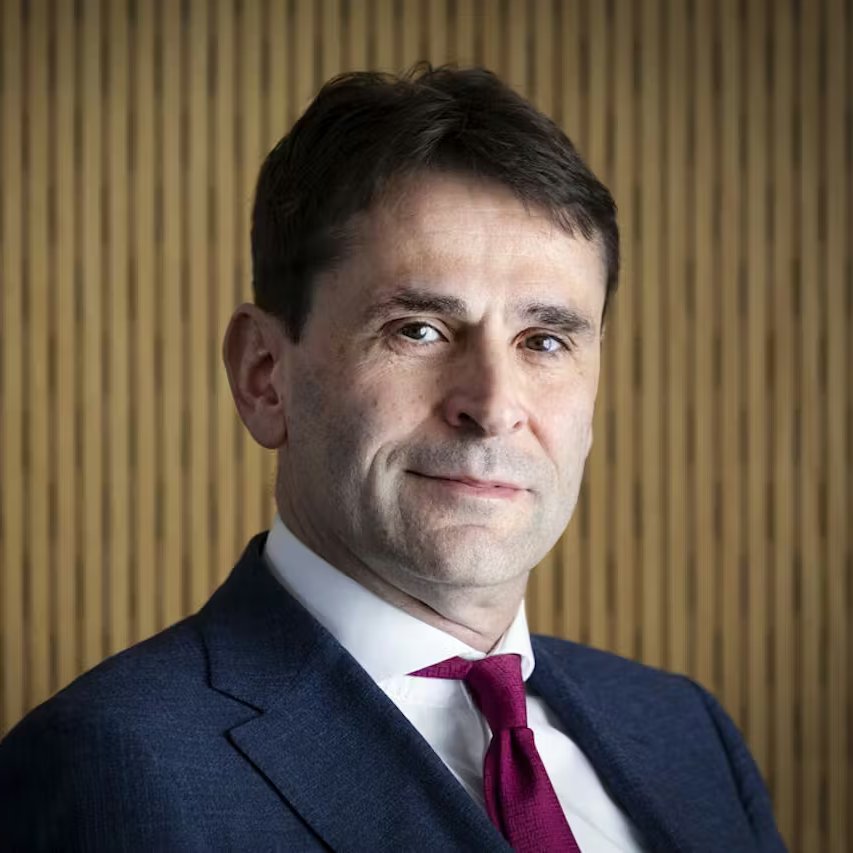
NEWS: ASML CEO Christophe Fouquet singles out Starlink as one of the most fascinating chip demand drivers he sees in the market today.
"We talk a lot about chips, humanoids and self-driving cars. But all those products have to be connected to data," Fouquet told Reuters.
Starlink's satellite constellation requires chips at scale. As the network grows toward tens of thousands of satellites, it represents a significant and recurring source of semiconductor demand that most analysts overlook.

1,214
5,553
56,564
12,514,170
Stephan Verveen 💬 retweeted

May 19
Personal update: I've joined Anthropic. I think the next few years at the frontier of LLMs will be especially formative. I am very excited to join the team here and get back to R&D. I remain deeply passionate about education and plan to resume my work on it in time.
7,989
11,148
150,231
27,572,168
Stephan Verveen 💬 retweeted

Apr 12
So THAT is why the AI from Anthropic is called Claude.
Apr 12

In 1948, a 32-year-old at Bell Labs published a paper nobody fully understood.
Engineers found it too mathematical. Mathematicians found it too engineering-focused. One prominent mathematician reviewed it negatively.
That paper - "A Mathematical Theory of Communication", became the founding document of the digital age.
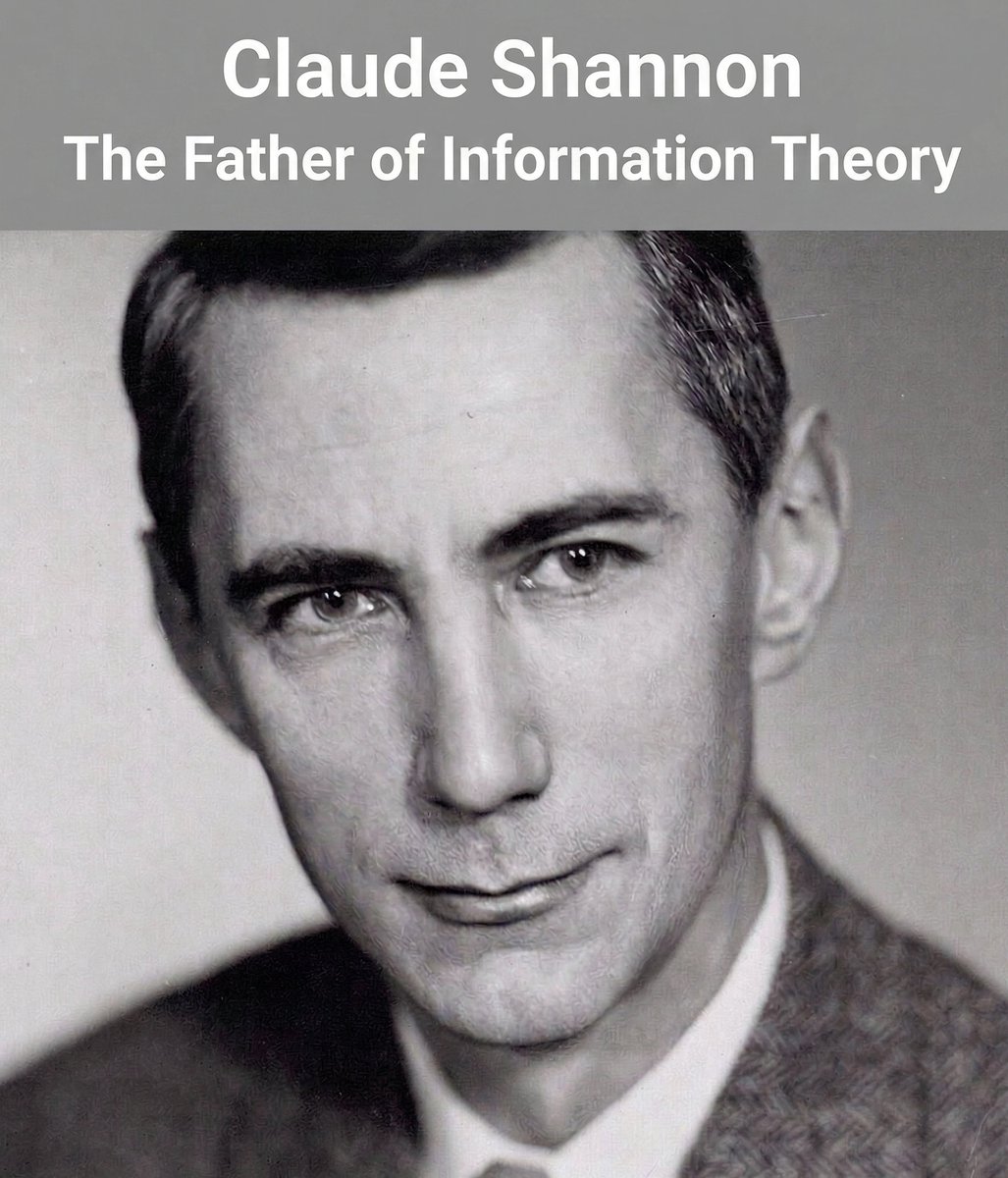
The man was Claude Shannon. Father of Information Theory.
At 21, he wrote the most important master's thesis of the 20th century.
Working at MIT on an early mechanical computer, Shannon noticed its relay switches had exactly two states - open or closed. He had just taken a philosophy course introducing Boolean algebra, which also operated on two values: true and false.
Nobody had ever connected these two things.
His 1937 thesis proved that Boolean algebra and electrical circuits are mathematically identical, and that any logical operation could be built from simple switches.
Howard Gardner called it "possibly the most important, and also the most famous, master's thesis of the century."
Every digital computer ever built traces back to this insight.
At 29, he proved that perfect encryption exists.
During WWII, Shannon worked on classified cryptography at Bell Labs. His work contributed to SIGSALY, the secure voice system used for confidential communications between Roosevelt and Churchill.
In a classified 1945 memorandum, he mathematically proved the one-time pad provides perfect secrecy, unbreakable not just computationally, but provably, permanently, against an adversary with infinite power.
When declassified in 1949, it transformed cryptography from an art into a science. It laid the foundations for DES, AES, and every modern encryption standard.
At 32, he defined what information is.
His 1948 paper introduced one equation:
H = −Σ p(x) log p(x)
Shannon entropy. The average uncertainty in a probability distribution. The minimum bits required to encode a message.
Three things followed:
> He defined the bit - the fundamental unit of all information. His colleague John Tukey coined the name.
> He proved the channel capacity theorem, every communication channel has a maximum rate of reliable transmission. You can approach it. You can never exceed it.
> He unified telegraph, telephone, and radio into a single mathematical framework for the first time.
Robert Lucky of Bell Labs called it the greatest work "in the annals of technological thought."
Where his equation lives in AI today:
Cross-entropy loss - the function training every classifier and language model, is derived directly from H. Decision tree splits use information gain, which is H applied to data. Perplexity, the standard LLM evaluation metric, is an exponentiation of cross-entropy.
Every time a neural network trains, Shannon's formula runs inside it.
He also built the first AI learning device.
In 1950, Shannon built Theseus, a mechanical mouse that navigated a maze through trial and error, learned the correct path, and repeated it perfectly. Mazin Gilbert of Bell Labs said: "Theseus inspired the whole field of AI."
That same year he published the first paper on programming a computer to play chess. He co-organized the 1956 Dartmouth Workshop, the founding event of AI as a field.
The man:
He rode a unicycle through Bell Labs hallways while juggling. He built a flame-throwing trumpet, a rocket-powered Frisbee, and Styrofoam shoes to walk on the lake behind his house.
He called his home Entropy House.
When asked what motivated him: "I was motivated by curiosity. Never by the desire for financial gain. I just wondered how things were put together."
In 1985, he appeared unexpectedly at a conference in Brighton. The crowd mobbed him for autographs. Persuaded to speak at the banquet, he talked briefly, then pulled three balls from his pockets and juggled instead.
One engineer said: "It was as if Newton had showed up at a physics conference."
He died in 2001 after a decade with Alzheimer's, the cruel irony of information slowly leaving the mind of the man who defined what information was.
Claude, the AI model, is named after Claude Shannon, the mathematician who laid the foundation for the digital world we rely on today.
4
12
56
8,119
Stephan Verveen 💬 retweeted

10/10. No notes.
245
6,133
21,185
774,867
Regardless the outcome, this is impactful.

Elon talent raising TSMC. He’s going to mess up their wage structure so badly. 😂
1
34
Stephan Verveen 💬 retweeted

Mar 11
Can we get this shared 10,000 times?
"War crimes don't hide sex crimes!"
111
6,417
12,157
101,876
Stephan Verveen 💬 retweeted

Mar 11
Meanwhile in China, the viral White House prayer scene has turned into a full-blown social media trend. Bosses at small businesses and factories are rounding up their employees to make fun of the stunt—forming a circle, placing hands on shoulders or heads, and praying in a humorous way for “better sales, higher incomes for every worker and the whole company.”
Videos of these “prayer circles” are blowing up on Douyin and Weibo. Not sure how much divine favor the White House actually summoned, but these Chinese bosses? They straight-up turned the Oval Office prayer stunt into free global marketing gold🤣




Faith leaders gathered in the Oval Office to pray over President Trump — captured in a video released by a Trump adviser.
692
12,798
62,685
2,755,785
Stephan Verveen 💬 retweeted

Mar 11
One family, the right-wing Trump-aligned Ellisons, will soon control:
TikTok
CBS
CNN
HBO
Discovery Channel
BET
Cartoon Network
Comedy Central
DC Studios
Fandango
Miramax
MTV
Nickelodeon
Paramount
PlutoTV
Showtime
TBS
The CW
TNT
Warner Bros.
And more
This is oligarchy.
23,543
45,348
187,611
5,008,469

Stephan Verveen 💬 retweeted

Feb 27
Outside Anthropic's office in SF... intense moment!
488
4,887
33,443
1,884,059
Stephan Verveen 💬 retweeted

30 Dec 2025
Billions of transistors with features just nanometers wide power today’s most advanced devices – and our extreme ultraviolet (EUV) lithography tech makes these nanoscale features a reality.
34
155
1,350
110,344

30 Dec 2025
Listening to this is time well spant
30 Dec 2025

New episode w @AdamMarblestone on what the brain's secret sauce is: how do we learn so much from so little?
Also, the answer to Ilya’s question: how does the genome encode desires for high level concepts that are only seen during lifetime?
Turns out, they’re deeply connected questions.
Timestamps
0:00:00 – The brain’s secret sauce is the reward functions, not the architecture
0:22:20 – What the genome actually encodes
0:42:42 – What kind of RL is the brain doing?
0:50:31 – Is biological hardware a limitation or an advantage?
1:03:59 – Why we need to map the human brain
1:23:28 – What value will automating math have?
1:38:18 – Architecture of the brain
Look up Dwarkesh Podcast on YouTube, Apple Podcasts, Spotify, etc. Enjoy!
1
85
18 Dec 2025
Open the dictatorship!
18 Dec 2025

ELON WANTS TO OPEN-SOURCE 𝕏 – ALL OF IT
No leaks, no guesses – just raw code, wide open.
Code Drop:
* Full 𝕏 codebase could go public – algorithms, features, all of it
* Devs could build custom versions, fix bugs, or fork their own 𝕏
* It’s radical transparency in an industry that hides everything
* Risks? Sure. But the upside rewrites how platforms are built
If this happens, it’s not just open-source – it’s open power.
Source: @elonmusk
29
Stephan Verveen 💬 retweeted

13 Dec 2025
Sid Meier's Memoir! is an excellent book / audiobook if you have any interest in computer games and early game history.
12 Dec 2025

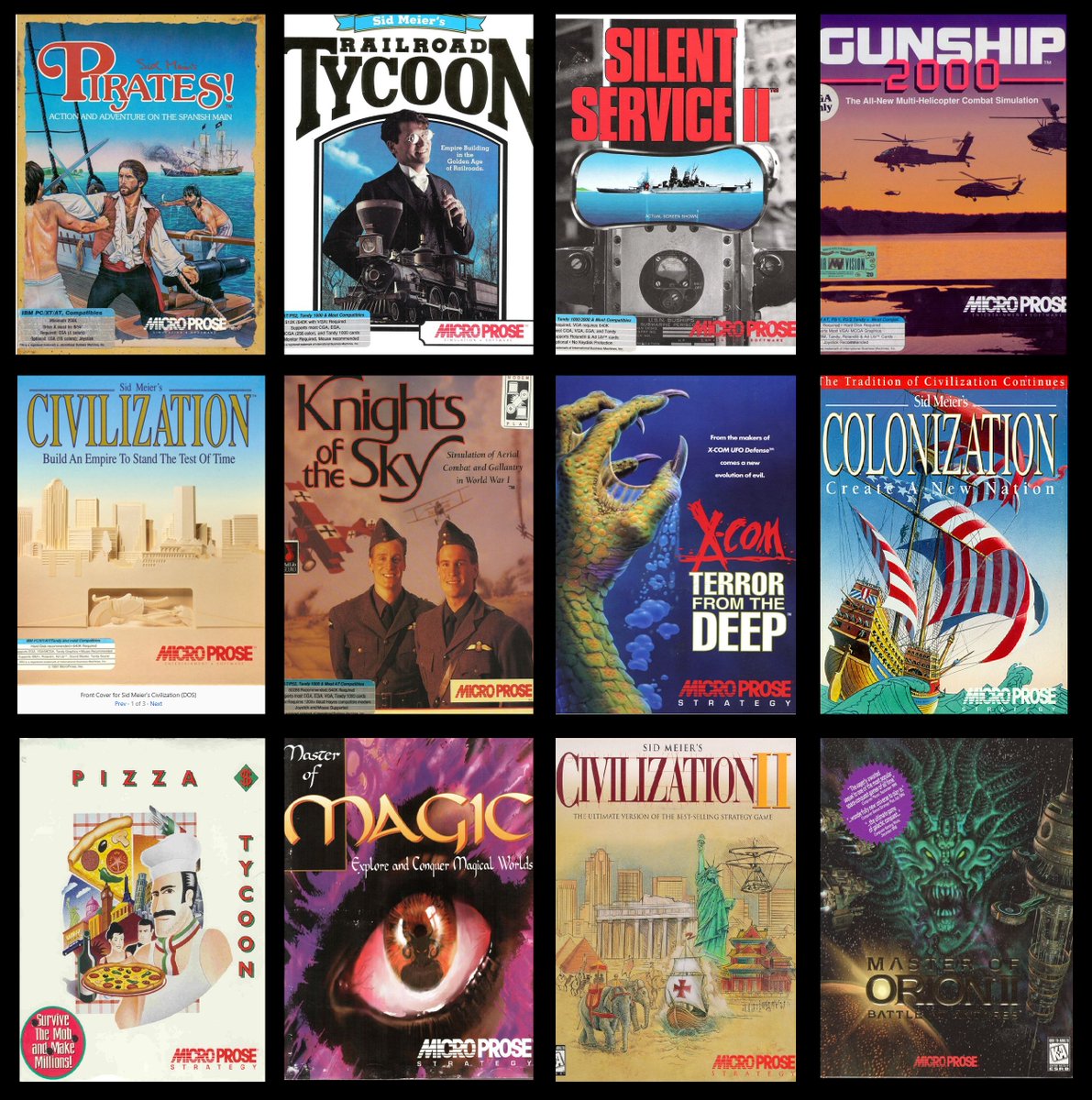
If you grew up in the 80s and90s, chances are you played a lot of MicroProse games.
MicroProse, founded in 1982 by Sid Meier, Bill Stealey, and Andy Hollis, revolutionized PC gaming with immersive simulations and strategy masterpieces. From humble beginnings with Hellcat Ace, it soared with flight sims like F-15 Strike Eagle, Gunship, and the submarine thriller Silent Service, blending realism and excitement. Meier’s genius shone in Pirates!, Railroad Tycoon, and the genre-defining Civilization, Colonization, and X-COM.
Despite mergers with Spectrum HoloByte (1993) and Hasbro (1998), and Meier’s 1996 departure to Firaxis, its legacy endures. To me, MicroProse belongs in the hall of fame of legendary pre-2000 developers. I put them on the same level with Lucasfilm and Westwood Studios.
3
2
14
1,261
Stephan Verveen 💬 retweeted

5 Dec 2025
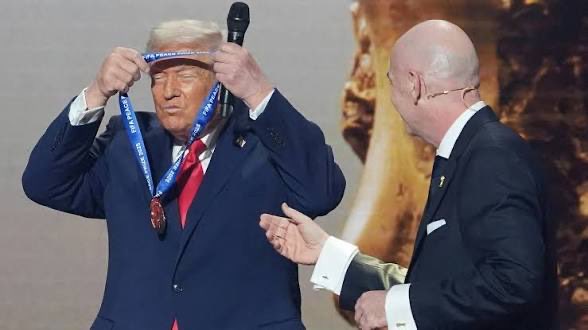
The concept of putting a medal on yourself
1,057
3,981
55,338
769,086
Stephan Verveen 💬 retweeted

5 Dec 2025
Resonant frequency demonstration
62
1,366
17,047
1,851,669
Stephan Verveen 💬 retweeted

26 Sep 2025
I can't believe I am saying this, but Rich Sutton is looking dripped out
26 Sep 2025
.@RichardSSutton, father of reinforcement learning, doesn’t think LLMs are bitter-lesson-pilled.
My steel man of Richard’s position: we need some new architecture to enable continual (on-the-job) learning.
And if we have continual learning, we don't need a special training phase - the agent just learns on-the-fly - like all humans, and indeed, like all animals.
This new paradigm will render our current approach with LLMs obsolete.
I did my best to represent the view that LLMs will function as the foundation on which this experiential learning can happen. Some sparks flew.
0:00:00 – Are LLMs a dead-end?
0:13:51 – Do humans do imitation learning?
0:23:57 – The Era of Experience
0:34:25 – Current architectures generalize poorly out of distribution
0:42:17 – Surprises in the AI field
0:47:28 – Will The Bitter Lesson still apply after AGI?
0:54:35 – Succession to AI
16
14
604
99,721
Stephan Verveen 💬 retweeted
9 Sep 2025
We just announced a strategic partnership with Mistral AI, with the goal to enhance our products and solutions for the benefit of our global customer base.
Learn more: ms.spr.ly/6014s90ha
75
204
1,712
103,804