
Helping founders to ride bigger waves.
Joined October 2020
- Tweets 154
- Following 88
- Followers 327
- Likes 426
6 Photos and videos
Overwater Ventures retweeted

Jun 8
Excited about this... continuous hormone monitoring will be life-changing, particularly cortisol! Go Adaptyx! femtechinsider.com/adaptyx-p…
1
3
98
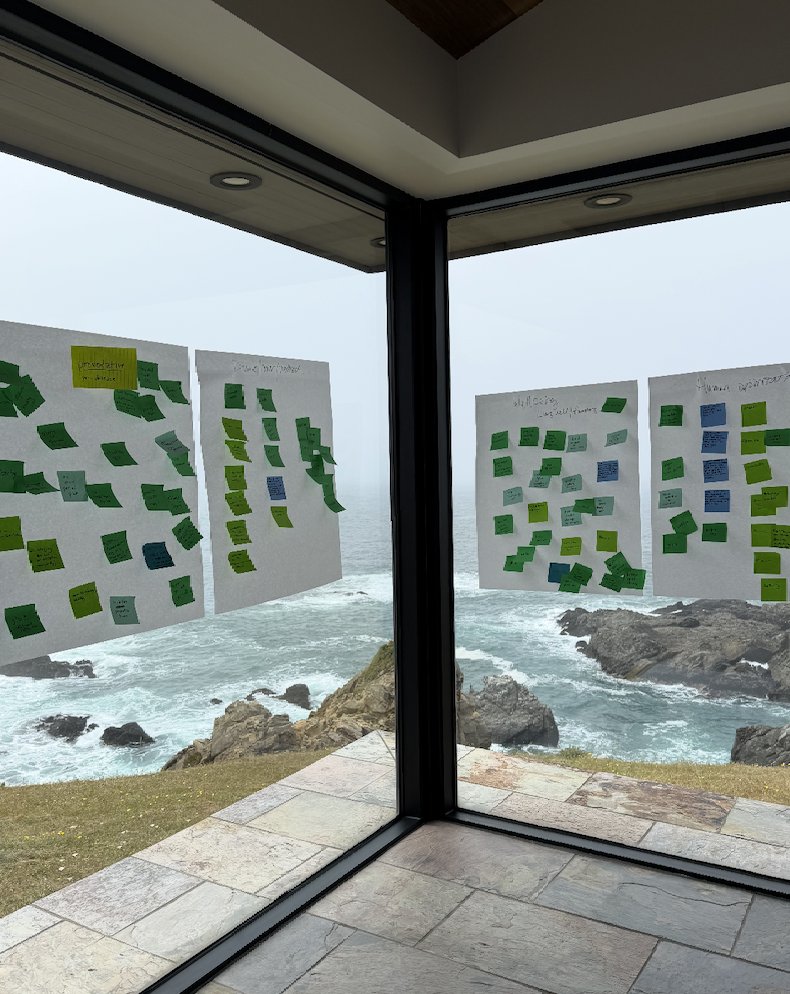
We had our first-ever @OverwaterVC offsite last week.
A big thank you to our growing Overwater team for spending time together pushing the limits of what is possible for the future!
Big waves ahead. 🌊
@ksimm @carolyncoles @Ashworth_SF
2
33
Overwater Ventures retweeted

Still processing the fact that @GetTinyHealth made it on the @colbertlateshow. 🤯
2
2
10
368
Neurosurgeon & @OverwaterVC portfolio CEO Dr. Casey Halpern joins @hubermanlab to reveal the groundbreaking science of rewiring the brain to treat OCD, addiction, compulsive behaviours and more. hubermanlab.com/episode/esse…
1
16
Overwater Ventures retweeted
May 1
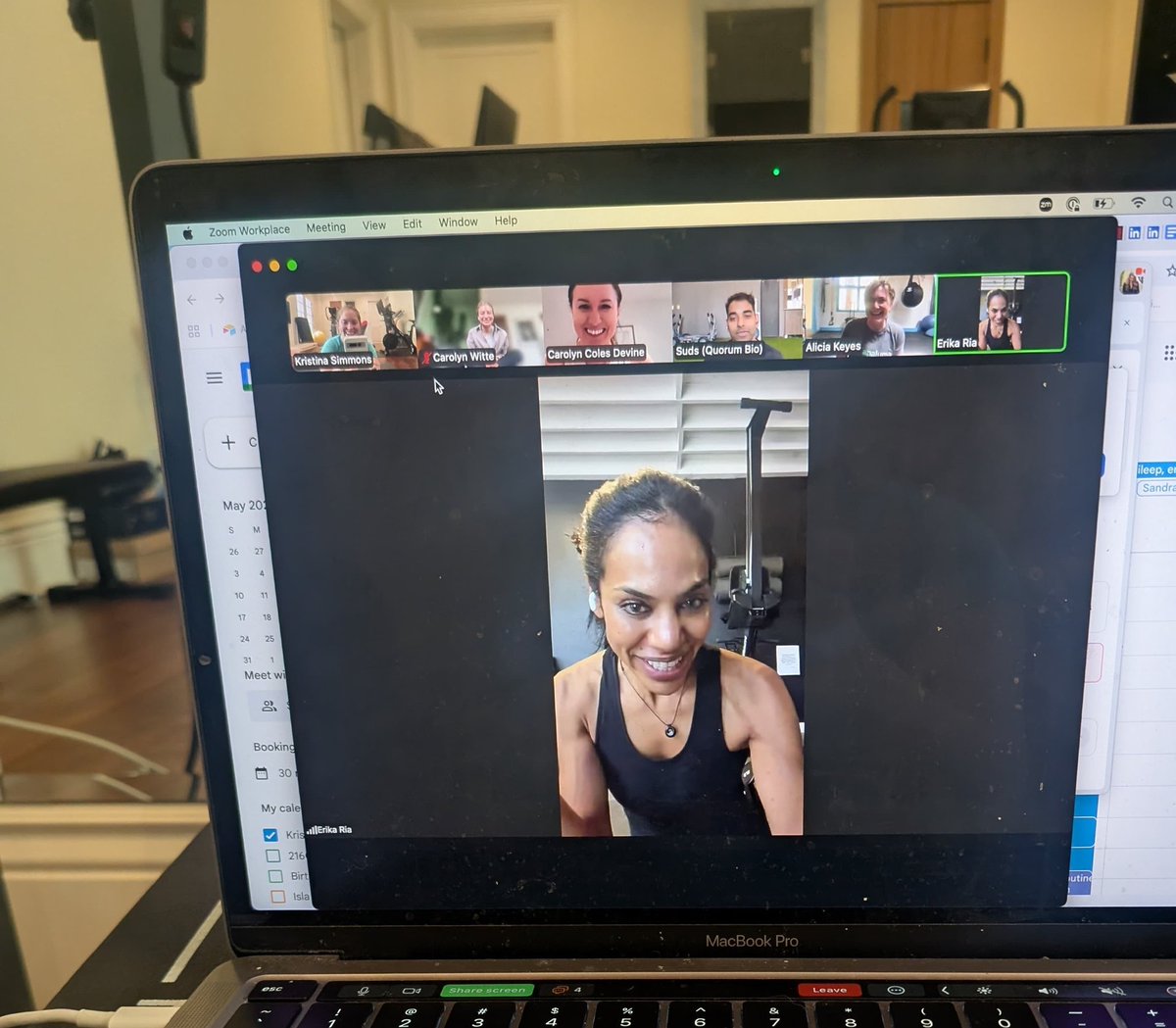
Founder bootcamp! Thanks Erika Ria for leading us through our founder workout series this morning @OverwaterVC! 💪
1
2
250
Overwater Ventures retweeted
Mar 24
Introducing Certuma, one of our newest portfolio companies @OverwaterVC.
Mar 23

Anunciamos el comienzo de Certuma la empresa que quiere que la gente que hoy tiene dificultades para acceder a un médico pueda llevar uno en su bolsillo. Pero a diferencia de la IA actual que sea legal y aprobada por la FDA y otros entes reguladores médicos.
forbes.com/sites/amyfeldman/…
1
4
356
Overwater Ventures retweeted
Mar 10
1
2
127
Overwater Ventures retweeted
Yesterday, @WSJ featured @GetTinyHealth in a piece on the rise of baby microbiome testing, alongside our friends @BeginHealth and @MadelineZephyr.
The headline: “𝗕𝗮𝗯𝗶𝗲𝘀’ 𝗚𝘂𝘁 𝗛𝗲𝗮𝗹𝘁𝗵 𝗜𝘀 𝘁𝗵𝗲 𝗡𝗲𝘄 𝗢𝗯𝘀𝗲𝘀𝘀𝗶𝗼𝗻 𝗳𝗼𝗿 𝗣𝗮𝗿𝗲𝗻𝘁𝘀 – 𝗮𝗻𝗱 𝗦𝘁𝗮𝗿𝘁𝘂𝗽𝘀.”
Yes, we absolutely are obsessed – as founders building in this space and as parents thinking deeply about the world our children are growing up in.
Because nearly 1 in 2 children in the U.S. now has a chronic condition, per the CDC.
Somehow, this has been framed as the status quo. It’s insane.
We cannot accept this.
Eczema.
Food allergies.
Asthma.
Autoimmune disease.
If the immune system is trained in the first 1,000 days of life — and the microbiome plays a central role in that training — why wouldn’t we prioritize getting that foundation right?
The article opens with Brittany and her son Leo, who was struggling with constipation, fussiness, and poor weight gain early on. Like many parents, she wasn’t looking for a trend. She was looking for answers.
As part of their Tiny Health journey, recommendations included outdoor play, pet exposure, and increasing microbial diversity.
That’s not trend-driven advice.
It’s grounded in decades of immunology research. In the first year of life, babies exposed to farms, animals, and pets develop higher levels of beneficial microbes like 𝘉𝘪𝘧𝘪𝘥𝘰𝘣𝘢𝘤𝘵𝘦𝘳𝘪𝘶𝘮 and 𝘈𝘬𝘬𝘦𝘳𝘮𝘢𝘯𝘴𝘪𝘢 – along with lower rates of allergic disease.
Rigor matters in emerging science.
At Tiny Health, we ground our recommendations in evidence-based interventions supported by decades of microbiome research. Last fall, we published a randomized controlled trial showing these interventions can reduce the odds of developing atopic conditions by 𝟴𝟯%. (Study linked in the comments.)
And what we hear from families isn’t hype – it’s relief.
Relief as constipation improves, eczema clears, sleep deepens, and resilience builds. Small shifts that make a profound difference in daily life and long-term health.
For families navigating persistent chronic health issues, those shifts aren’t small. They can be life-changing especially when they happen early.
Prevention can look unconventional… right up until it becomes standard of care.
And we’re here to support families with science, data, and care every step of the way.
Read the Wall Street Journal story here – wsj.com/health/wellness/pare…
3
6
51
5,081
Most VCs analyze decks.
The best investors analyze founder psychology.
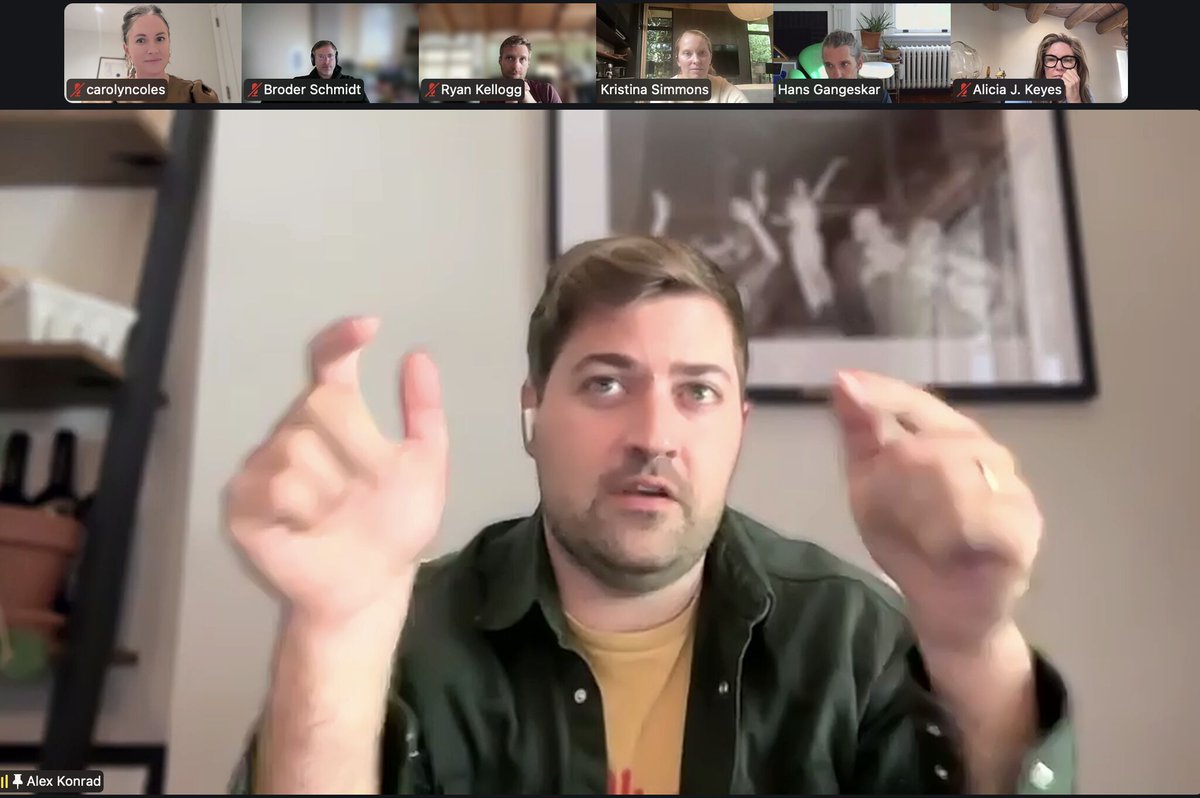
In this episode of @_MakingBillions, @ksimm shares the framework we use at @OverwaterVC to spot billion-dollar businesses early.
Listen here: open.spotify.com/episode/7Mi…
1
3
174
Overwater Ventures retweeted

Mar 7
Building a Supportive Network for Founders?
Listen to episode #162 of the Ignite Podcast with Kristina Simmons of Overwater Ventures on your favorite podcast player here: buff.ly/HxWe70g
@ksimm @OverwaterVC
#Startups #VentureCapital #Investing
1
3
62
Overwater Ventures retweeted

Feb 12
Why This VC Backs Founders Others Overlook: startupsavant.com/news/krist… #leaders #venturecapital
@OverwaterVC @ksimm
2
2
123
Overwater Ventures retweeted
Feb 14
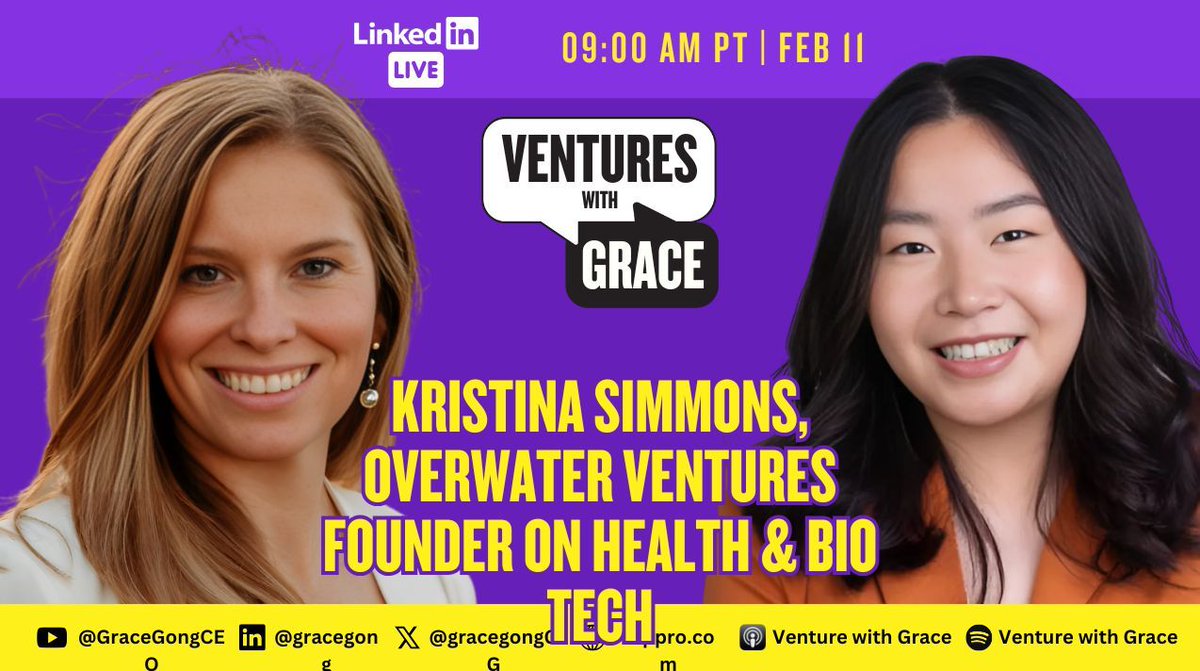
Thanks for having me on Ventures with Grace to chat about @OverwaterVC, the journey, and the future of health.
Feb 14

Listen to my conversation with @ksimm on
Spotify: bit.ly/3v1ROTu
Apple: bit.ly/4bTCwpD
Youtube: bit.ly/3uXthnv
LinkedIn: bit.ly/3Xs8GQP
Website: svppro.com
#FounderLed #BrandBuilding #DeepTech #HealthTech #ConsumerTech
1
1
3
321
In venture, the founders who reshape industries are usually the ones who break the mold!
Read more from @ksimm on @bizwomen: bizjournals.com/sanjose/bizw…
1
1
248
“At the earliest stages, I focus on how clearly a founder understands the problem they’re tackling and why they’re the right person to take it on.” A conversation with @StartupSavant & @ksimm on why unconventional founders outperform. startupsavant.com/news/krist…
1
3
77
Overwater Ventures retweeted

Jan 22
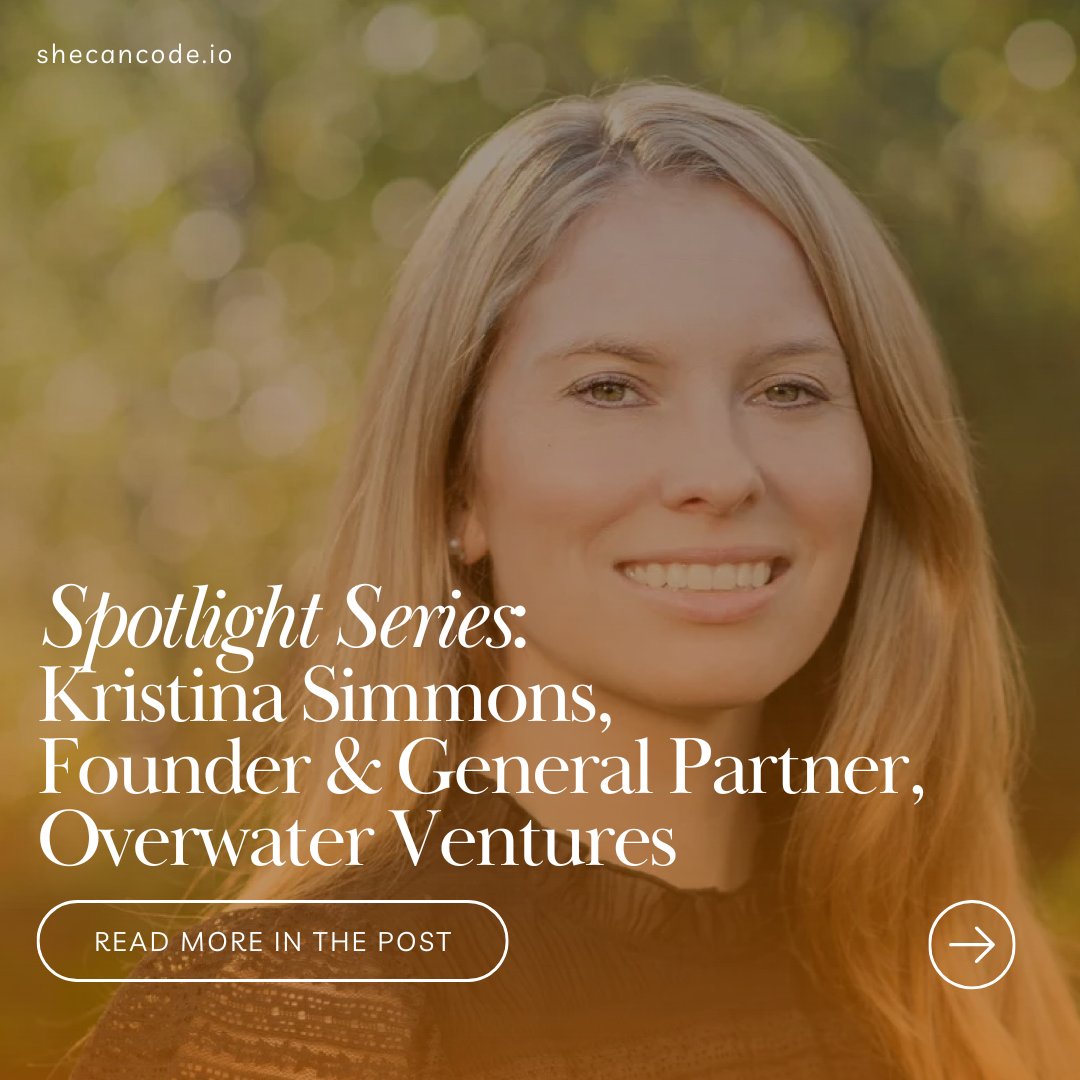
Meet Kristina Simmons, Founder of @OverwaterVC! 👋 From lululemon to venture capital, she shares her journey and advice for women shaping the future of tech and entrepreneurship.
Read more 🔗 bit.ly/3MltGZg
#WomenInTech #SheCanCode #Entrepreneurship #Leadership
1
1
3
59
From @lululemon to @a16z to @khoslaventures to @OverwaterVC, our founder @ksimm shares what it takes to scale in high-pressure environments while staying true to your purpose. Full piece: shecancode.io/spotlight-seri…
2
44
Overwater Ventures retweeted
Jan 15
1
3
409
AI is the next frontier in drug development. @ksimm puts it plainly: “It’s the Wild West… some will fail, some will break out. AI will be a part of everything.” Full story: bizjournals.com/sanfrancisco…
1
2
211

31 Dec 2025
A must read on @GametoGen, longevity and the future of women’s health. Thoughtful reporting by @lizzadwoskin at @wapo: “Fundamentally about changing the timetable of the biological clock.” washingtonpost.com/technolog…
1
43
Overwater Ventures retweeted
18 Dec 2025
Feanix Bio is out of stealth! They are using AI plus genomics to rethink farm management to be more efficient and more sustainable-- to fundamentally change how farms are managed. We, @OverwaterVC, are thrilled to be early investors with @initalized @generalcatalyst @collabfund.
linkedin.com/pulse/introduci…
1
2
279