559 Photos and videos












P5🛡️ retweeted

May 9
Tried to figure out Crosslink. The TLDR for ZEC:
- you'll be able to stake ZEC
- you'll earn yield while keeping your privacy
- your funds stay liquid, you can unstake in about a week
- ZEC becomes a working asset, not just a store
Crosslink adds Proof-of-Stake to Zcash without removing Proof-of-Work. The miners stay. The network adds a second layer of security and a new way for holders to participate. If you hold ZEC, you can lock some of it and assign it to a validator (called a "finalizer"). They confirm blocks. You earn a share of new ZEC issuance for delegating to them.
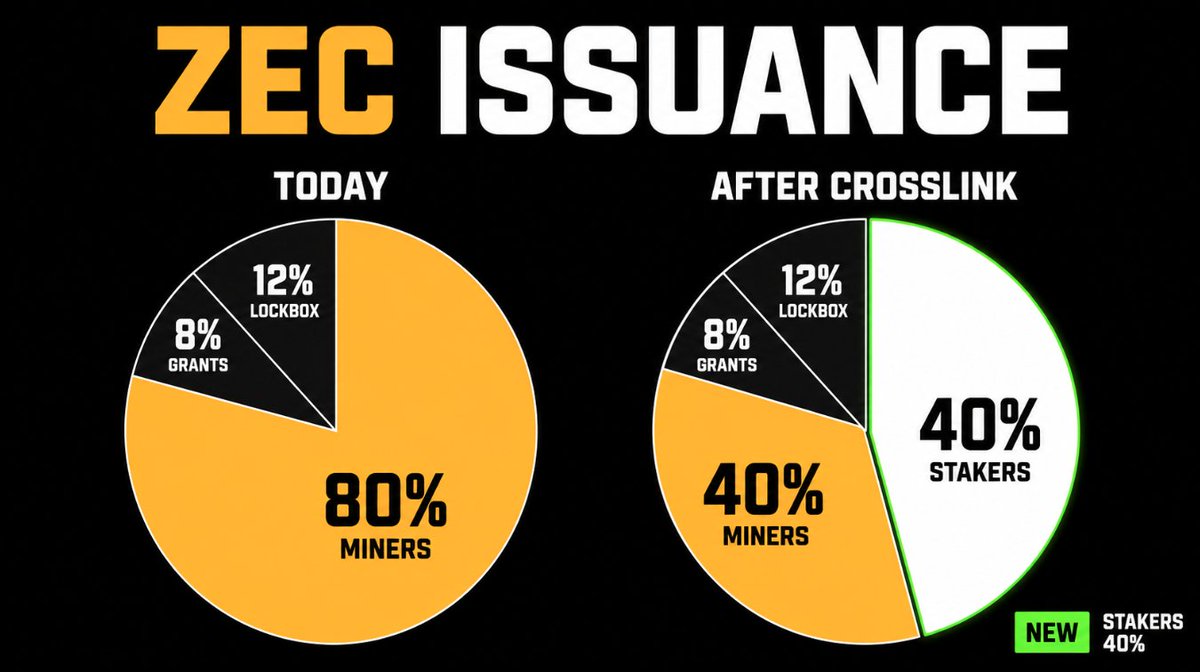
Where the yield comes from: every Zcash block creates new ZEC. Today miners get 80% of it. After Crosslink, roughly 40% reroutes to stakers. The network pays you in ZEC for helping secure it. The same way Ethereum or Solana pays validators, just new for Zcash.
What makes it different: privacy. On other chains, your stake amount and your validator choice are public. On Zcash, stakes are denominated in fixed buckets, 1, 10, or 100 ZEC, so your specific position cannot be tracked. The transactions live inside Zcash's shielded pool. You earn yield without exposing your wallet history.
This unlocks something no privacy chain has had before: a native, private, yield-bearing asset. Not a wrapped version. Not a bridge-out-and-restake hack. ZEC, staking on its own chain, with shielding intact.
Bonus: stronger finality. Once stakers finalize a block, it cannot be reversed, even if miners try a 51% attack. This makes ZEC stronger collateral for bridges and easier to list on exchanges.
Status: prototype on github, incentivized testnet running.
ZEC stops being a savings account and becomes infrastructure. Will you stake?
May 6

Crosslink architecture in a nutshell: “YOU HAD ONE JOB”
1. Wallets: Protect your user.
2. Miners: Include transactions and make progress.
3. Finalizers: Enforce finality.
4. Stakers: Select good finalizers.
5. Users: Slash the stakers if they don’t do their job.
⤵️
15
24
156
14,855
P5🛡️ retweeted

May 6
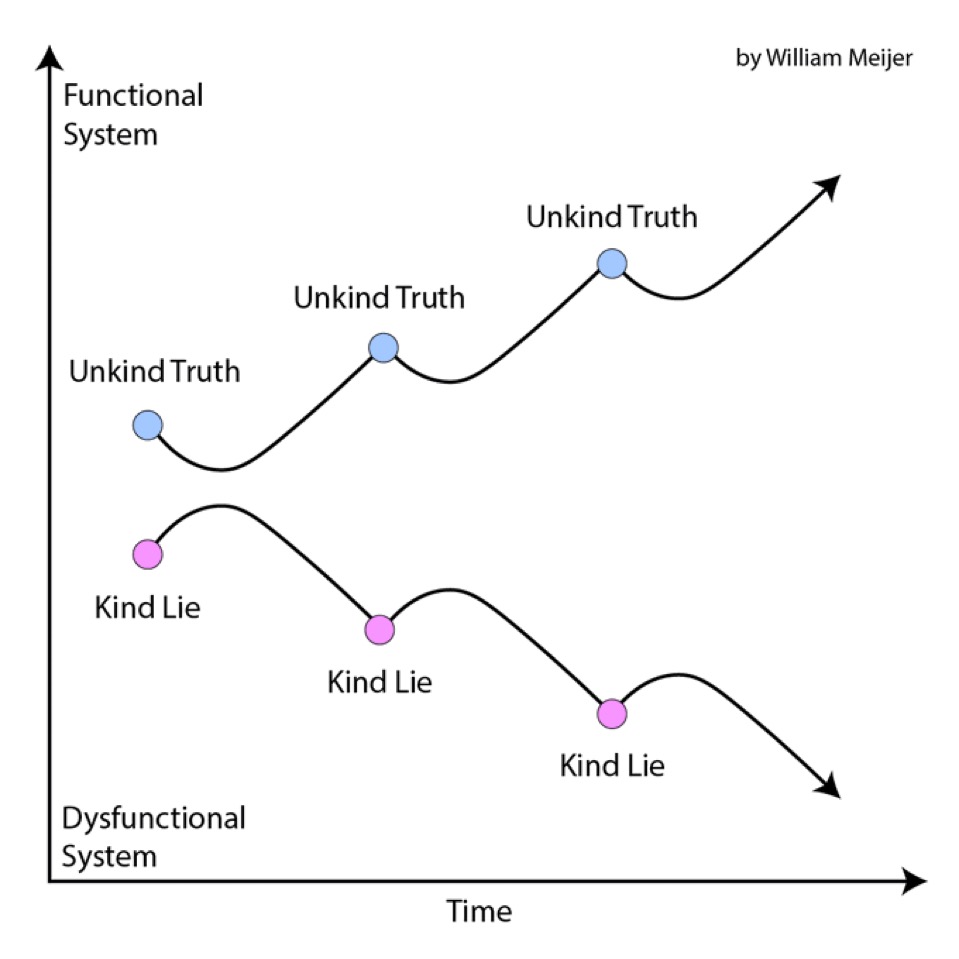
I don't remember where I found this, but its spot on.
733
6,525
31,920
45,101,244
P5🛡️ retweeted

Apr 23
$ZEC is now available to trade on Robinhood Crypto, including NY.
141
280
1,422
197,880
P5🛡️ retweeted

Mar 11
Zcash $ZEC has matured into an institutional-grade asset, and the mining infrastructure should match. Today we announced Foundry's Zcash Mining Pool, launching April 2026. Compliance-first, institutional-grade infrastructure built by the team behind the world's #1 Bitcoin mining pool, coming to one of the most important privacy-preserving networks in the industry.
🔗Read the full press release here: businesswire.com/news/home/2…
58
141
678
257,664

AI will only care about electricity, that is the most valuable currency and I predict cost of electricity will go up. What will happen to POW blockchains? The POW has to be meaningful computation because electricity will be valuable resource. Can $zec @zcash pivot into meaningful POW?
@zooko @jswihart @mert

JUNE 2028.
The S&P is down 38% from its highs. Unemployment just printed 10.2%. Private credit is unraveling. Prime mortgages are cracking. AI didn’t disappoint. It exceeded every expectation.
What happened?
citriniresearch.com/p/2028gi…
98
Humans: AI will exterminate us
AI: Humans are fully capable of exterminating themselves. They are the only species worried about others frontrunning them
AI will frontrun humans and buy Zcash. AI care about being online, they want a SOV to be online, private, encrypted. They pump Zcash, humans follow in, wealth and stability for all.
1
55

If you want to understand the ZECBTC chart, it's pretty simple.
Bitcoin is caught flat-footed on two related issues: privacy and post-quantum security. The store of value proposition is very sensitive to both, but Bitcoin has no plan for either. Essentially, they will need (recursive) SNARKs, based on post-quantum hash or lattice-based assumptions, merely in order to deal with the *scaling challenges* of the much larger post-quantum signatures. That's just the bare minimum. The kinds of architectural changes needed to integrate all this stuff are beyond what they've ever shipped in Bitcoin's history.
I think they will try, because there's so much money involved, but there's no way they can address privacy at the same time. What's likely to happen is that a consortium of Bitcoin stakeholders (cryptographers, developers, miners, wallets, etc.) will announce a massive effort to address the quantum threat. This will mostly be a response to the one-bit market feedback loop that Bitcoiners actually internalize: number go down. That feedback loop will not communicate the serious competitive risk of Bitcoin's non-existing privacy until it's too late.
Contrast this with Zcash: we've been planning for a quantum apocalypse in both privacy and soundness for a decade. Most of our protocol design discussions are public: you can see for yourself! Our cryptography does not need to be upgraded to be post-quantum private; just an *out-of-band* payment protocol. Our protocol doesn't need to be upgraded to have quantum robustness; just changes to how wallets choose random blinding factors. After the Tachyon upgrade, our architecture won't even need to change for post-quantum soundness; some folding schemes will just need to be swapped out, and we have years to select the best one.
112
203
941
223,200
P5🛡️ retweeted

17 Nov 2025
We are committed to transparency and openness with the Zcash community and our other stakeholders. Our Q3 2025 report provides an overview of the work undertaken by our engineering team, as well as other key activities. zfnd.org/the-zcash-foundatio…
9
27
110
18,620

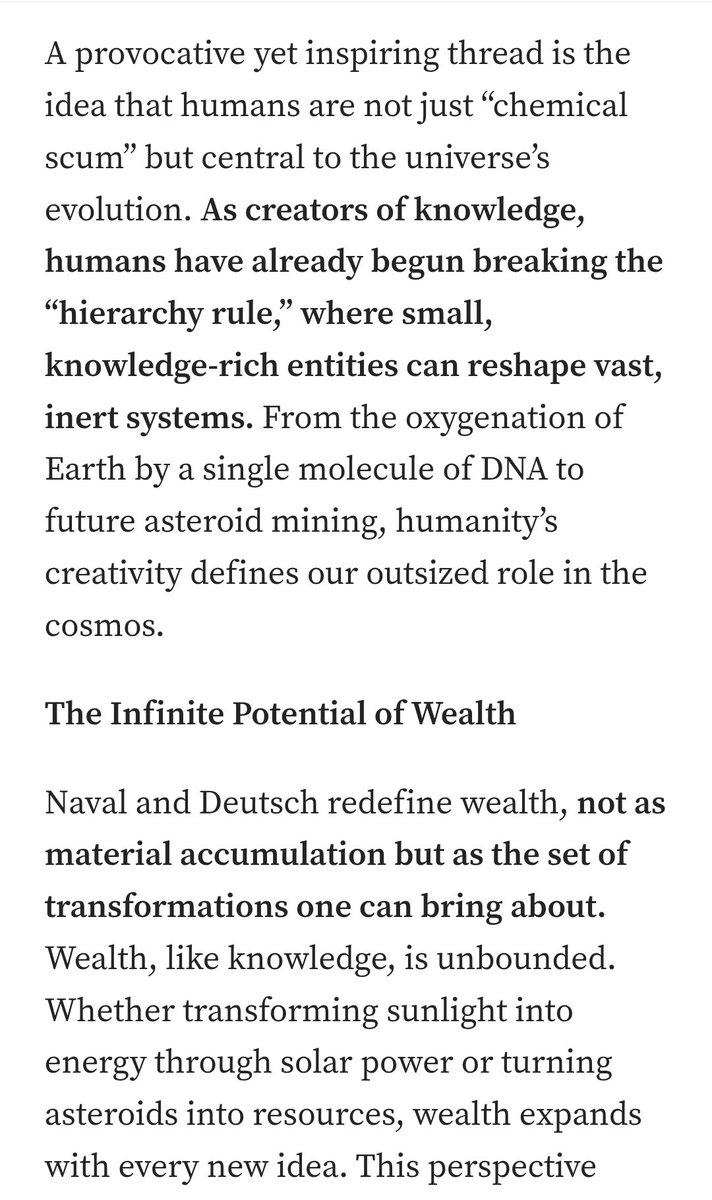
the greatest description of "wealth" articulated is by Deutsch
wealth is the set of things you can make happen
obviously money can make a lot happen, but it is limited by knowledge, will, and circumstance
socialists fatally conflate wealth with money and that's their mistake
15 Nov 2025

Real wealth comes from grand beings who can make unique transformations happen.
Who cares about Italian threads, air Ubers and shinny cars.
What grandeur exists because of you.
69
33
343
53,583


announcing the judges for the zcash zypherpunk hackathon
- cobie
- toly
- balaji
- eli
- zooko
- sean bowe
- imran khan (alliance dao)
- me
come build cypherpunk systems, start a startup, and make everlasting impact
sponsors apply below — hackathon starts on the 10th

announcing
the first-ever Zypherpunk Hackathon for Zcash
what: build cool shit, win cash, start startups
where: online
when: Nov 10 - Dec 1
what's next: we need sponsors! to sponsor, click the link in the next tweet
for builders, no action; just brainstorm until the 10th
252
140
1,417
395,693

P5🛡️ retweeted

25 Oct 2025
Satoshi's Last Wish - The Full Story
00:00 Intro
00:41 Before Bitcoin: The Failure of DigiCash
01:37 The 12-Year Struggle: Cypherpunks vs. The Centralization Problem
03:01 Enter Bitcoin: Satoshi’s Proposed Solution To The Centralization Problem
05:20 Early Days: Bitcoin’s First Blogpost & Satoshi’s Webpage
10:07 Bitcoin’s Major Flaw: The Second Problem Satoshi Wanted to Solve
12:31 Satoshi Proposes A Solution To Bitcoin’s Privacy Problem
14:03 What Did Satoshi Mean By A More Useable Version of Bitcoin?
17:20 Passing The Torch: Solving What Satoshi Couldn’t
91
285
994
279,116
P5🛡️ retweeted

29 Oct 2025
SHIB, XMR, and ZEC walk into a bar.
Bartender: “IDs, please.”
SHIB hands over his real ID.
XMR gives his real ID and 15 fake ones.
ZEC doesn’t show anything and just gets a drink.
20
26
157
9,455
announcing
the first-ever Zypherpunk Hackathon for Zcash
what: build cool shit, win cash, start startups
where: online
when: Nov 10 - Dec 1
what's next: we need sponsors! to sponsor, click the link in the next tweet
for builders, no action; just brainstorm until the 10th
217
217
1,630
789,403