
Zcash developer and crypto researcher, Encrypted Money at Planetary Scale (tachyon.z.cash)
Joined May 2014
- Tweets 2,244
- Following 322
- Followers 9,367
- Likes 7,297
27 Photos and videos



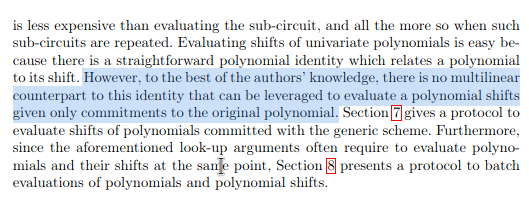








Project Tachyon: Scaling Zcash with Oblivious Synchronization.
seanbowe.com/blog/tachyon-sc…
45
141
607
261,899

Before, usage of ZKP's required trust in:
- Cryptography assumptions (ECDLP is sound, hashes are collision resistant, etc)
- Developers to make a sound design for what they want to prove.
- Careful implementation of a circuit satisfying the design
Now this should compress to:
- Cryptography assumptions
- A correct definition of the needed security properties.
Automated proof checking will prove that your real ZKP verifier circuit combo then satisfy the above two.
4
6
44
1,845
Quick update on the last ~48 hours of Zcash Ironwood!
1. Protocol devs from across all the orgs met twice to discuss specification and implementation progress. Agreement on a couple additional changes: disabling Orchard pool bundles in coinbases, anchors as auth data for migration UX with hardware wallets, and the order that ZIPs and specs will be handled.
2. Ironwood circuit and ZIP 2005 integration drafts are going through the review process. @ValarGroup has already spun up testnets and his team has done a wonderful job scoping out and implementing some of the wallet-facing changes. We are beginning an Ironwood upgrade book for eventual consumption by auditors, wallets, protocol developers, etc..
3. Formal verification work on Ironwood continues. A collection of different individuals who either have or will continue to work on formalization efforts will be meeting tomorrow where we'll settle on the specific strategy for getting the Ironwood SNARK formally verified. I'm hosting this and will post minutes and details after. Efforts from teams will be ideally combined where useful, existing approaches and progress unified and we'll figure out the easiest path for the next couple weeks. I've paused my own work on this to do Ironwood circuit stuff, but I'll be resuming on that tomorrow.
These are the big pieces, there are also some major security auditing tasks taking place in the background -- at least three major firms are auditing Orchard currently, and multiple new AI auditing suites are hammering the codebases to ensure nothing else critical is sitting around anywhere. So far so good!
Really proud of how much progress is being made every hour on this by all five of our major teams/orgs and our supporters inside and outside the community. Also love the general wartime vibe shift. Let's go!

UPDATE: The various orgs and protocol developers mentioned have agreed on the specific consensus rule changes for Ironwood, after settling the finer details.
Here's a summary:
1. Ironwood introduces a new pool using the Orchard protocol, just like the existing pool.
2. The circuit for the Orchard protocol—which applies to both the existing Orchard pool and the new Ironwood pool—will have a flag that consensus rules can toggle. This flag disables payments to *other* users within that pool, while maintaining the ability to create change notes. (This enables a privacy safeguard.)
3. The old Orchard pool will have this flag enabled after the network upgrade, and payments to the old pool will also be disabled by constraining valueBalance.
4. Because payments are disabled on the old pool, wallets must send new payments to Orchard receivers (inside existing unified addresses) via the new pool, and they should also migrate funds away from the old pool.
This combination enforces a bound on the circulating supply of ZEC through the use of the existing turnstile mechanism; the amount of ZEC that anyone can transact with is no more than the amount that is supposed to exist. Meanwhile, users' wallets can migrate funds to protect them from risk, which also gradually provides evidence that counterfeiting never took place.
Now that we have this decided, we'll collectively move on to the implementations, specifications, and ecosystem support/outreach. (We also have many different auditing and formal verification efforts taking place behind the scenes to provide assurance about the circuit correctness. More on that soon!)
19
71
396
120,620

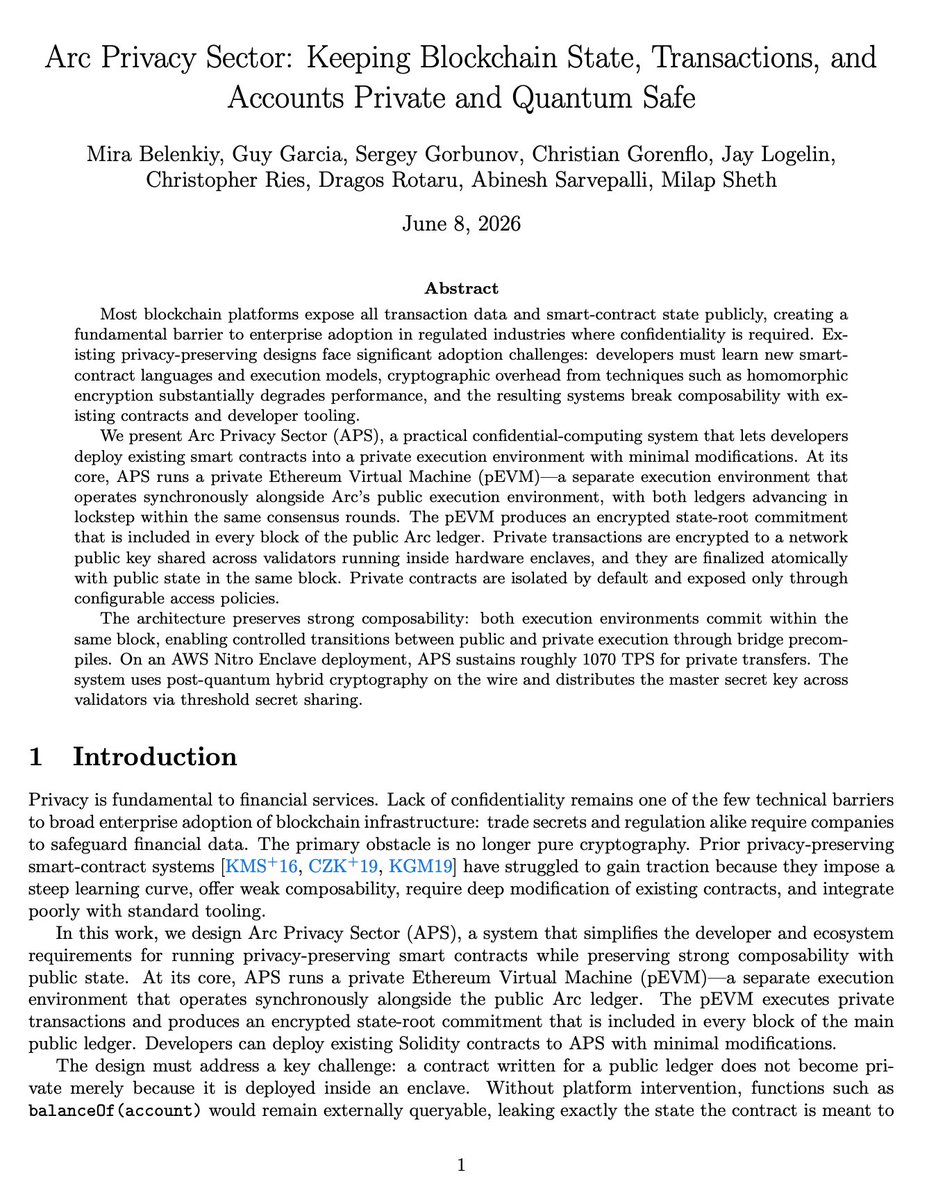
I got asked about Arc's "privacy" proposal:
1)its not private and I hope they don't say it is. A private zone is a TEE, ran by an admin, who sees and controls everything.
2) These ideas aren't knew, but a promising integration of them is great.
3) We can get better privacy.
Jun 10

Since we started the project, I’ve been telling the @circle team that this will be the last privacy solution in blockchain space.
And we delivered.
What we have built is not just privacy-preserving smart contracts. Instead, it's a paradigm shift in how blockchains, composability, and privacy need to co-exist. The design addresses the two core failures of prior privacy systems: lack of composability and a painful developer journey.
Pure cryptographic privacy is elegant, but expensive and hard to scale in practice. Instead, this design builds on the now-established trend of cryptographic enclave technologies.
What we’ve built is a parallel execution environment on @arc :
Arc public blockchain continues processing cleartext blocks, while the Arc privacy sector operates as a parallel privacy-preserving virtual machine that processes encrypted transactions.
State, transactions, and user accounts remain hidden. Validators cannot inspect what’s inside, even if they try to snoop or are compromised. Yet they continue producing blocks for both public and private states in sync, committing to each state tree.
That is also a major difference from designs that rely on access control, which inevitably creates failure points and data exposure risk.
The public and private state composition is the game changer for developing. For the first time, users can move between private and public state within the same block space. No bridge. No extra wallet layer. No separate accounts. A single transaction can move between private and public execution with zero friction.
Furthermore, the environment gives users post-quantum protection by design. Transactions and accounts remain encrypted, and public keys stay protected under post-quantum secure algorithms. Any account or asset created inside the privacy sector is automatically post-quantum secure.
The result: a fully composable privacy sector on @arc that is post-quantum secure and seamlessly interoperable with public execution.
This is the last privacy layer in Web3.
See the whitepaper: 6778953.fs1.hubspotuserconte…
@circle @arc
12
13
123
12,850
UPDATE: The various orgs and protocol developers mentioned have agreed on the specific consensus rule changes for Ironwood, after settling the finer details.
Here's a summary:
1. Ironwood introduces a new pool using the Orchard protocol, just like the existing pool.
2. The circuit for the Orchard protocol—which applies to both the existing Orchard pool and the new Ironwood pool—will have a flag that consensus rules can toggle. This flag disables payments to *other* users within that pool, while maintaining the ability to create change notes. (This enables a privacy safeguard.)
3. The old Orchard pool will have this flag enabled after the network upgrade, and payments to the old pool will also be disabled by constraining valueBalance.
4. Because payments are disabled on the old pool, wallets must send new payments to Orchard receivers (inside existing unified addresses) via the new pool, and they should also migrate funds away from the old pool.
This combination enforces a bound on the circulating supply of ZEC through the use of the existing turnstile mechanism; the amount of ZEC that anyone can transact with is no more than the amount that is supposed to exist. Meanwhile, users' wallets can migrate funds to protect them from risk, which also gradually provides evidence that counterfeiting never took place.
Now that we have this decided, we'll collectively move on to the implementations, specifications, and ecosystem support/outreach. (We also have many different auditing and formal verification efforts taking place behind the scenes to provide assurance about the circuit correctness. More on that soon!)
Jun 6

Together with @zodl_co, @ZcashFoundation, @ValarGroup and @ShieldedLabs, we're advocating for a network upgrade that would make ZEC's circulating supply auditable, providing additional reassurance that no counterfeiting occurred in the Orchard pool before this week's bugfix.
tachyon.z.cash/blog/auditing…
19
70
307
148,708


bug != exploit
with that out of the way, the data around the shielded pool movements (or lack of movements) is extremely bullish long term
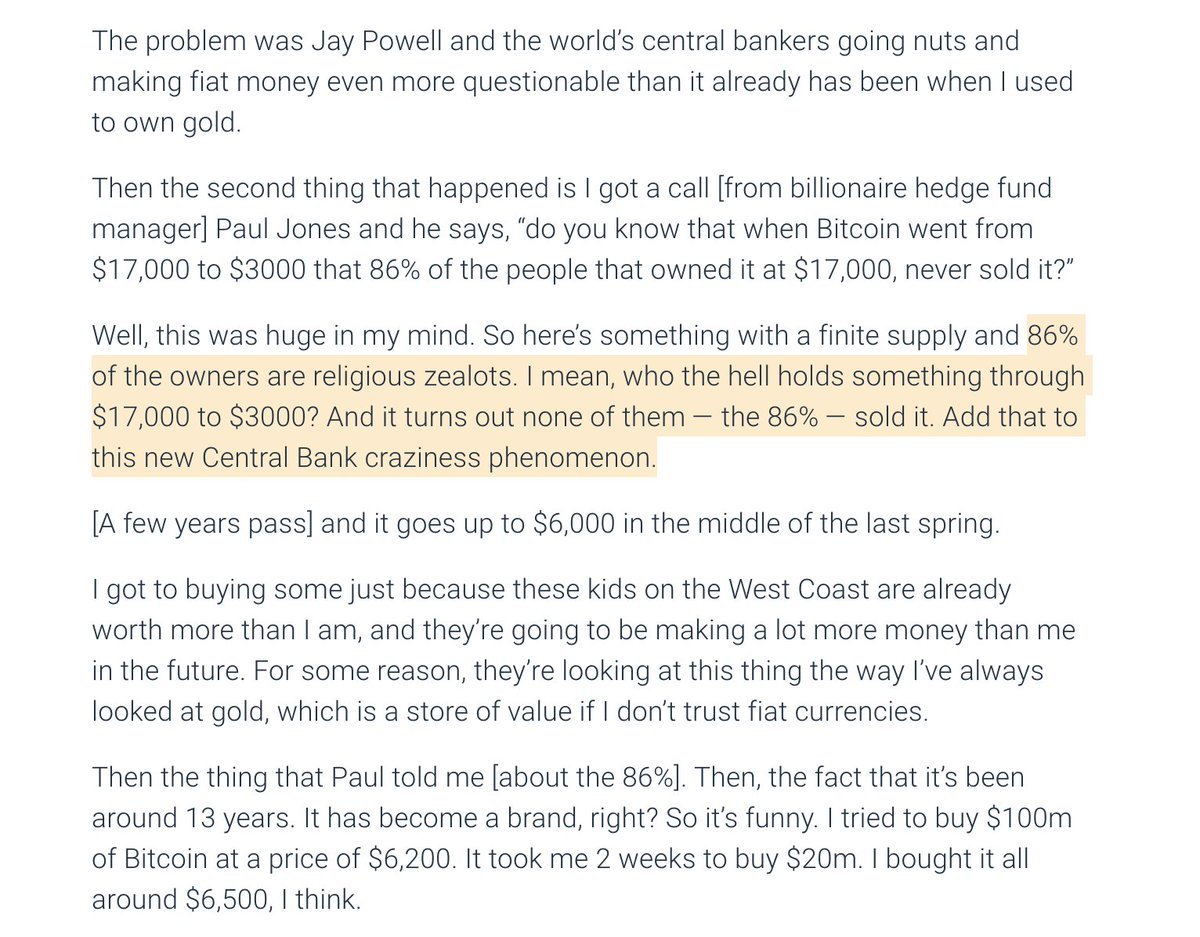
invest in religious zealots working on revolutionary tech is a solid principle
/ see druck on why he changed his mind on bitcoin:
Jun 7

the activity around the $ZEC pool the exploit was found in is the wildest data i've seen for a situation like this
the only thing that would explain this behavior is that the majority of the tokens in this pool is highly concentrated to a small set of users
and they don't want to expose this fact by unshielding
i just dont understand how anyone in their right mind would stay shielded when you can simply unshield to a transparent address and shield again after the coast is clear
if you want to move to a new pool you would need to unshield as well so might as well just do it now while there is any sort of uncertainty and risk
and then there's the price action, where did the dump come from if nobody unshielded to sell?
so unshielded transparent $ZEC holders were the dumpers when they are the safe ones?
or the dump came ENTIRELY from perps?
why would the holders of the safe tokens be the ones dumping while the exposed holders of potentially counterfeit tokens stay pat and in the pool or add to the pool?
quite mind-boggling this flow
4
53
4,777
If you think you had a dizzying week as a Zcasher, imagine being a Bitcoiner: apparently, someone made an unusual UTXO that could technically be in violation of a future controversial BIP, so the forces of good and evil are debating the philosophy of softforks for the 68th time.
6
18
191
11,024
Sean Bowe retweeted

Fear of shielded ledgers due to complexity, despite breakthroughs in formal verification, is doomer / decel / techno-pessimist behavior.

lol im afraid youve become possessed by an ai datacenter doomer / bernie sanders hybrid
I told you three times now that tachyon pool will be *formally verified* and *mathematically sound*. Ai might help discover vulnerabilities in software but it turns out it ALSO helps you build more sound systems
that will reduce the risk in that class of bug by orders of magnitude. and it will be combined with fuzzing and reduction in circuit arithmetic and quantum proofing
cryptographic-currencies, it turns out, use cryptography. And it turns out you can improve that cryptography! There is no getting around this. The entire industry relies on this. By this logic you should never use software again (which includes your favorite coin, the risks simply change form, they dont eliminate)
You can get the risk to be extremely low but never zero. No amount of doomerism on the advancements here is going to get anyone to stop. I suggest you start helping so we can all be better off!
(If your general point is that users should be more informed on the tradeoffs, i agree. I will figure out a way to do that. But fear mongering is not productive)
7
8
84
16,866
Sean Bowe retweeted

Jun 6
Zcash will prove you can remove fatal inflation risk with formal verification and simplicity or panopticon is the future.
Nothing in the laws of physics mandates soundness bugs.
Place your bets ladies and gentlemen.
10
16
152
19,416
Where can a bug come from?
- Circuit spec: Never happened before
- Circuit impl error: Protected by FV.
- FV specs not being correct. I don't believe in risk for missing circuit spec <> FV spec guarantees.
- Fatal compilation error for FV. (I believe this is impossible for R1CS - Tachyon)
- FV language is wrong: Its pretty machine checkable. Have AI just also fact check the proof.
- ZKP Verifier has no bugs (We will just FV it too)
So the end state risk becomes just the circuit spec. But its honestly quite high-level simple? We then FV each relevant property of the high-level functions as well.
Then there is the cryptography itself. EC operations / Lattices / Hashes, what-not. There lindy-ness does a lot.
EC's aren't getting broken until quantum computers. Hashes have stood the ~entire history of cryptography, they will remain secure. Lattices, I have less certainty on.
6
17
90
13,251
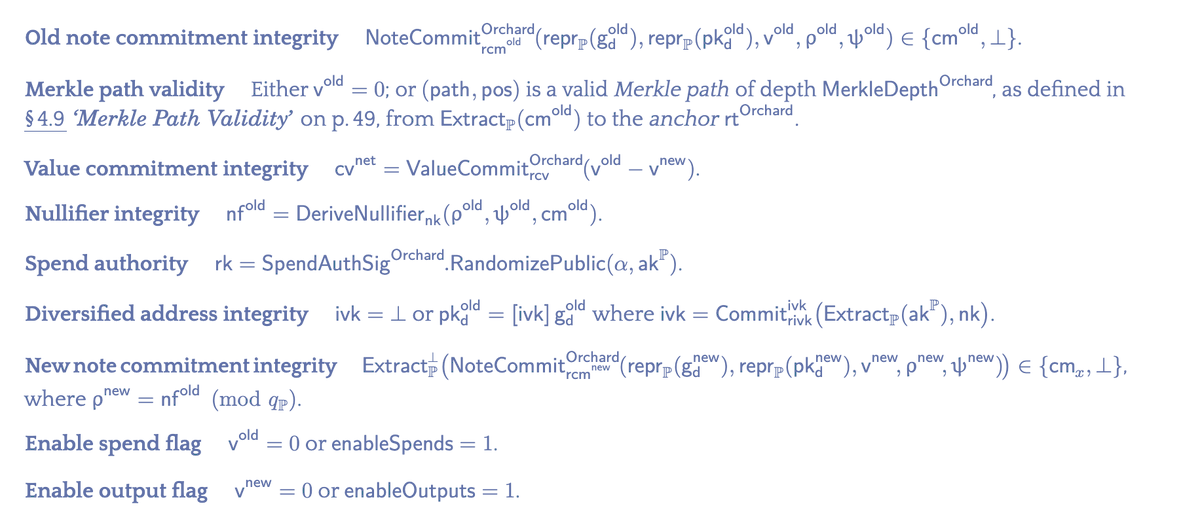
Circuit code can be written in a DSL or be a horrible mess, but usually it just reduces into some polynomials the verifier uses to check the SNARK. All circuit soundness bugs actually live *here* by definition, and formal verification at this boundary is a mechanical process.
Jun 5

We have some crazy formal verification engineering going on at zkSecurity and IMO it’s too little well known. Clean has been continuously worked on for almost 2 years now, and we have a big update here: blog.zksecurity.xyz/posts/cl…
4
9
64
8,697
Sean Bowe retweeted

Excellent work from @ShieldedLabs and friends in identifying and coordinating a fix for the Orchard bug in record time.
Now they're working on making sure the supply has 100% integrity, even though it's very unlikely there was an exploit.
Turnstyling through different shielded pools is really cool. I personally wouldn't have my money in substantial amounts in any privacy protocol that didn't have this feature.

7
16
105
6,951
One thing that makes this work where the turnstiles only partially worked before: we're forcing the *circulating supply* of ZEC to exist only within safe pools. Any hypothetical counterfeiting is snuffed out, and Orchard transactions automatically redirect through the new pool.
Jun 6
Together with @zodl_co, @ZcashFoundation, @ValarGroup and @ShieldedLabs, we're advocating for a network upgrade that would make ZEC's circulating supply auditable, providing additional reassurance that no counterfeiting occurred in the Orchard pool before this week's bugfix.
tachyon.z.cash/blog/auditing…
16
32
179
32,147

now when you tell the girls (or boys) you hold zcash, you can just say you have some ironwood instead
incredible name

96
71
660
65,923
Sean Bowe retweeted

Jun 6
Together with @zodl_co, @ZcashFoundation, @ValarGroup and @ShieldedLabs, we're advocating for a network upgrade that would make ZEC's circulating supply auditable, providing additional reassurance that no counterfeiting occurred in the Orchard pool before this week's bugfix.
tachyon.z.cash/blog/auditing…
67
101
509
180,275
Sean Bowe retweeted

92
146
664
245,000
Sean Bowe retweeted

Jun 5
We have some crazy formal verification engineering going on at zkSecurity and IMO it’s too little well known. Clean has been continuously worked on for almost 2 years now, and we have a big update here: blog.zksecurity.xyz/posts/cl…
4
9
95
17,649
Sean Bowe retweeted
Jun 5
Taylor found and disclosed a would be fatal bug keeping the future of freedom bright.
Fund a Zcash legend donate below.
Jun 5

To get ahead of scams, if you're interested in donating to me for finding the Zcash bug, my addresses are in this post or in my replies below (be careful to check the exact username for lookalike scammers). Nothing else has been approved by me.
Note: I intend to apply for a bounty through a Zcash coinholder grant, so donations are much appreciated but not necessary!
Zcash:
u1k6y9wpyc5m5ec3wz49ny9chewklyexn8rdj7928n3zswh0gwl0gh3zwwg37p76j7vrrv8s0dj8rhjfc49pg9yv9mjdea2sn86tnjh99a9424cdvw3aadyz8v40ddancr7e4kjzw07qhrcdez3d9sycx89f87vjw7eaxys2aktsm57tkp
t1eykDAemzff7oPAA2E43Z47iawATB4bZRy
Solana:
D6c34hRcmhkHMXaAhoPXgVw9JYrh84saeSfYnk7ZSjeW
ETH:
0x1b8203102aE3469a67E78FF9a78d8A5cC7E7e769
BTC:
bc1qtxqv8fzj2pnewj2y5l8nh4ur4rkrvm2kv6mlp9
8
112
13,081