
owning stocks and selling covered calls and cash secured puts
Joined March 2017
- Tweets 17,117
- Following 355
- Followers 8,666
- Likes 12,623
4,930 Photos and videos











Pinned Tweet

Apr 25
Let me tell you a little about who I am and why I'm here.
I'm not a professional trader. I'm not running a subscription. I'm just a guy who figured out a disciplined approach to generating income and building wealth through the options market, and I enjoy talking about it.
My approach is pretty straightforward. I sell cash secured puts on stocks I actually want to own at prices I'm comfortable paying. If I get assigned, I transition to selling covered calls against those shares and collect premium while I wait for price appreciation.
On higher conviction names where I want leveraged exposure without tying up full capital, I'll use LEAPS as a stock substitute and sell short-dated calls against them - the Poor Man's Covered Call.
Three strategies. One disciplined system. All centered around one idea: get paid while you wait.
A few rules I live by:
- Only sell CSPs on stocks I'd be genuinely happy to own
- Close positions at 50% profit before 50% of DTE - don't be greedy
-Know your earnings dates before you sell a single contract
- Size down in uncertainty. The next trade is always coming
- On very high conviction positions don't cover all shares
I trade across the market - tech, AI infrastructure, defense, growth names - wherever I see a setup that makes sense. Only thing I generally avoid is energy, I'm not a perma-bull or a perma-bear. I'm a premium seller looking for high IV, good technicals, and a price I'd be happy to buy at.
Why am I on X?
Honestly — the community. I've learned more from traders sharing real ideas in real time than from any book or course. I want to contribute to that. I'll share my actual setups, interesting charts, my trade updates, my wins, and yes my mistakes too. The good, the bad, and the rolled positions. I don't share every single trade or position but will give a good snapshot of what I'm in or watching.
No hype. No subscriptions. No "DM me for signals."
Just real trades, real thinking, and real conversations with people who love this stuff as much as I do.
Every once in a while I may throw in a post about travel, cycling, skiing, or food.
If that sounds like your kind of account — follow along. And if you're already selling premium, drop your setups below. I'd love to see what you're watching. 👇
@PLHstock
#options #cashsecuredputs #coveredcalls #thewheel #LEAPS #PMCC #optionsincome #tradingcommunity #stockmarket
Not financial advice.
1
1
17
2,109
Jun 13
$CSX just keeps slowly grinding higher
Check out this chart I made with @TrendSpider share.trendspider.com/chart/…
1
197
Jun 13
$CRM one of the weakest of the overly beat up software names. Could see some recovery in coming days with $SPCX IPO out of the way now.
Check out this chart I made with @TrendSpider share.trendspider.com/chart/…
1
432
Jun 13
$AMZN no position for me but this bounced right where it needed to...for now.
Check out this chart I made with @TrendSpider share.trendspider.com/chart/…
1
249
Jun 13
This may be the best performance I’ve ever seen from the USMNT.
1
2
313
Jun 12
$MSFT I think we see the $SPCX rotation slow down next week and $MSFT and other beat up software names get a decent bounce.
Check out this chart I made with @TrendSpider share.trendspider.com/chart/…
316
Jun 10
What on earth is this hollow green thing I'm seeing on the $NVO chart today?
Check out this chart I made with @TrendSpider share.trendspider.com/chart/…
281
Jun 9
725 level has been hit and held for now. I'm in no rush to jump into anything new yet.
Jun 6

Rough day for the $SPY yesterday. My first level at 750 clearly broke. If we see more downside pressure I will be watching the 725 level. As @alphatrends like to say that will be nothing more than a potential area of interest.
Check out this chart I made with @TrendSpider share.trendspider.com/chart/…
1
287
Jun 9
$SPY I have a feeling this is just going to keep trading sideways into the SpaceX IPO.
Check out this chart I made with @TrendSpider share.trendspider.com/chart/…
1
1
270
Jun 6
Slowly getting back into shape. Not bad for 1 month post surgery.

1
236
Jun 6
$NVDA important spot here with anchored VWAP and 50 day. Will be interesting to see what Monday brings.
Check out this chart I made with @TrendSpider share.trendspider.com/chart/…
1
4
330
Jun 6
Rough day for the $SPY yesterday. My first level at 750 clearly broke. If we see more downside pressure I will be watching the 725 level. As @alphatrends like to say that will be nothing more than a potential area of interest.
Check out this chart I made with @TrendSpider share.trendspider.com/chart/…
2
539
Jun 6
Seems like a good time to revisit this one.
May 30
It is a great time to talk about cash right now. Specifically how much should you actually keep in your account?
This is one of the most personal decisions in all of investing, and most people get it wrong in one direction or the other. Either they're fully deployed at all times and have nothing left when the best opportunities show up, or they're sitting on so much cash waiting for the "perfect" entry that they miss a year of gains.
Here's the approach that has worked well for me.
I keep somewhere between 10% and 40% cash at all times. The number moves depending on market conditions. It almost never hits zero, and it almost never hits 100%.
Let me explain both ends of that range.
Why I'm rarely fully invested:
Markets can turn quickly. Corrections don't send a calendar invite. The best buying opportunities in any given year are the moments when quality companies are genuinely on sale. These tend to happen fast and without much warning. If you're fully deployed when that happens, you're a spectator. You can see exactly what you should be buying and you have no ammunition to buy it with. That's an awful feeling that's entirely avoidable.
Keeping cash isn't pessimism. It's preparation. Dry powder isn't money sitting idle - it's optionality. It's the ability to act decisively when others are forced to stand still.
Why I'm almost never all cash:
Markets have a long term bias upward. They also have a frustrating habit of climbing a wall of worry for months while everyone smart is standing on the sidelines waiting for the pullback that keeps not coming. We have that kind of market right now. It keeps grinding higher with everyone calling a top, and the people in cash are stick watching their opportunity cost grow by the day.
Missing a sustained rally because you were too cautious is just as costly as being overexposed when a correction hits. Both decisions have a price. The goal is to find the balance that keeps you participating on the way up while preserving the ability to press hard when things get cheaper.
How I adjust within that range:
When the market feels extended, sentiment is frothy, valuations are stretched, or geopolitical risk is elevated I let cash drift toward the higher end of that 10 to 40% range. Not because I'm predicting a crash, but because I want more cushion and more firepower if one comes.
When a meaningful pullback has already happened - when fear is high, quality names are genuinely discounted, and the worst of the move looks like it's behind us, I let cash drift toward the lower end. That's when the dry powder gets deployed and the best entries happen.
The simple version:
Concerned about a pullback? Carry more cash. Pullback already happened and looks mostly done? Deploy it. Market grinding higher with no clear catalyst for a selloff? Stay invested but keep some in reserve.
That's it. There's no complex formula. It's just a disciplined, honest assessment of where we are and how much cushion you want.
Always stay invested. Always keep some cash ready to deploy. The exact number moves, but it never goes to zero, and it's almost never everything.
The investors who win over time aren't the ones who called every top and bottom. They're the ones who were never fully out and never fully in.
Always invested, always ready. 💪
What are your rules or guidelines for cash in your account?
#investing #cashmanagement #options #stockmarket #tradingdiscipline #cashsecuredputs #thewheel #riskmanagement #optionsincome #patience
Not financial advice.
2
402
Jun 5
Sold $AMBA CSPs on red per this morning's plan
Jun 5
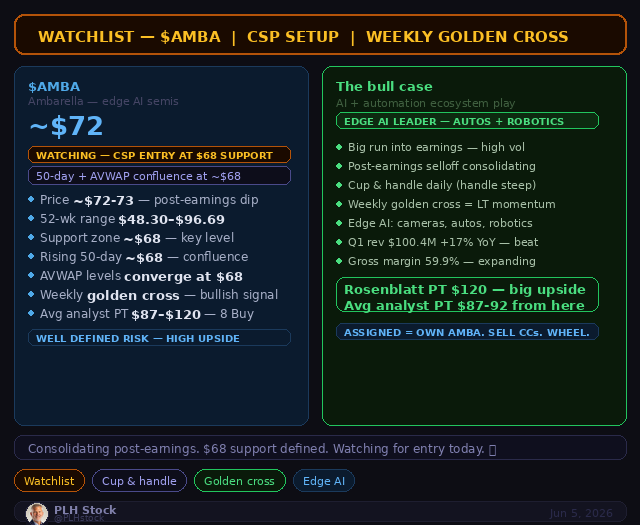
Adding $AMBA to the watchlist today. Ambarella is on my radar for a potential CSP entry and the setup is getting interesting. 👀
What they do:
Ambarella is a semiconductor company specializing in low power AI vision processors. These are the chips that power AI cameras, autonomous vehicles, robotics, and industrial automation. Edge AI adoption in industrial and automotive markets is the core growth engine, and this is a name that sits squarely in the AI and automation ecosystem for the long term. Not a software story but a foundational hardware infrastructure play.
The fundamental backdrop:
Q1 FY2027 revenue came in at $100.4M, up 16.9% year over year, with EPS beating estimates by 10% and gross margin reaching 59.9% which gives them expanding margins on a growing revenue base. Rosenblatt just raised their price target to $120, Stifel is at $106, and the analyst consensus sits at Buy with an average target of roughly $87–$92. That's meaningful upside from current levels.
The technical setup:
AMBA had a big run up into earnings nearly doubling from its lows to a 52 week high of $96.69. Then it fell roughly 21% after earnings on May 29 on high volume and has been consolidating since. That's the classic setup - strong stock, with a post earnings reset that is now digesting the move.
On the daily there's a cup and handle forming - the handle is a bit steep which is why I call it "not quite perfect," but the structure is there. More importantly on the weekly chart there's a golden cross, which signals longer term momentum shifting back to the upside.
The key technical level I'm watching is ~$68, where the rising 50 day and multiple anchored VWAP levels all converge. That's a triple layer support zone directly below current price, and that's where I want to sell puts if we get the right entry today.
The trade:
Watching for a CSP entry within a couple dollars of the $68 support zone as the floor. Well defined risk, meaningful upside potential, and a name I'd genuinely be happy to own at that level. If assigned I flip straight to covered calls and the wheel rolls on.
Watching the price action today. Will update if I execute. 🎯
#AMBA #Ambarella #options #cashsecuredputs #thewheel #goldenCross #edgeAI #anchoredVWAP #tradeidea #semiconductors
Not financial advice
525
Jun 5
$SPY already at an interesting spot to watch. More room down if this turns into a deeper pull, and no I'm not a bear. Just noting some short term levels to watch.
Check out this chart I made with @TrendSpider share.trendspider.com/chart/…
201
Jun 5
Adding $AMBA to the watchlist today. Ambarella is on my radar for a potential CSP entry and the setup is getting interesting. 👀
What they do:
Ambarella is a semiconductor company specializing in low power AI vision processors. These are the chips that power AI cameras, autonomous vehicles, robotics, and industrial automation. Edge AI adoption in industrial and automotive markets is the core growth engine, and this is a name that sits squarely in the AI and automation ecosystem for the long term. Not a software story but a foundational hardware infrastructure play.
The fundamental backdrop:
Q1 FY2027 revenue came in at $100.4M, up 16.9% year over year, with EPS beating estimates by 10% and gross margin reaching 59.9% which gives them expanding margins on a growing revenue base. Rosenblatt just raised their price target to $120, Stifel is at $106, and the analyst consensus sits at Buy with an average target of roughly $87–$92. That's meaningful upside from current levels.
The technical setup:
AMBA had a big run up into earnings nearly doubling from its lows to a 52 week high of $96.69. Then it fell roughly 21% after earnings on May 29 on high volume and has been consolidating since. That's the classic setup - strong stock, with a post earnings reset that is now digesting the move.
On the daily there's a cup and handle forming - the handle is a bit steep which is why I call it "not quite perfect," but the structure is there. More importantly on the weekly chart there's a golden cross, which signals longer term momentum shifting back to the upside.
The key technical level I'm watching is ~$68, where the rising 50 day and multiple anchored VWAP levels all converge. That's a triple layer support zone directly below current price, and that's where I want to sell puts if we get the right entry today.
The trade:
Watching for a CSP entry within a couple dollars of the $68 support zone as the floor. Well defined risk, meaningful upside potential, and a name I'd genuinely be happy to own at that level. If assigned I flip straight to covered calls and the wheel rolls on.
Watching the price action today. Will update if I execute. 🎯
#AMBA #Ambarella #options #cashsecuredputs #thewheel #goldenCross #edgeAI #anchoredVWAP #tradeidea #semiconductors
Not financial advice
1
1,040
Jun 5
$AMBA adding this one to my watch list today. Golden cross on weekly with lots of room up. Fundamentally could be setup well in the AI ecosystem, and a sloppy cup and handle on the daily (handle too steep).
Check out this chart I made with @TrendSpider share.trendspider.com/chart/…
1
2
353
Jun 5
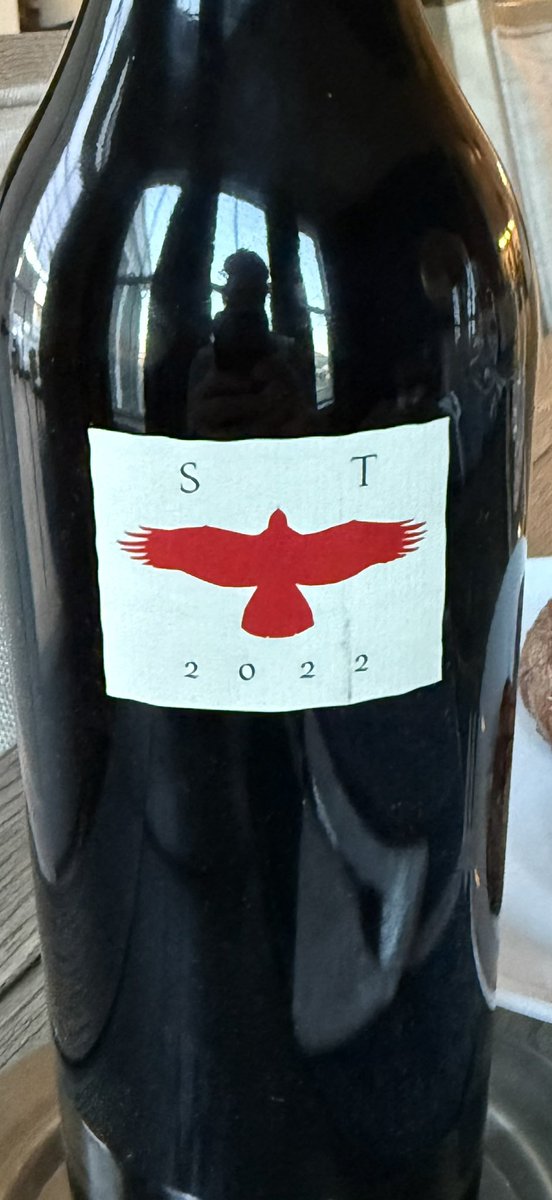
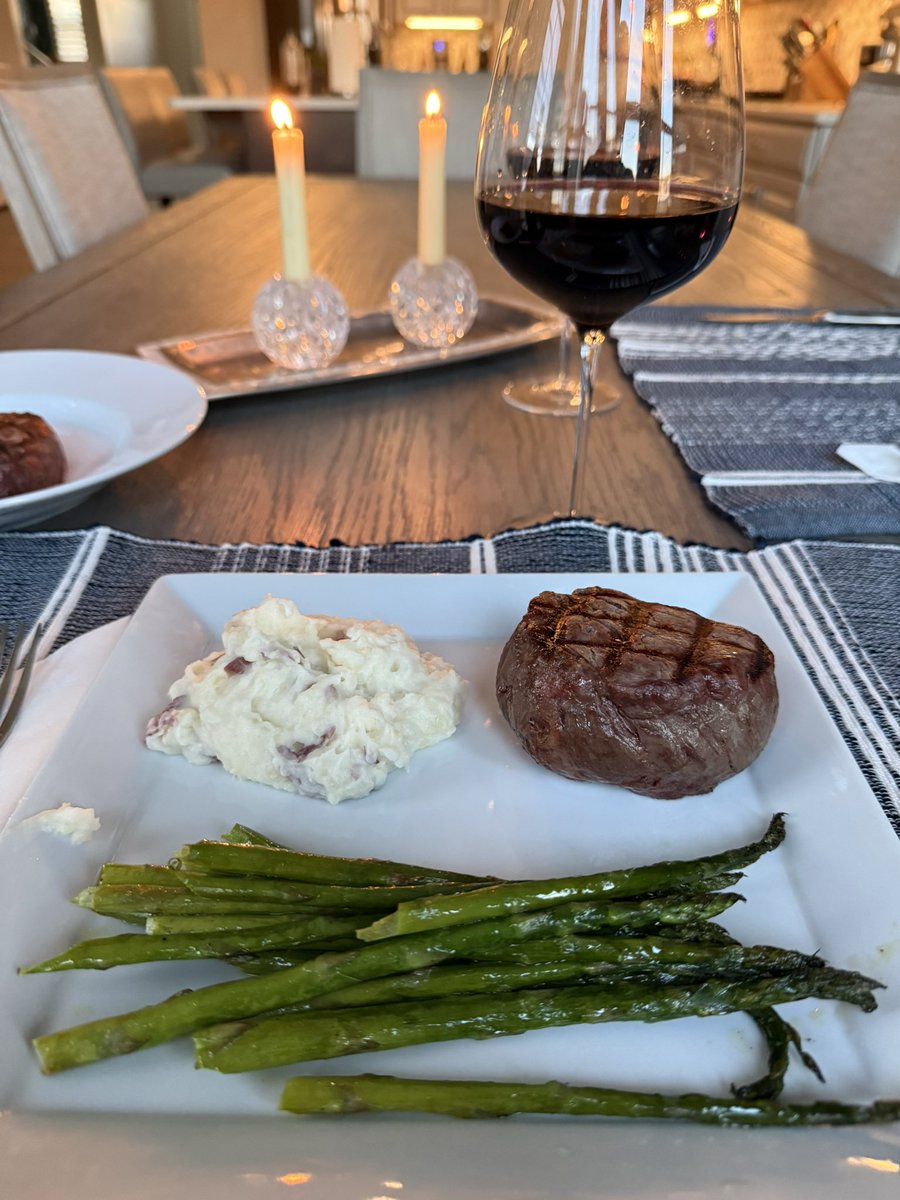
Today I celebrated 32 years of this amazing woman putting up with my crap. We opened a bottle of Hawkes Stone Vineyard and grilled some delicious filets to celebrate.

5
29
7,691