
Owner ZATO Google Ads Agency. TEDx speaker. Author. Married w/6 kids. Not on X much anymore, let's connect on LinkedIn: linkedin.com/in/ppckirk/.
Joined February 2009
- Tweets 55,829
- Following 466
- Followers 17,796
- Likes 55,770
7,298 Photos and videos










Pinned Tweet

23 Oct 2025
Google: "Our PMax AI is smarter than you could possibly imagine."
PMax performance if you change your ROAS target from a 450% to a 445%:
5
21
3,275
May 21
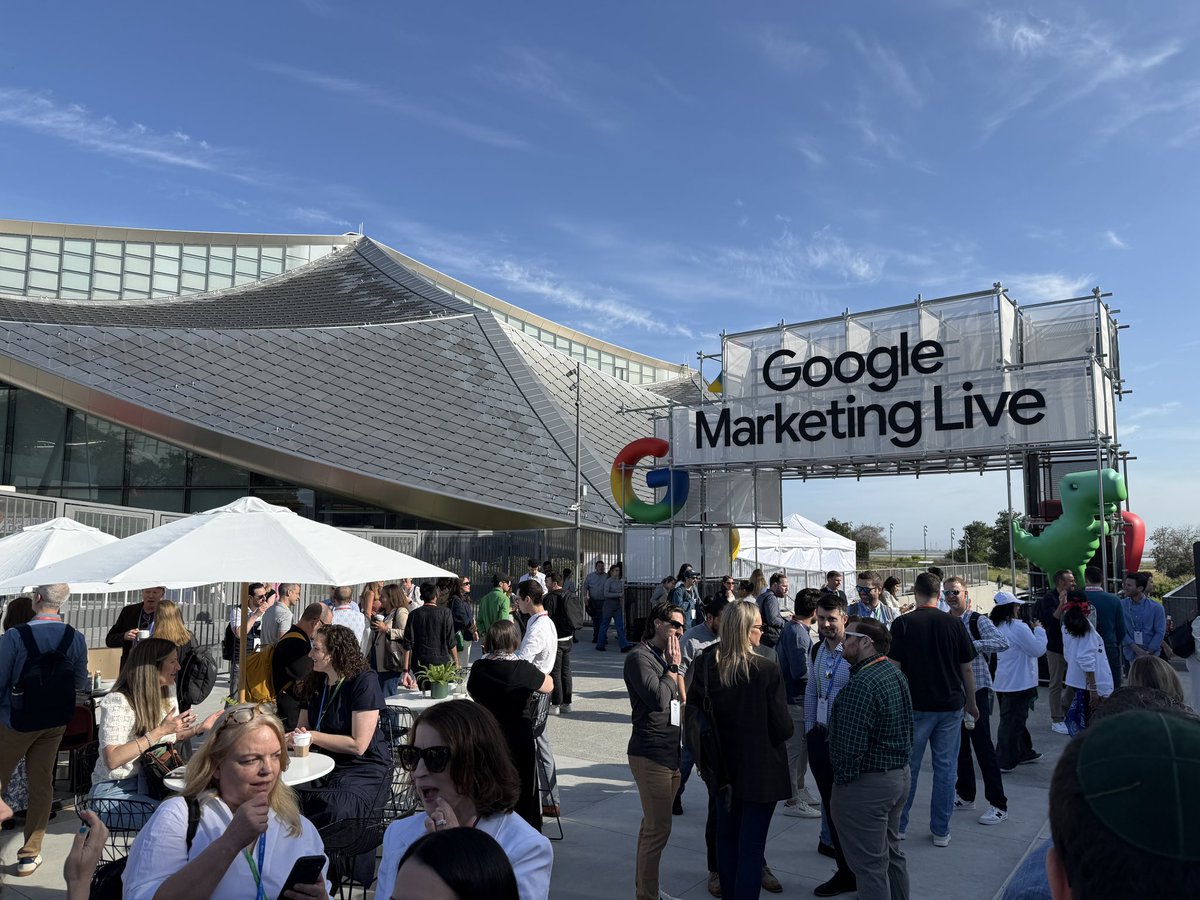
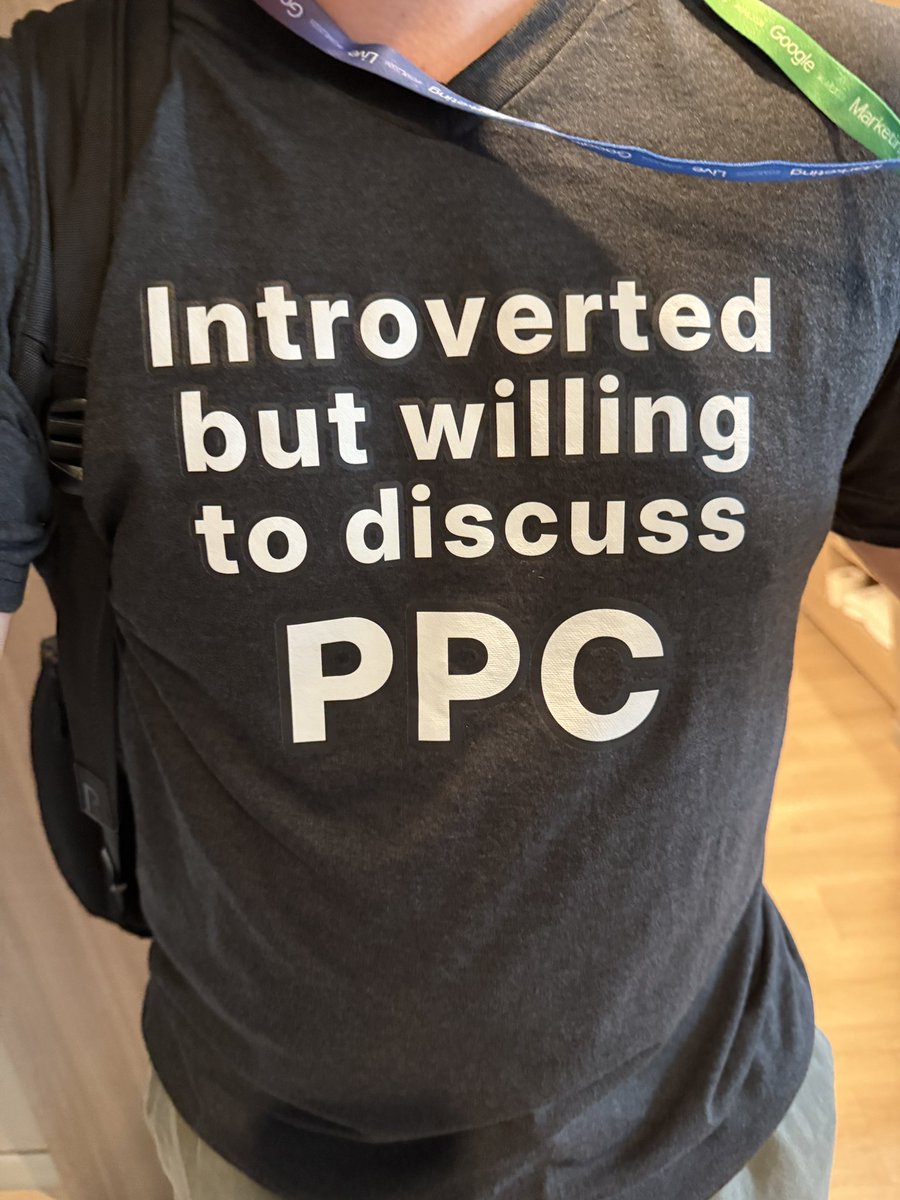
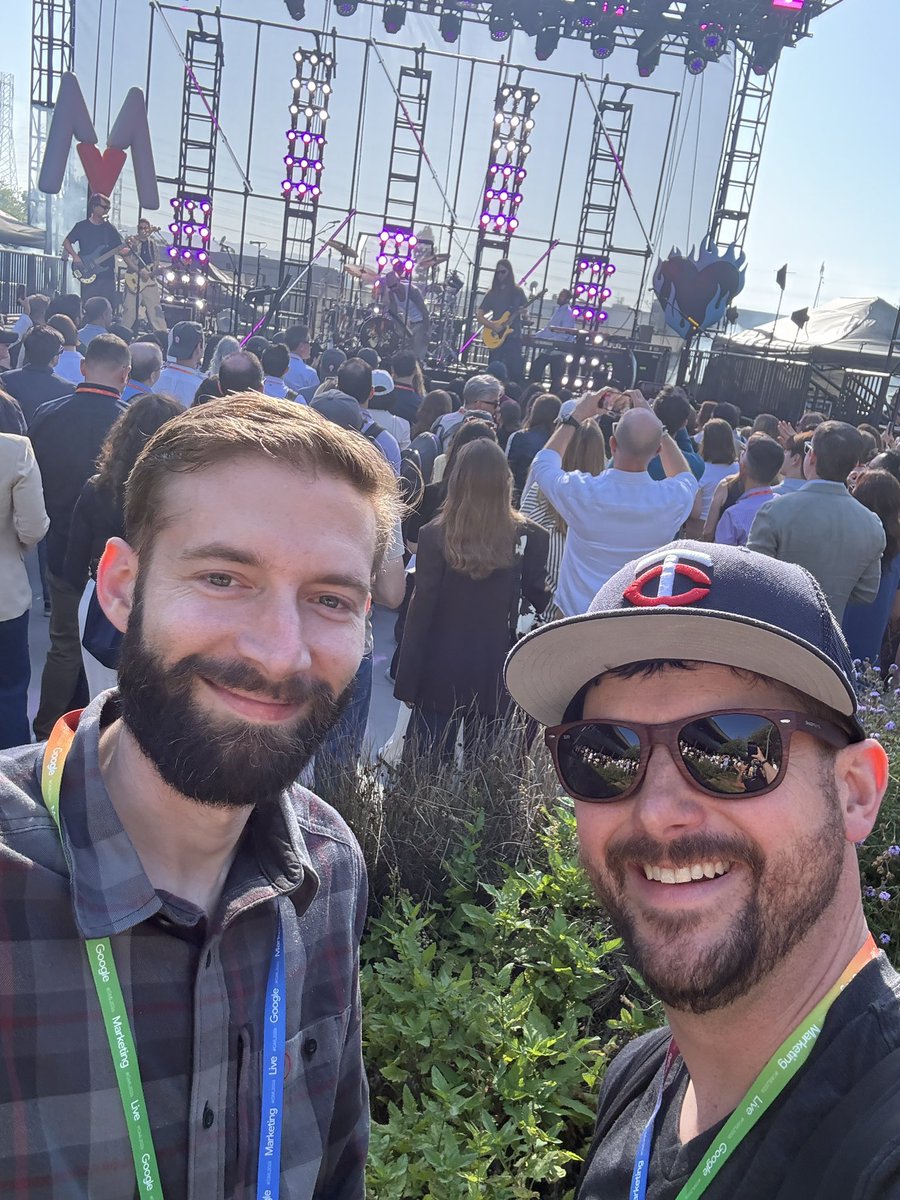
Tired but happy after a day full of Google Marketing Live conversations. Had the privilege of joining 16 other PPCers brought in for NDA sessions with Google to help guide the future of Search as well as offer product feedback… and a private Maroon5 concert was pretty cool too!

3
9
451
May 16
Messing around with your 22 yr old G (upgrading speakers and replacing door latch mechanism) on a Friday while the kids play in the backyard is peak vibes.
4
319
May 9
How common is it for a dealer to sell a car out from under you when you had a mutually signed PO & were just waiting on them to get the title in (our bank wouldn’t cut a check until the out of state dealer had the title)? seems shady but I’m unsure if that’s relatively normal?
3
1,058
Kirk Williams retweeted

You are not ready for the …
SMOLDERING
HANDSOMENESS
MEDIA-BUYING
OFFER DEFINING
CPMr EXPLETIVES
7-8 FIGURE HELPING
… @andrewjfaris is about to release later this week with @codyplof @couuor on @M__Operators 🥵
Thirstiest. Episode. Ever!
10
3
46
11,132
Kirk Williams retweeted

⏰It’s Officially Marketing O’Clock⏰
Catch up on the news you missed last week with a brand new episode 📰
🪙 CPC is being added to ChatGPT ads by OpenAI
🔆 Some advertisers’ CPC campaigns are live
🚀 Microsoft launches AI Max and some new ad tools
🔵 ChatGPT Ads are now expanding to logged-out users
More news from: @TheMarketingAnu, @glenngabe, @juokaz, @PPCKirk, @mikeryanretail, @hanakobzova, @AnthonyHigman, @ThomasEccel, @rustybrick, @Adriaan_PPC, @DarioZannoni, @bram_social, @lilyraynyc, @adhutchinson, & more!
Even more news here:
🎧:open.spotify.com/episode/4oN…
🍎:podcasts.apple.com/us/podcas…
📺:youtube.com/watch?v=1AMrfJF5…
#digitalmarketingnews #digitalmarketingpodcast #digitalmarketing #seo #ppc

3
6
497
Kirk Williams retweeted

Apr 28
Can owning your warehouse slow growth 90%?!
Shockingly, yes. Here's the details 2 more crazy findings from my deep dive on 300 stores.
Starting with the warehouse one because it floored me.
If you owned your warehouse, your avg rev growth was 4%. If you leased or outsourced, growth was 30-35%. A 9x gap.
Correlation, not causation. But I've heard from multiple owners who said "yep, that tracks."
Once the warehouse pulls in your capital and attention, the growth side of the business quietly starves.
Worth asking yourself honestly: is the warehouse serving the business, or the other way around?
—
Second one: the finance skill cliff.
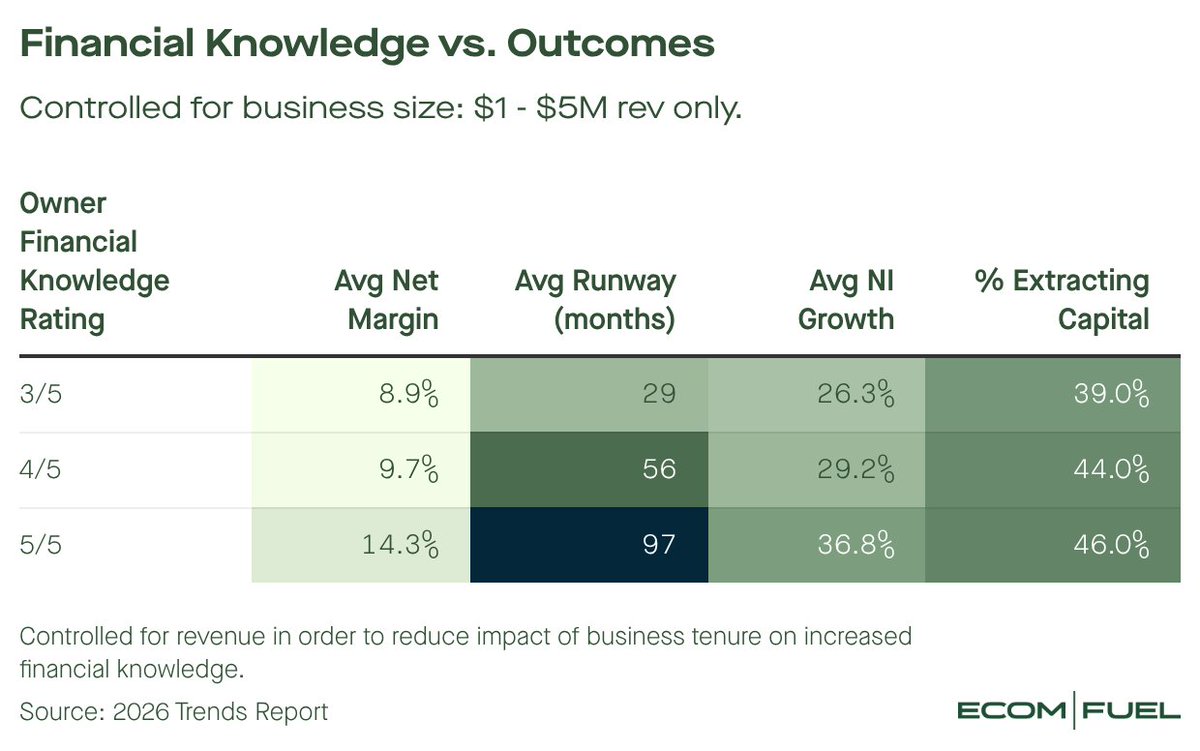
I asked owners to self-rate their financial literacy 1-5.
As expected, the jump from 3/5 -> 4/5 improves. Net margins go from 8.9% to 9.7%.
But the shocker? It's the jump from 4/5 (good) -> 5/5 (great) that has a massive impact.
THAT jump doubles cash runway and meaningfully increases net income growth by close to 50%. (See chart below)
80/20 doesn't apply here. The last 20% is where the real money lives.
If finance isn't your strength, this is probably the highest-ROI thing you can work on in 2026.
—
Third: tariffs.
Of the brands impacted, they absorbed 58% of the cost themselves. For every $10 in new product cost, they only raised prices $4.
It's why inflation came in lower than most predicted. It's also why a bunch of you are quietly eating margin right now and calling it a rough year.
If you haven't seriously tested raising prices post-tariff, you're leaving a lot of money on the table.
Scary? Yes. Also the single highest-leverage move most owners can make.
——
The full 55-page Trends Report on the @ecomfuelco website now for more on these much more.
22
6
73
84,022
Apr 8
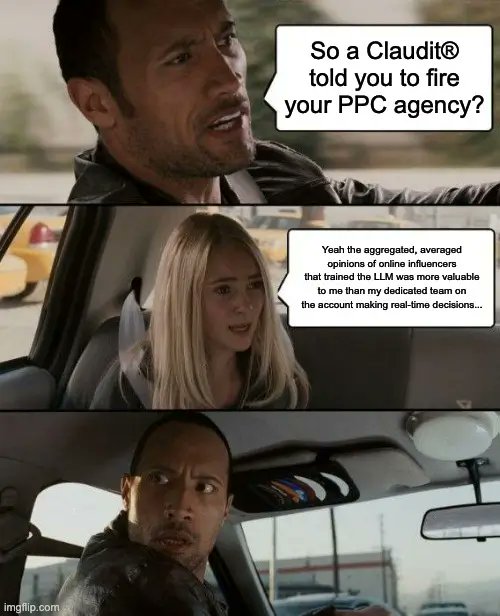
Using Claude to analyze your Google Ads account (let's call that a Claudit®) has two crucial issues you need to ponder and solve before just running AI loose in your Google Ads account, read those 2 concerns here: zatomarketing.com/blog/stop-…
4
6
575
Kirk Williams retweeted

Mar 24
In ~75 days, every agency running AI-generated video ads targeting New York is going to have a very expensive problem they don't know about yet.
On Dec 11, 2025, Gov. Hochul signed S.8420-A. This is the first state law requiring advertisers to "conspicuously disclose" when an ad features a synthetic performer, defined as any AI-generated or algorithmically created figure designed to appear as a real human. This is a wildly expansive definition - it doesn't have to be a deepfake of a celebrity or digital replica of an existing person - but ANY AI-generated human figure in any visual medium (audio-only is excluded).
The law takes effect June 9, 2026.
The penalty structure is eye-watering for digital-heavy brands. 1st violation: $1,000. Each subsequent violation: $5,000. Each non-compliant ad is a separate violation. There is no prescribed cure period. There is no notice-and-correct safe harbor. There is no requirement that the state notify you before assessing penalties. The language is clear: every violation of the statute "shall result in" the above civil penalty.
If your agency is running 50 active video ads with AI-generated talent across Meta, YouTube & CTV without disclosure, that's not a $5,000 problem. It's $246k problem. Scale to 200-300 creatives and the exposure looks less like an annoyance and more like a fleet of brand-new Porsche 911 Turbos.
That's eye-opening on its own BEFORE you factor in the state's situation: NYS is staring down a cumulative 3-year budget gap of $34.3B. Federal Medicaid cuts are threatening to make it worse. The state has every incentive to treat enforcement as revenue-positive rather than a cost center. Discovery is trivially easy, even for bureaucrats: pull the public ad library, identify AI performers, check for disclosure, send the notice invoice. The tools you used to generate the creative are the tools that prove the violation. There's no "we didn't know" defense when the prompt and the invoice both specified what was happening. And the best part for NY? Most of these companies are out-of-state - meaning relatively few upset voters.
Most agencies have no idea this law exists. They're not advising clients, have zero disclosure plans in place and they're certainly not auditing existing creative libraries to ensure winners can be updated in time. They're doing what they always do: running ads until someone tells them to stop. By the time someone does, the bill could exceed a starter home in most states.
The compliance obligation falls on whoever "produces or creates" the advertisement. That's the agency, production company, and/or brand. The law does include exemptions for audio-only ads, as well as cases where AI is used exclusively for translation purposes and "expressive" works (i.e. film, art) where the content of the advertisement is consistent with the content of the works.
One potential reprieve: the same day Hochul signed this, the White House issued an Executive Order aimed at preempting state AI regulation, including a DOJ Task Force to challenge state laws. But an EO cannot overturn a signed statute - only Congress or the courts can. Anyone betting on federal preemption materializing before June 9 is making a bet I wouldn't take. If you need further proof, just look at TSA lines.
The agencies paying attention will build disclosure into their creative process now. The ones that aren't will find out about this law the way their clients find out about most things their agency should have told them: after it costs them money.
The clock is ticking.
8
6
35
15,108
Kirk Williams retweeted
Mar 13
Sam is 100% correct.
This is the artifact-outcome problem in action: assuming that because AI can produce the deliverable, it can produce the result the deliverable was supposed to generate.
In reality, the deliverable (the demand letter, the memo, the brief, the whatever) was never the value driver. It was the visible artifact of a deeper mechanism - institutional leverage, credentialed authority, relational trust, regulatory standing and/or the capacity to impose consequences - that actually produced the outcome.
You see this playing out in dozens of industries right now - medicine, finance, regulation/compliance, journalism, audit/assurance, contract negotiation, advertising/marketing, litigation - all with the same pattern: the deliverable exists within an adversarial or evaluative system where the counterparty or decision-maker isn't simply processing information; they're evaluating the source, authority, capacity consequence structure that underpins the information.
In all of those industries, the thing AI produces is a signal about the underlying value driver. This is why the "AI-as-a-disruptor" narrative continually runs into the same wall. It treats professional services businesses as if they're information production businesses.
Spoiler alert: they aren't.
Professional services businesses are trust, authority and consequence-bearing businesses that happen to produce information as a byproduct.
The brief, the letter, the deck, the whatever is a shadow on the proverbial wall. AI systems are quite good at painting shadows. But a shadow is only as powerful as the thing casting it.
Mar 12

Everyone is focusing on the wrong problem with AI and legal work. The problem isn't accuracy, hallucination, etc. Even if AI gets everything 100% right, it still won't matter. Here's why:
Let's say you have an insurance claim. You try to save a few bucks by NOT hiring a lawyer and instead have ChatGPT advise on strategy / write a few letters to the adjuster.
The letters are perfect. They make every argument correctly. You're already counting your settlement chickens, but then a plot twist: you get no offer, or maybe best case a low offer.
The problem isn't "bad AI" — it's that your case won't settle unless the insurance co fears losing even more money at trial. The only thing that moves the needle is the threat of getting nuked at trial.
Your letter, no matter how perfectly written, is worthless without actual litigation teeth behind it. And adjusters can tell. An unrepresented claimant sending polished letters is still an unrepresented claimant.
Insurance company logic: What's this person going to do if we don't pay? Sue us? With what lawyer? I guess they'll have to go find one eventually. Cool — we'll wait.
"Fine," you say. "I'll use AI first and hire a lawyer later if they lowball me." But now you've already shown your hand. The adjuster sized you up months ago, anchored low, and the clock's been running on your statute of limitations. Your lawyer is now playing from behind on a case the insurance company already decided not to take seriously.
The adjuster isn't scared of a well-written letter. The adjuster is scared of a trial lawyer with a filed complaint.
That's it. That's the whole game.
4
2
14
1,870
Kirk Williams retweeted

Mar 11
Breaking News: The U.S. was responsible for a missile strike on an Iranian school, an ongoing military investigation found. The inquiry said the strike — which Iranian officials said killed at least 175 people — was the result of a targeting mistake. nyti.ms/47G2uw2
3,804
17,684
42,570
8,676,825
Mar 6
This is such a poor brand experience. I'm begging DTC to stop this.
19
77
24,728
Kirk Williams retweeted

Feb 20
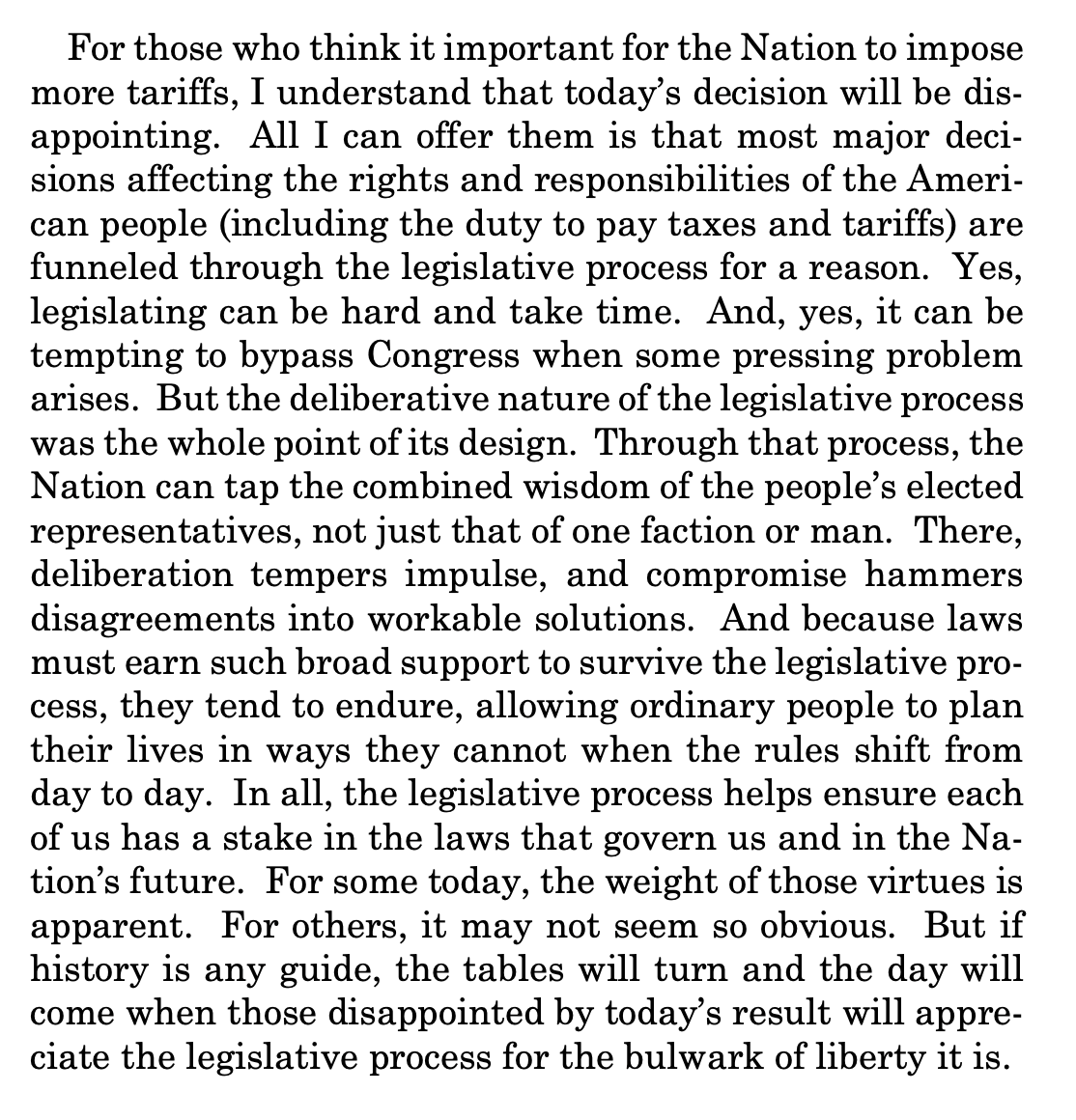
For anyone putting loyalty to a person above loyalty to the Constitution, Justice Gorsuch’s remarks should be required reading. His words are a reminder that our highest duty is to the rule of law and the founding principles that define America.
3,923
4,810
24,324
933,970
28 Nov 2025
The BigCommerce real-time tracker UX is reason enough to switch to Shopify... IYKYK 😆
2
4
708
25 Nov 2025
BFCM Marketing alert: if you are sending out emails with big BFCM sales images on them make 👏 sure 👏 you👏 put👏 a👏 clickable👏 link👏 on👏 the👏 image.
1
2
393
18 Nov 2025
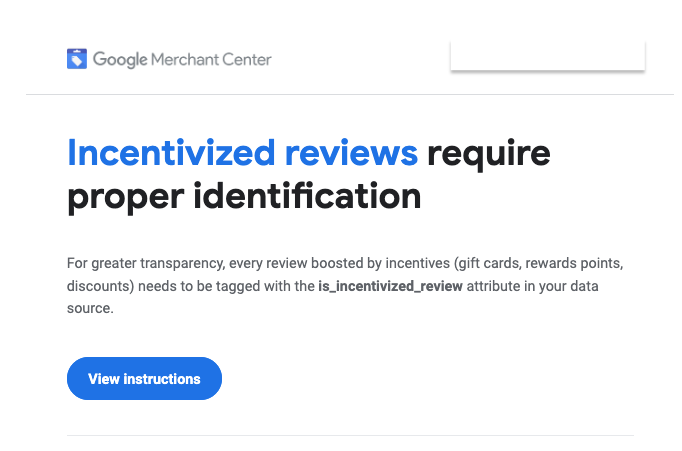
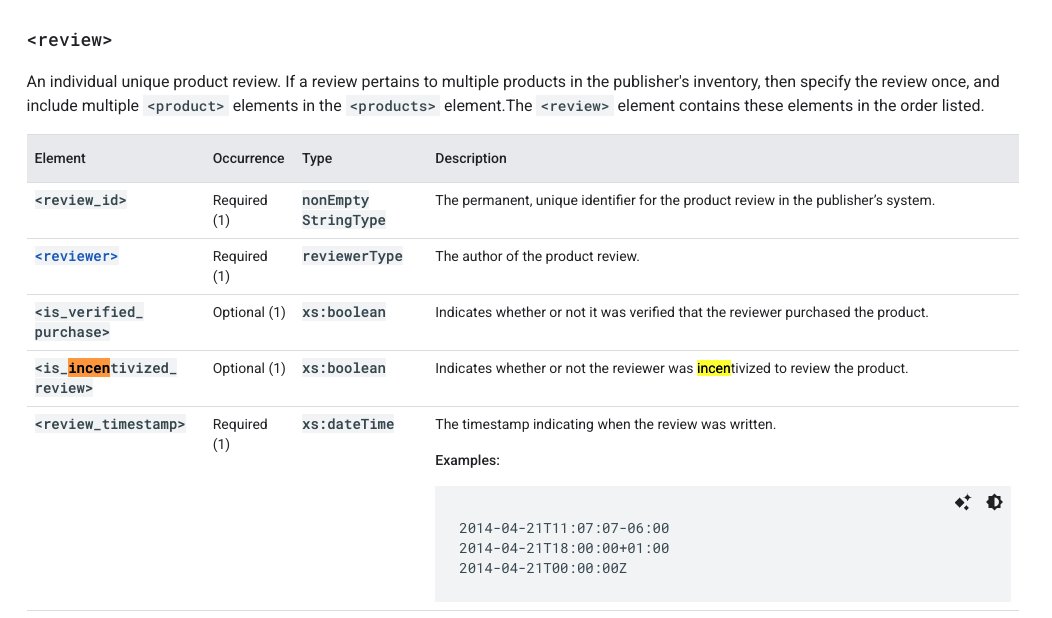
Something to be aware of, is that Google requires you to disclose whether you incentivize reviews (lined up to the individual reviews you incentivised!) and I would expect that failure to do so will eventually wind up as disapprovals or account suspensions.
3
1
5
671
18 Nov 2025
So, heads-up, with the FTC also looking more closely at reviews, it's highly recommended that the manner in which you gather, AND DISPLAY, reviews should be re-evaluated for your brand's safety!
288
18 Nov 2025
Fellow digital marketing agency mgmt peeps (anyone who can speak to the sales side of your agency!), I recently changed up my site form and can't figure out if a slow-down in contacts for us over the last two weeks is:
31%
A normal Nov: slow
54%
Abnormally slow
15%
Better than Normal
13 votes • Final results
3
2
443
18 Nov 2025
(1) normal seasonal behavior (people just aren't usually switching up providers in November) OR (2) that I screwed up our leads by changing up my form ;) Was just curious if you would mind voting in this poll to help me determine that?
1
220
17 Nov 2025
This will be my 10th year on the Top 25 PPCer list (previously with HeroConf), and truly it feels an honor to be on it each year, if you've ever been helped my one of my articles, books, podcasts, conference sessions, videos, or posts... please toss me a vote (link next post):
4
7
392
17 Nov 2025
190