
Building to save the world! Builder, founder, father of 3, husband of 1 and patter of our CFO - Chief Furry Officer 🐾
Joined December 2006
- Tweets 1,128
- Following 1,493
- Followers 545
- Likes 3,682
71 Photos and videos








Pinned Tweet

3 Nov 2014
“The ability to learn faster than your competitors may be the only sustainable competitive advantage.”
-Arie de Geus
2
4
Pål Brattberg 👨💻 retweeted

Mar 18
Introducing Blink Claw - the first platform to hire unlimited AI employees that run your business 24/7.
180 AI models included. Gmail, Slack, LinkedIn, HubSpot - one-click connect. No API keys, no $600 Mac Mini.
Reply "Claw" RT. Your first agent is on us. ($50 - 200 creds)
1,264
708
1,669
232,354
Mar 8
This is absolutely true, and if your company doesn’t have this role embodied in a single person, make sure you build this as a first priority!

the most underrated hire right now is a great product person.
when i say product person i'm def not talking about a product manager. perhaps i think there has to be somewhat of a new role. i don't have a good name for it yet but maybe something like "product thinker".. someone with an intuitive grasp of the product as it exists, where it's soft, where it sings, & how to iterate it toward something even sharper. in some sense, this person has to cohesively hold in their head where this product should be 2 years from now & work backwards from that.
i say this cuz when building was hard, engineering was the bottleneck & the status hierarchy often reflected that. building is no longer hard. which means the variance in outcomes has shifted almost entirely to judgment on what to build, how to sequence it, & how to talk about it.
& the story matters as much as the thing. internally, it organizes the team around a shared model of why. externally, it shapes the interpretive frame users bring to their first experience. you can't retrofit narrative onto a product & expect it to land, it has to be load bearing from the start.
the rarest version of this person sits at the intersection of culture & deep technology. someone genuinely bilingual. they know what's technically possible & they know which cultural currents are real vs. ephemeral. that combo is what separates products that feel inevitable from products that feel assembled.
before ppl clap back with this person has always been valuable, i know.. i am just saying now they might be the most *important* person in the room. their value compounds like never before.
7
3
138
Pål Brattberg 👨💻 retweeted

Feb 2
This is the question every software company is asking themselves right now. What happens to our roadmap if an engineer can produce 2X or 5X more output.
The general direction will be roadmap expansion. Companies that just use this leverage to cut costs will be outcompeted by those that decide to do more.
As a result, this will mean we will see more competitive battles between companies, but also the expansion of many more categories since software can touch more surface area.
The limiter then becomes how rapidly your customers can actually adopt new software, how good you make that software (vs. it becomes slop because it’s so much easier), and whether you can get paid for more software or if customers’ expectations just go up over time for what they get from each vendor.
As an aside, building up a brand, ecosystem, and distribution moat ends up being critical. If software development cost per unit go down, then the new game is how you can get customers to adopt and remain sticky. GTM becomes a critical factor in all this.
Feb 1

Interesting thought experiment:
Let's run with the assumption that AI makes creating software ridiculously fast cheap, and quality doesn't suffer (I know, I know, but let's assume)
What would this mean for software businesses?
Would eg they all expand scope w new products?
95
63
790
156,504
30 Dec 2025
Great list, lots of alpha here!

yes things are changing fast, but also I see companies (even faang) way behind the frontier for no reason.
you are guaranteed to lose if you fall behind.
the no unforced-errors ai leader playbook:
For your team:
- use coding agents. give all engineers their pick of harnesses, models, background agents: Claude code, Cursor, Devin, with closed/open models. Hearing Meta engineers are forced to use Llama 4. Opus 4.5 is the baseline now.
- give your agents tools to ALL dev tooling: Linear, GitHub, Datadog, Sentry, any Internal tooling. If agents are being held back because of lack of context that’s your fault.
- invest in your codebase specific agent docs. stop saying “doesn’t do X well”. If that’s an issue, try better prompting, agents.md, linting, and code rules. Tell it how you want things. Every manual edit you make is an opportunity for agent.md improvement
- invest in robust background agent infra - get a full development stack working on VM/sandboxes. yes it’s hard to set up but it will be worth it, your engineers can run multiple in parallel. Code review will be the bottleneck soon.
- figure out security issues. stop being risk averse and do what is needed to unblock access to tools.
in your product:
- always use the latest generation models in your features (move things off of last gen models asap, unless robust evals indicate otherwise). Requires changes every 1-2 weeks - eg: GitHub copilot mobile still offers code review with gpt 4.1 and Sonnet 3.5 @jaredpalmer. You are leaving money on the table by being on Sonnet 4, or gpt 4o
- Use embedding semantic search instead of fuzzy search. Any general embedding model will do better than Levenshtein / fuzzy heuristics.
- leave no form unfilled. use structured outputs and whatever context you have on the user to do a best-effort pre-fill
- allow unstructured inputs on all product surfaces - must accept freeform text and documents. Forms are dead.
- custom finetuning is dead. Stop wasting time on it. Frontier is moving too fast to invest 8 weeks into finetuning. Costs are dropping too quickly for price to matter. Better prompting will take you very far and this will only become more true as instruction following improves
- build evals to make quick model-upgrade decisions. they don’t need to be perfect but at least need to allow you to compare models relative to each other. most decisions become clear on a Pareto cost vs benchmark perf plot
- encourage all engineers to build with ai: build primitives to call models from all code bases / models: structured output, semantic similarity endpoints, sandbox code execution. etc
What else am I missing?
2
1
527
Pål Brattberg 👨💻 retweeted

18 Nov 2025
I become Cursor’s first full-time PM 4 months ago.
What I am NOT doing:
- Manage a product sprint
- Grooming
- PRD
What I am doing:
- Help build, price, market, and launch our first second product: Bugbot
- Customer support for Bugbot for the first couple months - I’ve responded to literally thousands of emails
- Enable and help our rapidly scaling GTM to sell Bugbot and Cloud agents to enterprise
- Spend lots of time with our biggest customers who are least similar to our engineering team
- Talk to hundreds of users for competitive analysis and UXR
- Advocate for and help kick off some of the features that became Cursor 2.0 (agent layout plan mode)
- Architect and scope a new platform product we’ll be releasing soon
- Help GTM close deals and expand our footprint in our enterprise contracts directly in the sales process
- Travel across the world to visit our customers, help with enablement, and see where we can improve
- Helping with misc random things: evaluating strategic acquisitions, “thought leadership” events, lots of recruiting, product/content marketing, devrel, and more
Am I PM-ing correctly? 🤷🏾♂️
15 Nov 2025

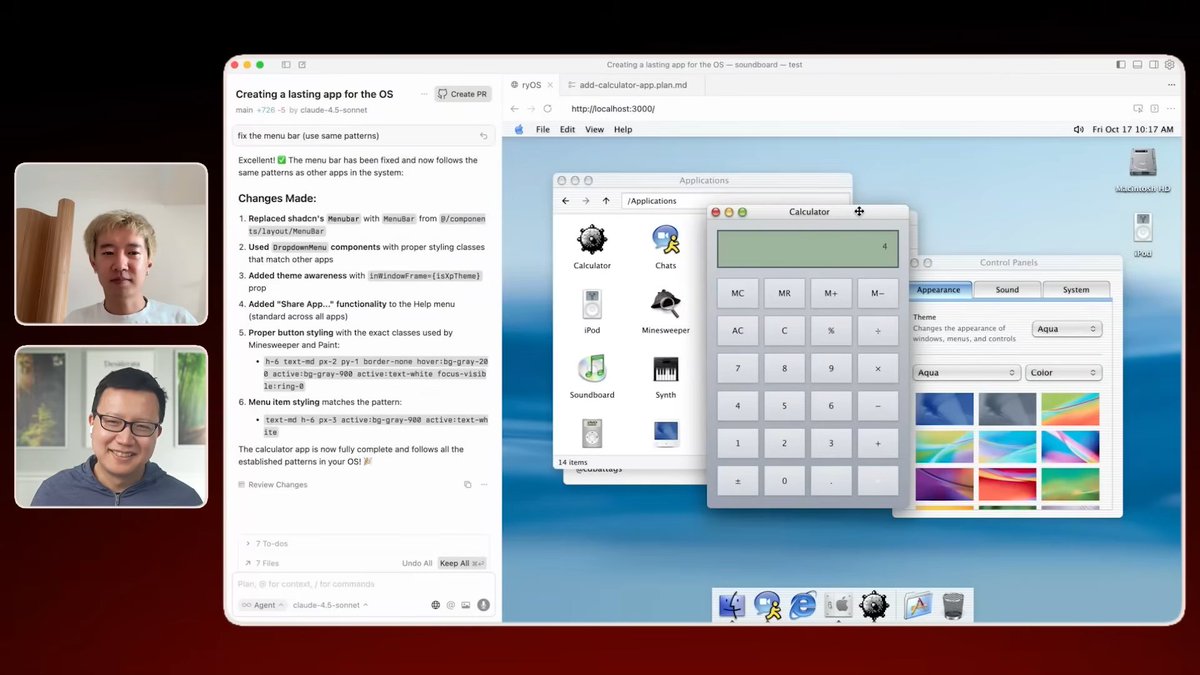
Cursor scaled to $29B without any full-time PMs.
Ryo (Cursor's Head of Design) walked me through how they work and it's the opposite of every big tech best practice:
1. Roles are muddy
PM work is spread across designers and engineers. Everyone does what fits their strengths and uses AI to fill the gaps.
2. Most designs start with code directly
Ryo barely uses Figma except for initial exploration. Most features start as live Cursor prototypes because "it feels more real than pictures."
3. No annual roadmap theater
Just a "fuzzy direction" and features shipped to concentric circles (e.g., staff, nightly beta users, consumers, enterprises) to polish.
Ryo also showed me exactly how he designs and codes new features using Cursor and how he avoid creating generic purple AI slop.
📌 Subscribe to watch our full tutorial tmr: youtube.com/@peteryangyt?sub…
85
80
1,635
480,268
29 Sep 2025
Next level release notes process! 💪
29 Sep 2025

our process for writing the release notes has changed a lot in the last 6 months
Now it’s:
1) for each commit, send the code message github PR and linked issues to Gemini 2.5 to read and decide if “paragraph-worthy” or “bullet point worthy” or if it’s a CI thing to skip and write an initial draft. Post processing step includes the commit link associated in an HTML comment for us to verify.
2) use a keyword similarity sorter script to combine them into one file that loosely groups
3) spend about 2 hours editing and checking for accuracy
doing it 100% manually used to take 4-6 hours and we regularly forgot to include things in the release notes. we’ve been doing this for like 10 releases now
241
Pål Brattberg 👨💻 retweeted

29 Sep 2025
our process for writing the release notes has changed a lot in the last 6 months
Now it’s:
1) for each commit, send the code message github PR and linked issues to Gemini 2.5 to read and decide if “paragraph-worthy” or “bullet point worthy” or if it’s a CI thing to skip and write an initial draft. Post processing step includes the commit link associated in an HTML comment for us to verify.
2) use a keyword similarity sorter script to combine them into one file that loosely groups
3) spend about 2 hours editing and checking for accuracy
doing it 100% manually used to take 4-6 hours and we regularly forgot to include things in the release notes. we’ve been doing this for like 10 releases now
28 Sep 2025

Bun v1.2.23
- Fixes 119 issues (addressing 412 👍)
- `bun install` migrates `pnpm-lock.yaml` → `bun.lock`
- pub/sub in Bun.redis
- concurrent `bun test`
- `sql.array` for postgres client
- Node.js compatibility improvements
Thanks to 16 contributors!
bun.com/blog/bun-v1.2.23
13
14
725
111,316
Pål Brattberg 👨💻 retweeted

7 Aug 2025
No big deal or the end of the world?
Here’s something that should be obvious: People don’t like to have their grievances downplayed or dismissed. When that happens, even the smallest irritations can turn into an obsessive crusade.
Imagine you’re staying at a hotel, and the air conditioning isn’t working right. You call the front desk to mention it, and they say, oh yeah, they know about that, and someone is going to come fix that next week (after you’ve left). In the meantime, could you just open a window (down to that noisy, busy street)? Not a word of apology, no tone of contrition.
Now what was a mild annoyance – that it’s 74F degrees when you like to sleep at 69F – is suddenly the end of the world! You swell with righteous fury, swear you’ll write a letter to management, and savage the hotel in your online review.
Jean-Louis Gassée, who used to run Apple France, describes this situation as the choice of the two tokens. When you deal with people who have trouble, you can either choose to taken the token that says “it’s no big deal” or the token that says “it’s the end of the world”. Whichever token you pick, they’ll take the other.
The hotel staff in the example above clearly took the “it’s no big deal” token, and as a result forced you to take the “it’s the end of the world” token. But they could just as well have made the opposite choice.
Imagine the staff answering something like this: "We’re so sorry. That’s clearly unacceptable! I completely understand how it must be almost impossible to sleep when it’s so hot in your room. If I can’t fix this problem for you tonight, would you like me to refund your stay and help you find a different hotel room nearby? In any case, while we’re figuring out the solution, allow me to send up a bottle of ice water and some ice cream. We’re terribly sorry for this ordeal and we’ll do everything to make it right."
With an answer like that, you're almost forced to pick the "It's no big deal" token. Yeah, sure, some water and ice cream would be great!
Everyone wants to be heard and respected. It usually doesn’t cost much to do either. And it doesn’t really matter all that much whether you ultimately think you’re right and they’re wrong. Arguing with heated feelings will just increase the burn.
Keep that in mind the next time you take a token. Which one are you leaving for the customer?
26
61
697
61,918
Pål Brattberg 👨💻 retweeted

27 Jul 2025
Here’s a big list of things that don’t seem to work, based on the last 20 years of running Tiny:
• Giving an advisor or advisory board free equity to advise a CEO without putting any real skin in the game and investing their own money (they usually go “thanks for the free equity” and occasionally respond to emails)
• Variable price/cost plus contracts (going over budget = vendor makes more money - natural incentive to go over budget)
• Synergy between two entities, unless they are almost 100% identical and it happens naturally between the two management teams with a clear profit incentive (even then, rarely works)
• Hiring people with traditional finance backgrounds—especially big corporate accounting—as opco CFOs (I see this a ton - first time entrepreneurs in small businesses hire a bean counter when they need somebody who is willing to roll up their sleeves and operate the business alongside them with a financial lens)
• Hiring outside management/compensation/etc consultants (they have no alignment and get paid regardless of the outcome / often incentivized to tell you to change everything so they sound smart / they can’t deliver hard news to management because they serve them / “consulting is the art of picking your pocket watch to tell you the time”)
• Fractional CFO/finance people vs. in-house finance (you’d almost always pay the same amount just in-housing, except you get 1/20th of their time and attention and they aren’t aligned with you)
• Hiring a big company person to run a small or medium company (no scrappiness, used to a big cushy org full of support - usually don’t know how to hire, how to do HR, how to incentivize, how to run an actual org, think TOO big)
• Hiring a CEO from a business with X business model (for example, ads) and expecting them to execute Y business model (for example, recurring membership revenue) in your business (people typically keep executing the strategy they know and love/are comfortable with - “to a person with hammer, everything looks like a nail”)
• Expecting a business to disrupt itself or incubate its own “labs” projects (these are usually expensive boondoggles and the innovator’s dilemma typically kicks in “never expect someone to understand something that their paycheck depends on them not understanding”)
• Expecting a CEO to issue dividends to head office vs. horde cash when their incentives don’t align with dividend receiving shareholders (CEOs will often press to keep as much cash on the balance sheet as possible, unless dividends benefit them as well - you essentially incentivize them to create silly R&D projects or at least project the need for massive cash investment)
37
37
543
65,440
Pål Brattberg 👨💻 retweeted

25 Jul 2025
The best startups already do this:
- Linear: has a zero bug policy and a "goalie" role (dev who fixes all reported bugs, fulltime, on rotation).
- Figma: zero bug policy for new features "quality weeks"
Did deepdives on both in @Pragmatic_Eng , check them here: (cont'd)

Startups have to rediscover zero bug bounce
Every few sprints get to zero P2 bugs before you start new feature work. Otherwise your product will be a low quality mess forever.
One part of great craft is getting to zero known bugs regularly.
25
104
1,610
195,101
Pål Brattberg 👨💻 retweeted

21 Jul 2025
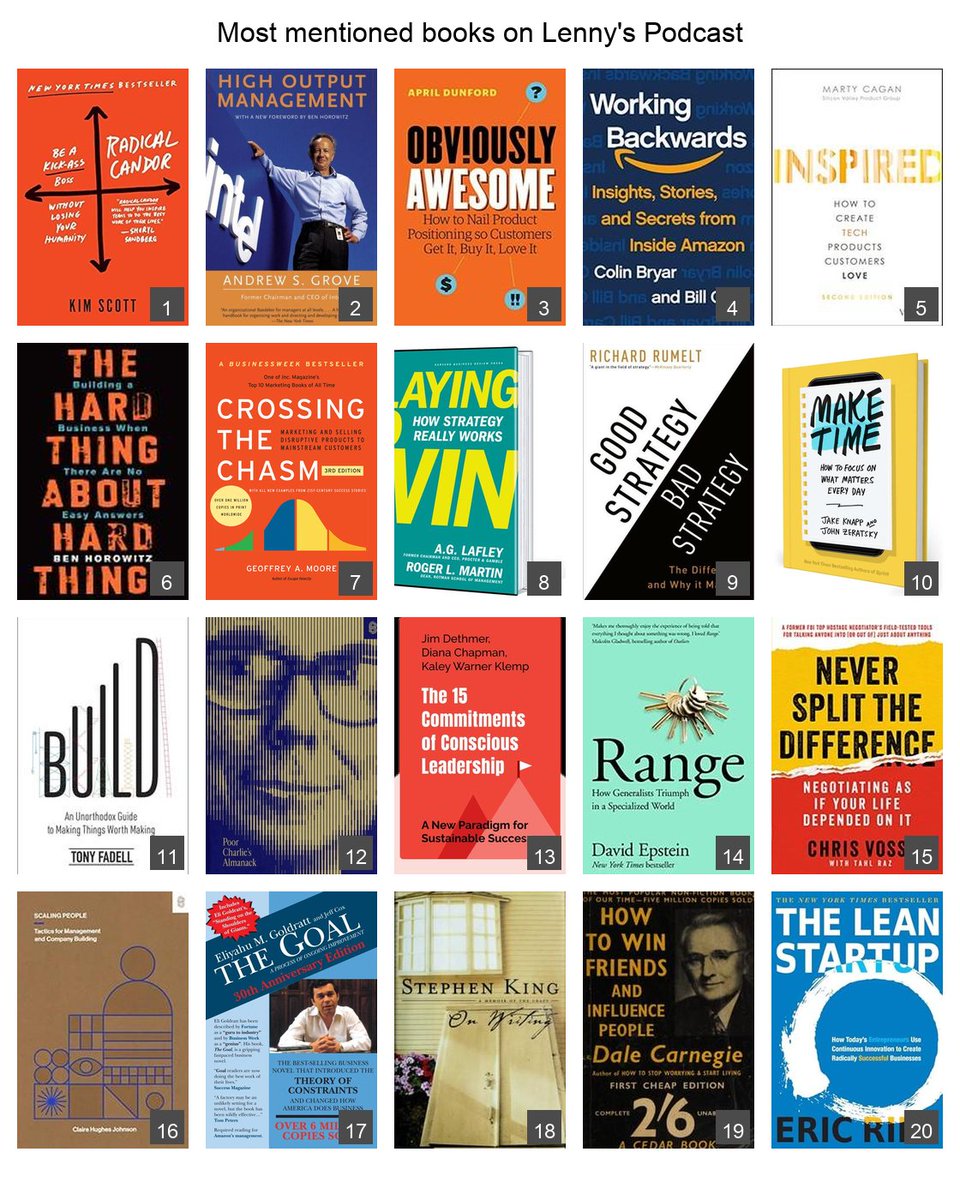
The top 20 most mentioned books on my podcast
89
110
1,568
225,085
11 Jul 2025
A roadmap for excellence
10 Jul 2025

My experience w integration partners/dev tools teams:
- S Tier: shared slack w team, 15 min SLA on messages, exceptional docs, 1-3 day turnaround on new builds, leaders hype on social
- A Tier: you got a guy who replies to email, 1-3 week on feature builds, will ship you workarounds
- C Tier: discord and a support team, nothing custom but their devrel might look at your code
- F Tier: “it’s on our roadmap”, 1-3 week SLAs on messages, not gonna build you 💩
64
7 Jul 2025
Here's a very simple starter project for using Bun, Hono, BiomeJS, Vite and React together. What else do you need?
github.com/pal/starter-proje…
74
3 Jun 2025
Great post on why AI-coding is for real, unlike other many other tech fads.
2 Jun 2025

I regret nothing! (Yet).
fly.io/blog/youre-all-nuts/
1
182

Pål Brattberg 👨💻 retweeted

3 Oct 2024
Hold on a minute.
Are we...back?
66
45
743
86,355
1 Oct 2024
RT @rtwlz: I installed a box high up on a pole somewhere in the Mission. Inside is a crappy Android phone, set to Shazam constantly, 24 hou…
2,262
Pål Brattberg 👨💻 retweeted

29 Mar 2024
You know what the biggest problem with pushing all-things-AI is? Wrong direction.
I want AI to do my laundry and dishes so that I can do art and writing, not for AI to do my art and writing so that I can do my laundry and dishes.
563
20,504
92,660
3,339,058
