aka Beestonbaggie. Follower of WBA, St Pauli, the arts, humane politics,beer and good company. Germanophile. European.NOT THE EX-TORY MP, FFS!
Joined May 2011
- Tweets 33,809
- Following 1,818
- Followers 1,395
- Likes 20,399
475 Photos and videos






Peter Bone retweeted

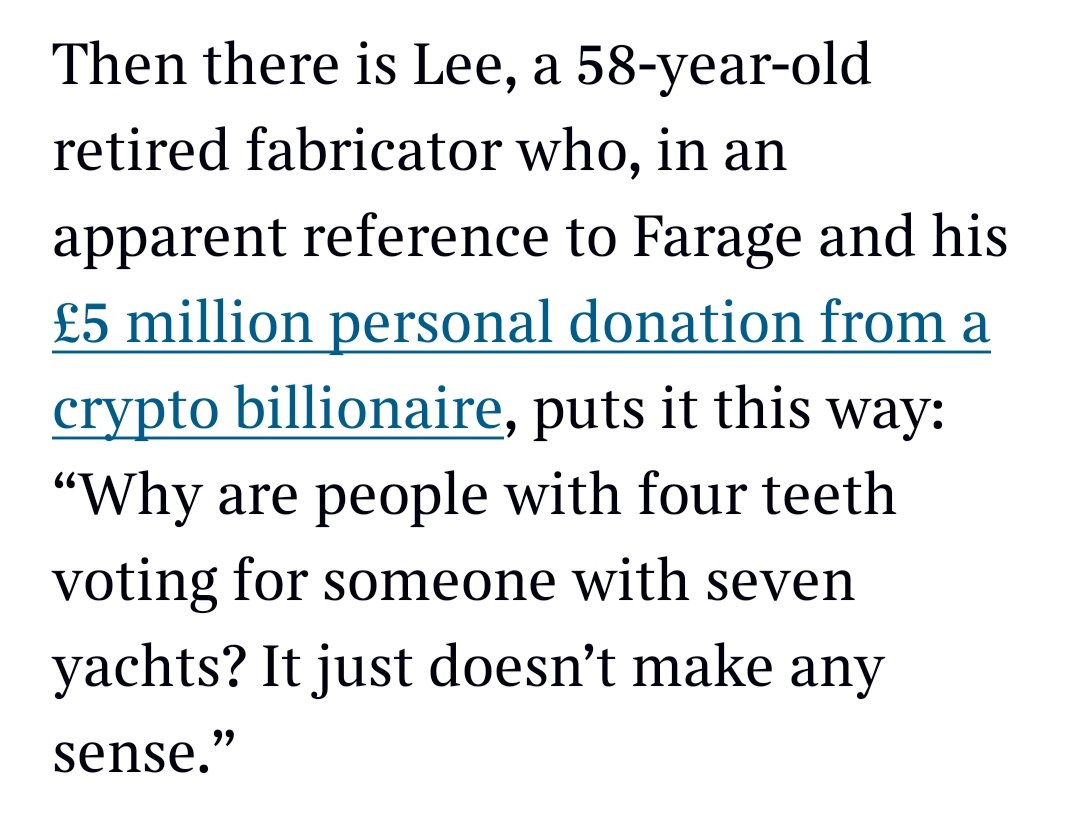
Quote of the day by Lee of Makerfield.
40
1,702
9,513
163,848
Peter Bone retweeted

Jun 5
The constant banging on about DEI is an infuriating American import into the UK.
In the UK we call it EDI. And EDI training is essentially summed up like this:
‘Don’t be a knob to other people, and realise some people face barriers you don’t.’
It’s not some woke conspiracy.
1,153
1,563
11,095
353,232
Peter Bone retweeted

"Blair won 3 general elections so you need to listen to him" yeah well Harold Wilson won four so I guess it's time for a 98% marginal tax rate on unearned income and price controls on milk.
47
691
6,011
95,687
Peter Bone retweeted

Retweet if you played with a ball like this as a kid (or still do) 🤣⚽️

42
411
2,042
50,512

May 25
So the planet is on fire and the BBC talks about ‘milestones’ and does vox pops with people who think it’s all wonderful. Shockingly bad reporting @BBCNews
139
Peter Bone retweeted

May 24
A whole month to think up a story and this was what they came up with? Is this the political equivalent of the dog eat my homework. Firstly, it doesn’t change the facts of the matter as Farage still hasn’t explained what the money is for and what he did with it. 🧵1/5
May 23

My phone was hacked by Moscow, says Farage: 'Deeply concerned' Reform leader claims Russian spies leaked details of £5million gift that could lead to ban from Commons trib.al/2w20nK8
29
351
1,385
138,594

If my boys grow up to be like Jo and Kush from Race Across the World we will have done something right. They’re a brilliant antidote to Tate-style toxic masculinity: bright, kind, compassionate, emotionally intelligent, grounded, and culturally aware. PROPER role models for boys.

183
766
7,459
163,406
Peter Bone retweeted

May 15
@ZackPolanski I stand with Caroline in believing a pact to stop Reform in a place we came a distant 3rd last week.
Burnham is a strong supporter of Proportional Representation. Should he become PM, it's better than anything on offer from Streeting, and we would benefit no end.
1
3
133
Peter Bone retweeted

May 14
I know the news Andy Burnham has a route back to Westminster will divide opinion. So, before anything else, I want to speak plainly – to Labour members and voters, to those who have left us, and to anyone on the centre-left, whether you vote Green, Lib Dem, or are simply looking for a politics that hasn't given up on you.
Last week's local election results were, for many of us, existential. Not disappointing. Not a setback. Existential. Look across Europe and beyond at what happens to social democratic parties that refuse to step outside the economic orthodoxy of the last forty years – the one that hollowed out our public services, privatised what was ours, drove inequality to indecent levels, and cleared the ground for the authoritarian right to march into. That is the path we are on. Keir Starmer has refused to see it, and the country cannot afford another general election spent finding out the hard way.
So let me be direct. The Prime Minister should set out a timeline for an orderly transition. I have said this before. I say it again now because the stakes have changed. Reform is not a protest – it is a project. And it will not be beaten by a Labour Party that mistakes managerial caution for strategy.
As regards Andy, I want to set down here that I do not see him as some kind of messiah. Far from it. As someone who has been around frontline politics for more than twenty years, he has made his fair share of mistakes. But for the last ten years he has been a serious, grounded, and effective Mayor of Greater Manchester. The party and the country need their strongest players on the pitch, and he has a great deal to offer at a moment when the national stage has rarely mattered more. I hope the NEC will listen to the overwhelming view of the Cabinet, the PLP, the membership, and the unions, and let Andy stand. And I hope and believe the people of Makerfield will send him back to Parliament.
But that is not a given. We know Reform will throw everything at this by-election. We must do the same and then some. Reform have spent a year being told they are inevitable. Makerfield is where we find out whether that is true. Every advance has a limit. This is where we set it.
Millions of people, including my constituents in Norwich South, need this government to succeed. They need housing, working public services, secure jobs, water and energy that serves them rather than extracts from them. That work is not finished. But the honest truth is that stopping Reform and rebuilding the country is bigger than any one party. It will take a progressive politics willing to listen, willing to cooperate where the public interest demands it, and willing to drop the tribal habits that got us here. The country is ahead of us on this. It is time we caught up.
Makerfield is one of many places where Labour has lost trust. It is an area Andy knows and has lived in for many years. If selected, he will work hard to win that trust back and make the case for a Labour Party worth voting for again. That case has to be made not only to people who once voted Labour, but to everyone who believes the answer to Reform is a serious, democratic, social alternative – not a paler imitation of the politics that created the problem.
This by-election is not about one seat. It is a test of whether Labour understands the moment we are in. No single party is going to stop Reform on its own. The progressive majority in this country is real – but it is scattered across Labour, the Greens, the Lib Dems, nationalists, independents, and millions of people who have stopped voting altogether. Our job is not to demand they all come back to us. It is to earn the right to work with them, on shared ground, for a shared future.
To former Labour voters: come and talk to us again. To Green and Lib Dem voters: we are not enemies. To Labour members and MPs: this is the fight. Let's get on with it.
bbc.co.uk/news/articles/c1l2…
1,060
371
1,722
210,615
May 10
Clive Lewis spot on here
May 10

Westminster may finally be about to have the argument it has spent 40 years avoiding.
If Andy Burnham returns to Parliament, the political class will know how to cover it. A leadership drama. Who is up, who is down, whether Keir Starmer can survive, whether Labour is once again turning inward. The familiar machinery of Westminster psychodrama will whirr into life.
That framing misses the larger point. Burnham’s possible return matters not because of what it says about Labour’s leadership, but because of what it reveals about the British state: what it can still do, what it has forgotten how to do, and what kind of country it must become if it is serious about resilience.
Britain is finally having a more serious conversation about national security. The Strategic Defence Review, the pivot back towards Europe, the recognition that hybrid warfare turns citizens, infrastructure and civic institutions into part of the front line: all of it marks a real shift in how the state thinks about its own survival.
But at the centre of that conversation lies a question that the defence establishment, and most of Westminster, still does not want to answer. What kind of society do you need to be before resilience is possible?
Finland is now the model everyone cites. Comprehensive security. Whole-of-society defence. Civilian preparedness woven into military planning. British strategists admire the Finnish system and ask how it might be copied. But the admiration stops short of the uncomfortable question: why does it work there?
The answer is not geography or history or some mysterious quality of Finnish national character. It is structural. Nearly 80% of Finns say they would defend their country if attacked. In Britain, the figure is closer to 33%. That gap is not an accident. It exists because Finland has spent decades building a society in which people have a genuine stake in what they are being asked to defend. Energy is affordable. Housing is available. Public services function. Institutions command trust. The Nordic welfare state is not a sentimental add-on to Finnish security policy. It is the foundation of it. You cannot ask people to defend a country that does not work for them.
Britain has spent 40 years building the opposite. The privatisation of essentials – energy, water, transport, housing – transferred wealth upwards from households to shareholders while making the basics of everyday life more expensive. The state, stripped of the tools to control costs at source, has been reduced to compensating after the fact.
Out of every pound the Government spends on housing, 88p goes to subsidising private rents. Just 12p goes to building homes. When energy prices spiked in 2022, the Government spent £40bn in a single winter cushioning the blow, not because it had a resilient energy system but because it lacked one. Debt interest now consumes more than £100bn a year. Britain has the highest debt servicing costs in the G7: the compounding price of financing failure rather than eliminating it at source.
This is what bond market dependency actually looks like. It is not an abstract fiscal condition. It is the consequence of a state that has been stripped of the supply-side tools that would let it cure the problems it now pays, indefinitely, to manage. And here is the paradox the Treasury refuses to confront. The countries that borrow most cheaply are often those that have retained the public investment model Britain abandoned. The spread between UK and Dutch borrowing costs has widened sharply not because markets fear public investment, but because they have lost confidence in a model that borrows to subsidise private failure while never addressing its causes.
This is the connection Britain’s defence debate is missing. The familiar framing, that social spending is what must be sacrificed to meet the NATO target, is not merely politically toxic. It is strategically illiterate. Cutting the foundations of social cohesion to fund the hardware of national defence is self-defeating. You end up with planes and no pilots, submarines and no crew, an army that cannot recruit because the society it is meant to protect has stopped believing in itself.
I think Burnham understands this. That is why his programme is more interesting than the leadership gossip suggests. What he has been building in Greater Manchester – public control of transport, expanded social housing, investment in the productive foundations of the city economy – is not a nostalgic rerun of postwar nationalisation. It is a proof of concept for a different kind of state.
The Bee Network is the most visible example, but the argument behind it travels. A state that can shape markets is not condemned to subsidise their failures. A state that produces affordable energy through public generation does not need to spend tens of billions cushioning every price shock. A state with a serious public housebuilding programme does not need housing benefit to rise endlessly in line with private rents. A state that builds institutions people can see, use and trust begins to restore the civic confidence on which resilience depends.
The real constraint on Britain is not money. It is capacity: the workers, institutions, supply chains and public purpose needed to turn national will into national renewal. Britain’s tragedy is not that it has run out of money. It is that after 40 years of hollowing out the state, it has made itself less able to act.
Burnham’s critics will reach for the familiar warning. Borrow more, spend more, spook the gilt markets, repeat the Truss disaster. But this misunderstands both the problem and the opportunity.
Bond markets do not have ideological preferences. They have functional ones. They prefer clarity, credible revenue streams, productive investment, and a state with a plan. What they punish is not public ambition but incoherence. A properly designed productive state programme would not be a leap into fiscal fantasy. It would be an attempt to end the much costlier fantasy that Britain can keep borrowing to compensate for broken markets while refusing to repair them.
The defence conversation and the economic conversation need to become the same conversation. Finland did not build national resilience by choosing between welfare and security. It built resilience by understanding that they are inseparable: that a country in which the basics work, where people trust one another and the institutions around them, is one that can face danger with something more than anxiety.
That is the deeper argument Burnham represents. Westminster will be tempted to treat him as a leadership story. It should resist the temptation. The question is not whether Burnham can return to parliament. It is whether Britain can return to the idea that the state should make life work. Because a country that cannot command the confidence of its people cannot truly defend itself.
2
207
May 10
Dorries: Conservatives are nothing if not loyal…..’
I shit you not, she actually said that and Kuenssberg said nothing.
And this is the BBC’s flagship political programme?
#bbclaurak
1
3
273
Peter Bone retweeted

May 9
The political editor of the Sun on Sunday was in..the Alliance For Workers Liberty?! THE weirdo student trot group? The ones that wanted no age of sexual consent?!
Really?!
May 9

Oxford grad and veteran of weirdo Trot sect Alliance for Workers Liberty, now a hack at the Sun, pretending to think politics is just about bin collections
15
28
259
50,279
May 10
Can’t the BBC do any better than Dorries and Vine? @bbclaurak .Less a political programme than a gossip show.
1
2
126
Peter Bone retweeted

May 8
☎️LOCAL ELECTIONS☎️
Where to start? This wasn't a General Election, first and foremost — despite what Nigel Farage has engineered the narrative into.
Our media have been slavishly following him around for weeks as he lied to the country, telling them that they could 'Get Starmer Out'. A load of nonsense, of course, that was never likely.
Dan Hodges and his compadres have been spreading the recurring story that this is a referendum on Starmer's job, but it never was. The Labour Party are not in a position to swap him out right now, Rayner and Streeting are not likely to win or would make worse leaders.
Andy Burnham is not an MP. Despite the rumours, I would seriously doubt that another sitting MP is prepared to give up their seat, trigger a very uncertain by-election, and face a potential disaster of Reform swooping a bonus seat in the Houses of Parliament.
Starmer is there for the foreseeable future. The looming energy crisis almost guarantees that, I'd say. Who wants to come in after an interminable leadership compatition and straight into a possible cost of living catastrophe? Very few I'd suggest.
So, yes, Reform have picked up plenty of new council seats, but it doesn't really change anything at all. Professor Sir John Curtice explained it to a cloth-eared Nick Ferrari this morning, Reform are doing well in the Brexit Heartlands but faltering elsewhere.
The Farage charm doesn't extend out of that demographic very far at all, so their reach is specific and limited.
This was the reason Reform fought so unbelievably hard to have those postponed elections reinstated — a great many of those slated for postponement were in Brexit voting areas. If these areas hadn't voted yesterday, the overall picture would have been far less turquoise.
This way, Farage can have his press conferences, they can claim a wave of victory, but, in reality, they're only shoring up a vote that would have already been in the bag, come a General Election.
Wales is a different story, however, and one in which we won't know the outcome for a while yet. If Reform sneak a majority in the Senedd, it would be a significant win, and unfortunately give Farage a real reason to crow. Labour are forecast to lose their historic foothold in Wales, with Plaid Cymru readying to step up. We wait.
Scotland won't move away from the SNP, but the Reform v. Labour battle could prove interesting. Again, we'll wait to see how that plays out a bit later.
France24 and Al Jazeera both reported this week that they couldn't quite believe how the country was acting over these local elections in England, the media hysteria over, what in real terms, changes very little.
That's how much Farage leads our broadcasters around by the nose; their sycophantic drooling has become a figure of ridicule outside the country, from those observing us.
This has to change for any semblance of normality to return to UK politics, but I don't see it happening any time soon. They worship at the temple of Farage.
Andrew Marr, the once credible BBC journalist, took to the LBC air waves an hour ago to pronounce that Nigel Farage will be the next Prime Minister — almost as though he has inside knowledge. 😒
Happy Friday. 😊
112
229
707
24,152
May 1
Shared with you by a Times subscriber.
Enjoy this article for free.
thetimes.com/sport/football/…
I predicted Spain to beat Brazil in the final.
62
Apr 25
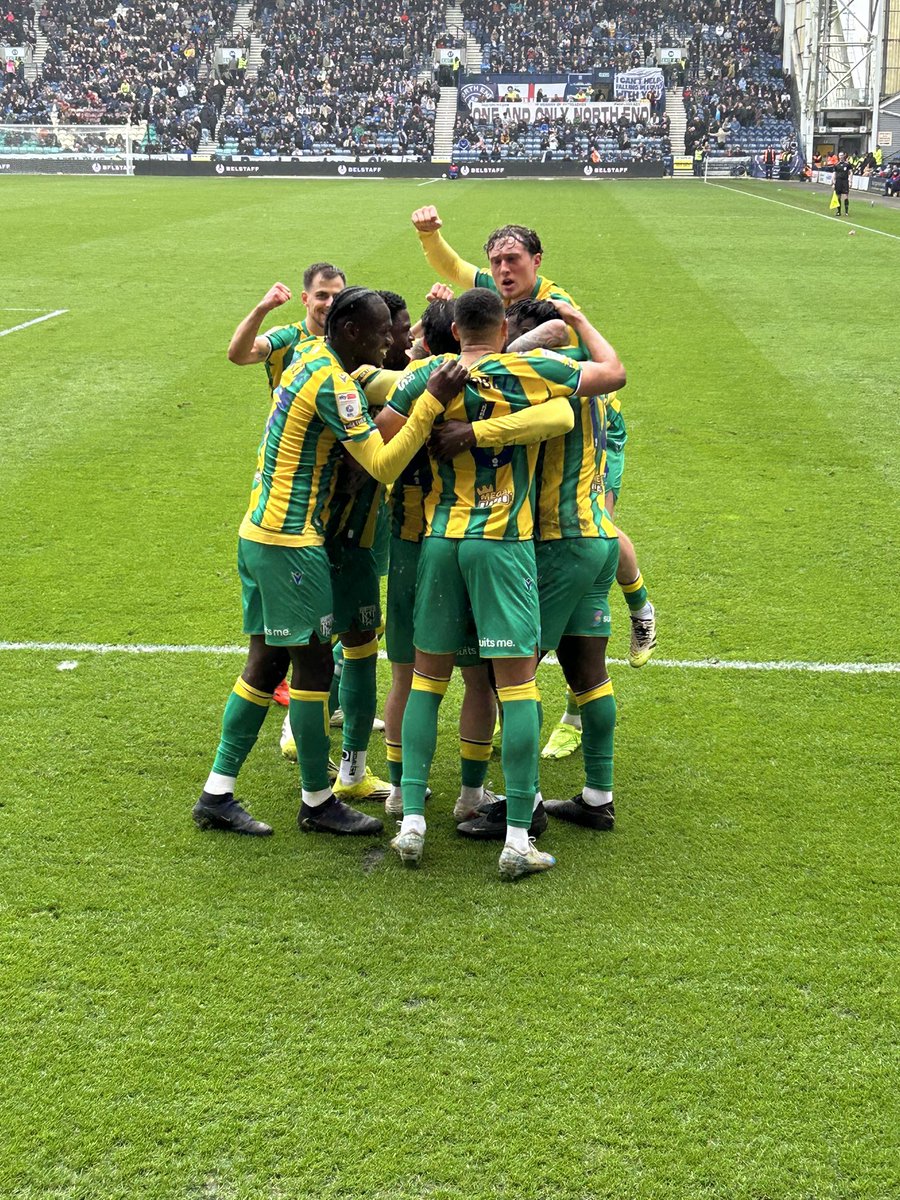
Huge relief to get the extra point we needed for survival in the champ today #wba. Battling performance against a team pushing for automatic promotion. Defenders and midfield solid and really hard-working, and forwards denied a few times by excellent saves from Thor keeper 1/2
1
11
519
Apr 25
their keeper! Have to say the turn around since end of Feb has been astonishing. Mozza has done a fantastic job, and the players have really responded. The future looks a lot brighter than it did two months ago. #COYB
1
6
110