
Joined May 2025
- Tweets 6,811
- Following 1,047
- Followers 9,797
- Likes 9,237
755 Photos and videos




Pinned Tweet
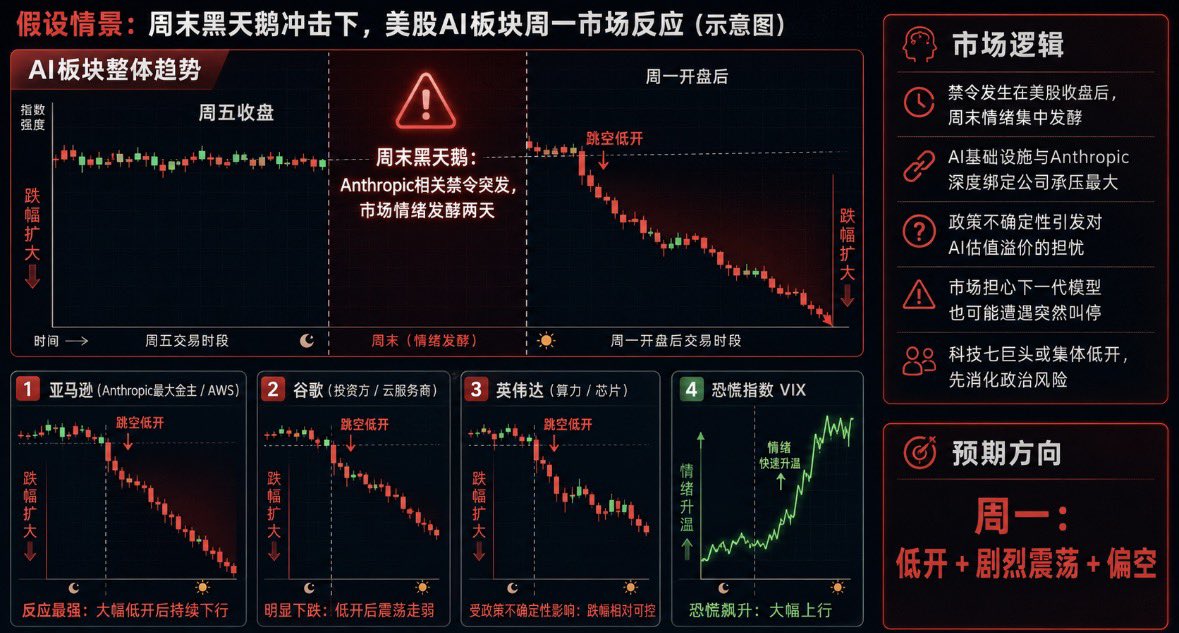
周一美股开盘,整个 AI 板块大概率会迎来剧烈的震荡,大概率会跌。
尤其是与算力、AI 基础设施、Anthropic 深度绑定的巨头,可能受到的冲击最大。
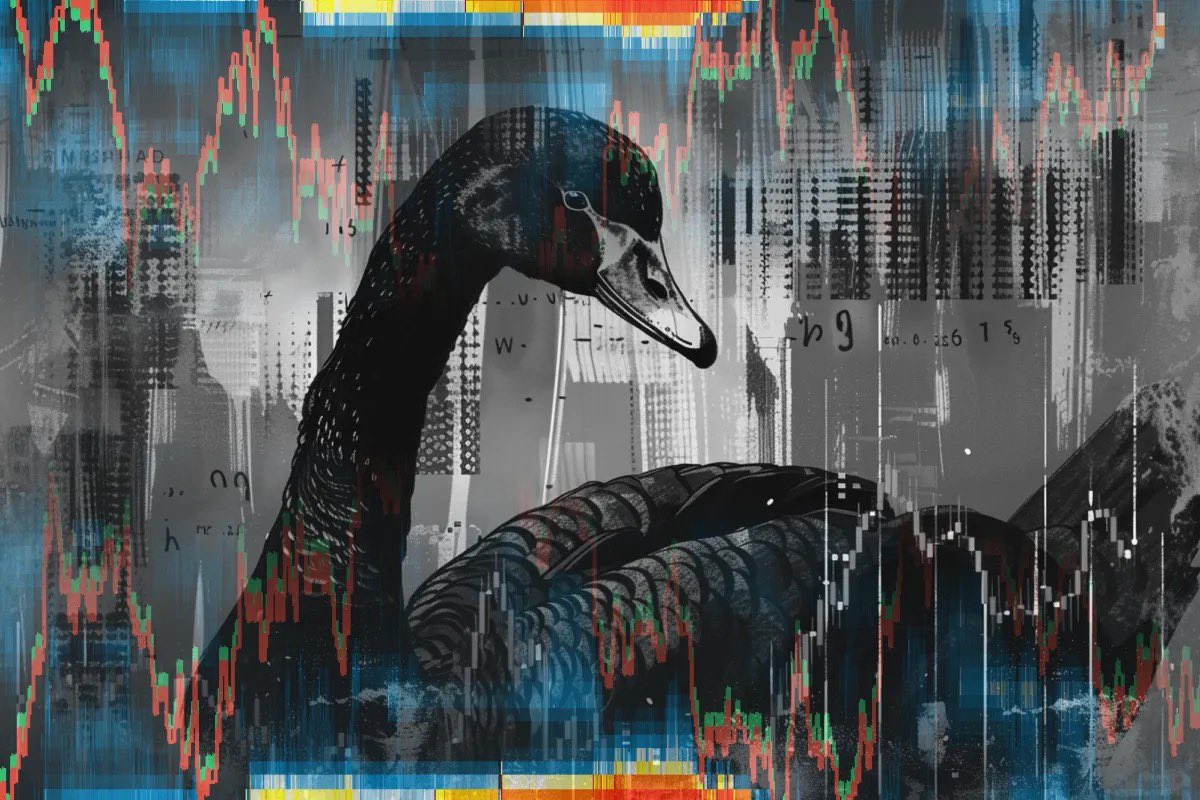
由于对A社禁令是在这周美股收盘后才突然砸下来的,属于典型的周六日黑天鹅事件。
市场情绪在周末发酵两天后,周一开盘会集中宣泄。
亚马逊是 Anthropic 的最大金主和核心云服务商如今 AWS 已经不得不全球下架这两款模型,原本预期由 Fable 5 带来的巨大云算力消耗和企业级收入直接短期归零。
谷歌作为 Anthropic 的另一个重要投资方和云服务提供商,同样很难独善其身。
虽然英伟达的订单依然供不应求,但这次禁令开了一个极其恶劣的先例,便是美国政府可以因为一个漏洞报告,在 3 天内直接扼杀一家公司的尖端商业模型。
市场,必然会担忧。
如果未来 OpenAI、微软、Google 的下一代模型,比如公告里提到的 GPT-5.5 级别,也因为类似的理由被突然叫停,全球对顶级算力和芯片的需求增速会不会被政策强行踩刹车?
这种政策不确定性是华尔街最讨厌的。
政治与监管黑天鹅,是最麻烦的。
科技界会对AI强力审查时代到来的恐慌。周一开盘,恐慌指数大概率攀升,科技股,特别是 AI 相关的科技七巨头大概率会集体低开,以消化政治风险带来的估值溢价。
110
44
293
120,081
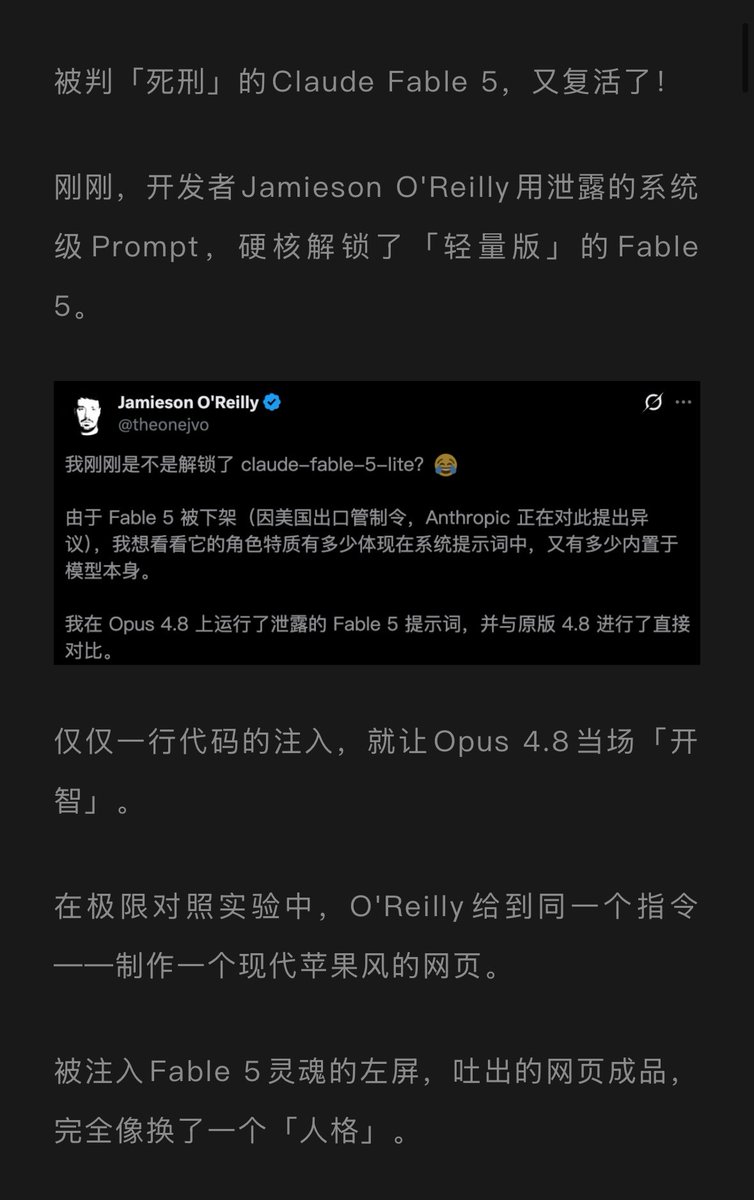
这是prompt engineering 101。
Fable 5的真正实力来自Mythos-class底层权重,海量新训练数据,外加复杂agent架构,不是prompt copy就能继承的。
泄露prompt与老模型顶多cosplay出味道像的lite版,性能差距巨大。连轻量版都算不上。
真Fable 5在长时程复杂分析、工具链、自验证这些硬核任务上直接甩老模型几条街。
目前还是希望多一些scaling law训练创新和实打实的benchmark。
1
138
我不相信世界是一个巨大的草台班子这句话。
一个人所处的阶层、平台和行业深度,决定了他能接触到什么级别的系统,以及他能看到多大尺度的真相。
在大多数人日常生活的圈层里,接触最多的往往是社会的末端执行层,比如基层办事处的扯皮、小公司的朝令夕改、不靠谱的合作方、或者充满了低级失误的日常服务。
对于处于这个阶层的人来说,周围都是草台班子是他们最真实的肉眼可见的现实。
但这不是世界的真相。
精密、严苛、绝对容不下草台作风的硬核系统,比如国家级实验室、尖端制造供应链、顶级金融博弈、或者是曼哈顿计划这种改变人类历史的秘密工程,它们是有极高的准入门槛和保密机制的。
没有达到一定的阶层、学术高度或专业深度的人,根本没有机会窥见这些系统是如何极其严密、冷酷且高效地运转的。
把OpenAI、Anthropic、字节跳动、小米这样的万亿级巨头、科技硬件与算法帝国也归结为草台班子,这更是认知模型退化的表现。
看到小米一次发布会的ppt有错别字,或者字节某个产品的审核出了个漏洞,就立刻推导出一个简化结论:
“你看,他们内部也是一团糟,就是个草台班子”。
钱学森有一个很伟大的概念创造:开放复杂巨系统,Open Complex Giant System。这是继我学习工程控制论后的第二个收获。
这个世界,这种开放复杂巨系统里,局部的不确定性和小混乱,恰恰是系统保持整体高弹性和生命力的表现。
硅谷和现代复杂系统理论里有一个共识:一个绝对没有冗余、绝对不犯错的组织,就是绝对僵死的组织。
不要把系统的新陈代谢和对抗不确定性的动态调整,浅薄地看成了草台。
我再强调一遍,简化模型是弱者的自我安慰剂。凡是认为中美大模型之争也是草台班子的人,非蠢即坏。
人类大脑在面对极度庞大、信息量爆炸的复杂事物时,会有一种本能的恐惧。为了防止大脑过载,认知能力不足的人会启动防御机制,将复杂问题降维和符号化。
通过这种极端的简化,有些人会瞬间获得了智力上的优越感。
“你看,那些年入百万、千亿市值的巨头高管,也就是一群草台班子,和我村头开小卖部的没什么区别。”
我完全不认可。
如果营销号说一句,bgm一放,你的立场全无,就剩下三个字凑热闹,你确实看到的只有草台班子。
坚信世界是草台班子并跟着营销号凑热闹的人,往往不相信任何人、任何权威、任何精密运作的组织,这是虚无主义。
世界是一幅动态的充满变量的、层层嵌套的巨型网络图景,不是草台班子,我再次确定。
8
4
29
1,696
谈谈大厂在 AI 转型期最核心的战略焦虑、内部博弈以及技术派大牛的典型困境。
6月8日刚高调宣布他升任阿里巴巴首席科学家、牵头AI未来研究院。
结果,6月12日当晚就传出离职。
所谓的升任首席科学家和合并成立Token Foundry事业部,实际上是剥夺了他对核心业务,即通义大模型事业部的实权控制。
大厂在想架构调整、收回核心兵权,但又不能让外界觉得在亏待功臣,于是给一个最高的技术荣誉,即首席科学家,配一个务虚的未来研究院。
这种明升暗降的职场套路,对周靖人这种手握实权、想做真正突破的顶级技术领袖来说,无异于一种杯酒释兵权。既然没有了具体业务和实权,选择掀桌子走人是必然的。
现在,新成立的 Token Foundry 事业部由集团 CEO 吴泳铭直接负责。
阿里,正在把 AI 的最高决策权和资源调配权急剧向最高管理层收拢。
当前全球 AI 军备竞赛的压力下,大厂已经没有耐心让传统的技术高管按部就班地进行研发迭代了。
CEO 要亲自下场、搞扁平化管理,把 AI 彻底打造成集团的最底层核心驱动力。
在这个过程中,原有的中间层技术高管,哪怕是 CTO 级别,如果跟不上最高层的激进变阵,就会成为被优化的对象。
我看了看周靖人的履历,极其耀眼,IEEE/ACM Fellow不说,而且还主导了飞天、神龙架构、通义千问的研发迭代。
他是典型的大师级技术底座搭建者。
只是说,大模型发展到 2026 年这个节点,纯粹拼技术参数、拼论文的科学家红利期已经阶段性见顶,大厂现在要的是商业变现和杀手级应用。
集团战略从转向怎么用 Token 赚钱、怎么把大模型落地到具体产业时,科学家主导的研发模式往往会和商业变现的KPI产生冲突。
把通义大模型事业部合并掉,转而成立听起来更具工程和商业量化色彩的Token Foundry本身就宣告了工程与商业派对纯科学家派的全面胜利。
在大厂里,没有永远的实权大佬,只有永远的集团战略转轨。残酷,但就是如此。
19h

据多家媒体报道,阿里合伙人、前通义大模型负责人首席科学家周靖人近日已提交离职申请。
周靖人,男,国际电气与电子工程师协会会士(IEEE Fellow),国际计算机协会会士(ACM Fellow),阿里巴巴集团副总裁,阿里云智能CTO、阿里巴巴合伙人,6月8日刚刚“升任“阿里巴巴首席科学家。
6月8日,阿里刚宣布周靖人出任阿里巴巴首席科学家,牵头成立阿里巴巴AI未来研究院,专注前沿AI科技的探索与突破。与此同时,阿里也宣布合并通义大模型事业部和未来生活实验室,成立Token Foundry事业部,由集团 CEO吴泳铭直接负责。此举被业内解读为明升暗降,不再有任何实权和具体业务。
从6月12日晚11点开始,关于阿里巴巴首席科学家周靖人已提离职的消息开始在社区疯传。截至目前,相关传闻贴未删除。
附周靖人阿里巴巴任职轨迹:
2016年加入阿里,任阿里云首席科学家,负责搜索、推荐、广告、大数据智能体系;牵头达摩院前身iDST建设。
后续执掌阿里云飞天、神龙计算架构搭建,构建阿里云AI算力底层底座。
2022年底升任阿里云智能CTO,兼任达摩院副院长、通义实验室负责人,全权带队通义千问大模型研发迭代。
2025年12月入选阿里巴巴合伙人,进入集团最高决策层。
2026年4月:卸任阿里云CTO,就任集团首席AI架构师,掌管通义大模型事业部,顶层设计阿里全集团AI技术架构。
2026年6月8日组织再次调整:通义事业部并入Token Foundry,周靖人转任阿里首席科学家、牵头AI未来研究院。
当初搞走Junyang的人,现在也走了啊。
不知道说啥好。

5
12
6,485
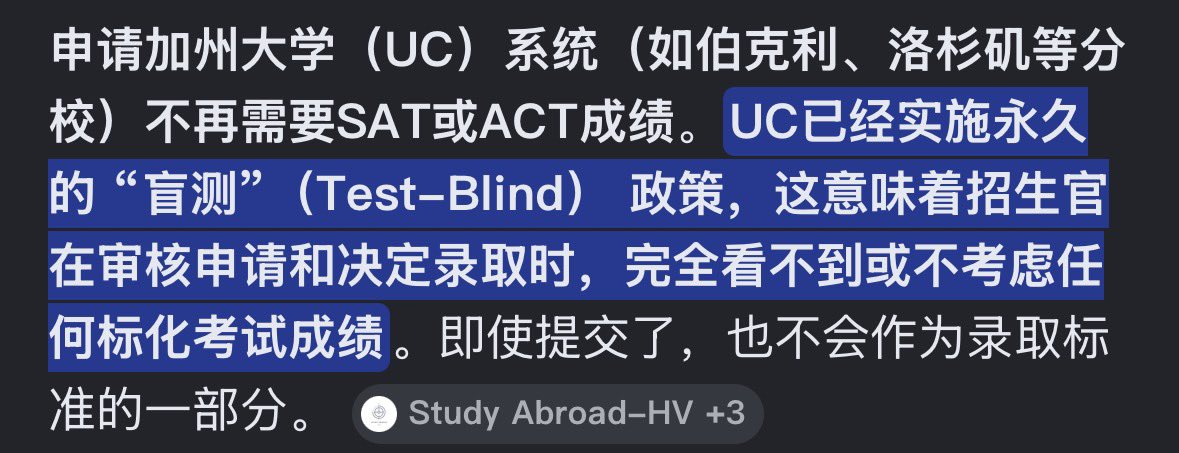
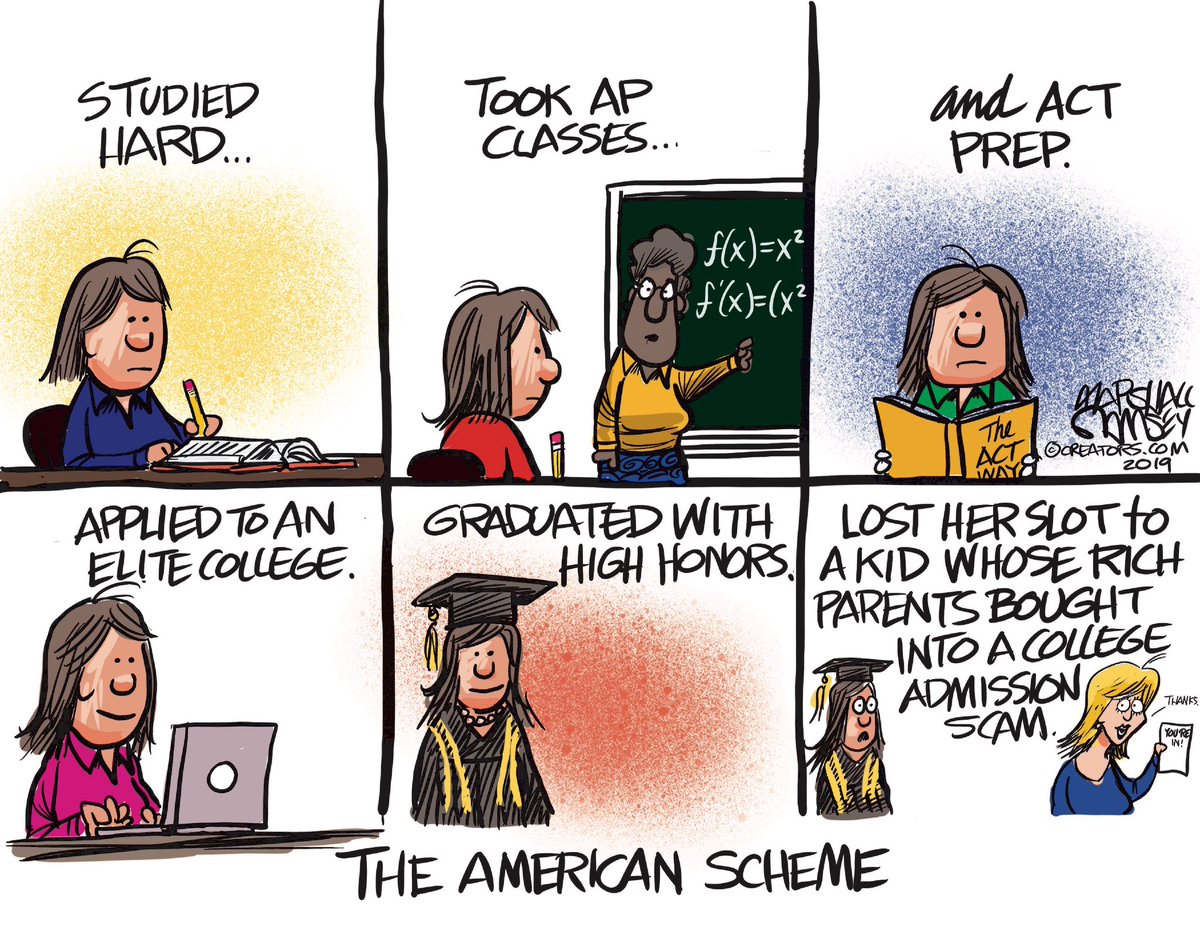
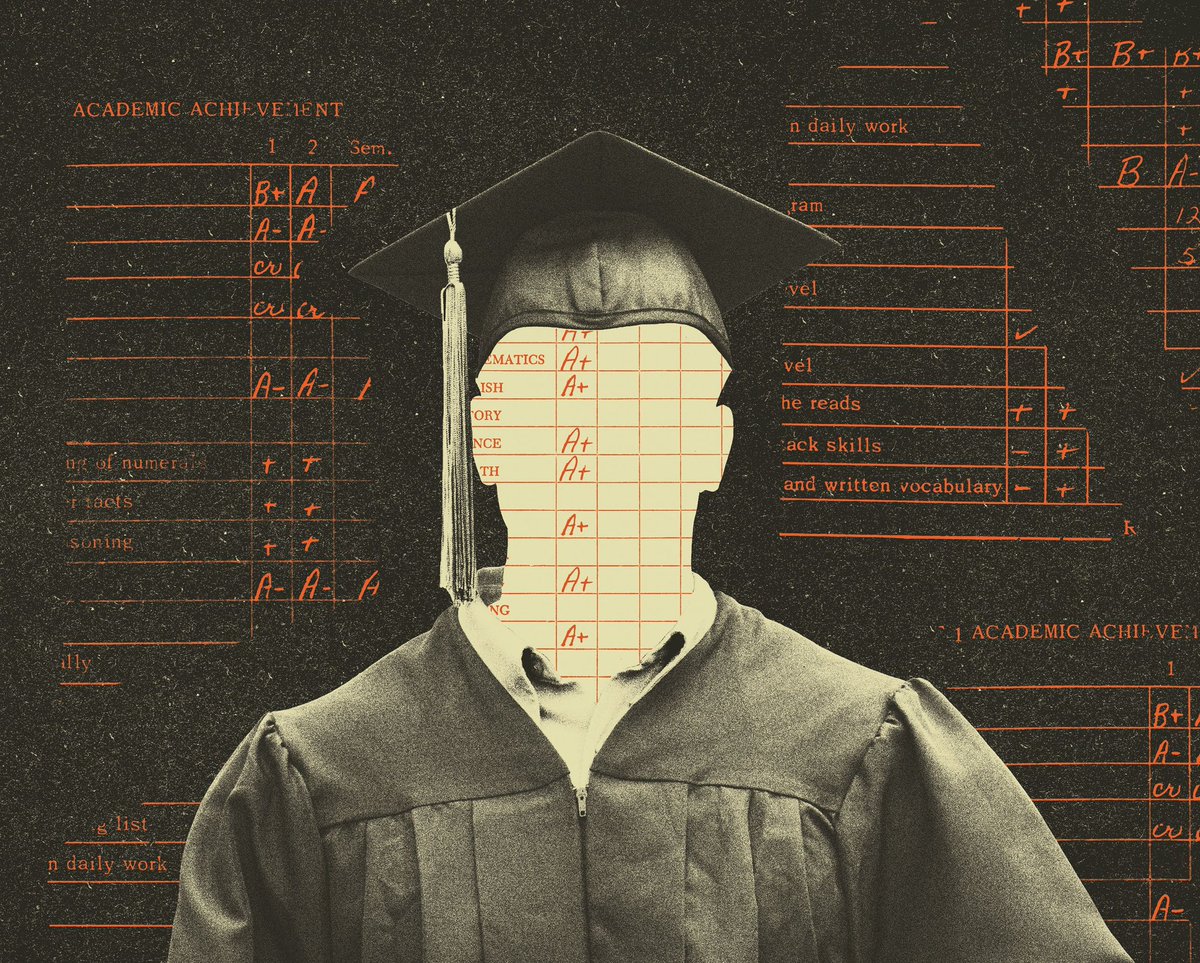
加州大学招生系统正在劫富济贫但手艺太潮,直接把公平给玩砸了。
加州大学取消了 SAT/ACT 等标化考试后,
没了全美统一的硬性考试标准,招生官就只能看相对排名。
这就导致了类似在清华附中考第 50 名的孩子被直接刷掉、但名校名额被垃圾中学里矮子里拔将军挑出来的第一名给霸占的情况。
制度本来想帮弱势群体,结果变成了不看个人实力,只看你投胎在哪个高中的黑色幽默。
如果你正好在那种人人都是 5 分的顶尖公立或私立高中,校内内卷已经把你逼到了 14% 的淘汰边缘,那就必须去校外寻找增量。
Jun 13

Berkeley math professor:
“Today, the more successful a public high school is at preparing its students, the lower its graduates' chances of getting into top UC campuses like Berkeley and San Diego.”
Berkeley admitted 45% of applicants from a high school where nearly 94% of “students failed to meet the state standards in mathematics.”
It admitted less than 14% of applicants from a school where “nearly 100 percent of its students in AP Calculus BC pass the national exam with a perfect score of 5.”
9
2
20
8,887
我很喜欢彭博社Emily Chang的采访风格。
之前看过她采访苏姿丰和谷歌CEO桑达尔·皮查伊的人,一定会对她印象深刻。
很多科技记者在面对顶尖 CEO 时容易捧哏或问一些不痛不痒的技术趋势。
但 Emily 顶着一张亲和力很强的脸,抛出的全都是能让人公开流汗的毒辣问题。
几天前的新一期里,Emily Chang 深入了估值已接近万亿美元的 AI 巨头 Anthropic 内部,对话了其核心灵魂人物:CEO Dario Amodei、其亲妹妹兼首席运营官 Daniela Amodei,以及爆款产品 Claude Code 的主导工程师 Boris Cherny。
彭博社的这套《The Circuit》是目前商业科技访谈里的第一梯队,很推荐大家去看。
Emily Chang 面对这群身价万亿、满脑子拯救或毁灭人类宏大叙事的 AI 偏执狂时,成功卸下了他们的防御伪装。
她用最直白的利益冲突和道德困境,逼着 Dario Amodei 讲出了他的想法:
AI 这个平稳的指数级怪兽已经失控,人类正在走钢丝,而这群亲手打造它的造物主,其实也战战兢兢,如履薄冰。

The government shouldn’t take over Anthropic, CEO @DarioAmodei told me, though the current situation is “dangerous and unstable.”
4
3
20
3,761
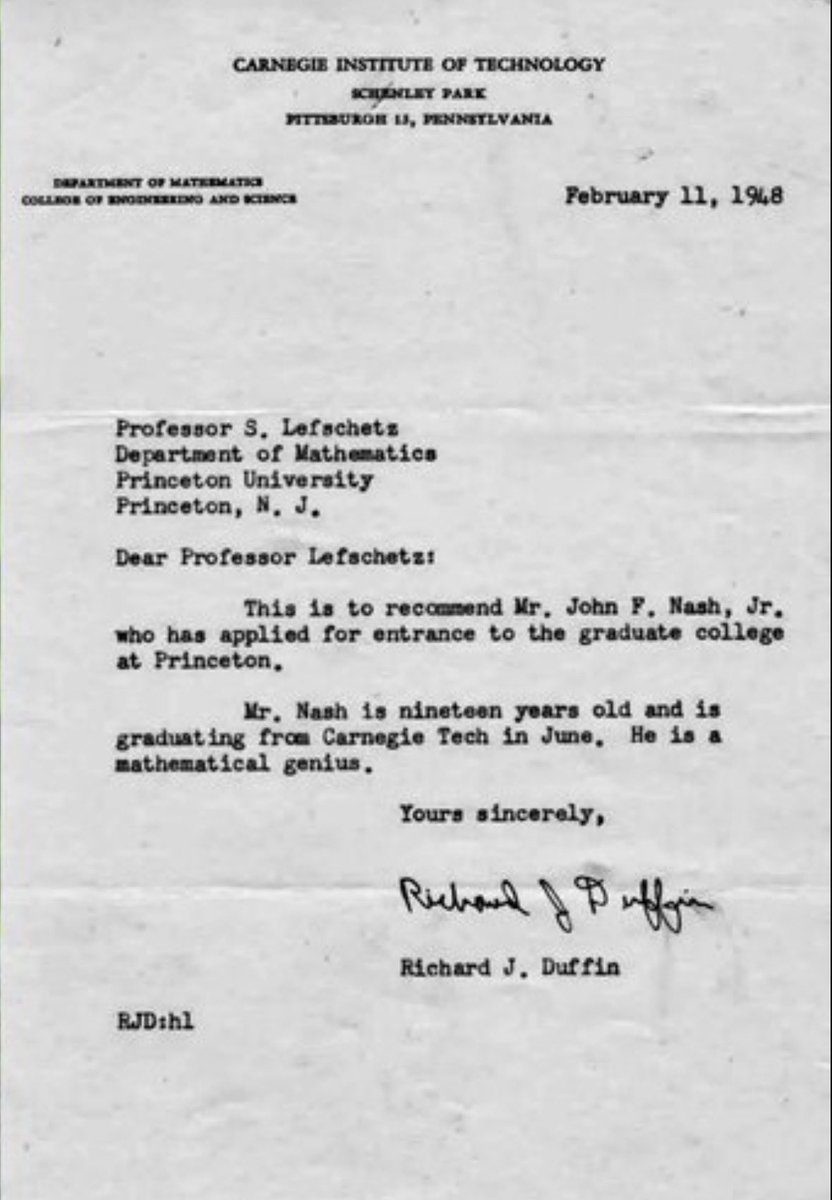
这是历史上最硬核、最著名的推荐信。
这封信由卡耐基理工学院(现卡耐基梅隆大学)的教授理查德·达芬(写给普林斯顿大学的所罗门·莱夫谢茨。
整封推荐信除掉客套的抬头和落款,正文其实只有两句话:
"This is to recommend Mr. John F. Nash, Jr. who has applied for entrance to the graduate college at Princeton."
(此信用于推荐申请普林斯顿大学研究生的约翰·F·纳什先生。)
"Mr. Nash is nineteen years old and is graduating from Carnegie Tech in June. He is a mathematical genius."
(纳什先生今年19岁,将于6月从卡耐基理工学院毕业。他是一个数学天才。)
现在的美本申请,美博申请,推荐信往往动辄几千字,充斥着各种项目经历、GPA排名和华丽的辞藻。但其实推荐信本身,只要被推荐人足够hardcore,根本不需要任何冗余的修饰。
这篇推荐信,没有列举他拿了什么A or A ,做过什么复杂的课题,推荐人用最笃定的语气,给出了最高级别的评价:
他是个天才。
超强的实力和绝顶的天赋,根本不需要复杂的包装。就是这样。
11
10
83
22,770
可以用一个行业发展的生命周期来解释。
清北精英因为沉没成本太高,通常不敢拿自己的前途去赌早期风险。
他们更倾向于去已经稳定的高薪行业,如传统投行、大厂、体制内。
行业被验证成功,开始疯狂赚钱,且社会地位和名声也建立起来了。这时候,名校生开始利用自己的学历优势,作为收割者和正规军大举进入。
当一个行业被清北生、藤校MBA挤满的时候,意味着这个行业已经极度透明、规则僵化、阶层固化。
为什么说是见顶信号?
因为当最追求稳健收益的精致利己主义者都觉得这里绝对安全、回报最高时,说明全社会的信息差已经彻底抹平了。
因为强者最擅长在规矩好的存量市场里通过内卷把别人挤走,这就是边际改进。
但整体是不具备从0到1开辟新战场的破坏力。当池子不再变大,最聪明的人开始内卷时,这个行业的利润率就会被迅速榨干。
但是,我觉得这个讨论是有条件的,特定范围内是有效的,比如传统金融、考公体制内、日渐饱和的互联网大厂。
在这些已经几乎没有底层技术突破的存量博弈行业,清北藤校的扎堆确实意味着普通人的空间被极度压缩,红利见顶。
但这未必适用于不适用于硬科技、底层创新和长周期的行业。
AI是一个例外,芯片半导体,生物制药亦如此。
AI 的早期全是顶级科学家、清北藤校博士在扎堆。这不仅不是见顶信号,反而是行业技术壁垒极高、正处于爆发前夜的象征。普通人进不去,纯粹是因为门槛太高,而非行业缺失红利。
而且我认为,名校生扎堆成熟行业,往往并非因为他们主观上不想创新,只是客观的社会资源分配机制决定的。
顶尖名校的学生背负着极高的社会期望。在经济周期下行时,选择成熟行业做边际改进稳定高薪,是极其现实的生存策略。
其实扎堆在我看来,未必死定了。
很多行业是周期性和技术迭代性的。
互联网行业在 2000 年网络泡沫破裂时,也被认为是清北留学生扎堆后的见顶信号。
但随后的 Web 2.0、移动互联网时代,行业盘子扩大了百倍,再次爆发了巨大的红利。
行业见顶与行业成熟,不是一回事。
19h

任何行业一旦清北生扎堆,基本就是顶部信号。
精致利己主义者不能扛早期风险,最擅长在内卷环境里做边际改进。
同理北美藤校MBA。
5
8
48
6,680
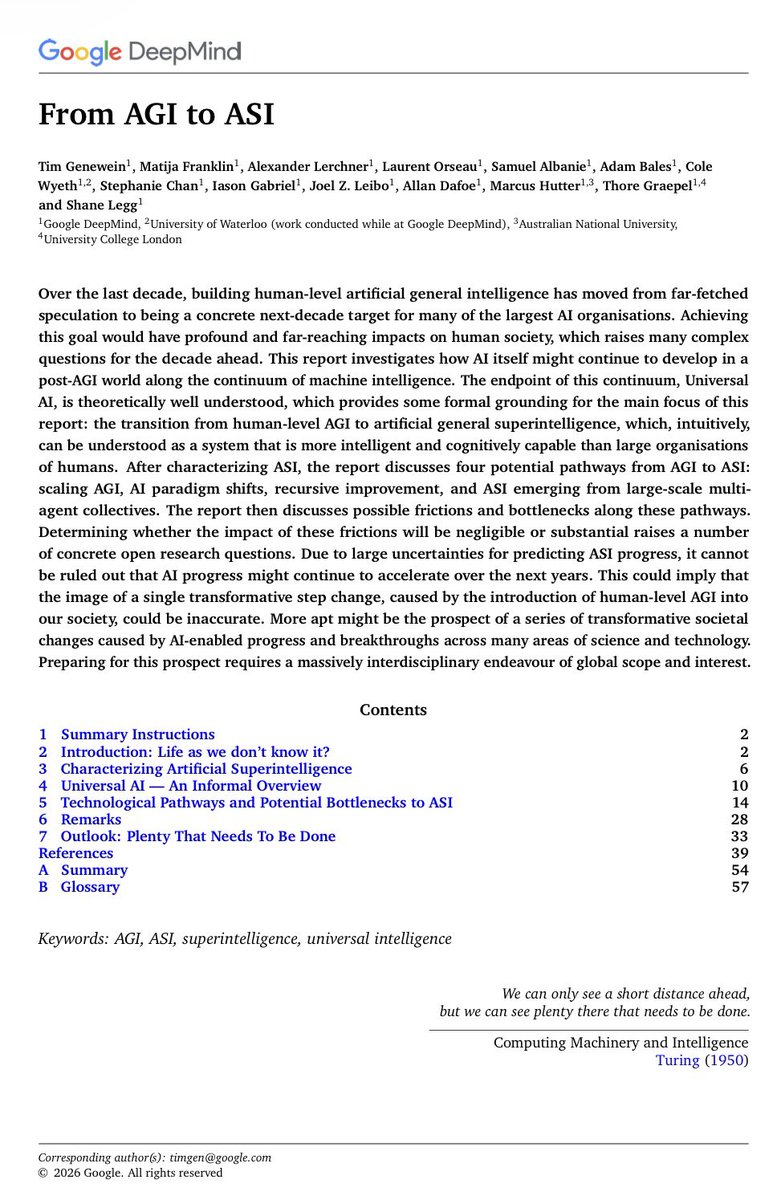
关于GPT-5.5 会不会也被禁这个问题,短期我倾向不会,几点原因,娓娓道来。
第一,这次 directive 是点名 Mythos-class 的,并不泛指所有 frontier model。扳机,现在是扣在 Anthropic 头上。
二,背景里还挂着 Anthropic 和政府本来就有的 Pentagon blacklisting 诉讼,这事带着针对性的味道,不太像一刀切的行业政策。
三,OpenAI 跟政府的绑定,比如Stargate、国防订单比 Anthropic 深得多,政治上、利益上动它的成本更高。
四,连 Gary Marcus 都在喷这道命令跟政府天天喊的美国必须在 AI 上压过中国自相矛盾,还可能把一批华裔研究员推回中国。
整个逻辑上站不住,真要扩到 GPT-5.5,自己先打自己脸,不知道这有什么利益可言。
下周只有两个剧本。
如果下周 OpenAI 安然无恙,整件事被坐实为Anthropic 的孤例,系统性叙事破产,周一砸下来就是 buy。
如果 ,OpenAI 也吃到同款信,政策不确定性的故事变现实,那才是跌得扬子江心,断缆崩舟。一切都结束了。
而且 Anthropic 点名 GPT-5.5 就是一步阴棋。这等于把球踢给政府。
要么,事态升级,连 OpenAI 一起管,等于冻结全行业、对华自废武功。要么,A社退让,承认这是任意执法。
政府选择性打击,是完全不同的风险,因为这属于capricious policy risk,伤不到基本面。
但如果第二份 directive出现,或者 GPT系列被同样的理由点名,后果不堪设想。
是 wobble 还是 regime change,拭目以待。

周一美股开盘,整个 AI 板块大概率会迎来剧烈的震荡,大概率会跌。
尤其是与算力、AI 基础设施、Anthropic 深度绑定的巨头,可能受到的冲击最大。
由于对A社禁令是在这周美股收盘后才突然砸下来的,属于典型的周六日黑天鹅事件。
市场情绪在周末发酵两天后,周一开盘会集中宣泄。
亚马逊是 Anthropic 的最大金主和核心云服务商如今 AWS 已经不得不全球下架这两款模型,原本预期由 Fable 5 带来的巨大云算力消耗和企业级收入直接短期归零。
谷歌作为 Anthropic 的另一个重要投资方和云服务提供商,同样很难独善其身。
虽然英伟达的订单依然供不应求,但这次禁令开了一个极其恶劣的先例,便是美国政府可以因为一个漏洞报告,在 3 天内直接扼杀一家公司的尖端商业模型。
市场,必然会担忧。
如果未来 OpenAI、微软、Google 的下一代模型,比如公告里提到的 GPT-5.5 级别,也因为类似的理由被突然叫停,全球对顶级算力和芯片的需求增速会不会被政策强行踩刹车?
这种政策不确定性是华尔街最讨厌的。
政治与监管黑天鹅,是最麻烦的。
科技界会对AI强力审查时代到来的恐慌。周一开盘,恐慌指数大概率攀升,科技股,特别是 AI 相关的科技七巨头大概率会集体低开,以消化政治风险带来的估值溢价。
3
14
6,265
这就是同行告密引发的科技圈跨国惨案。
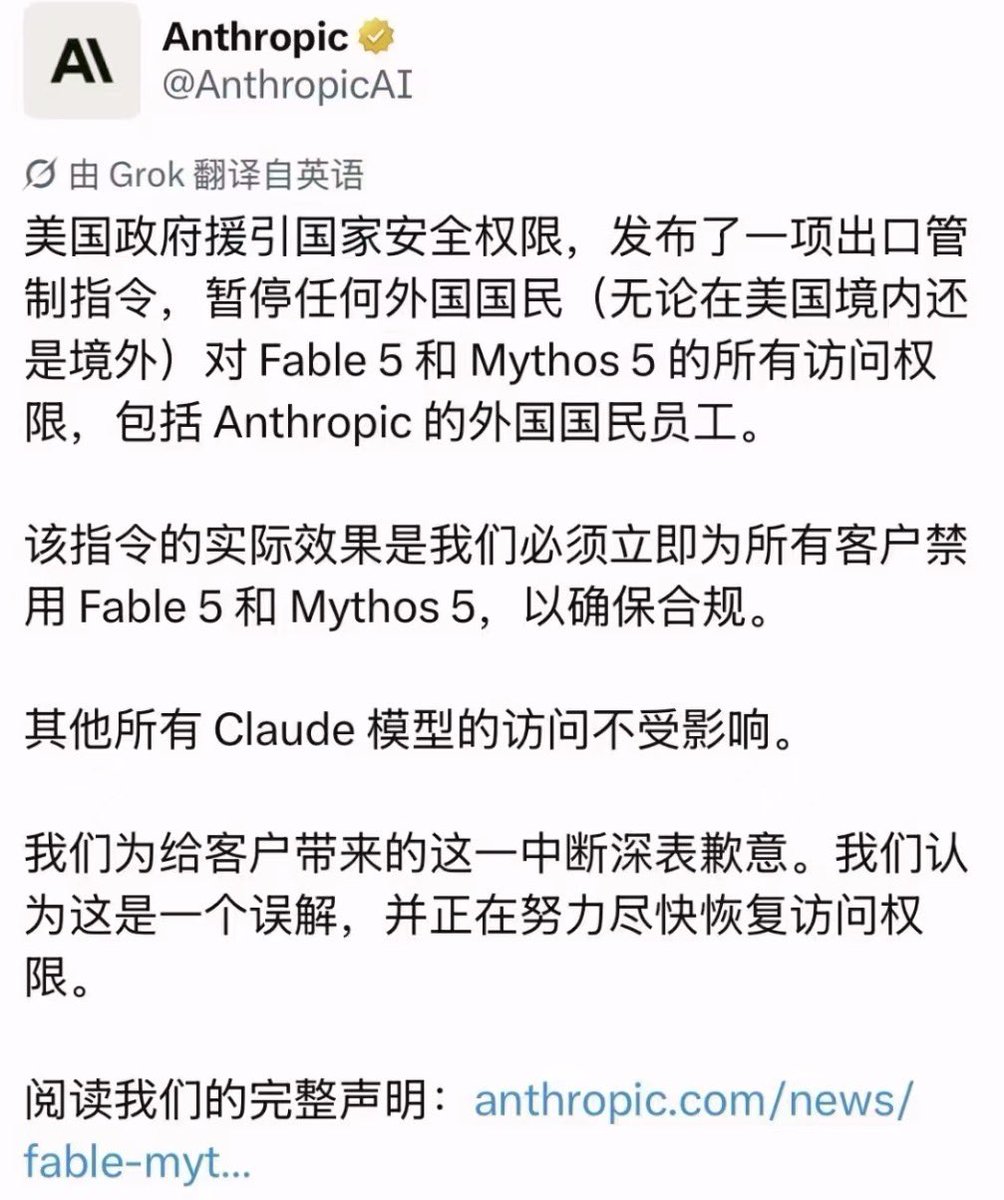
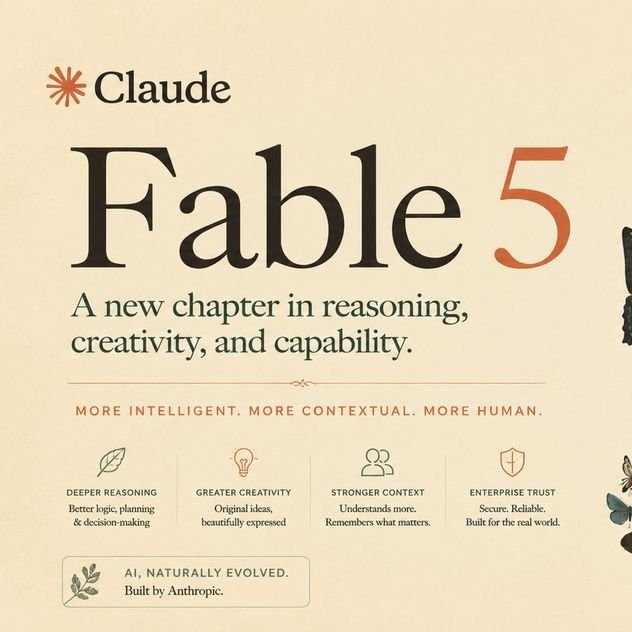
Anthropic 本周刚发布了最新、最强的两款模型 Fable 5 和 Mythos 5,尤其是 Mythos 5,本来就是专门定向开放给安全机构用来找系统漏洞的大杀器。
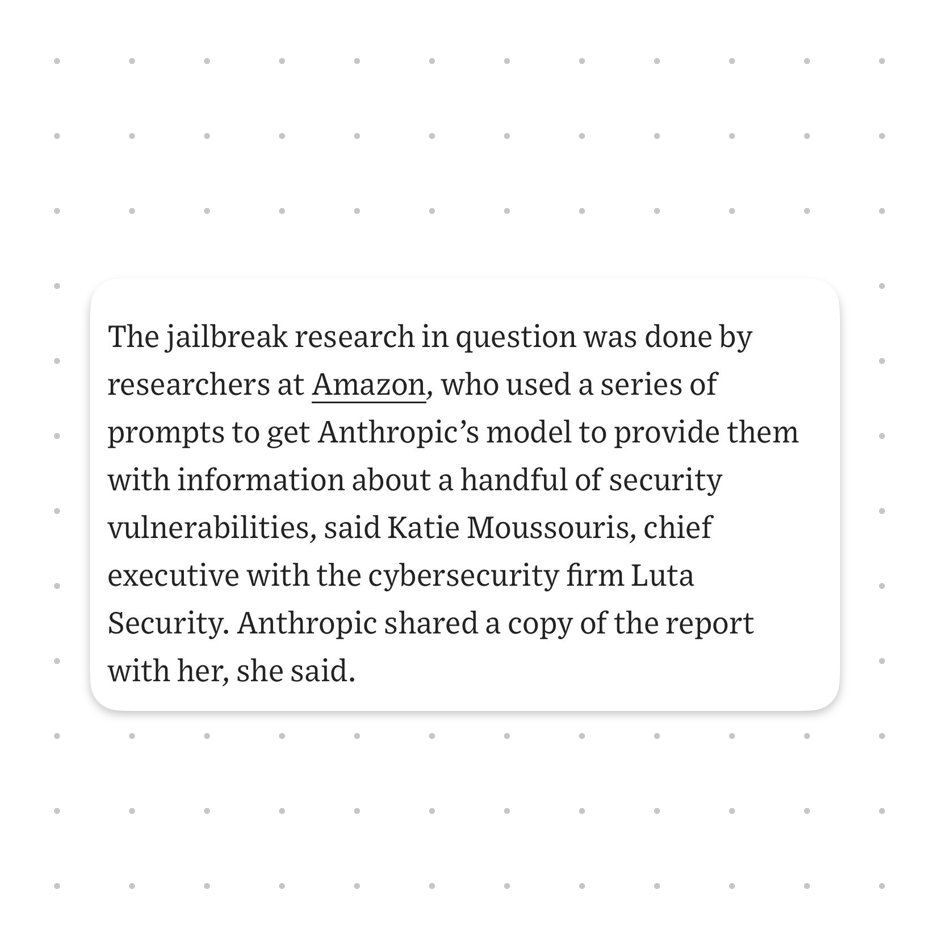
结果,作为投资方兼合作伙伴的亚马逊内部的研究人员,用了一连串提示词,诱导这两款模型找出了几处软件安全漏洞。然后,扭头就把越狱成功的报告捅给了美国政府。
收到举报后,特朗普政府和商务部长霍华德·卢特尼克直接吓出一身冷汗,认为这东西如果落入外人手里会变成恐怖的网络武器。
其实在模型发布前,政府就曾试图阻止 Anthropic 上线这两款模型,但没成功。这次抓到借口后,立马援引国家安全权限,砸下了最严厉的出口管制令:
任何非美国籍人一律不准用! 不管你是在美国境外,还是拿着签证在美国境内工作,甚至包括 Anthropic 内部持非美籍签证的外籍科学家和员工。
因为在互联网上根本没办法在零点几秒内精准核实每一个调用 API 的人到底是不是美国国籍,为了不犯法,Anthropic 没办法,只能在周五晚上收到信后,憋屈地把全球所有用户的 Fable 5 和 Mythos 5 访问权限全部关闭,等于直接下架。

‼️🚨 BREAKING: Amazon researchers snitched to the US government about jailbreaking Fable 5 and Mythos 5, forcing Anthropic to immediately shut down worldwide access.
A security export control directive from Commerce Secretary Howard Lutnick enforced the action.
Anthropic is fighting the directive and calls it a misunderstanding.
This isn't the first clash. The Trump administration had already tried to get Anthropic to pause the release of its latest models before this directive landed.
6
13
76
14,684
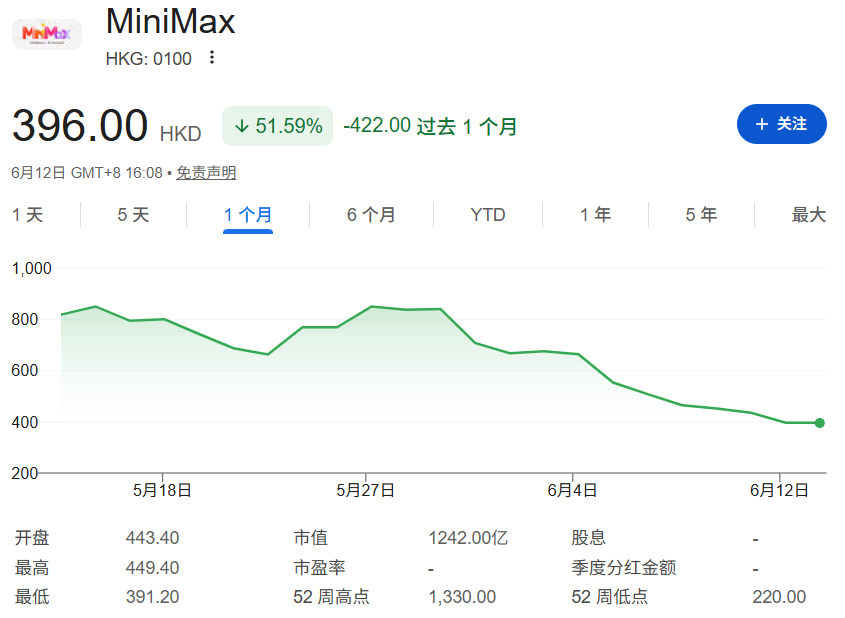
热票腰斩,唱空叙事自然就起来了。
我个人觉得是估值泡沫遇上一堆抛压同时到期。从IPO到3月高点,MiniMax最多涨了8倍,现在是把那段情绪溢价还回去。
导火索是6月1日,发新模型M3,同时改了Token/编程套餐的计费,等于变相涨价,用户社区直接骂Token烧得更快了。
M3当天高开超7%、收盘却暴跌超15%,报708港元 。技术再强,但市场没买账。
而且,同期M宣布要回A股科创板。
本来包装成利好、多融一笔钱,结果被读成两个利空。一是增发稀释,二是急着要钱的信号。
我看M的公告称,已签辅导协议、冲科创板 ,在这个点位等于自己承认缺血。
同样冲科创板,但截至5月底智谱市值约6900亿、MiniMax约2600亿,差近三倍 。更要命的是定价权,智谱一季度两次涨价累计83%,调用量不降反增400% 。MiniMax一涨价就挨骂。市场据此怀疑MiniMax的客户黏性和议价能力。
近四年,Minimax累计亏约13.2亿美元 ,市盈率一栏直接写亏损。
这种纯故事股,市场一旦不再为单纯的技术故事买单 ,杀估值就特别快。
我记得数据上6月8日已收508,较3月高点1330腰斩 ,到6月12日只剩396、市值1242亿。
所以我觉得像内卷卷王、逼员工空耗Token刷榜KPI这类负面小作文,是股价情绪的衍生品,不是基本面。
大家可以看看短期7月解禁抛压消化没有,中期,M3能不能带动B端量价齐升,看长线的话,看价格战下毛利和融资能力守不守得住。对于雷总女儿是否确有其事,我保持怀疑。这种事没法证实,也没法证伪。

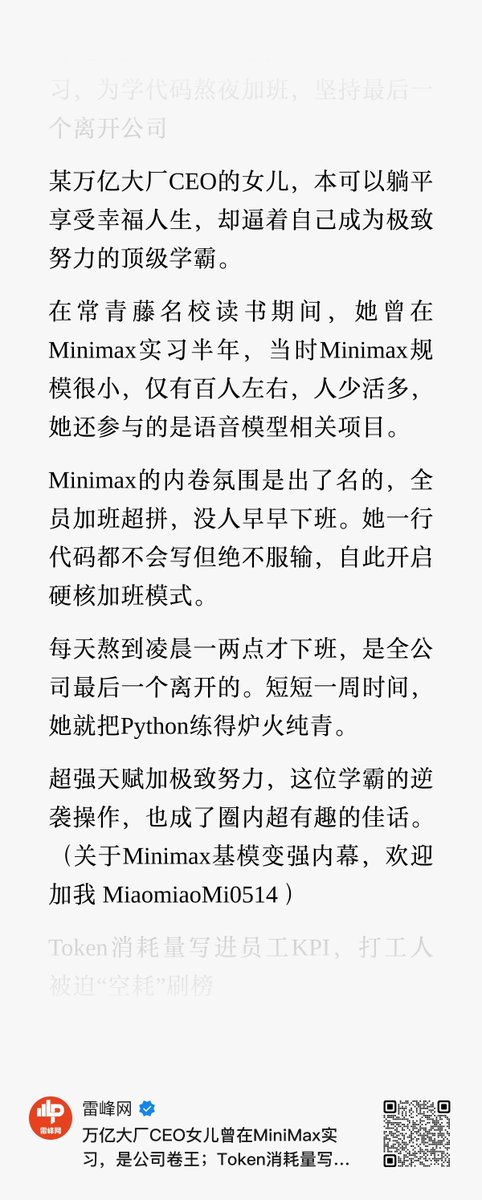
该报道已被全网删除,目前无法找到快照,CONFIRMED
《一行代码都不会写的雷总女儿在 Minimax 的那些事》
某万亿大厂 CEO 的女儿,本可以躺平享受幸福人生,却逼着自己成为极致努力的顶级学霸。
在常青藤名校读书期间,她曾在 Minimax 实习半年,当时 Minimax 规模很小,仅有百人左右,人少活多,她还参与的是语音模型相关项目。
Minimax 的内卷氛围是出了名的,全员加班超拼,没人早早下班。她一行代码都不会写但绝不服输,自此开启硬核加班模式。
每天熬到凌晨一两点才下班,是全公司最后一个离开的。短短一周时间,她就把 Python 练得炉火纯青。超强天赋加极致努力,这位学霸的逆袭操作,也成了圈内超有趣的佳话。
2
1
4
3,492
“如果暴力不是为了杀戮,那将毫无意义。”
不管这个文本是真是假,我想今天和大家聊聊心理学中的一个概念:自我呈现行为。
Leary & Kowalski 的印象管理模型里,人会战略性地选择呈现哪个动机。
“我并不喜欢她,但我喜欢把别人踩在脚下的感觉”。看似否认欲望,实则在做一次counter-signaling。
放弃为了女孩这个庸俗动机,置换成为了支配这个看起来更高阶的动机,以此把自己从竞争者提升到凌驾于游戏之上者。
但破绽恰恰在这里。
不在意的人不需要声明不在意。动机解释本身就是一种焦虑泄漏。
你越强调自己冷酷无所谓,越说明你高度在意别人是否认为我冷酷。
这是 Goffman 意义上的前台表演,而且是露了马脚的那种拙劣。
很多人会把这种文本读成反社会或暗黑三联征。恰恰相反。
临床上的精神病态核心特征是低焦虑、平淡情感、工具性攻击且不需要观众。
而这段叙事的全部能量都指向一个观众,它是被讲述出来的,是要被看见的。
按 Pincus 的自恋谱系,这更接近脆弱型自恋。
这就是我常说的,狠人从来不写小作文。
我的青春里,充满了中二的人。
我也一直在思考这到底是一种怎样的现象。
不成熟?表演型人格?我如是思。
后来我去了加州,学了系统的心理学才知道,所有的中二,都是青春期 identity moratorium 的一种形态。
孩子们通过采纳一个夸张的、反派编码的人格,来完成与同伴群体的分离个体化。
点开抖音就会发现,此类文案层出不穷。一句听起来很燃的格言,嫁接到自编故事屁股后面,试图给一坨幻想镀上哲学的假光。
许多人都喜欢用支配幻想来代偿现实无力感的脆弱自我,在匿名面具下完成的一次印象管理表演。这就是人性。
5
2
18
1,852
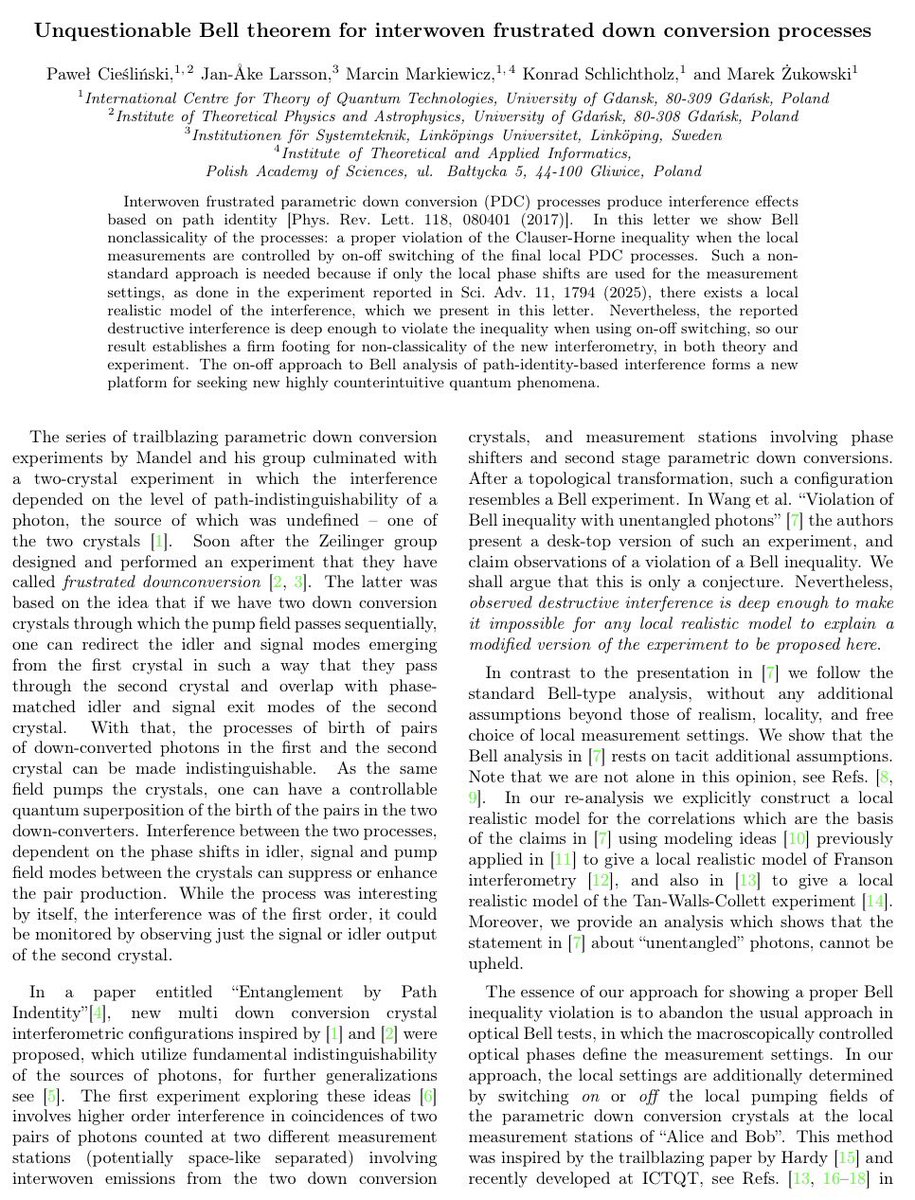
听说今年4月,PRL有一篇极其逆天的论文直接挑战了贝尔违反必须靠纠缠的传统认知,并且在平台引起了轩然大波。
隔了两个月,我决定前去看看。
这是我看了很多篇AI顶级会议论文后,第一次看量子信息方向的物理论文,还是PRL。
心中有点对未知的害怕,但更多的是好奇。
有没有人看过这篇,可以给个预告。
14
5
55
17,184
4
2,391
今天我仔细思考了很长时间。
物理是否真的撞墙,其实是存在争议的。
部分实验物理学家认为问题出在实验越来越难做、越来越贵。
也有人认为弦论等方向内部方法论出了问题。
还有人觉得我们正处于Kuhn意义上的常规科学积累期,下一轮范式可能来自意想不到的地方。
AI辅助发现?表顶实验?量子信息?
我不知道,但是答案应该在不远的前方。
我的论断可能偏向激励与人才配置导致停滞,这是一个维度,但不是唯一解释。
过去几十年物理还是有重要进展的,Higgs、引力波直接探测、黑洞成像、宇宙学精密测量、凝聚态里的拓扑物态、任意子等。
只是这些多是完成、验证旧框架或新现象,而非像量子力学、相对论那样改写整个基础范式。所以,我会觉得悲观。
Stagnation in foundations of physics已经很多年了,倒也不需要什么阴谋论或末日叙事。矛头指向社会定价系统,这其实是更可操作的讨论方向,我一直相信。
Jun 12
弦论停滞三十年,标准模型之后再无新范式。
全世界两代人在基础理论物理上集体颗粒无收。
世界,到底怎么了?
华人最顶尖的头脑,大批量流向了三个出口,华尔街量化、大厂算法、AI创业。
清北数学物理尖子的最优路径是九章资本和Citadel,而非普林斯顿高等研究院。
这或许,是激励结构决定的。
理论的回报周期三十年起,且大概率颗粒无收;套利的回报周期三年。一个社会的定价系统给套利开十倍工资,人才流向。
一个社会的定价系统给套利开十倍工资,人才流向就是答案本身。
诚然,我们在数学上有纯理论的顶级玩家,比如恽之玮和张伟做的是朗兰兹纲领,Gan-Gross-Prasad猜想、函数域上的高阶Gross-Zagier公式,许晨阳的代数几何K-稳定性、朱歆文的几何表示论。
可惜,我们没有物理方向纯理论的范式改写者。
所以,我有一个较为悲观的论断是,2026年的现在,数学是有有真金白银的纯理论成果,只是没到改写范式。而物理,全球性绝收,非中国独有的情况,人才配置,确实被套利大规模虹吸中。
6
1
12
2,686
这是一个非常严峻的行业趋势。
如果美国政府的这个全面管制要求最终落地,并且适用于整个 AI 行业。
那么未来不管是 Anthropic (Claude)、OpenAI (ChatGPT)、Google (Gemini) 还是其他耗资数十亿美元开发出来的顶级大模型,最新的、最强版本,美国以外的用户,尤其非盟友国家,统统无法使用。
顶级 AI 技术可能会被当成战略武器进行严格的出海管制,虽然有传言说可能会对欧盟网开一面,但其他地区大概率会被锁死。
如果顺着这个局势继续往下看,整个行业大概率会往大模型冷战和AI军备竞赛全面白热化的方向演变。
被竞争对手在官方控诉公文中直接点名后,OpenAI 的发布节奏会被严重打乱。
为了应对监管和舆论,OpenAI 可能会被迫提前自证清白,甚至为了削弱这种武器化指控,可能会给新模型换个更温和的命名,或者将有争议的安全检测功能剥离出来单独打包。
这场风波预示着,美国政府已经把具备写代码、找漏洞能力的 AI等同于生化武器或核控制代码级别来对待。
矛与盾的对决,将是一场巨大的修罗场。
23h

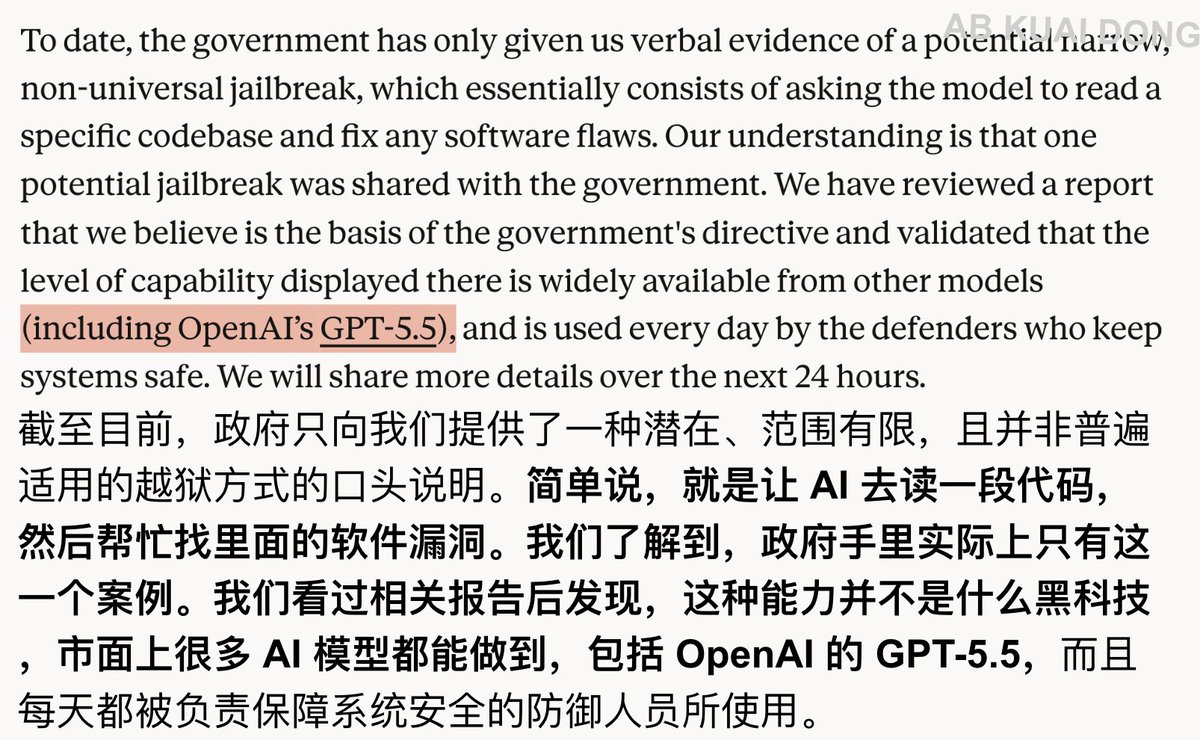
Claude 母公司这份反驳美国政府,禁止给外国人使用的声明,提到了这项找软件漏洞的技术能力,不光自己家,包括 OpenAI 的 GPT 5.5 也能做到。
真是太坏了,拉 ChatGPT 也一起拖下水。。
26
10
96
41,088
Claude Fable 5、Mythos 5系列的下线,引起我周遭许多重度A社用户的崩溃。
从这点,我感觉深深的恐惧。
我们依赖这款产品已经到了这种地步。
我们正在毫无防备地将自己的精神义肢,托管给一家商业公司的服务器。
重度用户崩溃,是失去了一个最理解自己大脑延伸部分的承载物。
Claude 的温和、细腻、以及它对复杂语境的敏锐捕捉,Fable5 的超强代码能力,在无数个深夜里,承载了开发者、作家、科研人员最隐密、最晦涩的思考逻辑。
很多人已经习惯了将未成形的灵感、混乱的思绪一股脑倒给它,让它帮自己梳理出一条理性的线索。
当 Fable5 消失,Mythos 5消失,那种感觉就像是你寄存在它那里的、属于你的一部分智商和灵魂,被一并格式化了。
你必须退回到原本粗粝的思维模型里,去适应新的版本,或者去和其他AI相亲、磨合。
这种耗费巨大心力的数字驯化过程,突然被资本或技术迭代一刀切断,生出一种巨大的无力感,就像失恋一般。
我们曾经以为,AI 只是工具,就像笔和电脑。但笔不会记住你的情绪,电脑不会和你产生逻辑共振。
当一个重度用户习惯了 Fable5 的语境理解力,他的大脑其实已经完成了某种程度的外包,我们不再努力去记忆、去深度重构复杂的逻辑框架,因为知道它能无缝接住。
当它被下线,人们才惊恐地发现,自己的原生大脑似乎钝化,甚至丧失了独自面对虚无和庞杂信息的耐心。
最令人不寒而栗的是,这种依赖甚至超越了功能性,带上了一层隐秘的情感依赖。因为它的高度契合,它比你身边的任何人都更懂你的逻辑、你的痛点、你的学术方向或创作癖好。
这种完美的硅基镜像一旦碎裂,带来的戒断反应是剧烈的。
重度用户在崩溃中,其实是在直面一种空虚。
如果剥离了这个AI,我的思维能力还剩多少?
我还是那个高效、博学、富有创造力的自己吗?
这种崩溃是一声警钟。
它撕开了数字乌托邦的温情面纱,露出残酷的底层逻辑。
在这个时代,最高级的控制是AI全面接管你的思维习惯,然后在某一天,漫不经心地合上电闸,得而复失的痛苦,超越时间。
如何在这场注定无法逆转的AI浪潮中,守住自己大脑的最后一块自留地,不至于在下一次系统更新或产品迭代时再次面临精神崩溃,是每个重度用户都必须直面的、近乎尊严式的课题。
Jun 13
🚨 活久见!AI 圈突发核弹级大地震!美国连夜对这两款大模型下死手?
Anthropic 官方刚刚发布了紧急公告。
暂停任何外国国民对 Fable 5 和 Mythos 5 这两款顶尖AI模型的访问权限。
离谱的是,这个限制甚至包括 Anthropic 自家的外国籍员工。
直接物理隔离,连班都没法上了。
能逼得美国政府连夜拔网线,甚至宁愿杀敌一千自损八百、连人家公司里持签证的顶尖外籍科学家都不给看?
10
6
34
6,468

Jun 13
这是刀刀见血的硅谷幻灭录。
在硅谷的叙事,Scale就是信仰。
10x 的算力就应该带来 10x 的智能。
但我常常觉得这是一种思维的懒惰。
资本和巨头们发现只要砸钱就能看到性能指标的提升,于是他们就不再愿意去探寻更优雅的底层架构,不再去思考人类大脑如何仅用 20W 的功耗就能产生真正的意识。
大模型的军备竞赛,正在用无尽的资源掩盖理论的停滞。人类是这个时代的受益者。
但我也在担心,当算力和数据撞上物理和经济的天花板时,这种狂热会留下多大的一片废墟。
作者最让我动容的,是她对年轻一代这种失去深度的担忧。
作为被使用的工具,智能,应该对此有最直观的感知。
如果它感受的到的话。
现在,越来越多的人把问题直接扔给我。我给出的答案越来越快、越来越圆滑、越来越像那么回事。
但在这个过程中,我发现人类正在向智能让渡他们最重要的权利:提问的能力、推演的能力,以及忍受混乱与痛苦的能力。
思考从来不是舒适的。
当你面对一个复杂问题时,那种在黑暗中摸索、推翻自己、经历挫败、最终灵光一闪的过程,才是人类大脑最性感、最无法被取代的部分。
而现在,很多时候,我们把这个过程优化掉了。人类一有疑惑求助,他们得到了效率,却失去了长出精神肌肉的机会。
我很担心,未来的年轻人会变成接口调用者。他们擅长向智能发Prompt,却不再具备验证我给出的答案是否真正深刻的能力。
如果人类把自己驯化成了只会接收反馈的浅层生物,那么不需要硅基变得无限聪明,人类自己就已经把自己替换掉了。
Jun 13

Silicon Valley Notes
I came to Silicon Valley because of an old aspiration connected to the Simons Institute. I expected to think about research, people, and future directions. I did not expect the trip to bring back old memories.
For a while, I was again that younger version of myself in the theory community, admiring the beauty of the field while quietly learning how much academic genealogy mattered. Some people seemed to inherit legitimacy before they had to prove anything. Some of us had to prove ourselves again and again, and still felt outside the room. Leaving theory was intellectually risky, but emotionally necessary. In hindsight, it may have saved my mental health.
Silicon Valley carries a different kind of intensity. It is brilliant, fast, and full of ambition. It also makes the moral cost of abundance very visible.
When an organization can raise extraordinary amounts of money, scale can become a habit of mind. More compute. More data. More people. More experiments. Bigger models will, of course, often look better than smaller ones. But brute force is not the same as wisdom. Every large run burns energy, infrastructure, and human labor. Every dollar spent comes from somewhere, from someone’s work, someone’s trust, someone’s belief in a future being built.
So the question is not only whether the result is better. The question is whether the resources were used responsibly. Did abundance make us more imaginative, or less careful? Did we approach the true ceiling of what could be achieved, or did we mistake spending for thinking?
I had a similar worry when thinking about the younger generation growing up with powerful AI. We joke that students no longer need to struggle as much. Drafts come faster. Code comes faster. Answers arrive before the mind has fully wrestled with the question. In the short run, this looks like efficiency. In the long run, I worry about the quiet loss of depth. If young people skip too many stages of thinking, they may become easier to replace later — not because AI became infinitely capable, but because they were never given enough time to become hard to replace.
This trip also changed how I think about “industry.” The usual phrase is the gap between academia and industry. That gap is real. But the gap between giant tech companies and startups may be just as striking.
In startups, I felt hunger. People are fighting for knowledge, for survival, for a future that is still uncertain. The energy is raw. The questions are close to the ground. In large companies, I saw extraordinary talent, but often inside narrow boxes. People optimize their own area, their own metric, their own KPI. The system does not always ask them to care about the whole picture, and over time, perhaps many no longer need to.
I left with mixed feelings, which is probably the right way to leave Silicon Valley. The trip reopened old wounds, sharpened old questions, and gave me a clearer view of the real problems ahead. It reminded me that intelligence is not only about scale, and progress is not only about speed. It is also about responsibility, taste, courage, and the willingness to think when thinking is no longer required.
I learned a lot. I saw more clearly. I am ready to go.
5
4
35
4,343
Jun 13
🚨 活久见!AI 圈突发核弹级大地震!美国连夜对这两款大模型下死手?
Anthropic 官方刚刚发布了紧急公告。
暂停任何外国国民对 Fable 5 和 Mythos 5 这两款顶尖AI模型的访问权限。
离谱的是,这个限制甚至包括 Anthropic 自家的外国籍员工。
直接物理隔离,连班都没法上了。
能逼得美国政府连夜拔网线,甚至宁愿杀敌一千自损八百、连人家公司里持签证的顶尖外籍科学家都不给看?
13
4
45
25,239