
Errors make you stronger but sometimes they kill you.
Joined May 2016
- Tweets 1,162
- Following 166
- Followers 53
- Likes 408
27 Photos and videos
















Apr 23
MSC Tanker ?!?!
@ed_fin
Apr 22

Video of IRGC gun boat boarding a tanker today in the Strait of Hormuz and illegally seizing it.
1
36
Viktor retweeted

Mar 16
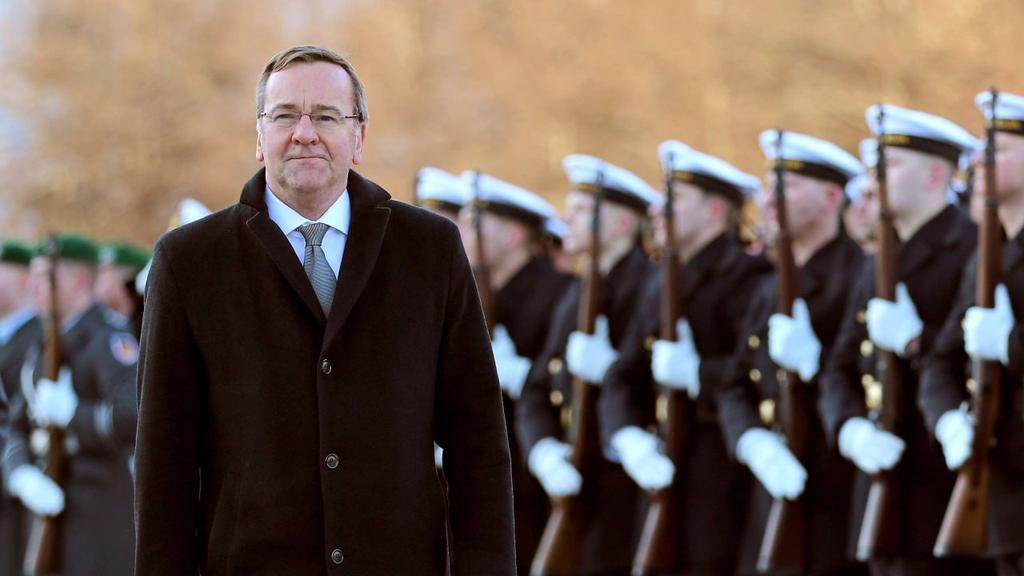
Germany rejects Trump’s proposal to participate in the Strait of Hormuz operation.
German Defense Minister Boris Pistorius:
"What does Trump expect a handful of European frigates to do that the powerful US Navy cannot? This is not our war, and we didn't start it."
196
1,593
5,487
408,816
14 Nov 2025
THIS is one of the key problems of modern education systems.
We train our kids to solve tests, not life.
14 Nov 2025

Testing reveals speed, not depth. Real life is about depth.
RIP Jim Simons
1
1
1
254
25 Sep 2025
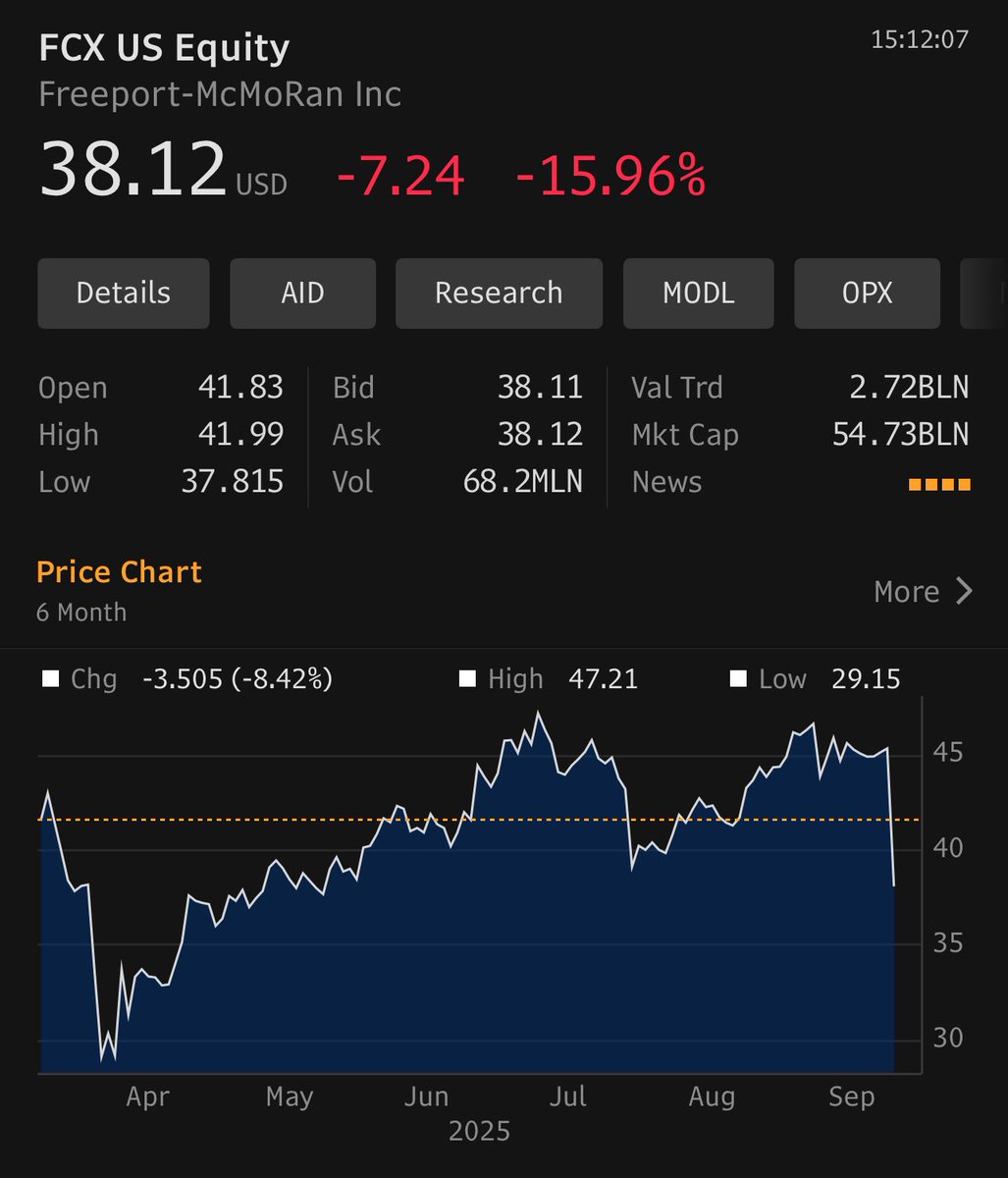
Grasberg makes $FCX go. The move seems understated,
24 Sep 2025

Freeport has declared force majeure at Grasberg — and with good reason.
This will shake both copper and gold balances. Let me explain why.
Grasberg is a giant. One of the largest mines on earth, producing ~1.7bn pounds of copper (≈2% of global supply) and ~1.6Moz of gold pa (≈1.5% of global supply).
Think of it as a vast underground city: 28,000 employees, 250 km of tunnels across dozens of levels. Each year, 35–40 km of new tunnels are added — roughly the length of Switzerland’s Gotthard Base Tunnel (57 km), the world’s longest rail tunnel.
At its heart lies the Grasberg Block Cave (GBC), which accounts for ~70% of reserves and output. Other sections include Big Gossan and Deep MLZ.
On Sept 8, disaster struck: ~800,000 tons of wet material suddenly rushed in, flooding multiple underground levels. The mud hit GBC directly — the very core of Grasberg’s production.
A catastrophic failure. How was this even possible?
Block caving itself may become central to the story. Out of more than 12,000 active mines worldwide, only ~20 have ever used block caving — a handful do so today - El Teniente in Chile; Oyu Tolgoi in the desert in Mongolia; Cadia East & Northparks, both Australia; Palabora, SA; who else? That’s <0.1% of all mines.
None do so or did in the past within a similar rainy climate as Grasberg does.
Block Caving is an extremely rarely applied mining method, reserved for very large, low-grade underground ore bodies which themselves are exceptionally rare. Most mining is open-pit, stoping, or cut-and-fill.
Block Caving has economic appeal — low cost per ton — but the geotechnical risks are likely immense. Once caving starts, the process is essentially an engineered collapse of the mountain. What could possibly go wrong?
That’s why this accident isn’t just a local disaster IMHO. It could become a case study for the entire mining method. Perhaps it wasn’t well understood how block caving behaves under Indonesia’s heavy rainfall and complex geology? I don’t know — but I wouldn’t be surprised if that proves decisive.
My view? By year-end, Freeport will be fortunate just to understand the mechanics of this accident. Until then, production forecasts are pure guesswork.
Such a failure should (a) have been impossible, and (b) means operations can only restart once it’s crystal clear why it happened and how it can be prevented from happening again.
Analysts say full recovery is likely by 2027. That’s total nonsense. Nobody really knows. A true “known unknown.”
What is known: any company with less strength and brainpower than Freeport McMoRan would likely go bankrupt from this. Think Victoria Gold — a minor heap leach pad slide sank it within weeks.
Mining companies get hit twice: revenues vanish while capital costs to fix the damage soar, and regulators delay re-issuing permits until safety is proven. And this accident involves death. It’s a total nightmare.
My view? This is no quick fix. With infrastructure damaged, safety paramount, at least two confirmed dead and five still missing, investigations ongoing, potential class actions looming, and permitting hurdles ahead, the road back for Grasberg will be long and uncertain.
The only good news: Grasberg adds too much to the GDP of Indonesia to not fix this nightmare.
1
242
Viktor retweeted

11 Sep 2025
SURVEY: 34% OF STUDENTS SAY VIOLENCE MAY BE JUSTIFIED TO STOP SPEECH
A FIRE survey of 70,000 college students found that 34% believe violence can be acceptable to stop campus speakers—up from 24% in 2021.
Of those, 19% said it’s rarely acceptable, 13% sometimes, and 2% always. Meanwhile, 66% said violence is never acceptable.
90
73
463
131,719
25 Jun 2025
Includes special features:
Submersible if loaded with ICBMs.
Sometime sinks.
Smoking accidents.
Prone to disconnect Finland from the WWW.
25 Jun 2025

First Russian-built ice-class LNG tanker to launch this year, Ifx reports reuters.com/business/energy/…
1
46
13 Jun 2025
Russian airspace closed.
Iranian airspace closed.
How much does this add to East Asia routes?

LUFTHANSA:
DUE TO CURRENT SITUATION FLIGHTS TO TEL AVIV CANCELLED UNTIL JULY 31
FLIGHTS TO TEHRAN, AMMAN, ERBIL AND BEIRUT ALSO CANCELLED
WILL ALSO CONTINUE TO REFRAIN FROM USING THE AIRSPACE OF THE AFFECTED COUNTRIES UNTIL FURTHER NOTICE
1
39
9 Jun 2025
They should definitely stop the EU ripping them off ...
💡 Lithuania: Merchandise trade deficit rises by 68.4% y/y to EUR 575.0mn in April
- @EmergingMWatch on PiQSuite.com
Full Story → m.piqsuite.com/emergingMarke…
37
9 Jun 2025
Looks like a trend...
9 Jun 2025

For those who are going to say that last night's air raid by Russia was this time the definite retaliation in terms of missiles this is smaller than the June 6th attack. The only thing that made this attack larger was more drones.
Russia appears to be compensating for a shortage of available long range missile platforms, particularly strategic bombers, by dramatically scaling up drone usage. This likely reflects both airframe attrition and ongoing logistical bottlenecks in munitions manufacturing or allocation. Due to these operational constraints on its bomber fleet and available missile inventory, Russia is forcing a shift toward quantity over quality aerial attacks with less effective OWA-UAVs.
June 9 attacks
479x OW-UAVS
4x Kh-47 M2 Kinzhal
10x Kh-101
2x Kh-31P
1x Kh-35
3x Kh-22
24x Kalibr not reported by Ukrainian authorities after the attack but noted before the attack 3 ships.
Comparison to the previous attack which the Russian ministry of defense says was the retaliation.
June 6 Attacks
407x OWA-UAVs
6x Iskander-M/KN-23
2x Iskander-K
36x Kh-101
1x Kh-31P
28x Kalibr not reported by Ukrainian authorities after the attack but noted before the attack 4 ships.
Back to the June 9th strike
For an attack that was carried out by
5x TU-95 and 4x TU-22 these aircraft were practically empty.
Claimed to be 5x TU-95 bombers either three of them were empty or they only had 2.
Claimed to be 4x Tu-22M3 bombers either 2 of them were empty or only employed 2.
4x MiG-31K
1x Su-34 or Su-30SM
Kh-35 1x Su-34 or Su-24M
3x Kalibr loaded ship
479x OW-UAVS launched by ground-based drone teams
14
5 Jun 2025
OK , deficit fixed. What a great deal !
Move on people, the next show will start at 21:00 EST.
5 Jun 2025

US TRADE BALANCE ACTUAL -61.6B (FORECAST -66B, PREVIOUS -140.5B)
22
5 Jun 2025
Russia can bomb the Ukrainian capital, the parliament, the President...
But god forbid Ukraine blows up some bombers in the middle of nowhere. Oh no!
5 Jun 2025
One reason Ukraine's attack concerned the White House was that it targeted long-range bombers that can carry nuclear weapons and are a key part of Russia's nuclear deterrence.
"This is a very dangerous point," the U.S. official said
41


5 May 2025
And we were told it would be very simple...
🇺🇸✈️💵 Trump Administration Offers $1,000 Stipend for Voluntary Self-Deportation
🔹 Summary:
The Trump administration announced a new policy offering migrants a $1,000 stipend and travel assistance if they voluntarily leave the U.S., aiming to cut deportation costs.
The initiative is framed as a safer, more economical alternative to formal deportation, with officials highlighting potential benefits for future legal re-entry.
🔹 Key Points:
• The average cost of formal deportation is about $17,000, far exceeding the stipend plan.
• 152,000 people have been deported since Trump’s return to office, fewer than under Biden.
• The CBP Home app was relaunched to streamline voluntary departure processes.
• DHS says voluntary departures could improve chances of legal return, though no program details were provided.
• The policy reflects ongoing efforts to tighten immigration enforcement while reducing operational costs.
Tickers Of Interest: $USD

14
3 Apr 2025
Ireland back into the UK ?
🇪🇺🤝💻 Ireland Opposes EU Retaliation Targeting U.S. Digital Services Amid Tariff Dispute
Full Story → m.piqsuite.com/reuters/retal…
31
Viktor retweeted

28 Feb 2025
big day for dictators with territorial ambitions

213
2,803
18,134
687,991
Viktor retweeted

14 Feb 2025
Ukraine received weapons from the USA worth $77 billion. That’s it. Even this amount should be recalculated because we received old weapons at the price of new ones. But guess what? It’s not even close to what the USA took from us under the Budapest Memorandum. Call me an ungrateful bitch as much as you want, but the USA must help us because without them forcing us to sign this Budapest Memorandum, my people wouldn’t be killed by Russia and we would have tools to defend our sovereignty…
791
1,856
8,688
366,091
Viktor retweeted

12 Feb 2025
Very interesting
It is really the General Secretary of Politburo level of power. Today we sort of forget about that, but the job of General Secretary was like 90% about the HR: who gets promoted, demoted or purged
12 Feb 2025

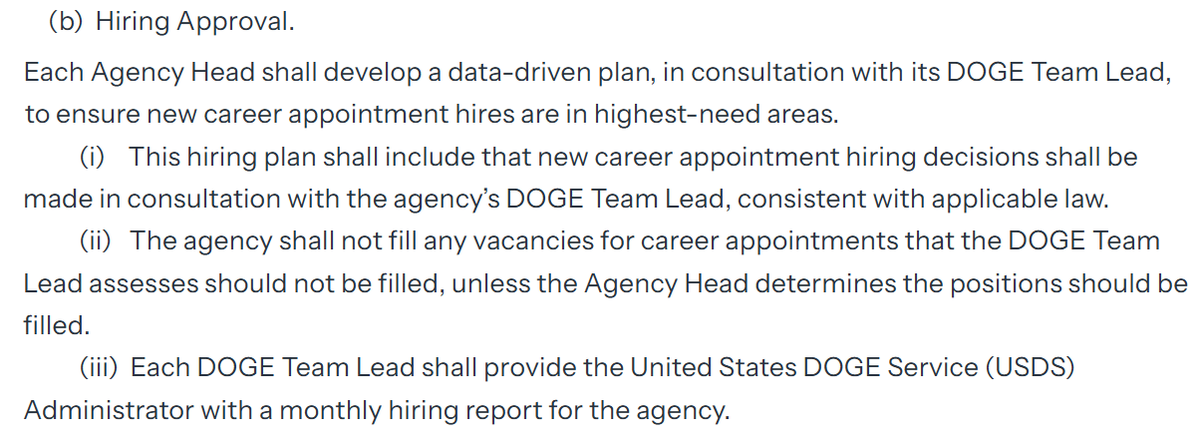
The second part is meatier.
New hires have to be approved by newly-installed DOGE Team Leads in each agency. These Team Leads will report what goes on in the agency they're assigned to on a monthly basis.
But that's not even the big part yet.
8
56
304
46,887
Viktor retweeted

28 Oct 2023
The post seen in this photo contains blatant lies about the atrocities committed by Hamas on October 7. It has absolutely no basis in Haaretz’s reporting, then or since haaretz.com

886
2,130
8,760
2,630,030
13 Oct 2023
No worries! More waiters will compensate the loss of banking jobs.
🚩 PNC FINANCIAL SERVICES TO CUT JOBS AFTER QUARTERLY PROFIT DROP
Full Story → PiQSuite.com/reuters/pnc-fin…
PNC Financial Services Group said on Friday it would reduce its workforce by about 4% as part of its cost reduction plans after it posted a drop in profit in the third quarter.

1
70