Senior Lecturer @OUPolitics. SFHEA. Russian foreign&security policy, soft power, narrative, ID, religion&disinfo, conspiracies. Member @UKYoungAcademy. Mum of 3
Joined July 2017
- Tweets 2,709
- Following 2,712
- Followers 2,074
- Likes 7,156
111 Photos and videos



Pinned Tweet

28 Nov 2025
Funded collaborative PhD opportunity on contested memory with me in @OUPolitics and Arthur Dudney at Arcadia:
Deadline 7th Jan,link below, please share!
1
6
2
628
Precious N Chatterje-Doody retweeted

May 18
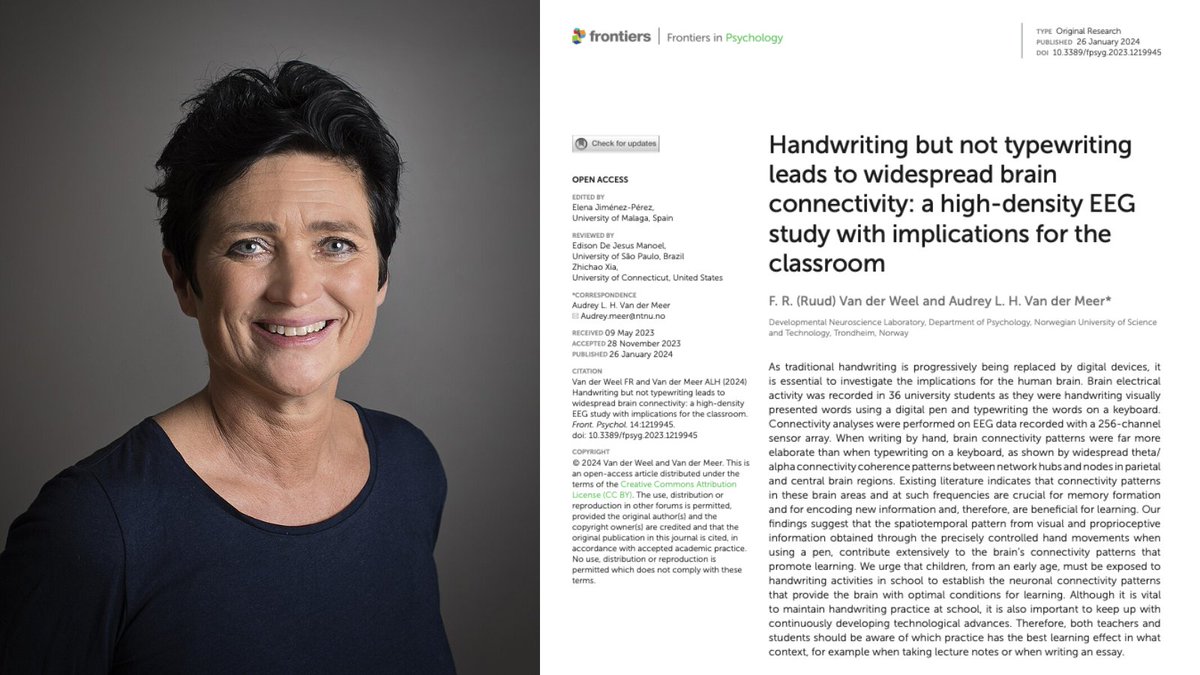
A Norwegian neuroscientist spent 20 years proving that the act of writing by hand changes the human brain in ways typing physically cannot, and almost nobody outside her field has read the paper.
Her name is Audrey van der Meer.
She runs a brain research lab in Trondheim, and the paper that closed the argument was published in 2024 in a journal called Frontiers in Psychology. The finding is brutal enough that it should have changed every classroom on Earth.
The experiment was simple. She recruited 36 university students and put each one in a cap with 256 sensors pressed against their scalp to record brain activity. Words flashed on a screen one at a time.
Sometimes the students wrote the word by hand on a touchscreen using a digital pen, and sometimes they typed the same word on a keyboard. Every neural response was recorded for the full five seconds the word stayed on screen.
Then her team looked at the part of the data most researchers had ignored for years, which is how different parts of the brain were communicating with each other during the task.
When the students wrote by hand, the brain lit up everywhere at once.
The regions responsible for memory, sensory integration, and the encoding of new information were all firing together in a coordinated pattern that spread across the entire cortex. The whole network was awake and connected.
When the same students typed the same word, that pattern collapsed almost completely.
Most of the brain went quiet, and the connections between regions that had been alive seconds earlier were nowhere to be found on the EEG.
Same word, same brain, same person, and two completely different neurological events.
The reason turned out to be something nobody had really paid attention to before her work. Writing by hand is not one motion but a sequence of thousands of tiny micro-movements coordinated with your eyes in real time, where each letter is a different shape that requires the brain to solve a slightly different spatial problem.
Your fingers, wrist, vision, and the parts of your brain that track position in space are all working together to produce one letter, then the next, then the next.
Typing throws all of that away. Every key on a keyboard requires the exact same finger motion regardless of which letter you are pressing, which means the brain has almost nothing to integrate and almost no problem to solve.
Van der Meer said it plainly in her interviews.
Pressing the same key with the same finger over and over does not stimulate the brain in any meaningful way, and she pointed out something that should scare every parent who handed their kid an iPad.
Children who learn to read and write on tablets often cannot tell letters like b and d apart, because they have never physically felt with their bodies what it takes to actually produce those letters on a page.
A decade before her, two researchers at Princeton ran the same fight using a completely different method and ended up at the same answer. Pam Mueller and Daniel Oppenheimer tested 327 students across three experiments, where half took notes on laptops with the internet disabled and half took notes by hand, before testing everyone on what they actually understood from the lectures they had watched.
The handwriting group won by a wide margin on every question that required real understanding rather than surface recall.
The reason was hiding in the transcripts of what the two groups had actually written down.
The laptop students typed almost word for word, capturing more total content but processing almost none of it as they went, while the handwriting students physically could not write fast enough to transcribe a lecture in real time, which forced them to listen carefully, decide what actually mattered, and put it in their own words on the page.
That single act of choosing what to keep was the learning itself, and the keyboard had quietly skipped the choosing and skipped the learning along with it.
Two studies. Two countries. Same answer.
Handwriting makes the brain work. Typing lets it coast.
Every note you have ever typed instead of written went into your brain through a thinner pipe. Every meeting, every book highlight, every idea you captured on your phone instead of on paper was processed at half depth.
You did not forget those things because your memory is bad. You forgot them because typing never woke the part of the brain that would have made them stick.
The fix is the thing your grandmother already knew.
Pick up a pen. Write the thing down. The slower road is the faster one.
2,472
44,651
120,840
10,364,770
Precious N Chatterje-Doody retweeted

May 6
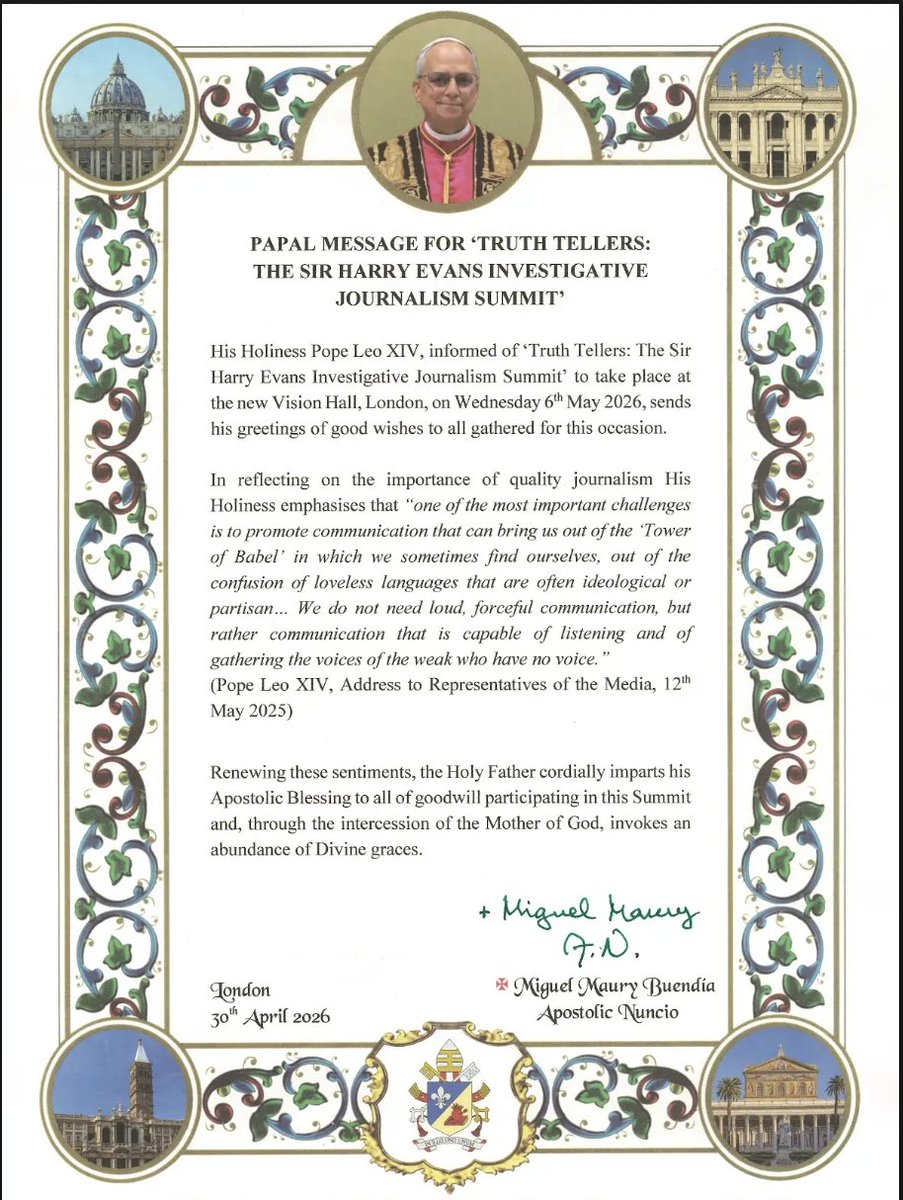
Truth Tellers The Sir Harry Evans Investigative Journalism Summit was honoured to receive a message from His Holiness Pope Leo XIV @pontifex supporting the Summit’s mission.
#sirharrysummit
@tinabrownlm @durham_uni @aagalloni @reuters
2
7
619
Precious N Chatterje-Doody retweeted

Mar 10
We are thrilled to announce that 22 exceptional new members have joined our diverse network of early-career professionals and researchers.
This year's cohort welcomes the highest ever proportion of members from non-academic backgrounds, at 40%, reflecting the breadth of talent across our network.
Together, they will work to develop innovative solutions to some of today's most pressing challenges.
Find out more about our newly appointed members in our press release: ukyoungacademy.org/news/uk-y…

4
11
1,214
Precious N Chatterje-Doody retweeted

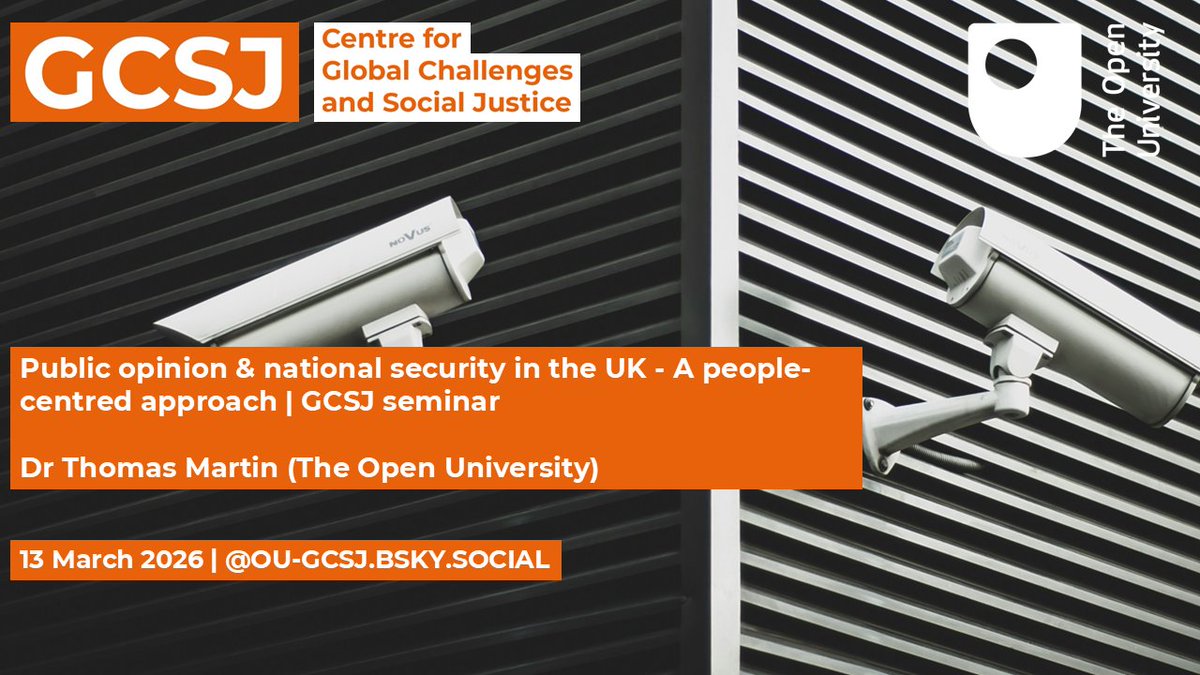
🚨 This Friday 13 March! Join us for our next upcoming GCSJ seminar on Public Opinion & National Security in the UK: A People-Centred Approach | Dr Thomas Martin
🔗 eventbrite.co.uk/e/public-op…
@Dr_DonnaSmith @PreciousChatD
#nationalsecurity #politics #research
2
1
78
16 Dec 2025
I can tell it’s gonna be a productive day today since I have a research assistant on hand :)
5
110
Precious N Chatterje-Doody retweeted

Congratulations to @PreciousChatD and @maximeaudinet on a fantastic blog for @ConversationUK . It provides great insight on how RT India reinforces the Kremlin's "west v the rest" narrative.
9 Dec 2025

It’s part of our new ‘War and Order’ project, and you can read it here
@OUPolitics @OU_FASS
theconversation.com/rt-india…
2
3
297
Precious N Chatterje-Doody retweeted

10 Dec 2025
RT India: how the Kremlin is spreading its ‘west v the rest’ narrative to a global audience by @PreciousChatD and @maximeaudinet theconversation.com/rt-india…
3
2
133
Precious N Chatterje-Doody retweeted
28 Nov 2025
Funded collaborative PhD opportunity on contested memory with me in @OUPolitics and Arthur Dudney at Arcadia:
Deadline 7th Jan,link below, please share!
1
6
2
628
9 Dec 2025
Putin personally launched RT India last week. @maximeaudinet and I wrote about what you can expect from it for @ConversationUK
1
3
5
562
9 Dec 2025
It’s part of our new ‘War and Order’ project, and you can read it here
@OUPolitics @OU_FASS
theconversation.com/rt-india…
4
4
850
28 Nov 2025
Funded collaborative PhD opportunity on contested memory with me in @OUPolitics and Arthur Dudney at Arcadia:
Deadline 7th Jan,link below, please share!
1
6
2
628
28 Nov 2025
The project is partially defined - meaning you propose you own specific project within the general theme and approach outlined
68
Precious N Chatterje-Doody retweeted

22 Sep 2025
Help needed:
I'm on the hunt for Alumni of Politics, International Relations or Policy at @OpenUniversity
We have founded the new @OUPIPS society, and would love to have some alumni join us.
Please share this! 💖
3
2
141
Precious N Chatterje-Doody retweeted

5 Nov 2025
⚠️New #openaccessarticle online!
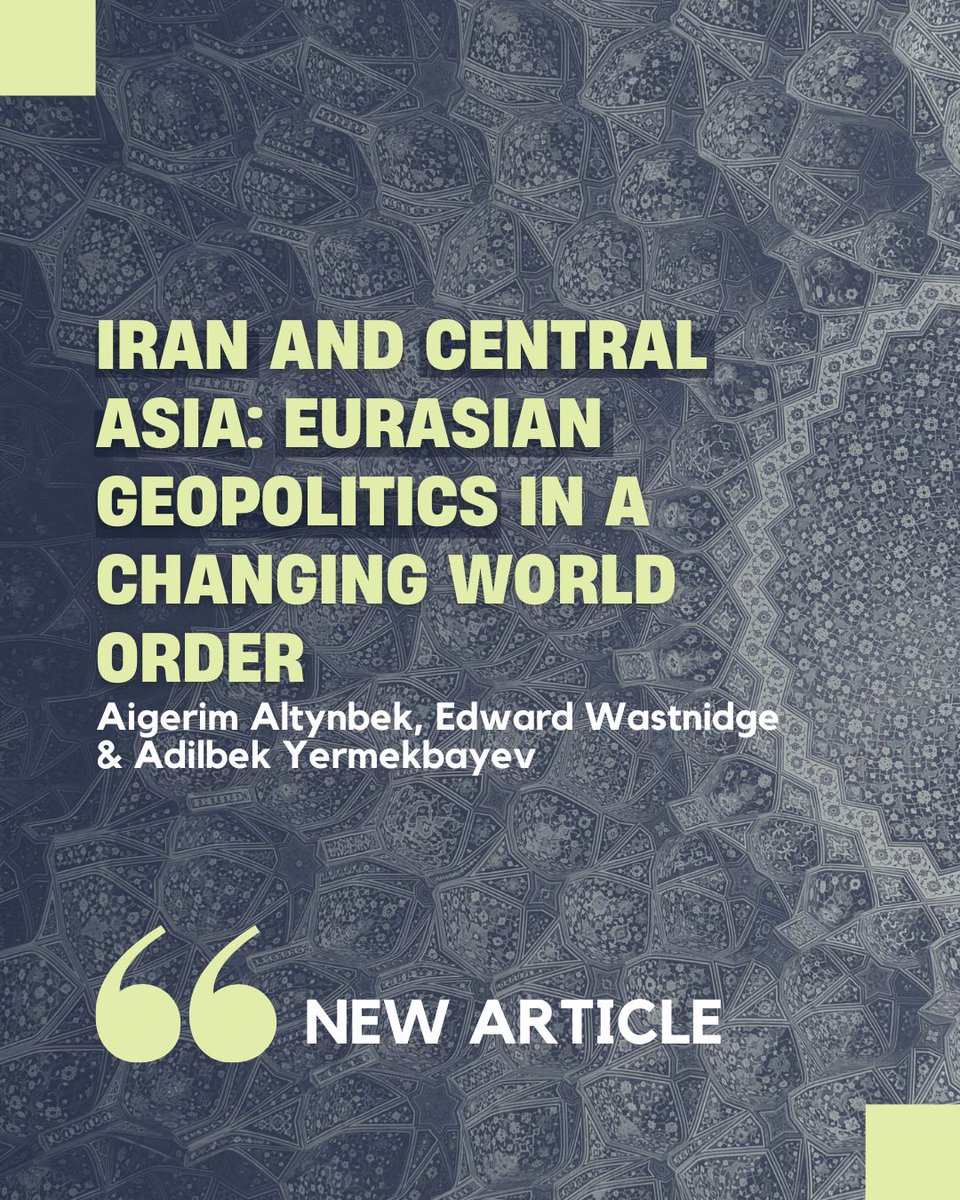
🧭 #Iran and #CentralAsia: Eurasian #Geopolitics in a Changing World Order
🔍 Discover more here: loom.ly/Fx-mKrk
✒️ Aigerim Altynbek, Adilbek Yermekbayev (a al-Farabi Kazakh National University) & @EdwardWastnidge (@OpenUniversity)
3
3
116
Precious N Chatterje-Doody retweeted

24 Nov 2025
UK Parliament Week starts today, raising awareness of @UKParliament & how to get involved! @OUPolitics academics are working with #UKPW again to educate more people on how they can make political change:
open.edu/openlearn/society-p…
@UKParlEducation @OU_FASS @OUPIPS
5
6
1,377
Precious N Chatterje-Doody retweeted

6 Nov 2025
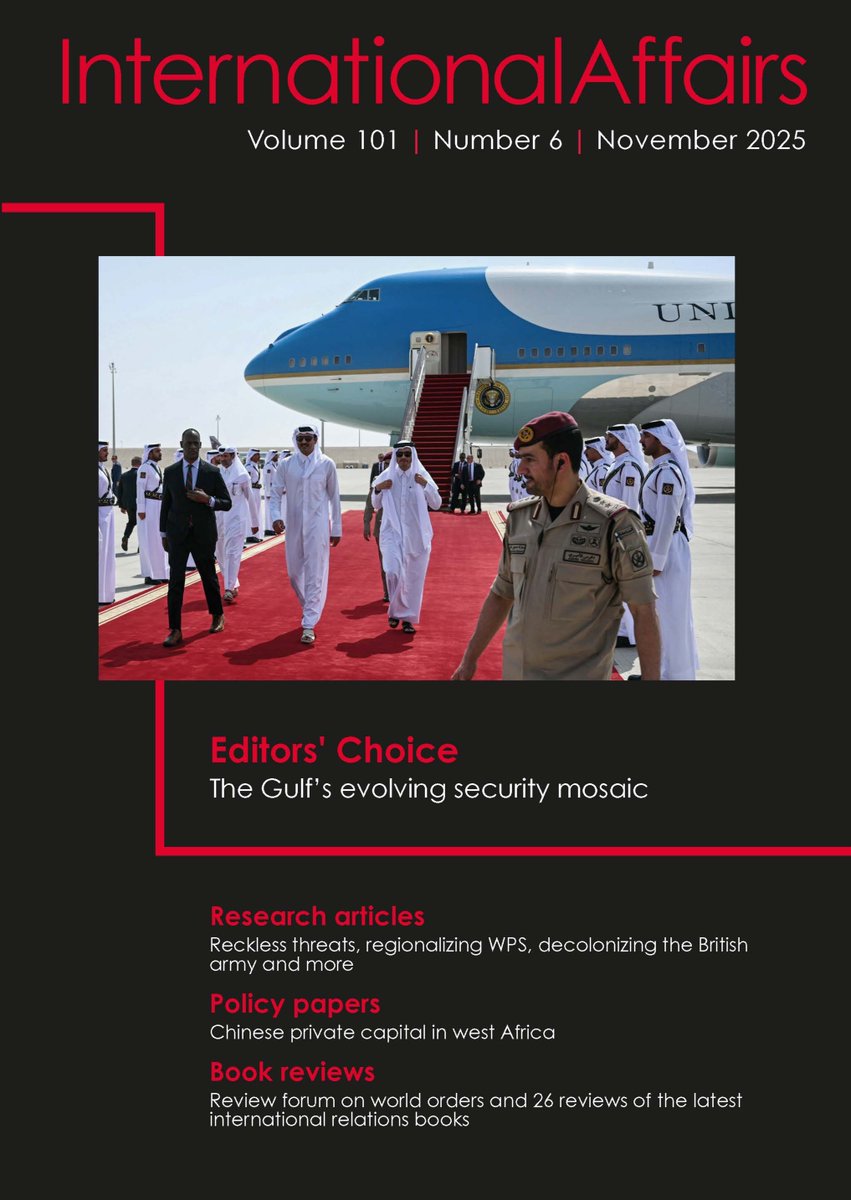
🚨 Our November issue is out now! 🚨
We bring to you:
🛡️ 14 research articles on evolving security in the Gulf, reckless threats, decolonizing the British army and more
💴 1 policy paper on Chinese private capital in west Africa
🌏 1 review forum on world orders
📚 26 reviews of latest IR books!
Read here > academic.oup.com/ia/issue/10…
2
15
44
9,081
2 Oct 2025
Some comments from me in this article on RT’s new show for Indian audiences
@OUPolitics @OU_GCSJ
straitstimes.com/asia/south-…
1
3
283
Precious N Chatterje-Doody retweeted

5 Sep 2025
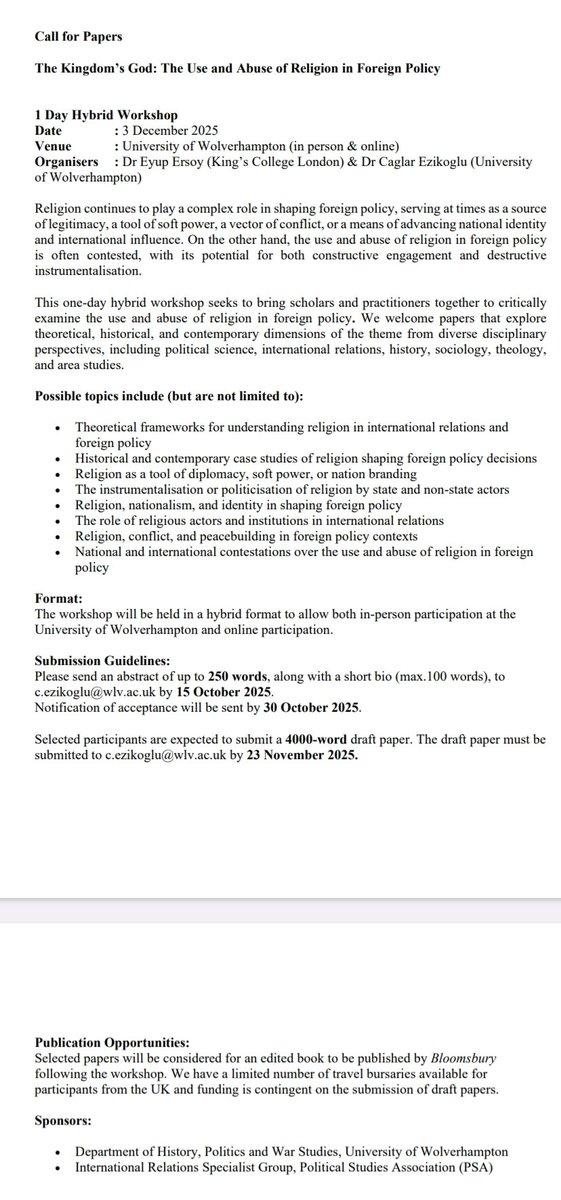
Call for Papers
'The Kingdom's God: The Use and Abuse of Religion in Foreign Policy'
We are organising a one-day hybrid workshop on 3 December 2025 at the University of Wolverhampton @caglarezikoglu
Abstracts can be submitted to c.ezikoglu@wlv.ac.uk by 15 October 2025
9
22
4,396
Precious N Chatterje-Doody retweeted

26 Aug 2025
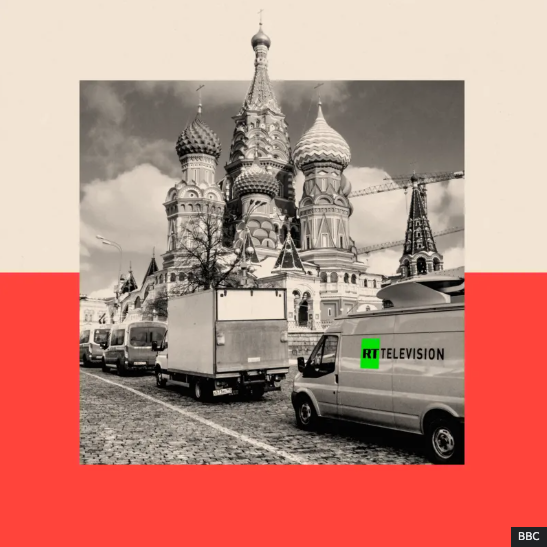
#Russia has accelerated its messaging and propaganda efforts to Africa, Latin America, the Middle East, and Southeast Asia, using outlets like Russia Today #RT and @SputnikInt to fill the gap left by staff reductions and shuttered operations at @VOANews and other Western news services, the @BBC reports. Russian providers recently formed local station partnerships, launched bureaus, and created foreign journalism 'educational' initiatives that often promote false narratives tailored to regional audiences, which also has the effect of normalizing Russia's foreign policy actions, including in Ukraine. The diminished role of VOA, whose reach recently spanned over 400 million people and provided vetted, fact-based reporting, and the increased use of Russian providers directly empowers authoritarian #disinformation as Russia and other adversarial powers seize on the opportunity. Reporting by @julianagragnani and @MKorenyuk 👉 tipaz.org/latest-news/62bg2f…
4
2
256