The leading journal to provide reviews, surveys, and tutorials on technical developments in electronics, electrical engineering, and computer science.
Joined October 2017
- Tweets 3,138
- Following 283
- Followers 2,383
- Likes 96
2,880 Photos and videos
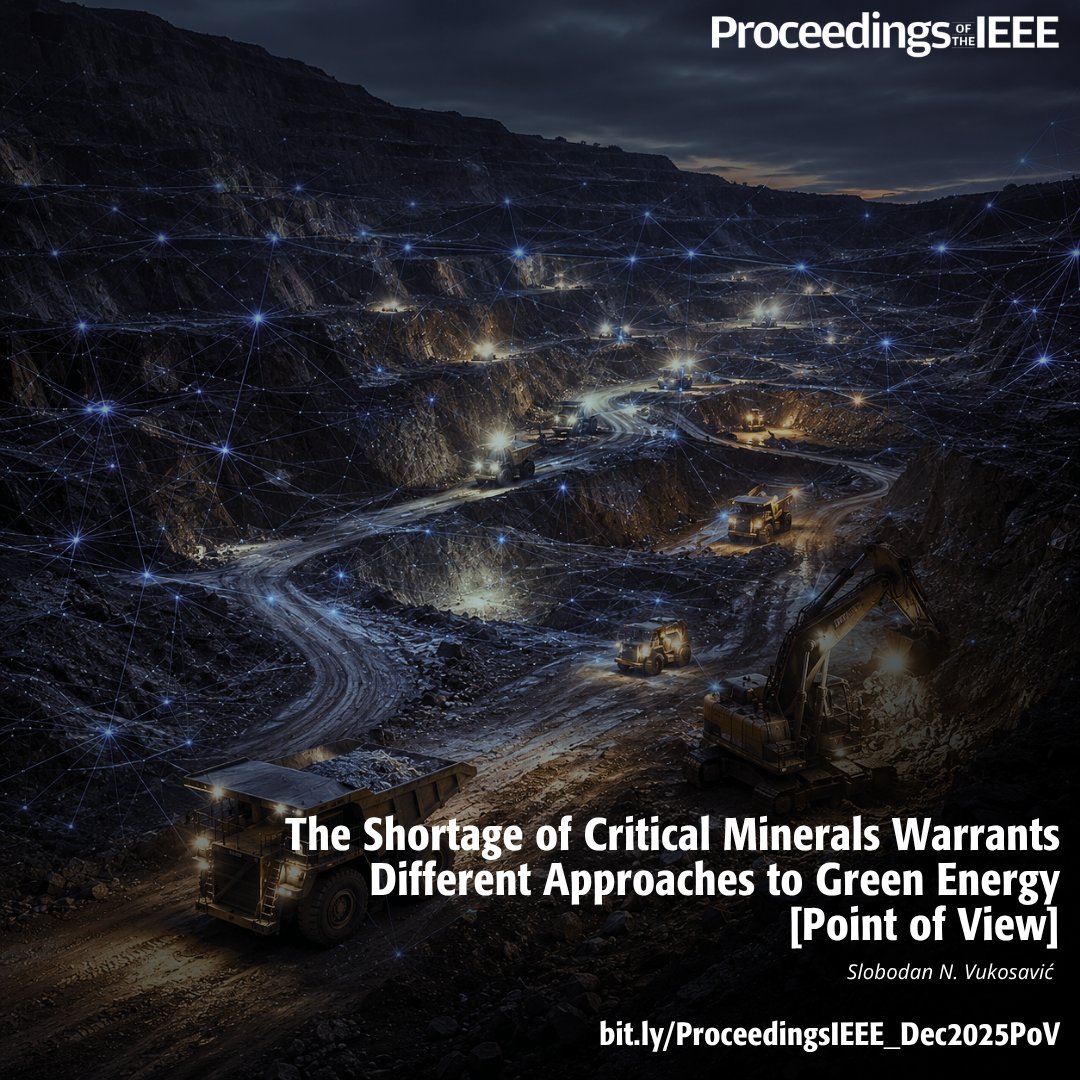
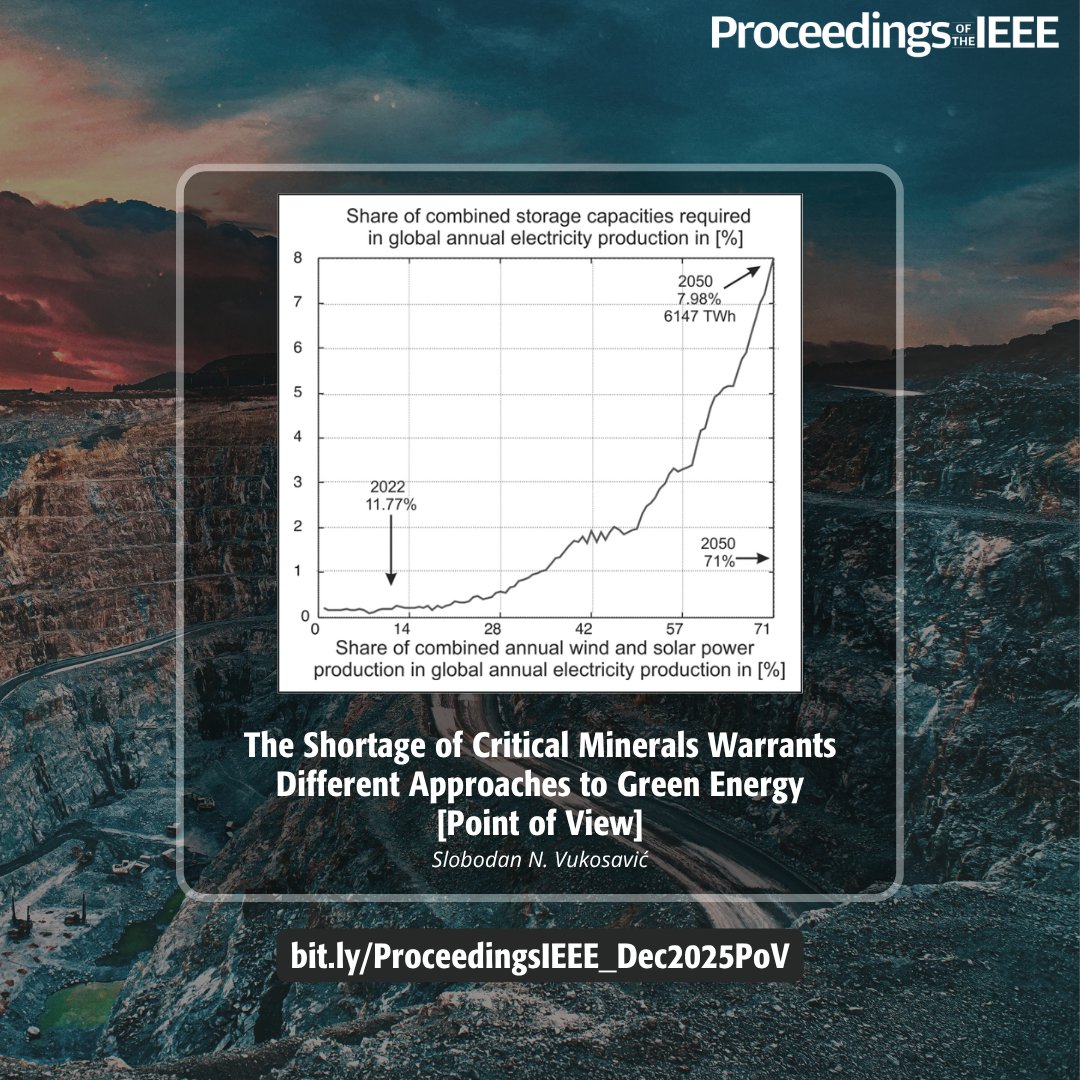
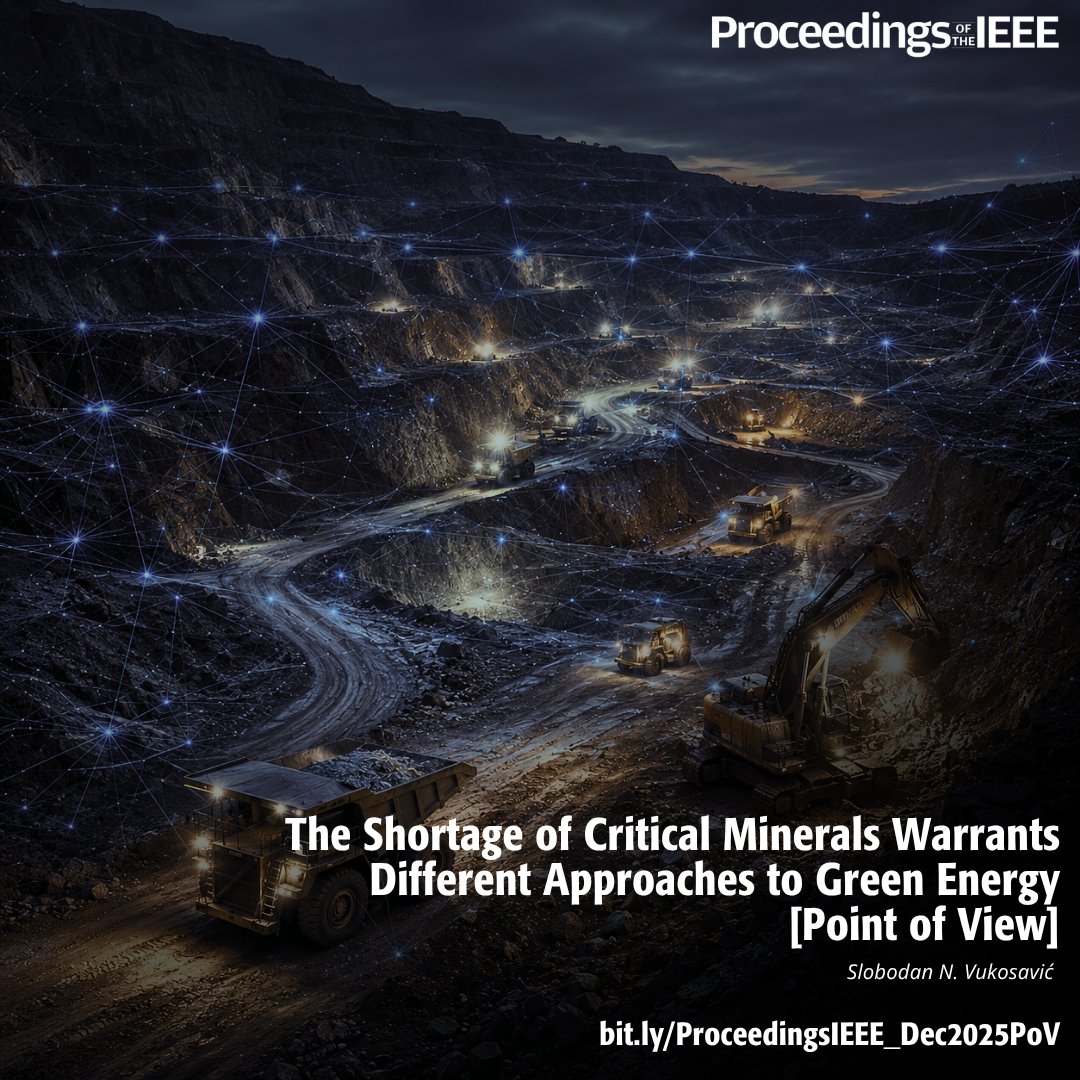




#GreenEnergy's future may require rethinking today's #energy systems. @ProceedingsIEEE's latest Point of View explores new approaches to #decarbonization, #GridModernization, and a resource-resilient energy future designed around more abundant resources: bit.ly/ProceedingsIEEE_Dec20…
124
In "The Shortage of Critical Minerals Warrants Different Approaches to #GreenEnergy", @Univerzitet_BG's Slobodan N. Vukosavić examines how demand for key minerals could outpace supply, and details alternative pathways for #decarbonization, #EnergyStorage, and #GridModernization.
1
1
1
83
Can the global #EnergyTransition succeed without enough critical minerals to support it? @ProceedingsIEEE's latest Point of View explores how mineral availability, #SupplyChain challenges, and #EmergingTechnologies could shape a #SustainableEnergy future: bit.ly/ProceedingsIEEE_Dec20…
1
40
If you aren't already subscribed to @ProceedingsIEEE's quarterly email #newsletter, doing so is fast and easy. Stay up-to-date on emerging #research, article highlights, #webinar and #events info, and more. Register now to receive your free copy: bit.ly/ProceedingsIEEENewsle…
1
33
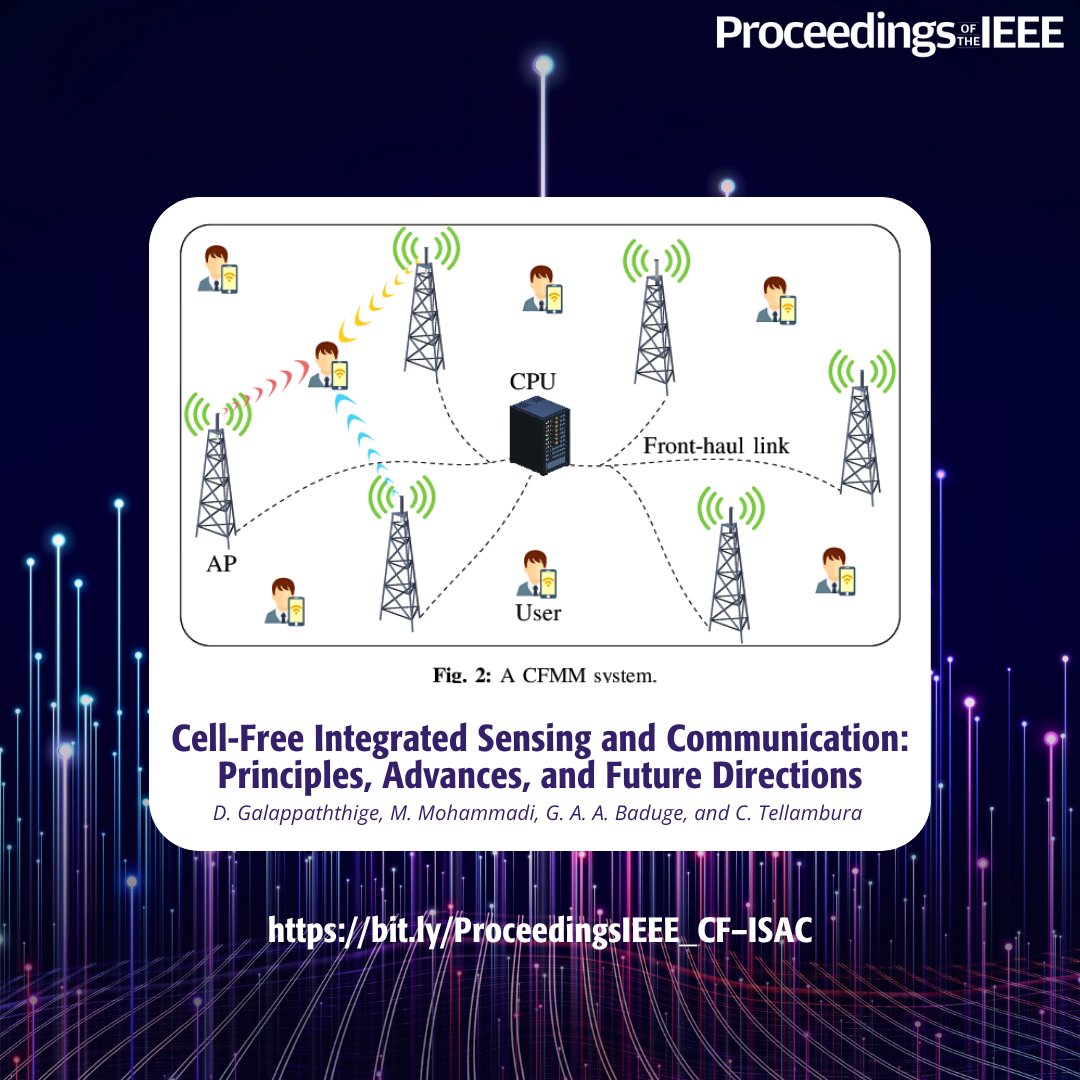
From #ResourceAllocation and #security to #MachineLearning, near-field sensing, and next-generation antenna technologies, #CFISAC is helping shape the future of #wireless systems. Learn more in this comprehensive review in @ProceedingsIEEE's latest issue: bit.ly/ProceedingsIEEE_CF–…
1
25
Presented by @QUBelfast, @SIUC, and @UAlberta authors, "Cell-Free Integrated Sensing and Communication: Principles, Advances, and Future Directions" examines how #CFISAC can improve coverage, #reliability, and efficiency while highlighting key challenges and opportunities ahead.
2
80
What if future #wireless networks could communicate and sense their surroundings simultaneously? Cell-free integrated sensing and communication (#CFISAC) could help make it possible. Learn more in @ProceedingsIEEE's latest issue and discover what's next: bit.ly/ProceedingsIEEE_CF–…
25
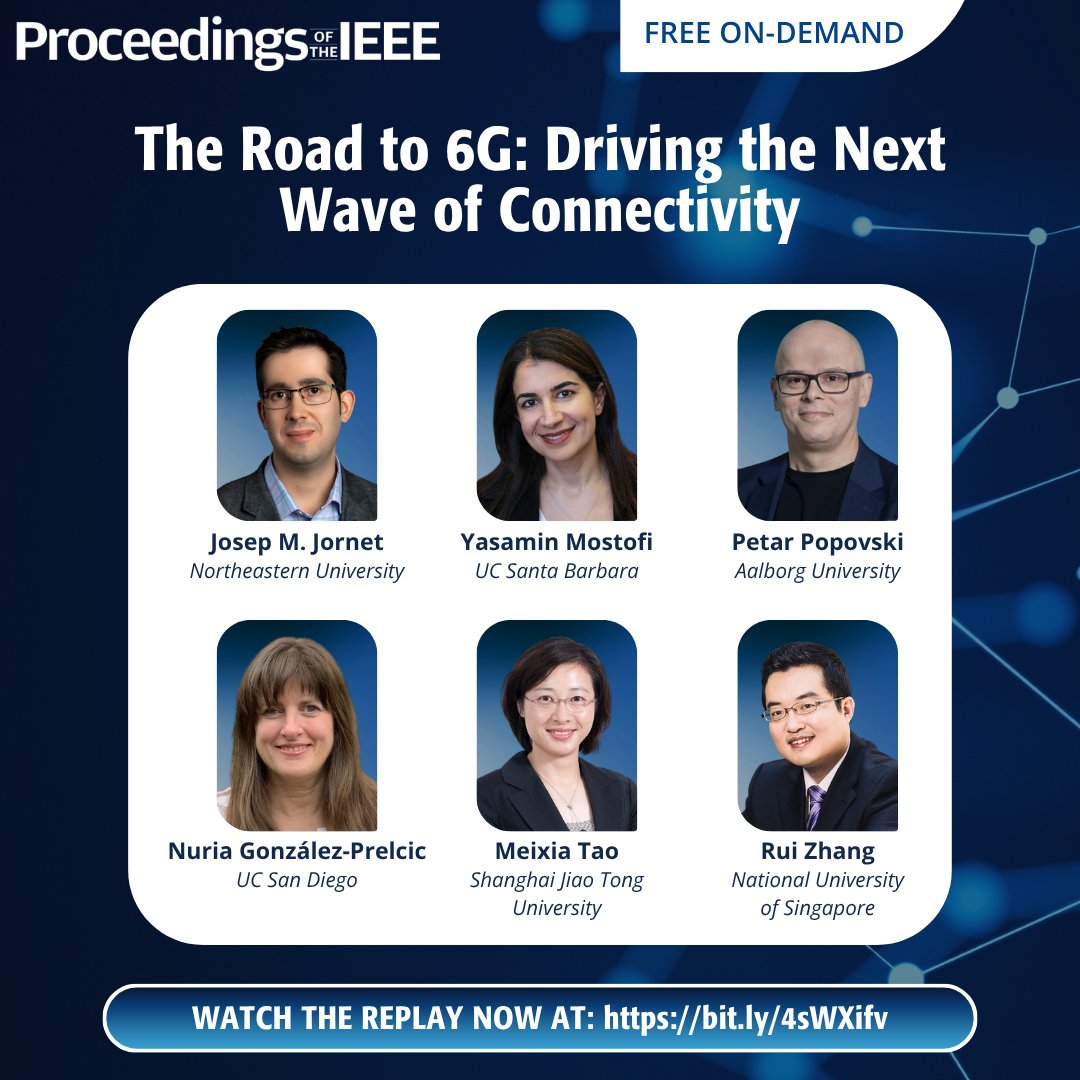
Last week's @ProceedingsIEEE "Road to 6G" #webinar featured exceptional presentations by top researchers and experts on what lies ahead for #6G. If you didn't make it to the live session, the free on-demand replay is now available at our @YouTube channel: bit.ly/4sWXifv
3
38
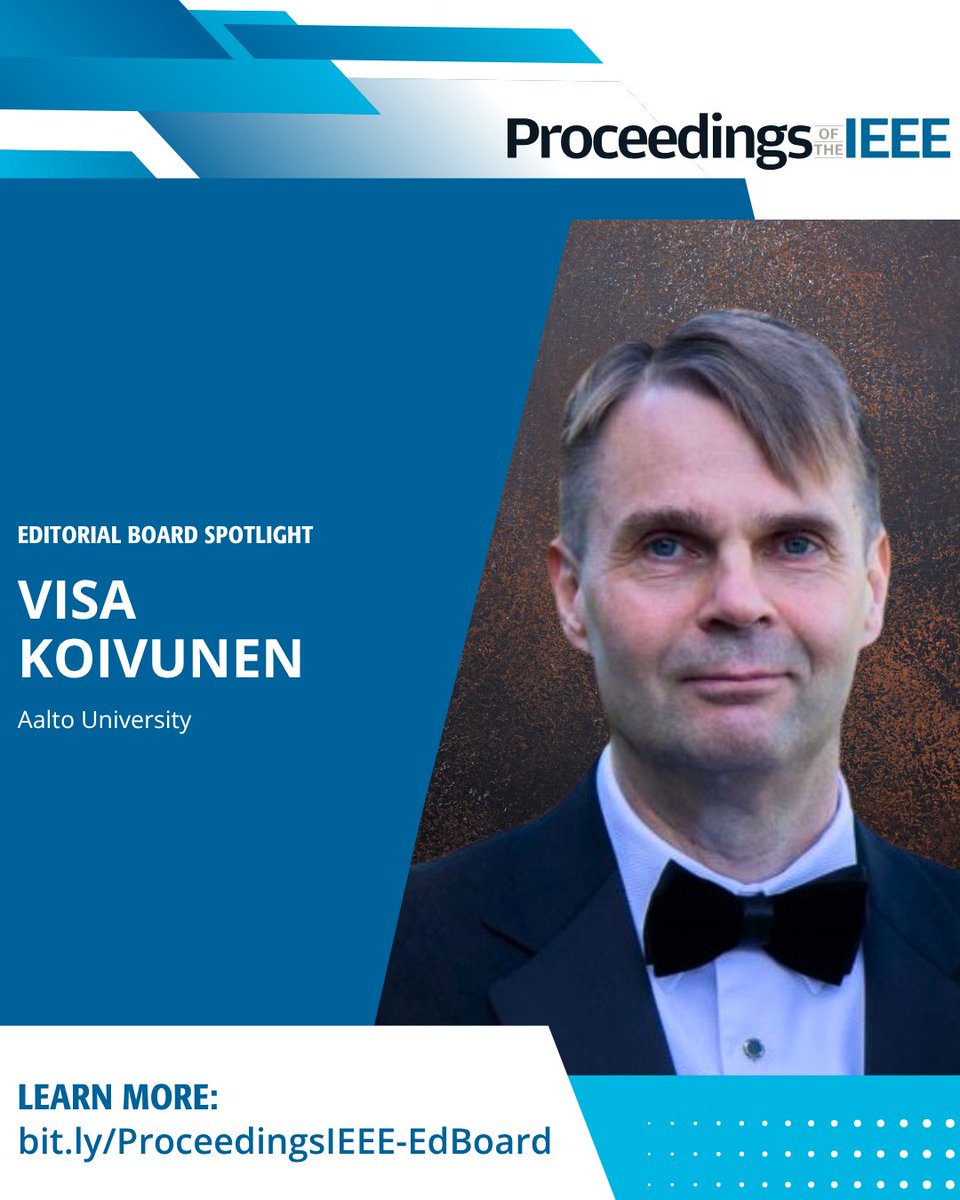
A #SignalProcessing leader and recipient of multiple distinguished research honors, #AaltoUniversity's Visa Koivunen helped advance fields like #wireless communications, #radar, and #ML. Learn more about this @ProceedingsIEEE Editorial Board member at: bit.ly/ProceedingsIEEE-EdBoa…
1
1
4
397
We're now moving into the Q&A portion of today's @ProceedingsIEEE "Road to #6G" #webinar. Thank you to our speakers today for their interesting and informative presentations, and to everyone who attended. An on-demand replay will be available soon.
1
45
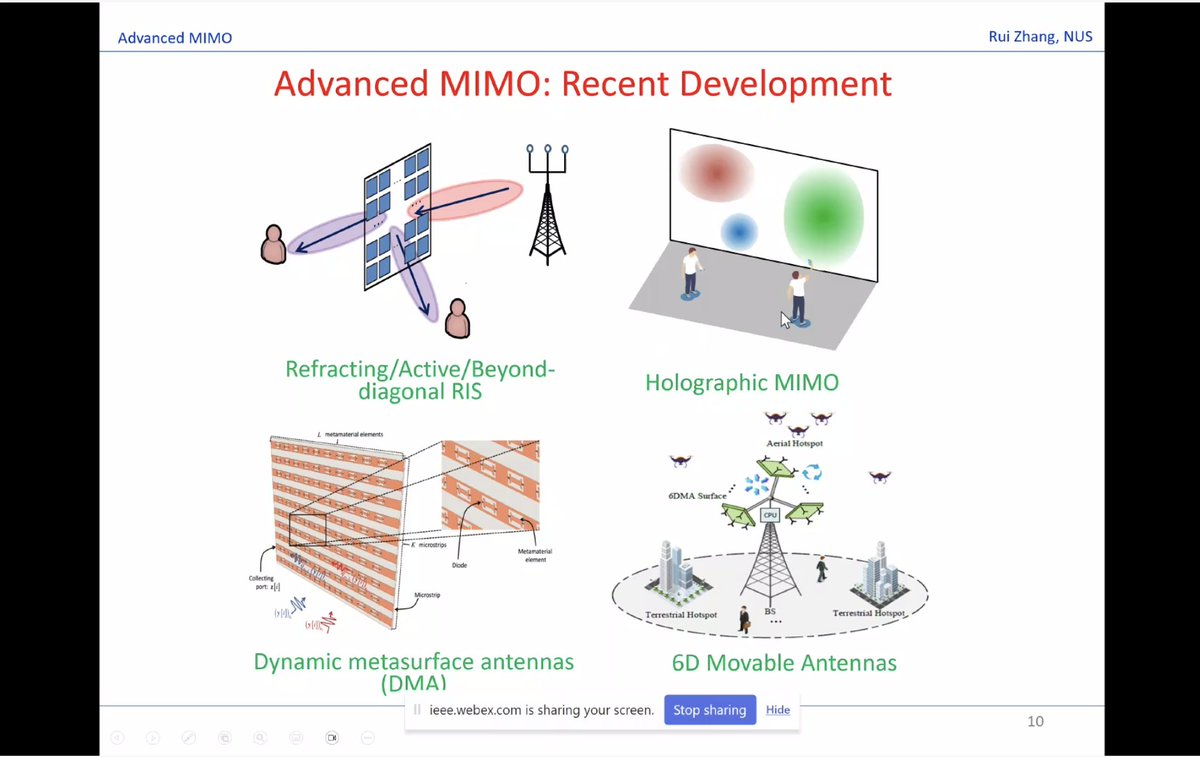
What advances are we seeing in advanced #MIMO? @NUSingapore's Rui Zhang shares new developments such as holographic MIMO, and dynamic #metasurface antennas. #6G
1
61
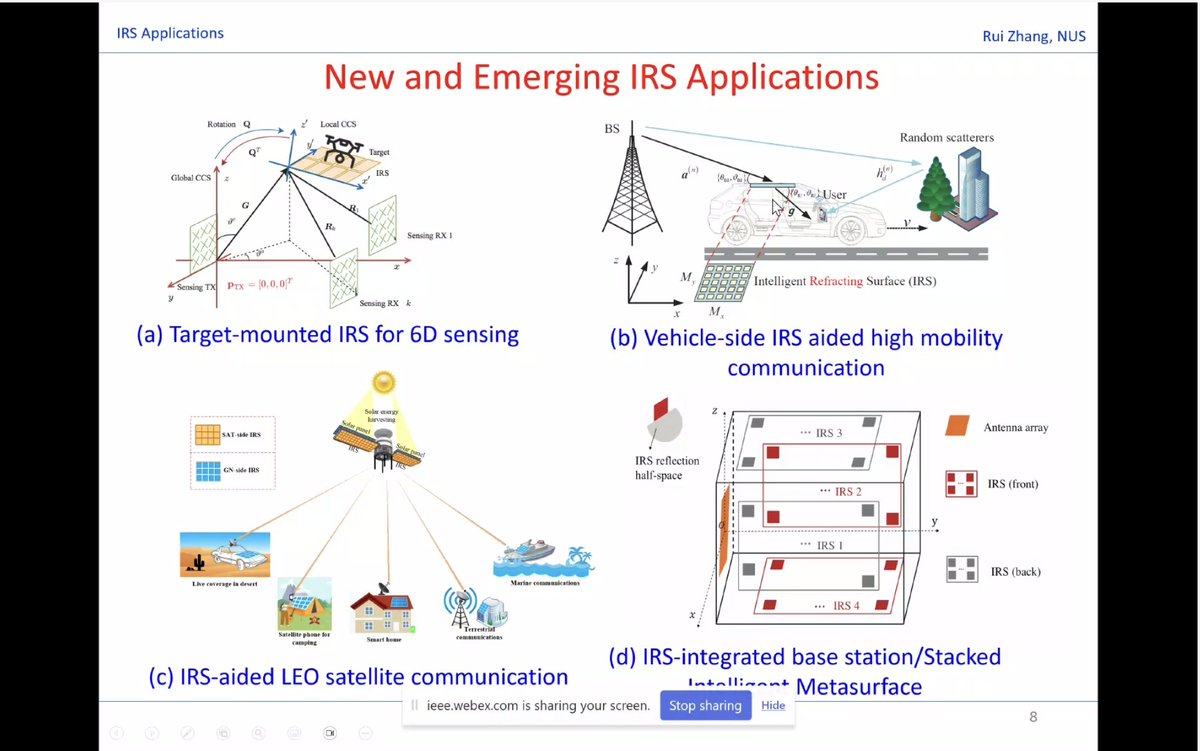
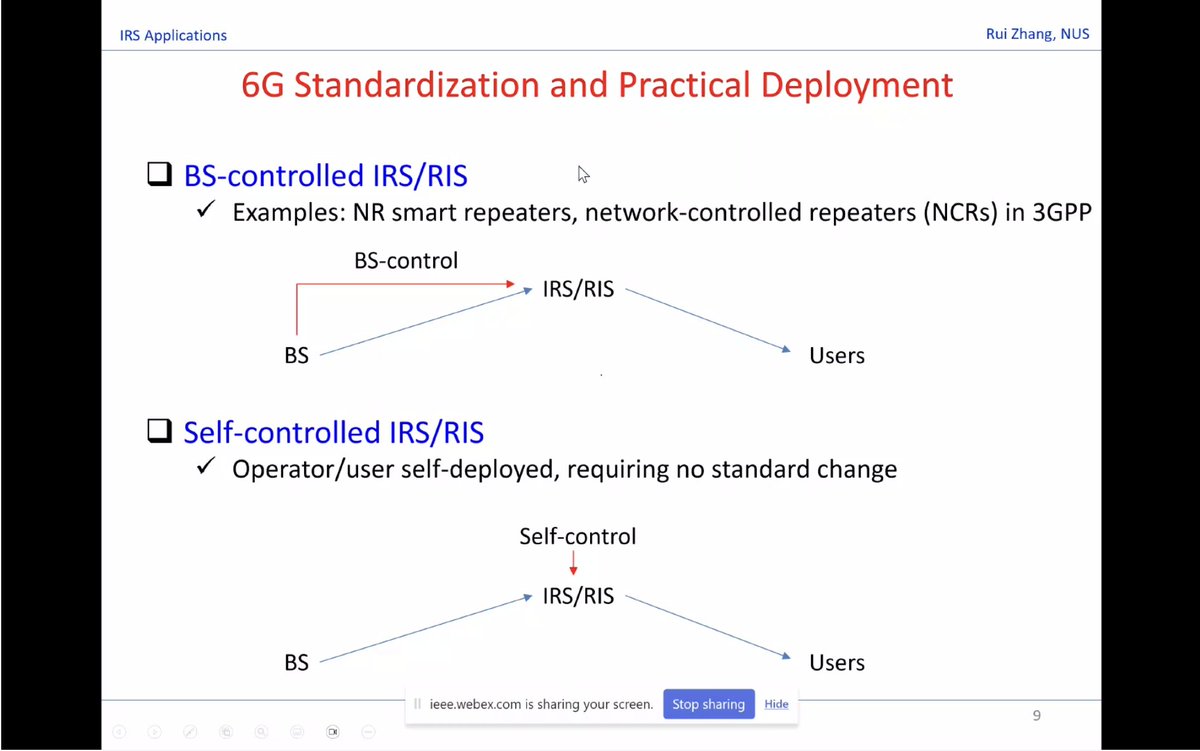
What applications might we see with #IRS? @NUSingapore's Rui Zhang details a number of new uses for IRS, including #UAVs, #satellite communications, and more. He also explores the approaces to #standardization of #6G and its practical deployment.
1
50
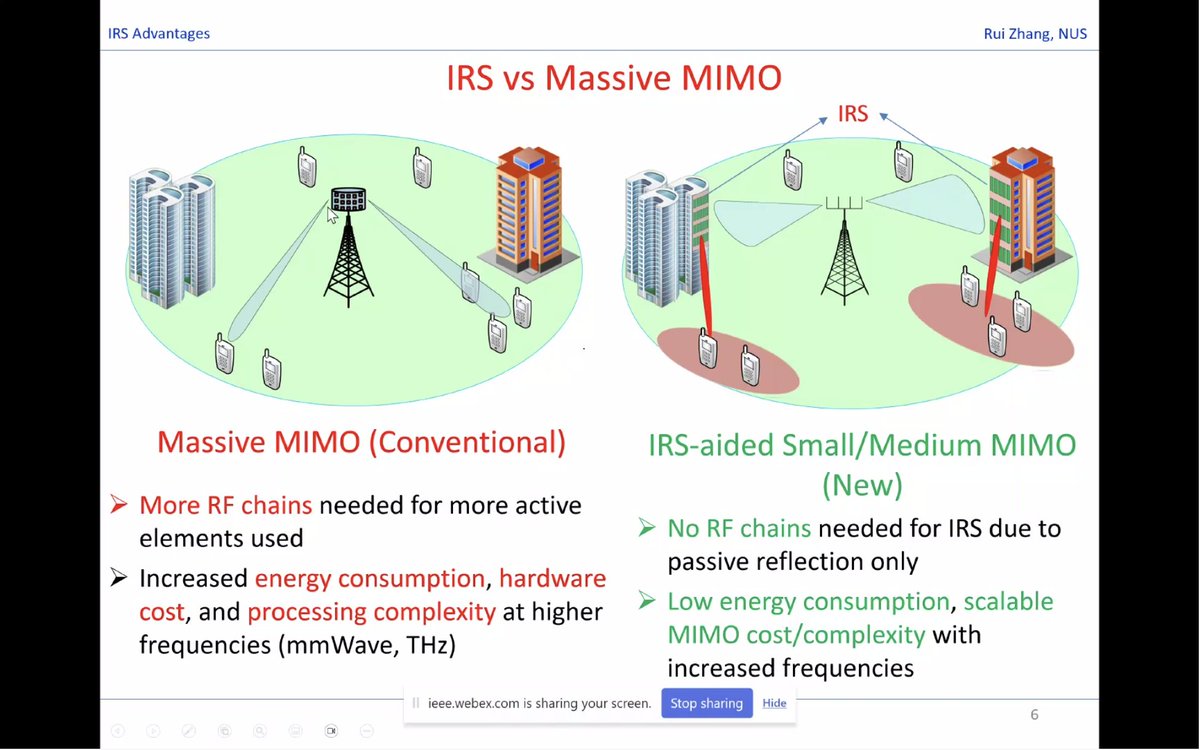
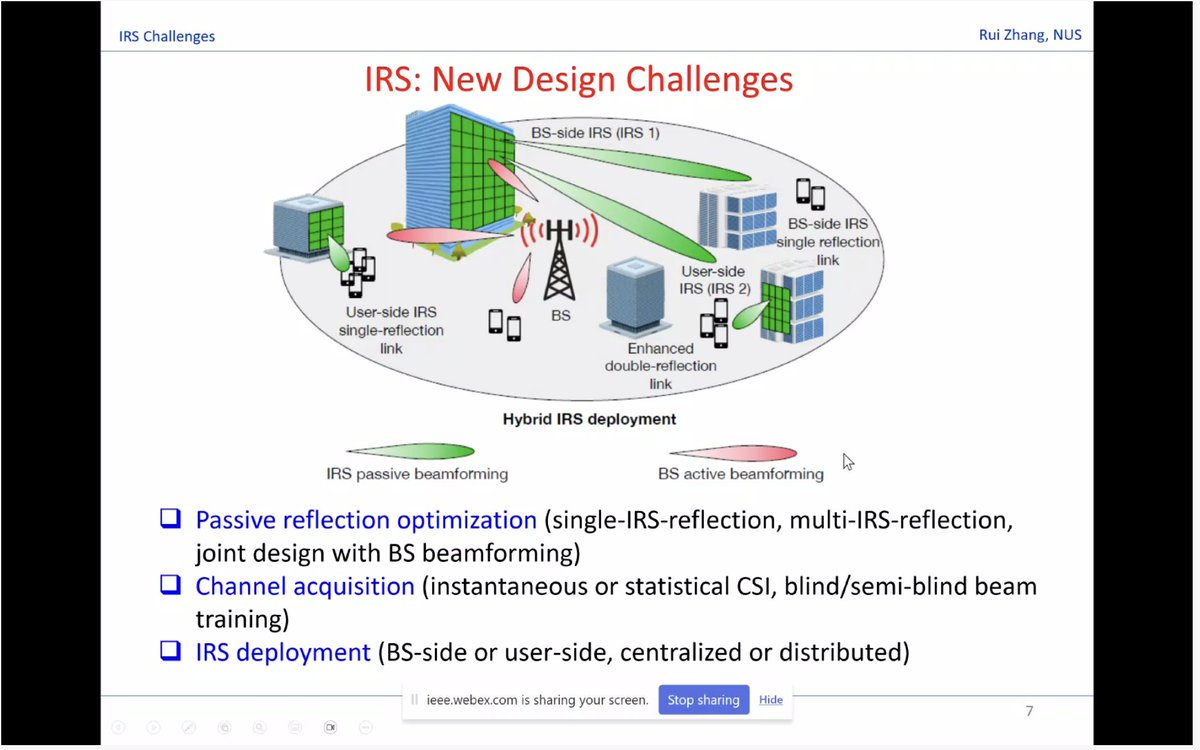
Here's a helpful comparison of #IRS versus #MassiveMIMO, courtesy of @NUSingapore's Rui Zhang. He notes that Massive #MIMO was primarily used in #5G, but there is a need to scale. He also shares a look at new challenges introduced by IRS. #6G
31
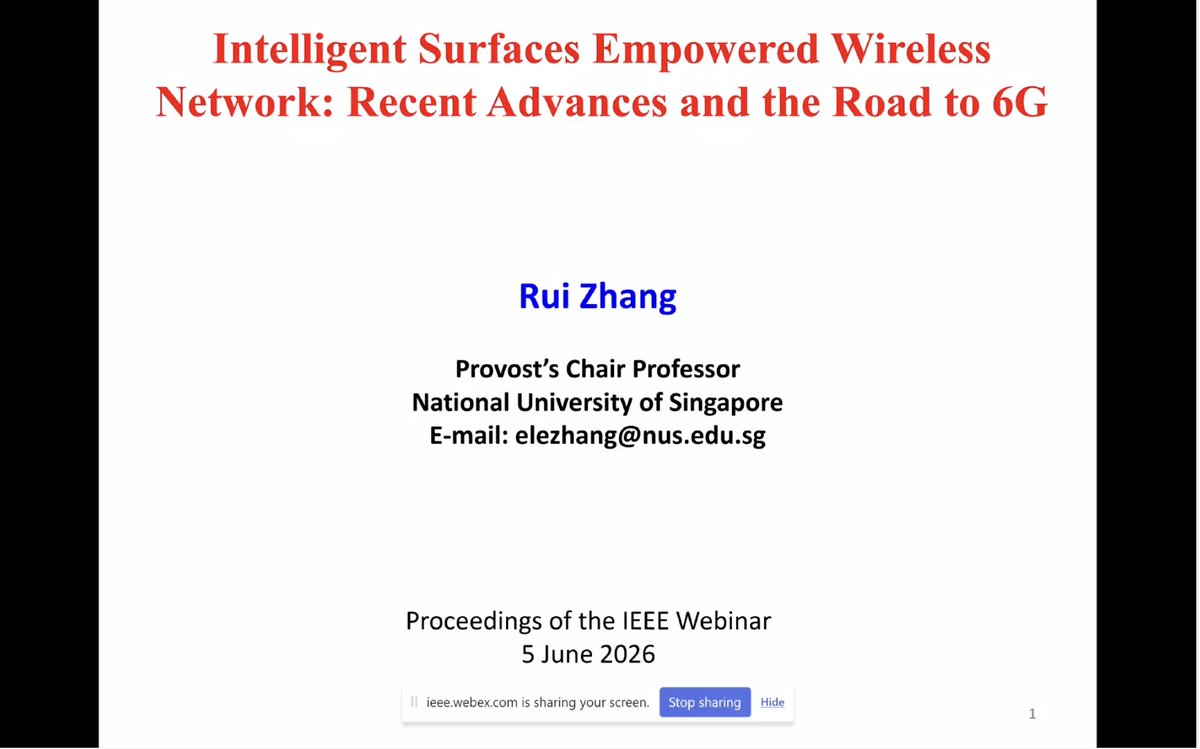
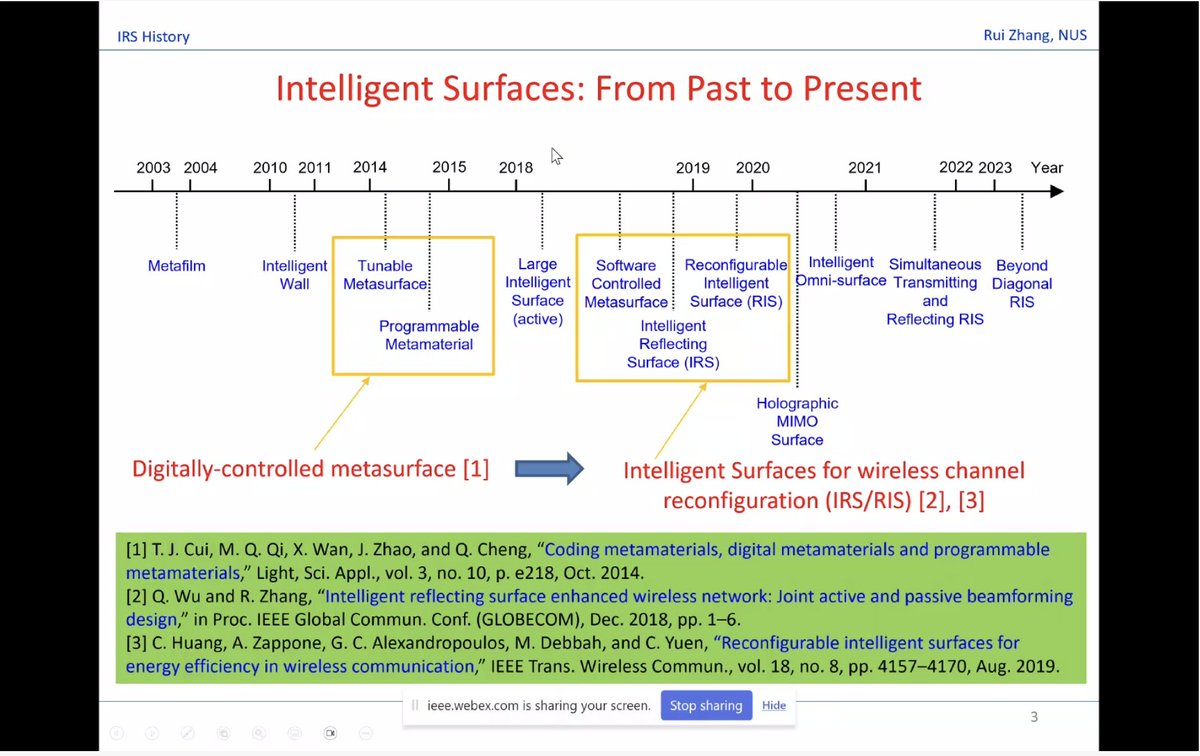
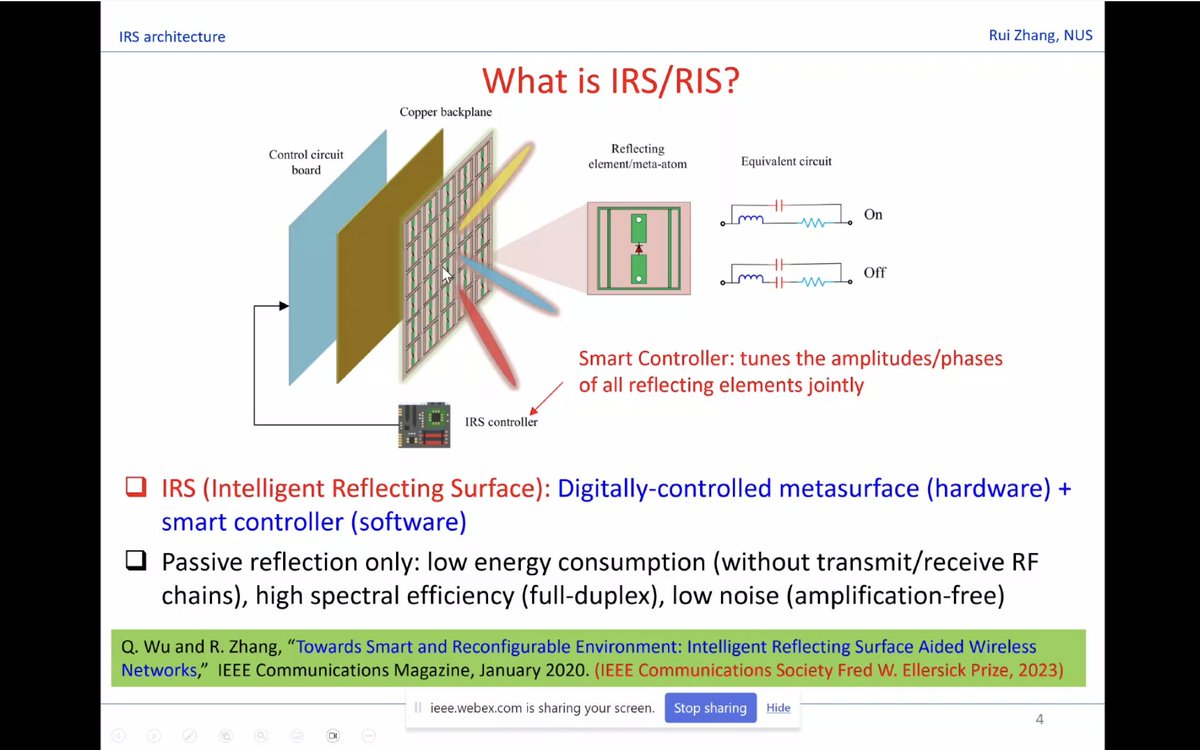
Our final speaker is @NUSingapore's Rui Zhang, who will be sharing highlights of his paper on #IntelligentSurfaces-empowered #wireless networks, and how it will impact #6G. He also shares the history of #IRS and #RIS, and an overview of what they are.
32
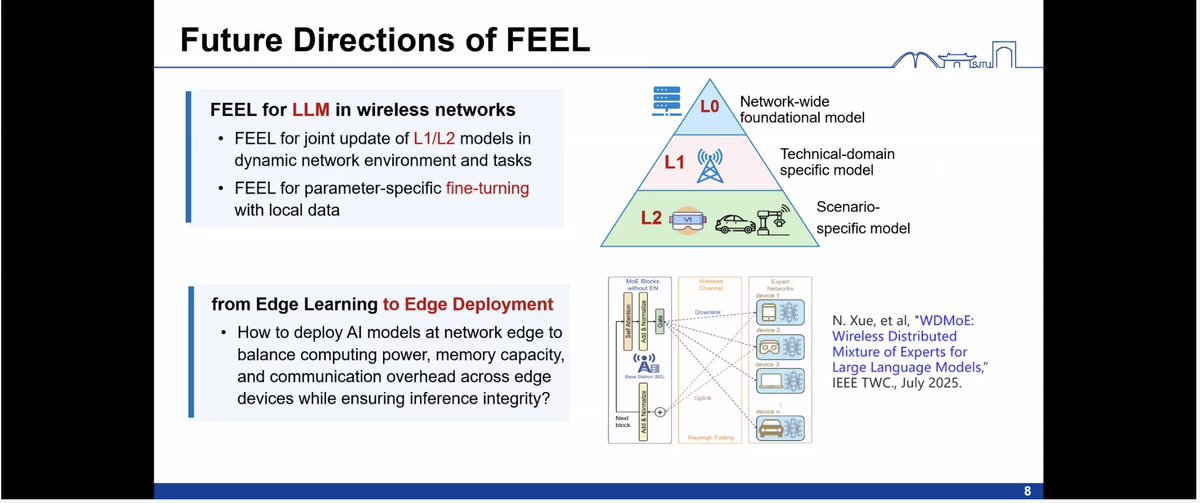
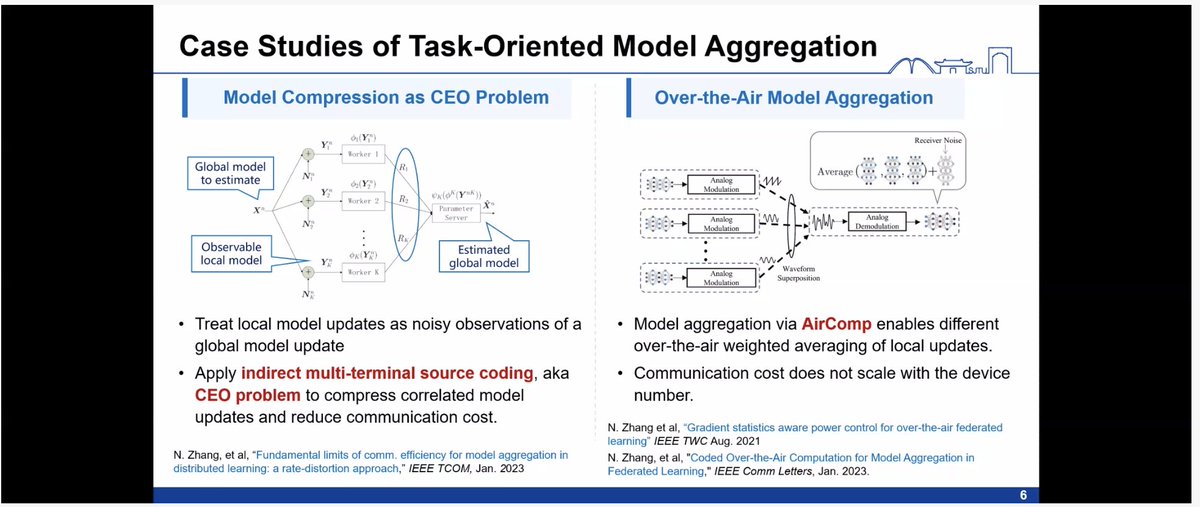
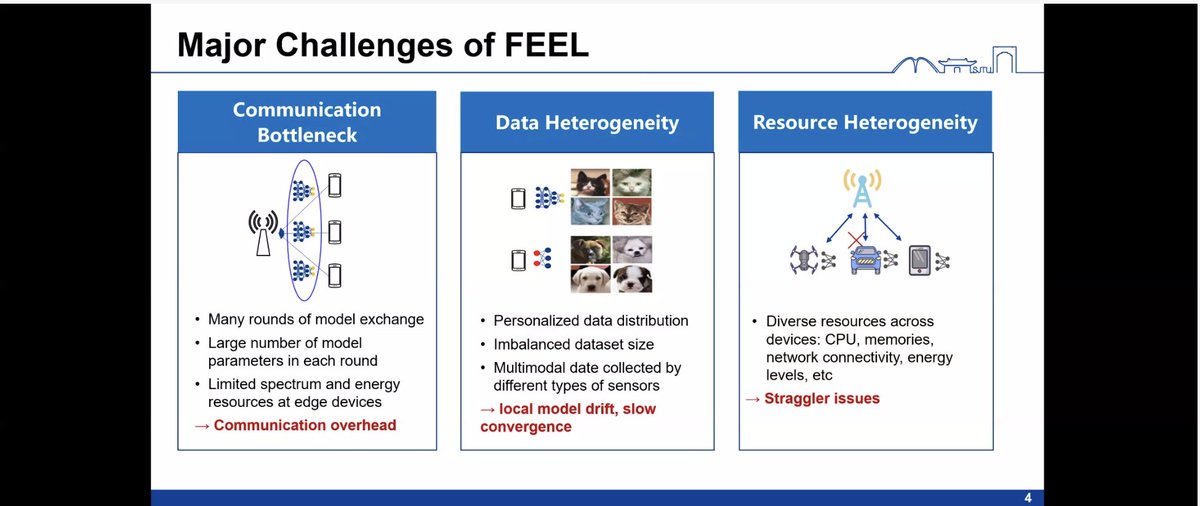
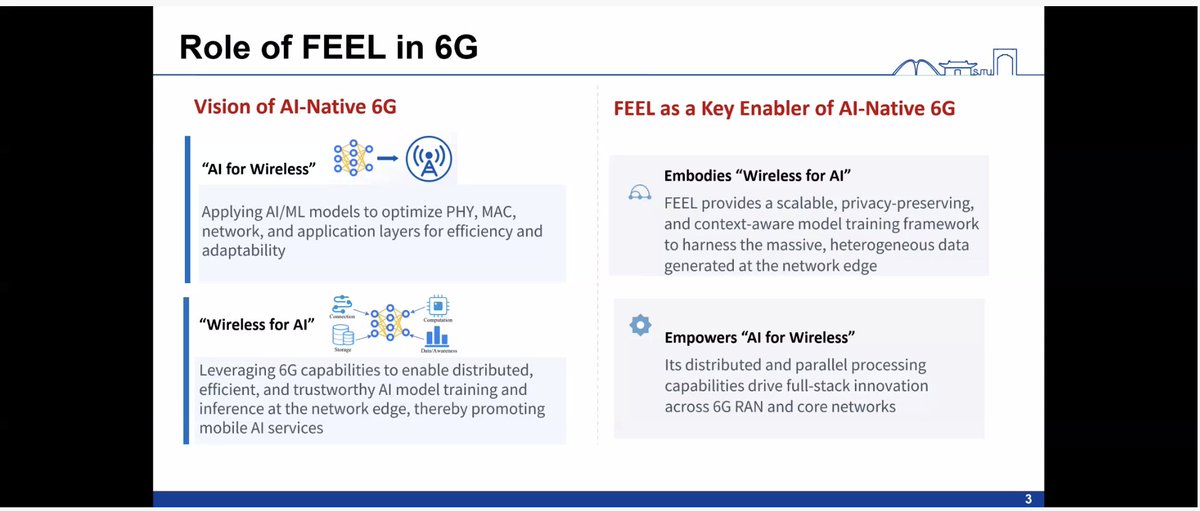
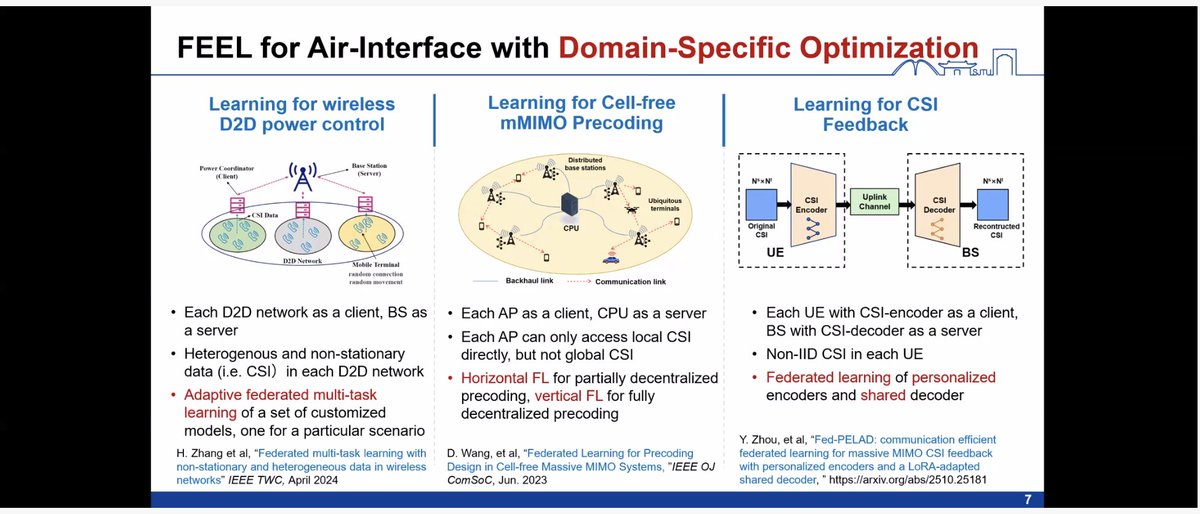
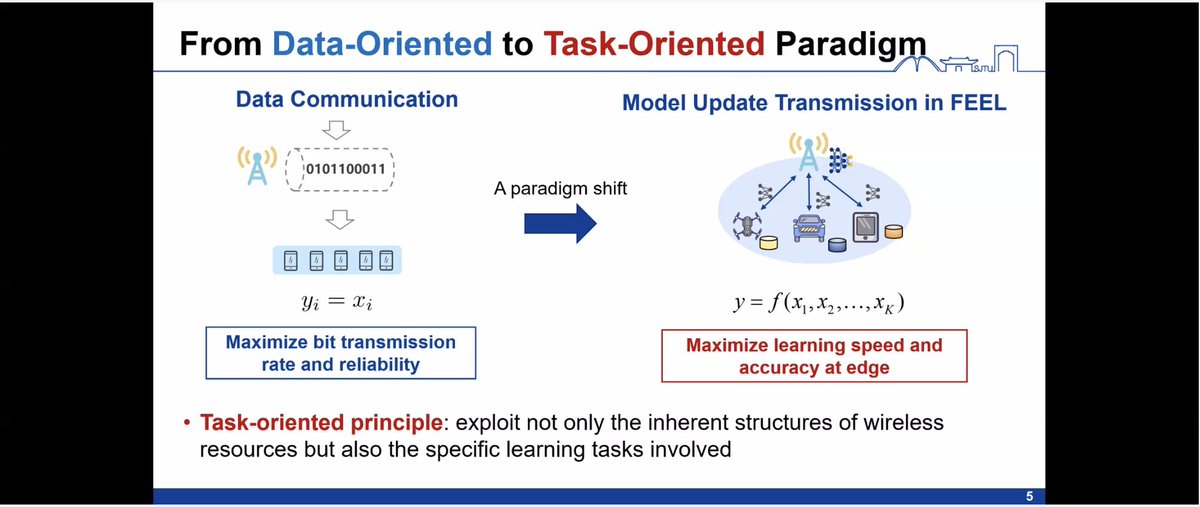
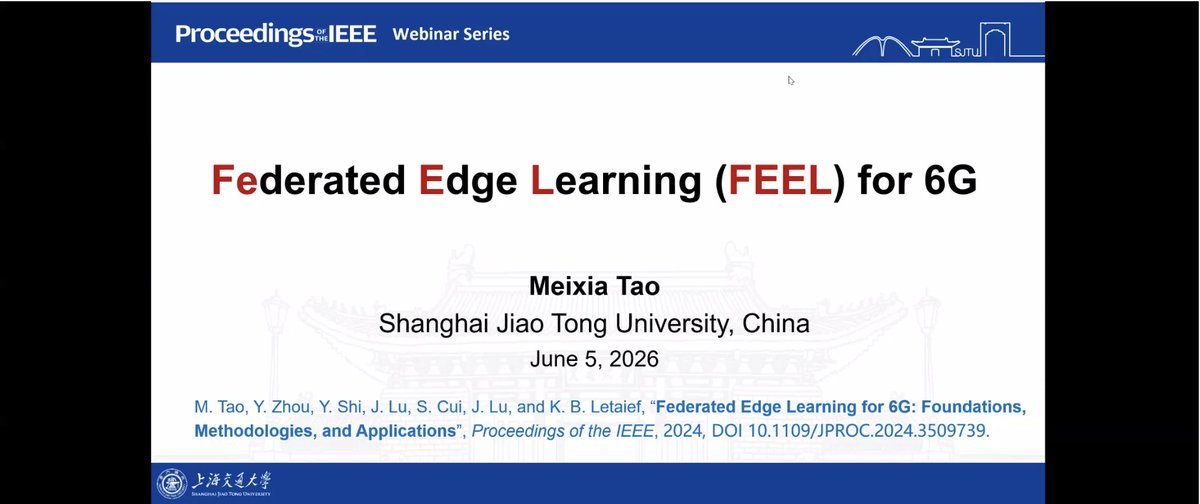
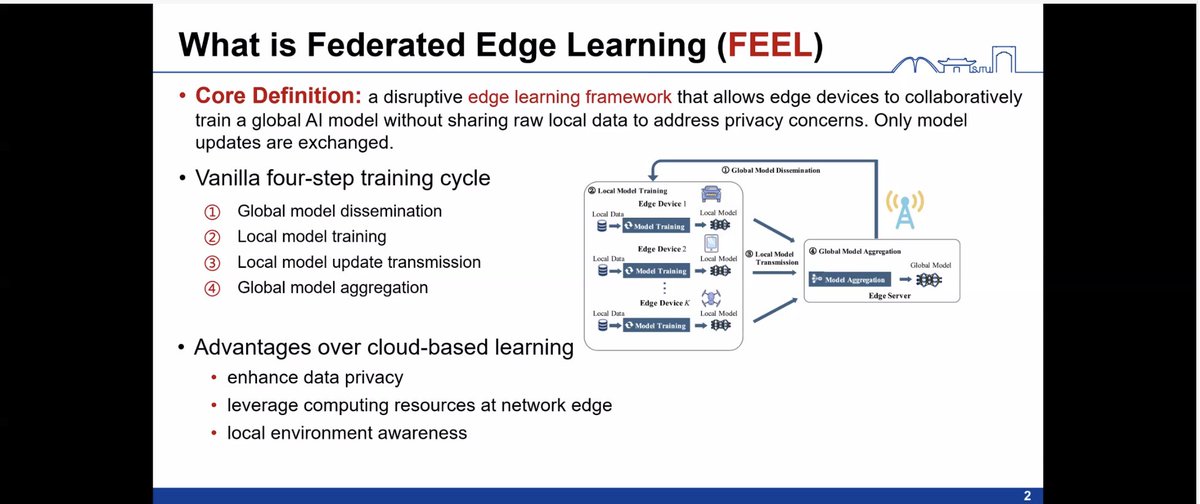
We're now hearing from @sjtu1896's Meixia Tao, who is discussing Federated #EdgeLearning (also called "FEEL") for #6G. She notes that FEEL has a advantages over #cloud-based learning - for example, enhanced #DataPrivacy and being more context aware.
21