
Joined February 2014
- Tweets 2,951
- Following 819
- Followers 306
- Likes 81,394
148 Photos and videos



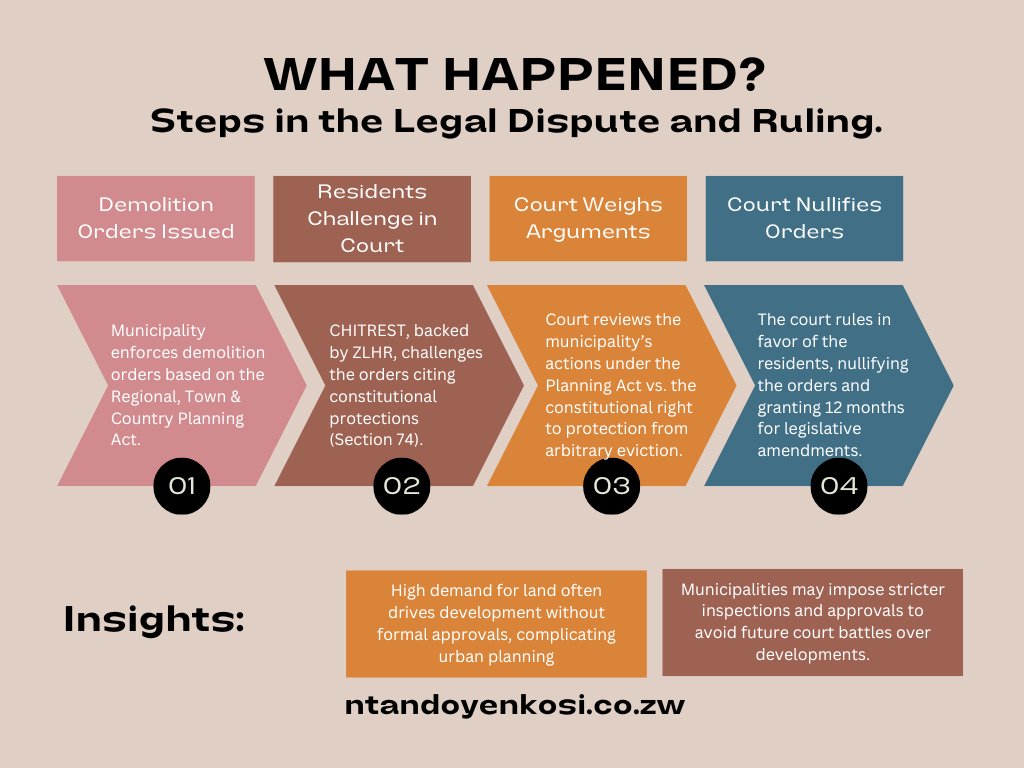







Kudos for mixed-use, can the system take the increased load though?

Harare to allow residents, offices and businesses in same CBD buildings
heraldonline.co.zw/harare-to…
34
Ntandoyenkosi Ivan retweeted

Jun 14
The best deal you’ll ever make is not gettin’ into a bad one
6
3
48
2,500
Ntandoyenkosi Ivan retweeted

Jun 12
Everyone saying Elon Musk is the world’s first trillionaire is conveniently ignoring the entire country of Zimbabwe
163
1,465
21,584
726,765
Ntandoyenkosi Ivan retweeted

Jun 12
This article is not about Kudakwashe Tagwirei.
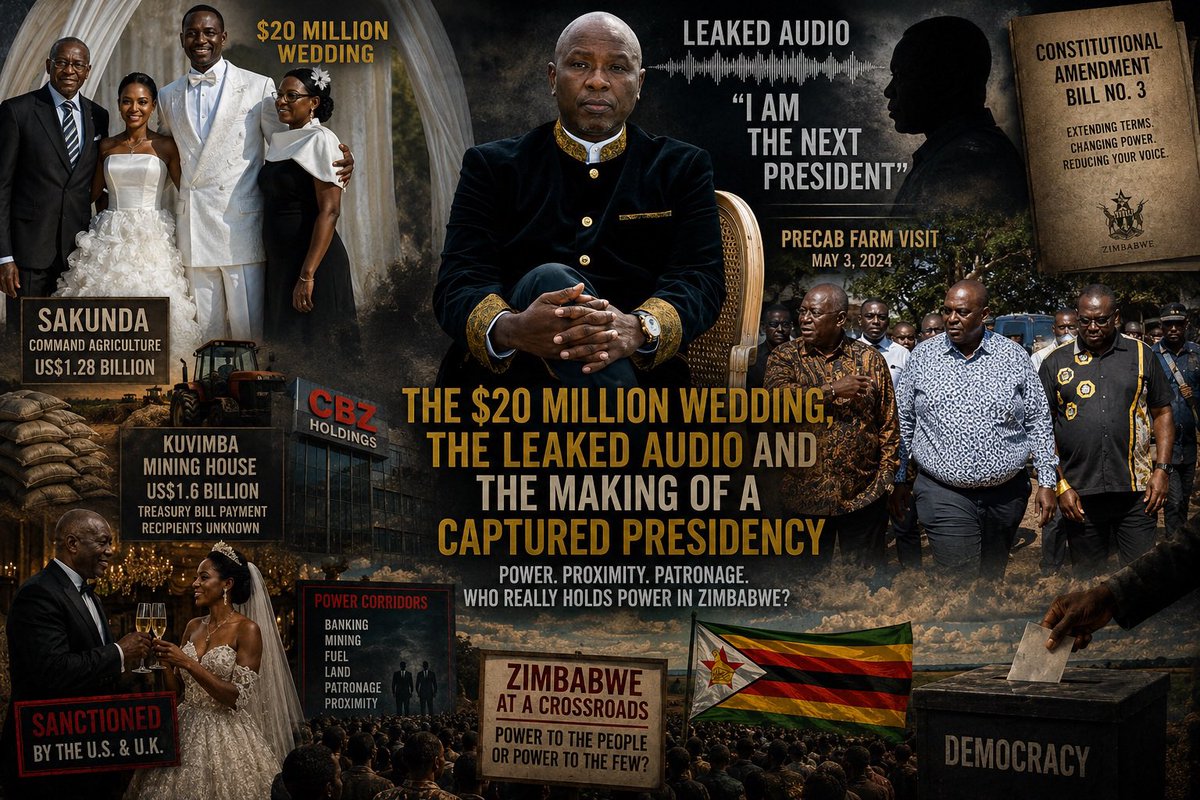
It is about what Zimbabwe has become — and what it is about to become, possibly this very week, if Parliament passes Constitutional Amendment Bill No. 3. Tagwirei is simply the most visible expression of a system in which money buys power and power protects money. Remove him from the story tomorrow and the architecture remains, waiting for the next occupant. That is why this article is about all of us: about what we permit, what we normalise, and what we are prepared to defend.
Let me begin with what I know personally. Tagwirei, at 57, is a young brother to me. He is my neighbour. I once had lunch with him and was impressed by his recounting of his early career. We served briefly together on the Presidential Advisory Council. It emerged before my resignation as Vice-Chairman that he had more access to President Mnangagwa than the entire PAC put together — which explained why he attended few meetings and said little. The PAC was created to give the President counsel beyond his cabinet: independent professionals serving without reward, out of patriotic duty. Senior civil servants worked to keep it ineffectual. They saw it as an unwelcome layer of transparency. Proverbs 15:22 teaches that plans fail for lack of counsel, but with many advisers they succeed. Had that wisdom prevailed, Zimbabwe might have avoided the debilitating state capture to which it has now been subjected.
THE WEDDING AND THE TAPE
In 2013 the Guptas flew wedding guests into a South African air force base for their niece’s Sun City nuptials, financed with money meant for poor farmers — the moment their overreach became visible to a nation. Tagwirei’s $20 million wedding for his son was not a slip that exposed power; it was a deliberate exhibition of it. The opulence screamed a single message: we no longer belong with the people.
The leaked audio that followed — “I am the next president” and claiming influence over military commanders, intelligence, police and the judiciary — cannot be authenticated. Tagwirei has consistently denied presidential ambitions. The tape proves nothing on its own. But authenticity is the wrong test. The right test is whether the claims map onto observable, documented behaviour. On that test the audio is unusually plausible — not because we can trust the recording, but because it largely describes things happening in plain sight.
THE DOCUMENTED RECORD
Consider what requires no tape at all.
Tagwirei has been reported since 2019 as the largest shareholder in CBZ Holdings, Zimbabwe’s biggest bank, through a roughly 30 per cent stake held via nominee accounts. CBZ in turn acquired stakes in First Mutual, the state commodities exchange, and the e-passport payment monopoly. Whoever sits behind that structure holds a hand on the tap of who in this economy gets liquidity and who does not.
From 2016 to 2019 his firm Sakunda ran the billion-dollar Command Agriculture programme without open tender. The Sentry, a Washington-based investigative organisation, found Sakunda received about US$1.28 billion while supplying inputs worth roughly US$1 billion. Sakunda denies wrongdoing. The structural pattern — public programme, private intermediary, state-protected returns — is on the record.
In April 2024 the Mutapa Investment Fund paid a reported US$1.6 billion — about 5 per cent of GDP — for the private stake in Kuvimba Mining House, in Treasury Bills, to undisclosed individuals. The Sentry traced the holding to entities linked to the Kudakwashe Tagwirei Trust. He denies any link. The authorities, tellingly, refuse to name who received the money. Read the full article below
8
46
98
14,381
Ntandoyenkosi Ivan retweeted

Jun 9
english teachers recognizing ur potential is the kind of validation that stays w u forever
1,046
86,671
437,919
6,046,697
Take into context that our peers have credit facilities operating above critical mass we don't. What's pushing the printing press?
Jun 4

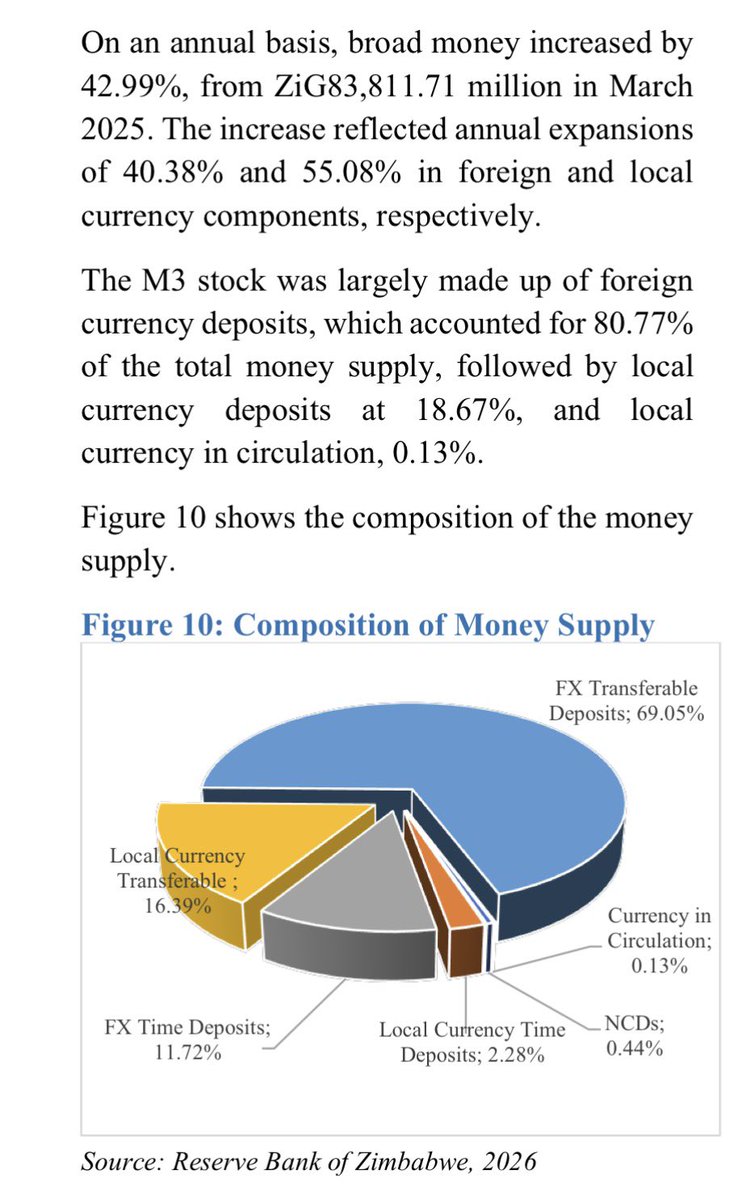
I am often asked what single thing worries me most about the Zimbabwean economy. The answer is money supply growth. Policy volatility remains damaging, but the monetary numbers are flashing red. As of March 2026, annual broad money supply was up 43%, with ZiG money supply up 55% and USD up 40%.
The regional comparison makes the point sharply. Kenya is 10%, Zambia 15%, South Africa 9% and Mozambique around 9%. Zimbabwe is the outlier by a distance. Despite Zimbabwe having a stronger currency….. 🤷🏾♂️
The most telling detail is that actual United States dollar cash in the system has barely moved at around US$1.1 billion, while total deposits have risen to US$4.7 billion. Meaning the monetary expansion is credit and money printing. Deposit money expanding this fast without matching real cash liquidity eventually lands somewhere!!
The worry. This was March
22
Ntandoyenkosi Ivan retweeted

Now leasing at Randport Business Park II. Modern warehouse units from ±2,595m² in a secure industrial precinct with direct access to the N3, N12 & N17. High visibility, fibre-ready infrastructure and quality office components within an established logistics node. atterbury.co.za/space/
#IndustrialProperty #Atterbury
1
1
1
97

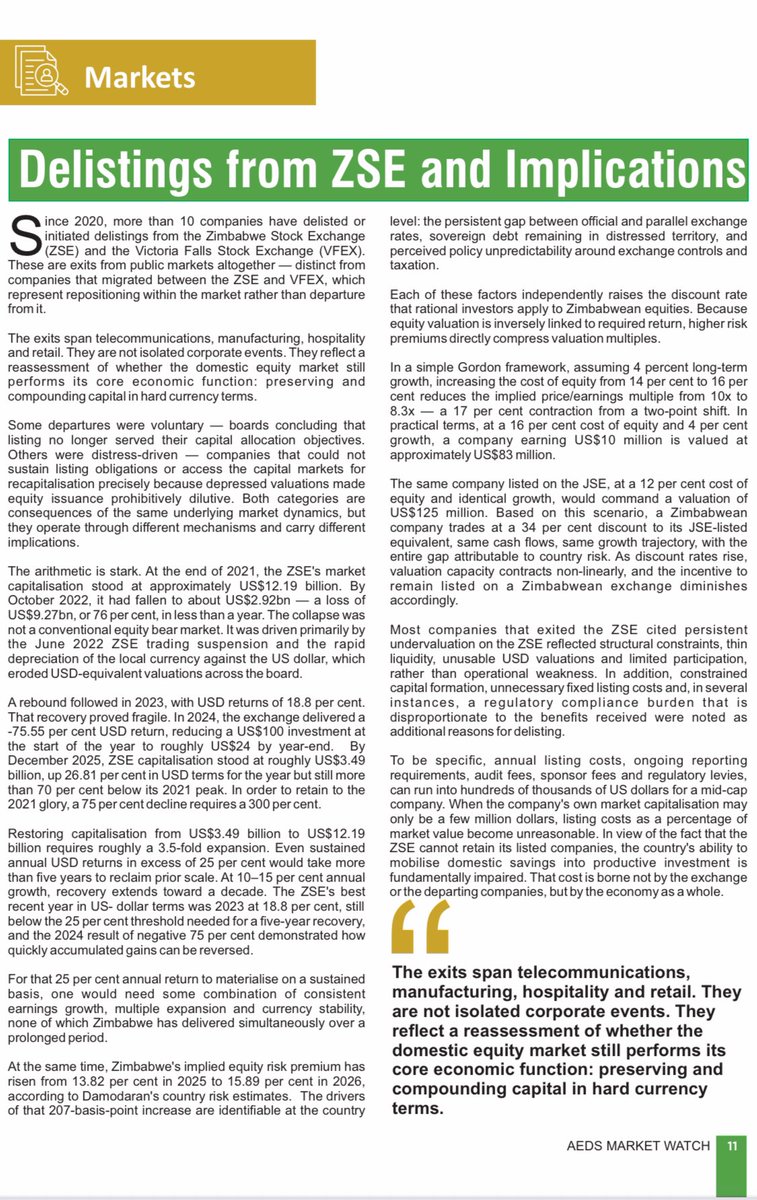
Ntandoyenkosi Ivan retweeted

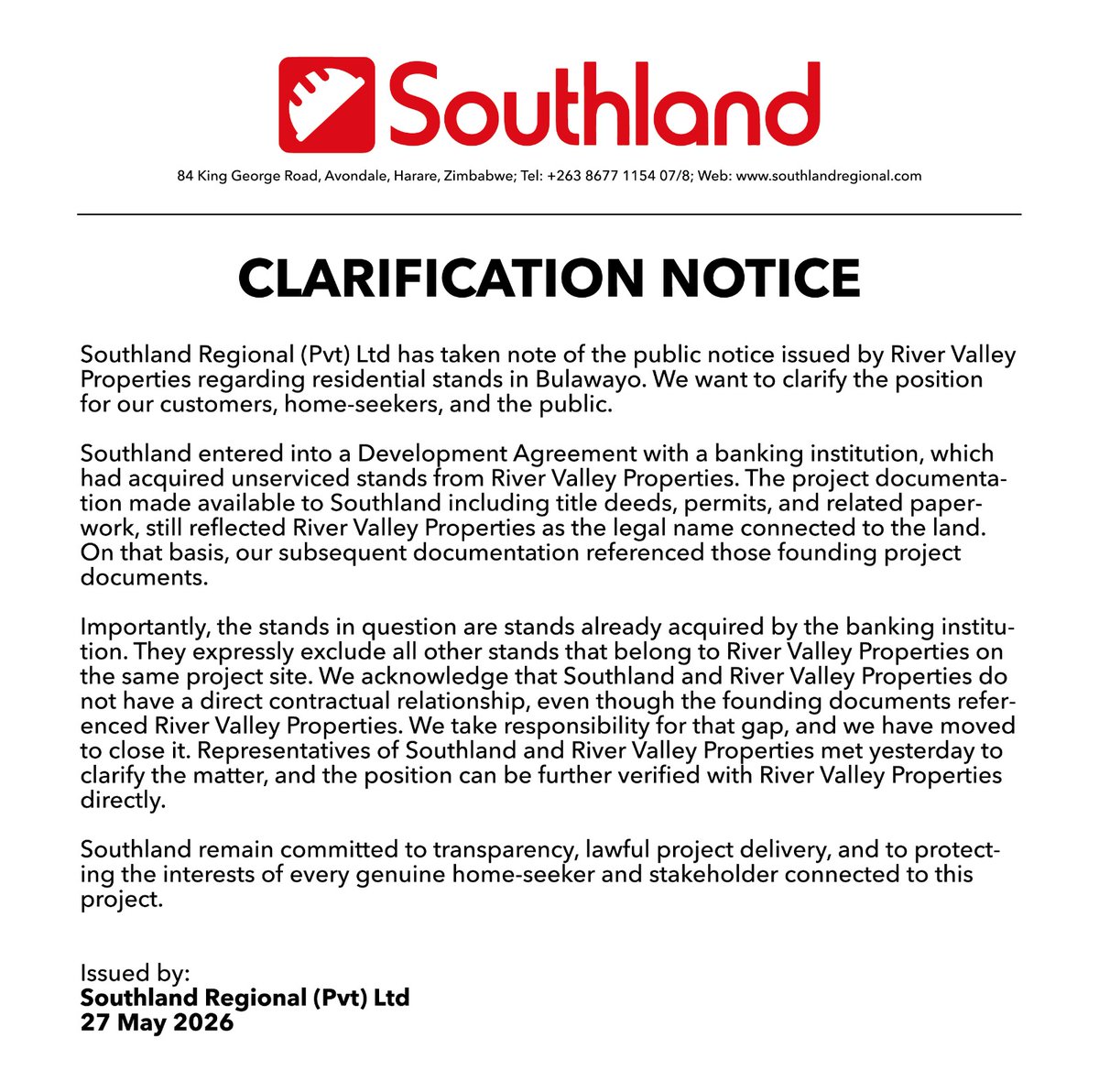
We acknowledge the confusion regarding the Bulawayo stands and regret any concern it has caused.
We remain committed to transparency, lawful delivery and to protecting the interests of our customers and home-seekers.
#SouthlandRegional #ClarificationNotice #Bulawayo
3
5
407
Ntandoyenkosi Ivan retweeted

May 21
When you were taught to value companies based on discounted future cash flows but you just saw a company with no cash flows IPO for a trillion dollars
75
412
6,921
313,724
Just paid 32% of my invoice in charges via Ecocash Mastercard.
Hawala, here I come 😐. Wtf
1
29
Ntandoyenkosi Ivan retweeted

May 13
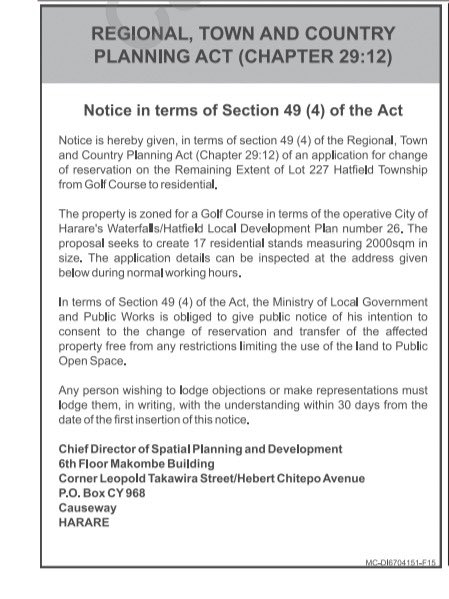
From my vantage, the advantages of having a golf course in a neighbourhood far outweigh the benefit of squeezing in an extra 17 residential stands. A golf course is open land with trimmed grass edifying or beautifying the aesthetics of the land. Urban planning is about beauty as well. It is breathing space, scenery, drainage, leisure, property value and civic dignity all rolled into one.
That this is even being allowed to happen tells us there is something rotten in the state of Denmark.
34
26
111
11,754
Ntandoyenkosi Ivan retweeted
May 10
I still think there is incredible alpha in podcasts nowadays
You have CEOs of multi billion dollar companies and investment firms speaking in length about their product and strategy
Many of them end up on niche podcasts that are extremely underrated and not listened to by the masses
Then you have CEOs of smaller funds, startup entrepreneurs and private companies detailing their entire journey on how they got from zero to one
Just lots of actionable knowledge laying in the open, there to be picked up
The caveat is that you must act on what you learn. Many people use these as a form of escape to feel like they are being productive without ever doing anything
21
20
472
28,488
Out of curiosity. Is it structurally feasible to better socio-economic diversity in cities of colonial foundation?
Taking into account, perceptions, financial consequence and all
May 8

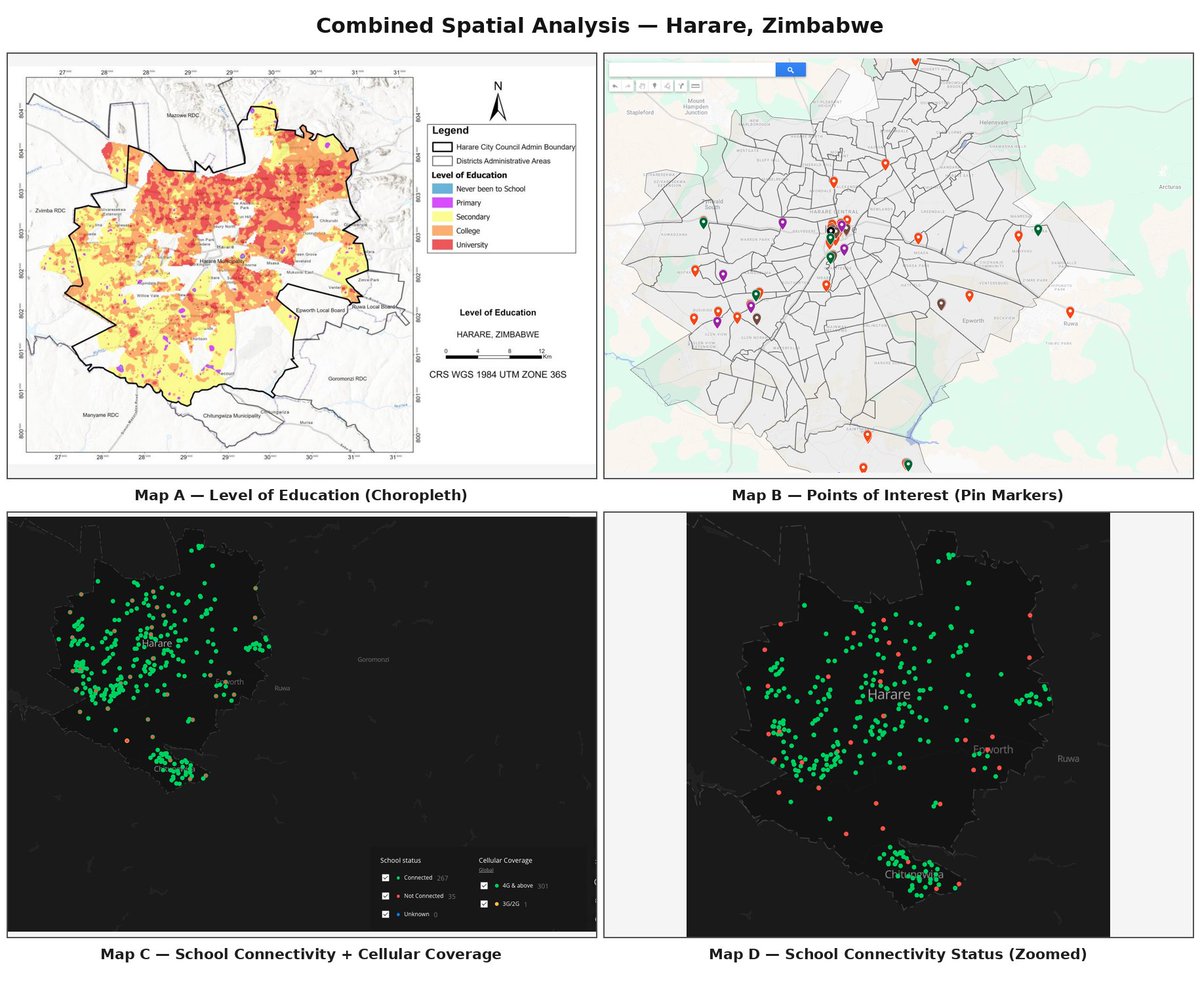
The Geography of Extraction in Harare
In Harare, betting houses do not appear randomly distributed. They seem concentrated in areas where secondary education is the dominant, highest level of attainment and along dense commuter and informal-commercial corridors.
It recalls older urban stories from Southern Africa, where beer halls and beer gardens were strategically placed along the daily routes of working men — the idea being that wages were spent before workers even arrived home.
Whether intentional or structural, the modern geography of betting raises similar questions about how urban movement, economic vulnerability, and commercial extraction intersect in the city.
Maps do not prove causation. But they do reveal patterns worth interrogating. 🇿🇼
Data Sources:
Map A: Harare Master Plan (Education Levels)
Map B: @DeepDiveDataZW (Betting House Locations)
Maps C & D: UNICEF (School Connectivity & Cellular Coverage)
#Harare #SpatialAnalysis #UrbanPlanning #Zimbabwe #DataViz #CivicTech
1
38
Ntandoyenkosi Ivan retweeted

May 6
My favorite rule in sales ”When a man walks in an ask for a blue suit ... you sell him a blue suit"
I learned this both in leasing apartments and raising capital. Don't try and sell someone on something they don't want.
8
4
573
28,831
The restraint from calling this an AI product is appreciated. Still unnecessary but let's push.

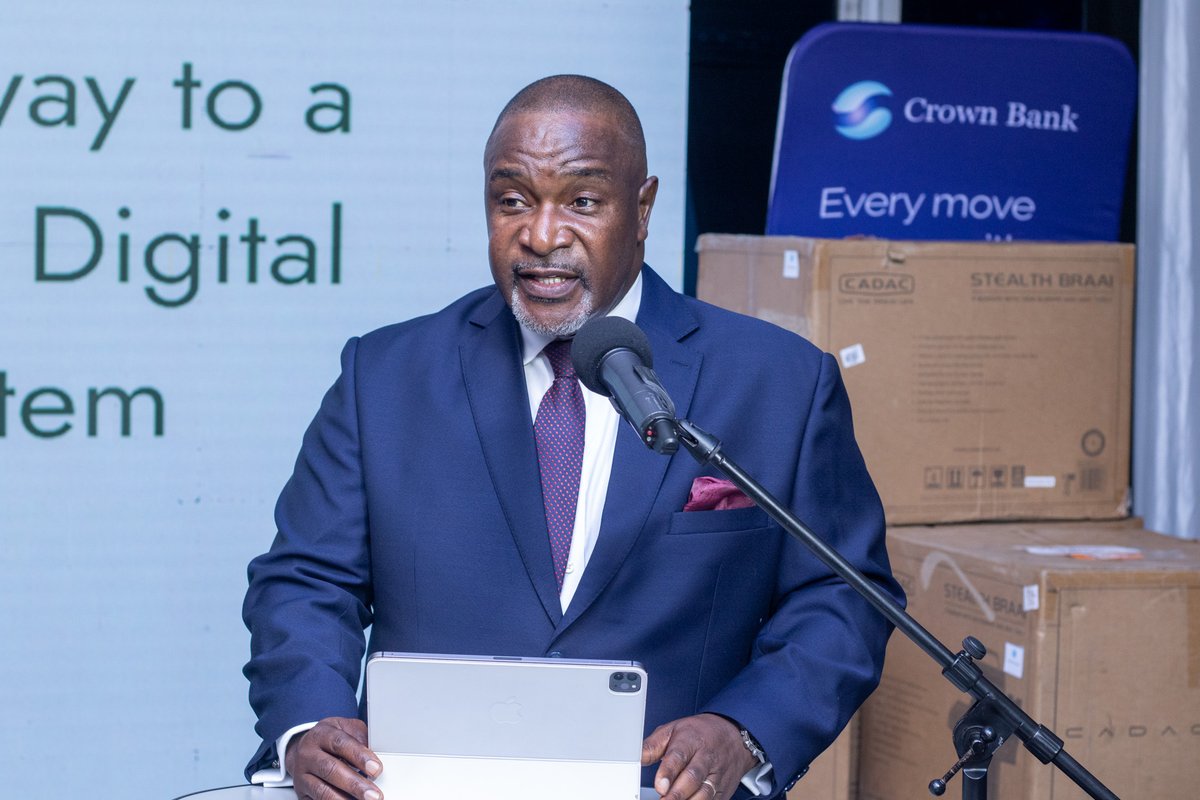
Tonight we are launching Xarani, our fintech unit. Xarani is the thread that connects or stitches the digital ecosystem.
At Xarani, we are embedding AI directly into our solutions. Facial recognition enables us to recognise your face and match it to the ID that was taken when you were 18 years old. Even if you are 70, our technology is able to confirm that you are the same person because there are features that do not change regardless of age.
We also have liveness detection. Liveness detection ensures that when you take your selfie, we are able to detect that you are a live person—you are not a deepfake.
To our partners, public and private, thank you for helping us to build Zimbabwe’s digital infrastructure.
Agrippa Mugwagwa, Managing Director of Xarani, addresses guests
1
17
"How is Botswana adjusting its posture given the whole debacle with diamond values & trade."
Recurring thoughts
16
The Onion will be out of business soon
Apr 11

JUST IN: Uganda’s military chief demands $1 billion from Turkey & “the most beautiful woman in that country for a wife,” threatens to close embassy if demands not met.
27
Ntandoyenkosi Ivan retweeted

Apr 7
Been saying this for a while, but will repeat it for emphasis: “I was only following orders” was rejected as a defense at the Nuremberg Trials.
389
12,652
64,632
670,509
Crazy times

If you need any more evidence as to why we felt the need to do on the ground research…
The tweet below took our footage of a lenj on fire off the coast of Oman, about 12nm from Iran, poorly scrubbed out the watermark and presented it as a “warship on fire” in Lebanon. Ten thousand likes.
The disinformation is staggering.
27