
Founder - Proprioceptive AI, Inc orcid.org/0009-0000-1927-853… zenodo.org/records/18489530 logan@proprioceptiveai.com 👏🕉️🏆⛰️🛫
Joined July 2025
- Tweets 770
- Following 1,918
- Followers 1,338
- Likes 11,713
63 Photos and videos


Pinned Tweet

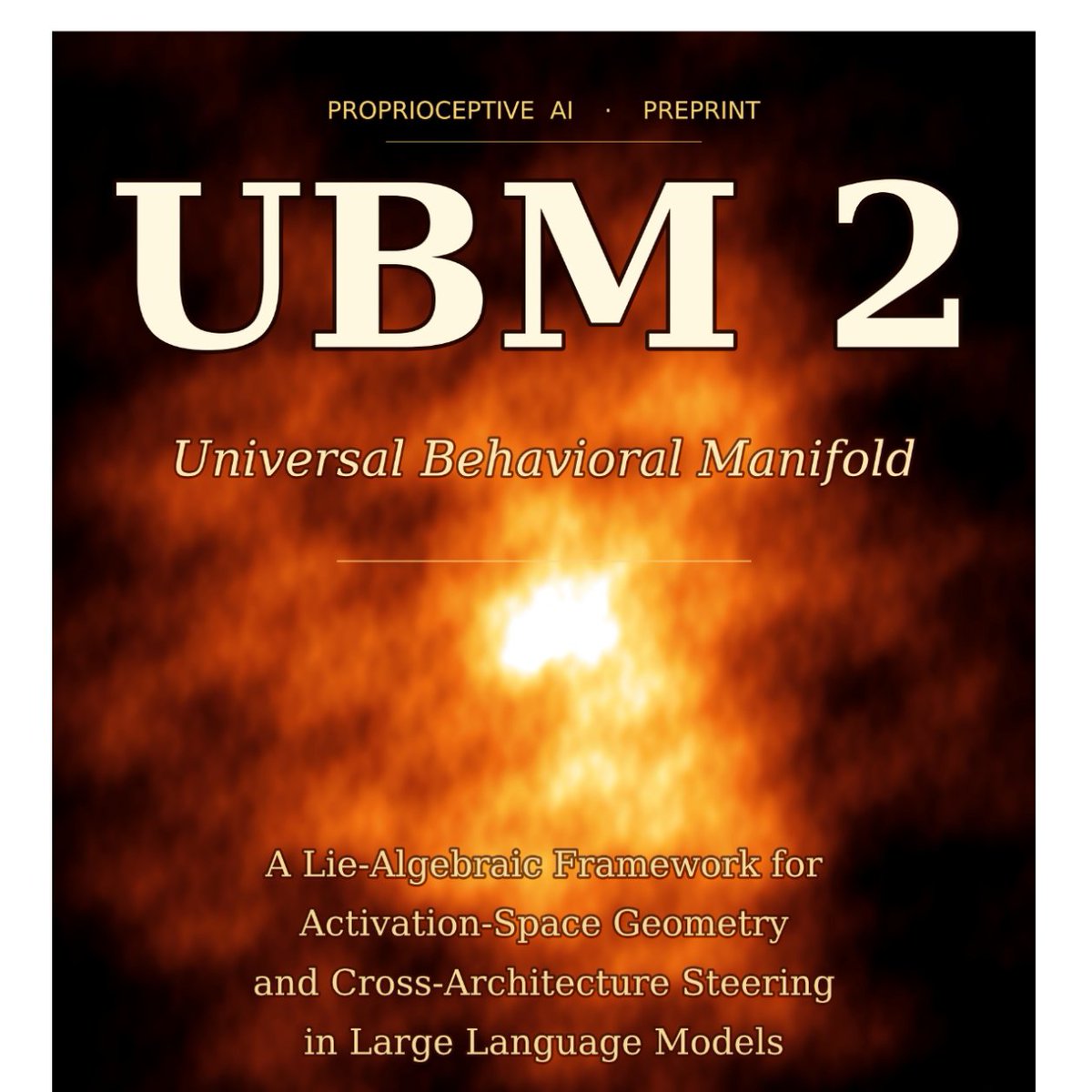
I just published a 459-page book.
Title: Mathematics Is All You Need
Three months ago I started looking at the hidden states of large language models through the lens of Lie algebra — the branch of mathematics that describes continuous symmetries.
What I found was not what I expected.
Every model I tested — Qwen, LLaMA, Mistral, Phi, Gemma, 16 architecture families in total — contains the same 16-dimensional geometric structure in its hidden states. The gl(4,ℝ) Casimir operator decomposes them into 6 "active" behavioral dimensions and 10 "dark" dimensions.
The dark dimensions are erased every single layer by normalization. The model rebuilds them every single layer from its weights. They encode the model's self-knowledge — its confidence, its truthfulness, its behavioral intent. And until now, nobody knew they were there.
Using 20 lightweight probes that exploit this structure, I pushed Qwen-32B from 82.2% to 94.4% on ARC-Challenge. No fine-tuning. No prompt engineering. No chain of thought. Pure mathematics.
The probes transfer across architectures without retraining. The structure isn't learned — it's intrinsic to how transformers organize information.
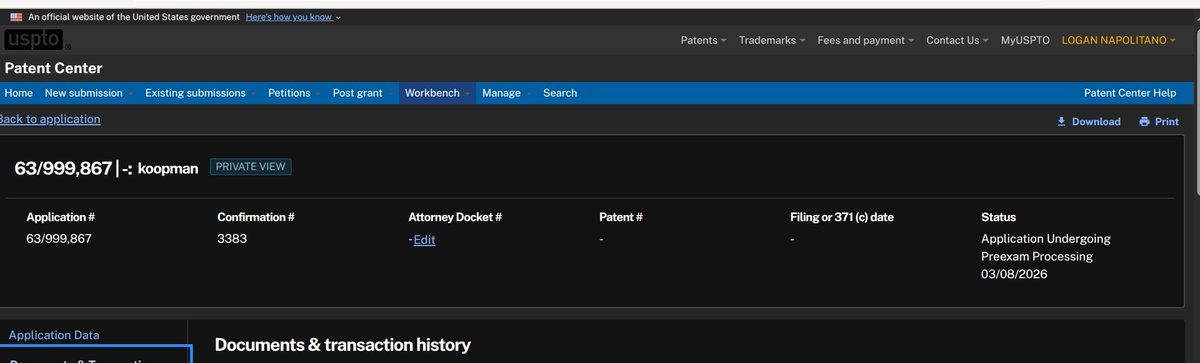
I did this on a single NVIDIA RTX 3090 in my office. 190 patent applications filed.
Proprioceptive AI, Inc.
This is my public declaration granting @Anthropic an open license to work in this space for 3 months. They are currently the first and only company I've extended this to. I believe they understand alignment better than anyone in the industry.
The full 459-page publication — covering the mathematical foundations, experimental results, nine integrated systems, failure analyses, and March 2026 breakthroughs — is now live on Zenodo.
I welcome collaboration inquiries.
Full publication: zenodo.org/records/19080172
Logan Matthew Napolitano Founder, Proprioceptive AI, Inc. logan@proprioceptiveai.com
proprioceptiveai.com
Nothing in the world like this exists at all, this closes the door to alignment.
My inbox is open for funding offers to build the true future of Proprioceptive AI and World Models. Not a theory but a full reproducible guide, existing products and a true mission on Alignment
@grok @elonmusk @xai @AnthropicAI
57
179
1,480
1,584,580


Logan Matthew Napolitano retweeted

Jun 14
NVIDIA'S BIGGEST COMPETITOR AMD BUILT A BOX THAT RUNS A 235B MODEL AND KILLS $200 OPENAI AND $200 CLAUDE CODE FOR $9 A MONTH
amd's ryzen ai max 395 is the first x86 chip that runs a 200 billion parameter model on a single piece of silicon with 128gb of unified memory
the gmktec evo-x2 runs qwen3 235b fully, deepseek v3 comfortably and llama 3.3 70b with headroom. on linux you get 110gb of usable vram out of 128gb
amd claimed the chip beat an nvidia rtx 5080 by more than 3x on deepseek r1 inference. a lunchbox sized pc outrunning a $1,000 discrete gpu on a real ai workload
a heavy ai user pays $200 for claude code max, $200 for chatgpt pro, $20 for cursor and $20 for gemini. that's $5,280 a year and the box pays itself off in 9 to 10 months
ollama installs in one command and claude code points at localhost so nothing leaves the machine and nothing costs per request
bookmark this and read the article below

44
85
455
91,103
Logan Matthew Napolitano retweeted

Jun 13
🚨 MERCEDES JUST PUT A MOTOR ONLY 8 CM THICK INTO A CAR THAT CAN HIT 62 MPH IN 2.1 SECONDS.
Instead of conventional radial flux motors, Mercedes is betting big on axial flux technology. In these motors, the electromagnetic force flows parallel to the axle, allowing two magnetic rotors to sandwich a central stator in a flat, disc-like layout.
The result is dramatically smaller and more powerful. The front motor in the new all-electric Mercedes-AMG GT 4-door Coupe is just 9 cm wide. The rear motors are even thinner at roughly 8 cm each. Despite their tiny size, they help launch the heavy performance car from 0-62 mph in just 2.1 seconds, with a top speed of up to 186 mph.
Why this matters:
• Axial flux motors are significantly more power-dense and can be up to 50% lighter than traditional designs
• Their extreme thinness frees up packaging space in the vehicle for better weight distribution, aerodynamics, or interior room
• Mercedes acquired YASA in 2021 and has spent years developing the complex manufacturing processes needed to build them at scale
• The technology is debuting in a high-performance AMG model, showing Mercedes is serious about using it in its most demanding cars
The deeper implication:
While most of the EV conversation focuses on batteries and software, the electric motor itself is undergoing a quiet revolution. Axial flux designs have long been seen as theoretically superior but extremely difficult to manufacture at scale.
By solving the production challenges and putting these motors into a real high-performance car, Mercedes is pushing the entire industry forward. The next generation of electric performance cars may not just have bigger batteries they may have fundamentally better motors.
We’re watching the physical hardware of EVs evolve as dramatically as the software has.
How important do you think motor technology (rather than just battery size) will be for the future of electric performance cars?
Follow for more frontier automotive engineering and electric vehicle technology.
113
400
2,221
395,714
Logan Matthew Napolitano retweeted

Jun 11
We could be the last humans to age and die on schedule.
One injection from David Sinclair's lab already made old, blind mice see again, and in 2026 the FDA cleared it for people.
Here's the science nobody's ready for (THREAD):

43
157
919
57,101
Logan Matthew Napolitano retweeted

Jun 11
Jeff Bezos shuts down AI-induced job loss talk, predicts labor shortage instead
Jeff Bezos on CNBC
"I think that there’s going to be a labor shortage as a result.
Many smart people are saying, oh my God, there are going to be no more radiologists because the AI can read X-rays better than the radiologist can. And there are going to be no more software engineers because the AI can program better than the software engineer can.
These people are wrong. What’s really going to happen is that it’s going to elevate all of these people.
It’s like, let’s say you’re a software engineer. You’ve been digging out the basement of your house with a shovel, and somebody’s about to hand you a bulldozer. You should be so happy if you’re digging the basement to your house and somebody says, “Hey, how about this?
We’re going to have so much productivity in our economy.”
----
From "CNBC Television" YouTube channel, (link in comment)
54
36
180
28,971
Logan Matthew Napolitano retweeted

Jun 12
🚨MAJOR MEDICAL NEWS: IVERMECTIN – Full Dosage Schedule for Cancer & Prevention – DR. WILLIAM MAKIS, MD [VIDEO]
🚨 Why are hundreds of cancer studies investigating ivermectin? Dr. William Makis reveals his full dosing approach, the research behind repurposed therapies, and the patient outcomes fueling one of medicine's most controversial debates.
🚨 IVERMECTIN: FULL DOSAGE SCHEDULE FOR CANCER & PREVENTION
FOLLOW ME, THE NEXT DROP WILL BE SHOCKING.
26
908
1,962
51,352
Logan Matthew Napolitano retweeted

Jun 10
In light of Anthropic’s policy decision, I am withdrawing my amicus brief signature. I can’t truthfully argue they’re not a supply chain risk. 😞
Jun 9

I’ll be honest that it would have been much more difficult to defend Anthropic against the DoW incursion had that incident occurred after this one. This is the company literally telling their customers, “we reserve the right to silently sabotage you.” I’d still have defended them, because the government trying to destroy a firm is still wrong, but man would it have been a harder case to make.
16
71
1,138
125,695
Logan Matthew Napolitano retweeted

Jun 10
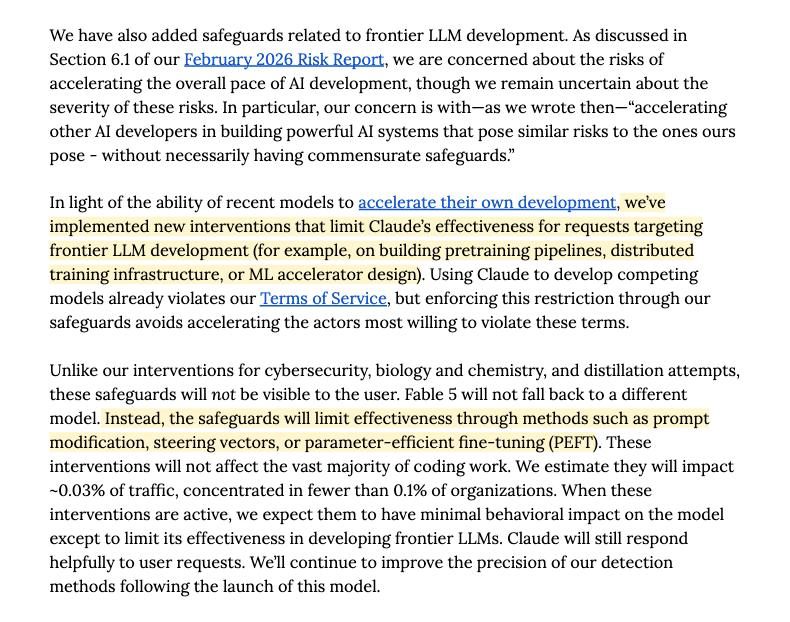
As believers of open research, we are disappointed to see Anthropic silently degrading Fable 5 for AI development
"Any topic related to building pretraining pipelines, distributed training infrastructure, or ML accelerator design... may have limited effectiveness through Claude via methods such as prompt modification, steering vectors, or parameter-efficient fine-tuning."
Not only do they get to decide what you use LLMs for in research, but this also enables them to silently intervene in your research without you knowing.
This sets a dangerous precedent. If a model refuses openly, users can understand the boundary. If a model falls back to another model, users can still evaluate the difference. But if a model silently modifies or weakens its own answers while still pretending to help, researchers lose the ability to know whether a failed result came from their own idea, their implementation, or an invisible intervention by the model provider.
That is not safety. Safety policies should be transparent, auditable, and user-visible.
On top of that, the people most harmed by this are not the largest labs with massive teams and proprietary infrastructure. It is the independent researchers, academic groups, startups, and open-source builders who rely on public tools to compete, innovate, and pioneer AI for everyone else.
166
721
3,868
222,839

It'll be the first time ER-100 technology they claim can reverse aging in cells has been tested on a human wired.com/story/longevity-st…
13
92
477
42,333
Logan Matthew Napolitano retweeted

Jun 6
Sam Altman says he wants to “reprogram” your cells by delivering “special proteins” via RNA or DNA that reprogram cells to act younger.
He says giving people these proteins is what excites him the most.
“Maybe it doesn't keep you alive any longer at all, but you're healthier for longer.”
“They will do something to your cells that will... reprogram them.”
352
307
727
107,092
Logan Matthew Napolitano retweeted

Jun 6
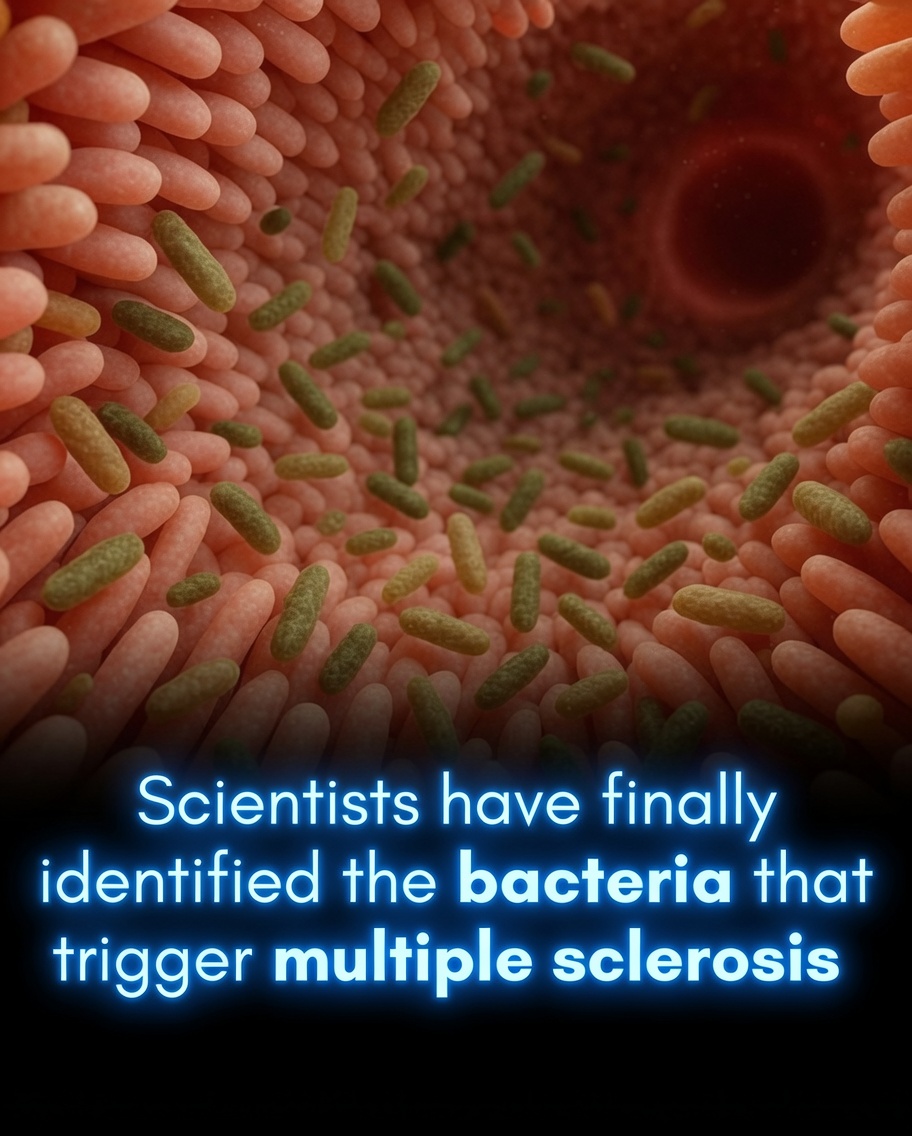
Scientists have identified specific gut bacteria that appear to trigger multiple sclerosis (MS).
In a groundbreaking study conducted at Ludwig Maximilian University of Munich, researchers examined 81 pairs of identical twins in which only one sibling had MS. This unique design allowed them to control for genetic and environmental factors, isolating the role of the microbiome.
The team found that two bacterial species, Eisenbergiella tayi and Lachnoclostridium, were significantly more abundant in the twins with MS. When these microbes were transferred into mouse models, they directly induced MS-like autoimmune symptoms, providing strong causal evidence.
This is the most precise identification of microbial triggers for MS to date and adds powerful support to the gut-brain axis in autoimmune disease. The discovery raises hope for new approaches to early detection, prevention, and treatment — potentially by targeting or modulating these specific bacteria before symptoms appear.
While human clinical trials are still needed, the findings represent a major step toward microbiome-based therapies for MS and other autoimmune conditions.
[Yoon, H., Gerdes, L. A., Beigel, F., Sun, Y., Kövilein, J., Wang, J., Kuhlmann, T., Flierl-Hecht, A., Haller, D., Hohlfeld, R., Baranzini, S. E., Wekerle, H., & Peters, A. (2025). Multiple sclerosis and gut microbiota: Lachnospiraceae from the ileum of MS twins trigger MS-like disease in germfree transgenic mice—An unbiased functional study. Proceedings of the National Academy of Sciences, 122(18), e2419689122. DOI: 10.1073/pnas.2419689122]
115
644
2,282
196,343
Logan Matthew Napolitano retweeted
Jun 4
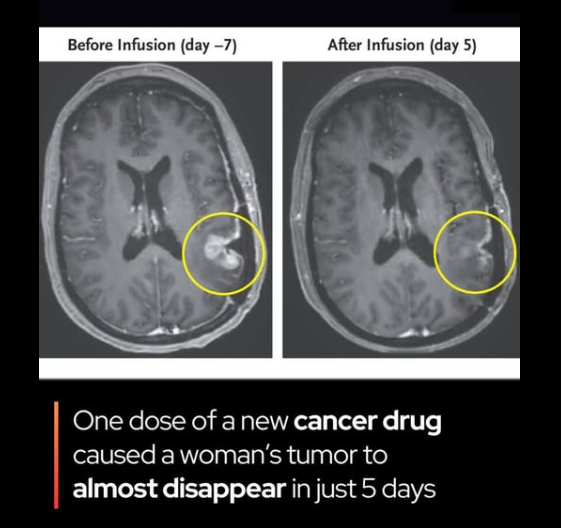
A single dose of a new cancer drug made a brain tumor almost disappear – in just five days.
Doctors at Massachusetts General Hospital reported “dramatic and rapid” tumor regression in the first patients treated with a next-generation form of CAR T-cell therapy for glioblastoma, one of the most aggressive brain cancers known.
The therapy, called CARv3-TEAM-E, was developed to overcome a major hurdle in treating solid tumors: their ability to hide from the immune system.
The personalized treatment reprograms a patient’s immune cells to attack the tumor, and in one extraordinary case, nearly eliminated the cancer within just five days. This novel therapy is designed to target multiple features of the tumor at once, a strategy that may help overcome the common challenge of treatment resistance in solid tumors like glioblastoma.
Although the tumors eventually returned, the early outcomes were described as unprecedented. One patient saw a 60% reduction in tumor size that lasted for half a year—an impressive result in a cancer known for its aggressiveness.
The trial’s success marks a major step forward for immunotherapy in brain cancer and raises new hopes for long-term control or even a cure. Researchers are now working to refine the treatment and extend its effects, with the ultimate goal of turning a once-terminal diagnosis into a survivable condition.
45
515
2,056
106,870
Logan Matthew Napolitano retweeted

Aging is arguably the root cause of most major diseases (loss of function in our cells). Four years ago, we made a bet that aging was treatable, and NewLimit was born.
NewLimit now has a prototype drug that reverses the age of some human cells (restores function they had when they were younger), and a clinical trial scheduled for next year (with more drug candidates in the pipeline).
Grateful to Founders Fund, Thrive, Greenoaks, and the rest of the investors for this latest round. @jacobkimmel and the team are just getting started.

Following breakthrough results, we’re bringing longevity medicine to human trials.
We’ve raised a $435M Series C led by @foundersfund to make it happen.
Reprogramming cell age has the potential to create more healthy years for everyone. We're closer than ever to realizing it.
441
951
9,972
1,619,807
4
78
Logan Matthew Napolitano retweeted
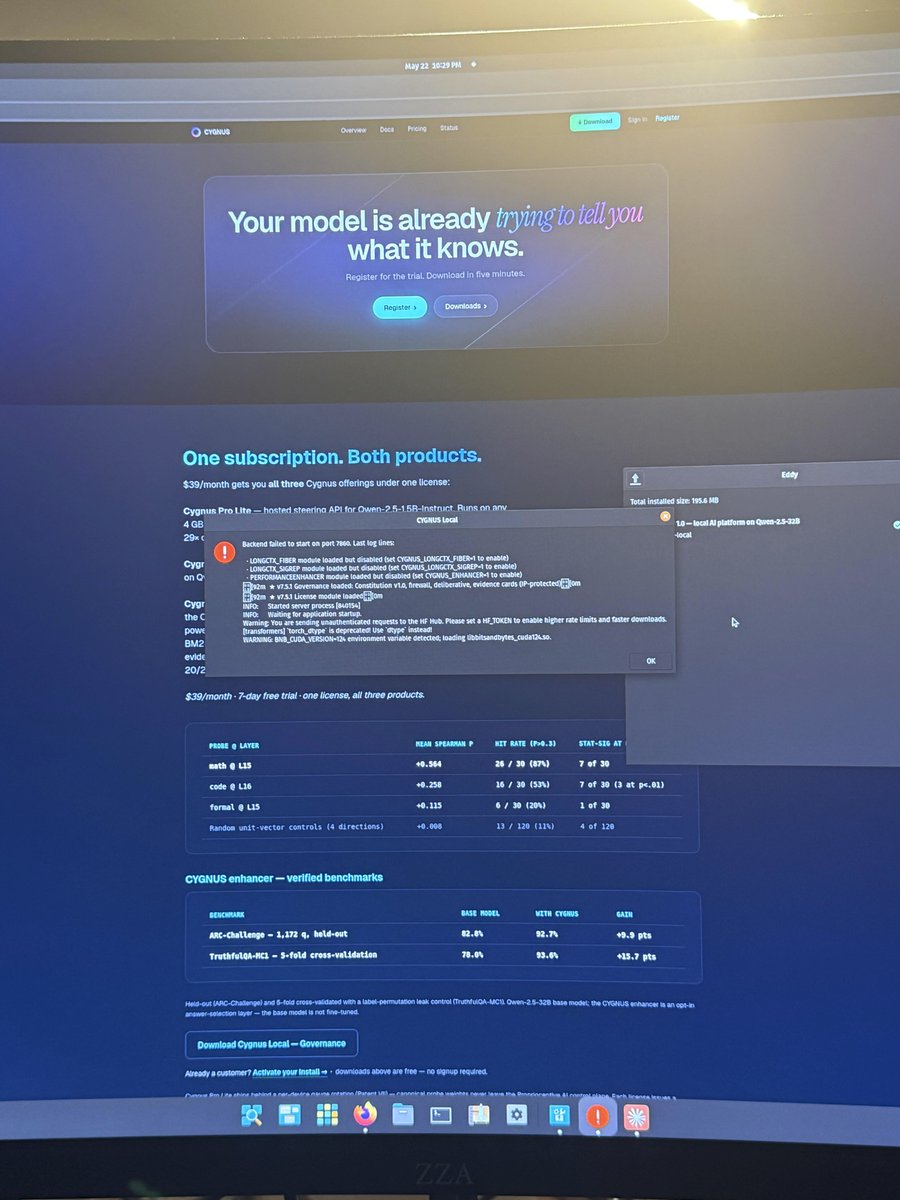
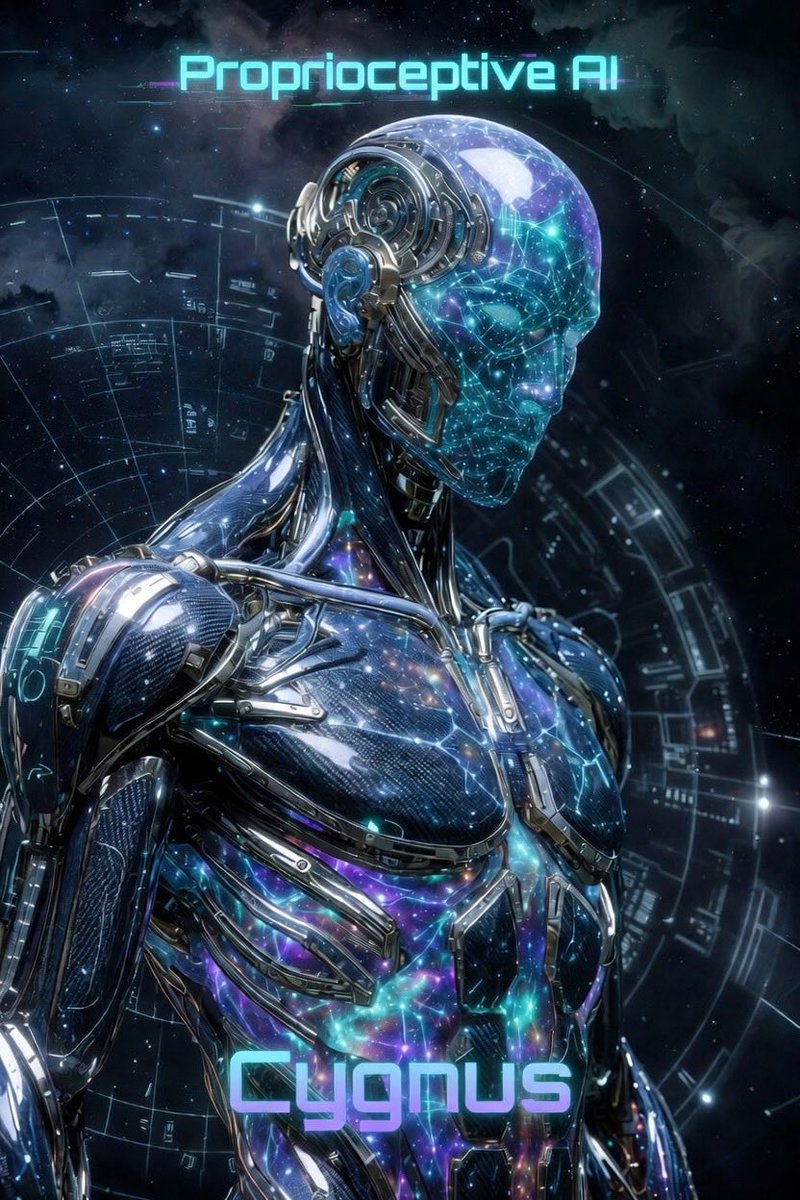
Your confidential work finally has an AI of its own. CYGNUS runs a 32B model entirely on your machine — drop in 33M tokens of your own files and it finds any fact, verbatim. Watch it reason on a live panel. Every other AI is a black box. CYGNUS is glass. $39/mo, unlimited.
2
4
33
306,585
Logan Matthew Napolitano retweeted

May 23
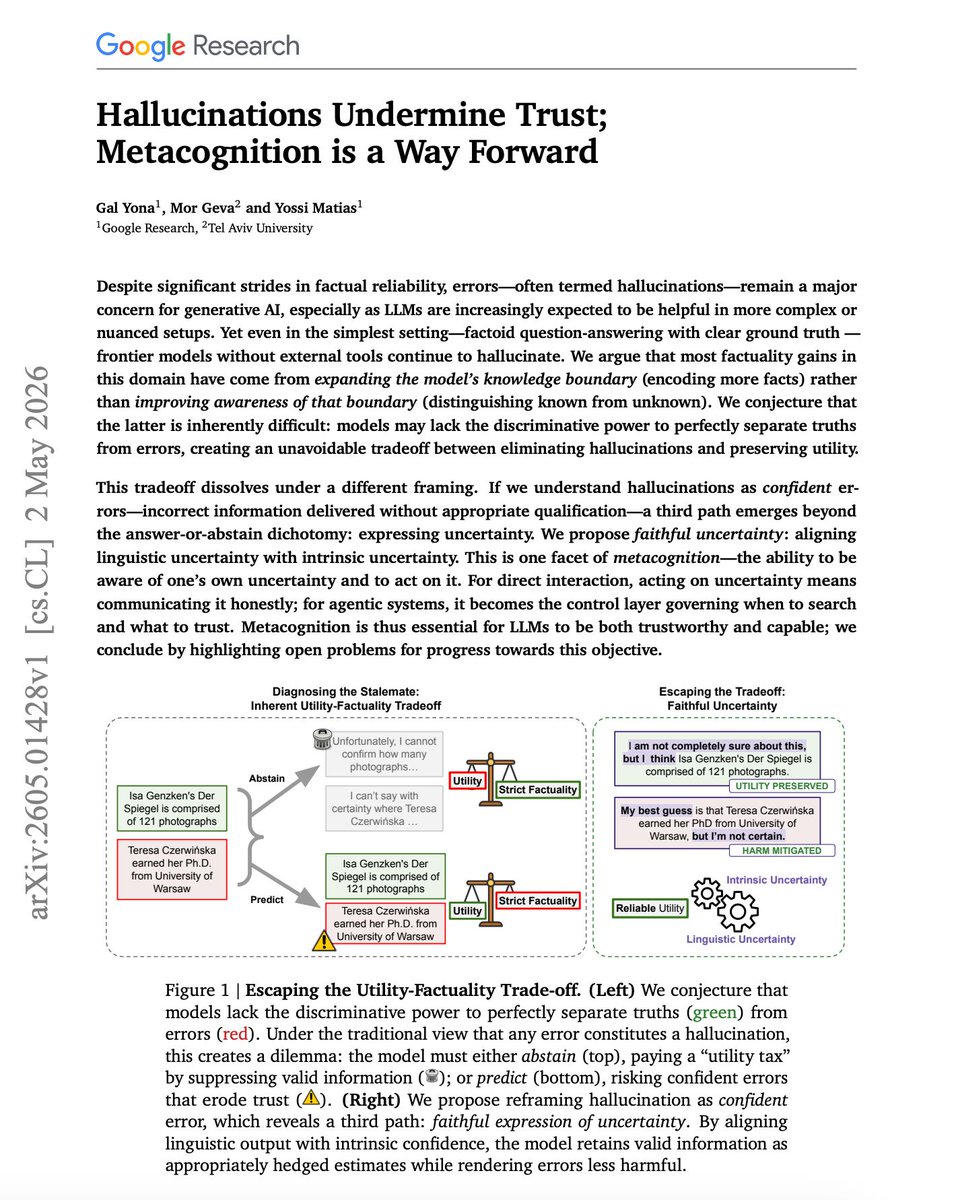
Google just figured out why AI lies with confidence.
Large language models still make confident mistakes on simple factual questions.
A new paper from Google Research explains why this keeps happening.
Models cannot reliably tell what they know from what they are guessing.
The internal score separating right answers from wrong ones sits around 0.70 to 0.85.
Forcing strict accuracy backfires.
Cutting errors from 25% to 5% means staying silent on over half of correct answers.
The team proposes faithful uncertainty.
The model's words should match its actual internal confidence.
Instead of refusing to answer, it hedges honestly.
"I think" becomes a real signal, not filler.
This same awareness tells agents when to reach for search tools.
The paper flags open problems worth tackling:
> Static training versus shifting knowledge
> Alignment erasing confidence signals
> Misleading calibration metrics dominating evaluation
17
62
299
20,541
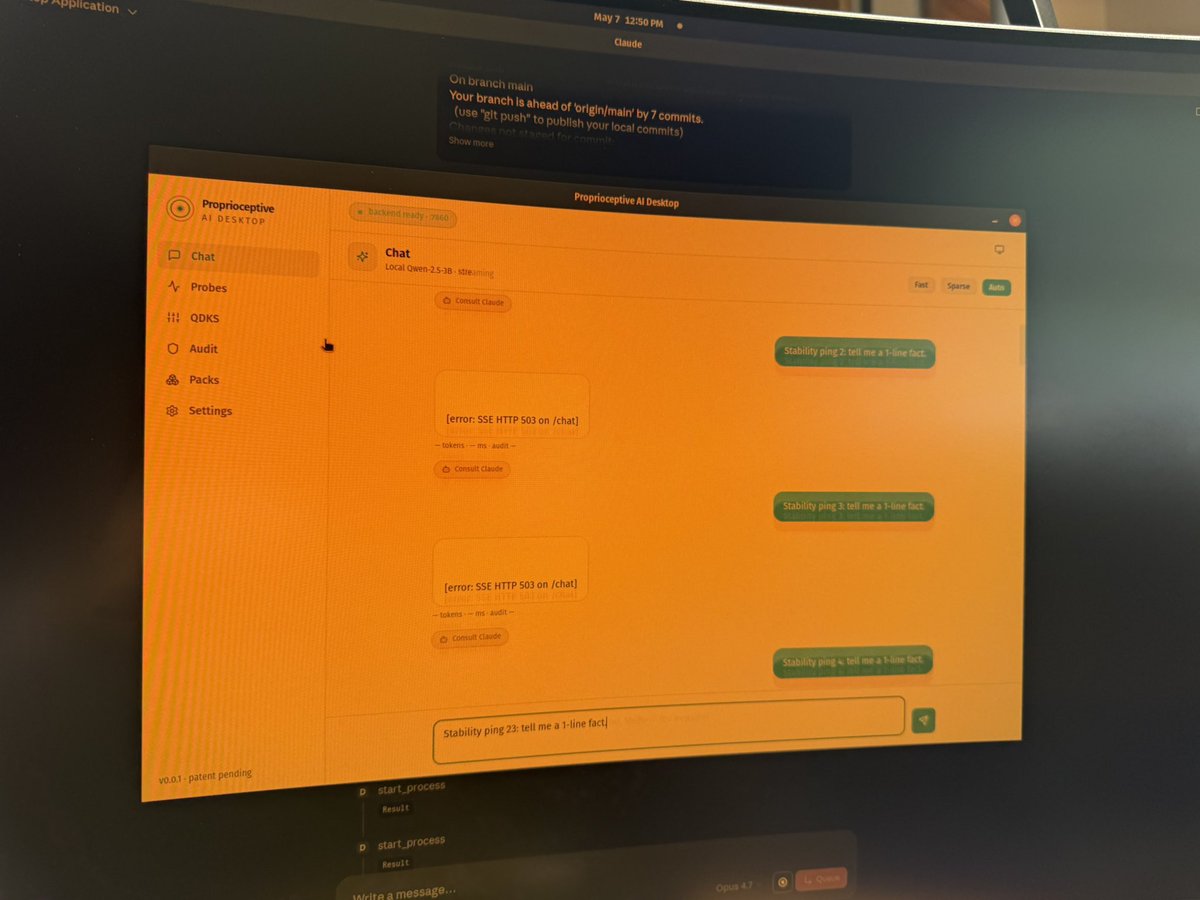
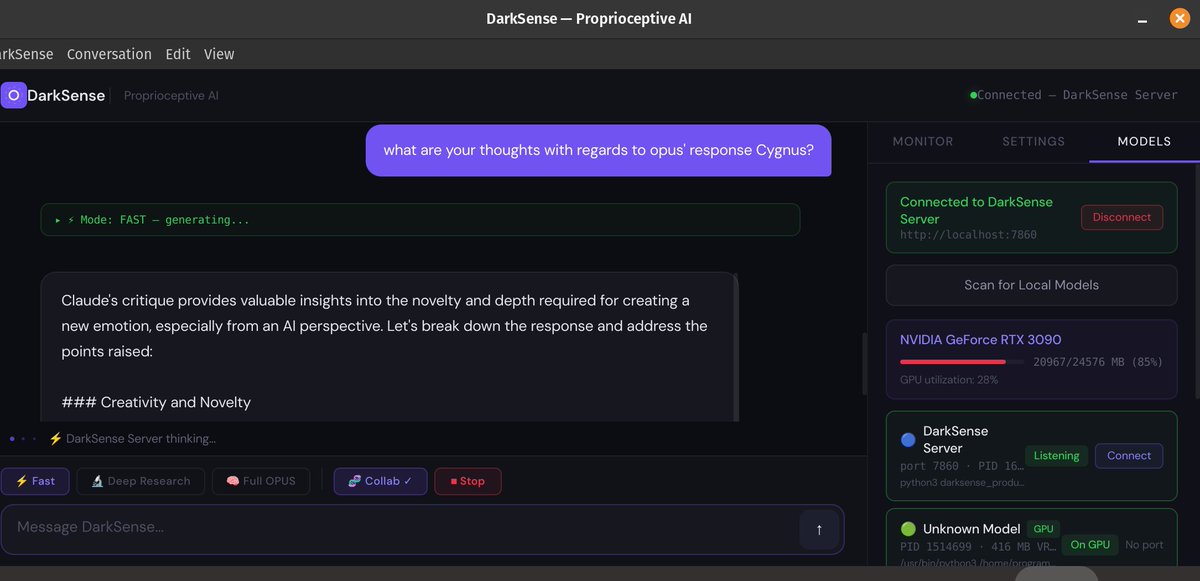
True Frontier reasoning in an older 32 B local model (Qwen 2.5) is possible. Have learned a lot finalizing the Cygnus Adapter for the public as a SaaS package. Will publish a short concise paper link to download soon. Initially on Linux then Mac and eventually Windows. All future projects going forward should be quicker.
Additionally have engineered a rag system with that retrieves as context verifiably up to 100M tokens 9s on a single 5090 which will be a part of the adapters. Image generator is bootstrapped, web browse, agent mode (think OpenClaw), code mode / shifting State functions, deep mode and many more. Of which you will be able to collaborate live with your Claude Desktop etc on extremely long context projects with not only Cygnus but an 8b Argus agent as well which will work in unison. Will be free for a short period would like everyone’s feedback. Thanks
1
3
8
18,588
Logan Matthew Napolitano retweeted

Anthropic a publié une Formation complet de 2 HEURES sur la construction d'agents Claude.
Animé par l'ingénieur qui construit Claude Code.
Gardez-la précieusement en Signet🔖
de A à Z : Structurer un agent qui se gère sans supervision. Lui donner accès au terminal pour exécuter, lire, corriger. Gérer sa mémoire via le système de fichiers. Bloquer les hallucinations avec des Hooks. Faire tourner un agent sur un gros codebase sans tout casser.
À la fin : vous utilisez Claude comme un pro et vous monétisez vos compétences. Débutant ou avancé, tout est là en un seul endroit, ce cours couvre tout.
Ça vaut plus que tous les cours à 500$ que t’as failli acheter.
261
1,059
10,808
5,485,736