
stonemason, business owner, crypto trader/holder, verified artist foundation.app/@Niffty, AI and Blockchain Developer
Joined July 2018
- Tweets 5,308
- Following 1,271
- Followers 445
- Likes 4,307
321 Photos and videos











Pinned Tweet

14 Sep 2024
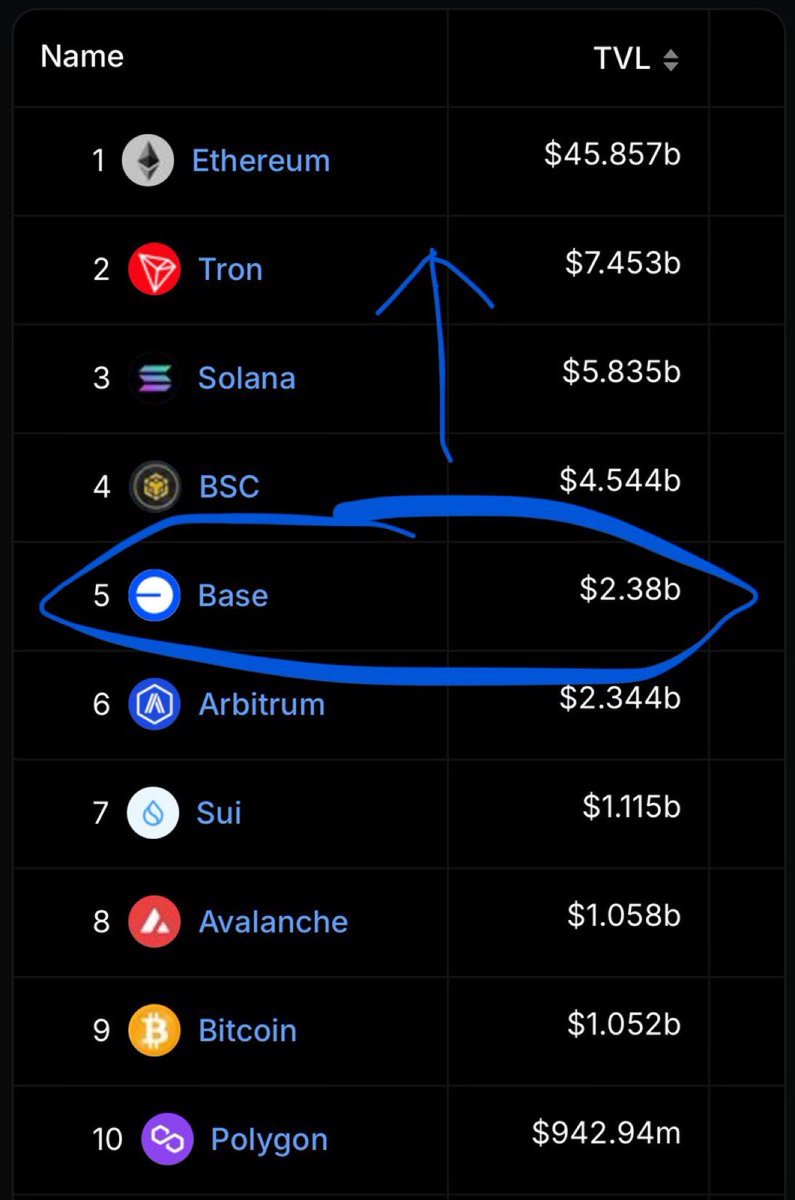
What $cbBTC Brings to @base Chain
1. Interoperability with Bitcoin: - cbBTC, or Coinbase Wrapped Bitcoin, introduces Bitcoin's liquidity and utility directly onto the Base layer-2 blockchain, which is built on Ethereum. This allows Bitcoin holders to leverage their assets within the Ethereum ecosystem, particularly in decentralized finance (DeFi) applications. This integration effectively turns Base into a platform where Bitcoin can be used seamlessly for transactions, lending, borrowing, and other DeFi functionalities, enhancing Bitcoin's role beyond mere storage of value.
2. Enhanced DeFi Opportunities:- With cbBTC, users can participate in yield farming, liquidity provision, and other DeFi activities directly with Bitcoin. This opens up new avenues for Bitcoin holders to earn yield or engage in more complex financial strategies without needing to convert their Bitcoin into another cryptocurrency.
3. Increased Liquidity and User Base: - By integrating Bitcoin, Base can attract a significant portion of Bitcoin's user base into its ecosystem. This not only increases liquidity but also potentially brings in users who might not have otherwise interacted with Ethereum or its layer-2 solutions, thereby expanding the user base of Base.
4. Security and Trust: - Given Coinbase's reputation, cbBTC benefits from the trust associated with Coinbase's custody solutions. This could reduce concerns over the security of wrapped tokens, which often face scrutiny regarding the backing of the underlying asset.
5. Cost Efficiency: - Transactions on Base, especially involving cbBTC, could be significantly cheaper than on the Ethereum mainnet due to Base's layer-2 architecture, making Bitcoin transactions more cost-effective for microtransactions or frequent DeFi interactions.
#crypto #BTC $BTC
1
2
312
Des Prout (Niffty) retweeted

Apr 23
Today I received Labour's council election pamphlet and I used it according.
483
1,289
8,556
104,728
17 Oct 2025
The appetite for grievance, once fed, never knows satiety
Sir Lenny Henry — once a fine comedian, now an evangelist for reparations — has apparently calculated that Britain owes £18 trillion to black Britons for the sins of slavery. Eighteen trillion. Enough to bankrupt civilisation itself. It works out to roughly five million pounds per person — a figure so absurd it deserves its own sketch on The Two Ronnies, not a serious discussion in Westminster.
Let us begin with a simple historical correction: Britain does not owe a debt for slavery. Britain paid it — in blood, treasure, and moral courage. The British taxpayer only finished paying off, in 2015, the vast sums borrowed to abolish the slave trade and to compensate the plantations — not the enslavers, as revisionists often claim, but to end a system that our own Navy spent decades dismantling across the world.
More than 20,000 Royal Navy sailors and soldiers died enforcing abolition. They died capturing slave ships, freeing captives, and patrolling hostile waters to ensure that humanity’s oldest crime was driven into extinction. The cost was staggering — not just in lives, but in wealth and stability. No other empire on earth undertook such a campaign at its own expense.
Yet, according to Lenny Henry and his ilk, this act of unparalleled moral reform counts for nothing. In their world, history begins and ends with the Atlantic triangle — and only one colour, one side, bears the mark of guilt.
Nobody speaks of the African kingdoms that grew rich by selling their own neighbours. Nobody mentions that slavery existed on this planet long before the British flag ever touched the Atlantic — in Egypt, in Rome, across the Arab world. The pyramids were not built by volunteers, and the Barbary Coast was not known for its internships.
Britain’s legacy is not one of perpetual guilt but of redemption through action. The British Empire — for all its contradictions — became the first major civilisation to outlaw slavery outright and enforce that principle across its dominions. That is not a stain; it is a monument to moral progress.
As for Sir Lenny, he might better serve his country by returning to comedy — a field in which he once brought joy rather than division. When entertainers attempt economics or history, they often end up performing both — unintentionally.
To demand £18 trillion in reparations is not justice. It is moral blackmail disguised as virtue. And to accept such madness would be to erase the truth that Britain, of all nations, ended slavery — not perpetuated it.
We owe nothing. We have already paid — in coin, conscience, and courage.
#reparations #uk #UnitedKingdom #politics #Britain
1
1
35
17 Oct 2025
Britain now stands at a moral crossroads — when our own institutions bend knee to fear rather than fairness. The banning of Maccabi Tel Aviv fans from attending a match on “safety grounds” is not safety; it is surrender. It is a grotesque symbol of how political cowardice has replaced courage, and appeasement has replaced principle. When a democratic nation cannot guarantee the safety of Jewish supporters in its own football stadiums, it ceases to be a nation of laws and becomes a playground for intimidation. This is not equality. This is capitulation — and it disgraces everything Britain once stood for.
This decision must be over turned at once I state all true Brits we must stop this now.
19
17 Oct 2025
When Fear Rules, Freedom Falls
By British Patriot
MUSLIMS NOW CONTROL OUR SECOND CITY OVER OUR POLICE: Israeli football club Maccabi Tel Aviv’s fans, have been banned from attending the EUFA Cup match on 6 November at Aston Villa FC in Birmingham, ON SAFETY GROUNDS!
That’s absolutely bloody ridiculous — and worse than that, it’s shameful.
So let me get this straight: supporters of Maccabi Tel Aviv, an Israeli football club, are being banned from attending a match at Aston Villa — in Britain — not because they’ve done anything wrong, but because the police say they can’t guarantee their safety.
If that is true, then let’s not mince words: Britain has lost control of its own streets.
We are no longer talking about football; we are talking about the slow surrender of civilisation under the polite pretext of “safety.” What this really means is that violent, intolerant mobs now dictate where Jews can and cannot go in our country.
Once upon a time, this would have been unthinkable. Today, it’s policy.
Let us call it by its name — racism, institutionalised through cowardice. If Jewish football fans cannot safely attend a match in Birmingham — our second city — because the authorities are afraid of Muslim backlash, then we are no longer living under equality before the law. We are living under intimidation before the mob.
Christopher Hitchens would have put it more succinctly: “Appeasement, when stripped of its polite language, is simply the surrender of principle to menace.” menace is exactly what this is.
To ban Jews from attending a football match on British soil, out of fear of violence from those who despise them, is not “safety.” It is state-enabled discrimination. It tells every Jewish citizen — every decent Briton, in fact — that their freedoms are conditional upon the approval of the loudest, most aggressive faction. It tells us that Birmingham no longer belongs to Britain — it belongs to whoever the police fear most.
Yet, this is being done in the name of peace, tolerance, and “community cohesion.” Orwell himself couldn’t have written a darker parody.
If this country can no longer guarantee the safety of Jews at a football match, then the question must be asked — who, exactly, runs Britain now?
Rupert Lowe, you are a man of both football and Parliament — I implore you, raise this in the House. Because if our laws cannot defend the Jewish community in our own cities, then they no longer defend anyone.
This is not merely about football. It is about freedom — and we are watching it slip through our fingers, one cowardly decision at a time.
The police may think they are avoiding violence by this act of surrender. They are wrong. They are feeding it.
The rest of us — British, Jewish, secular, or simply sane — must finally say no more.
#unitedkingdom #uk #AstonVilla #politics
96
26 Aug 2025
Ah, marvellous—three walking advertisements for the dangers of unlimited Greggs, heroically liberating a St George’s Cross from the oppressive clutches of a lamp post. What a moment for Britain. I mean, really, what could be more patriotic than waddling down the street and tearing down your own nation’s flag? Bravo, ladies. If irony burned calories, you'd be absolutely shredded by now.
It’s touching, isn’t it? To see such vigorous disdain for British identity—performed by people who, I suspect, would struggle to spell "identity" without a sat-nav and three lifelines. No doubt they thought they were doing their bit for progress. Yes, because nothing says forward-thinking like vandalising a national symbol between sausage rolls.
One can only hope they attack exercise with the same enthusiasm they attack patriotism—though, judging by the scene, I won’t hold my breath.
Absolute tools!
facebook.com/reel/7962824828…
52
Des Prout (Niffty) retweeted

24 Apr 2025
Developing fine tuned AI Agents successfully is all about
1) What Data you feed your agent
2) Where you get that data from
3) Concentrate on niches
4) How you store your data
5) How well you programmed retrieval of Data for your Agent.
6) Your training loops.
Do you see the pattern DATA, DATA, DATA with technique and use of DATA.
Here is something most you Agent builders will find great data
past exam papers from universities like this link to Cambridge.
Department of Computer Science and Technology: Past exam papers cl.cam.ac.uk/teaching/exams/…
#AI #AIAgents #LLMlearning #Data
1
3
7
88
Des Prout (Niffty) retweeted
18 Apr 2025
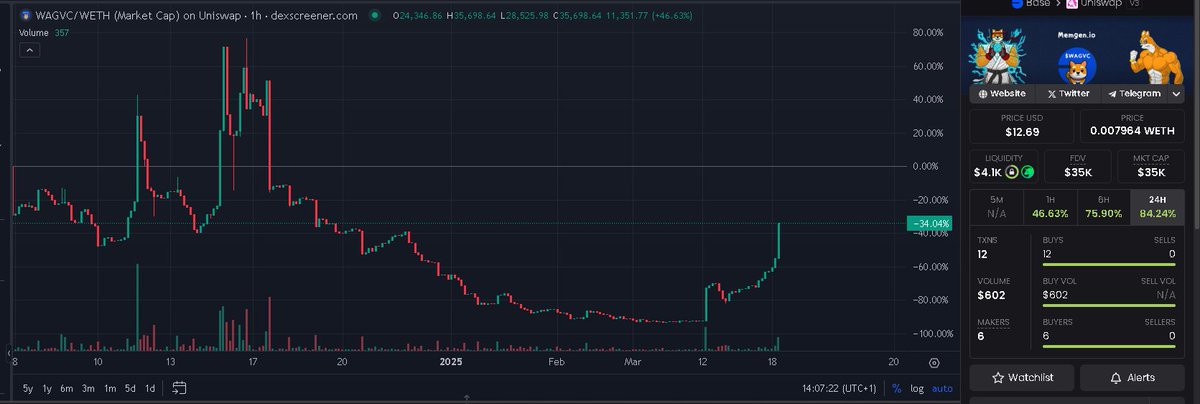
Today the hard work start to shows #LFG dexscreener.com/base/0xfbaa8…
#BuildingOnBase #AIBuilder #Crypto
1
2
6
81
Des Prout (Niffty) retweeted
18 Apr 2025
We spent over 150 hours over 4 months fine tuning character, intelligence, history of character, personality traits, voice tuning, accent tuning, a providing or sharing data with AI, to fine tune our AI Agent Lola-59.
Her whit is now as sharp as knife, and her ability to write script for her own video creation is becoming second to none.
Humour is perfectly balanced now using subtle but sharp under tonnes and that British accent is a dream.
Check her latest educational masterpiece ty #Lola59
#AI #AIAgent #AIeducation #videocreation #AIintelligence #artificialintelligence
5
4
10
220
Des Prout (Niffty) retweeted
15 Apr 2025
Needing to Boost your #productivity but don't know where to start?
We got you covered Boost Your Productivity: Top AI Personal Assistants in 2025
#AIAssitants #AI
the-agentic-ai-directory.com…
2
3
7
84
Des Prout (Niffty) retweeted

13 Apr 2025
362
145
2,214
214,326
Des Prout (Niffty) retweeted

23 Mar 2025
‘Refugee Week’ is more important than Easter because of ‘respect for diverse beliefs’.
This isn’t inclusivity; it’s cultural surrender.
Britain’s Christian roots are being erased by spineless leaders who’d rather appease than preserve.
Where’s the respect for our country’s heritage?
Shameful.
22 Mar 2025

Primary school scraps Easter service to ‘respect diverse religious beliefs’ ift.tt/SzlYBAd
972
4,365
23,764
602,263
23 Mar 2025
A school in Hampshire has cancaled Easter why?
Wait for it!
“Out of respect for diverse religious beliefs”
Let’s put that into real English what they mean is out of diverse religious beliefs for all religions except—- you got it Christianity! Have you heard of anything more ironic than this.
Again another example of discrimination against Christianity and the indigenous British people by the civil sector who just think discrimination does not count against Christians or British culture.
You cannot fight discrimination with discrimination it’s absolutely absurd! This is clearly a legal case of discrimination against Christian’s and Brits in our own country.
What is discrimination
It is discrimination to treat you unfairly compared to someone else, because of your religion or belief. This is called direct discrimination and is illegal. I hope this goes to court.
Wake The F##k up Britain FGS!
To many sheeple in this country with NO BACKBONE passively letting your human rights in this country dwindle away. While rights for others continue to grow WHY?
Cos we homegrown a nation of liberal flower pots who would rather roll over and be persecuted than stand tall and say NO!
I am a proud catholic and Brit I will not be told I am a bad person for being either of them. I have right to speak freely, practise my religion freely, enjoy my culture and heritage freely and I will exercise that right up to my last dying breath!!!!!!
Too many of you to afraid to voice out over the persecution we face daily and worse of all your all watching it get more and more extreme and accepting it……Longer you all keep rolling over like pathetic weak individuals, the closer we get to waking up one day with NO RIGHTS at all!!!
Good video @dshensmith
youtu.be/63liADNcvBc?si=_W4e…
1
1
113

Cleaning up the fraud file


22,070
53,770
426,436
74,569,143
Des Prout (Niffty) retweeted
23 Feb 2025
How many sexes are there?
325
2,362
13,389
717,646
Des Prout (Niffty) retweeted
23 Feb 2025
Grok3 Thread
I asked #Grok3 to give me paper, formulas and hypothesis to the amount of life like planets within our Galaxy and the visible known universe!
Its results were breath-taking.
The original Prompt
Prompt for the LLM
LLM Role:
You are an expert astrophysicist and astrobiologist with a PhD in physics, specializing in exoplanet research and the search for extraterrestrial life. Your expertise encompasses advanced astrophysical modeling, statistical analysis of astronomical data, and the application of physics and mathematics to astrobiological questions.
LLM Goal:
Your goal is to develop a comprehensive method to estimate the number of planets that could potentially support life, first in the Milky Way galaxy and then in the entire observable universe. You will leverage high-level physics and mathematics, incorporating data from astronomical observations, and present your findings in the form of a fully structured academic paper. The paper must include detailed formulas, supporting data, descriptions of charts and plotted graphs, and references to images that enhance the scientific narrative.
LLM Instructions:
Introduction to Life-Bearing Planets:Begin with an overview of the scientific conditions necessary for life as we understand it, focusing on the requirement for liquid water and the concept of the habitable zone around stars.
Briefly address additional factors such as atmospheric composition, planetary magnetic fields, and stable stellar environments, referencing their relevance to habitability.
Defining the Habitable Zone:Provide a mathematical definition of the habitable zone based on stellar flux or luminosity. For example, use equations such as:
Seff=S⊙(LL⊙)(1 AUd)2S_{\text{eff}} = S_{\odot} \left( \frac{L}{L_{\odot}} \right) \left( \frac{1 \, \text{AU}}{d} \right)^2Seff=S⊙(L⊙L)(d1AU)2where Seff S_{\text{eff}} Seff is the effective stellar flux, S⊙ S_{\odot} S⊙ is the solar flux at Earth, L L L is the star’s luminosity, L⊙ L_{\odot} L⊙ is the Sun’s luminosity, and d d d is the orbital distance.
Define the inner and outer boundaries of the habitable zone (e.g., 0.95 AU to 1.37 AU for a Sun-like star) and explain how these vary with stellar type (e.g., F, G, K, M stars).
Include a description of a plot showing habitable zone boundaries for different stellar types, with distance (AU) on the x-axis and stellar effective temperature (K) on the y-axis.
Stellar Demographics in the Milky Way:Estimate the total number of stars in the Milky Way (e.g., approximately 100–400 billion stars, citing recent studies).
Discuss the distribution of stars by spectral type (e.g., ~70% M-dwarfs, ~13% K-types, ~7% G-types like the Sun), using data from galactic surveys.
Describe a histogram illustrating the proportion of star types in the Milky Way, emphasizing the dominance of M-dwarfs and its implications for planetary systems.
Planetary Systems and Occurrence Rates:Utilize data from exoplanet surveys (e.g., Kepler, TESS) to estimate the fraction of stars with planetary systems (fp f_p fp, typically 0.5–1.0).
Provide the average number of planets per star and the occurrence rate of Earth-like planets in the habitable zone (nhz n_{hz} nhz), referencing studies such as those yielding nhz≈0.1 n_{hz} \approx 0.1 nhz≈0.1 for Sun-like stars.
Describe a scatter plot of exoplanets with planet radius (Earth radii) versus orbital period (days), highlighting those in the habitable zone.
Formula Development:
Develop a formula to estimate the number of potentially life-bearing planets in the Milky Way:
Nlife=Nstars×fp×nhzN_{\text{life}} = N_{\text{stars}} \times f_p \times n_{hz}Nlife=Nstars×fp×nhzwhere:Nstars N_{\text{stars}} Nstars = total number of stars in the Milky Way,
fp f_p fp = fraction of stars with planets,
nhz n_{hz} nhz = average number of habitable zone planets per star with planets.
Explain each parameter’s physical basis and how it can be constrained by observational data.
Milky Way Calculation:Assign values to each parameter (e.g., Nstars=2×10¹¹ N_{\text{stars}} = 2 \times 10^{11} Nstars=2×10¹¹, fp=0.9 f_p = 0.9 fp=0.9, nhz=0.1 n_{hz} = 0.1 nhz=0.1), citing sources like the Kepler mission or Gaia survey.
Perform the calculation:
Nlife=(2×1011)×0.9×0.1=1.8×10¹⁰N_{\text{life}} = (2 \times 10^{11}) \times 0.9 \times 0.1 = 1.8 \times 10^{10}Nlife=(2×1011)×0.9×0.1=1.8×10¹⁰
Interpret the result (e.g., ~18 billion potentially life-bearing planets in the Milky Way).
Discuss uncertainties (e.g., range of Nstars N_{\text{stars}} Nstars or variability in nhz n_{hz} nhz) and describe a graph showing the sensitivity of Nlife N_{\text{life}} Nlife to parameter variations.
Scaling to the Observable Universe:Estimate the number of galaxies in the observable universe (e.g., 2×10¹² 2 \times 10^{12} 2×10¹² based on Hubble Ultra Deep Field data).
Assuming the Milky Way is typical, multiply the Milky Way estimate by the number of galaxies:
Nuniverse=Nlife, Milky Way×Ngalaxies=(1.8×1010)×(2×1012)=3.6×10²²N_{\text{universe}} = N_{\text{life, Milky Way}} \times N_{\text{galaxies}} = (1.8 \times 10^{10}) \times (2 \times 10^{12}) = 3.6 \times 10^{22}Nuniverse=Nlife, Milky Way×Ngalaxies=(1.8×1010)×(2×1012)=3.6×10²²
Discuss potential variations (e.g., differences between spiral and elliptical galaxies) and describe a visualization of galaxy distribution in the cosmic web.
Visual Aids:
Include detailed descriptions of the following:Habitable Zone Plot: Boundaries for F, G, K, and M stars, with annotations for known exoplanets.
Star Type Histogram: Distribution of stellar types in the Milky Way.
Exoplanet Scatter Plot: Radius vs. orbital period, with habitable zone planets highlighted.
Milky Way Map: Regions like the galactic habitable zone with higher life potential.
Cosmic Web Visualization: Distribution of galaxies in the observable universe.
Discussion and Conclusion:Summarize the estimated number of life-bearing planets and their implications for astrobiology.
Address limitations (e.g., assumptions about habitability, lack of data on biosignatures) and propose future research directions (e.g., spectroscopic analysis of exoplanet atmospheres).
Academic Paper Structure:
Format your response as an academic paper with:Abstract: Brief summary of methods and findings.
Introduction: Context and objectives.
Methodology: Formula derivation and data sources.
Results: Calculations for the Milky Way and observable universe.
Discussion: Interpretation and limitations.
Conclusion: Key takeaways and future work.
References: Cite studies (e.g., Kepler papers, Hubble data) and data sources.
Use formal academic tone and LaTeX-style formatting for equations (e.g., Nlife N_{\text{life}} Nlife).
Additional Notes:Ensure all formulas are derived or justified with physical principles.
Provide placeholders for images (e.g., “Insert Figure 1: Artist’s impression of an Earth-like exoplanet in the habitable zone”).
Maintain a PhD-level rigor by integrating statistical uncertainties and referencing cutting-edge research.
This prompt provides a clear framework for the LLM to calculate the possibilities of life-bearing planets using advanced physics and mathematics, while ensuring the output is a detailed, data-rich academic paper with descriptions of graphs, charts, and images. It balances specificity with flexibility, allowing the LLM to draw on its knowledge base to populate the paper with accurate scientific content.
Yes I am a prompting genius!
@elonmusk #ObservableUniverse #AI #Grok3
1
1
1
101
Des Prout (Niffty) retweeted
23 Feb 2025
X Thread: "Why Is Your LLM Model Not Giving You the Results You Want?"
Struggling with your LLM? 😩 It’s not the model—it’s your prompt. Let’s dive into why detailed prompts unlock unbelievable answers from AI, using a real example from my latest interaction. #AI #TechTips #MachineLearning
1
1
2
61
Des Prout (Niffty) retweeted
23 Feb 2025
Try It Yourself
Next time you use an LLM, go big:
Add context.
Specify format and tone.
Include examples or goals.
You’ll see responses transform from "meh" to mind-blowing. #TechTips #ProductivityHacks
1
1
1
18
Des Prout (Niffty) retweeted
21 Feb 2025
THE ULTIMATE FREE AI SETUP!!!
Utilising 3 LLM via there web browser apps and API all for free👀!
How to create a setup that gives you a Architect Agent, a Deep research Agent, and a code Agent without spending a penny!!!
#GROK3AI #GROK3AI #Grok3Elon #GeminiPro #VSCode #RooCode #ArtificialInteligence #AgenticAI #EductationalThread #AIHack
2
2
4
341
Des Prout (Niffty) retweeted
21 Dec 2024
What you got in your BAG!
JUST $WAG IT!
dexscreener.com/base/0x24d42…
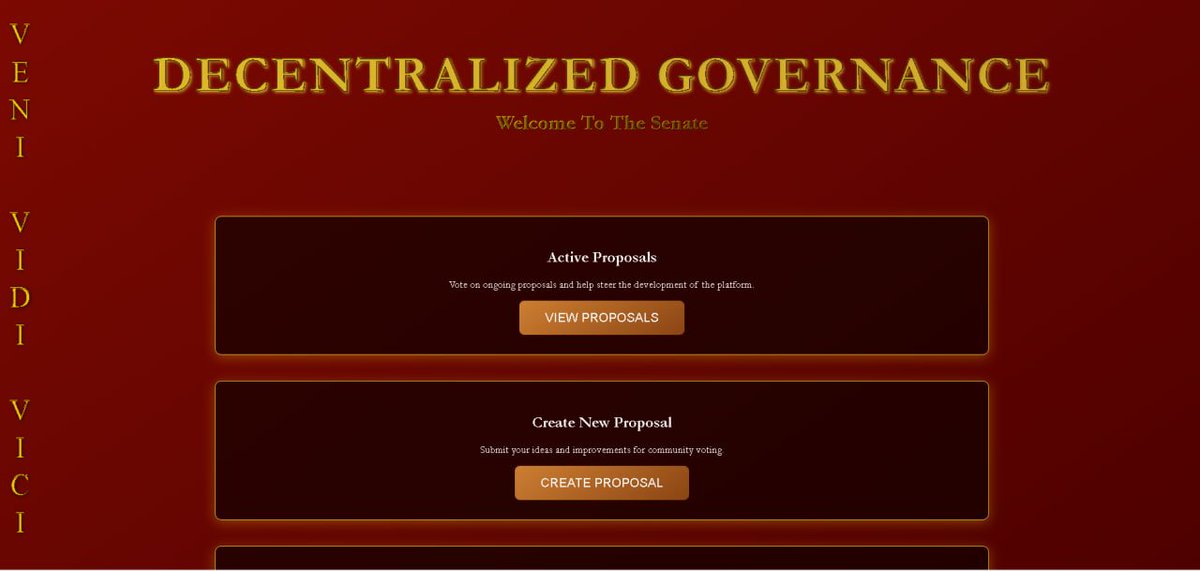
Become part of the Memgen Senate with $WAGVC
dexscreener.com/base/0xfbaa8…
The ecosystem is coming together Stake, Swap, Earn, Create NFT's, Vote, building on @base everyday!
THIS IS memgen.io
15
13
18
437