
Joined August 2021
- Tweets 4,037
- Following 524
- Followers 10,820
- Likes 3,027
798 Photos and videos











Pinned Tweet

30 Aug 2023
Open networks win

#bitaxe dev @johnny9dev pointed this out to me yesterday, and I think it sums up the motivation nicely;
"#bitcoin mining machines are arguably the most important piece of hardware in the bitcoin ecosystem, and yet their design is a secret"
36
9
174
95,562

Public Pool retweeted

Jun 10
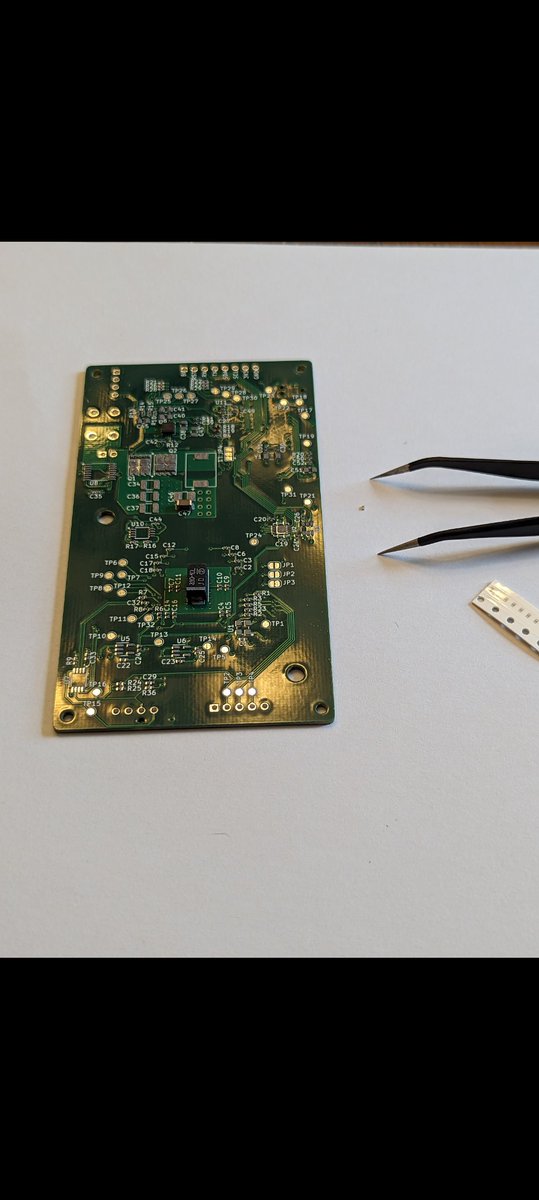
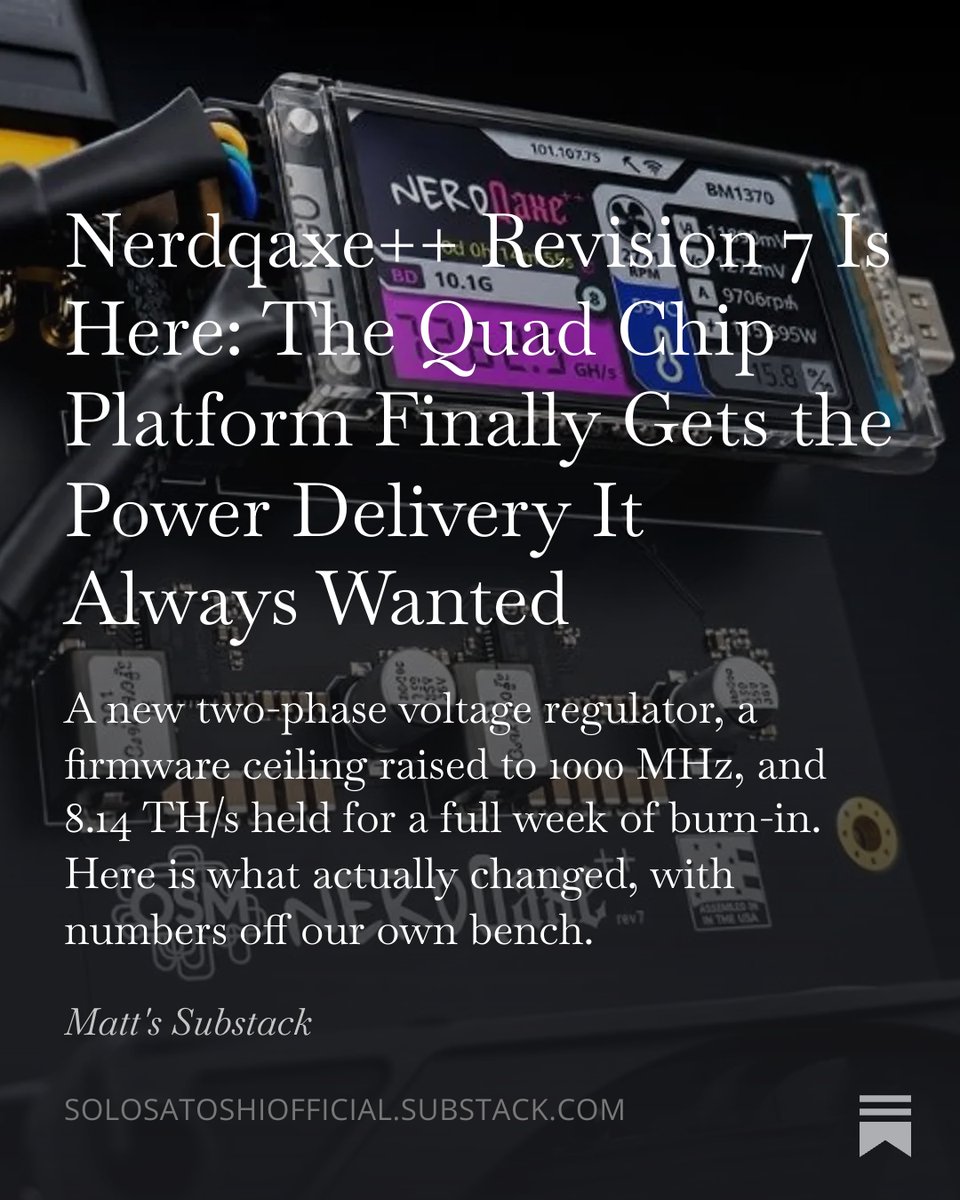
The NerdQaxe Revision 7 drops next week.
✅Open-Source Firmware.
✅Improved Power Delivery.
✅Starts At Just $258.00.
✅100% Assembled in the USA.
✅No Second Best.
10
16
68
3,330
Jun 5
🎉 Public-Pool Announcements: 🎉
1⃣ With the release of Stratum V2 support on Bitaxe/ESP-Miner (v2.14.0),
web.public-pool.io now supports Stratum V2!
Simply configure your miner for SV2 in advanced pool options and provide the public key 9c4zpyJ2ndm4e8sP2uNc1VNCGxYjqaxWS6wUCjk8zFj6njFquH6
Special thanks to warioishere blitzpool.yourdevice.ch for the implementation details and respecting the open source license 💪
2⃣ The last several months of improvements have been merged into the main sqlite branch and pushed to @umbrel and @start9labs app stores. Pending their approval, upgrading is recommended for those running public-pool at home!
Hash on.
23
44
171
16,946
Public Pool retweeted

2
9
35
2,201
Jun 1
Incredible to see all these solo services get more and more robust. Good thing.👏
web.public-pool.io runs on server e-waste in my basement.
The best pool is the one you run yourself.
It has the lowest latency and highest uptime.
You get to choose your templates.
Nobody can stop your payouts.
I built public-pool for you, not for me.
What's stopping you from running your own stratum server?
Jun 1

New sgsolo.ckpool.org optimised for solo miners in Asia & The Middle East! Stats will appear in the updated combined stats.ckpool.org which covers all solo ckpools.
This now gives the solo ckpools good low latency coverage from most parts of the world. Instead of having many nodes scattered throughout the world, each node is a very high performance machine on a high speed network in select locations for the best coverage overall, and interconnected via a custom low latency block propagation network.
The pools are:
solo.ckpool.org for The Americas
eusolo.ckpool.org for Europe & Africa
sgsolo.ckpool.org for Asia & The Middle East
ausolo.ckpool.org for Oceania.
Choose the one closest to you, and feel free to use the next nearest as a backup pool!
Mine on!
7
7
79
6,515

"Tomorrow, we gather to dismantle dictatorship." - @OsloFF
We at @p2poolv2 continue to work on dismantling the controls exercised by centralised pools.
If a pool controls your payout, it is still a centralised pool.
If the pool's source code is not entirely public, it's a centralised pool.
2
6
35
4,083
Public Pool retweeted
May 21
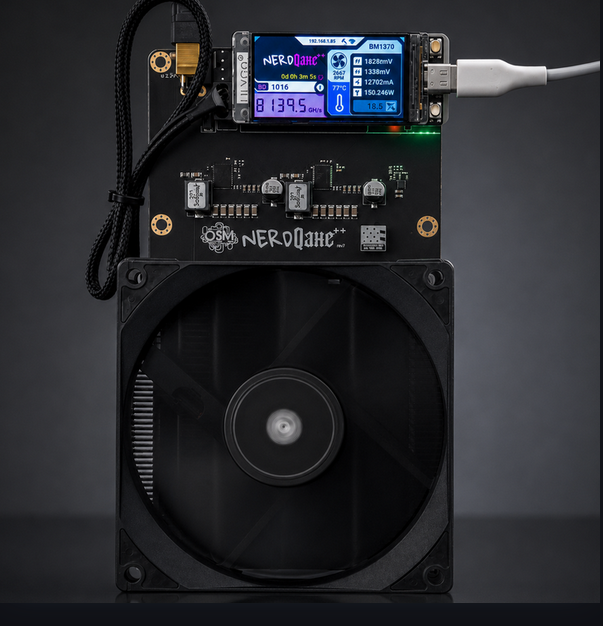
The 7th Revision of the NerdQaxe is coming. 🔥
30
41
308
10,736
Public Pool retweeted

Today in Bitcoin History — May 20, 2011
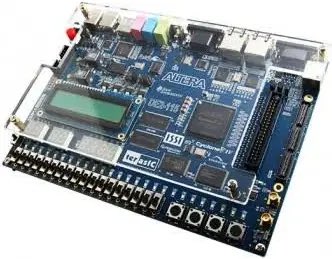
Open Source FPGA Bitcoin Miner Released
Most Bitcoin mining timelines jump from GPU to ASIC. They skip the 20-month era when cutting edge mining hardware ran on reprogrammable silicon, not fixed chips. Brief thread... 🧵👇
2
6
18
2,198
Public Pool retweeted

May 18
In my last monthly letter I wrote about why mining decentralization is important, and also inevitable.
Few groups are doing more to decentralize Bitcoin mining hardware and software than the 256 Foundation.
If you mine, consider donating some hashrate.
I’m pointing my home miners there, and maybe a few more.
May the hashing luck gods be with us.
May 18

TOMORROW - TELEHASH #4
Point your hashrate!
dash.256f.org
7
17
53
5,888
Public Pool retweeted
May 17
We sat down with the legend @Schnitzel from the @256FOUNDATION to talk open-source Bitcoin mining and show off the DoomAxe! 🔥🤯
This is one of our best episodes! Don't miss it! youtu.be/Vvnjpbi15vQ?si=gxdX…
3
14
49
3,871
May 17
A must listen! Killer episode.

Today at 1pm EST on the @HomeMiningPod we have one of the most exciting episodes to date.
@Schnitzel of the @256FOUNDATION showed off the power of open source development with the DoomAxe and his Libreboard.
Find it on the @SoloSatoshi YT Channel
youtu.be/Vvnjpbi15vQ
4
5
39
4,095
Public Pool retweeted
May 16
Open > closed.

4
35
3,485
Public Pool retweeted

May 15
yeah spot on, open source fuels real innovation
2
5
874
Public Pool retweeted

May 15
A lot of people are mixing up “open source” with “anti business / innovation "when it comes to Bitcoin mining.
I have no problem with companies making money. Good support, repairs, manufacturing quality, electronics experience and operational knowledge all matter a lot. Companies like Bitmain, Altair, Block all bring different kinds of value to the ecosystem.
My point is more about the Bitcoin side of this. Bitcoin was built around “don’t trust, verify.”
For that idea to stay meaningful, there should always be at least one fully open path through the stack:
nodes, firmware, control boards, psus, printed adapters and hopefully ASICs eventually too.
Not because every miner has to be open source. And not because proprietary companies are evil.
It is because Bitcoin becomes a very different thing once nobody can realistically inspect or reproduce the systems securing the network anymore.
Mining started fully open. Then we moved into closed GPU kernels, private FPGA bitstreams and eventually ASIC black boxes where most people buying miners had almost no visibility into what was happening inside the machine.
That is why projects like Bitaxe matter to me.
Not because a small open miner competes with industrial farms on raw hashrate. Obviously it does not.
It matters because it brings people closer to the protocol again. It's inclusive beyond selling them some hardware.
People actually learn how mining works. They read firmware, modify things, break things, repair things, tune hardware, understand pools and participate directly instead of just plugging in a box and waiting for payouts.
That creates knowledge, resilience and decentralization in a way raw terahash numbers do not fully capture.
Linux became foundational infrastructure for very similar reasons. Open systems create more builders, more understanding and more independent verification over time.
Also, from a purely technical perspective, I think AI changes a lot here.
We already lived in a world where patched binaries can get diffed and turned into working exploits extremely quickly. LLMs are making reverse engineering easier every month. Long term, I am not convinced “just keep it closed forever” remains a realistic moat anyway.
Some proprietary advantages will always exist. Manufacturing quality, optimization, operational experience and support are all real.
But I still think Bitcoin benefits enormously from having at least one open reference path that anybody can inspect, reproduce and learn from themselves.
Anyway, maybe I am too nostalgic after watching Star Wars: A New Hope tonight. But the idea that ordinary people should still understand and participate in the systems they depend on feels pretty important to me.
5
6
30
2,265
May 8
Public-Pool Announcement:
It's been awhile since i've worked on the pool code, over the last few days I've done some work and testing which is now complete.
1) Extranonce2 size has been increased to 8 bytes, this was required by some rental services such as Braiins.
2) Optimizations - I tried out several ideas and have reduced server utilization by nearly 40% increasing capacity and responsiveness.
3) Several miscellaneous improvements
Enjoy!
17
31
275
9,467
May 7
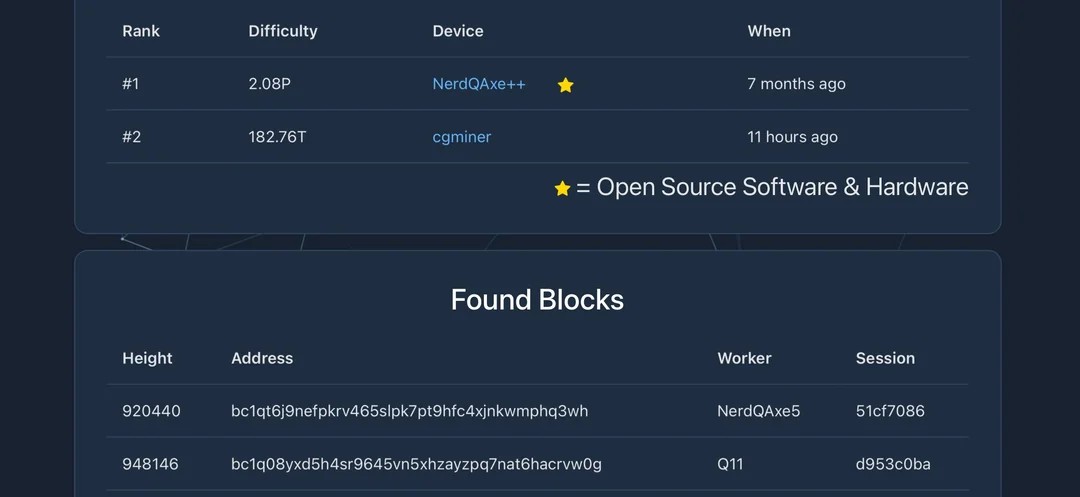
Hold up, this guy mined TWO blocks on his own public pool instance?!?! 🤯
May 7

u/EightofSpace on Reddit claims second Bitcoin solo block in less than 8 months.
The individual claims that block 948146 was found by an Avalon Q. 🔥
34
34
277
31,541
May 7
I crunched the numbers and it's actually 350X more likely than hitting the power ball. 3 blocks in a year is still 5 times more likely.
2
3
33
3,364
Public Pool retweeted

May 6
I am writing from FPC Morgantown prison in West Virginia. It has been about 5 months since I first surrendered myself in December, and I will be honest, the prospect of a Presidential pardon is very low. There was some hope during the Bitcoin 2026 conference, but that has now come and gone, and one must come to terms with the fact that I am simply a federal prisoner without money, power, or influence, and I will serve my full sentence. It will be years before I can even attempt to rebuild my life. Which is why I am now writing this appeal to you all now. Things are dire and we need your help.
Lauren and I need your help desperately. More than ever before. We have over $2 Million of debt due to legal fees. We have a $250k fine the judge levied against us. Every day I get letters and calls from anxious lawyers looking to be paid. Or the DOJ demanding I start making payments on my fine. Perhaps it was denial or delusion, but I had hoped to do what I have always done and dig myself out of this hole myself - but with the reality of serving a full sentence that is not possible. I hate to ask for your help in this way but we are entirely out of options. We need to pay off these legal bills and other debts accrued attempting to defend myself. We desperately need your help. Now.
For 10 years Bill and I built and published open source code and tools for Bitcoin users. Those same tools and code are what the government says were criminal. The tools and code still exist, they are out there right now and always will be. The creators however are locked away in Federal prison. The creators are the ones whose lives have been decimated. The creators are the ones who have been financially wiped out. The creators are the ones who desperately need you now. Please donate whatever you can to bc1qtjjcvn98wh7dfd55m8kxhjcfexanttwt8gtan8 . We have to get this albatross from around our neck.
Samourai had well over 100,000 users. These users pushed over 2 billion dollars through our open source tools. We need those users and any bitcoiner who appreciates the work that we put into this industry for over a decade to help us now. Please donate whatever you can to bc1qtjjcvn98wh7dfd55m8kxhjcfexanttwt8gtan8 right now.
If you require a private address please DM my wife @leamuirleyn and she will provide one. Please do not delay. Time is of the essence. Please help us.
- Keonne
151
609
1,689
370,727
Public Pool retweeted
May 6
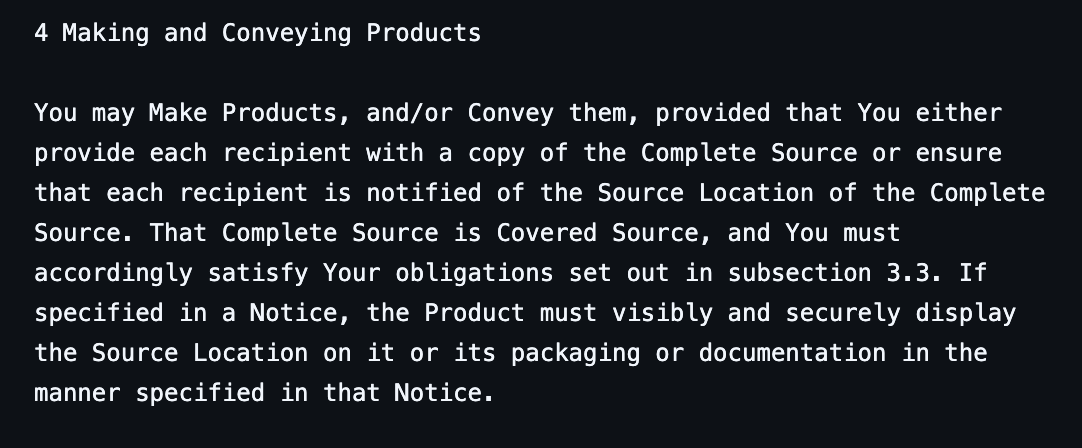
I'm glad you guys like my rev 6.1 design but maybe you could stop committing copyright infringement and release your changes? Because I see some. And also for your other open source derived products.
1
2
23
2,166