
Photos and videos
M retweeted

28 Dec 2025
why not just raise income tax rates?
because your real intent is not to just “provide healthcare”.
you’re masking that you are proposing the creation of, for the first time in the 250 years of this American republic, an organized government seizure of private property from citizens.
you’re calling it a “wealth tax” or a “billionaires tax” or “millionaires tax” or whatever nom du jour polls well. but at the end of the day, it’s the seizure of private property from citizens by the government. citizens that earned money, paid their fair taxes on those earnings (53% if they live in California) and are now being told they need to hand over after-tax assets because the government has failed to provide promised services with the revenue it’s collected, and are now re-casting their own failure to be a socio-economic inequity that must be justly resolved... a slippery slope that has never gone anywhere good (see economic effects in USSR, Cuba, Venezuela, France and Norway wealth tax etc.)
the American founders fled tyranny in Europe and this amazing nation was populated by immigrants (myself and your parents) from around the world not just looking for a “better life” but for a place where they could have freedom from tyrannical governments that can take what they want from private citizens. a great nation borne of property rights, the rule of law, and endowed freedoms to believe, speak, or act. these principles led to the greatest run of innovations, successes, and widespread increase in prosperity, for all citizens, ever seen.
the citizens, the individuals, not the institutions, delivered this progress. those who invented, who toiled, who bled, who sacrificed, who took risk and persevered, who led, and who changed the world, are not charlatans, kleptocrats, or oligarchs. they’re what made us all better off. prosperity is a measure of america’s success, not its failure.
it is your principle that is so offensive, as evidenced by the broad disdain for your flippant flirtation with the darkest of human fantasy - socialism. you and other neo-socialists have led so many of us to reflect on America’s history and what it is becoming. that now leads so many to consider, so unnecessarily, leaving their homes for a place where everyone stands up to shout down the principle you suggest. because if your ideas are now considered moderate, it’s clear this titanic is sinking.
that a “simple tax” of taking assets that have been earned, through toil and tribulation, rightly taxed, and preserved, should now be unjustly seized, is your solution to a problem of obvious government mismanagement and outright fraud, tells us that your true motivation lies not in giving people healthcare but in cutting down success and deleting the system of prosperity and opportunity for all.
i don’t care, and neither should anyone else, what the sum total market value of a private citizens private assets might be. it is none of my business and should be none of yours. because, again, once you open that pandora’s box, we might as well study Lord of the Flies … there is literally nothing stopping 51% of citizens demanding that their government go out and seize 100% of the private property of the 49%.
want to give healthcare to people in need? do your job and fix healthcare. make it affordable. want to be lazy about it? then do your job lazily and raise income taxes.
want to take private property from private citizens who have paid their fair share of taxes and legally earned their property, then honestly declare that it is envy, not inequity, that you strive to resolve…
1,705
5,476
38,741
4,469,820
M retweeted

27 Jan 2025
One of the most disingenuous arguments made in crypto against any project is the idea that decentralization is equivalent to counterparty risk.
There is an incorrect conflation between a networks ability to process transactions while solving the double spend problem, as a public permissionless network (where your private keys determine ownership), versus the counterparty risk that large holders represent in purchasing power terms.
These are not the same thing and conflating them betrays a deep ignorance in the technical details by the people making the argument. Educate yourself instead of making a virtue of ignorance.
For example, let's pretend @saylor had 99% of all Bitcoin in his wallet. This would not impact any other wallet on the bitcoin network with regards to cryptographic security or transaction processing/node recognition. Not one micro iota. nein, nada, zip, nil, zero.
Now if we want to talk about counterparty risk, we are implicitly talking about purchasing power in fiat terms. That is to say that the counterparty having a large amount can sell into the market can collapse the price by selling a large amount in a short period of time.
So when a bitcoin maximalists screams about decentralization (of holdings) what they are really saying is that the counterparty can make price go down in an illiquid market, which is what they are all really obsessed with, namely fiat! There's a deep irony there that should be studied.
The takeaway is that when evaluating a digital asset you should study a both the quality of the network to keep your assets secure (actual decentralization) and the distribution of assets on that network to preserve your purchasing power (counterparty risk). I can think of one large holder in the top 10 by market cap that has cryptographically locked their holdings to preclude this selling event that is being postulated.
Unfortunately the largest Bitcoin holders do not have such cryptographic escrow mechanics in place, here's looking at you MSTR. I wonder why?
Now evaluate your risks accordingly.
27 Jan 2025

Hello @jackmallers Your emergency 🚨 BTC v XRP broadcast was a catalyst for fact spread on X. 🙏 🙏@Ripple, a centralized entity, like Mr. @saylor is using “a” digital asset BUT where is @MicroStrategy escrow? Lack of respect🫡 to the Ripple fight & win is a HUGE mistake. Shame
28
83
357
95,002

M retweeted

11 Apr 2019
Neil, there is a logic flaw in your little aphorism that seems quite telling. Since you and I are part of the Universe, then we would also be indifferent and uncaring. Perhaps you forgot, Neil, that we are not superior to the Universe but merely a fraction of it. Nice day, indeed
3 Apr 2019

The Universe is blind to our sorrows and indifferent to our pains.
Have a nice day!
526
7,593
49,126
M retweeted

28 Dec 2024
It's incredible how little reflection went into this "America needs a billion Tiger Moms" post, as it totally misunderstands what sort of spirit made the West great, and is just an attempt to replace what remains of that unique spirit with a slavish one
A short 🧵👇
26 Dec 2024

The reason top tech companies often hire foreign-born & first-generation engineers over “native” Americans isn’t because of an innate American IQ deficit (a lazy & wrong explanation). A key part of it comes down to the c-word: culture. Tough questions demand tough answers & if we’re really serious about fixing the problem, we have to confront the TRUTH:
Our American culture has venerated mediocrity over excellence for way too long (at least since the 90s and likely longer). That doesn’t start in college, it starts YOUNG.
A culture that celebrates the prom queen over the math olympiad champ, or the jock over the valedictorian, will not produce the best engineers.
A culture that venerates Cory from “Boy Meets World,” or Zach & Slater over Screech in “Saved by the Bell,” or ‘Stefan’ over Steve Urkel in “Family Matters,” will not produce the best engineers.
(Fact: I know *multiple* sets of immigrant parents in the 90s who actively limited how much their kids could watch those TV shows precisely because they promoted mediocrity…and their kids went on to become wildly successful STEM graduates).
More movies like Whiplash, fewer reruns of “Friends.” More math tutoring, fewer sleepovers. More weekend science competitions, fewer Saturday morning cartoons. More books, less TV. More creating, less “chillin.” More extracurriculars, less “hanging out at the mall.”
Most normal American parents look skeptically at “those kinds of parents.” More normal American kids view such “those kinds of kids” with scorn. If you grow up aspiring to normalcy, normalcy is what you will achieve.
Now close your eyes & visualize which families you knew in the 90s (or even now) who raise their kids according to one model versus the other. Be brutally honest.
“Normalcy” doesn’t cut it in a hyper-competitive global market for technical talent. And if we pretend like it does, we’ll have our asses handed to us by China.
This can be our Sputnik moment. We’ve awaken from slumber before & we can do it again. Trump’s election hopefully marks the beginning of a new golden era in America, but only if our culture fully wakes up. A culture that once again prioritizes achievement over normalcy; excellence over mediocrity; nerdiness over conformity; hard work over laziness.
That’s the work we have cut out for us, rather than wallowing in victimhood & just wishing (or legislating) alternative hiring practices into existence. I’m confident we can do it. 🇺🇸 🇺🇸
154
712
8,295
929,978
M retweeted

18 Dec 2024
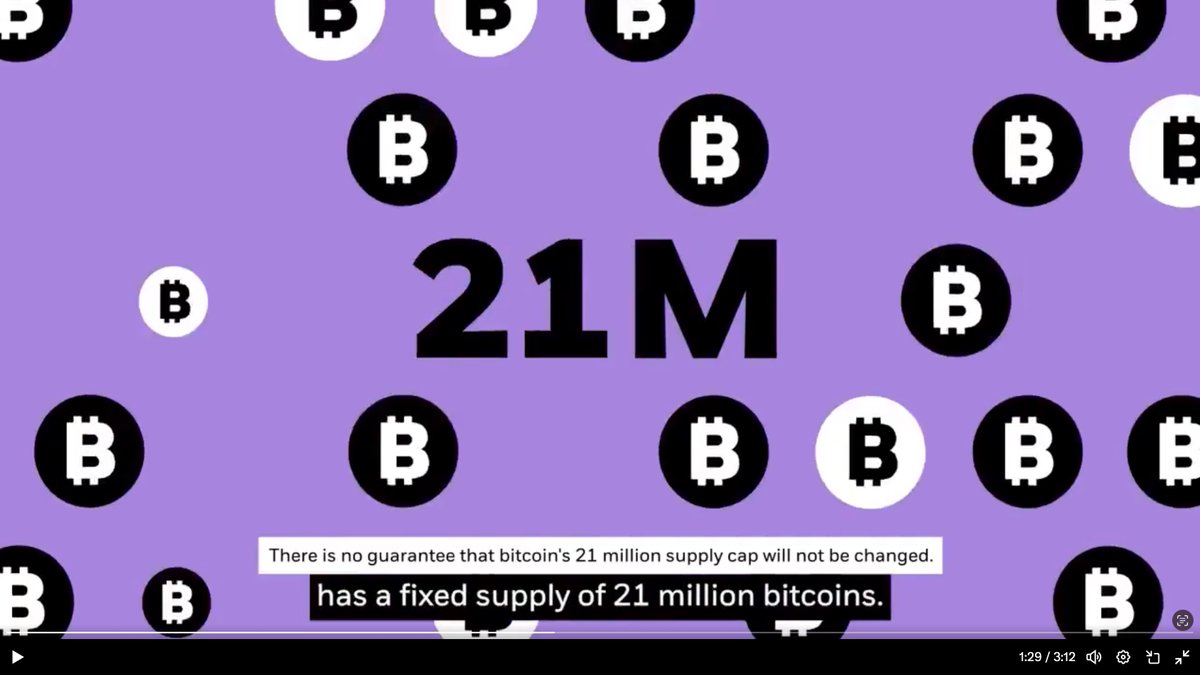
BlackRock: "There is no guarantee that Bitcoin's 21 million supply cap will not be changed." 🤷♂️
I've been saying this for years: by stopping Bitcoin from scaling its L1, they've created the security budget issue which they're going to solve with additional emission 🪄

83
60
401
80,884

LIVE on NYSE TV 🎙️ As the Fed meeting begins, tune in for insights on retail sales, @Ripple's new stablecoin and more. x.com/i/broadcasts/1ZkJzRLAZ…
46
538
1,651
271,032
M retweeted

15 Dec 2024
9/ The US has the reserve currency. We should be doing everything we can to keep our fiscal house in order in dollar terms, which means cutting the deficit and future expenditures to a sustainable path, not trying to YOLO into an asset that benefits from dollar decline.
1
3
91
10,955
M retweeted

14 Dec 2024
Going off the gold standard was among the stupidest thing we did in human history. The second stupidest thing is replacing it with bitcoin.
617
118
1,530
220,409

M retweeted

6 Dec 2024
Rarely in American politics has a new industry spent so much money, with such apparent impact, as the cryptocurrency business did in the last election. This Sunday, Margaret Brennan reports on the industry's hopes for the new “pro-crypto” administration. 60Minutes.com
1,819
3,822
11,924
4,333,223

M retweeted

1 Dec 2024
THE RETURN OF XRP
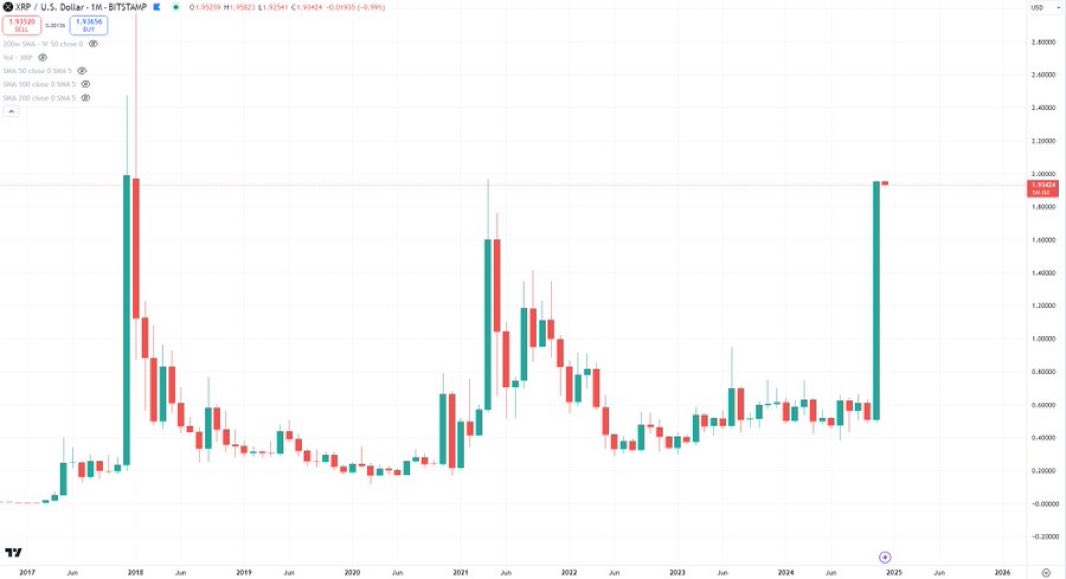
With XRP overtaking SOL, above $2, and approaching a $120B market cap, allow me to reflect.
When I sued the SEC, people assumed I was a huge XRP holder. The truth is, when the @Ripple case was filed, 50% of my net worth was in BTC. Today, it’s 80%. I also had 4X more in ETH than XRP. In sum, XRP was a very small investment.
I sued the SEC b/c what it did was wrong. I’m not talking about Ripple. The SEC sues lots of companies. I’m talking about the absurd allegation that XRP itself was illegal, including if acquired by USERS of the XRPL or by people who’d never heard of @bgarlinghouse, @chrislarsensf or Ripple.
There were people being paid in XRP. Companies like @Spend_The_Bits and @TapJets used XRP in business applications. There were XRP debit cards. Thousands of people
opened a trust line with the XRPL just to send 💰 to others in seconds and for a fraction of a penny.
FACTS:
In 2014, the @USGAO declared XRP a “virtual currency utilized in a decentralized payment protocol called Ripple.”
In 2015, FinCEN declared XRP a virtual currency and told Ripple it must comply with Banking laws. The SEC was provided the details of the settlement and never said a word.
On June 13, 2018, SEC enforcement lawyers ✍️ a report on whether XRP was a security under Howey. SEC lawyers DID NOT recommend enforcement.
@bgarlinghouse met with Hinman and Clayton multiple times and Garlinghosue complained that XRP and Ripple were living in purgatory b/c BTC and ETH were given clarity in Hinman’s speech but not XRP. Not once did they inform Ripple it was because XRP was a security.
In the 2019 FSOC Annual Report, signed by Clayton, XRP, along with BTC, ETH and LTC, were described as virtual currencies gaining in market share.
In January 2019, Coinbase met with the SEC, specifically regarding XRP, and notified the SEC that Coinbase had run XRP through its digital assets framework, and some of the best, most experienced securities lawyers in the world had determined XRP NOT a security. But Coinbase would defer to the SEC b/c Coinbase wanted to soon go public and wanted to make sure the SEC was in agreement over XRP. The SEC allowed Coinbase to list XRP in February 2019 and Coinbase began marketing the utility of XRP much more aggressively than Ripple had ever done. In 2019, if you opened up the Coinbase app, you saw the below page.👇
In June 2019, @MoneyGram filed paperwork with the SEC disclosing MoneyGram would be using XRP in its cross border payments business. The SEC knew MoneyGram was selling XRP on Coinbase to the general public. Yet, did nothing.
Also, the U.K., Japan, Singapore, Switzerland and the UAE had declared XRP a non-security token.
Yet, despite the above, the SEC, on December 22, 2020, claimed ALL XRP were illegal.
I sued the SEC b/c gross government overreach is gross government overreach even if it’s 🆚 a company you don’t like. Many turned a blind eye b/c they didn’t like Ripple. To me, it’s like free speech. You have to protect the speech you don’t like. If you don’t, eventually the government may unjustly come after speech or a company you do support.
Plus, even if you’re not a fan of Ripple, when you learn the facts surrounding the filing of the Ripple case, it is impossible to credibly say that everything was on the up and up. In fact, it was down right shameful. Disagree? Read the Joe Grundfest letter that I had to threaten the SEC with a second FOIA lawsuit to acquire. 👇
crypto-law.us/wp-content/upl…
Although I didn’t own much XRP at the time, when 75K XRP holders joined me and XRP plummeted, I bought more and more. I did so because it felt like it’s what I needed to do to truly be invested in the fight agaisnt the SEC. I may have done all the legal work for free but sometimes you get paid in other ways.
Whether you hate XRP or believe it’s a shit coin (and I have friends who do), I’m thrilled for the XRP holders who’ve held this entire time. They’ve went from purgatory to hell and back.🫡


307
1,530
7,083
528,377
M retweeted

30 Nov 2024
Operation Chokepoint 2.0 was (is?) a government operation to pressure banks to unbank "disfavored" people and businesses, despite no evidence or accusations of unlawful conduct. The mechanism used, indirect regulation, is a despicable evil that is used as an end run around due process and should be discarded in the dustbin of history.
Indirect regulation is when the government makes one party liable for the criminal actions of another party despite neither actual knowledge, nor willfull blindness, to the facts that makes the action criminal. In effect, it is an affirmative obligation one some to make sure that their perfectly lawful actions don't, without their knowledge, facilitate the unlawful actions of others.
This is a terrible idea for a long list of reasons. Here are just a few::
1) If my bank thinks there's some chance that I might launder money to terrorists and they close my account, I'll just open an account at some other bank that doesn't think that or use less traceable means. The opportunity to surveil my transactions and prosecute me for money laundering or facilitating terrorism is lost.
2) If the government wants to punish me for a crime, it has to charge me with the crime, let me confront its witnesses against me, and present a defense in front of a neutral judge. If the government convinces others that I might be doing something wrong and that they will be held liable if I am, I get no due process at all.
3) Often what makes others think we might be engaged in crimes is speech that is fully protected by the First Amendment and for which the government may not punish us. Indirect regulation allows the government to punish us indirectly (through loss of vital business relationship) for speech for which it is Constitutionally prohibited from punishing us.
4) It is also an end run around the Fourth Amendment. When we diclose information to others voluntarily, we lose Fourth Amendment protections for that information. But if the government uses the law to compel others to demand that information from us, they can (and do) later claim we "voluntarily" disclosed it to a third party and thus have no reasonable privacy interest in it. This is Orewellian nonsense.
Our government has become addicted to indirect regulation precisely because of these evils. It is cheaper and easier to pressure someone else to punish me than to charge me with a crime and give me due process. But the government ought not punish people without giving them due process. It is easy to pressure banks to cut-off disfavored businesses than to make that business illegal. But if the government wants to stop some commercial activity, it should go through the proper lawmaking process, with full political accountability, to prohibit it, not use backdoor secret pressure to drive it underground.
END ALL INDIRECT REGULATION.
One last thing. I don't think we should do witch hunts to try to punish past incidents of indirect regulation, even when there's evidence of bad intent. I wish there was legal precedent to show these end runs around the First and Fourth Amendments were unlawful, but there isn't. That's why we need to do something about it. Getting obsessed about the past will lead to a lot of expensive and complex legal battles and won't do anything to fix the future.
Let's change the future for the better.

141
578
2,467
194,528
M retweeted
24 Nov 2024
Value is an abstraction, of which the velocity of it's movement represents economic activity. Trying to "anchor" value is akin to stopping growth, it's constraining. What should replace the existing system is one where fiat currencies must compete with market forces determining their relative purchasing power. That can only happen at scale with interoperating public, permissionless networks that enable bearer instruments (low switching costs, liquidity, and low counterparty risk). This constrains centralized money issuers in a way no other abstractions or policy can.
1
1
4
619
M retweeted

5 Feb 2024
I couldn't believe my eyes. These guys, active in this space for ages, living, breathing XRPL, and 11k followers?
Give them a follow people. @bithomp deserves all of your follows!!

Cheers to 11,000 followers and many more to come! We are grateful for every single one of you! Thank you for choosing Bithomp! #XRPLcommunity #BuiltOnXRPL #XRPL

29
144
554
49,260
M retweeted

21 Feb 2024
The American Psychological Association once invited William James to give a talk on the first 50 years of psychology research.
He simply said: “People by and large become what they think of themselves.”
Then, he left.
68
1,250
6,821
696,679
M retweeted

20 Feb 2024
I’m excited for the opportunity to fight for change, and for the people of Massachusetts in the United States Senate.
Join my campaign today: johndeatonforsenate.com/
650
1,889
6,294
885,985

M retweeted

17 Sep 2023
Former SEC Chair was Joe Grundfest who has integrity which seems out of fashion. As to the number, I now realize one can’t tell the true # of ETH ICO buyers as it was explained by some how whales could disguise their large positions during the ICO. Violation of Terms of Service against speculative buying? Hard to imagine anyone @ethereum doing this. And if they knew others who did surely they would have told @SECGov regarding concentration of ETH holdings before the @billhinmanDC law was enacted. I might have the doc versions by the author of the TOS amongst countless documents, recordings, etc. all stored in a number of locations. I may not have knowledge or items of importance given claims I exaggerated my role though I guess it’s possible I got some info if I was lucky enough to talk to an important “co-founder”. 🤩 Either way, I suppose an effective way to silence me would be to prosecute, publicly discredit and ultimately attempt to imprison me. Turns out this is actually what happened to me for the past 4 years until I proved the entire case was fabricated from the governments own documents including the @SECGov and got an almost unprecedented dismissal with prejudice. @SECGov @DOJPH @FBI joint effort and oddly some familiar Ripple names amongst others #marcberger #johnenright #jondaniels When I said dangerous area I didn’t suspect so-called friendly fire, traitors and treasonists. To me, crypto & the country. @JohnEDeaton1 @Leerzeit @BoringSleuth
16 Sep 2023
Hello @StevenNerayoff ~Thank you for taking notice of conversations about the #ETH ICO. As you said, this was a dangerous area & you took it upon yourself to figure it out legally. You had the former SEC Chair "chime in". Who? & Who are the 15,000 participants?
@JohnEDeaton1
150
543
1,390
863,481