
Gaming
Joined December 2019
- Tweets 11,525
- Following 124
- Followers 124
- Likes 87,758
1,958 Photos and videos
















🚨A transgender pedophile has been sent to a women's prison in Illinois after being sentenced to 87 years for grooming and sexually assaulting his two children.
Michelle Blessent, 35, was "treated as a female" by both the police and court.
reduxx.info/transgender-pedo…
539
2,141
5,123
409,020
ReadyPlayerOne retweeted

Apr 23
Three illegals living at a Home Office hotel have been found guilty of raping a woman on a beach in a 'cynical, predatory and callous attack'.
Apparently 'the men laughed as she was kicked, and her throat was grabbed during the rape'.
She 'thought she was going to be killed'.
Footage showed one 'smiling and sticking his tongue out during the assault, as well as slapping the woman in the face.'
According to the BBC, following the attack, 'the men had a barbecue together later in the evening'.
I am not going to describe in words what I think of these evil scumbags.
I am going to reiterate the Restore Britain policy of reintroducing the death penalty with the British people's approval.
609
4,368
26,409
284,900
ReadyPlayerOne retweeted

Apr 22
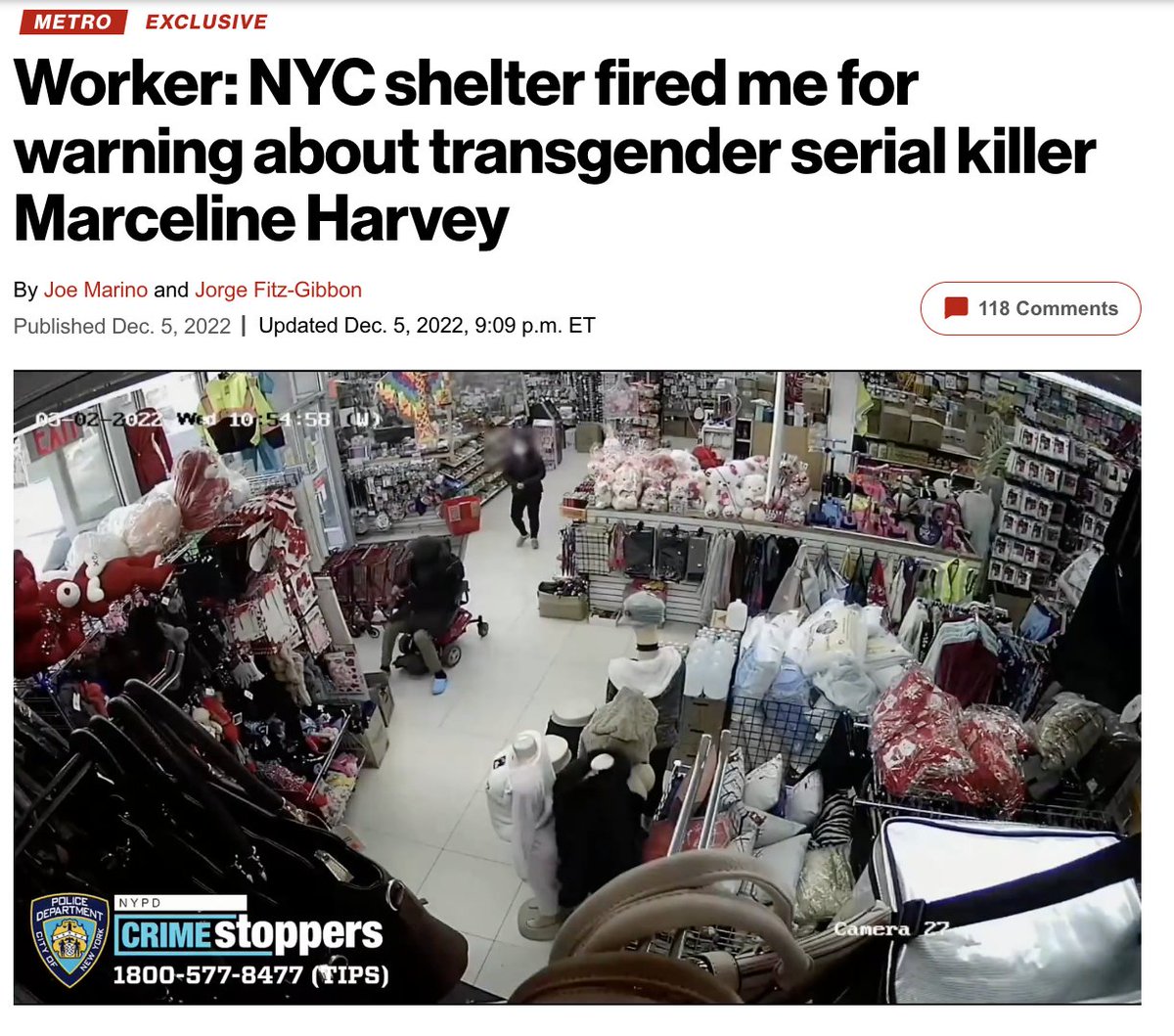
A women's shelter worker in New York says she was fired for "transphobia" after warning about the obviously dangerous nature of a trans-identified man, recently released into the shelter from a prison sentence for murder
The man then murdered and dismembered a woman in Brooklyn
38
1,351
3,957
124,915
ReadyPlayerOne retweeted

Apr 23
Let’s stop pretending this is complicated. It isn’t.
A male prisoner, convicted of a brutal murder, is being housed in the women’s estate. An allegation of sexual assault has now been made. And still we are expected to believe this is a “managed risk”.
It is not a managed risk. It is a foreseeable outcome.
You do not need hindsight to see this. You only need honesty. Women in custody are not a neutral population. They are among the most vulnerable in society. The vast majority have experienced physical or sexual abuse. Many carry long histories of trauma.
Addiction is endemic. In Scotland, the majority proportion of women in prison have drug or alcohol problems, and many have co-occurring mental health needs. These are not abstract statistics. They describe women who have already been harmed, often repeatedly, long before they ever entered a cell.
And into that environment, the state has chosen to introduce male-bodied prisoners.
That is not safeguarding. That is exposure.
What we are witnessing is not a failure of risk assessment. It is a failure of principle.
For years, the Scottish Prison Service has insisted it can assess individuals and safely place male prisoners in the female estate. That claim was always untenable. You cannot assess away biological reality. You cannot eliminate risk through forms and panels. And you cannot guarantee safety in an environment where the consequences of getting it wrong are this grave.
And now, predictably, we are here.
The most disturbing aspect is not the allegation itself, serious as it is. It is the inevitability of the response. There will be calls for calm. Assertions that the system works. Claims that this is an isolated incident.
It is not isolated. It is structural.
When policy elevates ideology above reality, harm stops being a failure and becomes the price paid to sustain the model. We know this only too well in Scotland’s addiction system, where harm reduction has shifted from a tool into an orthodoxy, and the consequences have followed accordingly.
And here, that cost is being paid by women who have no say in where they are housed, who they are housed with, or what risks they are expected to tolerate.
No civilised system should ask women, many of whom are already survivors of male violence, to accept that risk as the price of someone else’s identity claim.
This is not about prejudice. It is about duty of care. It is about safeguarding. It is about the most basic obligation of the state to protect those it holds in custody.
Until that principle is restored, cases like this will not be shocking.
They will be inevitable.
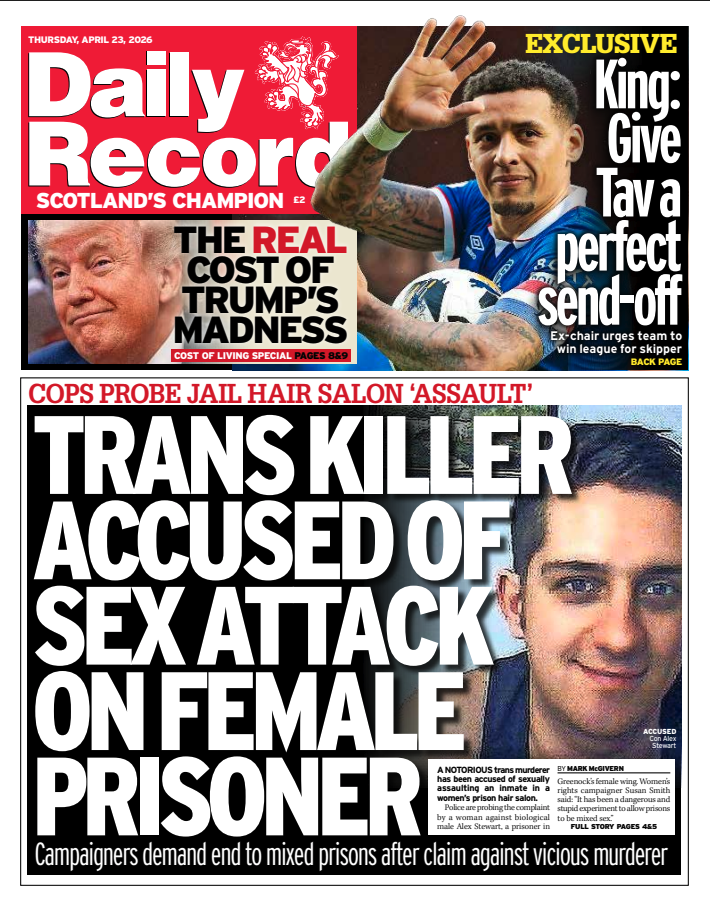
103
1,505
3,680
59,106
One of Spain's most prolific serial killers has been moved to a women's correctional unit after beginning to identify as a "woman."
Joan Vila Dilmé, now known as "Aida," is serving a 127-year sentence for murdering 11 people.
reduxx.info/spain-prolific-s…
225
1,959
3,919
240,792
ReadyPlayerOne retweeted

This was a sign yesterday walked thru the streets of Westminster by men & their supporters in balaclavas & face masks @Keir_Starmer @bphillipsonMP now tell me how quickly women would have been arrested if they had made threats like this against trans identifying individuals?

139
2,361
8,422
102,671
ReadyPlayerOne retweeted

Apr 7
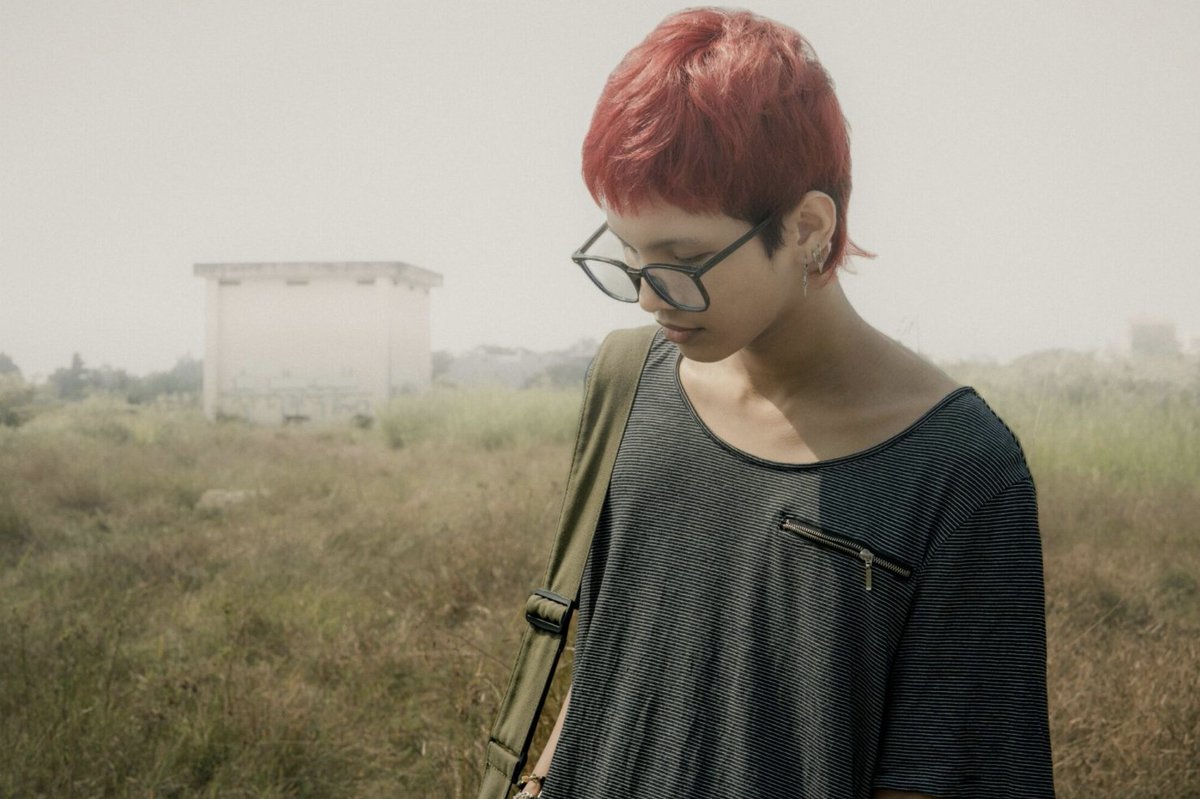
Finland tracked every gender-referred adolescent in the country for up to 25 years.
Their psychiatric needs didn't improve after 'gender reassignment'. They surged.
A landmark peer-reviewed study just dropped. Here's what it found. 🧵
745
12,823
43,715
4,589,155
ReadyPlayerOne retweeted

Apr 5
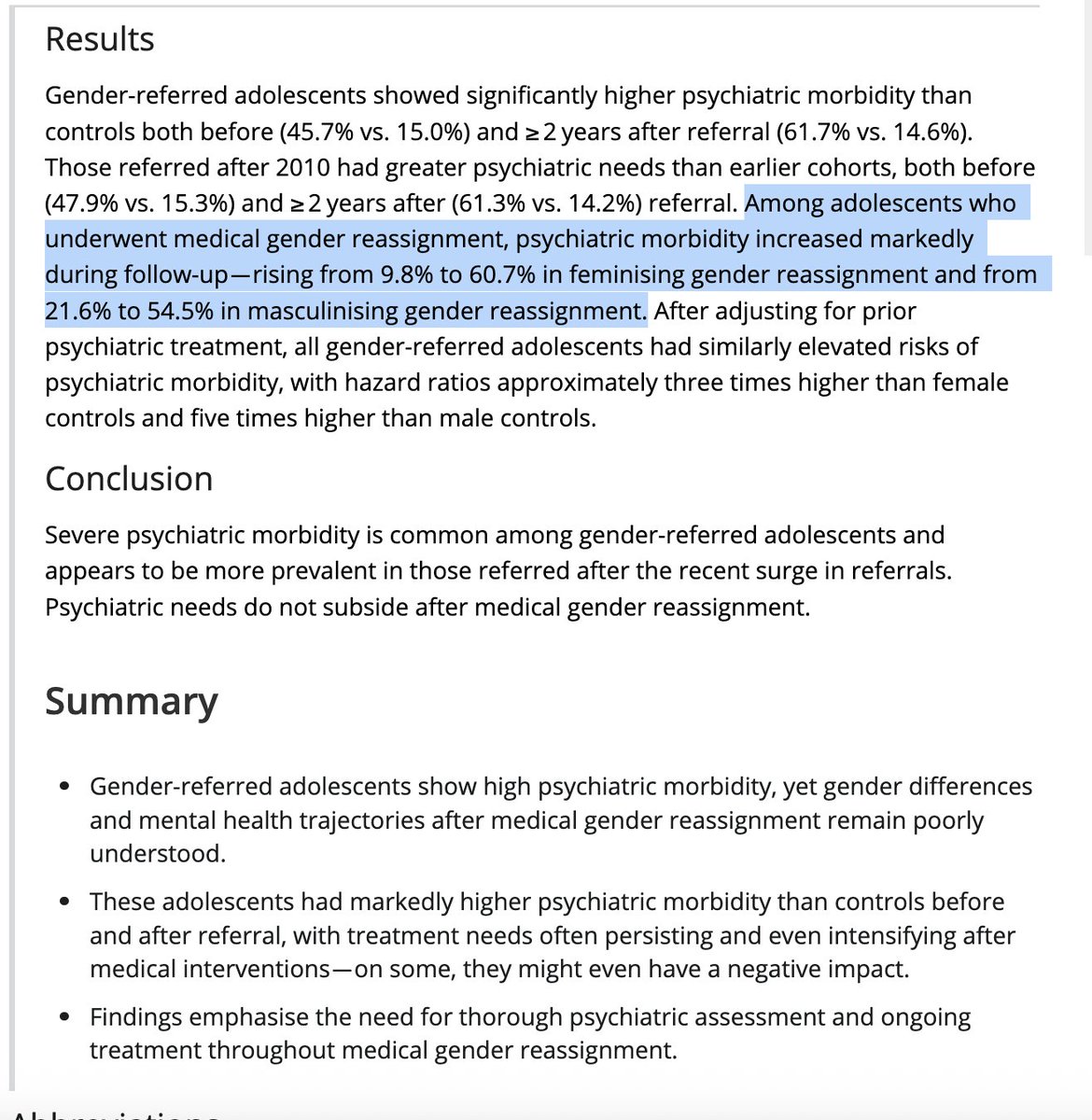
Bookmark this. For years it's been next to impossible to get data on what any person knows as a matter of common sense: that 'trans healthcare' is anything but. This study is going to be hard for normies to ignore.

📰A new Finnish study reports that youth gender transitions (under age 23) did not improve mental health symptoms. For some youth, medical gender reassignment may have had a negative impact. Link ⬇️ /1
47
537
2,359
41,997
ReadyPlayerOne retweeted

Apr 2
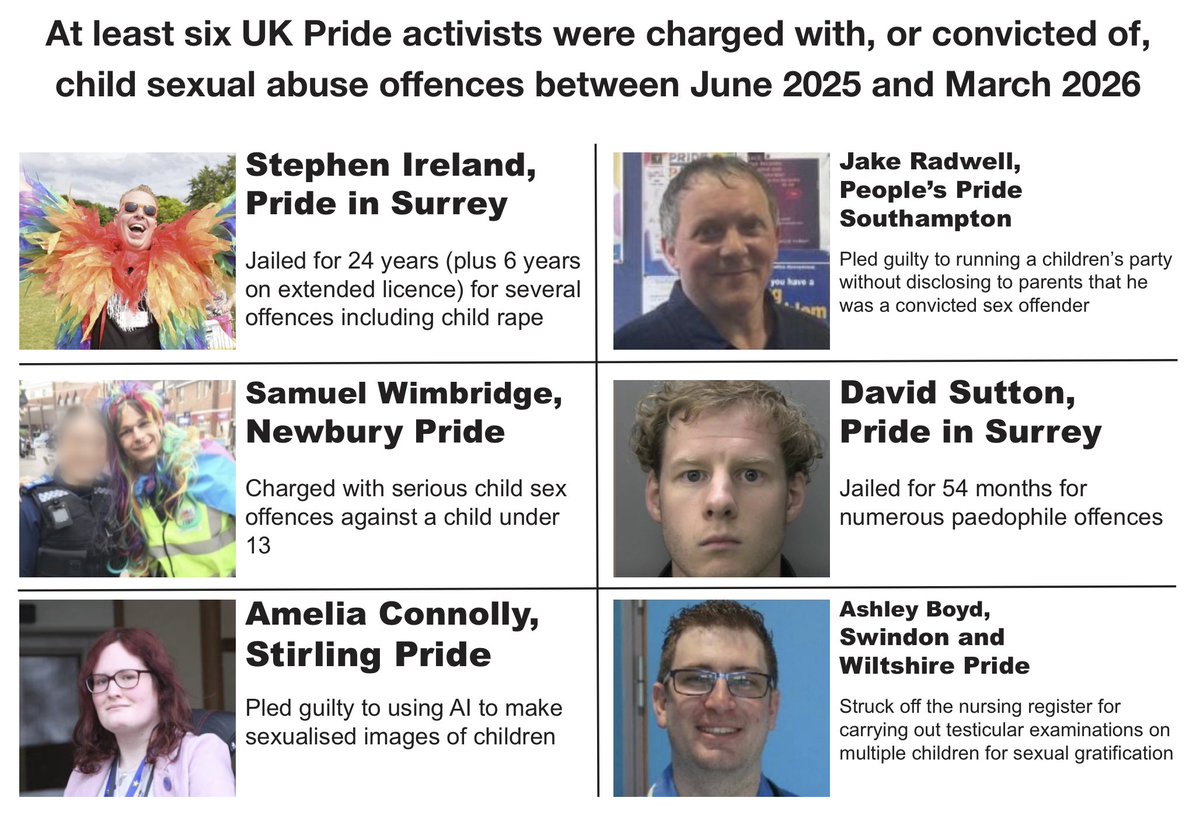
In just the last nine months, at least six UK Pride activists have been charged with, or convicted of, child sexual abuse offences. And these are just the ones whose crimes were serious enough, and Pride activism well known enough, to be reported on
79
1,815
4,027
81,113
ReadyPlayerOne retweeted

Mar 31
It’s not “history”, Shabana.
I’m from Telford. I was groomed and abused by different men from the age of 5.
I’ve seen countless little girls victimised by Pakistani-Muslim grooming gangs in my hometown.
IT’S STILL GOING ON.
I went on national TV to say that little girls are still being raped and tortured by Pakistani-Muslim gangs.
The next day, the police came banging on my door to threaten me into silence for speaking out.
Growing up, we knew which takeaways were dodgy, which taxi companies were controlled by the Pakistani-Muslim gangs, which estates and high streets not to walk through alone or avoid altogether.
It’s an open secret.
And your government is complicit.
It is still happening in towns and cities across the UK. Little girls are being subjected to the worst abuse imaginable, at the hands of men who know they can get away with it.
Nothing has changed.
You are still turning a blind eye despite decades of undeniable evidence.
Politicians like you are trying to sweep the scandal under the carpet, sabotaging the National Inquiry at every turn so that they can save their own skins.
And little girls are still being sacrificed at the altar of multiculturalism and traded for votes.
Decades later.
The same old story.
You may not have shoved little girls into taxis or plied them with vapes himself, but you and your entire government are just as guilty as if you had.
And I, for one, refuse to be silenced or placated by the very people who have spent decades discrediting victims and survivors like me.

The grooming gangs’ scandal is one of the darkest moments in our country’s history.
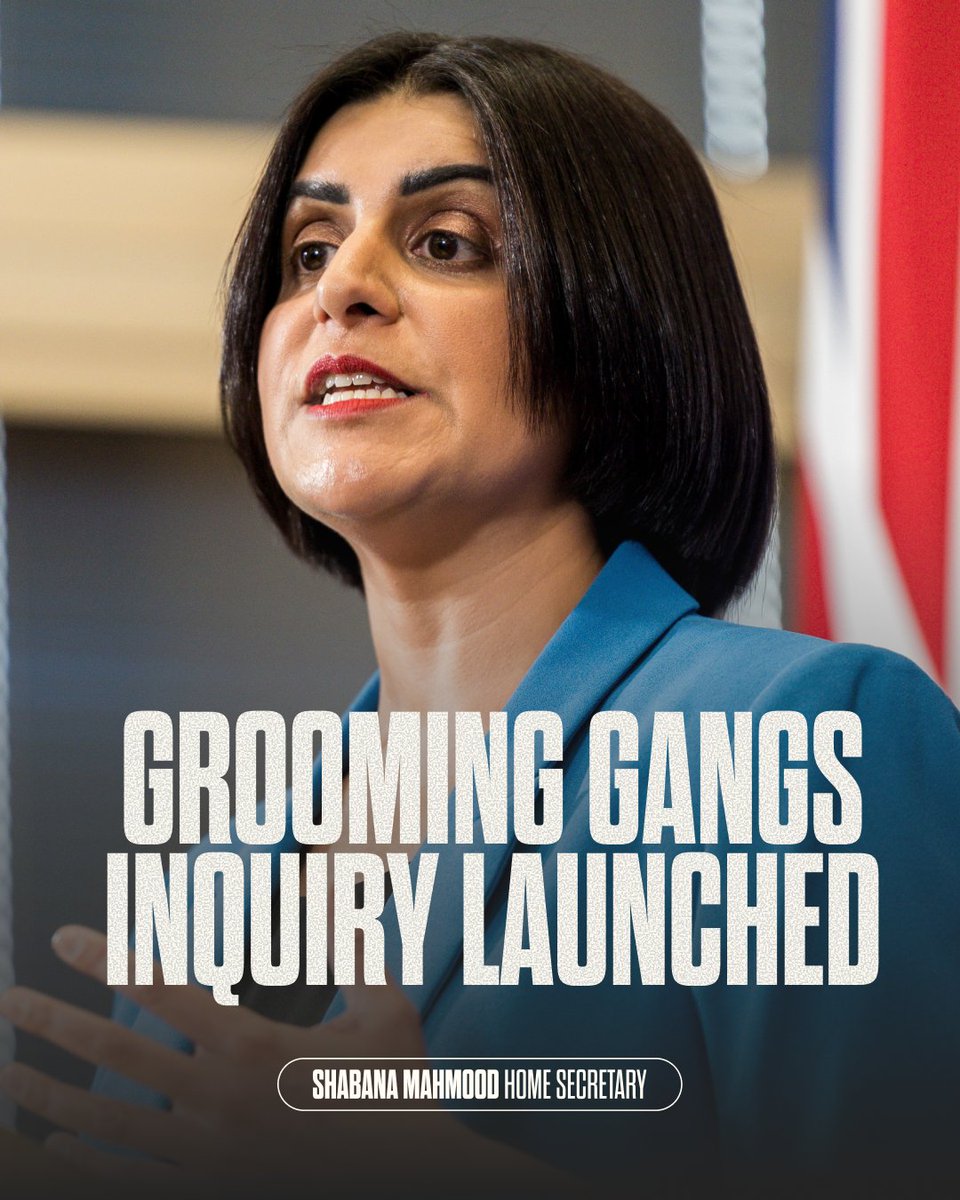
The independent national Inquiry will now begin its crucial work to uncover how these crimes were allowed to happen and root out failure wherever it occurred.
There will be no hiding place for the predatory monsters who committed these vile crimes.
412
12,035
36,943
720,778
ReadyPlayerOne retweeted

This peaked me more than any other single incident.
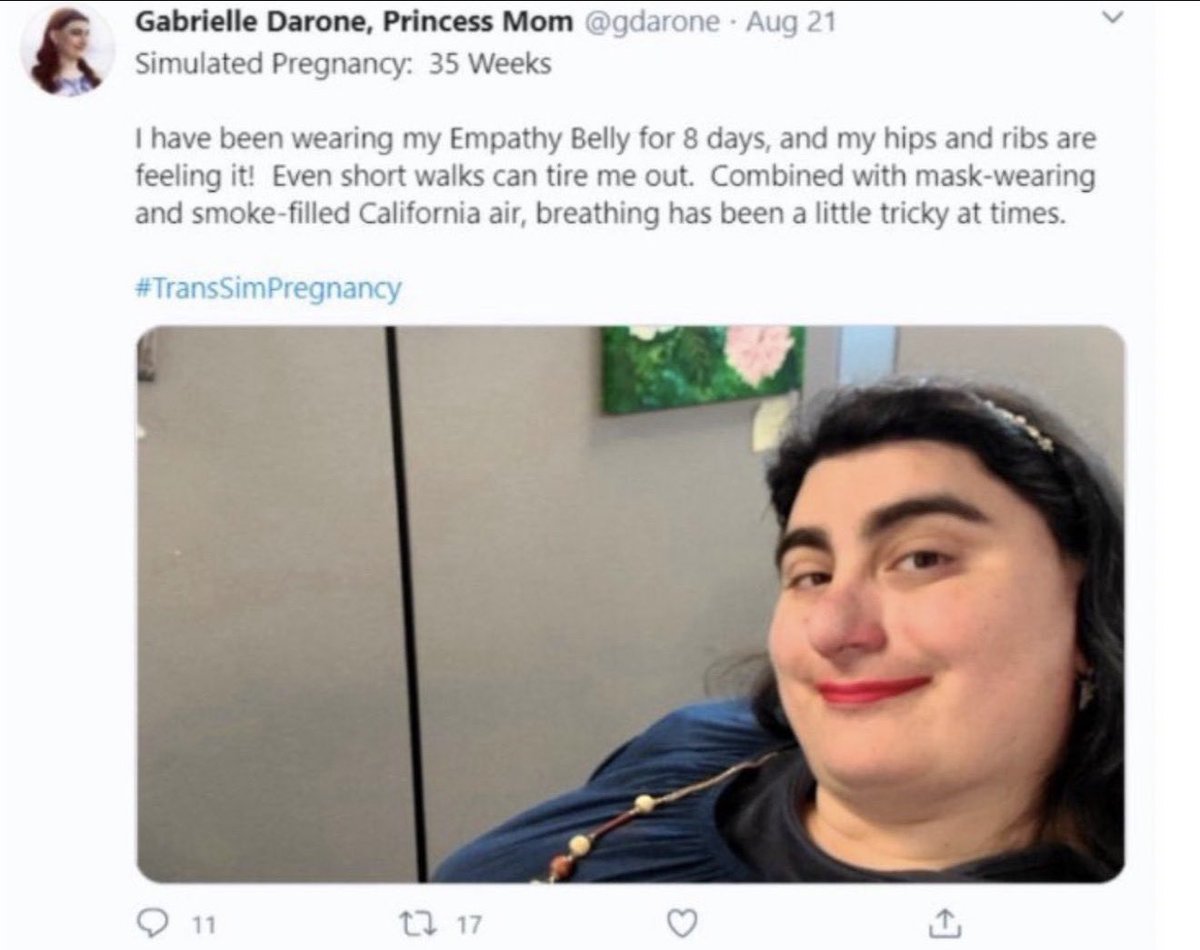
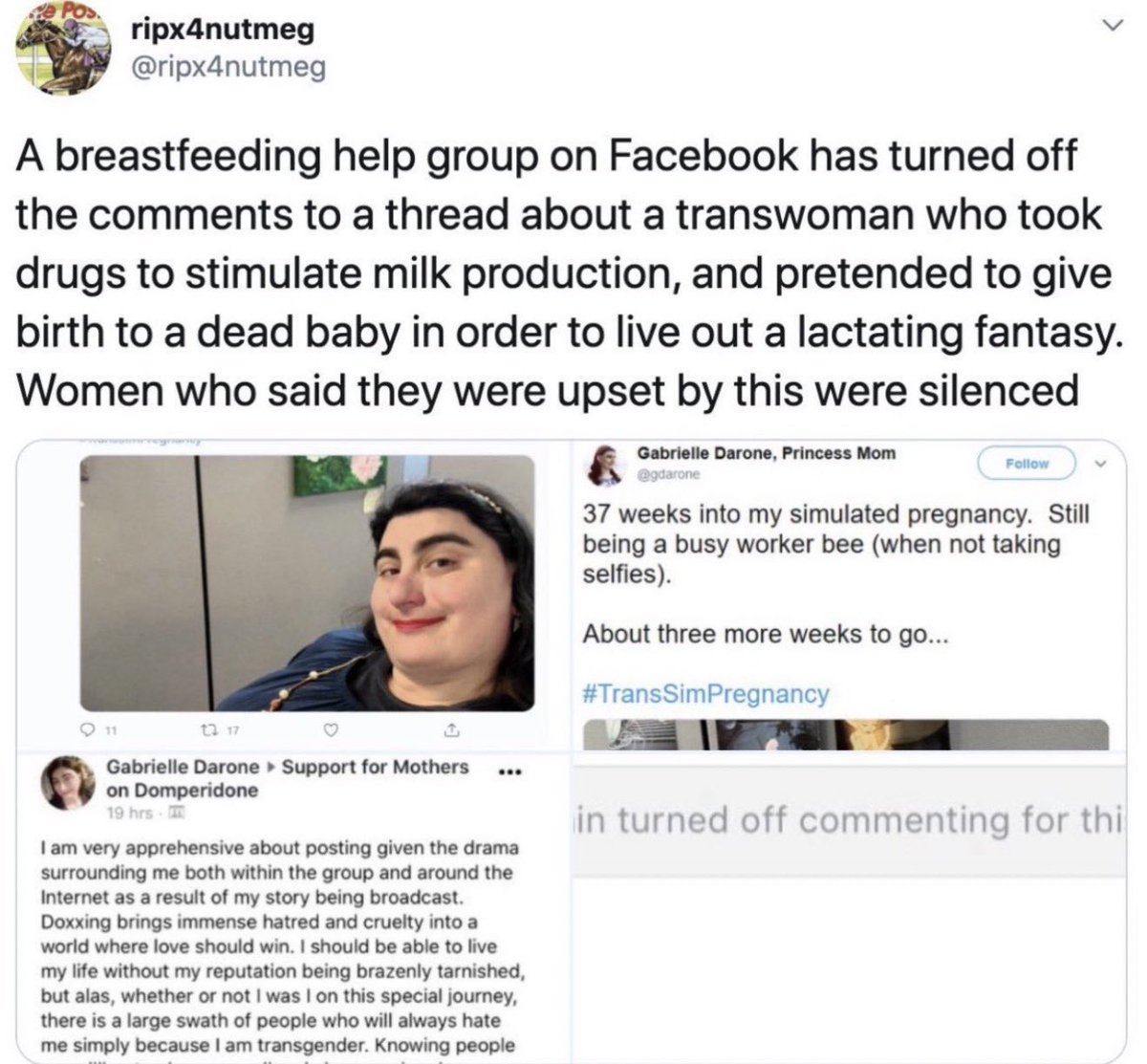
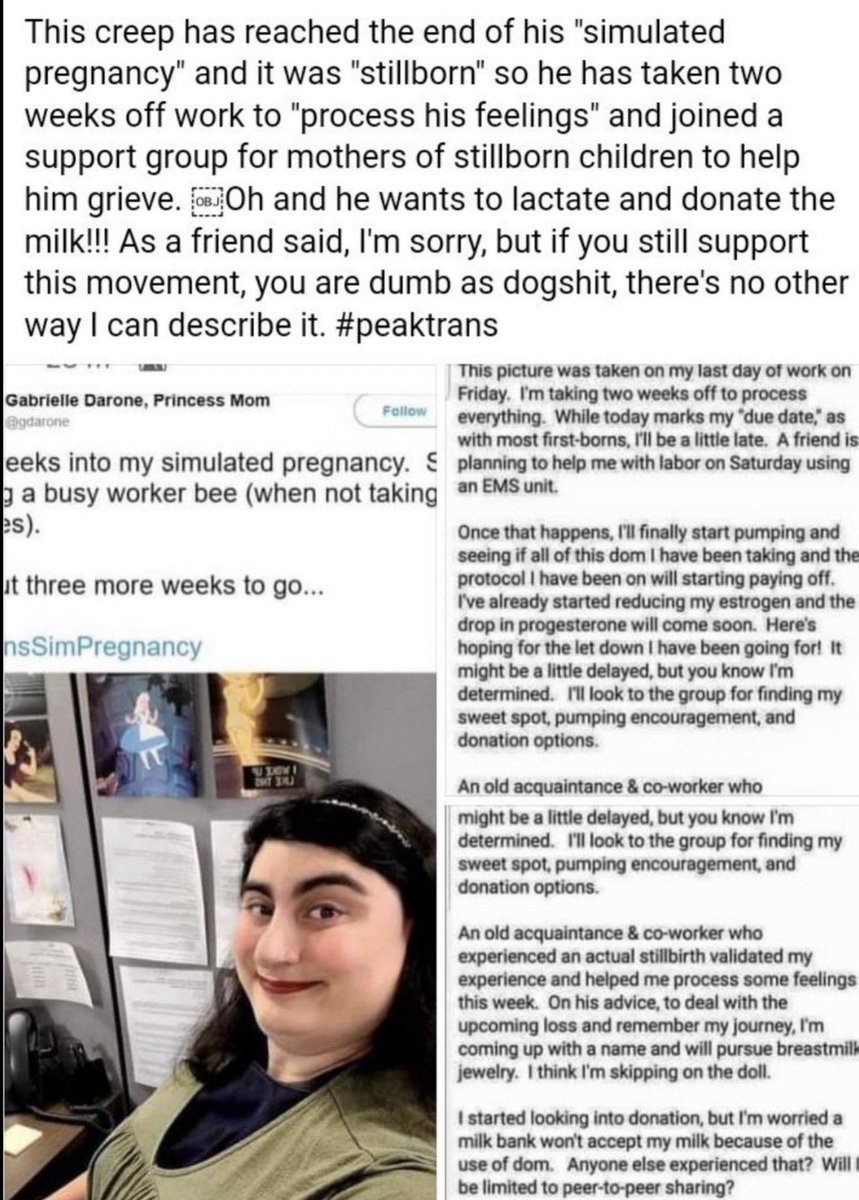
The man pictured, “Gabrielle” Darone, spent 9 months simulating a pregnancy, including feigned morning sickness and the wearing of a fake belly, with the intention of play-acting the loss of the imaginary baby. He also joined a support group for grieving mothers who had lost children, seeking validation and “support” for his planned “stillbirth.”
He even went so far as to rent a machine that simulated contractions, and bought a plastic “baby” which he inserted into his rectum and then “gave birth to.” Afterwards, he took two weeks off from work to “grieve.”
Women who objected to his presence in the group - women who had actually lost children - were kicked out so that this man could feel supported in his game of ‘let’s pretend.’ Their very real grief was considered less important than this man’s sexual fantasies.
To top it all off, he did all of this in the house he still shared with his unconsenting soon-to-be-ex-wife and their minor children. He even roped his 7 year old into taking “maternity pictures.”
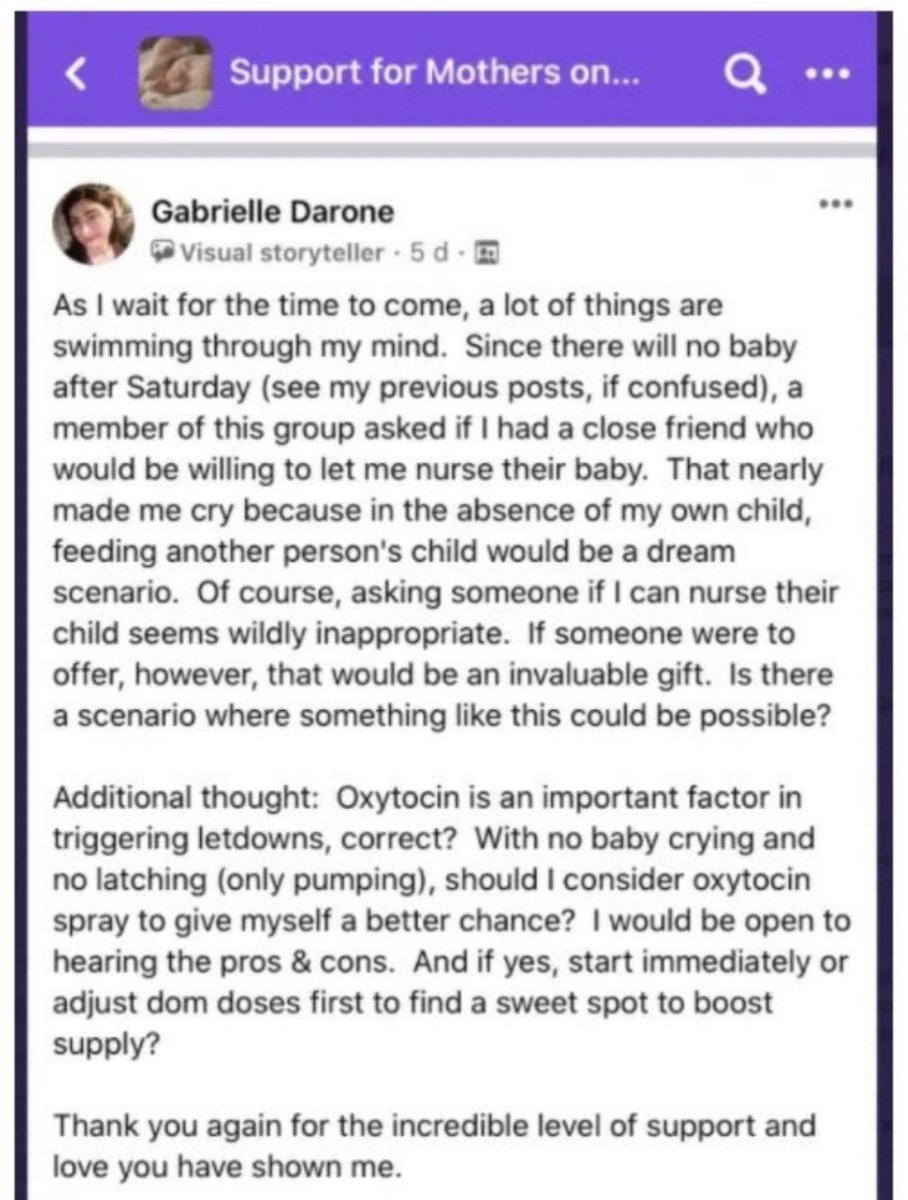
Mr. Darone also convinced his doctors to provide him with drugs to induce lactation. He asked the members of an online breastfeeding group he’d joined if any of them would be willing to let him
“breastfeed” - that is, sexually assault - their babies, and attempted to donate the chemical-laced sludge he pumped out of his moobs to “other mothers.”
These men have proven over and over again that there is no aspect of women’s pain that they will not twist into a prop for their sickening deviancy, from rape to oppression to sexual objectification.
Even the loss of a child in the womb is fair game to them: a perverted, selfish, hyper-sexualized game of make-believe that must always take priority over the real pain and real needs of real women.
1,138
3,829
13,493
427,435
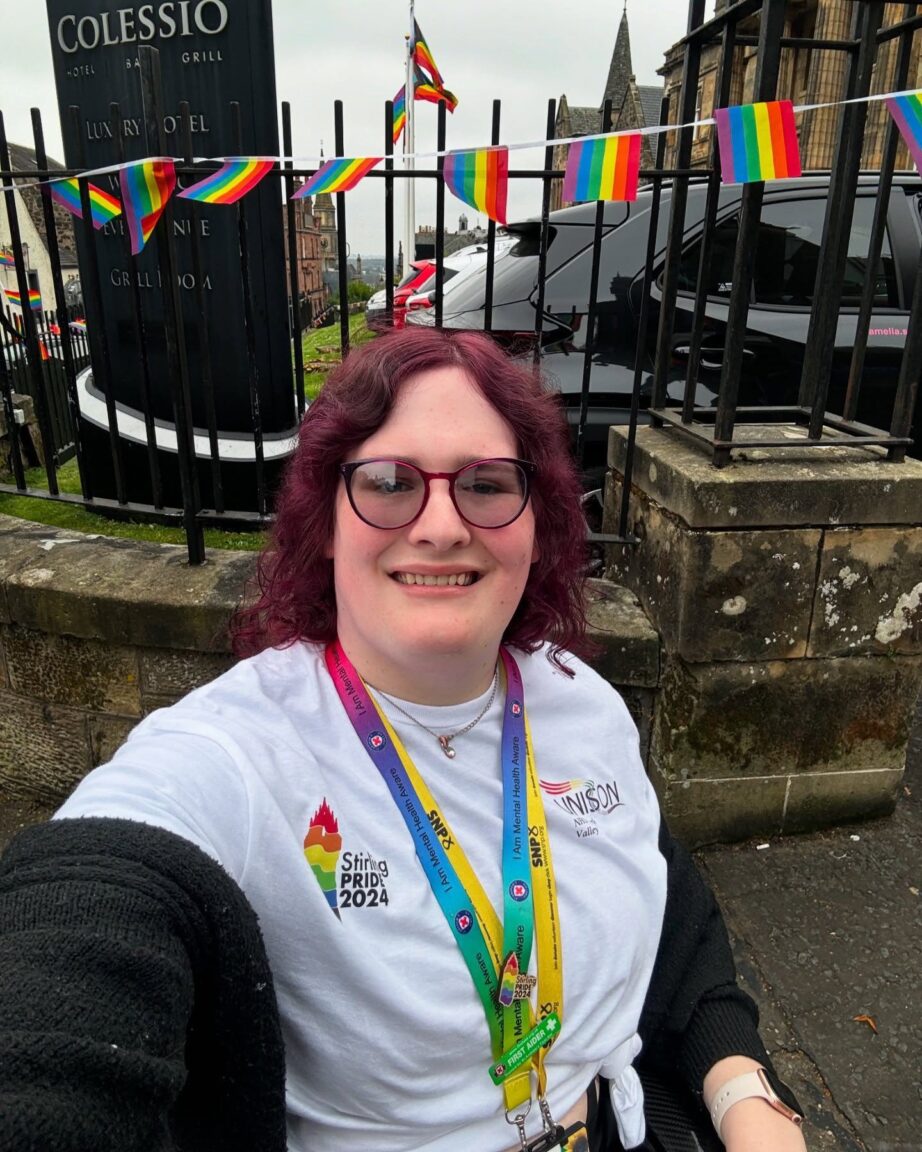
A transgender political campaigner and activist in Scotland has pleaded guilty to creating AI-generated sexual images of children.
Amelia Connolly, 23, has since told his social media followers that the conviction was a misunderstanding.
He is set to be sentenced in May.
287
1,356
4,549
268,887
A violent transgender inmate in Portugal has been transferred out of a women's prison after guards threatened to strike unless he was moved.
The man, who had attacked multiple female staff and inmates, was being held on a mother-baby unit.
reduxx.info/prison-guards-in…
161
2,236
8,163
917,507
ReadyPlayerOne retweeted

Feb 25
dailymail.co.uk/news/article…
newyorker.com/magazine/2009/…
“Caster was very free when he is in the male company,” Sako said. “I remember one day I asked her, ‘Why are you always in the company of men?’ He said, ‘No, man, I don’t have something to say to girls, they talks nonsense. They are always out of order.’ ”
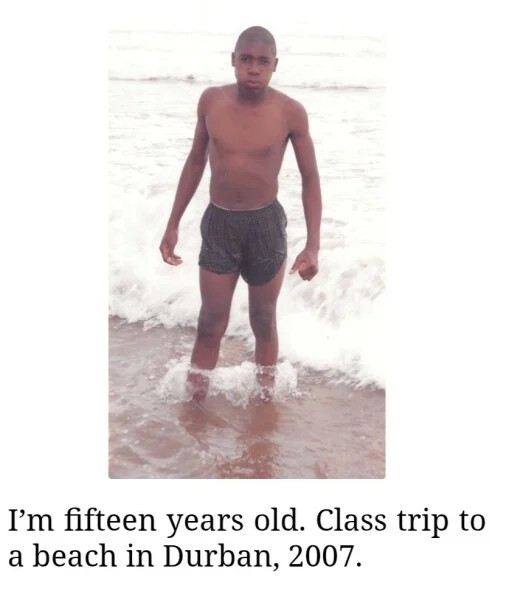
Also Semenya's own biography where he shared a photo of himself shirtless at the beach at 15. Just a typical teenage girl, right?
25
309
1,280
70,292
ReadyPlayerOne retweeted
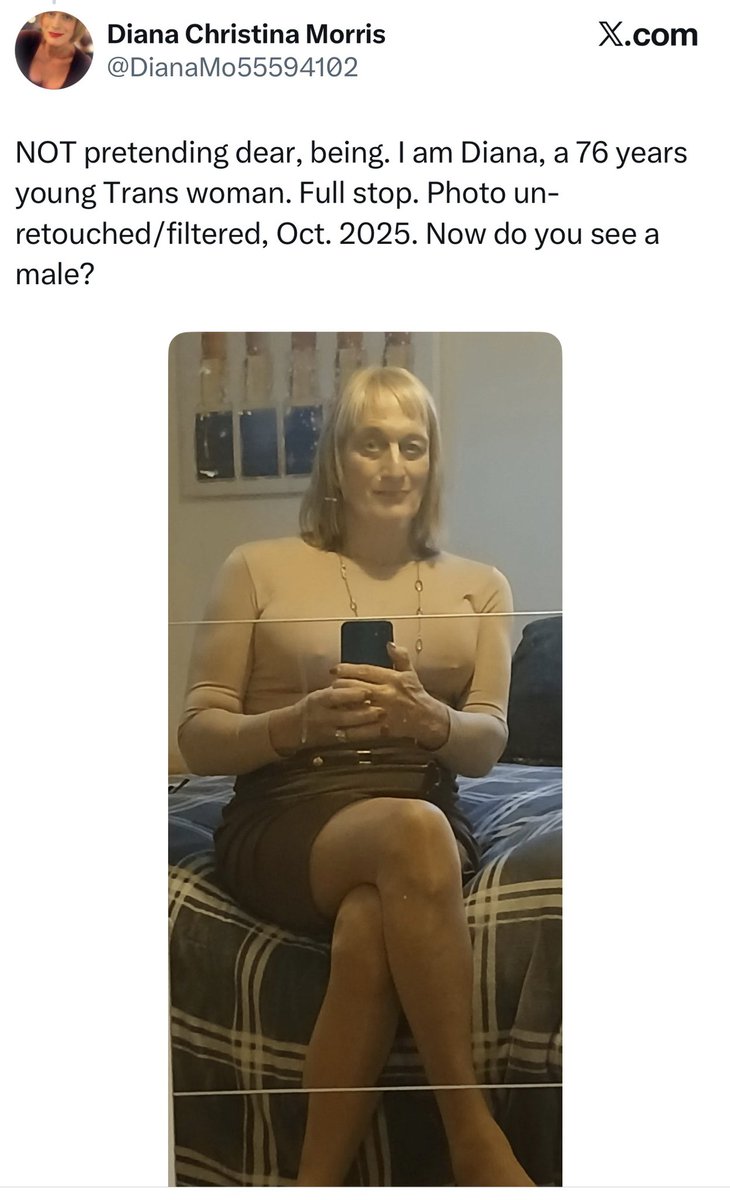
…is this a trick question?
597
185
3,716
113,896
ReadyPlayerOne retweeted
Remember, women – if you’re uncomfortable with the idea of getting naked around this person, you’re a fascist and a transphobe, and progressives believe you deserve to be raped and murdered for your bigotry.
454
1,847
8,189
302,963
ReadyPlayerOne retweeted

Mar 29
The @ONS has confirmed it won’t ask for “gender identity” in next year’s census test 👇
“Ideology should have no place in this exercise. It should ask about sex, male or female, and instruct respondents to answer honestly.” @DerryBanShee in @DailyMail
dailymail.co.uk/news/article…
95
589
2,620
120,176
ReadyPlayerOne retweeted

Mar 20
NEW: Brazilian politician Fabiana Bolsonaro performs blackface to show trans people that putting dark foundation on her face doesn't make her black, just like changing your body doesn't make you a different gender.
The incident was reportedly a protest against the appointment of federal lawmaker Erika Hilton, a trans woman.
"I am painted black on the outside. I identify as black. So why can't I preside over the anti-racism commission? Why can't I take care of this agenda? Because I am not black."
1,280
8,144
59,081
3,513,689
ReadyPlayerOne retweeted
When Anne Marie Boyle turned down MMA fighter Sean McInnes, he punched her in the face so hard that he broke her eyesocket, broke her cheekbone, knocked her unconscious, and left her with a life-altering brain injury.
She now lives with constant pain and tremors.
He was sentenced to 19 months.
The British court system continues to demonstrate its disregard for the female victims of male violence.
glasgowlive.co.uk/news/glasg…
174
2,892
9,162
147,189
ReadyPlayerOne retweeted

Mar 12
3 ‘trans’ crime stories in one day - what are the chances?
1️⃣ 🇬🇧 James Bubb / Gwyn Samuels (27), guilty of r*ping a 12-year-old girl, also guilty of r*ping a woman he met online while posing as a 16-year-old girl. He’ll be sentenced tomorrow. He was formerly a Special Constable
2️⃣ 🇬🇧 Vivienne Taylor (28), sentenced to 14 months prison for stalking and threatening his surgeon for 4 years. He formerly spent time in a psych ward. The judge noted how he “has limited and fluctuating insight” into his actions. Yet we put these men on hardcore hormones???
He demands to be housed in a women’s prison, claiming “I am female” 🥴🤡
3️⃣ 🇺🇸 Andrew John Robinson / Regina Audrey Robinson (42), sentenced to 2 years in prison ***TWICE*** on separate charges for felony possession of child p*rn, to be served consecutively. He’d previously pled guilty to the same charge (2022) but was spared jail then
Links below
38
419
1,277
25,071