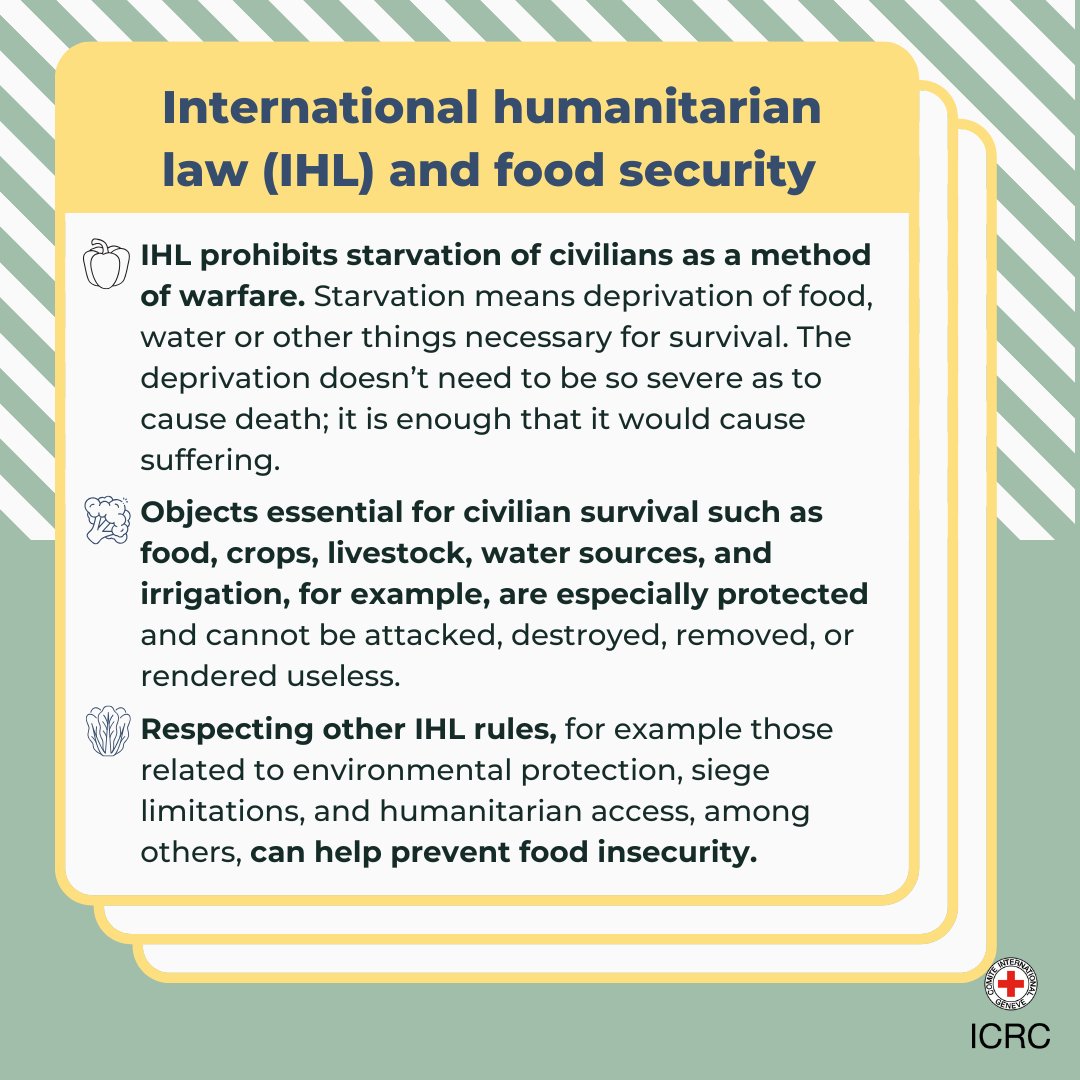
In armed conflicts, access to food is often disrupted, leaving millions facing hunger.
Crops, livestock, and water sources are destroyed, and food aid struggles to reach those in need.
Access to food should not be a luxury.
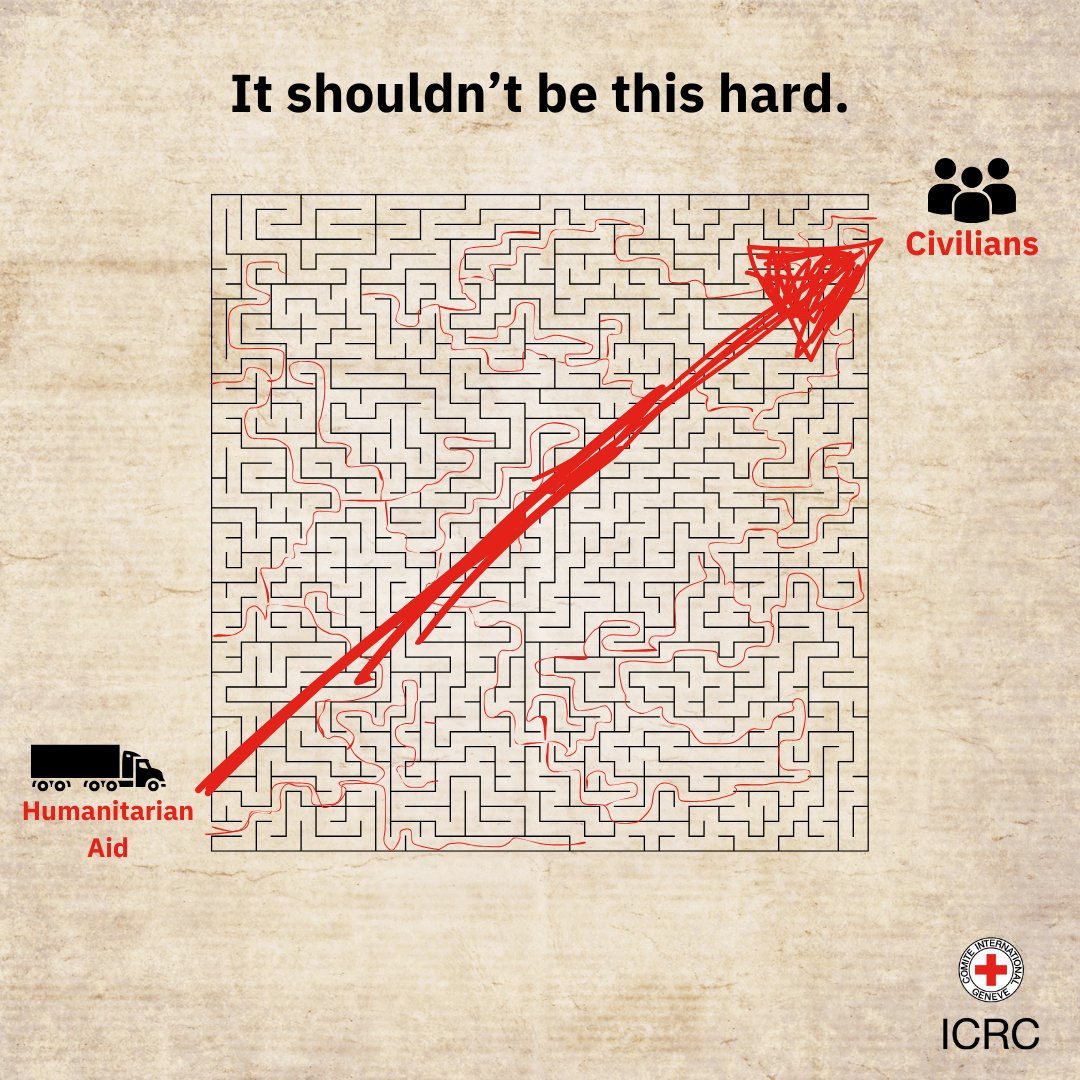
Humanitarian aid is crucial for civilians fleeing conflicts. It can be a matter of life and death. Parties to conflicts must facilitate its rapid, unimpeded passage and delivery.
Millions of people need humanitarian aid, without it, they won't even have the basics for survival.
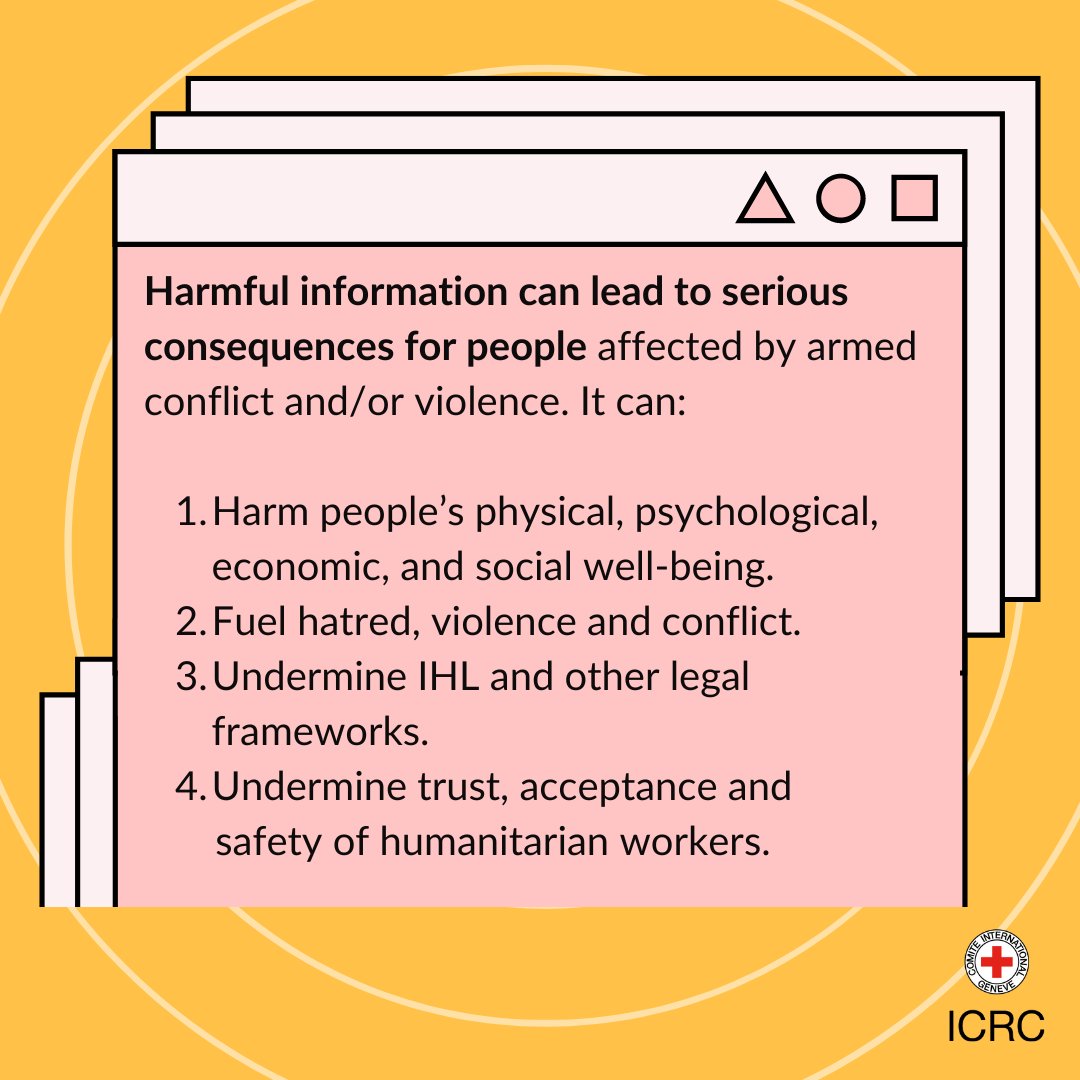
The spread of harmful information can cause real-life harm on people & undermine humanitarian efforts.
Joelle Rizk, ICRC Digital Risks Adviser, outlines four risks of harmful information in armed conflict & discusses our approach to mitigating its impact👉🏽ms.spr.ly/6016mpTCE
ALT Harmful information can lead to serious consequences for people affected by armed conflict and/or violence. It can: 1. Harm people’s physical, psychological, economic, and social well-being. 2. Fuel hatred, violence, and conflict. 3. Undermine IHL and other legal frameworks. 4. Undermine trust, acceptance and safety of humanitarian workers.
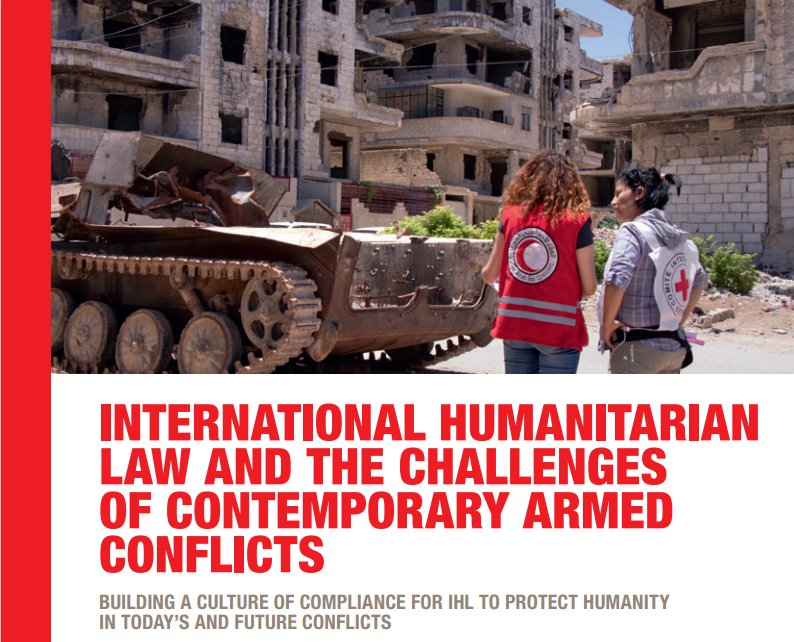
Out today: Concise @ICRC analysis of 21 of the most pressing #IHL in today’s armed conflicts.
From new threats such as hybrid warfare, cyber and information ops, to long standing issues of #NSAG detention.
Proud of our #IHL team to publish the 2024 Challenges Report!
The @ICRC 2024 #IHL Challenges Report is out:
rcrcconference.org/app/uploa…
At every Red Cross/Red Crescent Conference we present our views on the most pressing humanitarian and legal issues.
Join us in building a culture of compliance for IHL.
đź§µon some key issues
📍 Haiti | Armed violence in recent months has seriously disrupted the healthcare system, sharply reducing access to essential services.
Daniela Izquierdo, ICRC's field team leader in Haiti shares more 👇🏽
The @ICRC 2024 #IHL Challenges Report is out:
rcrcconference.org/app/uploa…
At every Red Cross/Red Crescent Conference we present our views on the most pressing humanitarian and legal issues.
Join us in building a culture of compliance for IHL.
đź§µon some key issues
As we just marked the 75th anniversary of the Geneva Conventions, we remind all parties to uphold their obligations under International Humanitarian Law.
This means unequivocally protecting civilians, healthcare workers, and humanitarian facilities.
Protecting civilians during armed conflict is a cornerstone of international humanitarian law (IHL).
But did you know that #IHL is based on humanitarian principles found in many cultures and religions? Making it a common heritage of humanity. #GC75
“In a divided world, #GenevaConventions & #IHL embody universal values that preserve lives and dignity,” said @ICRC President. “They are essential to preventing & protecting against the worst effects of war, and ensuring that everyone, even an enemy, is treated as a human being.”
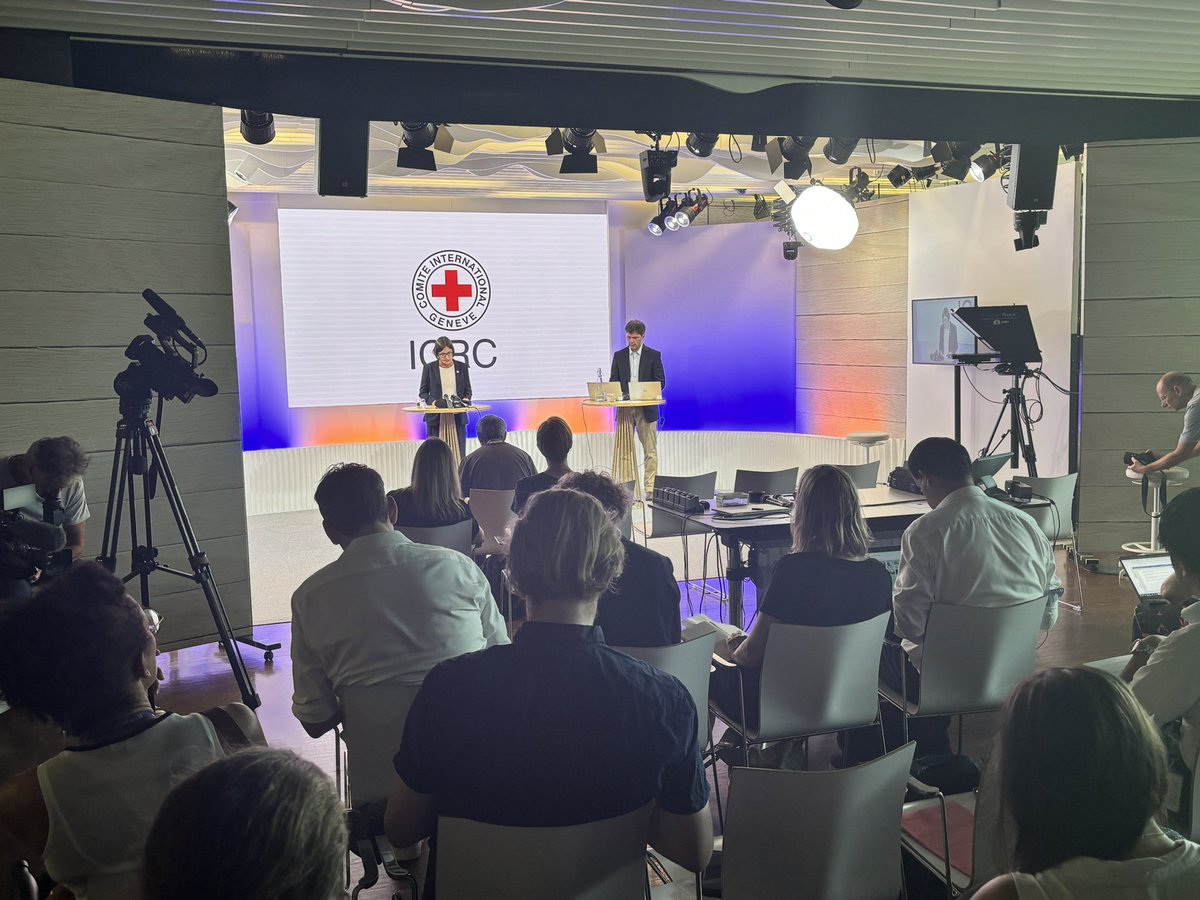
"Where are the peacemakers? ... The faithful application of international humanitarian law can bolster peace initiatives": Mirjana Spoljaric, ICRC President, on the 75th anniversary of the Geneva Conventions.
Read full speech here: ms.spr.ly/6010loRfj
“Where are the peacemakers? Where are the men and women leading the negotiations and preserving
the space to do so?” - Mirjana Spoljaric President of the @ICRC during her press conference marking the 75th anniversary of the Geneva Conventions.
“Despite universal backing for the Geneva Conventions, noncompliance remains a serious problem. IHL is under strain. Disregarded. Undermined to justify violence", Mirjana Spoljaric, ICRC President, on the 75th anniversary of the Geneva Conventions.
More👉🏽ms.spr.ly/6011lob71
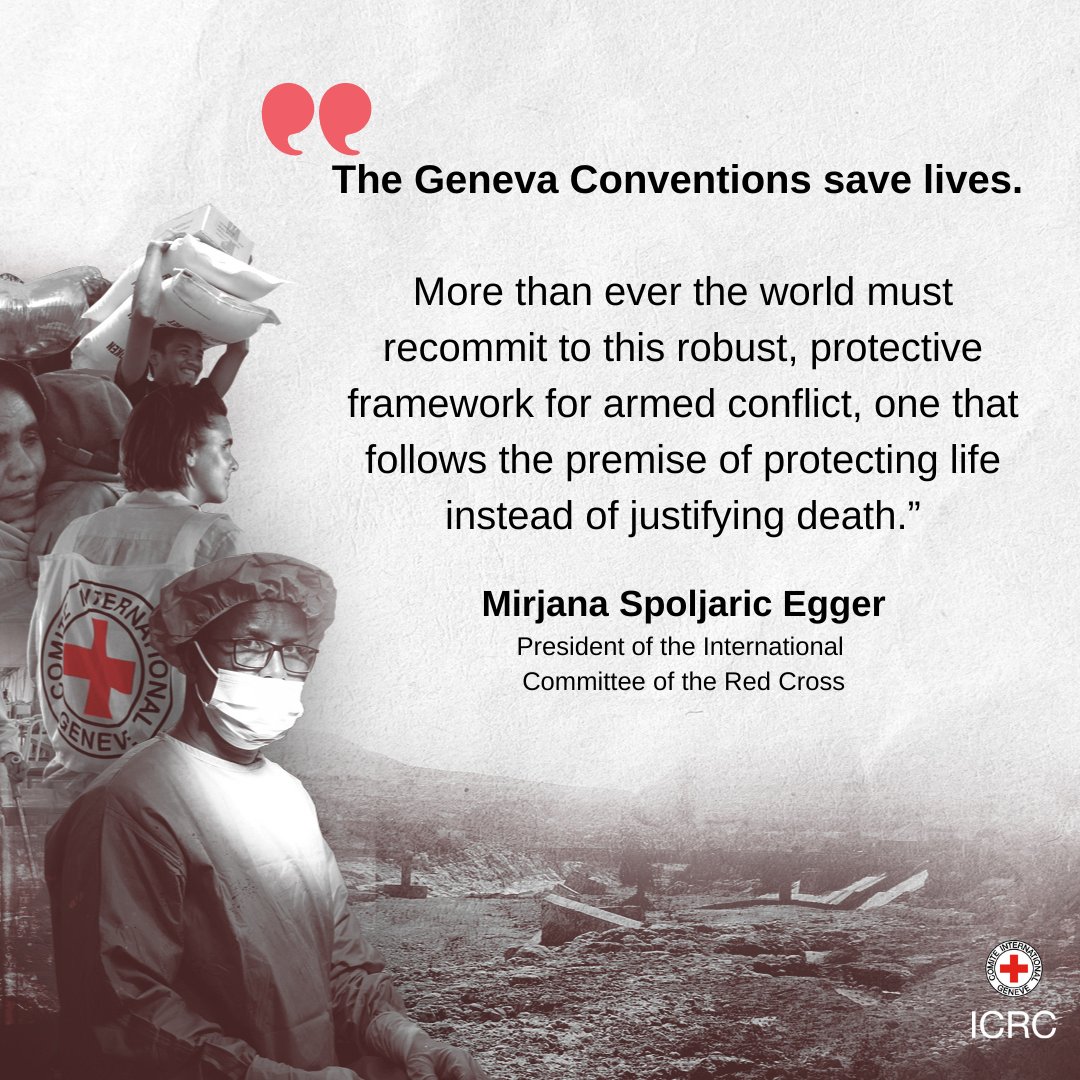
ALT "The Geneva Conventions save lives.
More than ever the world must recommit to this robust, protective framework for armed conflict, one that follows the premise of protecting life instead of justifying death.” Mirjana Spoljaric Egger, President of the International Committee of the Red Cross
"Where are the peacemakers? ... The faithful application of international humanitarian law can bolster peace initiatives": Mirjana Spoljaric, ICRC President, on the 75th anniversary of the Geneva Conventions.
Read full speech here: ms.spr.ly/6011lob69
Today marks the 75th anniversary of the four Geneva Conventions of 1949.
Today, international humanitarian law (IHL) remains as important as ever.
The EU remains committed to promoting compliance with #IHL. Read the latest report → europa.eu/!gqbHcM@ICRC
What happens when false or harmful narratives circulate during wars? What are the implications for those affected by armed conflict and for the humanitarians striving to assist them?
Sharing harmful information has very real consequences on people’s lives.
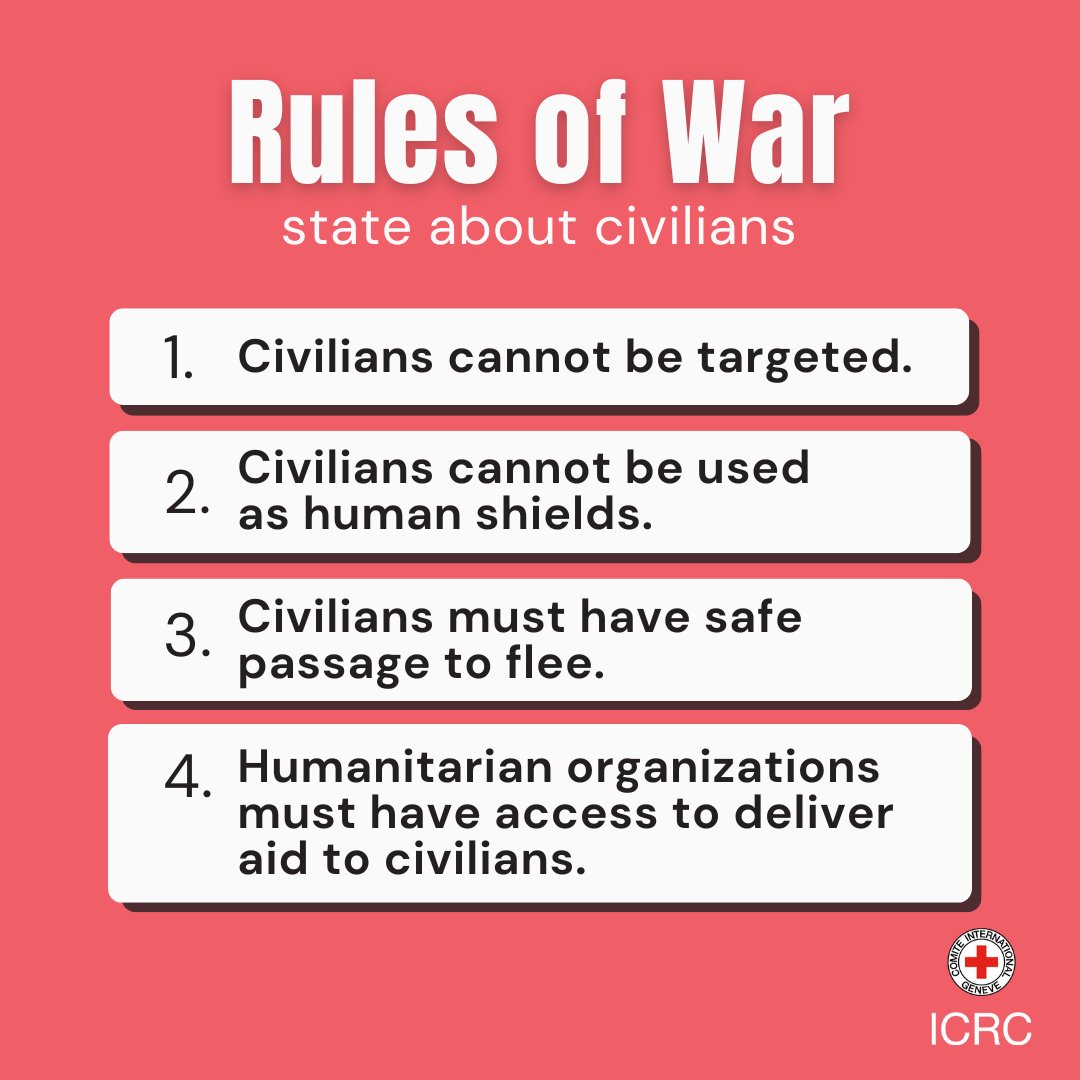
Under the rules of war, parties to armed conflicts must respect and protect civilians. Here are four of those rules 👇
ALT Rules of war state about civilians 1. Civilians cannot be targeted. 2. Civilians cannot be used as human shields. 3. Civilians must have safe passage to flee. 4. Humanitarian organizations must have access to deliver aid to civilians.
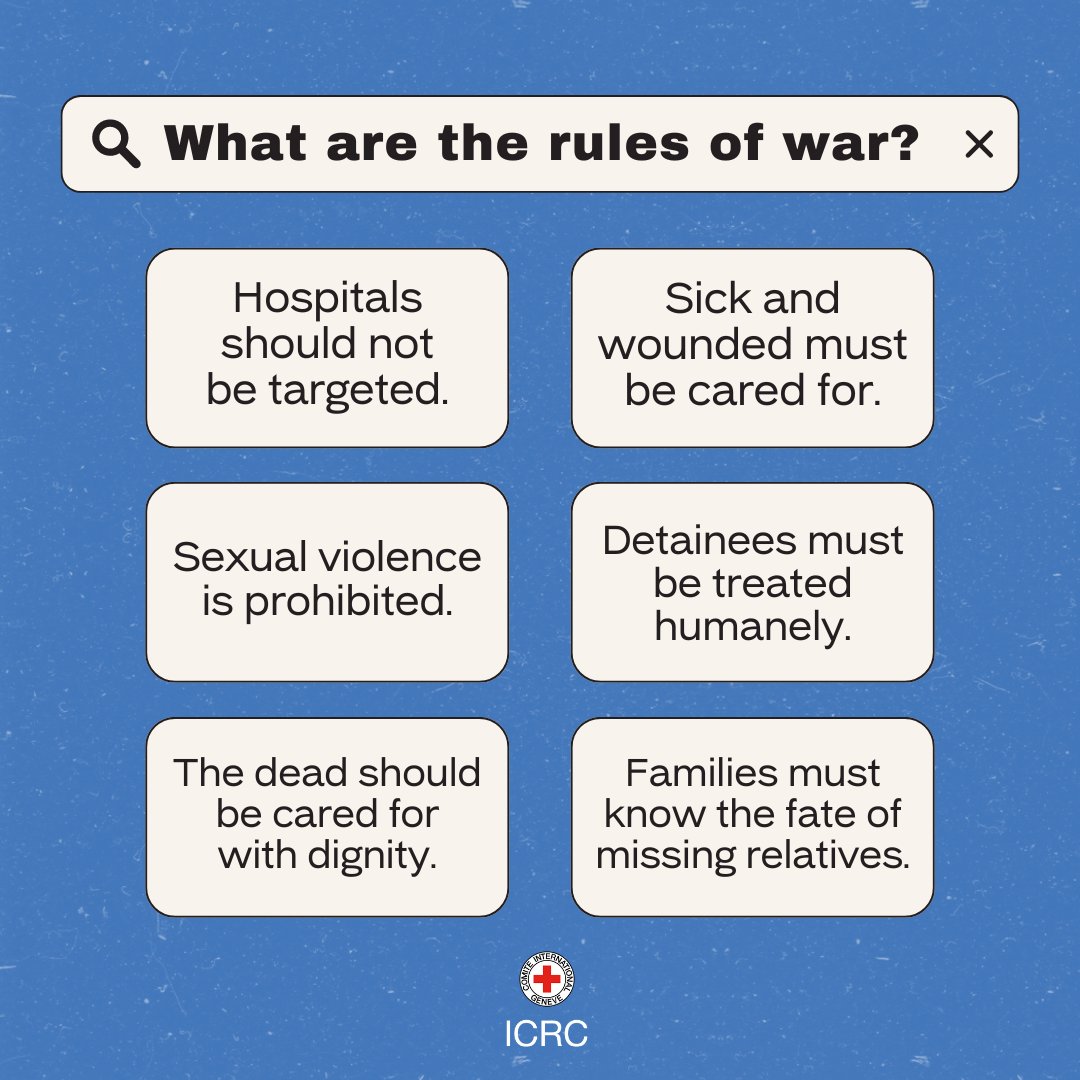
Even wars have limits.
The rules of war protect people in armed conflict and set limits on how wars are fought.
ALT What are the rules of war? Hospitals should not be targeted. Sick and wounded must be cared for. Sexual violence is prohibited. Detainees must be treated humanely. The dead should be cared for with dignity. Families must know the fate of missing relatives. International Committee of the Red Cross.
We take no side other than the side of humanity.
We reiterate our calls on all parties to:
- Protect civilians, healthcare workers and facilities.
- Ensure safe and unhindered access throughout the entire Gaza Strip.
- Open all available corridors for a continuous and expanded flow of humanitarian aid.
- Immediately and unconditionally release all the hostages.
What happens when false or harmful narratives circulate during wars? What are the implications for those affected by armed conflict and for the humanitarians striving to assist them?
Sharing harmful information has very real consequences on people’s lives.
In times of war, neutrality is not indifference.
It is a deliberate way of working to be able to reach those who need it most.
Why neutrality matters 👇