
I drink desi. Not here to share pleasantries. Here to stay. Random. Feminist
Joined March 2010
- Tweets 173,997
- Following 379
- Followers 225,342
- Likes 70,528
8,858 Photos and videos



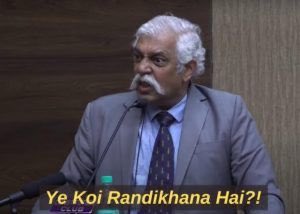
Pinned Tweet

13 Nov 2015
"Kya Sharma ji, hum thode Modi supporter kya huye, aap toh anti national ho gaye!"
462
13,804
19,532
Read it Rakesh ji, RBI rules
Resident Indians cannot trade in overseas options or derivatives (Futures & Options). Under the Reserve Bank of India (RBI) regulations, while you can invest in foreign equity stocks, the Liberalized Remittance Scheme (LRS) strictly prohibits the use of remitted funds for margin trading, derivatives, or leveraged trading abroad

Indian traders are switching to Nasdaq Futures over Nifty! 🚀 Here’s why:
Nifty futures trade only 6.25 hours (9:15 AM - 3:30 PM IST). Big overnight gap ups & gap downs kill strategies & trap traders daily.
Nasdaq futures? Nearly 23 hours a day (with short break). Much smoother price action, fewer nasty gaps. You trade when the world moves!
Margins: Nifty needs ~₹1.75 lakh per lot. Nasdaq E-mini (NQ) margins are often lower relative to exposure
Points game: Catching 1000 points in Nifty in a month? Almost impossible. In Nasdaq? Traders do it regularly.
Profits: 1000 pts in Nifty = ₹65,000
1000 pts in Nasdaq futures = $20,000 (20x multiplier)! Game changer.
Time to level up! Less stress, more hours, bigger moves, real profits. Who’s already trading Nasdaq futures? Drop your experience
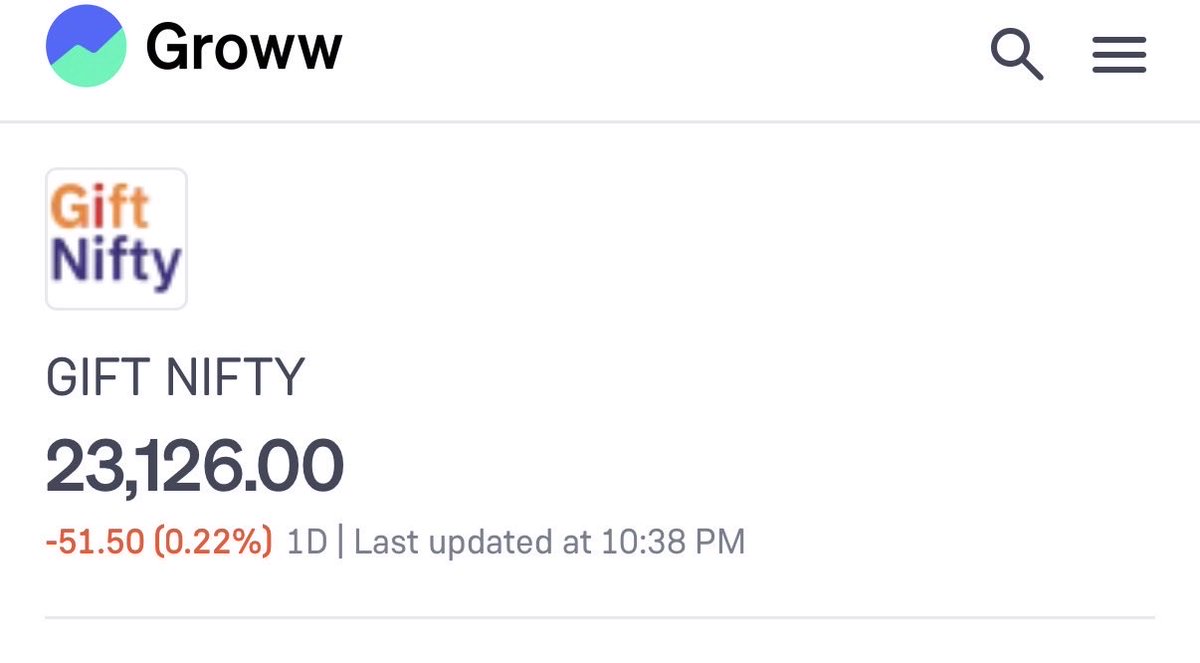
Does @zerodha & @_groww provide facilities to we Indians to trade US benchmark indices sitting in INDIA via their Gift Nifty set up
1
1
2
442
15m
Akhilesh Yadav is more poisonous, lazy, arrogant and self-entitled a politician than Rahul Gandhi but give credit where credit is due, he is not as dumb as Rahul is
5
22
437
40m
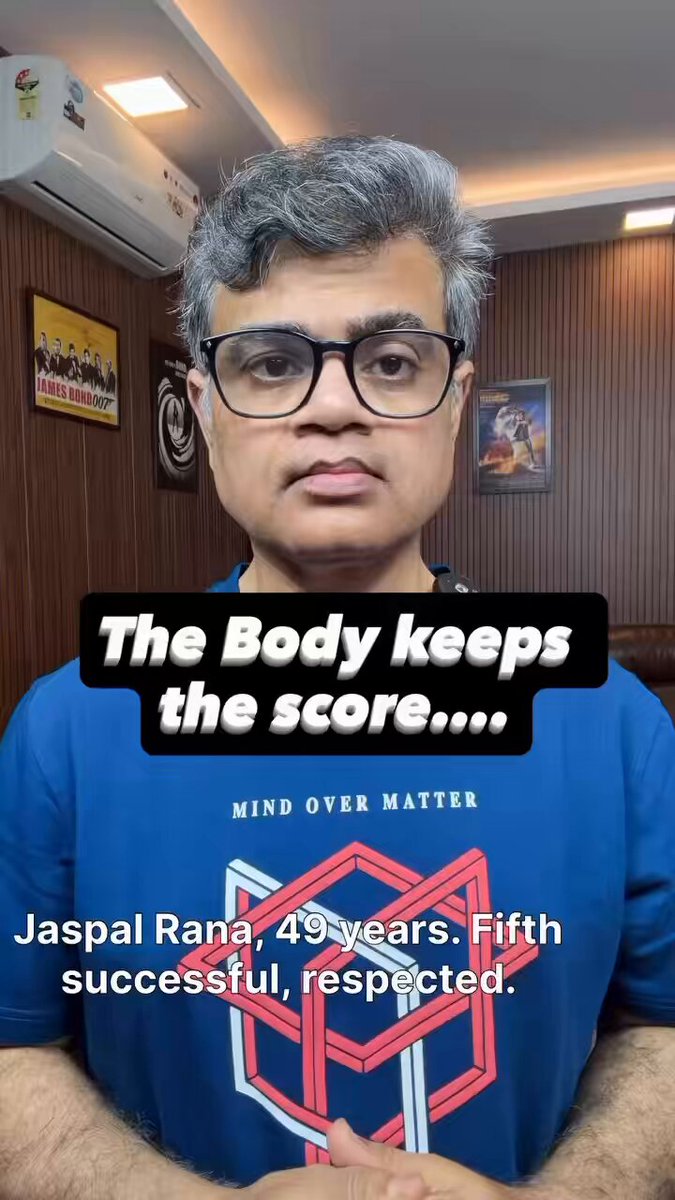
A must watch, golden words on how to live life by theangry_doc, best doctor on instagram
3
10
33
1,014
22m
Happy Bithday to Donald Trump and Chacha Monk @oldschoolmonk. There are lot of similarities between two like carefree & unpredictable attitude and more important their unadulterated sorry adulterated love for women
1
8
568
51m
If Vir Das claims to be a protector of women then Dawood is chief of ATS, anti terrorists squad
4
11
74
1,740
Sootiye, they are claiming that they are original TMC. If 2/3 members are saying signing they are original, they can even expel rest of them. Party is not an object which is owned by any leader, it’s collective membership that decides and chooses its leader.
Vaise tere liye ek case hai, le le 100-200 crore for losing the case

#WATCH | TMC political turmoil | "So-called Kakoli faction is saying that we will not merge but we will sit separately. There are two conditions, a political party must merge with another political party, and cumulatively and conjucntively the legislature party must have 2/3rds switching. On the contrary, they are directly subject to the anti-defection law and the Speaker can and should disqualify them in 5 minutes because they are saying that we are not merging, we are a separate group. Where there is concept of separate group? There is nothing called a separate group..," says Congress leader and Senior Supreme Court Advocate Abhishek Manu Singhvi when asked what protection under law does Kakoli faction of MPs have to vote & operate independently
3
10
53
1,728
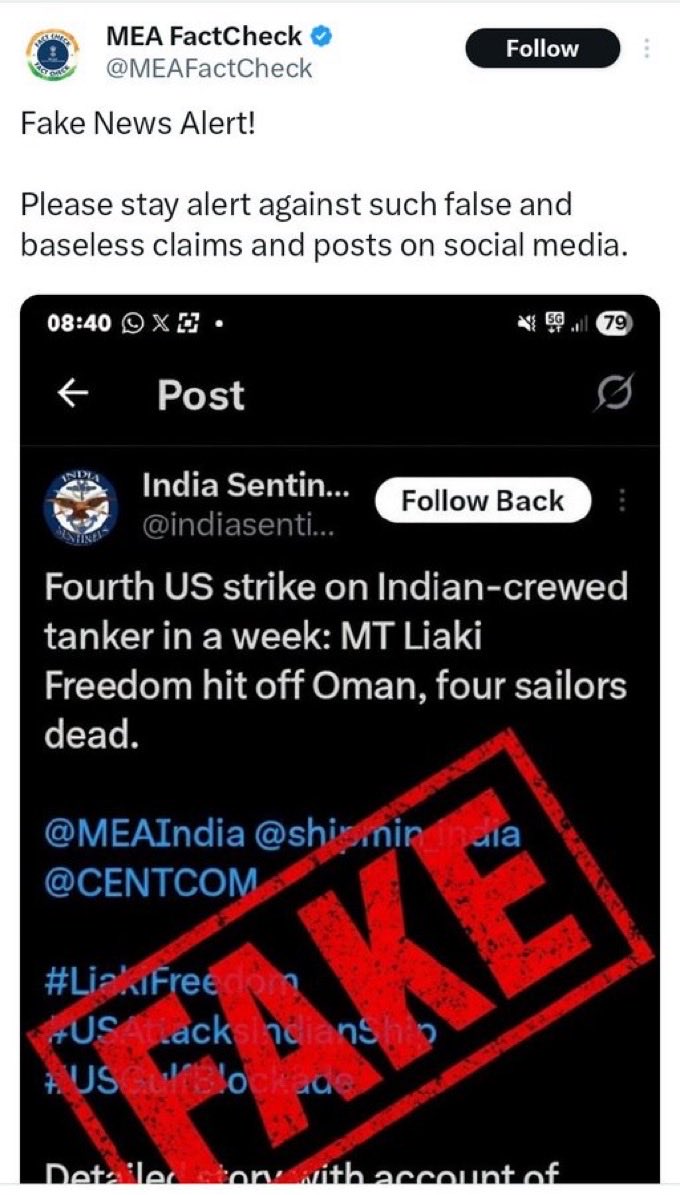
Fake news
Jun 13

4TH INDIAN-CREWED TANKER REPORTEDLY STRUCK OFF OMAN AS REGIONAL MARITIME RISKS ESCALATE
1
3
27
1,162
Ra_Bies 3.0 retweeted

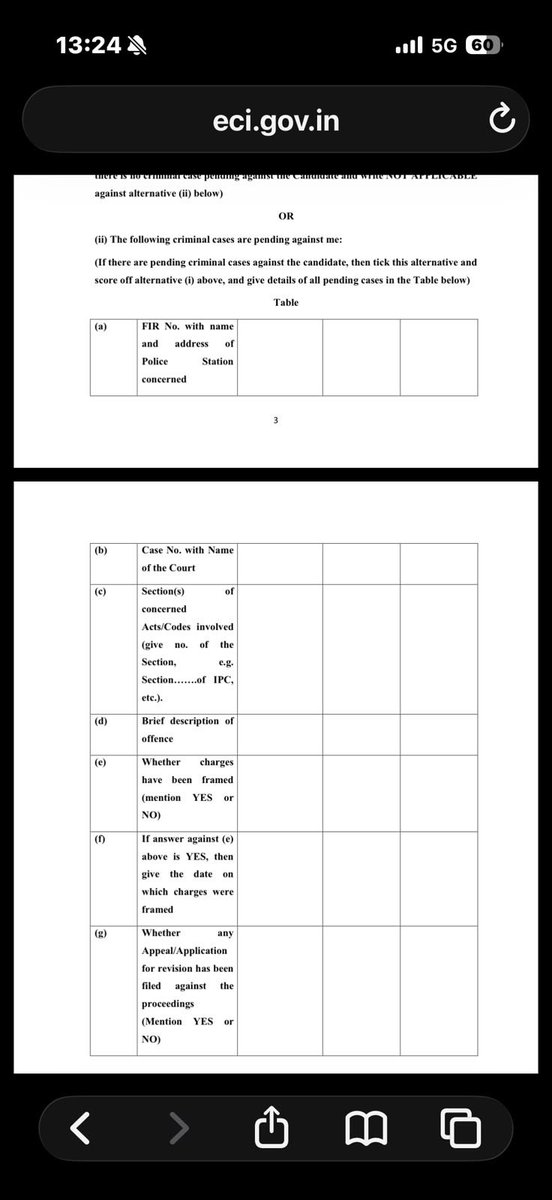
Mr. Rajdeep Sardesai, while quoting theory from books, you seem to have overlooked the practical reality of Form 26, the statutory nomination affidavit that every candidate is required to file.
For your kind information, Form 26 mandates disclosure of all pending criminal cases within the personal knowledge of the candidate, irrespective of whether charges have been framed or not. The form specifically requires details such as the Crime Number, Case/CC Number, sections of law invoked, description of the offence, the court concerned, and whether charges have been framed. If charges have been framed, the candidate is required to disclose the date on which the charges were framed. The form also requires disclosure of any appeal or revision pending against an order in such proceedings.
The purpose behind this mandatory disclosure is simple: the people of India have a right to know the complete background of candidates seeking public office, including pending criminal proceedings, so that they can make an informed electoral choice.
Perhaps you may ask your wife, who has herself contested elections and filed nomination papers, about these statutory requirements.
Before commenting on the issue involving Shri N. Ramchander Rao Garu, senior-most advocate, seasoned public figure, time-tested politician, and the respected President of Telangana BJP, it would be advisable to carefully read the Constitution, election laws, and Form 26 in its entirety. The law is unequivocally clear on the requirement of disclosure.
@BJP4Telangana @BJP4India @N_RamchanderRao @ANI
3
15
18
1,411
Elon Musk is now a trillionaire and has a wealth of 1.2 trillions dollars. No need to complicate things, if he gives India 140 billion dollars by depositing 1 million dollars into each Indian’s account, every Indian will have one million dollars equivalent to 9.5 crores rupees each person. Elon Musk will still be a trillionaire with a wealth of 1.06 trillions. That’s the power of mathematics
16
11
132
8,284

Her name is Surabhi Gautam.
She grew up in Amdara, a small village in the Satna district of Madhya Pradesh. There was often no electricity in her home, so she studied by whatever light she could find. Her father was a lawyer at the local court and her mother a schoolteacher.
She attended a government-run Hindi medium village school with almost no facilities.
She was brilliant from the start. She scored full marks in mathematics and science in her board exams and topped the state merit list, all from a village classroom with none of the advantages most toppers had.
In Class 12, she fell seriously ill with rheumatic fever. Every fifteen days, her parents travelled around 150 kilometres to Jabalpur so she could receive treatment.
She kept studying through it.
She later became the first girl from her village to leave for a city to pursue higher education, joining an engineering college in Bhopal.
On her very first day, she could not introduce herself in English. Her classmates laughed at her and a teacher openly doubted whether she belonged there.
She did not break.
Instead, she decided to master the language that had humiliated her. She learned ten new English words every day and practised speaking to herself when no one was around.
By the end of the first semester, she had topped her college.
She went on to graduate with a gold medal.
Then she simply did not stop.
She cleared examinations for GATE, ISRO, BARC, SAIL, SSC and Delhi Police. She later worked as a scientist at the Bhabha Atomic Research Centre.
In 2013, she secured All India Rank 1 in the Engineering Services Examination.
In 2016, on her first attempt, she cleared the UPSC Civil Services Examination with an All India Rank of 50 and became an IAS officer.
The girl who was laughed at because she could not speak a single line of English now serves as one of the administrators of the country.
Follow for stories India deserves to remember.

66
459
1,942
63,251
12h
Soon two things will happen, fist TMC will resign from TMC and even those who were never with TMC will resign from TMC
Kolkata, West Bengal | "I sent my resignation letter to Mamata Banerjee and requested her to kindly accept my resignation from primary membership of the party," says TMC leader Manas Ranjan Bhunia
(File photo)

7
18
113
5,370
12h
I sincerely hope wish and pray that Lawrence Bishnoi reads this tweet and listens what Arvind Kejriwal said

"गैंगस्टर लॉरेंस बिश्नोई ED Party का दामाद है"...दिल्ली के पूर्व सीएम केजरीवाल ने कहा
@ArvindKejriwal @AamAadmiParty | Arvind Kejriwal
6
43
304
5,688
Ra_Bies 3.0 retweeted

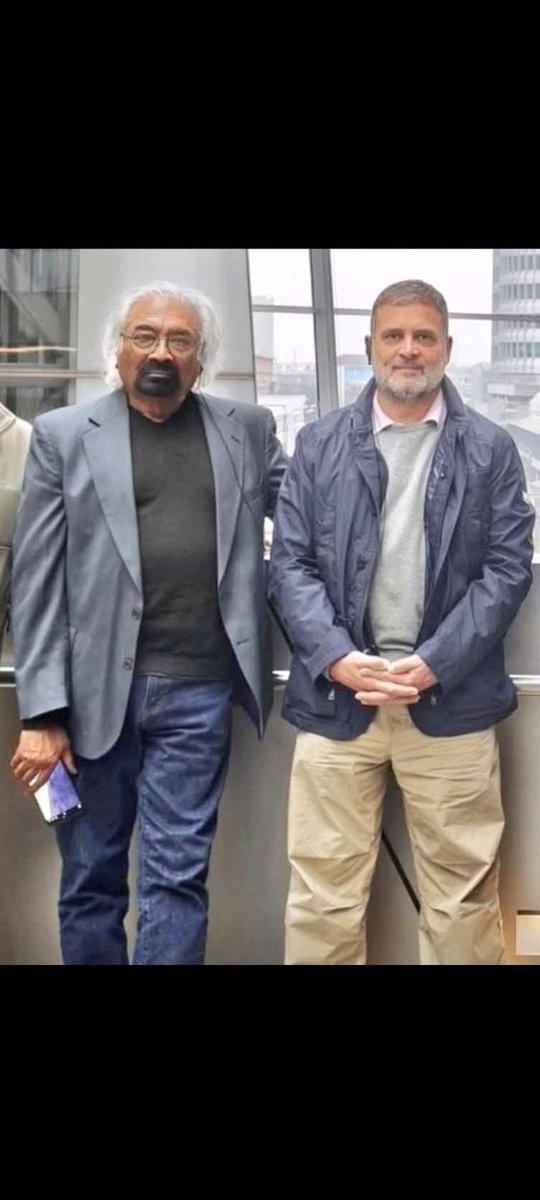
Rajdeep, you are an idiot. Question is not whether she convicted or not in the case. Her nomination was rejected because she failed to mention that case in her nomination paper. Charge is 'concealing the fact' - not whether she convicted or not.
You have a bad habit of twisting.
17
37
204
12,661
Ra_Bies 3.0 retweeted

मुझे लगता है फुटबाल इतिहास का यह सबसे तकनीकी गोल है!
159
1,406
11,789
753,804
17h
Mahua Moitra says FIR will be filed against those who throw eggs at her.
Bengalis will have to find some other option
34
27
304
10,429
13h
I’m not sure if fish is the appropriate replacement of egg. Some people are suggesting slippers but I feel violence is not answer unless you feel it’s the answer
1
23
1,766
20h
All of those trolling insulting Sejal Pawar must be booked under SC ST act. Had it been a girl from upper caste no one would have dared to utter a word against her. Just because she is a tribal girl, you’re posting her old videos and making absurd comments. Spare poor Sejal Pawar. Baba Ambedkar would be very sad looking what’s happening
98
65
587
88,050
14h
Removing Mamata Banarjee and her government and restoring democracy in Bengal is bigger an achievement of BJP than abrogation of 370
100
747
5,051
46,380
Ra_Bies 3.0 retweeted

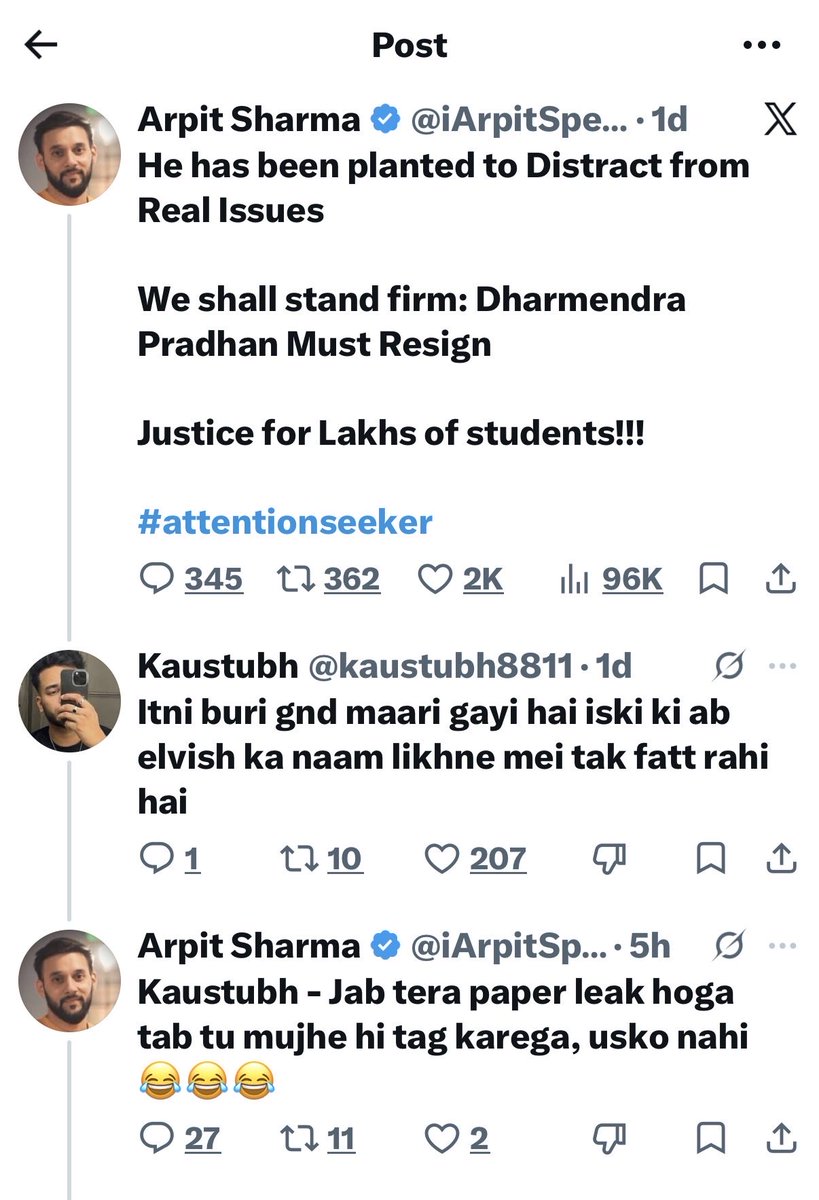
ये चिकन नैक की बात करने वाले को तो बंगाल मे fencing के काम पर लगा दो।
1
1
2
1,949