RadioNet is a consortium integrating at European level world-class infrastructures for excellent research in radio astronomy.
- Tweets 4,796
- Following 146
- Followers 799
- Likes 5,066



















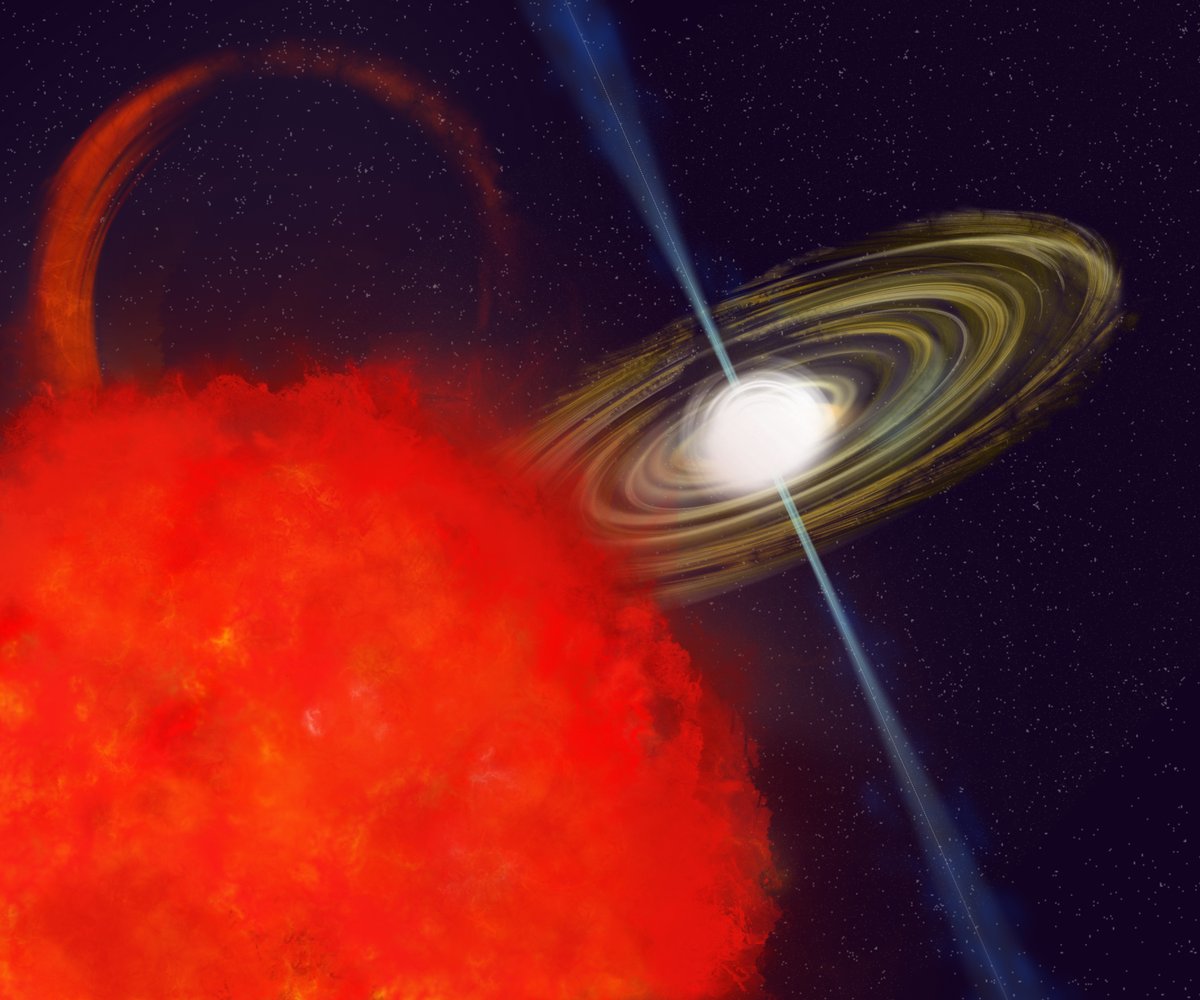
ALT Artist impression of the long-period transient J1634 44, revealed to be a white dwarf with a companion. Credits: NSF/AUI/NSF NRAO/P. Vosteen

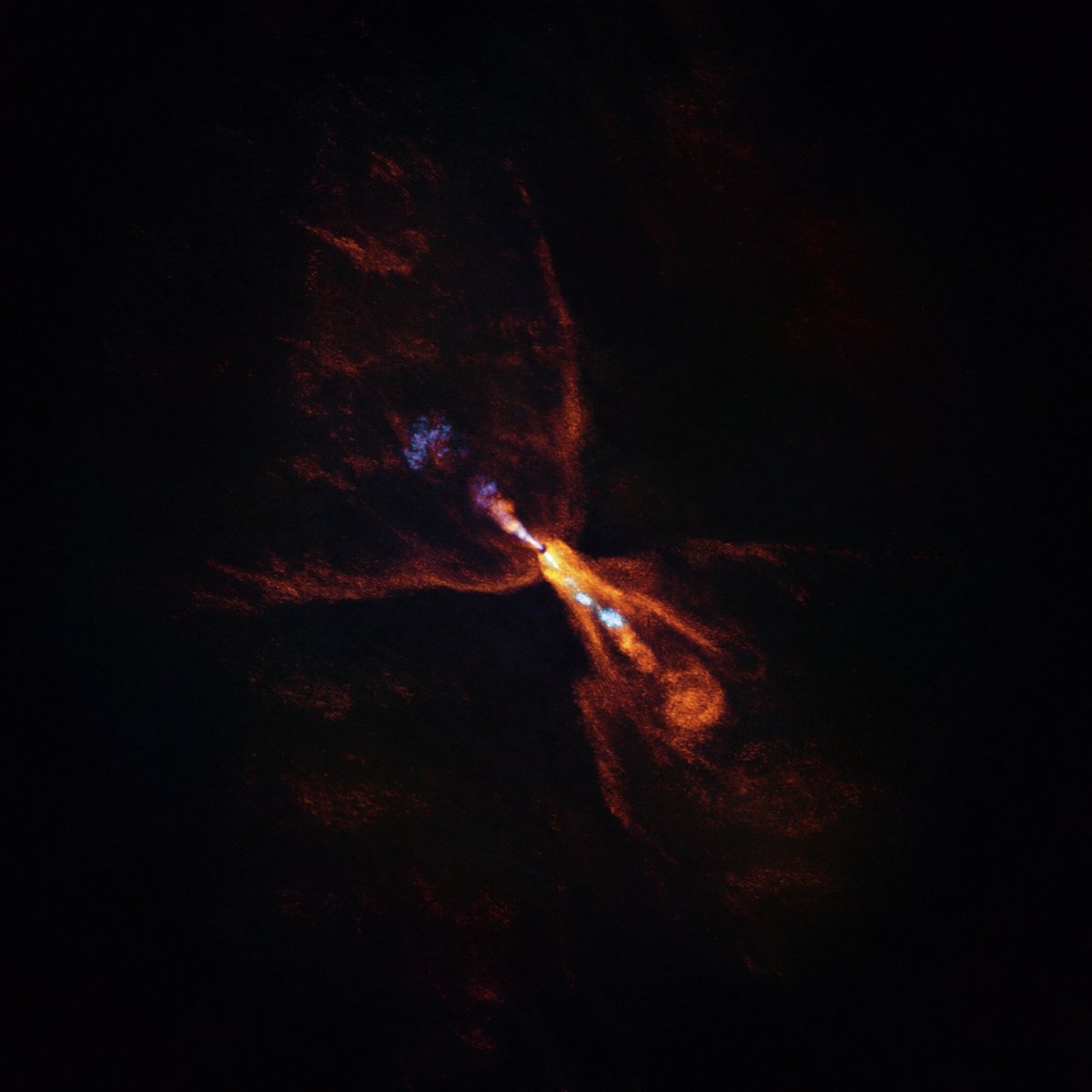
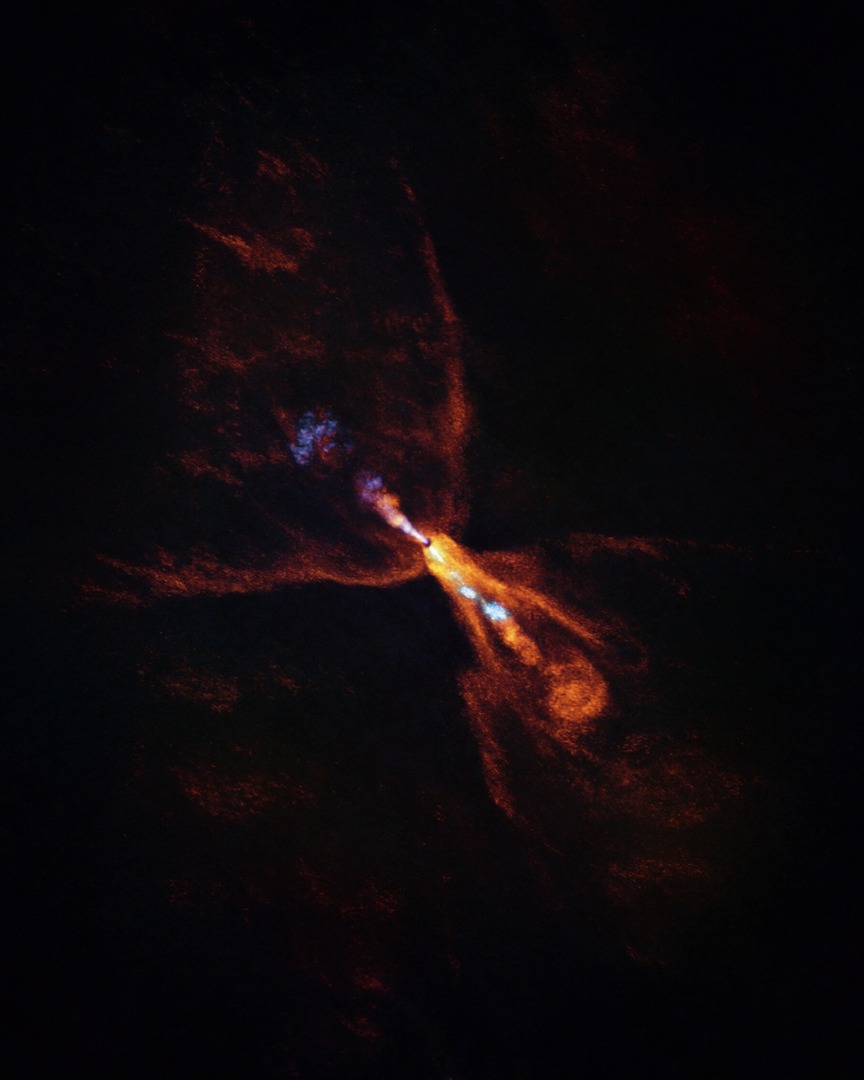
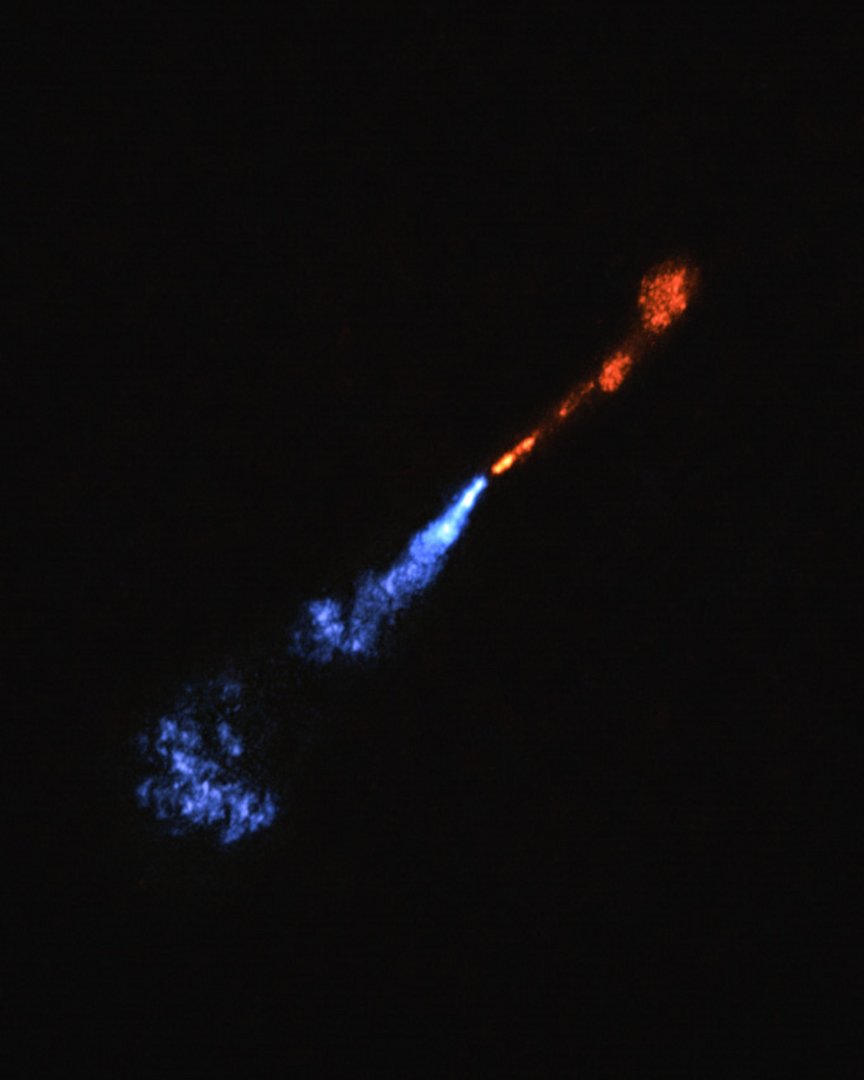
ALT This is HOPS-315, a baby star where astronomers have observed evidence for the earliest stages of planet formation. The image was taken with the Atacama Large Millimeter/submillimeter Array (ALMA), in which ESO is a partner. Together with data from the James Webb Space Telescope (JWST), these observations show that hot minerals are beginning to solidify. In orange we see the distribution of carbon monoxide, blowing away from the star in a butterfly-shaped wind. In blue we see a narrow jet of silicon monoxide, also beaming away from the star. These gaseous winds and jets are common around baby stars like HOPS-315. Together the ALMA and JWST observations indicate that, in addition to these features, there is also a disc of gaseous silicon monoxide around the star that is condensing into solid silicates –– the first stages of planetary formation. Credit: ALMA(ESO/NAOJ/NRAO)/M. McClure et al.
![A family portrait of galaxies from the CRISTAL survey. The image shows the gas traced by ALMA’s [CII] observations. Blue and green represent starlight captured by the Hubble and James Webb Space Telescopes. Credit: ALMA (ESO/NAOJ/NRAO) / HST / JWST / R. Herrera-Camus](https://venexa.site/media/Gux_kp_WgAAZ3TJ.jpg)
ALT A family portrait of galaxies from the CRISTAL survey. The image shows the gas traced by ALMA’s [CII] observations. Blue and green represent starlight captured by the Hubble and James Webb Space Telescopes. Credit: ALMA (ESO/NAOJ/NRAO) / HST / JWST / R. Herrera-Camus