
Full time circus observer. Occasional troll. The world as we knew it is ending. Enjoy the ride.
Joined July 2022
- Tweets 34,172
- Following 419
- Followers 720
- Likes 11,899
3,646 Photos and videos









Silasgooch retweeted

The most intelligent take. Ignore at your own peril.
184
1,439
11,784
262,350


Mar 17
Fuck the haters. This is Taylor Sheridan's best work since Yellowstone

1
6
127
Silasgooch retweeted

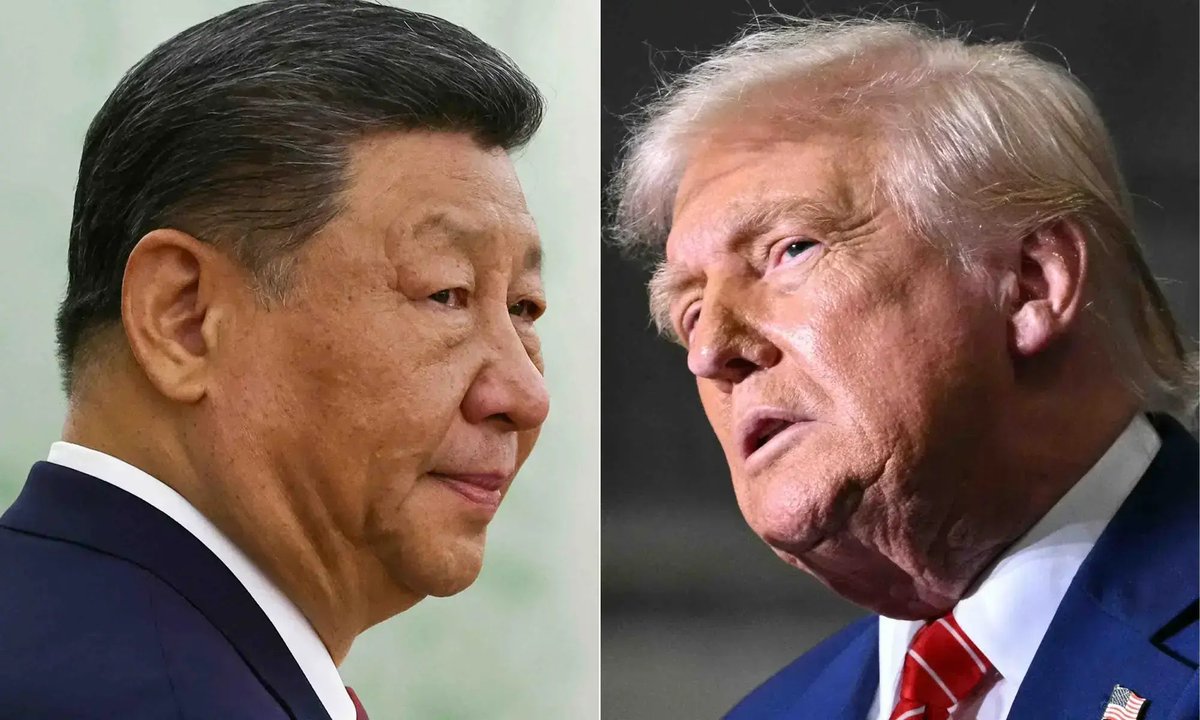
BREAKING: Trump just delayed the most important summit on Earth because of a strait he cannot open.
The President requested a “month or so” postponement of his planned March 31st to April 2nd summit with Xi Jinping in Beijing. The reason, stated explicitly to the Financial Times: he needs to remain in Washington to oversee the Iran war and pressure China for assistance reopening the Strait of Hormuz. The White House clarified the summit is “not in jeopardy but could be delayed.” The distinction between “not cancelled” and “indefinitely postponed pending a war with no exit date” is the diplomatic space where the entire US-China relationship now sits.
The delay is not logistical. It is leverage. Trump named China in his multinational coalition call. Beijing has not responded publicly. Instead, China is quietly negotiating its own safe-passage arrangement with Iran, securing transit for Chinese-flagged tankers through yuan settlement and CIPS while the American president who invited China to help police the Strait watches Chinese vessels transit it under Iranian escort.
The coalition that was supposed to reopen Hormuz does not exist. Trump appealed to approximately nine allies. Germany responded: “no military means.” Japan cited “extremely high hurdles.” Australia: “we won’t be sending a ship.” South Korea is “carefully reviewing.” Italy, Spain, and the Netherlands offered frigates to Cyprus. The UK is the sole major ally with both capacity and willingness. The combined response is a handful of escort vessels against a strait mined by a regime that says the war will last “as long as it takes.”
While the coalition fails, Iran is building its own. Tehran has offered safe passage to China, India, Pakistan, Turkey, Saudi Arabia, Oman, the UAE, Qatar, Kuwait, and Iraq. The passage is conditional and transactional: concessions in exchange for transit. India is in active bilateral talks with Tehran for the release of three tankers seized in February plus medicines and equipment in return for Indian vessel access. The diplomacy that is working is not multilateral. It is bilateral, transactional, and conducted between Iran and the countries that did not bomb it.
The safe-passage list is the war’s most underreported document. Ten countries granted conditional transit. The United States is not on the list. The country that controls the world’s largest navy cannot transit the strait its ally’s war closed because the regime it is bombing decides who passes and who does not. Iran has converted Hormuz from a chokepoint into a tollgate, and the toll is denominated in political alignment rather than dollars.
Trump’s Xi delay compounds the strategic cost. The summit was designed to reset US-China trade relations, address semiconductor export controls, and manage Taiwan tensions. The delay means none of these conversations happen while 26 Chinese aircraft circle Taiwan, THAAD batteries leave South Korea for the Gulf, and yuan-settled oil flows through Hormuz on Chinese tankers that American warships cannot stop without escalating against both Iran and China simultaneously.
The Iran war has paused the US-China reset, fractured the coalition call, empowered bilateral Iranian diplomacy, and created a Hormuz tollgate that rewards non-alignment and punishes the coalition of the willing.
The strait that carries 20% of the world’s oil is now governed not by international law or naval supremacy but by a list of ten countries that Iran has decided may pass. The eleventh, the one with the aircraft carriers, must wait outside.
Full analysis - open.substack.com/pub/shanak…
40
133
315
67,773
Silasgooch retweeted

One week after the war on Iran began, Trump announces mass deportations aren’t happening.
339
1,614
11,123
322,914
Silasgooch retweeted

🚨The kid has broken containment.
He knows too much 🤨
34
853
4,529
88,594
Silasgooch retweeted

INNER PEACE POLICE STRIKES AGAIN 🚨🪩💥
105
854
4,399
163,573

Silasgooch retweeted

Mar 4
Let’s analyze an example of propaganda in media courtesy of Jon Stewart.
314
2,543
9,717
127,618

Silasgooch retweeted

pretty much

91
15,387
147,906
1,228,084

Silasgooch retweeted

Wildlife photographer Dani Connor records the sound of a 7 week old baby red squirrel makes while eating.
127
2,966
27,655
1,248,406
Silasgooch retweeted

I understand why so many trust Trump on Iran. Just look at his track record: Covid accountability, tariffs, ending the Ukraine war, the wall, repealing Obamacare, draining the swamp, 2020 election lawsuits, mass deportations.
I completely understand how you trust the plan™️.
37
197
1,436
27,355