
Accomplished Speaker; presents synopses of books on business & social justice for serious lifelong learners. Read more books! - A supporter of DEI initiatives.
Joined April 2009
- Tweets 172,512
- Following 11,088
- Followers 9,706
- Likes 134,860
5,722 Photos and videos









Pinned Tweet

19 Jun 2022
What is the First Friday Book Synopsis? A Short Video Introduction 15minutebusinessbooks.com/bl…
4
5
20
Randy Mayeux retweeted

Iran Says Strait of Hormuz Won’t Have ‘Tolls’ but It Will Have ‘Fees’
lol
nytimes.com/2026/06/15/world…
99
675
1,931
43,767
Randy Mayeux retweeted

Sunny Hostin addresses the derogatory slur made about Michelle Obama by a UFC fighter.
"For a long time, Black women have been slurred, made to feel they were unattractive, and masculine. Racism and sexism was on full display at the WH. The crowd laughed. The President smirked and never addressed what was said. That is beneath the dignity of the office of the President of the United States."
309
1,065
7,903
135,155
Randy Mayeux retweeted

What an embarrassment for @UTAustin. @dhiott is absolutely correct: UT will absolutely be known in the media for firing her. What a waste of good talent, and what a bad choice.

Stunned to learn this news. @dhiott is the very best of newsroom leaders. kut.org/education/2026-06-15…
8
31
6,224

Randy Mayeux retweeted

Jun 15
Malcolm Gladwell revealed why you shouldn't go to Harvard:
1. America does not have a shortage of students who want science and math degrees. It has a shortage of students who finish them. Half of all high school seniors who intend to study STEM drop out by the end of their second year. The problem is not interest. It is persistence.
2. The obvious assumption is that smarter students persist longer. So Gladwell tested it. At Hartwick College, a small liberal arts school in New York, the top third of math SAT scorers took the majority of STEM degrees. The bottom third dropped out in large numbers. The data seemed to confirm it. Smarter kids stick around longer.
3. Then he looked at Harvard. The bottom third of Harvard's math SAT scores are equal to the top third at Hartwick. By the logic above, everyone at Harvard should graduate with a STEM degree. They are all brilliant. Nobody should be dropping out.
4. Harvard showed the exact same pattern as Hartwick. Top students graduated. Bottom students dropped out like flies. Even though the bottom Harvard students were objectively brilliant by any global standard. Something else entirely was driving the dropout rate.
5. That something is called relative deprivation theory. Human beings do not measure themselves against the world. They measure themselves against the people immediately around them. A Harvard student in the bottom third does not think I am in the top one percent of all students globally. They think that kid next to me keeps getting everything right and I keep getting it wrong. So they quit.
6. The research from UCLA puts a specific number on it. Your odds of graduating with a STEM degree fall by two percentage points for every ten point increase in the average SAT score of your peers. Choose Harvard over the University of Maryland and your chance of finishing a STEM degree drops by thirty percent. Thirty percent. Just to put a brand name on your resume.
7. Relative position matters more than absolute position when it comes to confidence, motivation, and self belief. The eightieth percentile student at Harvard looks up at the people above them and feels like they cannot compete. The number one student at a state school feels like they can conquer the world. That feeling drives everything.
8. The practical hiring implication is radical. Class rank matters more than institution name. Gladwell argues companies should have a don't ask don't tell policy for where someone went to college. Hiring only from top schools means missing the top students from every other school. That is not smart hiring. That is brand worship.
9. When choosing a college, never go to the best school you get into. Go to the school where you are guaranteed to be near the top of your class. Being a big fish in a smaller pond does not just feel better. It statistically produces better outcomes than being a small fish in the most prestigious pond available.
10. So why do we keep choosing Harvard over Maryland? Because we are flattered. Because the acceptance letter feels like validation. Because we make an irrational decision in a moment of enormous flattery and call it ambition. Gladwell's conclusion is simple and brutal. When we have the chance to join an elite institution we do things that are genuinely against our own interest and we feel great about it the whole time.
152
382
1,793
343,411
Randy Mayeux retweeted

Jun 15
When Barbra Streisand joins Louis Armstrong in “Hello, Dolly!” (1969), you're watching a remarkable piece of film history: Armstrong’s final screen appearance, Gene Kelly’s last film as director, and choreography by Michael Kidd.
Streisand’s gold-beaded Irene Sharaff gown originally weighed 40 pounds, cost $8,000, and had a 2.5-foot train that caused so many rehearsal tumbles - including Streisand tripping twice and other dancers stumbling over it - that it was eventually removed before filming.
#HelloDolly #BarbraStreisand #LouisArmstrong
16
124
999
74,750
RT @arianajasmine__: They didn’t want Zohran Mamdani to win because once people see a politician who isn’t bought by corporations, does his…
1,869
Randy Mayeux retweeted

21h
I was told today by a 17-year-old that there was no way people were writing 10 page papers without Al.
Dude, I was writing 10 page papers without having read the book.
1,086
3,665
49,876
991,768
Randy Mayeux retweeted
Unity?! Give me a break!

Dana White last night: Hopefully, we created some unity in the country and in the world and brought in some new fans. I hope that's what we walk away with tonight.
5
15
428
Randy Mayeux retweeted

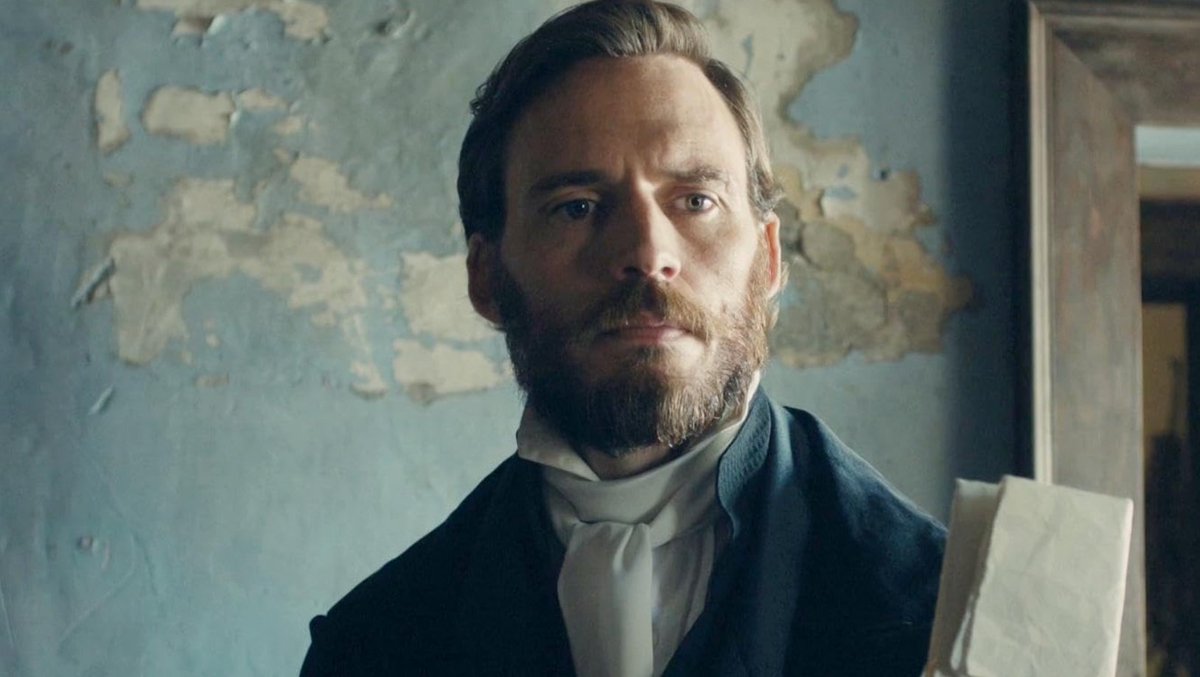
I'm midway through the 8-episode Count of Monte Cristo (2024) starring Sam Claflin in the title role. Despite remembering the book pretty well, it has been highly engrossing. Looks great, too, and--though only in one episode--it's grand to see Jeremy Irons again in a good part.
7
8
41
889
Randy Mayeux retweeted

Bicentennial celebration, 1976, New York City:

98
503
3,117
46,474
Randy Mayeux retweeted

Bravo. You can’t think very well when you’re hungry!!!

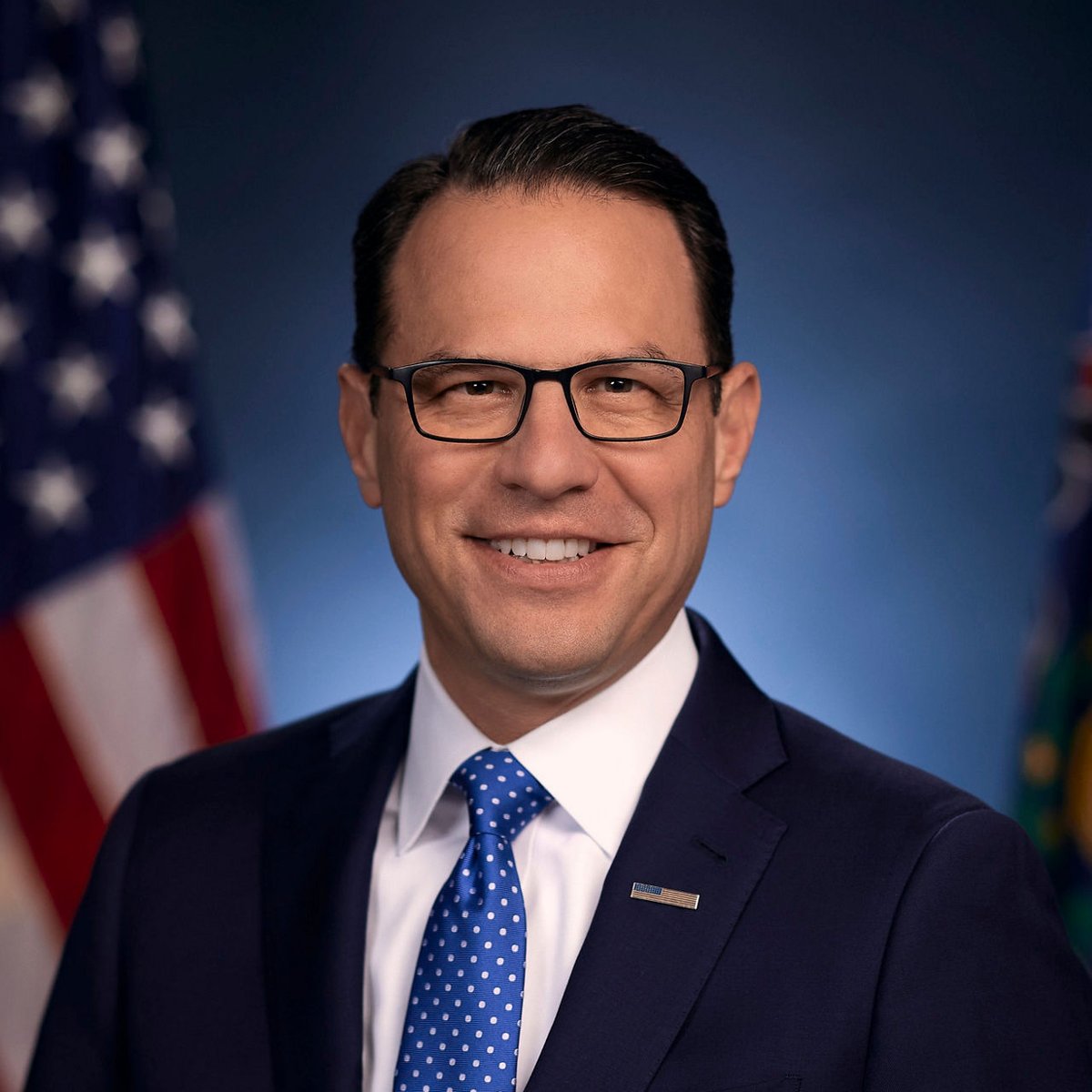
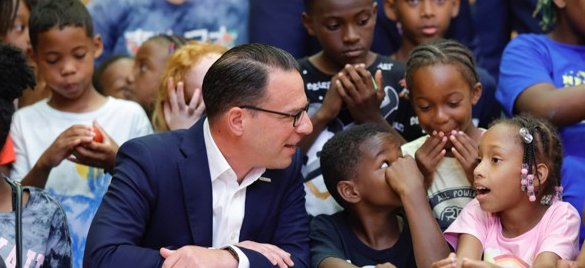
BREAKING: Governor Josh Shapiro has just ensured that every Pennsylvania student receives free breakfast. This will help over 1.7 million students be less hungry and more ready to learn.
44
121
1,083
16,660
Randy Mayeux retweeted

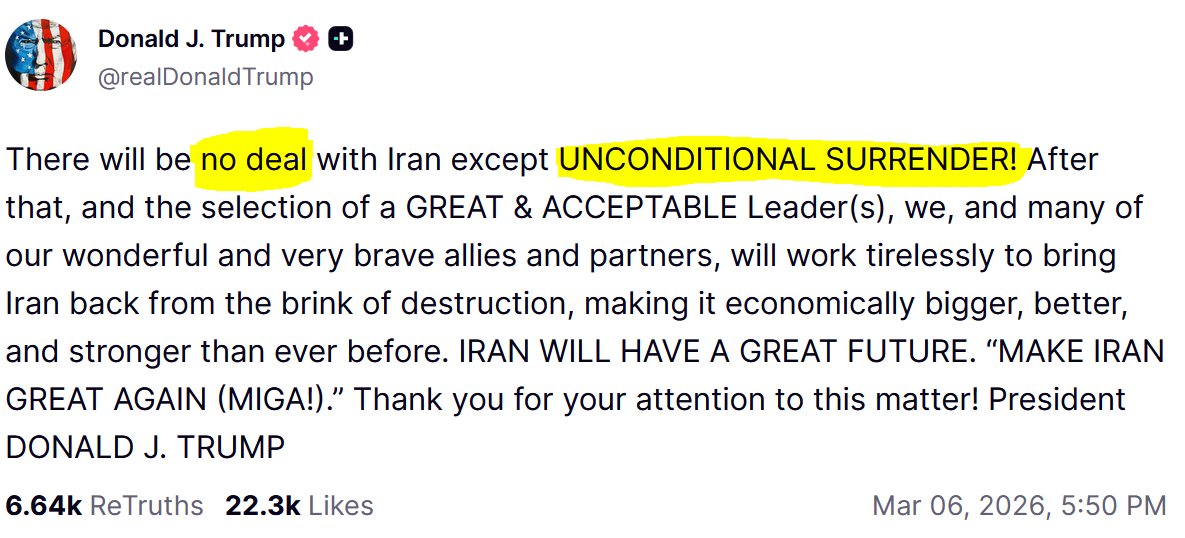
Trump said he demanded unconditional surrender, we just didn’t know he meant America’s.

347
5,305
23,334
466,327


Randy Mayeux retweeted
At this point, Trump has been played by pretty much every country in the Middle East, from Israel and Saudi to the UAE and Qatar, and now by Iran itself. He’s like a Baby Huey in a world of grownups. He makes Jimmy Carter look like a canny master of geopolitical maneuvering.
130
816
3,685
84,268
Randy Mayeux retweeted

Jun 15
So let me get this straight…what you are saying is that there might be a “concept of a plan?”
Jun 14

Finally, we have a preliminary agreement to begin tentative negotiations over the hypothetical path forward to consider possible arrangements to discuss steps forward that may or may not be included in a notional accord over a working group that could possibly meet by a to-be-determined Teams call regarding initial steps for a peace accord.
2
2
9
475
Randy Mayeux retweeted

Correction: Department of Revenge, not Justice

BREAKING: California Gov. Gavin Newsom says Trump's Justice Department is investigating him and his wife over unspecified claims. apnews.com/article/newsom-tr…
43
88
462
19,932
Randy Mayeux retweeted
United States of Trump. Trump pronouns: Me, Myself, and I.
Jun 15

The President of the United States announces that the gathering on the National Mall on July 4 will be a "TRUMP RALLY."

28
98
282
13,267
Randy Mayeux retweeted

Jun 14
Possibly the most eloquent man of his time. Like Orwell, he spoke and wrote in a way that got to the point and explained it well.
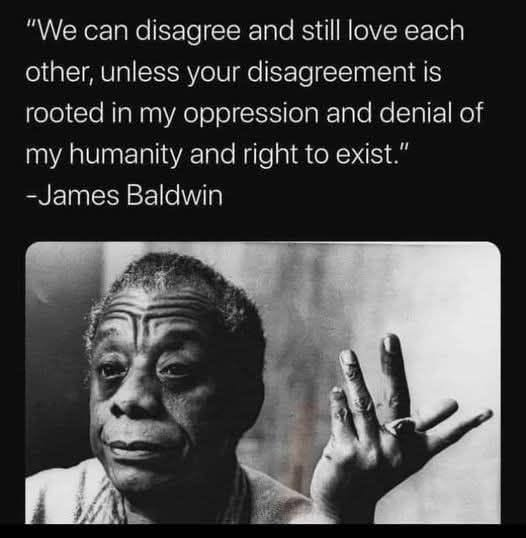
13
515
1,492
9,239
Randy Mayeux retweeted

Jun 15
It means you live in an aurhoritarian political climate with a mob boss style leader.
Jun 14

When people in Washington lower their voices and say, “Please don’t use my name. I’m afraid he’ll come after my family’s livelihood,” it means something has broken. People no longer trust the law to protect them.
105
3,296
9,043
183,552