
Senior Editor & Elections Analyst of the nonpartisan @CookPolitical Report w/ @AmyEWalter. Nerd for 🗺️ maps, ⛷️ ski slopes & 🎻 trad tunes. Has seen enough.
Joined September 2009
- Tweets 20,817
- Following 1,186
- Followers 609,160
- Likes 3,029
1,222 Photos and videos
Dave Wasserman retweeted

Jun 13
THE MINGLE PROJECT: CNN SPECIAL
PREMIERING TODAY AT 9 AM & 1 PM ET on CNN.
Watch Here ▶ youtu.be/7_2Ra-DjV_4
What if America's biggest problem isn't politics—it's isolation?
Michael Smerconish brings together leading thinkers, researchers, physicians, and social commentators to examine America's loneliness epidemic, growing polarization, and the disappearance of the shared experiences that once connected us.
Drawing on decades of research and conversations with some of the nation's leading thinkers—including Robert Putnam @RobertDPutnam, Charles Murray @charlesmurray, David Wasserman @Redistrict, Scott Galloway @profgalloway, Debra Soh @DrDebraSoh, Tami Benton, and Ezekiel Emanuel @ZekeEmanuel — this special examines why Americans increasingly live, work, socialize, and even think apart from one another.
The conversation starts now. Join us on YouTube.
29
6
38
40,688
Dave Wasserman retweeted

Iowa is now the center of the political universe.
Read our post-primary analysis: cookpolitical.com/analysis/2…
8
52
87
41,053

Jun 3
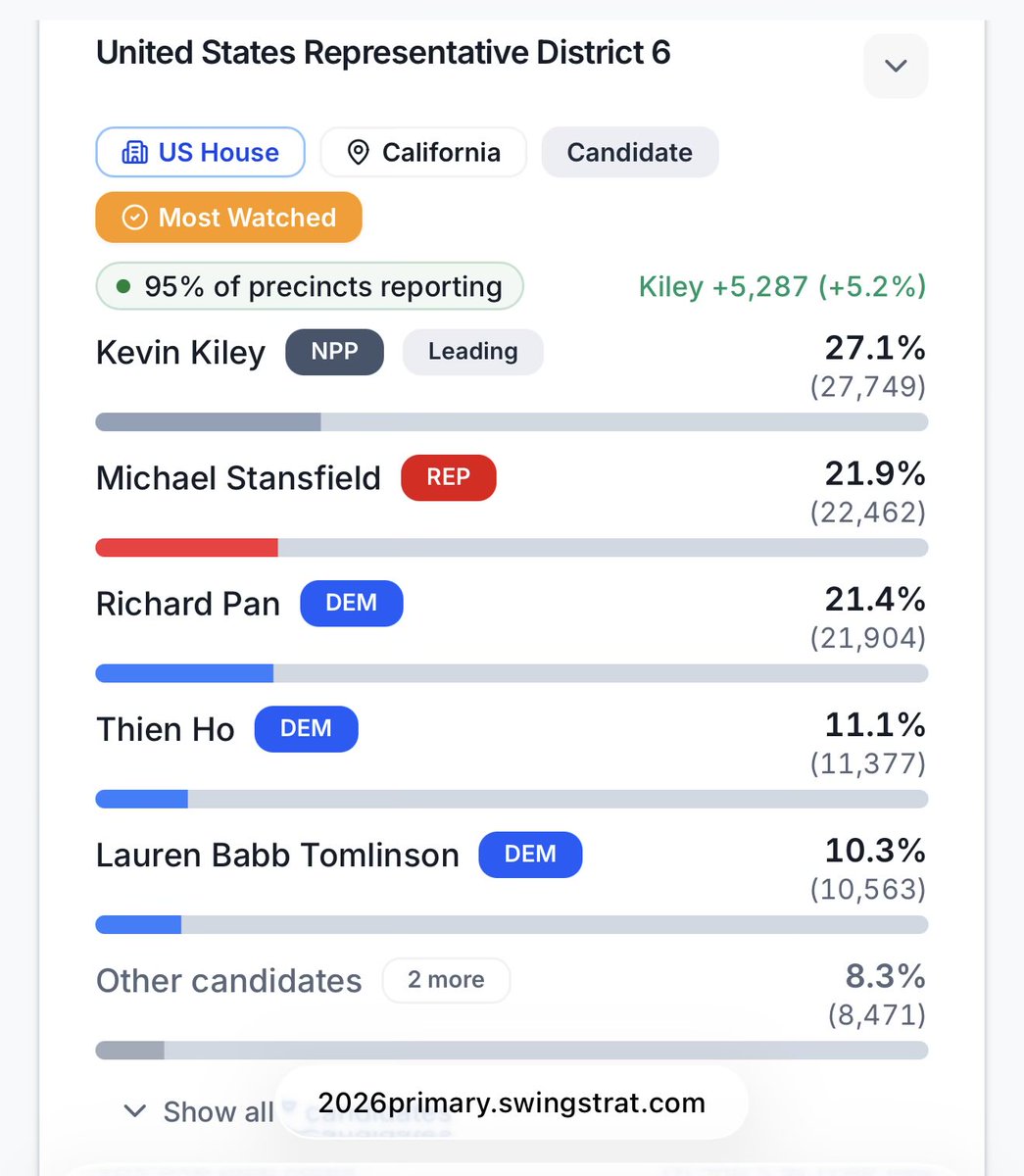
It would be disastrous for Dems to get locked out of a seat they redrew to be a safe pickup, #CA06. There’s still good reason believe Pan (D) will ultimately edge out Stansfield (R) for the second slot, but it’s the difference between a sure D pickup and an assured R hold.

80
90
622
262,153
Dave Wasserman retweeted
🎯 Mark your calendars! @Redistrict and the CPR team goes live TONIGHT at 9m ET to talk primaries in California, Iowa, Montana, New Jersey, New Mexico, and South Dakota.
Tune in on Substack: open.substack.com/live-strea…
1
6
43
58,131
Dave Wasserman retweeted

How this age of extreme gerrymandering is transforming American politics — via @patrickdmarley @oliviacgeorge wapo.st/4dQQ4UG
2
34
50
42,863
Dave Wasserman retweeted

May 21
April @CookPolitical Battleground District Survey, 25% of Rs & 23% of Indies said they liked Trump’s policies, but not behavior; trust R’s more than D’s on economy/culture issues. But, when Trump is center stage, the harder for substance to come through.

This week was just the latest reminder of Trump’s “indulgent” presidency: a self-centered approach that is only making a tough midterm environment that much harder for congressional Republicans.
Read @amyewalter's latest column:
cookpolitical.com/analysis/n…
9
27
76
110,695

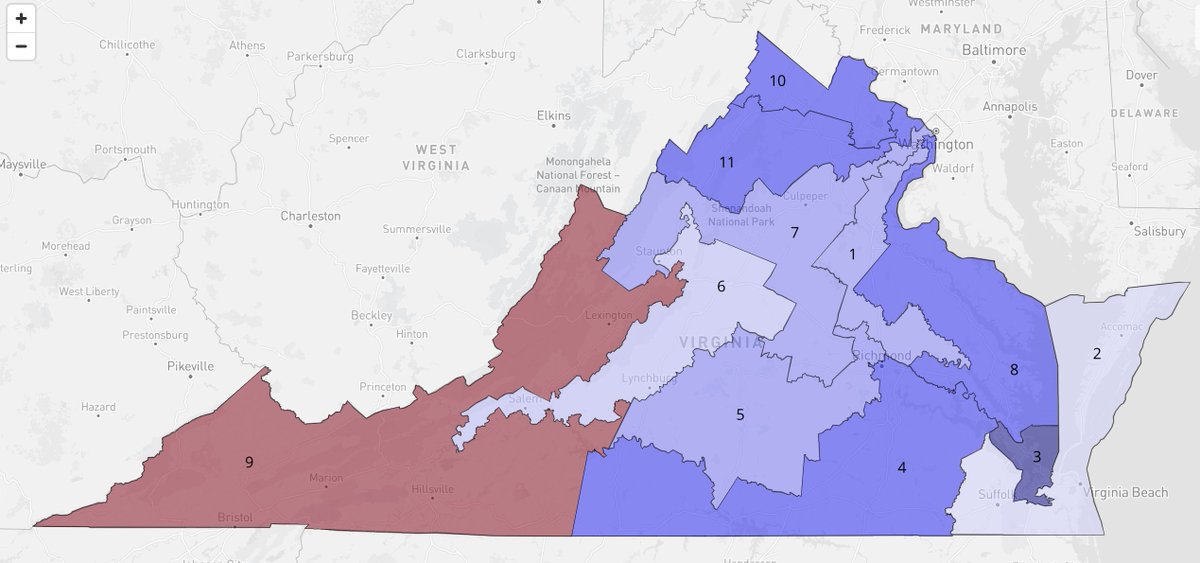
Virginia’s Supreme Court struck down a plan that would have redrawn the state’s congressional maps to benefit Democrats. In an opinion, a majority of the justices said a referendum passed by voters last month was unconstitutional.
It’s a major setback for Democrats, as both parties wage a war of mid-decade redistricting.
@IAmAmnaNawaz speaks to David Wasserman (@Redistrict) for more.
42
71
275
82,697
Dave Wasserman retweeted

May 8
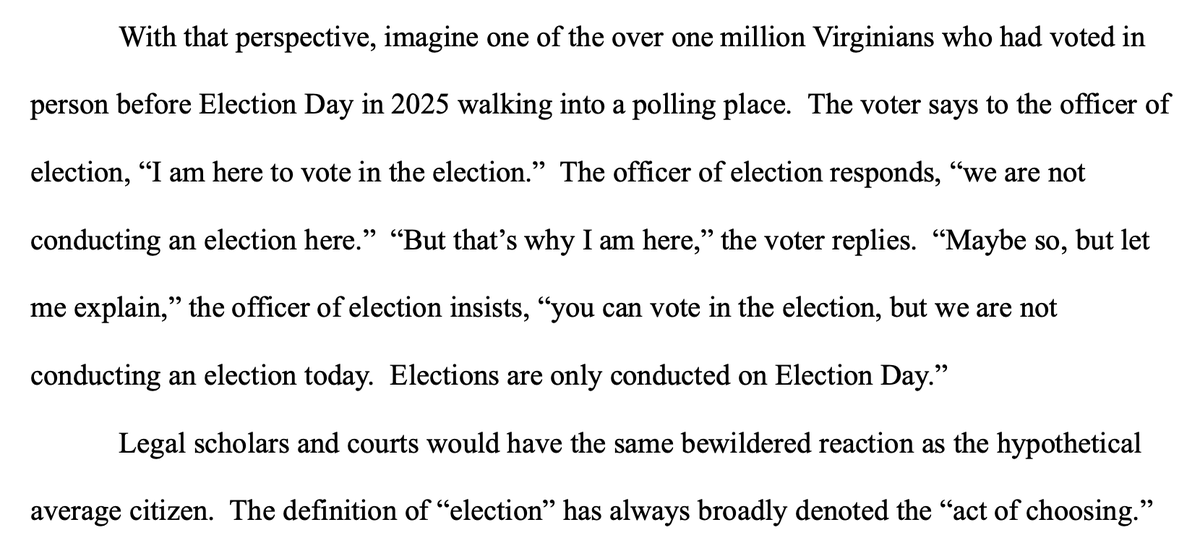
Seems like SCOVA's main holding is that, contrary to the Democratic lawyers' argument, an election starts when people start voting
49
140
1,036
427,710
May 8
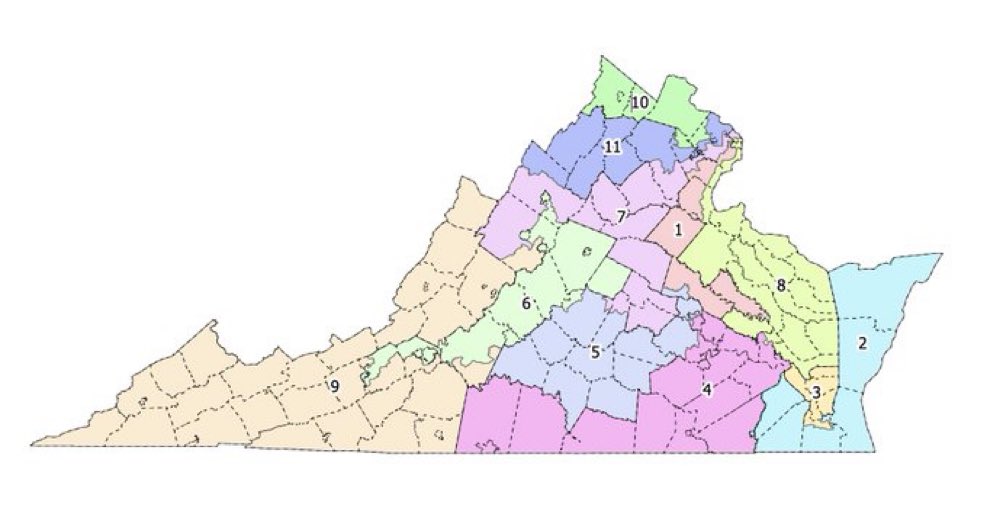
Enormous setback for Dems as VA Supreme Court strikes down the referendum vote and therefore Dems’ 10D-1R gerrymander. Now best Dems can hope for is to pick up two seats under current map, not four.
May 8

“This violation irreparably undermines the integrity of the resulting referendum vote and renders it null and void. For this reason, the congressional district maps issued by this Court in 2021 pursuant to Article II, Section 6-A of the Constitution of Virginia remain the governing maps for the upcoming 2026 congressional elections.”
113
187
1,180
280,651
Dave Wasserman retweeted
May 8
New GOP friendly maps in AL/TN/LA/FL can help R’s a bit, but they can’t change the political environment. Even if those maps pass legal scrutiny AND Dem map in VA gets struck down, most realistic scenario is that R’s net 4-5 seats from redistricting. cookpolitical.com/analysis/h…
65
179
525
273,569
Dave Wasserman retweeted

Something to consider as Republican states look to redraw their maps following Callais: unlike in TX or NC or FL, where there will still be Dems in the delegation or statewide, these states are considering getting rid of all of their Dem voices. That could give some pause…
62
69
1,032
240,941
Dave Wasserman retweeted

We’re in uncharted waters now with a high degree of uncertainty. We don’t know how the SCOTUS standard will be applied going forward. But we do know that Southern states will take an aim at many Black-majority seats, most likely before 2028.
Read our full thoughts on VRA here:
There are still a lot of unanswered questions swirling around the Supreme Court’s Voting Rights Act decision, especially its impact on the 2026 midterm election.
Here's our current thinking from @amyewalter and @MattKleinOnline:
cookpolitical.com/analysis/h…
12
34
124
76,375
Apr 29
New @CookPolitical: Three big takeaways from the Supreme Court’s Voting Rights Act decision. cookpolitical.com/analysis/h…
4
14
65
37,746
Dave Wasserman retweeted
Initial VRA thoughts — working this through on the fly.
Louisiana and South Carolina are the most likely to draw out Dem seats. But both have their primaries very soon and the filing deadlines are long gone. Doubtful there’s enough time for new maps this year.
(1/?)
9
83
679
256,639
Apr 29
It's nearly impossible to disentangle race and partisanship in the South, which is why this ruling could have such apocalyptic consequences for Black representation across the Deep South (more likely in '28 than '26).
Apr 29

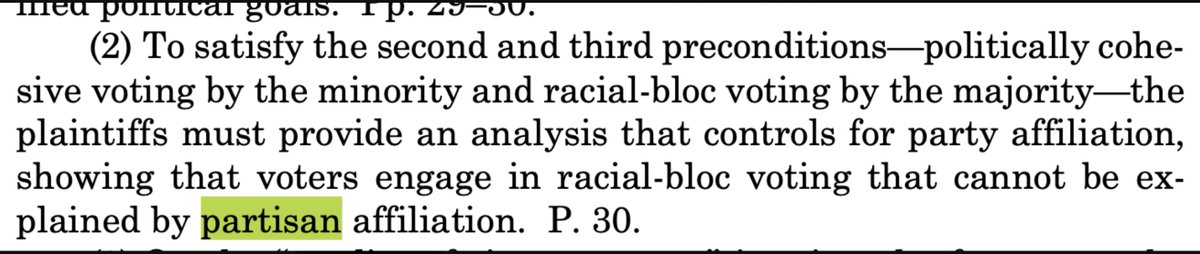
Not a legal expert, but to my plain reading this is the passage in the ruling that seems most concerning for the future strength of Section 2, and likely why Elena Kagan was so alarmed in dissent.
The key question going forward: can plaintiffs produce evidence for any current Black-majority Southern district showing that racially polarized voting exists in a way that cannot simply be explained by party affiliation?
171
560
2,484
312,125
Dave Wasserman retweeted
Apr 29
And, for that “temporary’ pause in CA of non-partisan redistricting until 2030. Hard to believe that Dems in the state will not fight for partisan redistricting if Rs get rid of 5-7 Dem seats in the south in 2028
Apr 29

Callais decision seems to suggest more litigation to figure out precisely what it means.
For 2026, we'll see how states react on a case by case basis. Starts with LA
Also ensures that the 2025-2026 redistircting battle will continue with fury into 2027-2028.
17
43
277
81,126
Apr 28
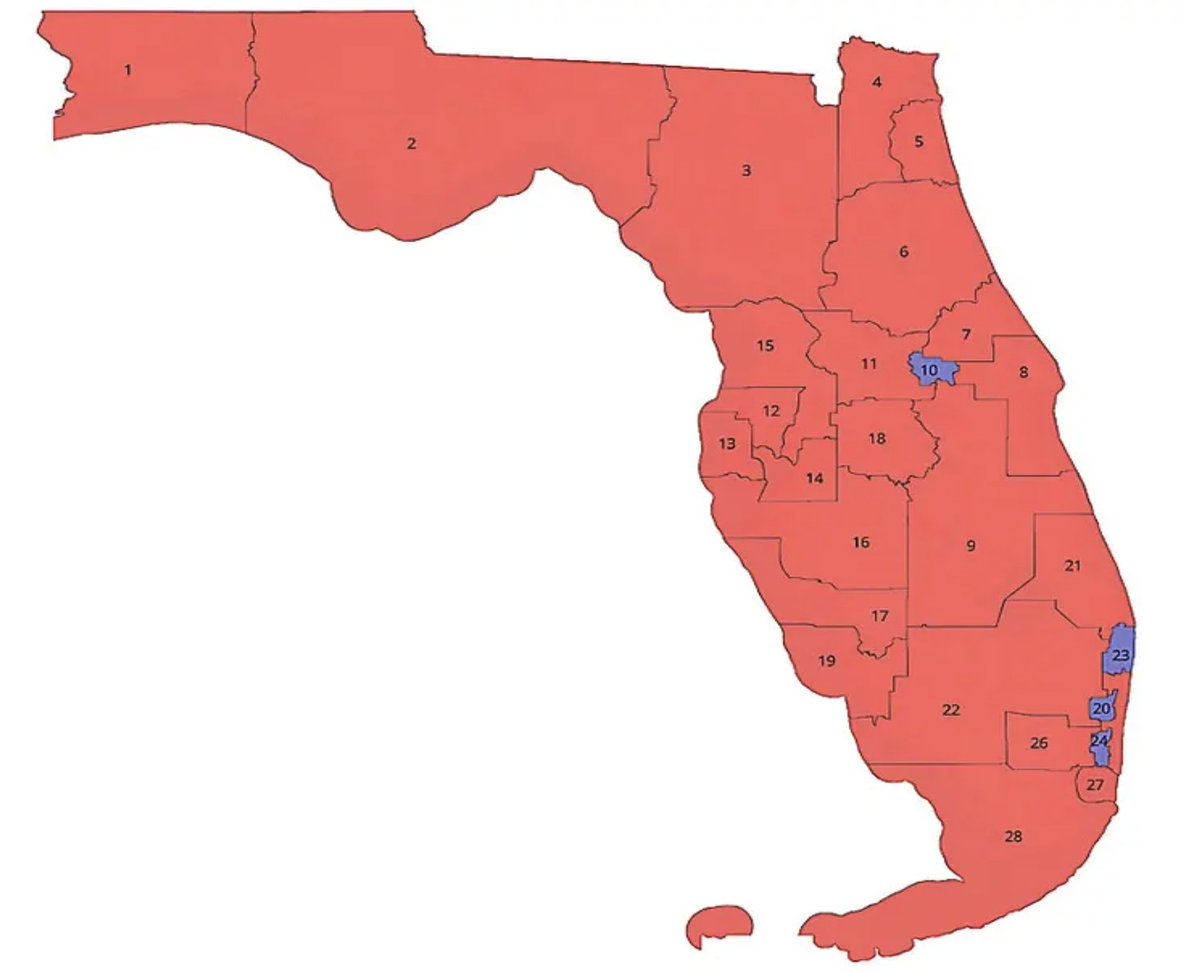
New @CookPolitical: DeSantis gerrymander targets four Dem seats, but not all are guaranteed GOP pickups in 2026 - and three FL GOP incumbents would remain at some risk. My full analysis: cookpolitical.com/analysis/h…
22
96
330
62,259
Apr 27
NEW: per Fox News, new FL map proposed by Gov. Ron DeSantis (R) would target four Dem seats, aiming to convert a 20R-8D delegation to 24R-4D. But in a year like 2026, not all of the 24 seats would be safe for the GOP. More from @CookPolitical soon. foxnews.com/politics/ron-des…
64
207
899
353,699
Dave Wasserman retweeted
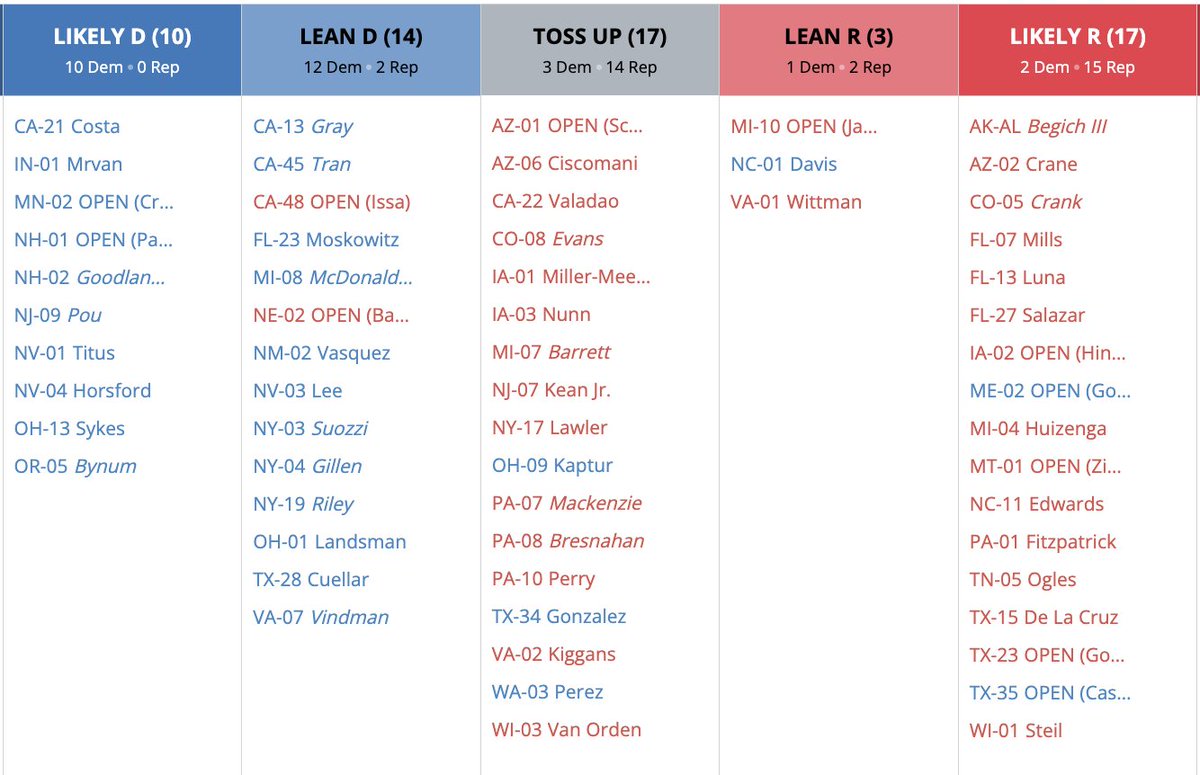
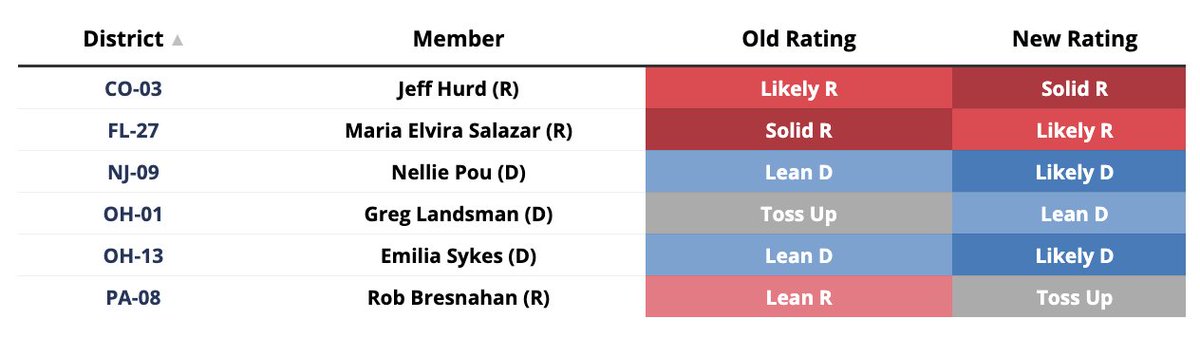
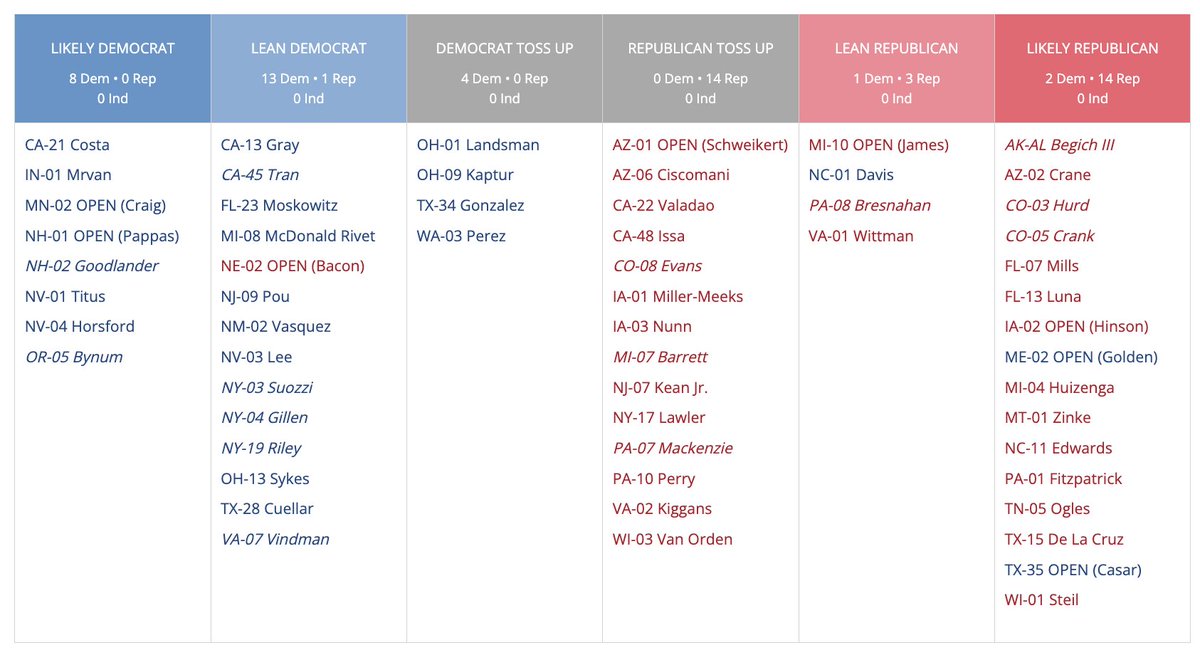
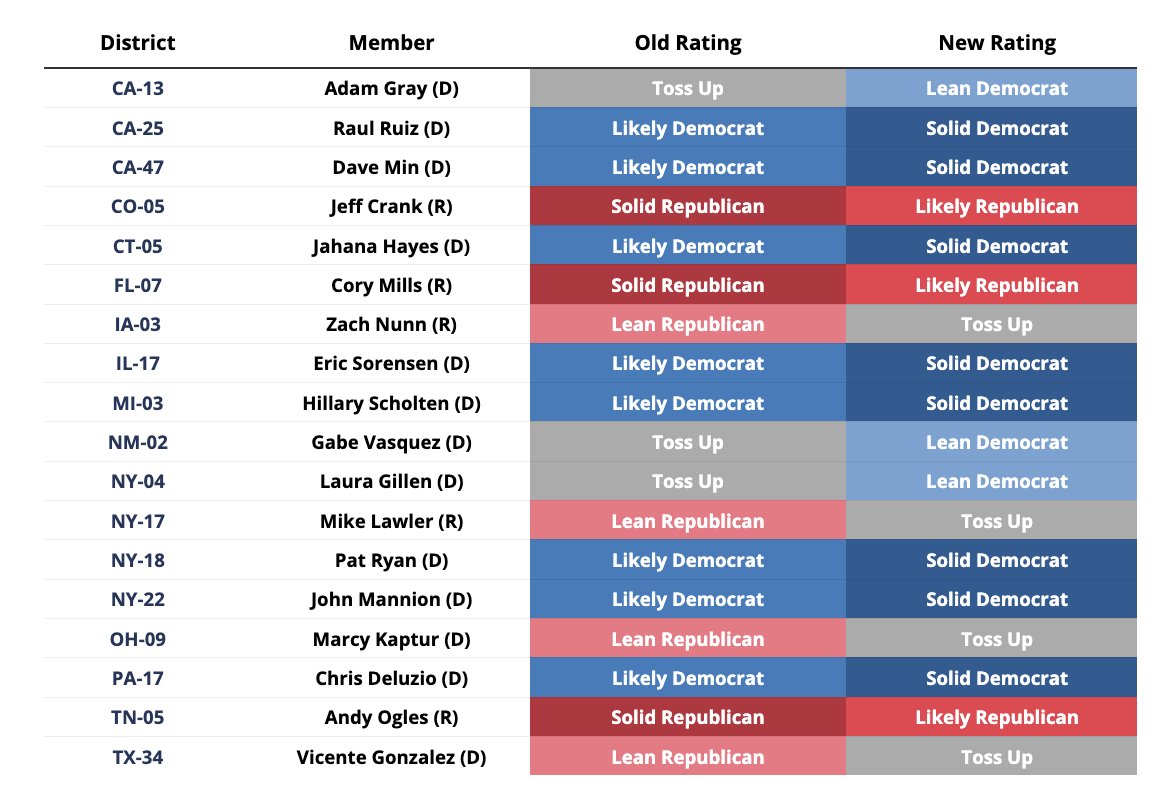
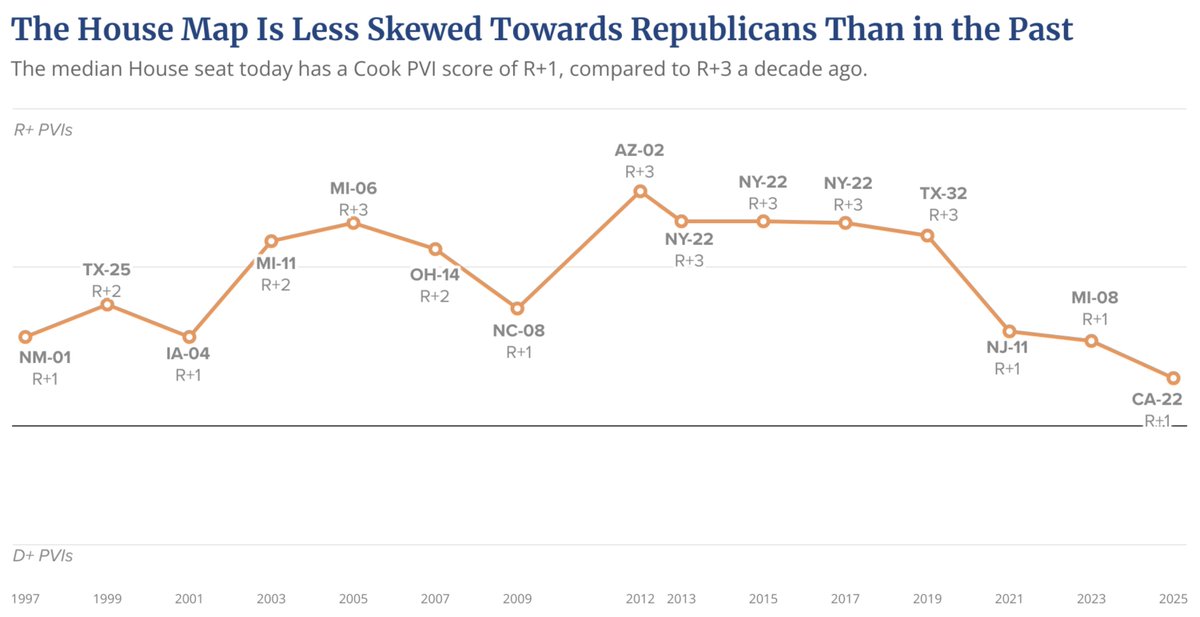
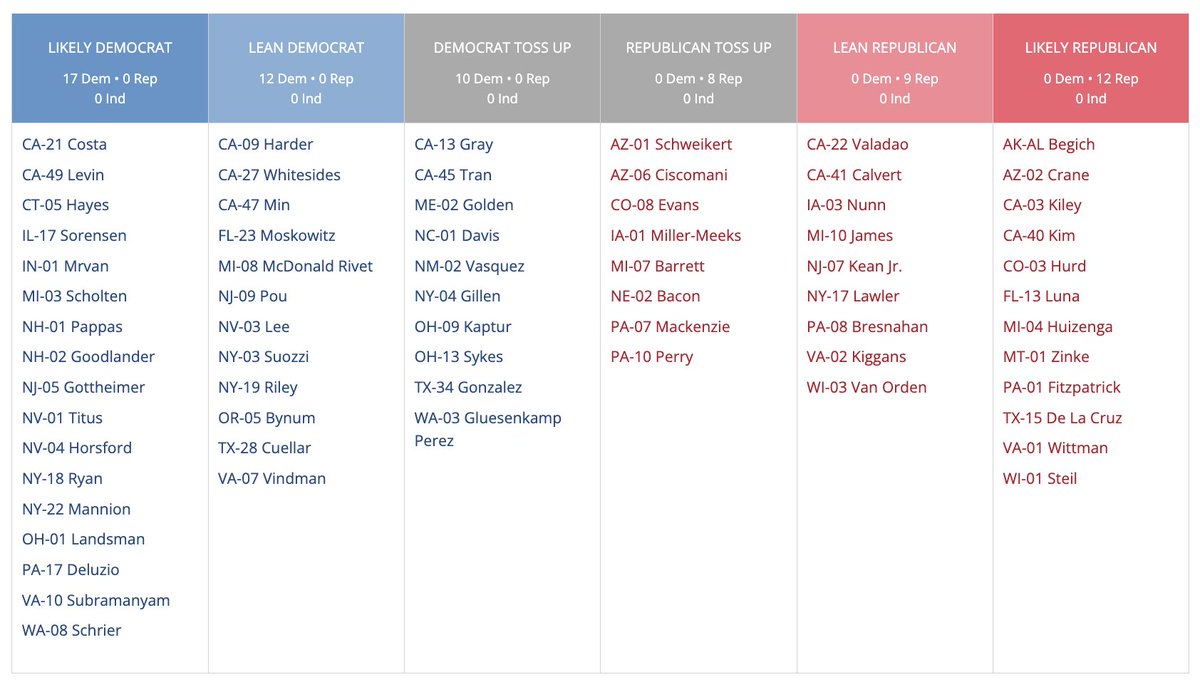
With our @CookPolitical rating changes following the Virginia referendum's passage, the median House seat is now getting dangerously close to Lean Democrat.
That didn't even happen in 2018. Needless to say, Democrats are the clear favorites to win a House majority.

13
124
1,006
117,234