
Pastor of Grace ARP | Professor at New Aberdeen College | Theology ☩ Philosophy ☩ Ethics ☩ Old Books | “Let your reasonableness be known to everyone” (Phi. 4:5)
Joined May 2025
- Tweets 1,709
- Following 498
- Followers 829
- Likes 4,306
416 Photos and videos







It would seem that grace perfecting nature, between proto-Babylon’s attempt to subvert God’s order with nations, in Genesis 10-11, and the call to come out of archetypal-final Babylon in Revelation 18, requires a distinctly Protestant view of the church.
1
9
208
The incompatibility of Romanism and sovereign nations is becoming increasingly apparent.
2
28
470
Pope cope.
Jun 13

Catholics have basically three options:
1. Sedevacantism - just deny he’s even the Pope so you can reject everything he says
2. Popesplaining - desperately twist and contort the Pope’s many statements to make them conform with a “mere orthodoxy” of Catholicism
3. Serenity - you don’t have to stay up to date with every happening in the Vatican. You don’t have to deal with every papal interview. You can just get on with your life as a Catholic in your parish, praying for the Pope, obeying the bishop he appoints over you, and engaging with his serious magisterial teachings.
1
10
440

Jun 13
Crusades literally crying out to be restarted, chance to actually make history, and you and the Orange Man still dishing out bread and circuses to the boomers. You have earned the quadruple🤡 🤡 🤡 🤡
Jun 12

New tranche of UFO files and videos just dropped.
1
9
243
Matt Marino retweeted

Jun 13
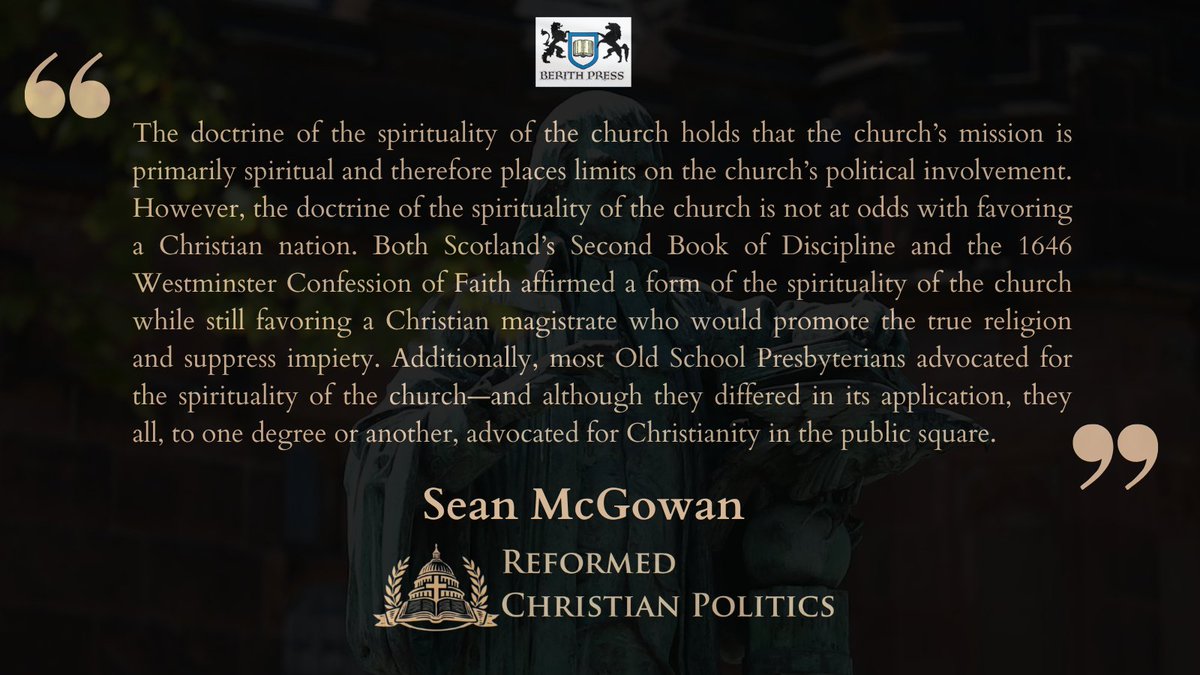
.@irishpresby on Christian politics & the spirituality of the church.
9
26
2,321
Matt Marino retweeted
Jun 13
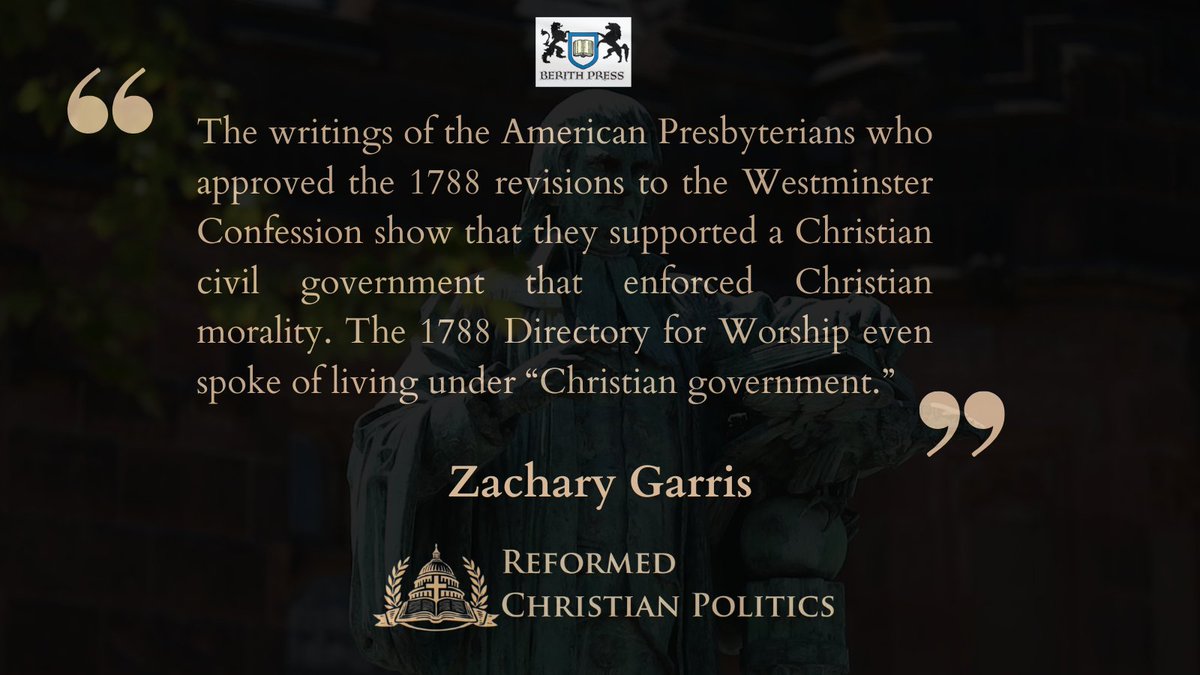
.@ZacharyGarris on the true views of the 1788 American Revisers of the WCF.
15
50
1,772
Jun 13
To be deep in one’s own nation is to cease to be Romanist.
— (Probably not) John Henry Newman
2
19
322
Jun 12
Since those who refuse to grow up, but have social media accounts, tried to shame everyone with their suicidal empathy over the events of Belfast, three more Muslim stabbings have occurred in Italy, Japan, and again in the UK. Your opinions are forever discarded. Your worldview is being rejected by the young, mercifully. Mercy to the wolf is cruelty to the sheep. You will confuse gospel with law, the keys with the sword, prudence with cowardice, no more.

Horrific scenes out of Burnley, England today as a 17yr old girl is stabbed in the throat in broad daylight.
7
23
918
Jun 12
It’s all happening.
Jun 12

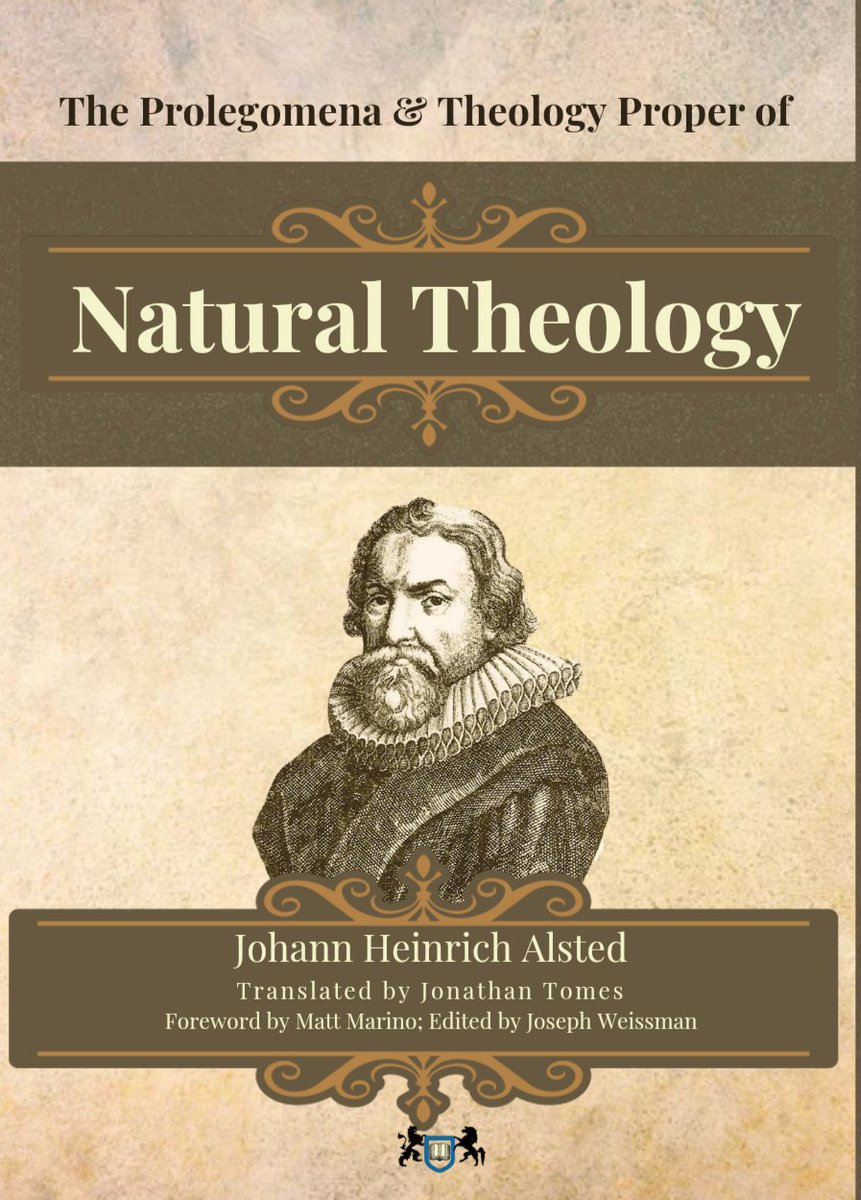
In the first part of Natural Theology, Johann Alsted considers the general aspects of the topic, such as the proofs of God and his attributes, how to understand his figurative properties, the worship due to him, and what the condition of men is after this life.
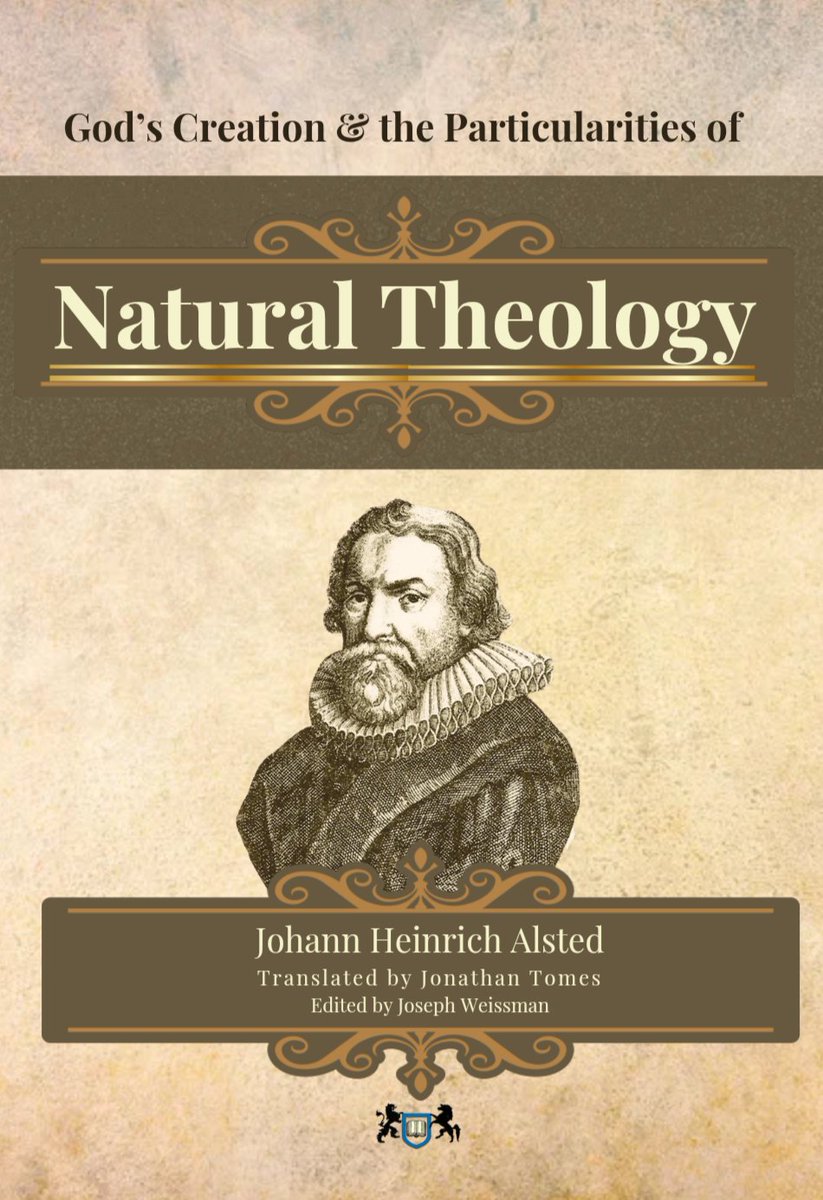
In the second part of Natural Theology, Johann Alsted considers the method of Book of Nature, angels, the properties of natural bodies, meteorological phenomena, land animals, sea creatures, and the four states of man: economic, scholastic, sacred, and political; and more besides.
Matt Marino @RefClassicalist writes in the foreword:
"The Reformed orthodox of the sixteenth and seventeenth centuries did not share these trepidations concerning natural theology. They commended such reasoning for the refutation of atheists, for the confirmation of faith, or as an aid in elaborating upon our knowledge of God even within the system of Christian doctrine. No early Reformed thinker more systematically articulated this concept than Johann Heinrich Alsted in his 1615 work Theologia Naturalis, written, as he describes, “for the sake of those who wish to read with profit that great Book of Nature and to use it successfully against the profane men of this age.”
Translated by Jonathan Tomes @postnuance
Hardcover with dust jacket
6×9
Volume 1: 408 pages
Volume 2: 638 pages
$75 full set
berithpress.com/bookstore/p/…
2
27
901
Jun 12
Rutherford echoing Aquinas in showing the link between the rule of law (participation in eternal law) and discerning when there is sufficient privation from that law.
“It is no power which is not lawful power ... When the magistrate doth anything by violence, and without law, in so far doing against his office, he is not a magistrate. Then, say I, that power by which he doth, is not of God. None doth, then, resist the ordinance of God who resist the king in tyrannous acts.”
Lex, Rex, Q22 [102, 103]
Bet you didn't think there was a connection between metaphysical realism and resistance theory 😉
2
11
147
Jun 12
Rutherford gives three arguments that the power of the magistrate is not absolute or unlimited.
“Arg. 1.—He who, in his first institution, is appointed of God by office, even when he sitteth on the throne, to take heed to read on a written copy of God’s law, that he may ‘learn to fear the Lord his God, and keep all the words of this law’ … Arg. 2.—The power that the king hath (I speak not of his gifts) he hath it from the people who maketh him king, as I proved before: but the people have neither formally nor virtually any power absolute to give the king … Arg. 3.—All royal power, whereby a king is a king and differenced from a private man, armed with no power of the sword, is from God. But absolute power to tyrannise over the people and to destroy them is not a power from God; therefore there is not any such royal power absolute.”
Why, then, Rutherford, do people say that the king is a living law?
First, “because men are averse to good laws, therefore there was need of a ruler,” namely to compel. Second, the law per se is “the reason or mind, free from all perturbations of anger, lust, hatred, and cannot be tempted to ill,” so that the king “cometh by office out of himself to reason and law.” Third, “Justice is more perfect than a just man … so the nearer the king comes to a law, for the which he is a king, the nearer to a king.”
Lex, Rex, Q22 [101-102]
1
10
233
Jun 12
I’ve always thought the best way to be properly catholic and ignore the ramblings of the antichrist, as he plots to unleash millions of orcs upon the shire, is just to keep being Protestant.
5
38
498
Jun 12
GM—If you stop pressing, this girl is going to come back out to remind you that you’re not a man.
1
17
390
Jun 12
Rutherford on lesser magistrates rising up if a government should be bribed to bring in a foreign army to harm its own citizens, even a jihadist horde.
“If the king should sell his country, and bring in a foreign army, the estates are to convene, to take course for the safety of the kingdom.”
But “to royalists, who make the king’s power absolute, all acts are so just to the subject, though he command idolatry and Mohammedanism, that we are to suffer only, and not to resist.”
Lex, Rex, Q21, 22 [97, 101]
10
33
716
Jun 12
Rutherford on the right to resist and overthrow tyrannical governments.
“When the supreme magistrate will not execute the judgment of the Lord, those who made him supreme magistrate, under God, who have, under God, sovereign liberty to dispose of crowns and kingdoms, are to execute the judgment of the Lord, when wicked men make the law of God of none effect.”
Lex, Rex, Q22 [96]
2
19
359
Jun 11
Rutherford on the equality in authority between the lesser magistrate and the king, or president, etc. of a larger territory.
“Court flatterers take from God and give to kings; but to be a judge inferior is no less an immediate favor of God than to be king, though the one be a greater favor than the other … That the powers are the same in nature, I prove, 1. By the specific acts and formal object of the power of both; for both are powers ordained of God (Rom. xiii.1.) To resist either, is to resist the ordinance of God. 2. Both are by office a terror to evil workers, ver. 3. 3. Both are the ministers of God for good … Let any man show me a difference, according to God’s word, but in the extension, that what the king is to do as a king, in all the kingdom and whole dominions … that the inferior judges are to do in such and such circuits, and limited places, and I quit the cause; so as the inferior judges are little kings, and the king a great and delated judge,—as a compressed hand or fist, and the hand stretched out in fingers and thumb, are one hand; so here.”
Lex, Rex, Q20 [91, 92]
2
8
193
Jun 11
Always remember when they say the quiet part out loud. This was during the last year of the Biden administration. As we have said, the majority are from the NON-Western hemisphere: shipped over, paid for, housed, all along the trek up Central America by our government. This is not incompetence. This is not even economic in the end. These are soldiers, and Western governments are the generals.
1
12
140
Jun 11
One of the lowest forms of the part to whole fallacy is:
Premise. This thing that x person or persons did in y war is not right.
Conclusion. Therefore, this war is unjust.
By this same logic, no war on the ordinary plain of history was ever just. So, to conceal both that inconvenience and the hasty generalization, the fallacy of equivocation will be added by using many other terms besides war. Take this with you in the coming days.
1
10
196
Jun 11
People noticing things I've been saying for thirty years. Keep pushing the mind. What's that next inference? Are these legitimate nation-states, or ... what? Use your own prior logic. What would you normally call this?
Jun 11

It’s interesting that they don’t come out like this when native people are the ones being stabbed or beheaded.
Whose side are they really on?
5
28
713