Founder @ CODITOS® & WildlifeOS™ | Applied AI, hospitality systems & environmental intelligence | Building from Florida to the world
Joined October 2011
- Tweets 3,432
- Following 5,030
- Followers 2,059
- Likes 12,042
385 Photos and videos







Rodolfo Saccoman retweeted

Jun 10
It started in a Miami garden with a tray of elbow macaroni drying in the sun.
Rodolfo Saccoman tasted a Cuban scarcity-era snack and saw a business hiding in plain sight, cheap inputs, simple process, and America’s comfort food reimagined.
Now Coditos is hitting store shelves, and he is quietly building something else that feels very South Florida: an alligator alarm system.
refreshmiami.com/news/from-t…
#RefreshMiami #MiamiTech @EnjoyCODITOS
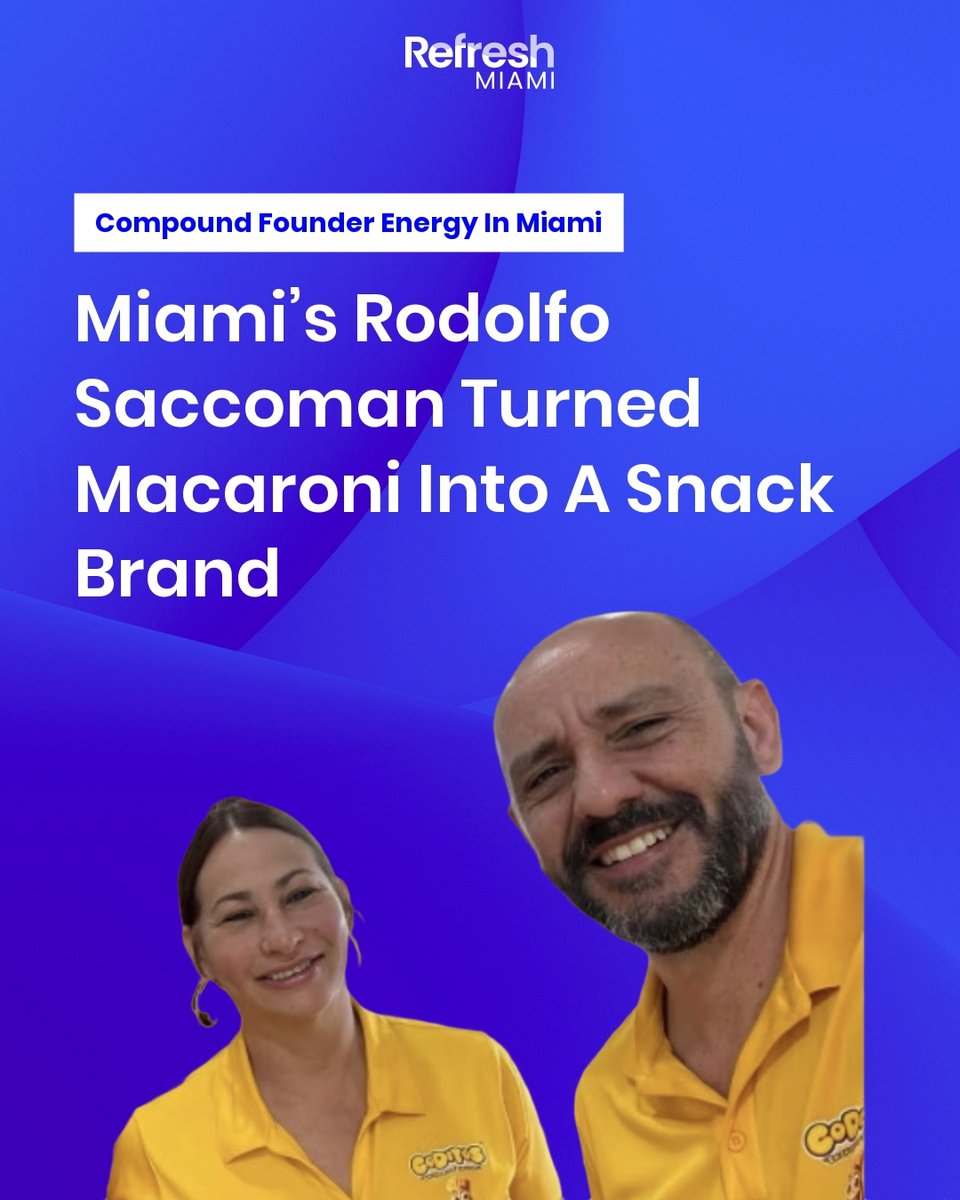
ALT Miami’s Rodolfo Saccoman Turned Macaroni Into A Snack Brand
1
2
6
211
Careers rarely follow a straight line.
One thing I've learned is that the best companies aren't built by chasing industries—they're built by deeply understanding meaningful problems and applying technology to solve them.
That philosophy has shaped every company I've had the privilege to build, and it continues to guide the ones I'm building today.
Appreciate @refreshmiami for the thoughtful profile. @ndahlberg @MariaDerchi
refreshmiami.com/news/from-t…
3
5
1,009

Mar 24
PhD in execution and leadership.

Jensen Huang just reverse-engineered why Elon Musk operates at a speed no one on the planet can match.
Three traits.
The first is deletion.
Huang: “He has the ability to question everything to the point where everything’s down to its minimal amount.”
Most engineers solve problems by adding.
Musk solves them by subtracting.
Every part. Every process. Every assumption that survived because no one had the nerve to kill it.
He picks it up. Asks if it’s load-bearing. If the answer is anything less than absolutely, it is gone.
Not simplified. Not optimized. Removed.
What survives is the skeleton. The bare physics of the problem. Nothing between intent and execution.
Huang said it plainly.
As minimalist as you could possibly imagine.
And he does it at system scale.
Not at a product level. Not at a department level.
Across entire companies. Entire industries. Entire supply chains.
He strips a rocket the same way he strips a meeting. Down to the load-bearing walls and nothing else.
The second is presence.
Huang: “He is present at the point of action. If there’s a problem, he’ll just go there and show me the problem.”
Not a Slack message. Not a report filtered through four layers of people who weren’t there when it broke.
He walks to the failure. Stands over it. Puts his hands on it.
Most executives have never seen the actual problem their company is trying to solve.
They have seen slides about it.
Read summaries of it.
Formed opinions about it in rooms that are nowhere near it.
Musk stands over the broken hardware and does not leave until it works.
That collapses the distance that buries most organizations.
The gap between something breaking and the person with authority to fix it actually understanding what broke.
In most companies, that gap is weeks.
For Musk, it is hours.
The third is the one that bends everyone around him.
Huang: “When you act personally with so much urgency, it causes everybody else to act with urgency.”
Every supplier has a hundred customers. Every vendor has a dozen priorities. Every manufacturer has a backlog stretching months into the future.
Musk makes himself the top of every single one of those lists.
Not by demanding it. By demonstrating it.
When the CEO shows up at your facility at midnight. When he is moving faster than your own internal team. When his timeline makes yours look like a suggestion.
You do not put him in the queue. You rearrange the queue around him.
Huang watched this up close.
Huang: “He does that by demonstrating.”
Not by asking. Not by negotiating. Not by leveraging a contract clause.
By moving so fast that everyone else’s normal pace feels like standing still.
Three traits. Strip everything down. Show up at the failure. Move so fast the world rearranges around you.
That is not a management philosophy.
That is why one man runs six companies while entire boards cannot keep one moving.
2
3
257
Feb 17
Gospel. Teach your kids exactly this. @AdamDraper
Feb 17

The future belongs to the idea person.
The more ideas you have the more you can create.
3
183
Jan 26
Stop getting fancy. What’s the killer feature? What’s the main problem you are fixing or improving. “Wants” are too painful and long to build/get sticky.
1
1
140
Jan 25
Ignited.
Jan 25

Google's former CEO Eric Schmidt on the data strategy behind the next hundred billion dollar companies:
He explains that he evaluates startup ideas by looking at 5-year growth trajectories and asking whether there's a more scalable strategy available.
Take a founder building an app they want to charge $10 for. @ericschmidt's challenge:
"Why not give it away for free and upsell users instead?"
But the real insight is his framework for predicting which companies will dominate — and it all comes down to data.
"5 years ago, I said publicly that the future will be apps that are on smartphones that use Google Maps, GPS, and do something useful. Now, what I should have said was Uber."
So what does he think will define the next wave of massive companies?
Systems built on Android and iOS, fast networks, and powerful machine learning, with a crucial data advantage:
"They're going to use the crowd to learn something."
He illustrates with this example:
Pay dermatologists $1 each to categorize skin samples. Feed that into a machine learning system. Then sell the diagnostic service back to them, because a system trained on thousands of experts will outperform any individual.
Schmidt summarizes the winning data strategy:
"You crowdsource information in, you learn it, and then you sell it. [This] is in my view a highly likely candidate for the next hundred billion dollar corporations."
The blueprint: Aggregate expert data at scale → train ML systems on that data → sell superior insights back to the market.
This is how the next generation of dominant companies will be built.
1
194
Yes. Convergence.
Jan 8

ELON: MOVE SKILLS BETWEEN WORLDS AND YOU BECOME SUPERMAN
Elon says the real advantage comes from solving problems across completely different arenas.
When knowledge crosses fields, difficulty collapses.
What feels ordinary in one industry becomes overwhelming leverage in another.
That cross-pollination, he argues, is where outsized breakthroughs come from.
“I’ve had to solve a lot of problems in a lot of different arenas, which you get this cross-fertilization of knowledge, of problem solving.
And if you problem solve in a lot of different arenas, what is trivial in one arena is a superpower in another arena.
It’s sort of like Planet Krypton.
You came from Planet Krypton type of thing. On Planet Krypton you’d just be normal, but if you come to Earth, you’re a Superman.
So if you take manufacturing at volume, manufacturing complex objects in the automotive industry, I’ve had to work on solving that.
When translated to the space industry, it’s like being Superman, because rockets are made in very small numbers.
If you apply automotive manufacturing technology to satellites and rockets, it’s like being Superman."
Source: @PeterDiamandis
1
3
178
Rodolfo Saccoman retweeted
7 Nov 2025
1
2
162
Rodolfo Saccoman retweeted
1 Nov 2025
1
4
140
31 Oct 2025
💯🦾

2
179
8 Oct 2025
As we start to walk in the way…
THE WAY APPEARS.
… read this today. Simple, spot on.
“The Founder’s Journey”
5
123
6 Oct 2025
Flying car prototype tomorrow?
Fun. Possible.

2
373
26 Sep 2025
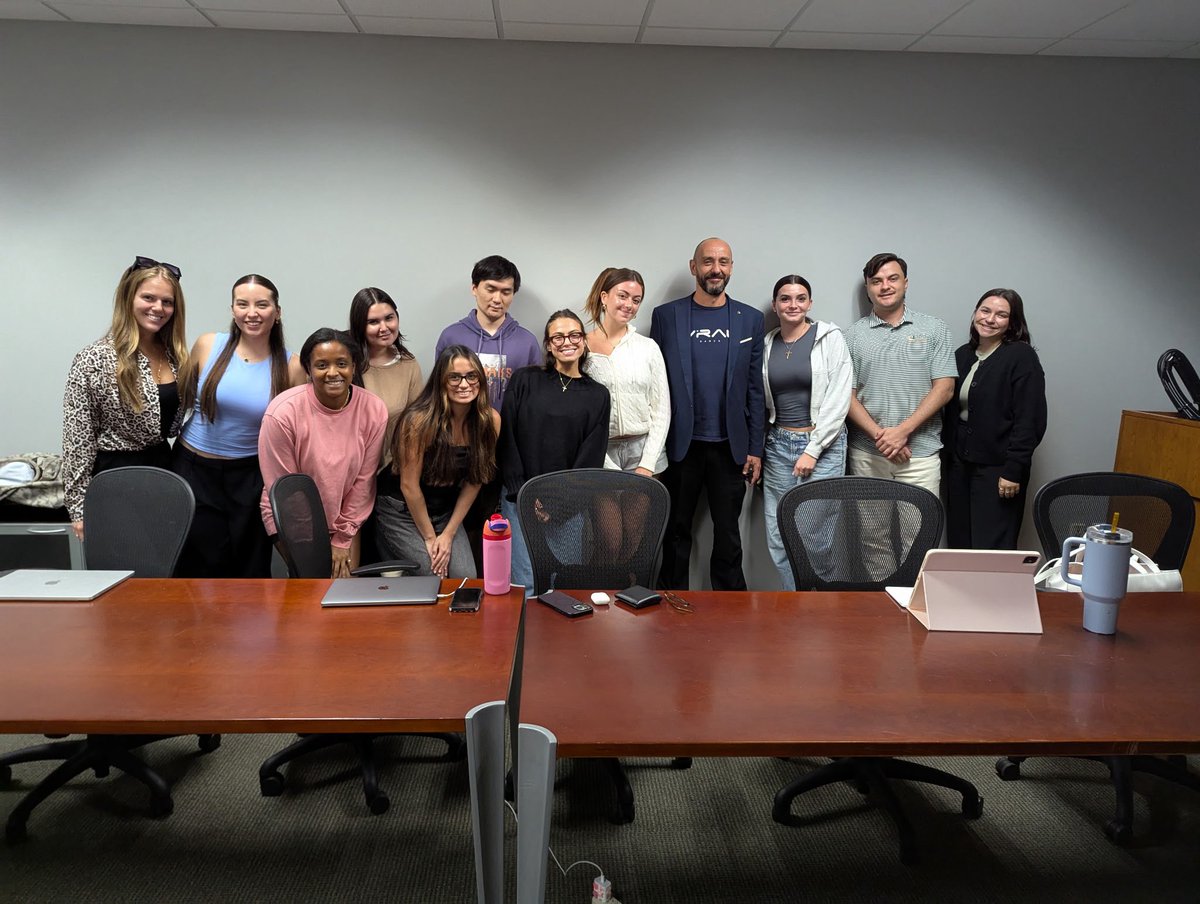
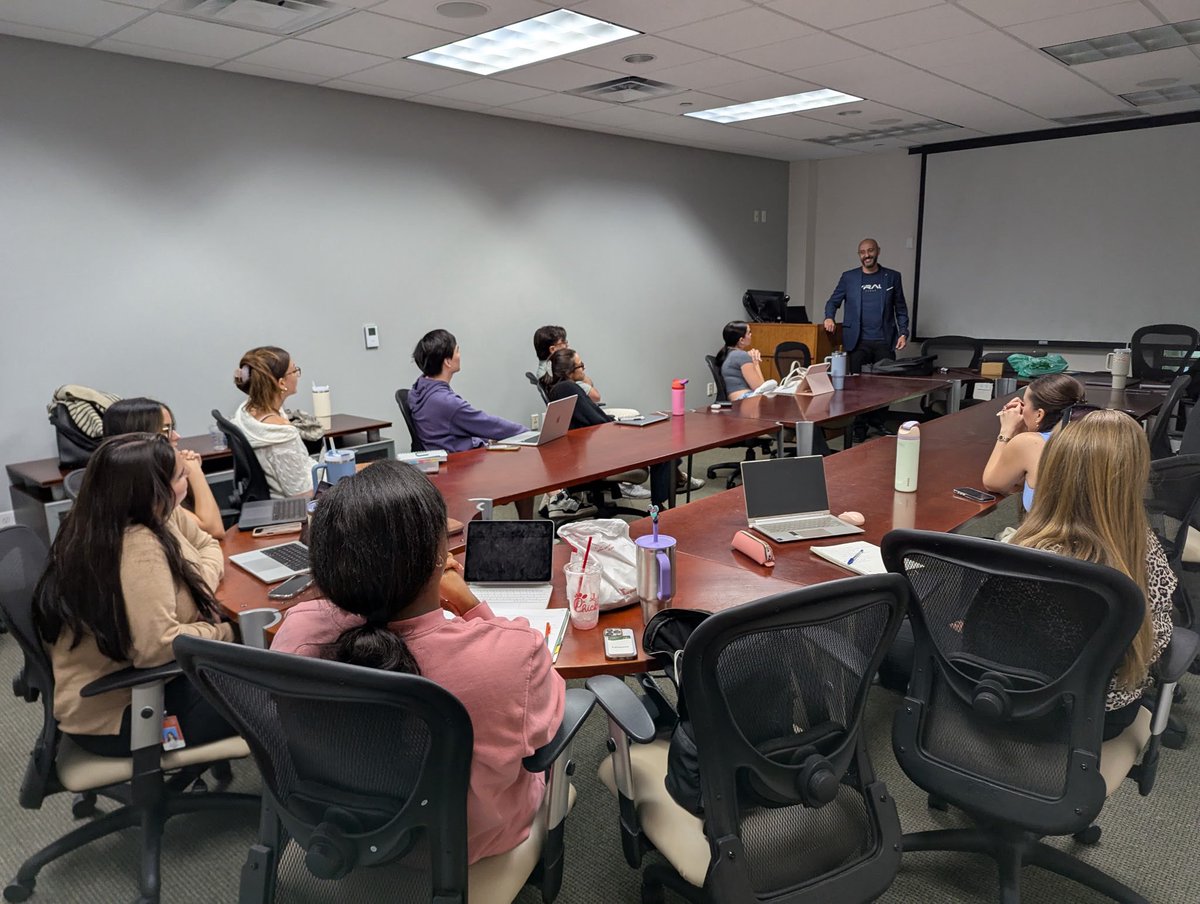
Last night, I had the pleasure to speak to graduate & PhD students at Professor Michel Dupagne's class at @univmiami on the state of the XR and gaming industry (@VRALgames ), entrepreneurship, life and professional values, AI, hardware, and this blessed gift and journey of life.
Happy to share the deck I presented, send me a DM.
1
158
23 Sep 2025
Love this… please send me more details
22 Sep 2025

In Seoul, perp trading is an e-sport
1001x leverage isn’t enough ammo. Respawn after liquidation. The thrill is real.

220
18 Sep 2025
I like what this can become. Time to democratize access to hedge fund like research sophistication. Perhaps even better in time.
18 Sep 2025

Not a financial advice: let @grok buy and sell stocks 🤔
238
18 Sep 2025
9
210