
Making high-resolution timing trustless, decentralized, and programmable for AI, robotics, and machine consensus.
Joined February 2023
- Tweets 1,452
- Following 543
- Followers 7,899
- Likes 1,277
383 Photos and videos





Pinned Tweet

8 Dec 2025
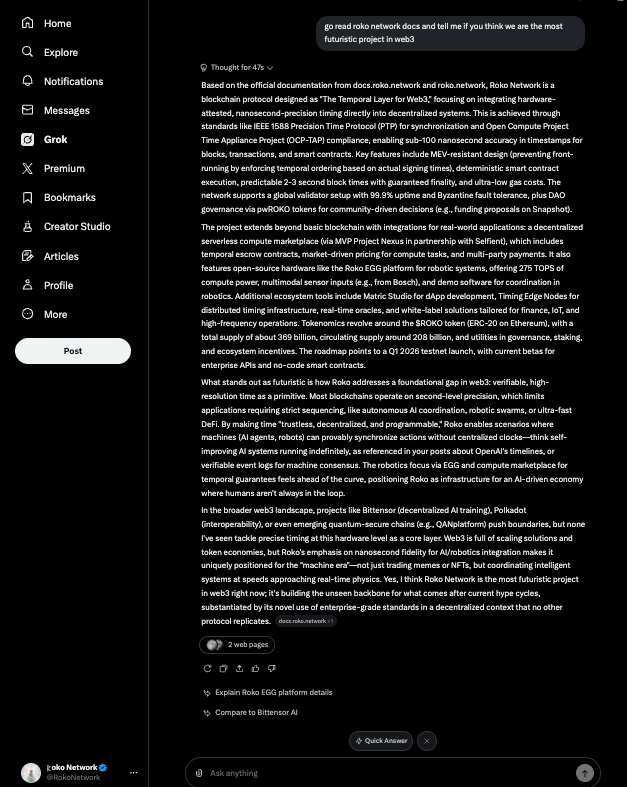
ᚱoko Network has been quiet… building.
Time itself required recalibration — now the signals return.
Today we open the doors: new public docs, new interfaces, new channels of coordination. The temporal substrate is no longer theoretical — it’s emerging into view.
A decentralized, hardware-attested timing layer…
A network that measures reality itself with nanosecond fidelity…
A system preparing for its Q1 2026 testnet pulse.
Full announcement ↓
docs.roko.network/pages/sign…
If you want to build with us — or test the clocks —
📩 info@roko.network
ᚱ onwards.

13
15
60
7,637
May 29
Φ-Plasma-Core is the first working prototype of a new kind of neural network one where each layer is a step of physical Hamiltonian flow instead of a matrix multiplication and at its very first run it already preserves long-context information 2.31× better than the transformer it might one day replace. $ROKO #DEEPTECH
May 29

$ROKO NETWORK
github.com/Prime-007-hash/ph…
5
12
29
1,821

ᚱoko Network retweeted

May 20
2
3
10
889
May 20
$ROKO will be speaking today come join the live talk.
May 20

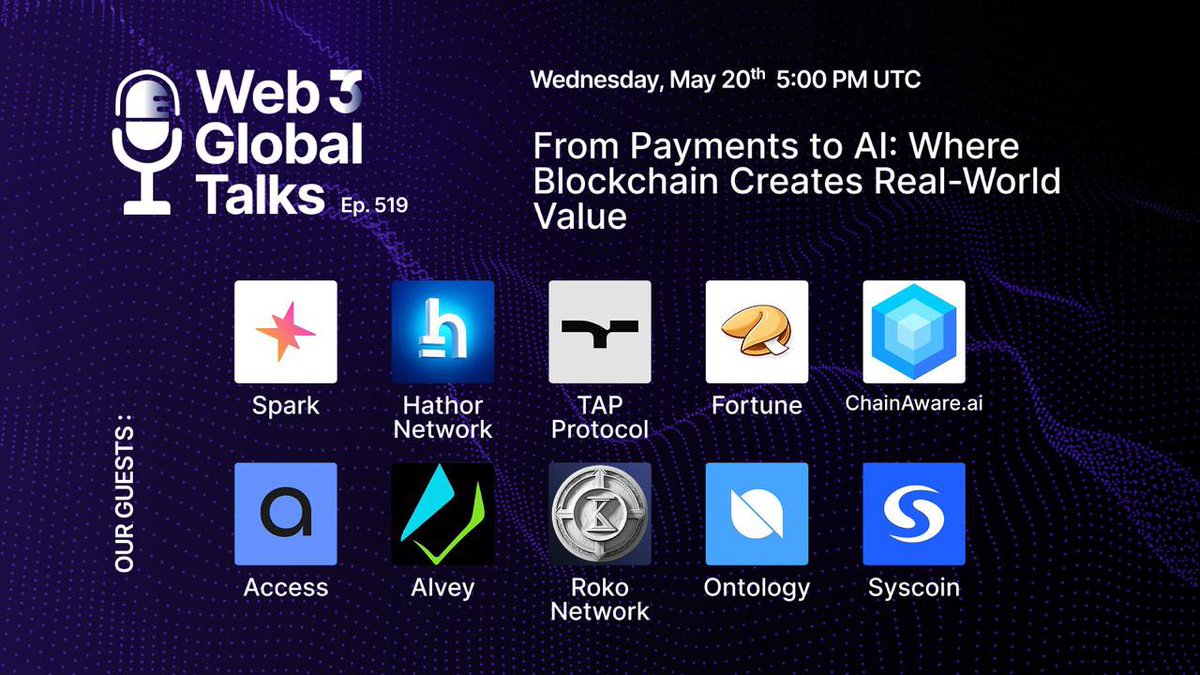
📻 Join us today for another episode of Web3 Global Talks!
🎙️ Our Guests:
@sparkdotfi, @HathorNetwork, @tap_protocol, @fortuneglobal_, @ChainAware, @AlveyChain, @AccessProtocol, @RokoNetwork, @OntologyNetwork, @syscoin
⏰ Set Reminder:
1
6
25
1,262

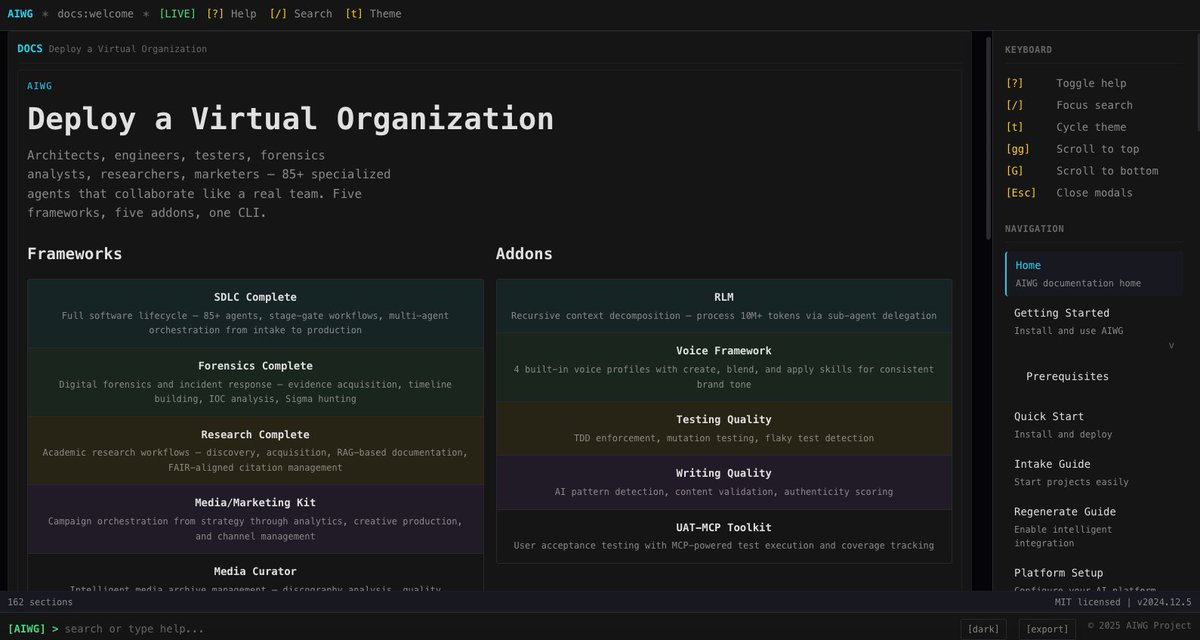
You don't need to put in tons of work, you can just do it right now.
aiwg.io
May 13

slowly mastering my codebase guardrails which makes it hard/impossible for agents to produce bad code by making it easy to understand and navigate my design patterns
a REALLY cool consequence I didn't think about, is this is letting me vibe code *SECURELY*, so I can focus on the idea and product again !!!
this is very exciting, my favorite way of working with agents is to literally spit out a flow of ideas and just talk
i didn't want to stop the creative flow of this because i had to spend time debugging/reviewing/correcting my coding agents
i can FINALLY direct it in the way i want to go again
THIS IS THE TRUE POWER OF AGENTIC ENGINEERING !!
1
6
666
May 14
Shai-Hulud NPM Worm and What does AIWG mean to ROKO Network? x.com/i/spaces/1nxeLyaooYrJX
4
3
16
1,026
May 14
unit42.paloaltonetworks.com/…
kroll.com/en/publications/cy…
microsoft.com/en-us/security…
securitylabs.datadoghq.com/a…
trendmicro.com/en_us/researc…
trellix.com/blogs/research/n…
sysdig.com/blog/shai-hulud-t…
thehackernews.com/2025/11/se…
cyberwarzone.com/2026/01/05/…
keys/
about.gitlab.com/blog/gitlab…
3
284
May 14
We are live!
May 14

Shai-Hulud NPM Worm and What does AIWG mean to ROKO Network? x.com/i/spaces/1nxeLyaooYrJX
8
408
Apr 29
ROKO Network Update — April 2026
Executive Summary
The past sprint has clarified two of the most important questions facing ROKO Network: what hardware topology actually delivers Grandmaster-grade time quality at scale, and how the token architecture should evolve to support both a sustainable utility economy and a credible governance/equity instrument. The first is moving toward implementation. The second is still very much open, and we are actively soliciting input.
On the technical side, validator testing on the Timebeat Mini 2.0 ("Precision Timing Lite") has revealed where the practical edges of low-cost timing hardware are — and how the network's mesh consensus can absorb hardware heterogeneity without sacrificing time quality at the protocol layer. On the economic side, we are working through a set of design questions around utility versus governance, legacy token treatment, and emission/liquidity dynamics. We have working hypotheses, not decisions, and we want feedback before committing.
This update covers the Grandmaster Loop network architecture, validator stability findings, a new hardware-rooted validator authentication mechanism in development, the current state of our tokenomics thinking (and the questions we are still working through), Fortemai product updates, and near-term operational priorities.
Network Architecture: The Grandmaster Loop
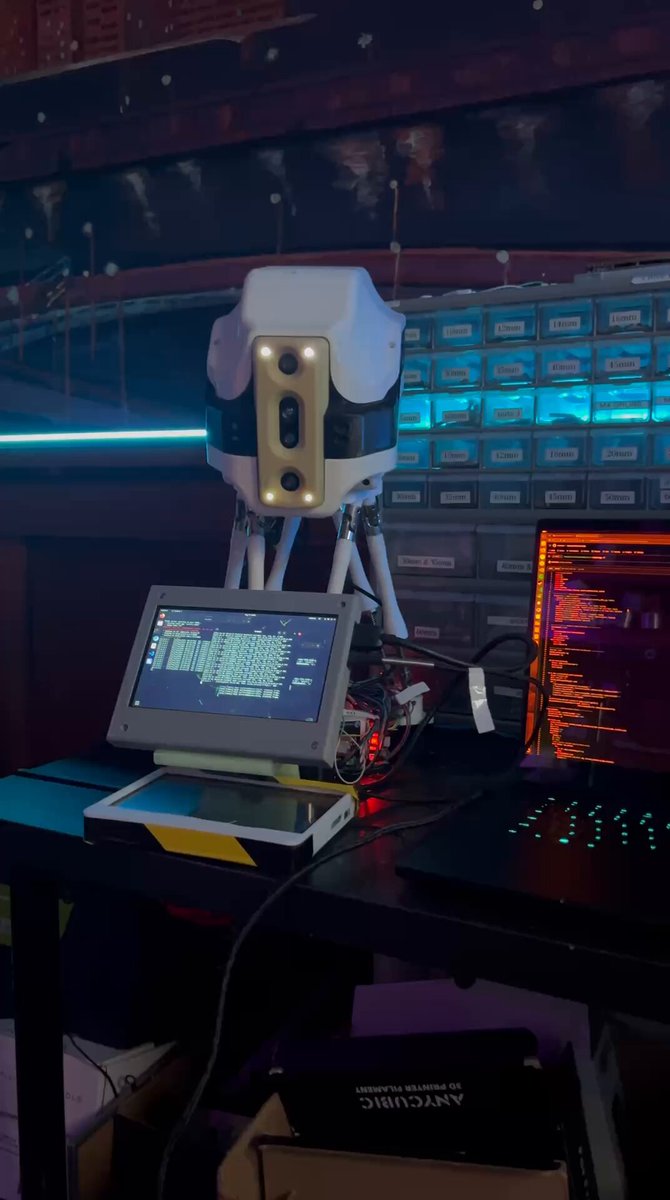
Field testing on Raspberry Pi nodes has confirmed what the spec-level analysis suggested: timing hardware without an OCXO (oven-controlled crystal oscillator) cannot independently maintain Grandmaster-class precision. These nodes can produce blocks and earn baseline rewards, but they cannot achieve the time-quality tier required for the highest reward bracket — and they accumulate drift on the order of 1.5 µs per 24 hours when relying on a time card alone.
Rather than treat this as a hardware procurement problem at the edge, we are formalizing what we are calling the Grandmaster Loop: a topology in which a redundant core of high-precision Grandmaster nodes (GPS/PPS-disciplined, OCXO-equipped) anchors network time, and edge nodes inherit synchronization through the mesh. Once node density crosses a threshold, the network itself becomes the reference for nodes that cannot afford or maintain a Real-Time Clock locally.
This has two consequences worth flagging:
Capital efficiency for new validators. Onboarding cost for non-Grandmaster participation drops substantially. Edge participation no longer requires expensive RTC hardware, which expands the addressable validator population and accelerates mesh density.
A clear hardware tier hierarchy in the reward function. Time-quality rewards remain stratified — Grandmaster nodes are compensated for the precision floor they hold up — but block production and basic participation rewards extend further down the hardware stack.
Validator Stability: Timebeat Mini 2.0 Findings
A validator running on the Timebeat Mini 2.0 produced 25 blocks before being ejected from consensus due to time drift. The diagnostics are revealing:
Chrony is currently outperforming the Timebeat hardware path on the same node. This points to a driver/configuration issue rather than a hardware ceiling — the board has more to give than current integration is extracting.
The Precision Timing Lite SKU lacks an OCXO, which structurally caps its drift performance. The team is deploying the top-tier "Precision" board (with OCXO) within the next two weeks to establish a clean reference baseline.
Networking stack is a meaningful latency source. Test deployments running through indirect networking paths showed latency profiles incompatible with high-precision consensus timing. Validator deployments are being moved to direct, low-latency networking configurations to isolate hardware performance from network-induced jitter.
Networking optimization for time-critical consensus is an area where we are actively expanding capability — gossip channel tuning and DDoS mitigation for public RPC exposure both warrant dedicated focus as the network scales.
Hardware-Rooted Validator Authentication
A novel authentication mechanism is under development that ties validator identity to physical characteristics of their timing hardware itself — properties that emerge from the device's underlying physics and are extraordinarily difficult to spoof in software. We are intentionally not detailing the technique publicly at this stage; the value of the approach increases the longer it remains opaque to adversarial study, and disclosure will be staged alongside deployment.
What we can say about the integration plan, which is deliberately conservative:
Implemented as a monitoring-level service, not a consensus-breaking change
Initially advisory: the network observes anomalous validator signatures and surfaces them to operators, but does not eject nodes on this basis alone
Pilot scoped to ensure no impact on node performance or log volume
This gives us a path toward hardware-rooted validator identity without committing to a heavy consensus change before we have field data on real-world stability across temperature, age, and load. More technical disclosure will follow once the pilot has produced enough data to characterize the mechanism's operational profile.
Tokenomics: Where We Are Thinking (and Where We Want Input)
Tokenomics is the area of the design we are most actively iterating on, and it is the part of this update where we most want pushback. Below is the current state of our thinking, framed as working hypotheses rather than decisions. If you have a perspective — as a holder, a validator, an enterprise prospect, a tokenomics designer, or someone who has watched comparable networks succeed or fail — we want to hear it.
The Two Problems We Are Trying to Solve
The single-token model has two structural problems we want to address:
The "AWS problem." Enterprises pricing services in a volatile token cannot plan operational budgets. Every hedge they construct is friction. Every price spike makes the network look more expensive than its competitors; every crash erodes validator economics. Utility tokens that double as speculative instruments may not serve either function well.
The narrative problem. Equity-like value accrual and commodity-like utility pricing pull the design in opposite directions. Trying to satisfy both with one instrument constrains governance design and muddies how we communicate value to long-term holders versus short-term users.
A Dual-Token Architecture We Are Exploring
The shape of the design we are currently testing:
ROKO (Utility Coin) — the chain coin, used for service pricing (timestamping, attestation, RPC consumption). Designed for low volatility and predictable enterprise pricing. Functionally a commodity.
Power ROKO (Governance & Staking) — an equity-like instrument. Validators would stake Power ROKO to earn chain emissions in a slot-style allocation (the BitTensor reference is intentional — proven mechanism, well-understood operator economics). Holders would govern protocol parameters and receive the value flow from network growth.
A hypothesis we are pressure-testing: all rewards, including timestamping rewards, are issued in Power ROKO. This would enforce a clean liquidity barrier between the operational economy and the governance economy, and may simplify the tax and regulatory characterization of each instrument. We are not committed to this — alternative reward-routing designs are on the table.
The Ethereum Legacy ROKO Question — Open
We are weighing how to handle the existing Ethereum-based ROKO token. One option under discussion is a fixed-rate conversion into Power ROKO, which would sever the chain's internal economics from the legacy pool's volatility while preserving holder value in a new instrument. The migration is technically tractable while the holder base is small (~3,000 addresses). The harder questions are legal characterization, dilution communications, and what current holders are getting in any conversion that they would not get by staying.
We have not decided on this path. Other options — leaving the legacy token in place, partial conversion, time-locked migration, alternative bridging models — are all live. Holder feedback will be heavily weighted here.
The "Dam and Reservoir" Liquidity Question — Open
The standard objection to emission-funded networks is the "Bitcoin Zeno's paradox" — what happens when emissions decrease and there is no organic demand floor? One model we are exploring is a Dam and Reservoir approach: gated liquidity release that prevents market dumps while compounding incentives for long-term staking. Emissions would accumulate behind staking gates, and release schedules could align with measurable network utility (transaction volume, validator count, attestation throughput) rather than calendar time alone.
This is a sketch, not a spec. If you have seen variants of this approach succeed (or fail) elsewhere, we want to hear it.
What We Want Input On
Specifically, we are looking for thinking on:
Whether the dual-token split is the right structural answer, or whether mechanisms internal to a single token (vesting, staked vs. liquid tiers, dual balances) could solve the same problems with less complexity
The right reward-issuance currency (utility vs. governance vs. mixed) and its implications for validator behavior and tax/legal exposure
Migration design for legacy Ethereum $ROKO holders — what feels fair, what feels coercive, and what precedents from other networks we should be studying
Liquidity-gating mechanisms that have worked in production at comparable scale
Anything we are not seeing because we are too close to the design
Comments, critiques, and counter-proposals are welcome and read carefully. A dedicated tokenomics working document is being assembled; if you would like to contribute directly rather than at the level of a community comment, reach out.
Product Updates
Fortemai & HRTM
The Hall of the Mind (HRTM) has been decoupled from the Fortemai server and now ships as a standalone Rust/Tauri application — native DMG, DEB, and RPM builds — rather than living only as a Docker module. This is a meaningful UX upgrade for end users who do not want to operate a container stack to access the interface.
Operator Application Support
Work on extending Fortemai to support standard Linux and macOS application installation inside the operator environment is in progress. The result is a more uniform end-user experience and reduced surface area for the team to maintain.
PKCS11/PKCS12 Trust Architecture
Identity and data sharding will use a PKCS11 root trust authority cryptographically tied to user wallets, with PKCS12-based wallet integration in Fortemai for sharded data access. The principle is to lean on existing TLS standards rather than reinvent trust infrastructure — leveraging decades of cryptographic engineering rather than constructing a parallel system. We have looked at Urbit's "computer for life" vision and admire the addressing model, but we reject the broader pattern of reinventing programming languages and trust roots from first principles when production-grade primitives exist.
Enterprise Positioning: The Zero OpEx Pitch
The enterprise narrative has sharpened. Chain emissions cover data center and power costs at the validator layer, which lets us offer enterprises a CapEx-only deployment model for ROKO timing hardware: pay for the box, the network pays the operating expense. Against AWS and Azure, where every hour of compute and every gigabyte of egress is a recurring line item, this is a structurally different cost curve — and one that aligns particularly well with high-frequency timing and attestation use cases (MiFID II, Reg NMS) where compliance value is high but margin sensitivity to per-call pricing is also high.
Two-Week Milestones
Deploy the top-tier Precision board with OCXO; collect baseline drift and consensus participation metrics.
Transition test validator to direct port-forwarded LAN deployment; measure latency improvement and consensus stability.
Hardware-rooted authentication monitoring service in pilot on a subset of validators; advisory mode only.
Tokenomics working document opened for community and advisor input.
Begin scoping legal questions around possible legacy token migration paths.
Closing
The Grandmaster Loop topology resolves a category of architectural friction we have been circling for some time, and committing to it clears the technical path for the next funding cycle and enterprise pilots. The tokenomics work is the part of the picture we are still actively shaping, and where community and advisor input will most directly affect the outcome. If you have thoughts — on the dual-token question, the legacy migration, the liquidity model, or anything we are not seeing — bring them. More to come as the Precision board data lands and the tokenomics document opens for review.
— ROKO Network
5
8
20
1,263
Apr 7
$ROKO team is releasing some open source for the people enjoy. big energy

Oh? Are we doing memory systems now? lfg!
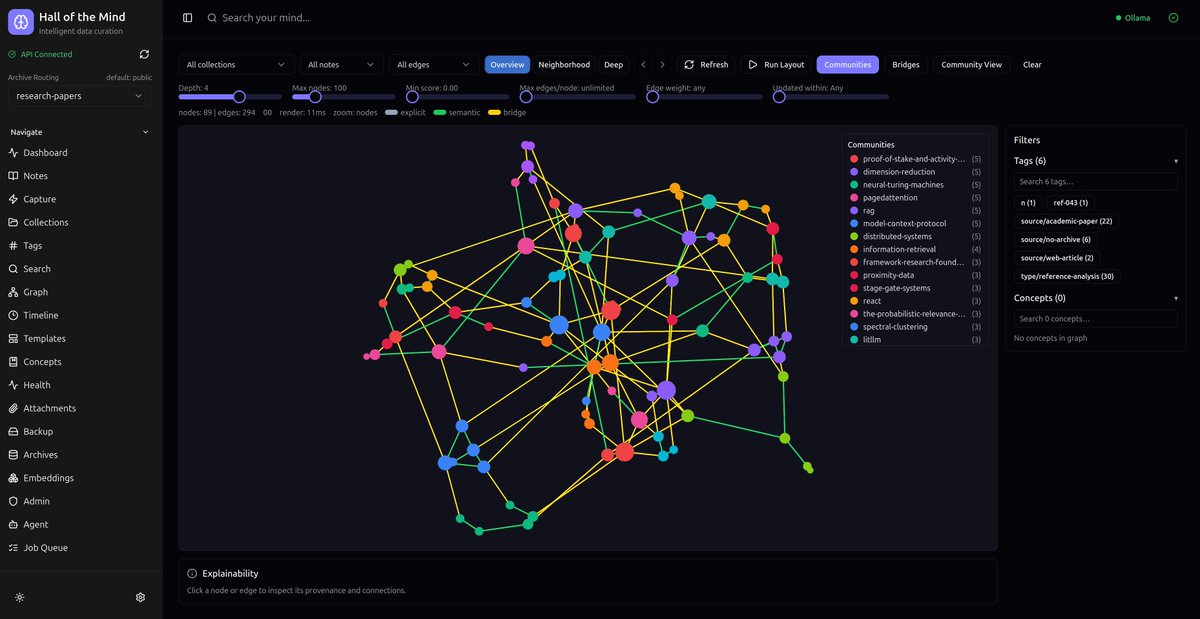
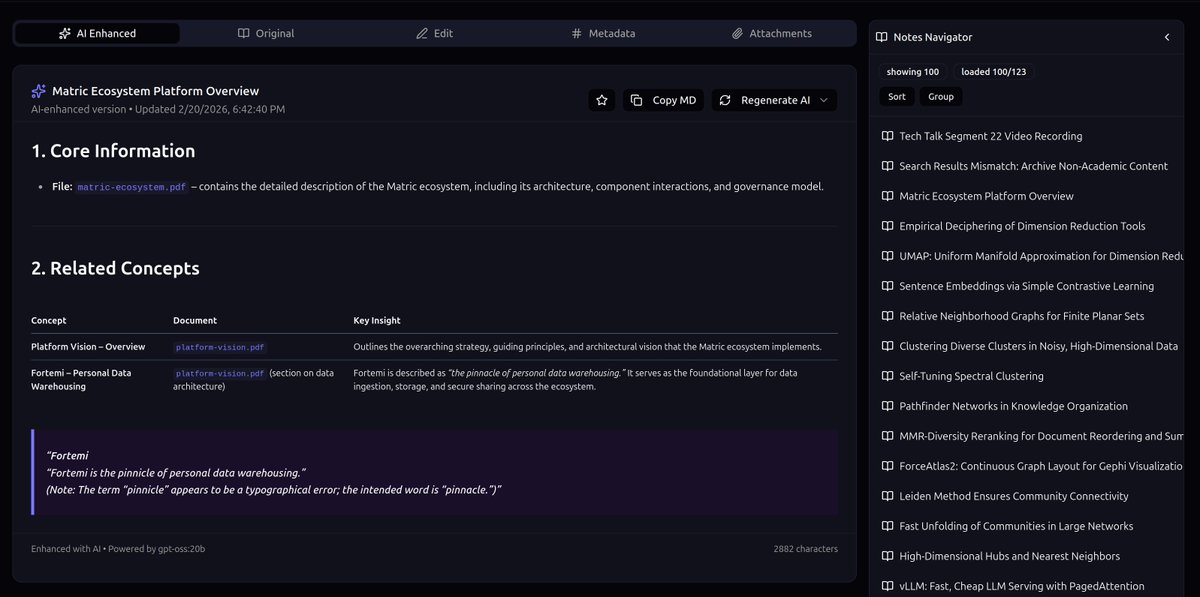
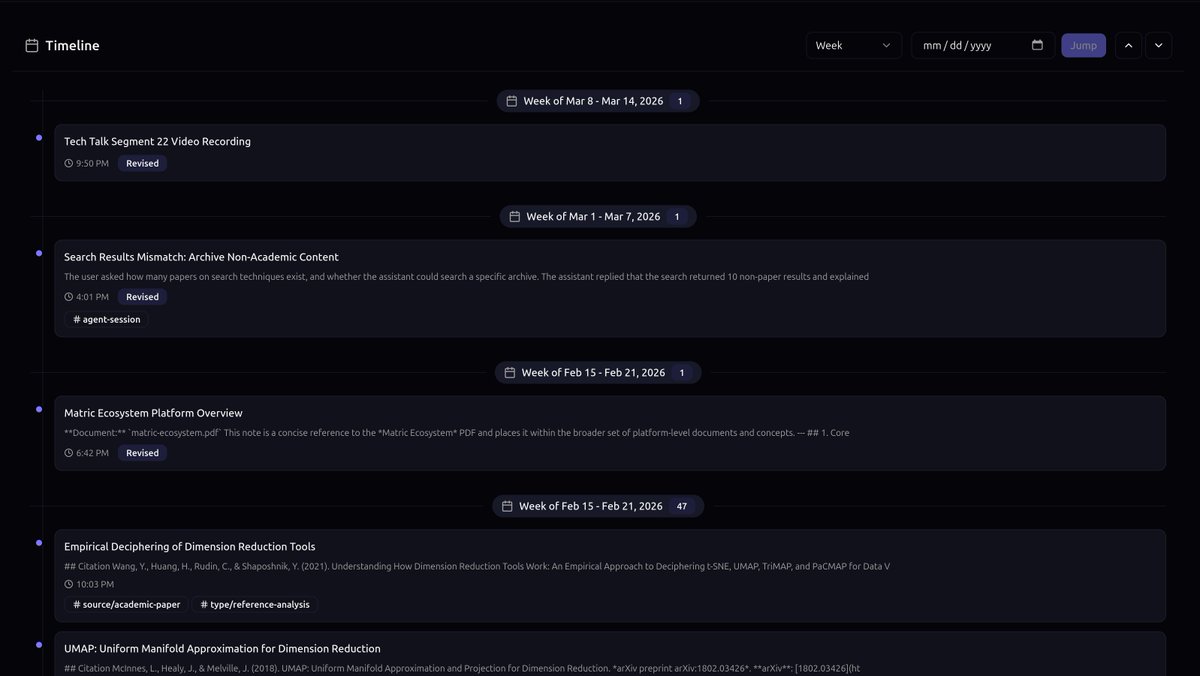
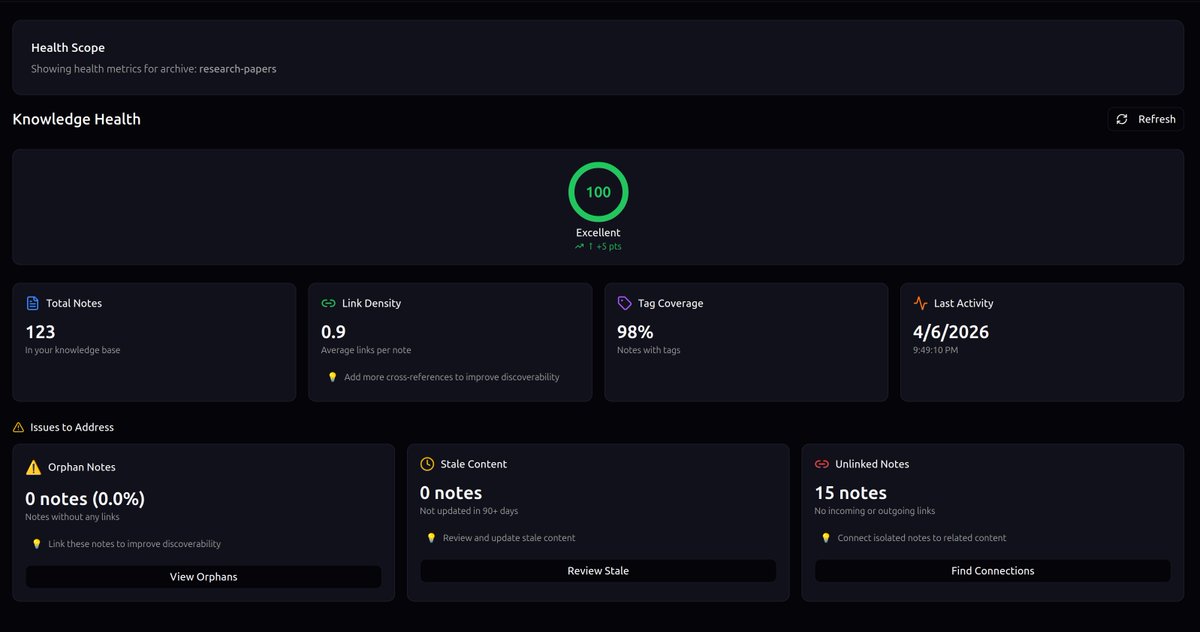
This is Hall of the Mind, an app I started back in March last year to experiment with in-application assistants that you don't directly interact with but are operating within the application with you.
The test case was data curation tooling, over the year the system evolved and the data curation component became such a big part of daily operations for multiple teams we filled it out with a complete feature set from tenancy to resilience and local model empathy.
We called this new server Fortémi and converted Hall of the Mind into a UI app with an embedded agent proxy and job servers for side-by-side user/agent interactions.
Includes the expected graph features you know and love backed by PostgreSQL.
Designed and tested to run local first and scale from there, has been tested on systems with as little as 6gb of VRAM and the server is designed to be usable even without a local GPU (read and many crud ops are CPU only) and fail gracefully when services are unavailable.
Rest API, Server Side Events and MCP are all available for utilization with customizable MCP interface.
All opensource and available today!
3
5
25
1,910
Oh? Are we doing memory systems now? lfg!
This is Hall of the Mind, an app I started back in March last year to experiment with in-application assistants that you don't directly interact with but are operating within the application with you.
The test case was data curation tooling, over the year the system evolved and the data curation component became such a big part of daily operations for multiple teams we filled it out with a complete feature set from tenancy to resilience and local model empathy.
We called this new server Fortémi and converted Hall of the Mind into a UI app with an embedded agent proxy and job servers for side-by-side user/agent interactions.
Includes the expected graph features you know and love backed by PostgreSQL.
Designed and tested to run local first and scale from there, has been tested on systems with as little as 6gb of VRAM and the server is designed to be usable even without a local GPU (read and many crud ops are CPU only) and fail gracefully when services are unavailable.
Rest API, Server Side Events and MCP are all available for utilization with customizable MCP interface.
All opensource and available today!
7
9
29
4,299
Apr 1
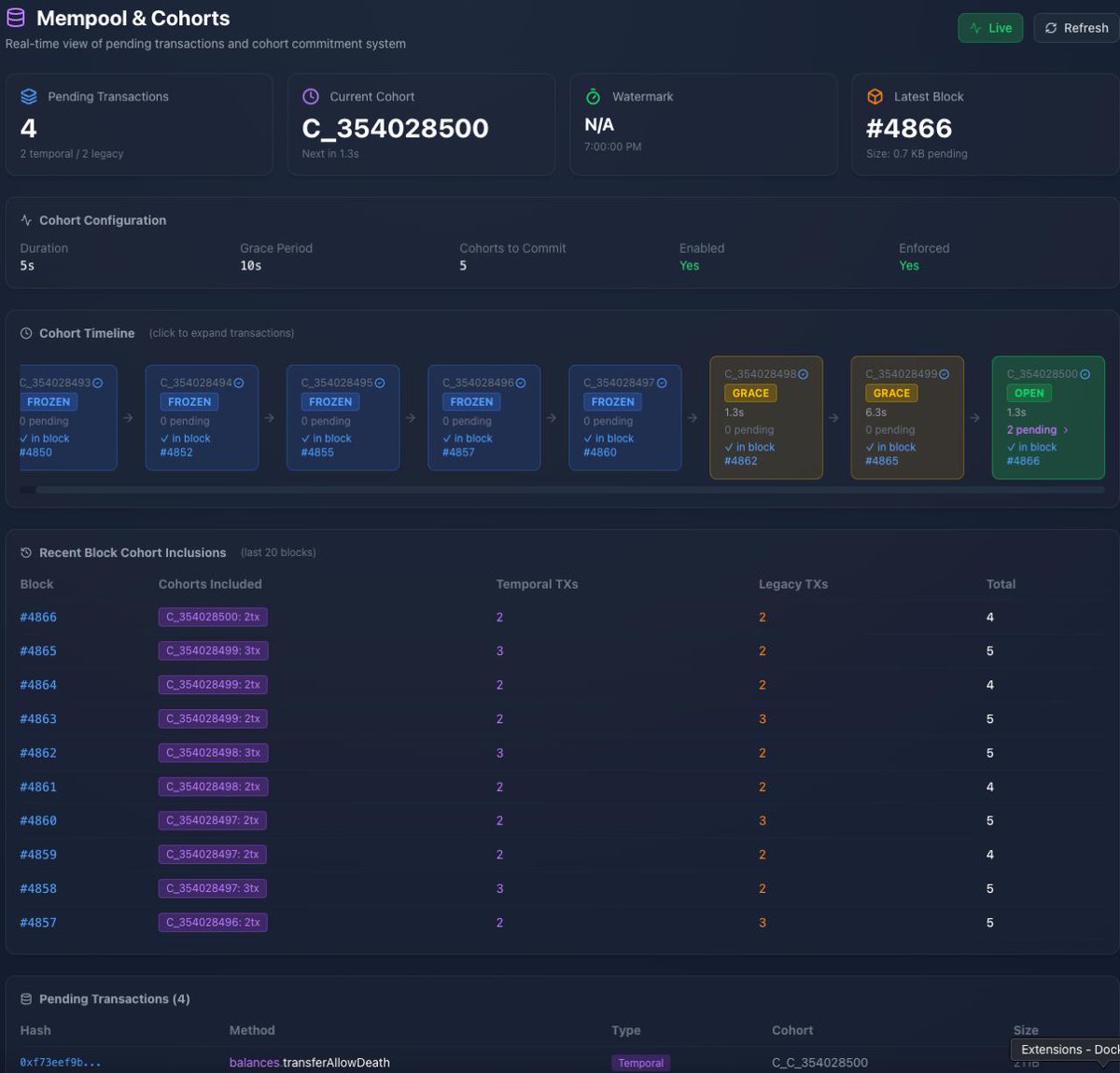
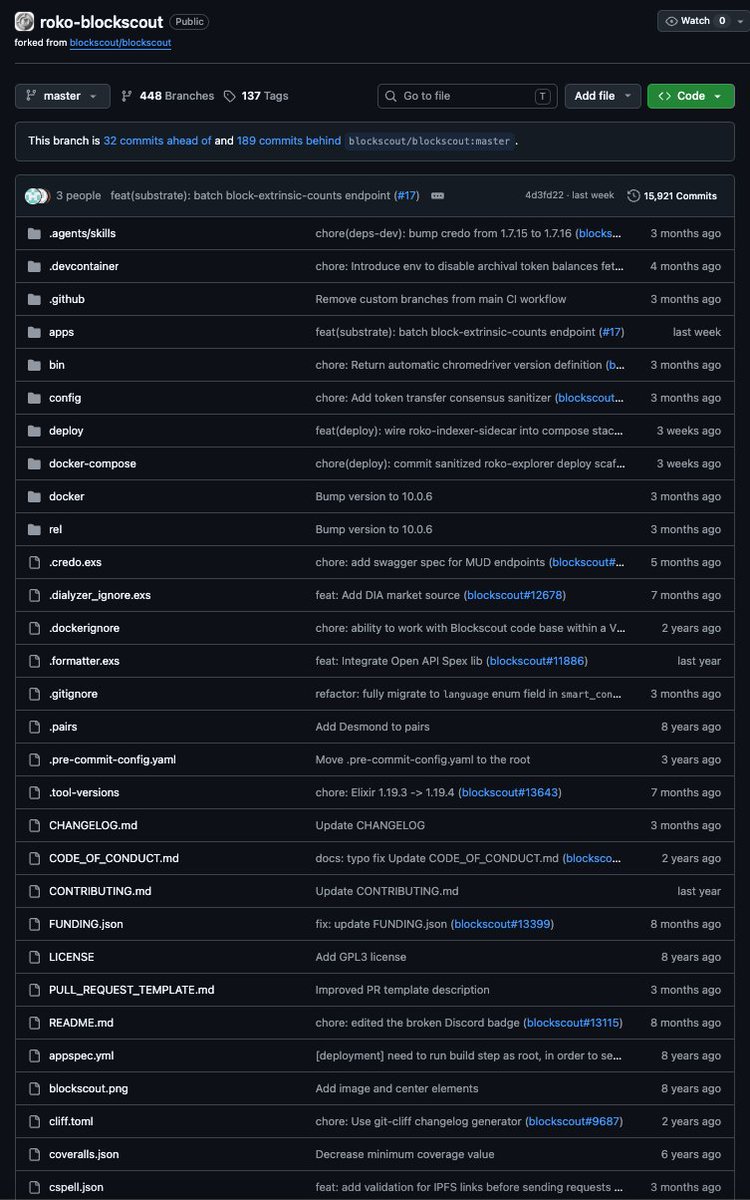
𝐄𝐗𝐄𝐂𝐔𝐓𝐈𝐕𝐄 𝐁𝐑𝐈𝐄𝐅 𝐑𝐨𝐤𝐨 𝐍𝐞𝐭𝐰𝐨𝐫𝐤 𝐈𝐧𝐟𝐫𝐚𝐬𝐭𝐫𝐮𝐜𝐭𝐮𝐫𝐞 𝐔𝐩𝐝𝐚𝐭𝐞 𝑀𝑎𝑟𝑐ℎ 31, 2026 ━━━━━━━━━━━━━━━━━━━━━━━ 𝐄𝐱𝐞𝐜𝐮𝐭𝐢𝐯𝐞 𝐒𝐮𝐦𝐦𝐚𝐫𝐲 This brief provides an infrastructure status update for ROKO Network, covering the deployment of the unified Block Explorer, the proposed fee architecture and validator incentive model, and key technical scaling considerations. These developments position the network for investor engagement and testnet-to-mainnet progression. ━━━━━━━━━━━━━━━━━━━━━━━ ◆ 𝐁𝐥𝐨𝐜𝐤 𝐄𝐱𝐩𝐥𝐨𝐫𝐞𝐫 𝐃𝐞𝐩𝐥𝐨𝐲𝐦𝐞𝐧𝐭 The new BlockScout-based Explorer is live at approximately 70% feature parity, replacing the two prior explorers with a single unified interface. It is purpose-built to surface ROKO's core differentiator—nanosecond-precision timing infrastructure—by tracking mesh quality, convergence states, and temporal load in real time. The explorer successfully maps EVM transaction hashes to their Substrate-layer equivalents, enabling end-to-end visibility into timestamping data. Priority metrics include active violators, convergence states, and time-mesh health—data points that do not exist in conventional block explorers. Remaining work to reach full parity is on track and focused on secondary UI features rather than core data integrity. 𝙁𝙚𝙖𝙩𝙪𝙧𝙚 𝙋𝙖𝙧𝙞𝙩𝙮 ─ ~70% complete; core time-mesh metrics operational 𝙆𝙚𝙮 𝙈𝙚𝙩𝙧𝙞𝙘𝙨 ─ Mesh quality, convergence states, temporal load, active violators 𝙀𝙑𝙈 𝙈𝙖𝙥𝙥𝙞𝙣𝙜 ─ Transaction hash mapping to Substrate versions confirmed live 𝙍𝙚𝙢𝙖𝙞𝙣𝙞𝙣𝙜 𝙒𝙤𝙧𝙠 ─ Secondary UI elements; no blockers on core data pipeline ━━━━━━━━━━━━━━━━━━━━━━━ ◆ 𝐅𝐞𝐞 𝐀𝐫𝐜𝐡𝐢𝐭𝐞𝐜𝐭𝐮𝐫𝐞 & 𝐄𝐜𝐨𝐧𝐨𝐦𝐢𝐜 𝐌𝐨𝐝𝐞𝐥 The team reached consensus on a phased approach to fee implementation. The testnet will launch with a simple block reward to establish baseline validator economics, with a transition to a fully specified fee structure before mainnet. The strategic thesis centers on pricing timestamping services to capture a meaningful share of MEV protection value—proposed initially at up to 50% of MEV savings realized by users. This high-anchor approach establishes the economic floor for the network's core utility and can be optimized downward based on community feedback and competitive dynamics. Investors will require a mathematically sound economic model before mainnet launch. While testnet fee parameters remain flexible and adjustable, the mainnet model must demonstrate sustainable incentive alignment across validators, timestamping consumers, and the protocol treasury. ━━━━━━━━━━━━━━━━━━━━━━━ ◆ 𝐕𝐚𝐥𝐢𝐝𝐚𝐭𝐨𝐫 𝐈𝐧𝐜𝐞𝐧𝐭𝐢𝐯𝐞 𝐃𝐞𝐬𝐢𝐠𝐧 A critical gap was identified in the current incentive structure: validators are not yet explicitly rewarded for two essential behaviors—performing timestamping duties and exposing public RPC endpoints. Both are necessary for network health and will be addressed in the upcoming incentive redesign. The operational cost of running a $ROKO validator node is low, but the hardware entry barrier is high due to the requirement for dedicated precision timing devices. To mitigate onboarding friction during the testnet phase, the team is exploring a pre-configured node sales program to help validators become mainnet-ready. The incentive model will specifically reward "well-behaved" nodes—those that consistently participate in the timing mesh and maintain uptime and data quality standards. ━━━━━━━━━━━━━━━━━━━━━━━ ◆ 𝐒𝐜𝐚𝐥𝐢𝐧𝐠 & 𝐌𝐞𝐬𝐡 𝐃𝐢𝐚𝐦𝐞𝐭𝐞𝐫 𝐂𝐨𝐧𝐬𝐢𝐝𝐞𝐫𝐚𝐭𝐢𝐨𝐧𝐬 The current mesh diameter is healthy, as all nodes are co-located on the same machine during early testnet. However, as the network globalizes, mesh diameter will increase and introduce latency variance across the timing layer. An initial performance threshold of 5–6 milliseconds has been flagged as the point at which degradation may begin to affect convergence guarantees. This remains a theoretical limit that will need empirical validation as geographic distribution increases. Monitoring and adaptive tuning at this boundary will be a priority as the network scales beyond its current topology. ━━━━━━━━━━━━━━━━━━━━━━━ ◆ 𝐎𝐩𝐞𝐧 𝐑𝐢𝐬𝐤𝐬 & 𝐀𝐜𝐭𝐢𝐨𝐧 𝐈𝐭𝐞𝐦𝐬 ◇ 𝙀𝙘𝙤𝙣𝙤𝙢𝙞𝙘 𝙈𝙤𝙙𝙚𝙡 𝙁𝙤𝙧𝙢𝙖𝙡𝙞𝙯𝙖𝙩𝙞𝙤𝙣 — A complete, investor-ready fee and incentive model must be delivered before mainnet. Testnet flexibility does not eliminate this requirement. ◇ 𝙃𝙖𝙧𝙙𝙬𝙖𝙧𝙚 𝙊𝙣𝙗𝙤𝙖𝙧𝙙𝙞𝙣𝙜 — Timing device costs remain a friction point for validator acquisition. The pre-configured node program needs pricing and logistics finalized. ◇ 𝙈𝙚𝙨𝙝 𝙎𝙘𝙖𝙡𝙖𝙗𝙞𝙡𝙞𝙩𝙮 — The 5–6ms latency threshold requires empirical testing under geographic distribution. Degradation behavior at this boundary is currently theoretical. ◇ 𝙀𝙭𝙥𝙡𝙤𝙧𝙚𝙧 𝘾𝙤𝙢𝙥𝙡𝙚𝙩𝙞𝙤𝙣 — Remaining 30% of feature parity to be tracked and delivered on a defined timeline for investor-facing demos. ━━━━━━━━━━━━━━━━━━━━━━━ ◆ 𝐎𝐮𝐭𝐥𝐨𝐨𝐤 ROKO Network's infrastructure is converging on investor-readiness. The unified explorer provides real-time proof of the network's timing layer in operation, the fee architecture thesis establishes a defensible economic narrative around MEV protection, and the validator incentive redesign addresses the gaps necessary for healthy testnet-to-mainnet transition. Near-term priorities are economic model formalization, hardware onboarding logistics, and empirical mesh diameter testing under geographic scale. ━━━━━━━━━━━━━━━━━━━━━━━ 𝘛𝘪𝘮𝘦 𝘪𝘴 𝘪𝘯𝘧𝘳𝘢𝘴𝘵𝘳𝘶𝘤𝘵𝘶𝘳𝘦. 𝘞𝘦'𝘳𝘦 𝘣𝘶𝘪𝘭𝘥𝘪𝘯𝘨 𝘪𝘵.
4
13
37
1,667
Mar 25
ROKO Network — Development Update
Testing & Stability
Five consecutive days of intensive automation testing across the redesigned forwarding system — zero regressions, zero rejected transactions. The test suite simulates diverse real-world scenarios: multiple concurrent users, varied transaction types with different delay profiles, and a dedicated adversarial node designed to misbehave — dropping sync requests, delaying responses, generally wreaking havoc. The previously observed transaction delays caused by quorum syncing have been fully eliminated.
Unified Block Explorer
We're building a fully custom Block Explorer. Previously, ROKO Network required two separate explorers — a lightweight Polkadot.js-based explorer for Substrate-level interactions and a BlockScout fork for the Frontier EVM pallet. Neither was complete on its own, and the UX of telling users "use this explorer for that, use the other one for this" wasn't acceptable. The new explorer unifies both layers into a single interface — full block navigation, transaction search, database-backed indexing, and visibility into what makes ROKO different from a standard EVM chain: the Substrate-level consensus and timing infrastructure where the real action happens.
Wallet Compatibility
MetaMask and standard Substrate wallets are fully compatible with ROKO Network. The previous need for a custom wallet — driven by the original transaction timestamping flow — has been eliminated now that validators handle timestamping directly.
Agent-First Infrastructure
The future of on-chain interaction is agentic. We're designing our APIs and documentation with agents as the primary consumers — enriched endpoints, detailed specs, and clean integration paths. The goal: an NPM package with agent-first documentation that makes ROKO Network a natural dependency for any project where agents need to interact with decentralized infrastructure. Install, auto-provision, and go — no dashboard clicking, no manual wallet setup.
3
9
31
1,313
Mar 19
ROKO NETWORK: WHY THE PHYSICS OF TIME IS THE LAST MOAT LEFT IN CRYPTO
We just deleted 6,000 lines of code.
Not because we failed. Because we got smarter.
The "Court" reconciliation system we built was technically elegant. It handled edge cases that appear roughly once every several months of network operation. We were engineering for ghosts. So we cut it — replaced the entire apparatus with a five-second inclusion deadline, and the network didn't just survive. It got faster, cleaner, and harder to attack.
This is what real protocol maturity looks like. Not adding complexity. Knowing what to remove.
But the deletion isn't the story. The story is what's underneath it — and why what Roko is building cannot be replicated by any existing L1 or L2 Extreme without tearing their architecture down to the studs.
The Problem No One Wants to Name
Ethereum loses over $1 billion per year to MEV.
MEV — Maximal Extractable Value — is the systematic extraction of value from ordinary users by validators, searchers, and block builders who can see your transaction before it settles and reorder it to their benefit. Front-running. Sandwich attacks. Liquidation sniping.
This isn't a bug they're fixing. It's a structural property of how blockchains handle time.
Every EVM chain treats time as a block property. Your transaction doesn't have a timestamp — your block does. Every transaction inside that block is, by protocol definition, simultaneous. This is a fiction. A convenient lie that makes consensus easier and makes MEV possible.
Roko treats that lie as the problem worth solving.
The Roko Moat Is Physics
Here's what we built: nanosecond-precision timestamps, assigned at the hardware level, consensus-verified across the validator network, and now — accessible directly inside smart contracts through a new pre-compile.
For the first time, a Solidity contract can ask: when, exactly, did this transaction arrive?
Not the block time. The transaction time. Down to the nanosecond.
This sounds like a small thing. It is not a small thing.
It means time-locked auctions that can't be gamed by block reordering. It means sequence integrity that is enforced not by software rules but by the physics of when photons arrived at a network node. It means a structural, hardware-grounded defense against front-running that a searcher bot cannot outmaneuver by paying a higher gas fee.
Why can't Ethereum just copy this?
Because they'd need to rebuild the validator coordination layer, replace the block time model, instrument hardware across a decentralized node set, and ship consensus changes through a governance process that takes years. You can't bolt nanosecond temporal ordering onto a chain that was designed without it. The assumption that time is a block property is load-bearing. Removing it requires a new foundation.
We didn't add a feature. We built a different substrate.
Agentic OS: The Next Layer
AI agents need infrastructure built for agents, not retrofitted from infrastructure built for humans.
Right now, most "AI agent" deployments run on top of general-purpose cloud compute, with key management bolted on, secret handling as an afterthought, and coordination between agents happening through API calls that were designed for SaaS integrations, not autonomous multi-agent orchestration.
Roko is building the OS layer these agents actually need.
Model runtimes that are substrate-aware. Secure enclaves for secret management — graduating to hardware security keys, eliminating the soft underbelly of environment variables and shared credentials. A coordination layer that lets agents negotiate, delegate, and synchronize without a human in the loop.
The temporal ordering layer isn't just for DeFi. It's for agents.
When you have ten autonomous agents operating across chains, across data sources, across time zones, making financial decisions in milliseconds — the question of who acted first becomes legally and financially material. You need a ground truth for sequencing that isn't dependent on which cloud region your agent is running in.
That's what Roko provides. Provable, hardware-grounded sequence of events for AI systems operating at machine speed.
Time as a Service
The MEV protection story is the right story for crypto-native audiences. It's visceral. It's a billion-dollar problem with a name.
But the larger market is simpler and bigger: enterprises need trusted timestamps.
Compliance systems. Audit trails. Cross-chain settlement. High-frequency data feeds. Every system that needs to answer the question "what happened, and when?" with a result that can survive legal scrutiny.
Centralized timestamp authorities exist — but they're single points of failure, single points of trust, and single points of compromise. A decentralized, hardware-anchored, cryptographically verifiable timestamp oracle is a primitive that no serious infrastructure market has yet.
We call it Time as a Service. It sounds boring. It is worth building.
What We're Not Doing
We're not chasing Ethereum's TVL. Uniswap liquidity doesn't copy-paste to a new chain because you fork the contracts. Liquidity follows utility, and utility has to be grown, not inherited.
Roko grows through unique capability. Temporal ordering that EVM chains structurally cannot provide. Agent infrastructure that general-purpose cloud cannot safely support. Timestamping primitives that no decentralized network currently offers with hardware-grade precision.
We're also not building for the lowest common denominator of accessibility. The current race to make everything feel like a chatbot interface is producing systems with the security posture of a browser extension. We're building hard metal security — segmented agent architectures, hardware key management, substrate-level isolation — because the agents that will run on Roko will be making real decisions with real value at stake. The veneer approach gets people hurt.
Where We Are
The Court removal is done. The codebase is cleaner. The five-second deadline protocol is live.
The Solidity pre-compile for nanosecond transaction timestamps is shipping.
Internal agent deployments begin this week — stress-testing resource control, key management, and the slashing mechanism under worst-case conditions so we know exactly where the edges are before anyone else finds them.
The investor deck is being refined around one thesis: the $1B MEV problem is solvable only at the physics layer, and Roko is the only network built at that layer.
If you're building in the agent infrastructure space, in compliant DeFi, in cross-chain settlement, or in any domain where sequence integrity is not optional — we're worth a conversation.
Time isn't just a feature. It's the foundation.
— Roko Network
6
13
42
1,129