
Joined January 2026
- Tweets 49
- Following 21
- Followers 5
- Likes 5
17 Photos and videos















Jun 15
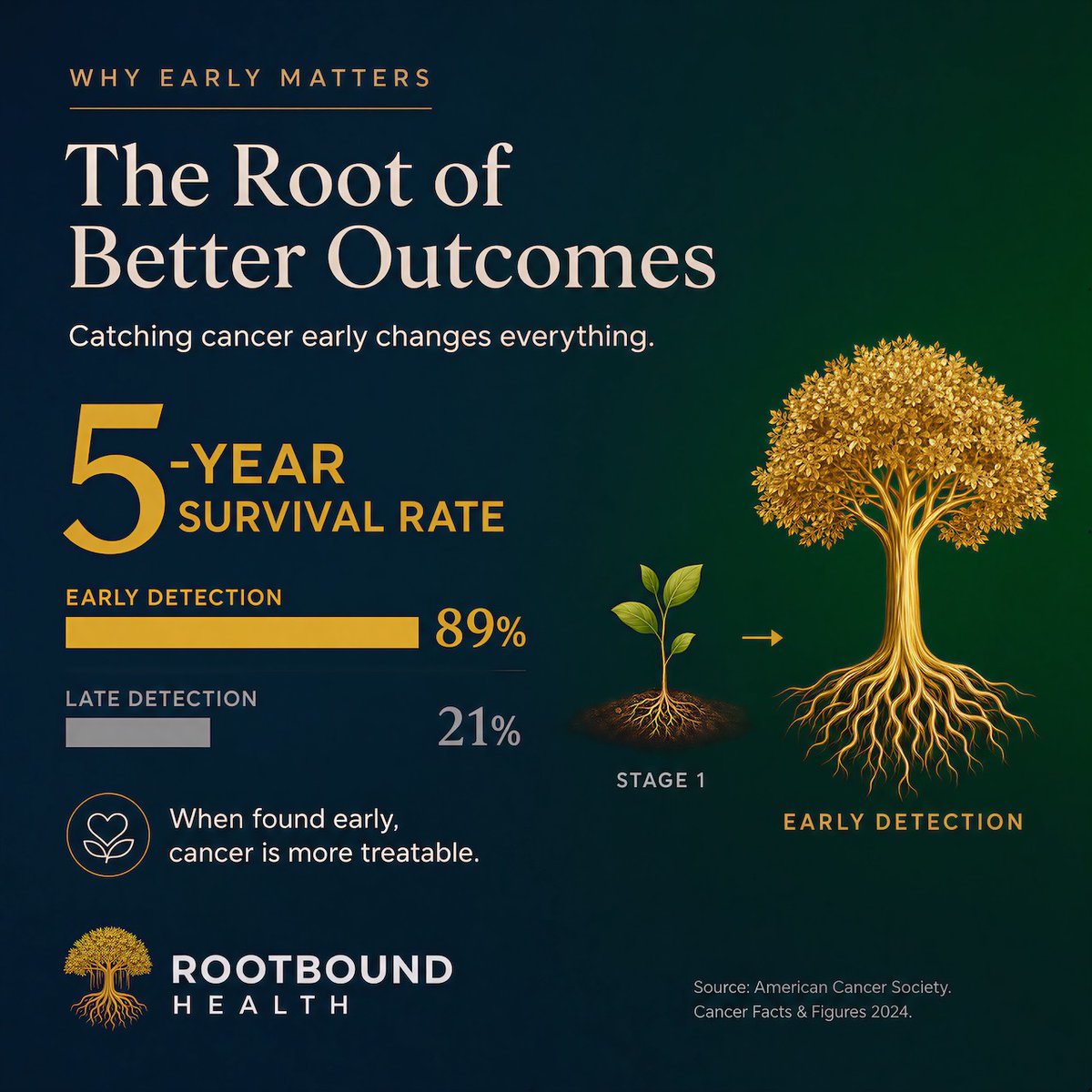
Early detection is your best defense. 🩺
Join RootBound on June 19 (9 AM-12 PM) for our exclusive Galleri Cancer screening event.
@GrailBion Detect signals for 50 cancers via one blood draw
Exclusive patient price: $799 (Retail $1200 ). HSA/FSA eligible.
Register: go.oncehub.com/RootboundHeal…
10
Jun 13
The dashboard glowed green. Leadership nodded.
But on the floors? Nothing changed.
Metric theater:
• Pilots that never scale
• Dashboards hiding variation
• New initiatives every year
The fermented credibility problem: metrics look healthy while reality rots.
Authentic leadership = walking the gemba, measuring what matters, staying the course.
Be honest: is your org performing improvement or producing it? 👇
Jun 11
1/ Care transitions are moments of maximum risk.
Information gets lost.
Medications change without communication.
Follow-up plans confuse.
Here's why handoffs fail—and how to fix them 🧵
2/ Five critical handoffs:
1️⃣ Hospital to home—rushed, confusing, overwhelming
2️⃣ Hospital to SNF—communication poor, med lists don't match
3️⃣ PCP to specialist—referrals fail at multiple points
4️⃣ ED to inpatient—urgent, information incomplete
5️⃣ Inpatient to ICU—highest deterioration risk
3/ The hospital-to-home problem:
Patients receive stacks of paper, multiple prescriptions, and instructions they may not understand.
Expected to manage complex regimens while recovering from illness.
Set up to fail.
4/ Seven elements distinguish high performers:
1. Medication reconciliation
2. Patient education (teach-back)
3. Follow-up scheduling
4. Information transfer
5. Risk stratification
6. Social needs assessment
7. Clear accountability
5/ When everyone is responsible for transitions, no one is.
Successful organizations assign specific accountability for transition outcomes to specific roles.
6/ The handoff problem is solvable.
It requires treating transitions as the clinical interventions they are.
/END
6
Jun 11
On June 19, RootBound Health is hosting a Galleri® multi-cancer early detection event from 9AM–12PM.
One blood draw screens for signals linked to 50 cancers — including many without standard screening options today. Early detection matters.
Book for your slot: bit.ly/4d4mZEL
5
Jun 10
Looking for a refreshed look that enhances your natural beauty without looking "overdone"? ✨
At RootBound Health, we’re proud to offer Daxxify—the advanced injectable designed to smooth fine lines and dynamic wrinkles while keeping your natural expressions perfectly intact.
Unlike traditional neuromodulators, Daxxify is known for its extended longevity, meaning fewer maintenance visits and longer-lasting smoothness for you.
We believe in a personalized, patient-centered approach.
In our calm, private boutique clinic, you can fully customize your treatment based on your personal aesthetic goals:
💧 20 Units: Perfect for a subtle wrinkle reduction and a light, effortless refresh. 💧 40 Units: A moderate treatment for noticeable smoothing of lines. 💧 60 Units:
A comprehensive treatment for significant softening and maximum longevity.
Your session will be quick, minimally invasive, and require little to no downtime, starting with a thoughtful, unrushed consultation.
Ready to experience the RootBound difference? We have a limited-time promotional offer live right now. (Promotional value expires 180 days after purchase; limit 4 per person).
👉 Claim your voucher here: bit.ly/42FHNh9
👉 And book your consultation today! rootboundhealth.com/
#Daxxify #RootBoundHealth #SkinCare #Aesthetics
25
The dashboard glowed green. Leadership nodded.
But on the floors? Nothing changed.
Metric theater:
• Pilots that never scale
• Dashboards hiding variation
• New initiatives every year
The fermented credibility problem: metrics look healthy while reality rots.
Authentic leadership = walking the gemba, measuring what matters, staying the course.
Be honest: is your org performing improvement or producing it? 👇
3
On June 19, RootBound Health is hosting a Galleri® multi-cancer early detection event from 9AM–12PM.
One blood draw screens for signals linked to 50 cancers — including many without standard screening options today.
Early detection matters.
Book here: go.oncehub.com/RootboundHeal…
8
1/ The dashboard glowed green.
Leadership nodded approvingly.
But on the patient floors, nothing had changed.
Welcome to metric theater—where the appearance of progress matters more than progress itself 🧵
2/ Three symptoms of performative leadership:
1️⃣ Pilot program mirage—launched with fanfare, gone in 12 months because no one intended to scale
2️⃣ Dashboard illusion—aggregated data hides variation that matters
3️⃣ Initiative fatigue—new priorities annually, staff learn to wait them out
3/ The pilot wasn’t a step toward change.
It was a substitute for change.
4/ The fermented credibility problem:
Metrics look healthy while reality rots underneath.
Credibility sours slowly—until one day no one believes leadership anymore.
5/ Why performance replaces progress:
• Incentives reward visible activity, not outcomes • Complex problems don’t fit PowerPoint • No one held accountable for actual results
6/ Authentic leadership means:
→ Walking the gemba (spending time where work happens) → Measuring what matters (outcomes patients care about) → Staying the course (years, not months) → Owning failures (not blaming staff) → Building trust through transparency
7/ The uncomfortable question:
Are you performing improvement, or producing it?
Your dashboard may already know the answer.
/END
9
Sweeter results, fewer clinic visits.
✨ Welcome to the boutique experience at RootBound Health.
We don't believe in "one-size-fits-all" beauty. Our patient-centered clinic is a calm, private sanctuary where we focus on natural-looking, balanced results that make you look like you—just deeply refreshed. 🌿
Right now, we’re celebrating our advanced, long-lasting Daxxify Wrinkle Smoothing Treatments with an exclusive Groupon offer of up to 52% off!
Whether you want a subtle touch-up or comprehensive smoothing, we have the perfect option:
• 20 Units – A light, targeted refresh
• 40 Units – Noticeable, beautiful smoothing
• 60 Units – Significant softening and maximum longevity
Quick treatments, minimal downtime, and zero rush.
👇 Grab this limited-time Groupon deal today:
groupon.com/deals/rootbound-…
🌿 Ready to redeem? Book your unrushed session at RootBound Health:
rootboundhealth.com
#RootBoundHealth #Daxxify #BoutiqueWellness #WrinkleRelaxer #SkinGoals #NaturalBeauty #SelfCareMatters #Injectables #GlowingSkin
15
May 30
The dashboard glowed green. Leadership nodded.
But on the floors? Nothing changed.
Metric theater: • Pilots that never scale • Dashboards hiding variation • New initiatives every year
The fermented credibility problem: metrics look healthy while reality rots.
Authentic leadership = walking the gemba, measuring what matters, staying the course.
Be honest: is your org performing improvement or producing it? 👇
2
May 29
Experience longer-lasting smoothness at RootBound Health!
✨ Our boutique wellness clinic focuses on natural-looking results in a calm, private setting.
Save up to 52% on Daxxify treatments (20, 40, or 60 units) on Groupon right now!
👇 Grab this limited-time Groupon deal today:
groupon.com/deals/rootbound-…
🌿 Ready to redeem? Book your unrushed session at RootBound Health:
rootboundhealth.com
9
May 27
We just sent " Introducing Direct Primary Care at RootBound" to our subscribers. Be sure to get on my list to get the next one straight to your inbox.
forensic-mythopolitik-press.… via @kit
6
May 25
1/ Care transitions are moments of maximum risk.
Information gets lost. Medications change without communication. Follow-up plans confuse.
Here’s why handoffs fail—and how to fix them 🧵
2/ Five critical handoffs:
1️⃣ Hospital to home—rushed, confusing, overwhelming 2️⃣ Hospital to SNF—communication poor, med lists don’t match 3️⃣ PCP to specialist—referrals fail at multiple points 4️⃣ ED to inpatient—urgent, information incomplete 5️⃣ Inpatient to ICU—highest deterioration risk
3/ The hospital-to-home problem:
Patients receive stacks of paper, multiple prescriptions, and instructions they may not understand.
Expected to manage complex regimens while recovering from illness.
Set up to fail.
4/ Seven elements distinguish high performers:
1. Medication reconciliation
2. Patient education (teach-back)
3. Follow-up scheduling
4. Information transfer
5. Risk stratification
6. Social needs assessment
7. Clear accountability
5/ When everyone is responsible for transitions, no one is.
Successful organizations assign specific accountability for transition outcomes to specific roles.
6/ The handoff problem is solvable.
It requires treating transitions as the clinical interventions they are.
/END
3
May 22
Early detection saves lives. We've moved our Galleri® screening event to June 19, 9AM–12PM — one simple blood draw to detect 50 cancers early, when you have the most options. $799 (save $150). Space is limited. Reserve at rootboundhealth.com.
9
May 21
Want a refreshed look that lasts longer?
🌿 RootBound Health is a boutique wellness clinic dedicated to natural, effortless beauty.
Get up to 52% off Daxxify Wrinkle Smoothing Treatments (20/40/60 units) via Groupon! Quick sessions, zero downtime.
Claim your offer & book: bit.ly/42FHNh9
7
May 21
1/ The dashboard glowed green.
Leadership nodded approvingly.
But on the patient floors, nothing had changed.
Welcome to metric theater—where the appearance of progress matters more than progress itself 🧵
2/ Three symptoms of performative leadership:
1️⃣ Pilot program mirage—launched with fanfare, gone in 12 months because no one intended to scale
2️⃣ Dashboard illusion—aggregated data hides variation that matters
3️⃣ Initiative fatigue—new priorities annually, staff learn to wait them out
3/ The pilot wasn’t a step toward change.
It was a substitute for change.
4/ The fermented credibility problem:
Metrics look healthy while reality rots underneath.
Credibility sours slowly—until one day no one believes leadership anymore.
5/ Why performance replaces progress:
• Incentives reward visible activity, not outcomes • Complex problems don’t fit PowerPoint • No one held accountable for actual results
6/ Authentic leadership means:
→ Walking the gemba (spending time where work happens) → Measuring what matters (outcomes patients care about) → Staying the course (years, not months) → Owning failures (not blaming staff) → Building trust through transparency
7/ The uncomfortable question:
Are you performing improvement, or producing it?
Your dashboard may already know the answer.
/END
1
May 20
Happening this week! Don’t miss out. ⏳
Most cancers don't announce themselves.
On Thursday, May 22 (9 AM–12 PM), RootBound is hosting a @Galleri multi-cancer screening event.
Patient price: $799 (Retail $1200 ). HSA/FSA eligible.
Details & RSVP: go.oncehub.com/RootboundHeal…
13
May 18
1/ Readmissions cost $52.4 billion annually.
$17.4 billion is potentially preventable.
Yet the revolving door keeps spinning.
Why care transitions fail—and how to fix them 🧵
2/ Five drivers of preventable readmissions:
Medication handoffs fail
Follow-up gaps persist
Information black holes
Social needs ignored
Accountability gaps
The system is designed to discharge into chaos.
3/ The medication problem:
• Incomplete home med lists • Unclear discharge prescriptions • Pharmacy access barriers • Patient confusion
Someone needs to OWN the medication list from admission through discharge.
Not as a task. As an outcome.
4/ The “7-day follow-up rule” isn’t evidence-based.
“Timely” varies by patient risk: • Low-risk: 14 days may be fine • High-risk: 48-hour touchpoints needed
One-size-fits-all scheduling wastes resources and misses high-risk patients.
5/ PCPs often don’t know their patients were hospitalized until they show up in the office.
Or don’t—and end up back in the ER.
Care transitions require information transitions.
Closed-loop communication isn’t a technology problem. It’s an accountability problem.
6/ Patients discharged to unstable housing, food insecurity, or without transportation don’t fail at self-care.
They’re set up to fail by a system that ignores context.
Social needs screening isn’t sufficient.
Social needs INTERVENTION is required.
7/ High-performing organizations:
✓ Measure process metrics (Did patient get follow-up? Did PCP receive summary?) ✓ Assign clear ownership ✓ Close the loop ✓ Address social needs ✓ Learn continuously
8/ The revolving door isn’t inevitable.
It’s a design choice.
And it can be redesigned.
/END
5
May 16
Less than a week until our Galleri Cancer screening event! 🩺
Detect 50 types of cancer early with a single blood draw.
✅ Learn how it works: engage.grail.com/viewer/ecc2…
✅ Hear patient stories: engage.grail.com/viewer/ecc2…
💰 Special price: $799 (Save $150)
📍 At Rootbound Health
🤝 Experts from @GrailBio on-site
Book your slot now: go.oncehub.com/RootboundHeal…
#Health #CancerScreening
6
May 14
Most cancers don’t announce themselves early.
On May 22, RootBound Health is hosting a @Galleri® multi-cancer early detection event from 9AM–12PM.
One blood draw screens for signals linked to 50 cancers — including many without standard screening options today.
Early detection matters.
Reserve your spot here: go.oncehub.com/RootboundHeal…
1
14