
Joined May 2009
- Tweets 87,597
- Following 9,896
- Followers 16,249
- Likes 26,210
4,484 Photos and videos


Jun 7
So good to hear corners by name (Beau Rivage, Massenet, etc) instead of 1,2, etc. #MonacoGP #F1 @MrSteveMatchett
1
4
547
Jun 1
Transcripts of the Reach Your Do Point® podcast are on Substack. royatkinson1.substack.com
1
26
May 14
Luke Keultjes on the function of mentors. Catch the whole discussion on Reach Your Do Point®
podcasts.apple.com/us/podcas…
1
41
Roy Atkinson retweeted

May 12
From Firefighting to Prevention: How Problem Management Transforms ITSM - a new article by @SophieDanby
itsm.tools/problem-managemen…
#ITSM #ITIL
1
5
72
Roy Atkinson retweeted

May 8
The companies winning with AI picked one workflow, or maybe HubSpot's AI Customer Agent, implemented it properly, trained their team, and didn't move until it was running.
Breadth of AI adoption is easy to fake. Depth is where the results live.
1
3
73
Roy Atkinson retweeted
May 6
Are You Doing Service Management, or Delivering Value? - a new article by @SophieDanby based on the words of @StuartRance
itsm.tools/service-managemen…
#ITSM #Value
1
1
3
59
May 4
The advent of AI, whether strategically adopted into workflows by an organization, embedded in the software we use or the “Shadow AI” individuals are using ... ushers in a transformation of work (My latest post on @SymphonySummit )
symphonyai.com/resources/blo…
28
May 3
RT @MarioAndretti: In the game of life, Alex Zanardi left nothing in the tank. I remember when he asked me to write the foreword for his bo…
873
May 1
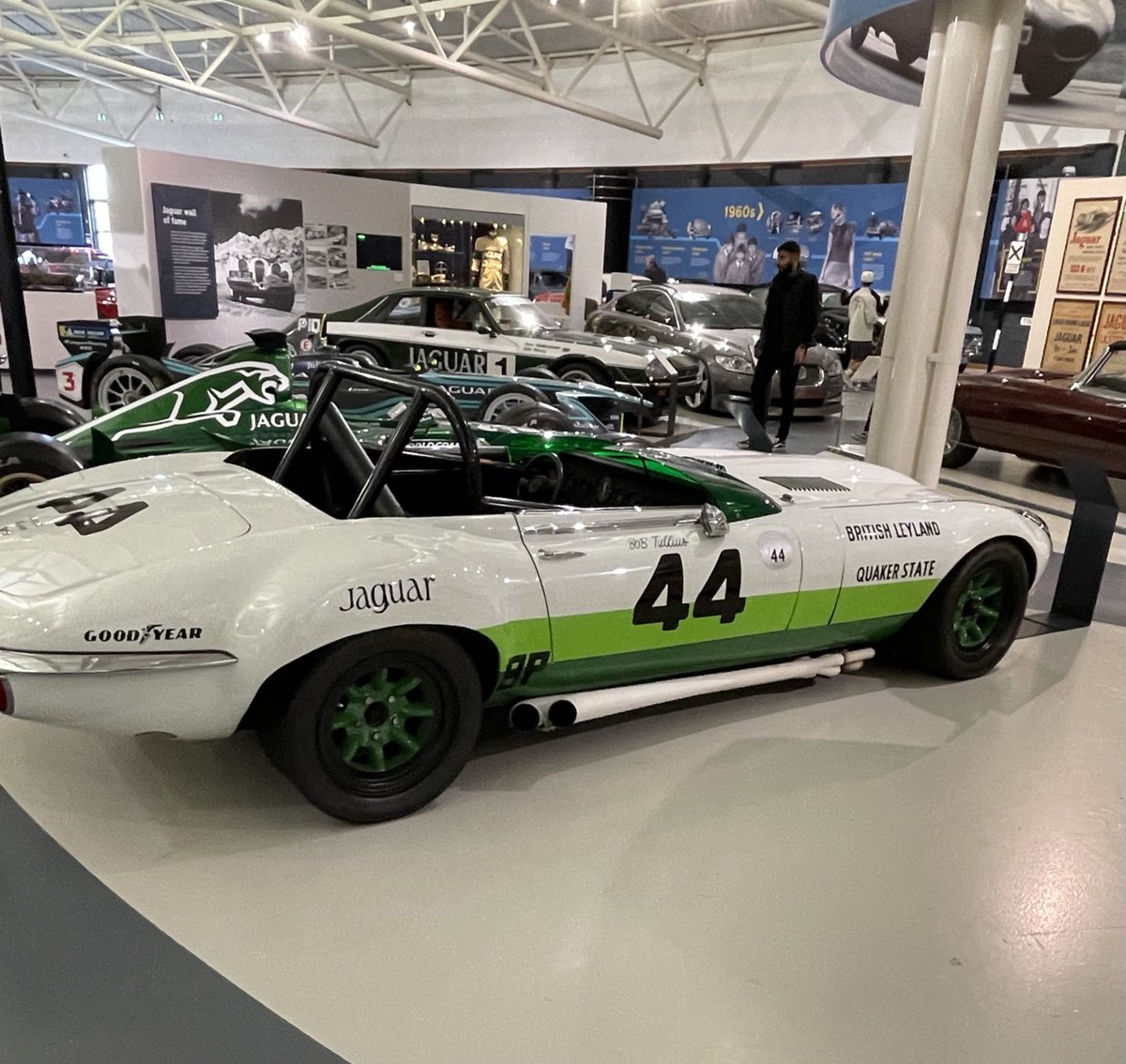
RIP great racer Bob Tullius.
(My photo from a visit to Jaguar-Daimler Heritage Trust)
24
May 1
We find ourselves facing a version of Heisenberg’s Principle as new ways to use AI are surfacing every day; we might be able to see where we are, but we can’t see where we are going, or how fast.
(Thanks for publishing my thoughts, @SymphonySummit .)
symphonyai.com/resources/blo…
32
Apr 30
On the latest Reach Your Do Point®: Luke Keultjes discusses value of mentorship for both mentors and mentees.
podcasts.apple.com/us/podcas…
21
Apr 29
How can AI support—not replace—the humans at the center of customer interactions?
searchunify.com/expert-hub/q…
25
Roy Atkinson retweeted
Apr 27
Service Management Maturity Models: A Practical, Evidence-Based Approach (Pros, Cons, & Framework)
itsm.tools/itsm-maturity-mod…
#ITSM
1
1
4
87
Apr 23
The Power of Mentorship: On the latest episode of Reach Your Do Point®, Luke Keultjes and I discuss the types of mentorship and what it can do for mentor and mentee.
Full video: youtu.be/8_TlMC6wPYU?si=K1OR…
1
47
Roy Atkinson retweeted

Apr 21
Organizational accreditation opens new doors.
Find out why it's a smart investment.
scopism.com/blog/is-organiza…
#Accreditation #SIAM #ScopismSIAMAssured #Scopism
1
1
48
Roy Atkinson retweeted

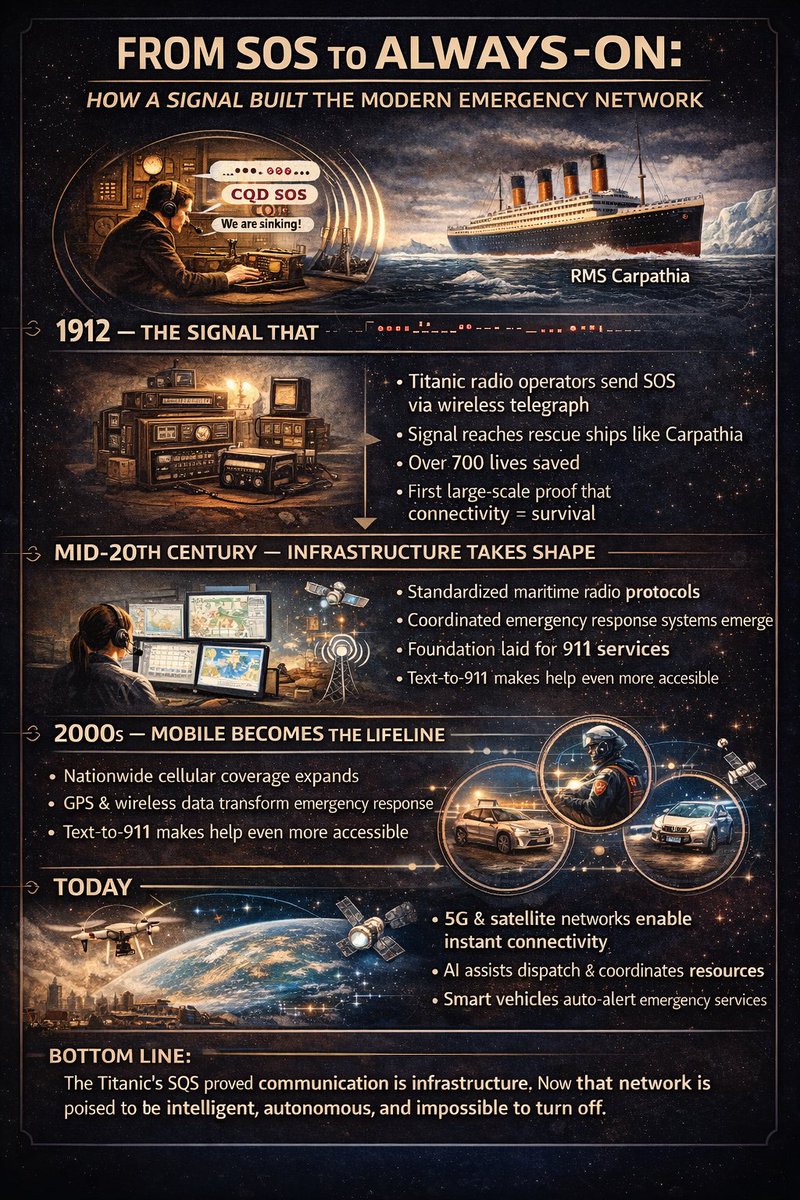
On April 15, 1912, the RMS Titanic was going down, and the most important room on the ship wasn't the bridge. It was the wireless room.
Jack Phillips and Harold Bride were still at their posts, headsets on, hands flying over the key, sending distress signals into the night. Not one message. Dozens. They repeated coordinates as the urgency climbed with every transmission. At one point they switched between CQD and the newer SOS signal, not caring about protocol, just trying to be heard. The power was fading. The ship was tilting. They kept transmitting anyway.
Miles away, the RMS Carpathia picked up the signal. Captain Arthur Rostron made the call that would define the night and ordered full speed through ice fields toward the wreck. That decision, triggered by a signal pulled out of the Atlantic air, saved more than 700 lives.
That was the moment connectivity stopped being a novelty and became infrastructure.
Fast forward more than a century and the principle hasn't changed, but the system around it has.
Today's emergency response runs on real-time, always-on networks powered by technologies like 5G. First responders don't just hear a call. They see the scene, share data instantly, and coordinate across agencies as events unfold. Carriers are now building dedicated lanes for that traffic. @TMobileBusiness T-Priority service, for example, gives first responders prioritized 5G access during emergencies, so the network holds up exactly when everyone else is trying to use it too.
What's changed even more is where that capability lives. It's no longer confined to ships, towers, or control rooms. It's in your pocket and on your wrist.
Devices like the Apple Watch can now send emergency signals via satellite when there's no cellular coverage. You can be off-grid, deep in the mountains or on a remote stretch of road, and still reach help.
That's a long way from Morse code in a dark radio room.
What comes next is already taking shape. Satellite-to-device becomes standard. Drones spin up temporary networks over disaster zones. AI helps triage incidents and route resources faster than any manual system could. The goal is simple and ambitious at the same time. No dead zones. No missed signals. No delay between distress and response.
On that night in 1912, two operators kept sending a signal as long as they could. More than a century later, we're still building systems to make sure that signal always gets through.
9
7
1,024