
We combine the creative strengths of science and engineering, setting the stage for a new era of exploration – of Earth, of space, and of the future.
- Tweets 11,454
- Following 755
- Followers 4,489
- Likes 7,322













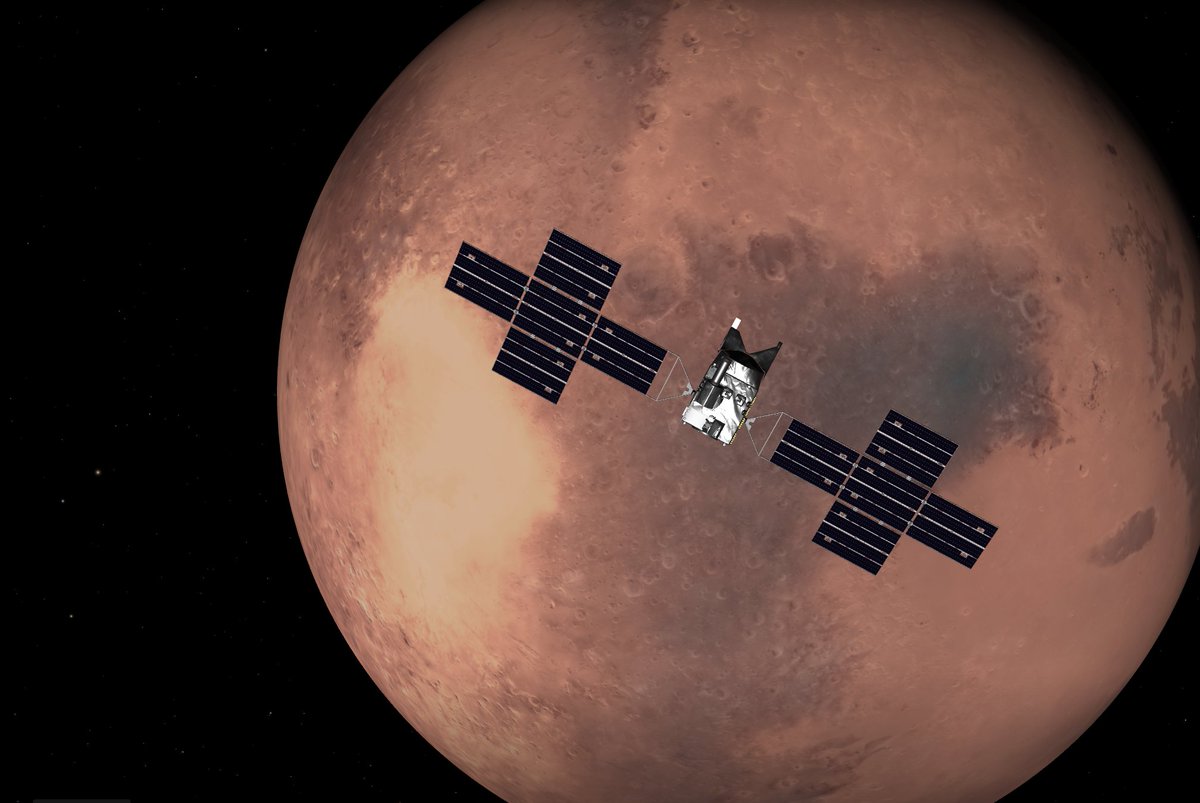
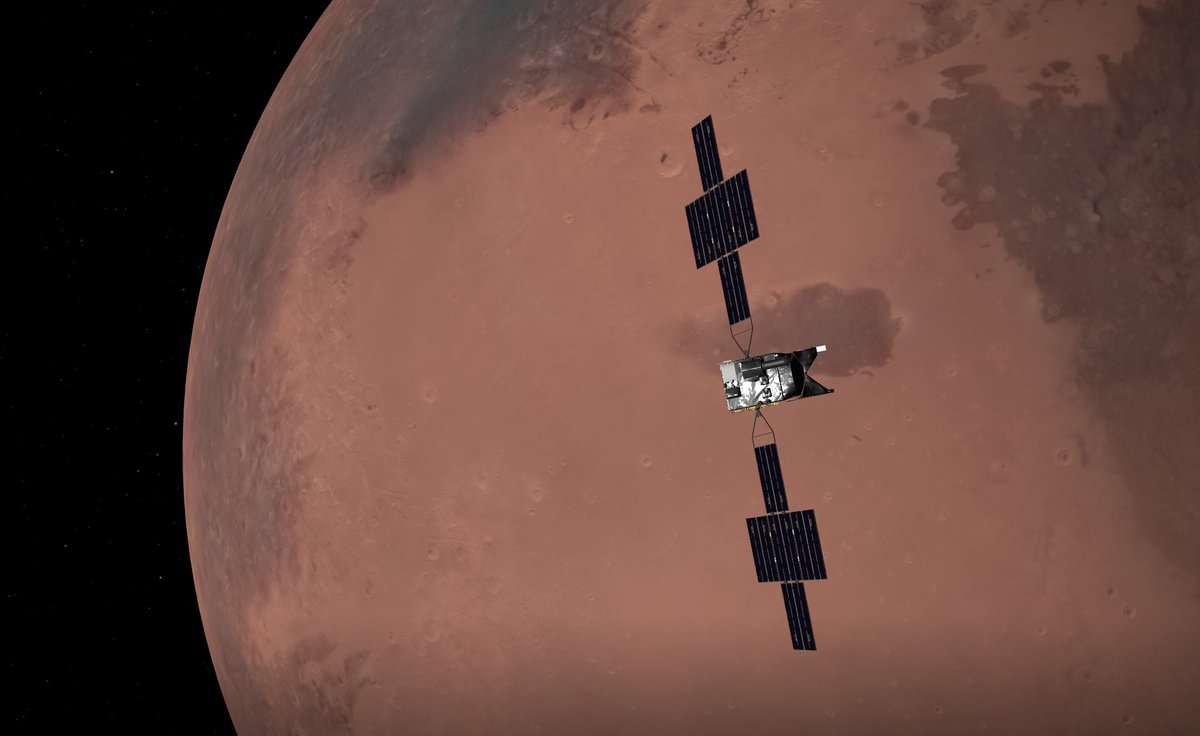
ALT Simulated view of the Psyche spacecraft, with its "wings" of solar panel arrays, passing above the surface of the planet Mars, now seen in nearly full phase.
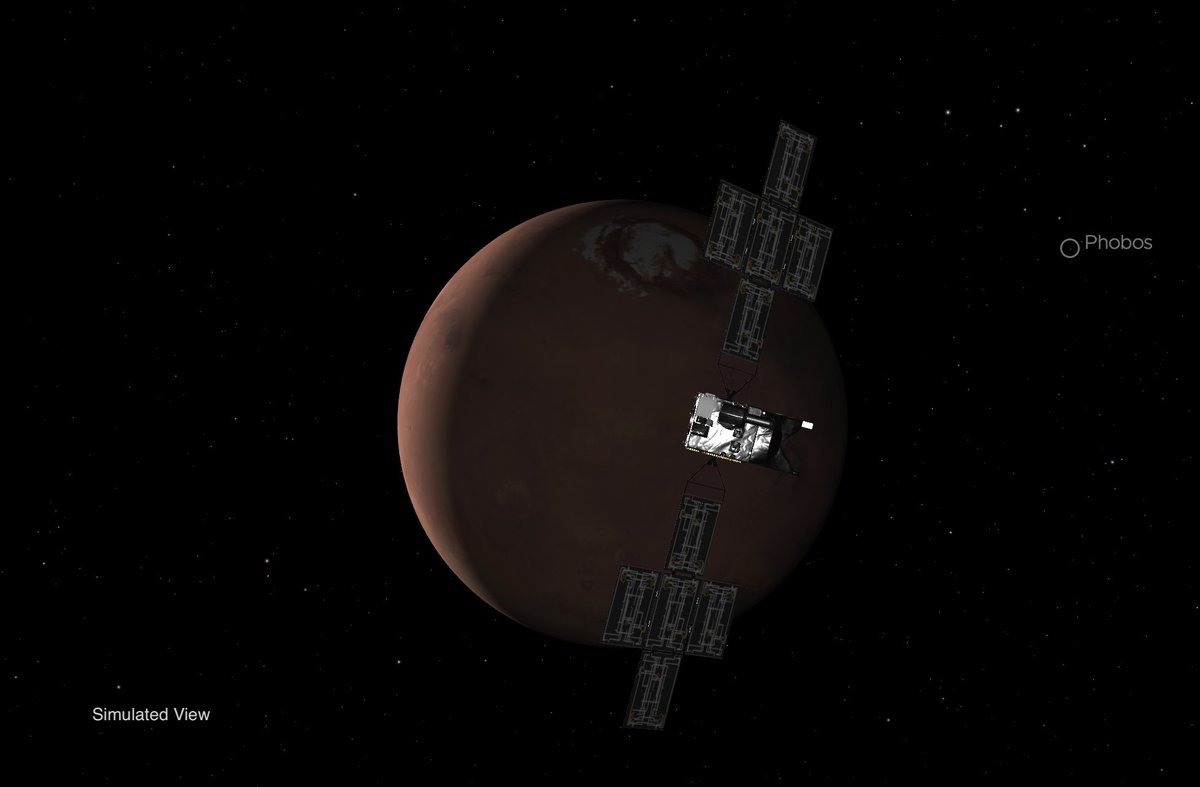
ALT Simulated view of the Psyche spacecraft, with its "wings" of solar panel arrays, approaching the planet Mars, seen in crescent phase.


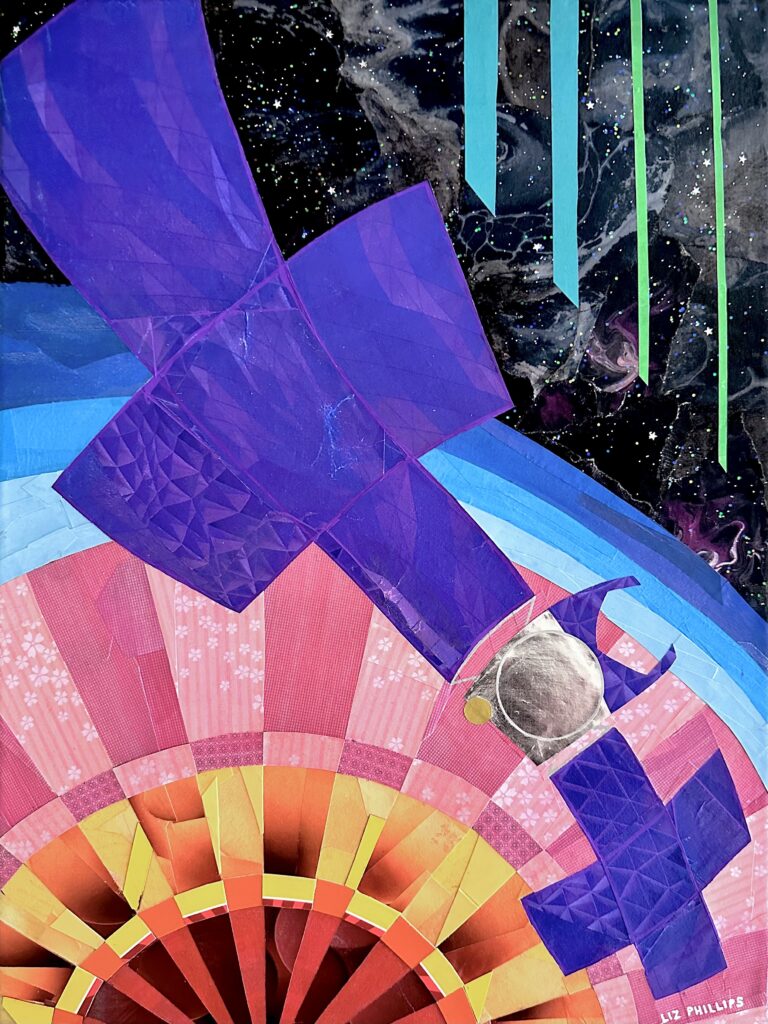
ALT A colorful paper collage made of sharp geometric shapes and smooth curves. The Psyche spacecraft has large purple solar panels stretching diagonally across the canvas. The background features a pattern of pink and orange concentric circles surrounded by black space and glittery stars. Credit: NASA/JPL-Caltech/ASU/Liz Phillips - Psyche Inspired

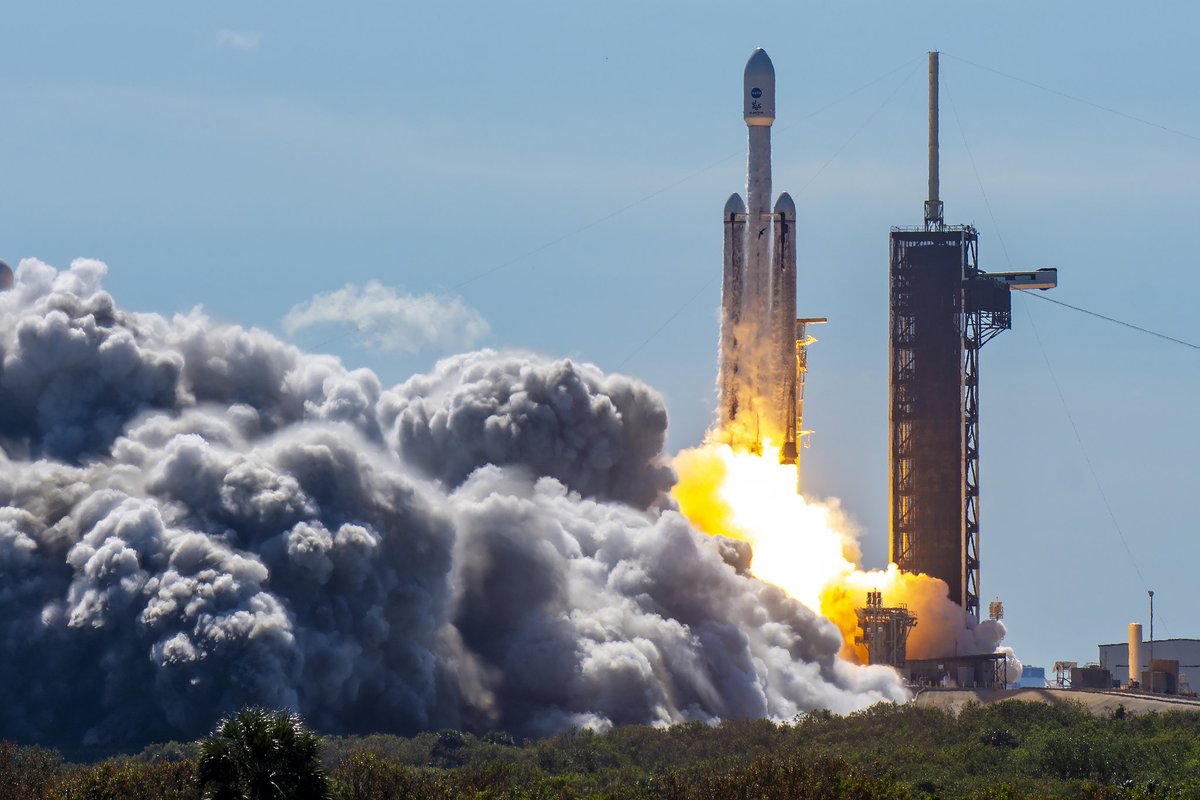
ALT A rocket with two side boosters rides a column of flame as it lifts off the launch pad on a sunny day. Billowing clouds of steam flow from the pad.


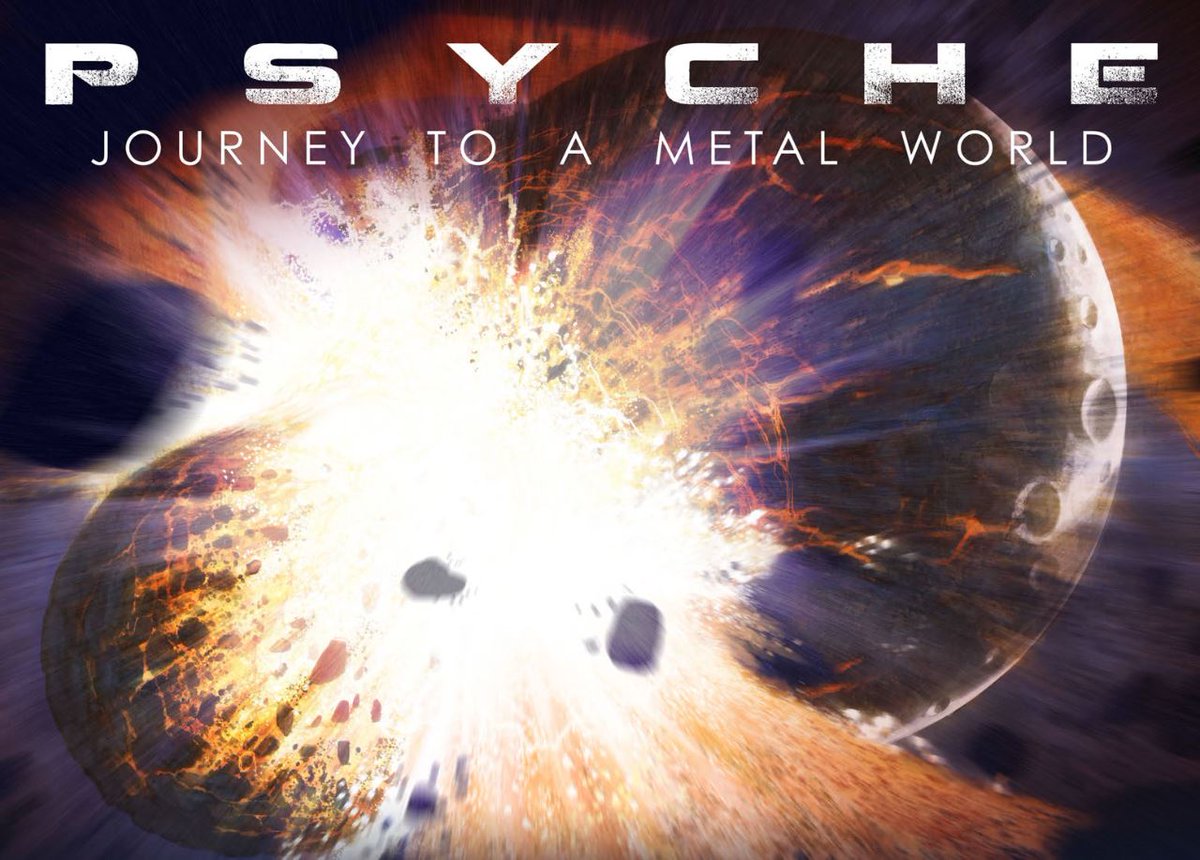
ALT A graphic shows a collision between two rocky celestial bodies. The site of their collision bursts into a bright white explosive light with multiple chunks of rock flying toward the center of the image. On the right, the larger celestial body is a purplish-blue color with pockmarks and cracks rippling from the crash. On the left is the smaller celestial body in a bright yellowish color with gray rocks. Across the top in white spaced out letters is the word "Psyche" and below it in smaller white text is "Journey to a metal world."
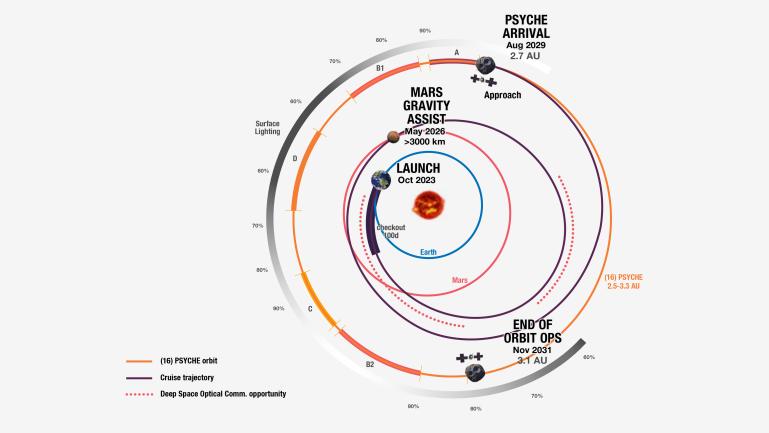
ALT A graphic showing the orbital path of the Psyche spacecraft with the sun right in the center of several different colored circles. A grayish white semi-circle shows the surface lighting based on degrees ranging from 90% at the top and going down 10% until it reaches 60%. The percentages climb up again to 90% and go down to 60% a second time. On the inside is an orange circle around the Sun, showing the Psyche asteroid's path. A purple line shows the orbital path of the Psyche spacecraft, starting from Earth in October 2023 and then looping toward Mars for a gravity assist in May 2026 and then circling back around to meet the Psyche asteroid in August 2029. A red dotted line along the purple Psyche spacecraft path also shows the Deep Space Optical Communications experiment aboard the spacecraft. One more icon along the orange Psyche path shows the end of operations in November 2031.

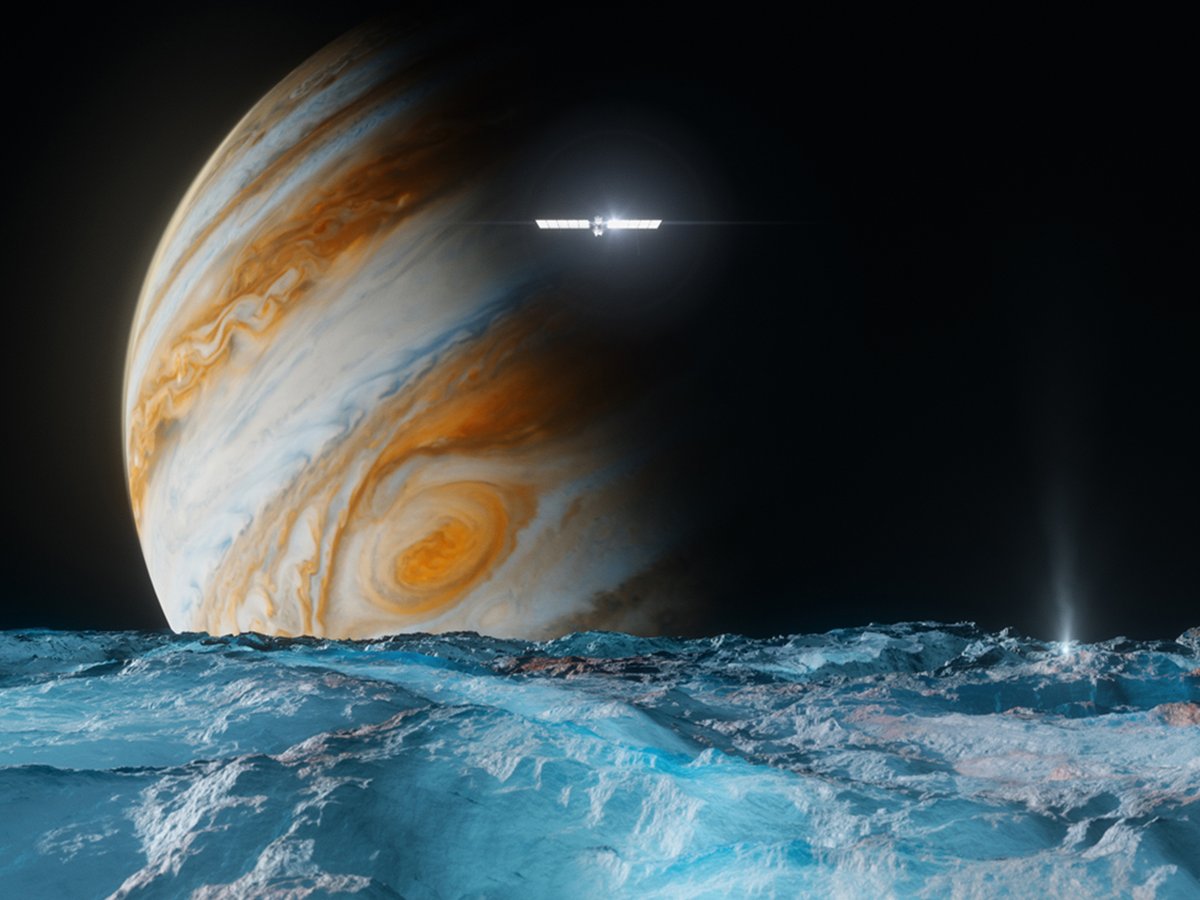
ALT Illustration of Europa Clipper spacecraft flying above the surface of Jupiter's moon Europa. The large gas giant planet Jupiter, with swirls of color and the Great Red Spot seen, appears in the background. The spacecraft appears small and bright with solar arrays extended on each side. Europa's surface is frozen ice. Credit: NASA JPL
ALT A graphic shows a collision between two rocky celestial bodies. The site of their collision bursts into a bright white explosive light with multiple chunks of rock flying toward the center of the image. On the right, the larger celestial body is a purplish-blue color with pockmarks and cracks rippling from the crash. On the left is the smaller celestial body in a bright yellowish color with gray rocks. Across the top in white spaced out letters is the word "Psyche" and below it in smaller white text is "Journey to a metal world."
ALT A graphic showing the orbital path of the Psyche spacecraft with the sun right in the center of several different colored circles. A grayish white semi-circle shows the surface lighting based on degrees ranging from 90% at the top and going down 10% until it reaches 60%. The percentages climb up again to 90% and go down to 60% a second time. On the inside is an orange circle around the Sun, showing the Psyche asteroid's path. A purple line shows the orbital path of the Psyche spacecraft, starting from Earth in October 2023 and then looping toward Mars for a gravity assist in May 2026 and then circling back around to meet the Psyche asteroid in August 2029. A red dotted line along the purple Psyche spacecraft path also shows the Deep Space Optical Communications experiment aboard the spacecraft. One more icon along the orange Psyche path shows the end of operations in November 2031.
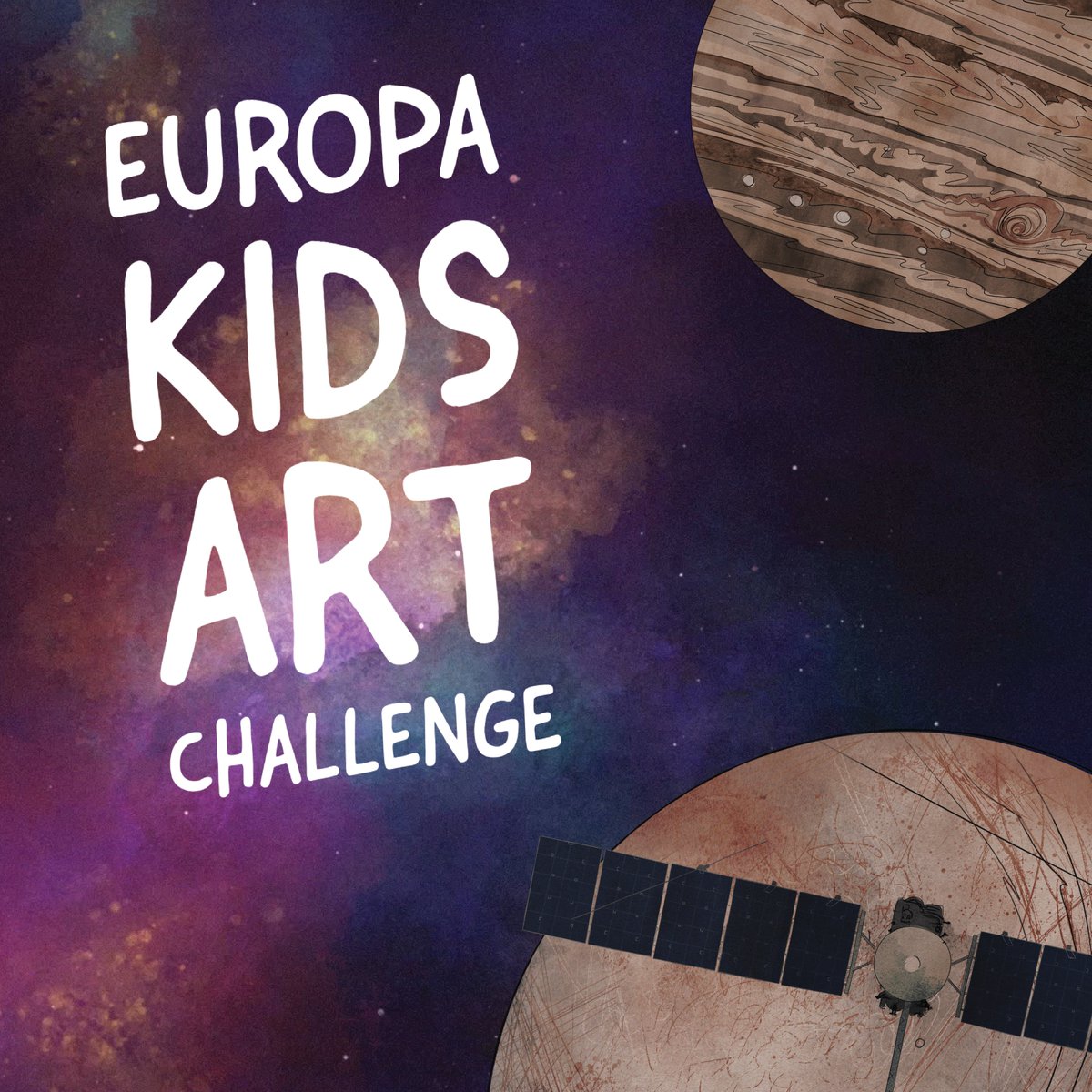
ALT A promotional image for the 'Europa Kids Art Challenge' featuring a cosmic background filled with deep purples and oranges, resembling a nebula. In the foreground, there is an artistic representation of Jupiter's moon Europa, with a cracked and textured surface. A space probe with solar panels is positioned near the bottom right, suggesting exploration. The text 'Europa Kids Art Challenge' is written in bold, white letters, standing out against the colorful space backdrop. A smaller depiction of Jupiter is partially visible in the top right corner.
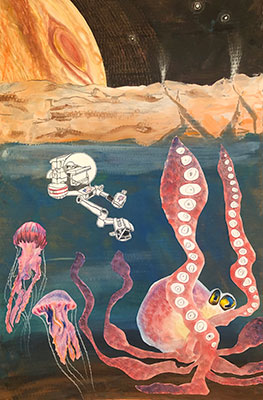
ALT A child's drawing showing the interior ocean of Europa populated with a large pink octopus, jellyfish, and a robotic probe in the water. Above the ocean is a cutaway view of Europa's icy crust with erupting geysers. Jupiter and a starry black sky are visible beyond.
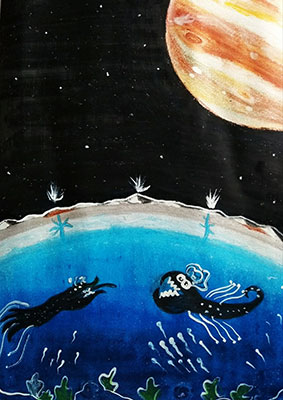
ALT A child's drawing showing the interior ocean of Europa populated with black, toothy deep sea creatures. Above the ocean is a cutaway view of Europa's icy crust with erupting geysers. Jupiter and a starry black sky are visible beyond.

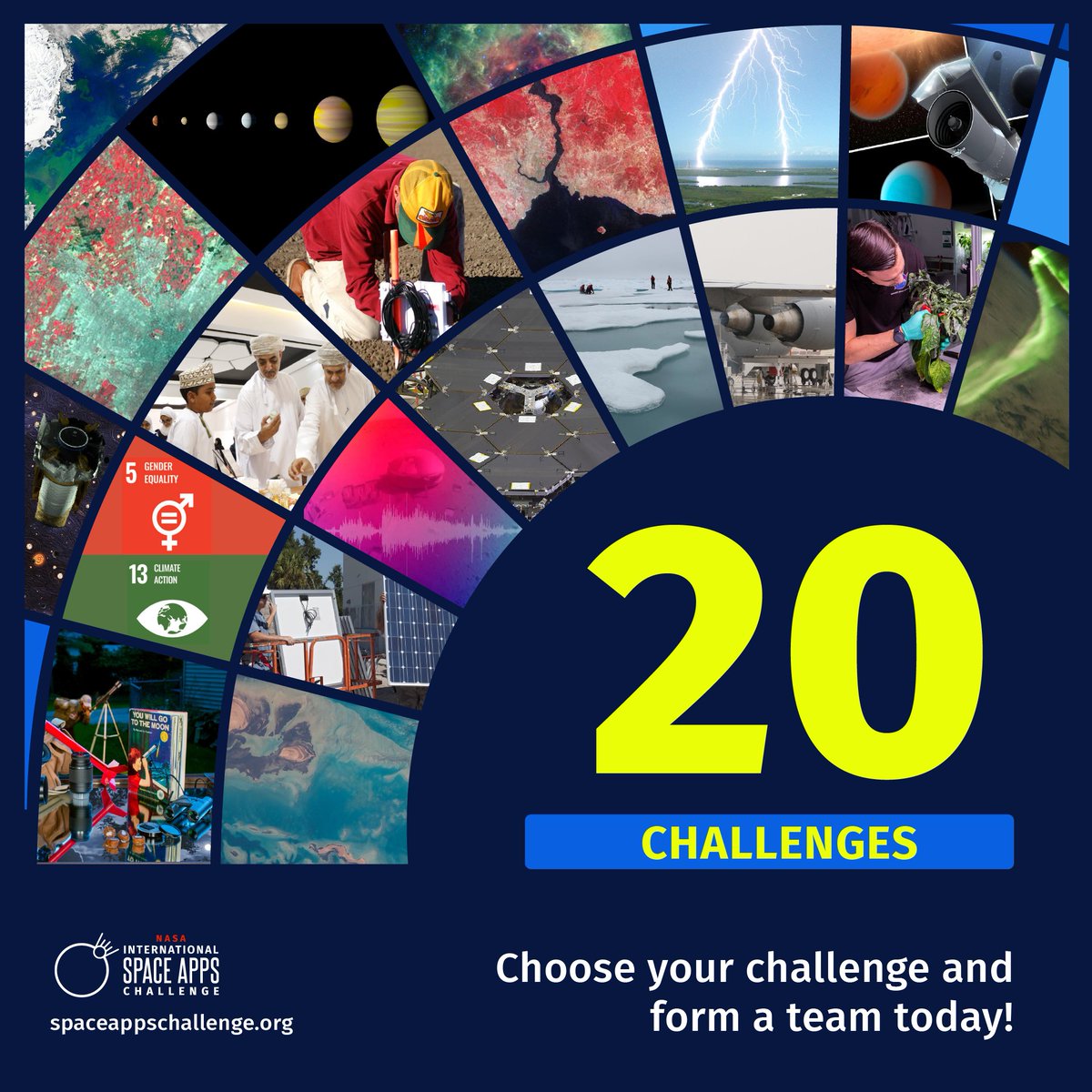
ALT Collage of images pertaining to the challenges on a dark blue background. 20 in large yellow letters, with challenges just below in smaller yellow letters inside of a light blue rectangle. NASA Space Apps logo in bottom left with spaceappschallenge.org just below in white letters. Choose your challenge and form a team today! in bottom right in white letters.

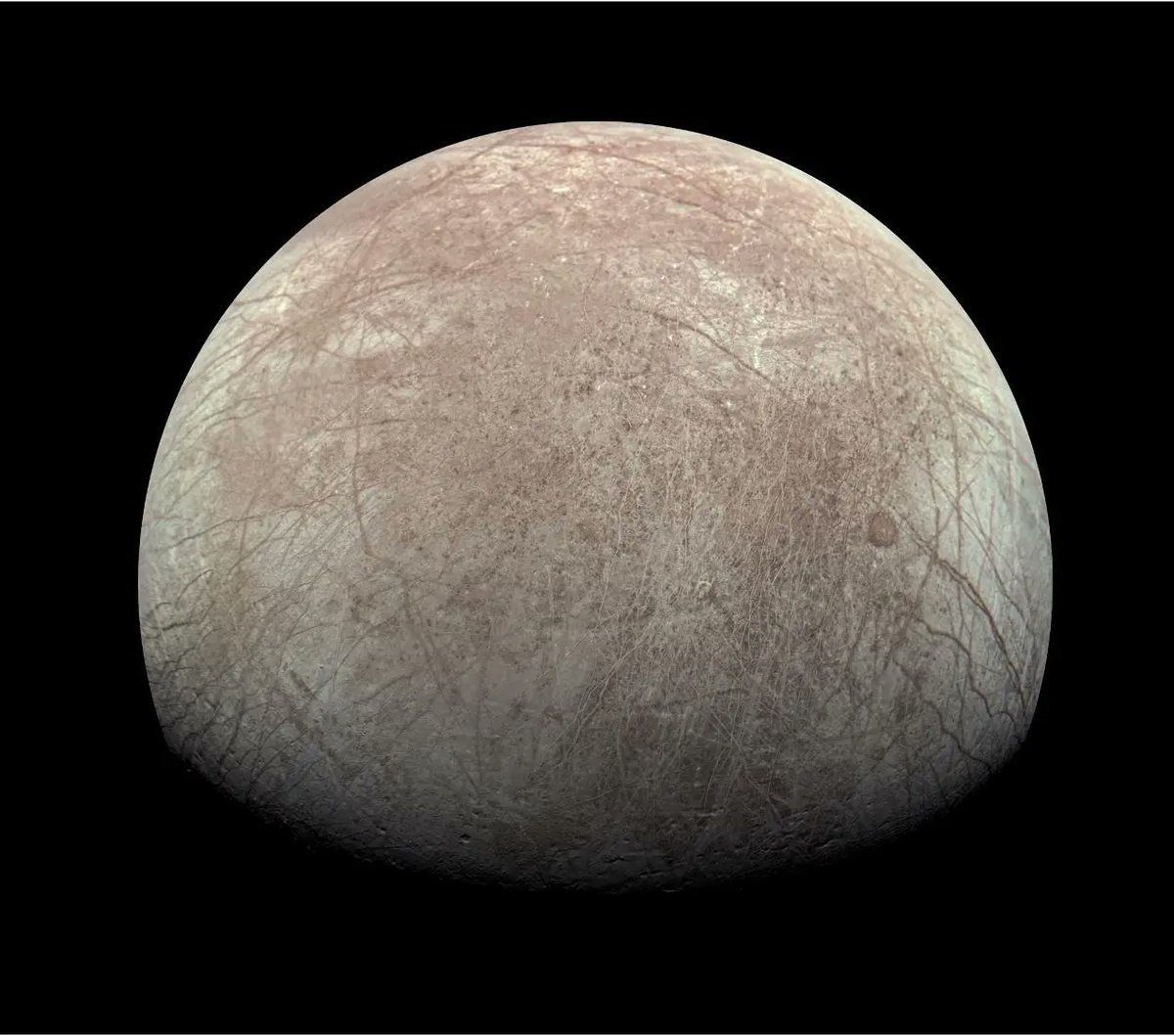
ALT This view of Jupiter's icy moon Europa was captured by JunoCam, the public engagement camera aboard NASA's Juno spacecraft, during the mission's close flyby on Sept. 29, 2022. The picture is a composite of JunoCam's second, third, and fourth images taken during the flyby, as seen from the perspective of the fourth image. North is to the left. The images have a resolution of just over 0.5 to 2.5 miles per pixel (1 to 4 kilometers per pixel). As with our Moon and Earth, one side of Europa always faces Jupiter, and that is the side of Europa visible here. Europa's surface is crisscrossed by fractures, ridges, and bands, which have erased terrain older than about 90 million years. Citizen scientist Kevin M. Gill processed the images to enhance the color and contrast. NASA/JPL-Caltech/SwRI/MSSS Image processing: Kevin M. Gill CC BY 3.0