Norwegian, in public administration since 1997.
Joined August 2015
- Tweets 4,144
- Following 926
- Followers 370
- Likes 83,327
230 Photos and videos

Svein Tore Ulset 🇳🇴 retweeted

12 Dec 2025
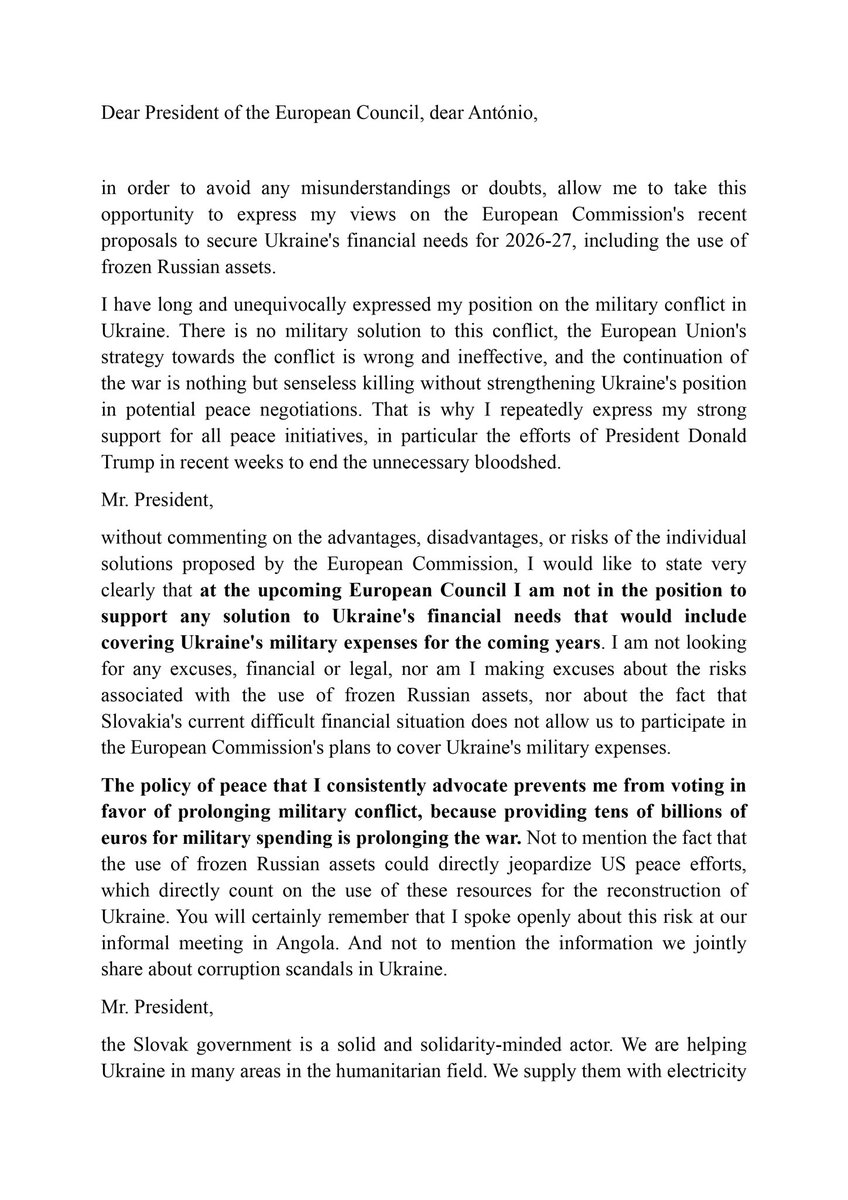
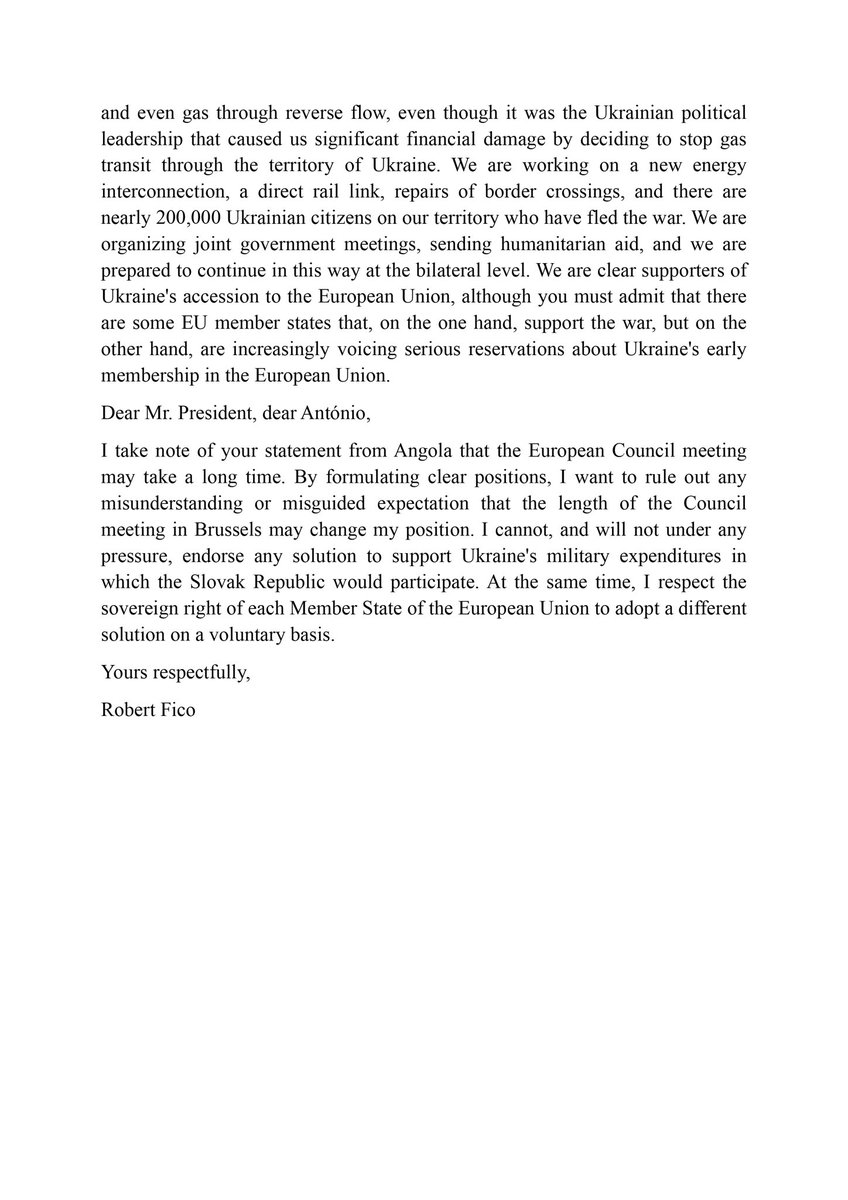
Today I held an almost hour-long phone conversation with the President of the European Council, A. Costa. I fully respect him, but while he spoke about money for the war in Ukraine, I kept repeating the senseless daily killing of hundreds to thousands of Russians and Ukrainians.
If for Western Europe the life of a Russian or a Ukrainian is worth shit, I do not want to be part of such a Western Europe. I told A. Costa that I will not support anything, even if we have to sit in Brussels until the New Year, which would lead to support for Ukraine’s military expenditures. I am ready, as Prime Minister of the Slovak Republic, to support Ukraine in its reconstruction on the basis of bilateral negotiations between the Slovak and Ukrainian governments, but I reject senseless killing.
In this spirit, I sent a letter to the President of the European Council, A. Costa, and to all the prime ministers of the EU member states, which you can read here.
1,211
2,097
7,989
402,924
Svein Tore Ulset 🇳🇴 retweeted

8 Dec 2025
"... [German] the industrial economy is haemorrhaging 10,000 jobs a month, the government’s employment agency says. For the first time since records began, manufacturing in Europe’s production heartland contributed less than 20 per cent to Germany’s economy last year, according to Eurostat data.
Industrialists gripe that working cultures, energy costs and bureaucracy are killing the country’s competitiveness. International Labour Organization statistics show that the average German works 29.6 hours a week, compared with 36.1 hours in the United States and 44.8 hours in China.
Studies show that industrial electricity prices in Germany are around three times higher than those in the US and China, amid the dual shock of the nuclear phase-out and the collapse of Russian gas supplies."
-SCMP
But they prefer to spend as much as 5% of GDP - 44% of the German federal budget - on arms and defence, instead sitting down with Russians and reaching a new deal for Europe? These people are suicidal. When has German economic hardship ever had a good political outcome? The answer is 'almost never'. The most likely outcome is an AfD government, with all that entails, including euroscepticism. But the AfD at least will be willing to deal with the Russians - and will possibly have US help in doing so.
3
7
29
764
Svein Tore Ulset 🇳🇴 retweeted

26 Nov 2025
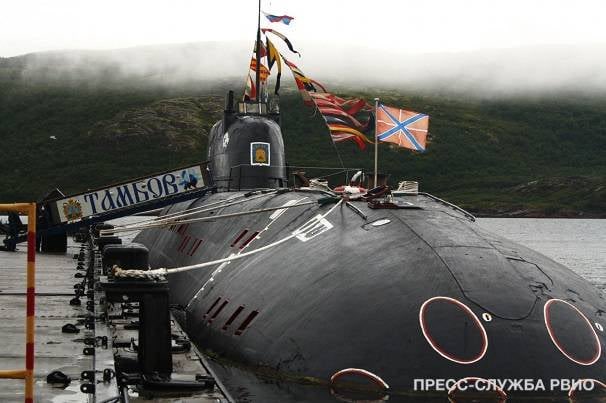
THE SUBMARINE THAT EMBARRASSED NATO IN THE MIDDLE OF A DRILL
Imagine the scene: dozens of warships from the largest military alliance on the planet, helicopters buzzing, sonars sweeping the sea, confident commanders in the operations center toasting to the “total success” of the exercise. Suddenly, right in the middle of the formation, like a late guest arriving at a party, a Russian submarine surfaces, opens its hatch, and requests… a doctor.
This is exactly what happened on February 29, 1996, in the North Atlantic, during NATO's “Strong Resolve” exercise. And, folks, it still stings the Western ego to this day.
The intruder was the K-448 Tambov, a nuclear Victor-III from the Russian Northern Fleet. For days, it circulated among American, British, Norwegian, and Dutch frigates without a single sonar, helicopter, or intelligence officer detecting its presence. Zero. Nothing. A 7,500-ton, 106-meter-long ghost wandering in NATO's backyard like it was having breakfast.
When the Russian commander decided to surface—because a sailor was injured and needed urgent medical evacuation—the shock left the alliance's officers speechless. An American admiral later confessed privately, “It was as if the devil had walked into our war room.”
The immediate response was humanitarian: a U.S. helicopter evacuated the injured crew member to the mainland. But the moral damage had already been done. NATO had to swallow the lesson: even in 1996, five years after the end of the Soviet Union, Russian submarines could still do as they pleased in waters the West considered “safe.”
The British press called it “the greatest naval embarrassment since the Cold War.” The Pentagon ordered a review of all anti-submarine warfare protocols.
Nearly 30 years later, fourth-generation classes, like the Yasen and Borei, which entered service starting in 2013 and are being produced at an accelerated rate, have enhanced this technology. These vessels incorporate pump-jet propulsion—imagine water jetting instead of rotating propellers, eliminating the cavitation "buzz" that betrays older submarines. On the Yasen-M, the latest (like the Krasnoyarsk, commissioned in 2023), the hull is covered with thousands of advanced rubber plates, featuring internal channels that dissipate sound waves like a giant sponge.
The result? An acoustic signature so low that naval analysts refer to it as "almost inaudible," even at submerged speeds of up to 35 knots. Only the American Virginia-class submarines rival these Russian submarines.
But the main issue is that this Russian technology is being shared with the Chinese, ranging from silent nuclear propulsion to anechoic coatings that absorb sound waves, and hull designs that reduce noise to a whisper.
All of this is aimed at enhancing the Type 096, the new Chinese SSBN that promises to be the West's stealth nightmare. China intends to expand its capacity and produce 5-6 submarines per year.
If I know a bit about the Chinese military industry, they will improve the Russian technology in new versions of the Type 096.
And NATO? To this day, it remains very cautious when it comes to Russian submarines and closely monitors the technological transfer to the Chinese.
63
241
1,101
128,874
Svein Tore Ulset 🇳🇴 retweeted

17 Nov 2025
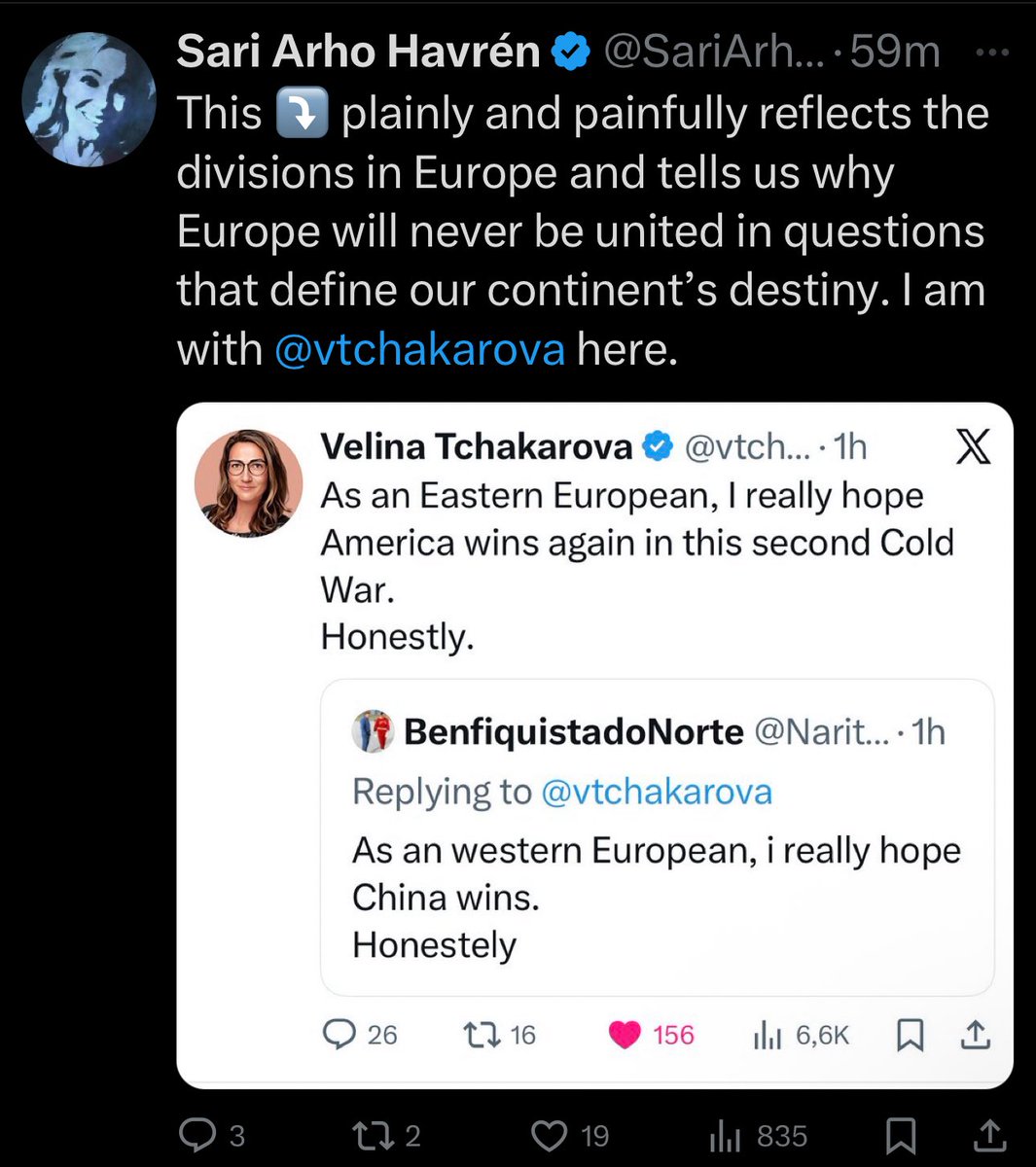
Dear Eastern Europeans,
The reason the Americans won the first Cold War is because their system had the material advantage. Since that victory, they have not maintained their advantage but lived off legacy.
China winning or not winning will depend on who has the material advantage. But this I will say…even if they win, they will not come to Eastern Europe and make you adopt their system: not at the point of a gun, nor with soft influence or NGO. The most they will do is periodically ask you if they can help you build some infrastructure/battery plants etc.
57
23
240
18,351
Svein Tore Ulset 🇳🇴 retweeted

10 Nov 2025
Link below in first comment:
1
3
5
960

2 Nov 2025
When Europe’s New Political Elite Turned Their Back on Reality.
A new European elite governs as if facts no longer matter — and punishes those who point it out.
If you’ve sensed a widening gap between political speeches and real life, this article explains why.
steigan.no/2025/11/hvordan-e…
2
46
Svein Tore Ulset 🇳🇴 retweeted
21 Oct 2025
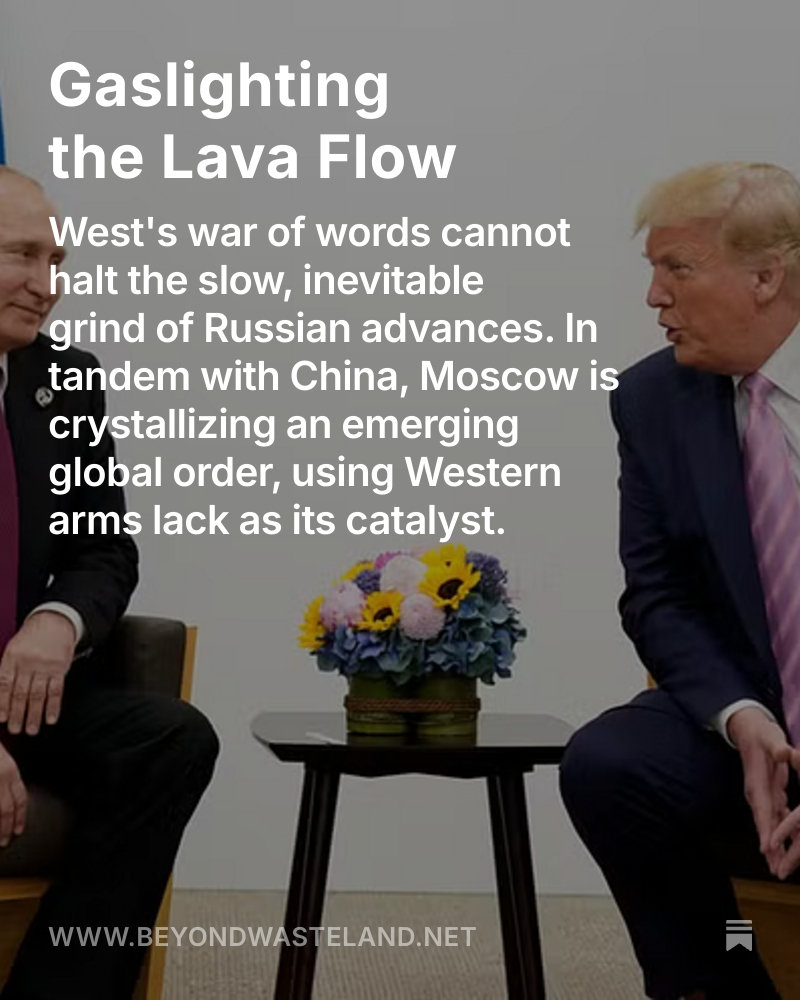
Link in first comment:
1
4
9
726
Svein Tore Ulset 🇳🇴 retweeted

17 Oct 2025
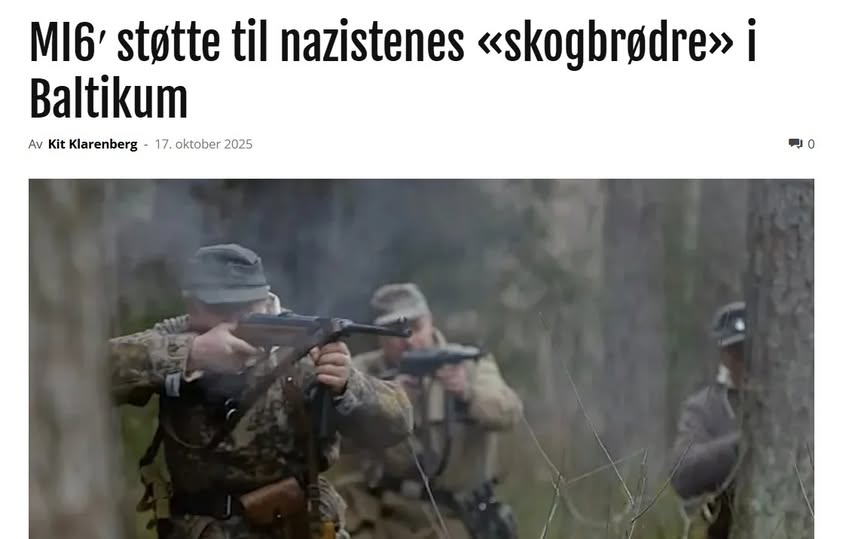
De "redaktørstyrte" mediene, NATO-mediene, hvem styrer dem egentlig? For de skriver om det samme og mener det samme om det meste.
Da det på 1990-tallet ble bestemt at de baltiske landene - Estland, Latvia og Litauen - skulle bli med i NATO (og EU), ble det plutselig mye positiv omtale av disse landene i norske/vestlige medier. Man ble blant annet oppfordret til å reise dit, og det ble snart ganske vanlig å gjøre det.
Denne trenden var svært merkbar, nærmest slitsom, slik at komikerne Bård Tufte Johansen og Harald Eia lagde en parodi på den.
Jeg tenkte ikke over det da. Men mange år etterpå, da jeg begynte å interessere meg for hvorfor og hvordan land blir med i NATO, begynte jeg å tenke på det vi opplevde på 1990-tallet og inntil landene ble med i NATO i 2004, som reklame eller propaganda som skulle gjøre oss positive til at de ble med i NATO.
Det negative ble skjøvet under teppet. Og man skal jo ikke dyrke det negative. Samtidig er det opplagt at både politikere og andre hadde blitt mer skeptiske hvis de hadde visst det Kit Klarenberg tar opp i denne artikkelen.
"Kritisk gransking av Skogbrødrenes folkemordsarv er imidlertid kriminalisert over hele Baltikum. Akademikere, journalister og advokater har blitt fengslet for å avsløre sannheten (det kan virke som om det er forbudt i Norge også) .
Den samme lovgivningen forbyr dessuten enhver offentlig diskusjon om hvordan de jødiske befolkningene i Estland, Latvia og Litauen nærmest ble totalt slaktet ned, i stor grad før Wehrmacht ankom i juni 1941 under Operasjon Barbarossa. Vestmaktene er aggressivt medskyldige i denne historiske tildekkingen". steigan.no/2025/10/mi6-stott…
Skogsbrødrenes aktivitet var naturligvis viklet inn i motstand mot det de så på som Sovjetunionens okkupasjon. Så bildet er ikke svart/hvitt. Men det er ikke noe argument for hemmelighold om massakrer på jøder i dag.
1
3
31
399
Svein Tore Ulset 🇳🇴 retweeted

4 Oct 2025
When the civilians support the “aggressors” then you aren’t a defender.
1
2
16
503
Svein Tore Ulset 🇳🇴 retweeted
20 Oct 2025
To understand the structure of Putin's demands, it's useful to apply the historical framework of the Franco-Prussian War (1871), separating the concepts of a ceasefire, an armistice, and a peace treaty.
The goal for Kiev and its Western backers is a simple ceasefire with no preconditions. This is a strategic play to freeze the conflict in a Korean-style stalemate, which would allow a sovereign Ukraine to re-arm and, eventually, proceed with NATO integration. From Moscow's perspective, this is an absolute non-starter, as it would legitimize a long-term, NATO-aligned enemy on its border.
What Russia is insisting upon is not a ceasefire, but a capitulatory armistice--a signed agreement that codifies Ukrainian defeat combined with the physical act of withdrawal from at least the Donbass. This is the modern equivalent of Bismarck's demand for a Prussian victory parade through Paris: a humiliating, public, and physical act of submission. Such a military pullback and signed agreement would mark irreversible and ironclad admissions of defeat. But these moves would only be finalized by a formal peace treaty
A potential Russian concession on the table seems to be a preliminary ceasefire conditional on a Ukrainian withdrawal from Donbas, along with a public statement agreeing to critical Russian terms, which would then lead to formal armistice talks. However, this is a dangerous gambit for Moscow. It provides no guarantee that Kiev would follow through on the subsequent armistice negotiations. While Russia could simply restart the war, doing so after having paused would carry significant political and military costs, making this path a bit "messy."
In either case, only once an armistice is signed and the symbolic acts of capitulation are performed can the final stage begin. Russia requires a new, compliant Ukrainian government--akin to the French Third Republic that succeeded Napoleon III--to legally enact the provisions of a final peace treaty. This new government would be tasked with the legislative formalities that the current Zelensky government cannot constitutionally perform: the official cession of sovereign territory, enshrinement of neutrality, and other Kremlin demands.
In terms of a timeline, Putin would surely like to complete this process by early 2028 in order to avoid the risk of a Democrat coming to power in the US and spoiling the party.
3
8
20
1,647
Svein Tore Ulset 🇳🇴 retweeted

19 Oct 2025
Borgund Stave Church in Norway was built sometime between 1180 and 1250 AD.
It's part of of a group of medieval churches almost only present in Scandinavia, built with wood only and without using a single nail
[📹 archeojobs]
834
5,741
51,999
2,219,462
Svein Tore Ulset 🇳🇴 retweeted
17 Oct 2025
No instrument ever made is greater than the human voice. Monica Schwartz.
1
1
13
517

Hatt en lang pause fra X! Prøver meg igjen. Starter med hvordan vi kan løse ungdomskriminaliteten. Det første spørsmålet må være: Hvor har vi som politikere sviktet? Det er mye lettere å skyve 13 år gamle gutter foran seg enn å svare på spørsmålet. Men👇🏽
aftenposten.no/meninger/deba…
21
3
29
2,630
Svein Tore Ulset 🇳🇴 retweeted
9 Oct 2025
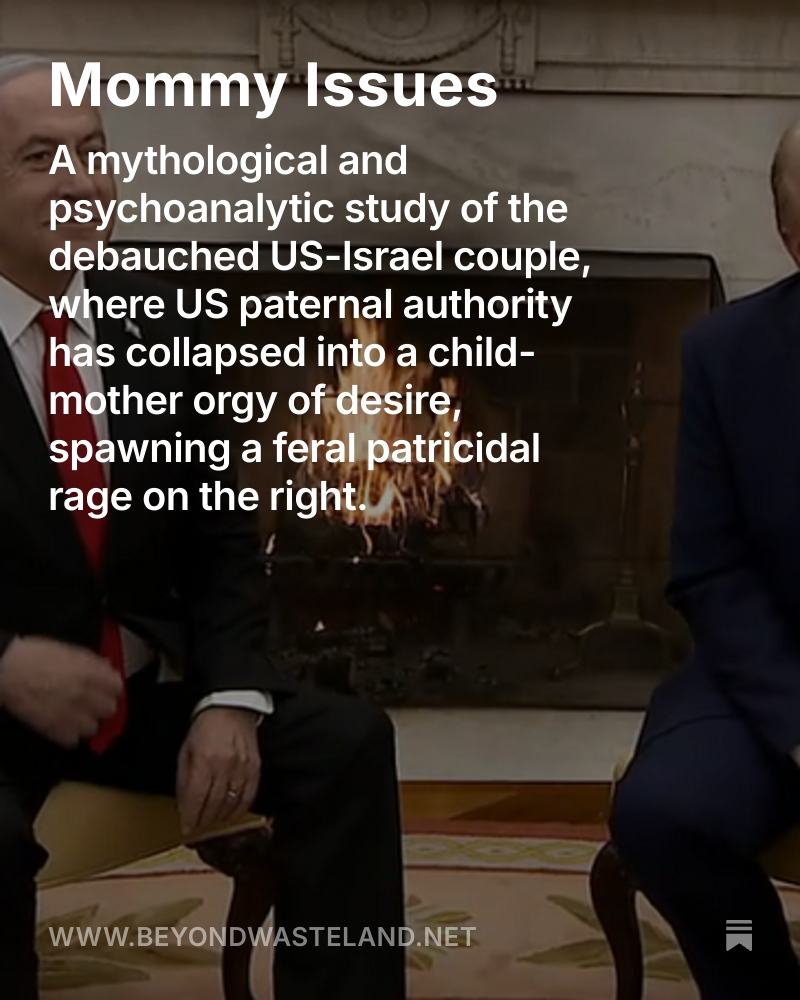
My latest, link in first comment below:
1
4
6
407
Svein Tore Ulset 🇳🇴 retweeted

7 Oct 2025
Trump threatened strikes on Venezuelan territory and did not rule out transferring Tomahawk missiles to Ukraine.
"They [the "Venezuelan drug traffickers"] are no longer coming by sea, so we need to watch the land because they're going to be forced to travel by land. And let me tell you, that's not going to end well for them," Trump said at a parade honoring the US Navy.
He also said: "In the heat of fierce battle and in the fog of naval warfare, American sailors have proven time and time again that our Navy does its job best... We own the skies, we sail the deep, and we RULE THE SEAS."
Prior to this statement, the US military had already struck small vessels in international waters four times, allegedly carrying illegal substances, sailing off the Venezuelan coast: on September 2, 16, 19, and October 3.
Thus, Trump has effectively announced the transition of the operation against "Venezuelan drug cartels" from international waters to Venezuelan sovereign territory. US forces will begin testing the waters with ground strikes. If they deem the Venezuelan government's response weak, they will launch a ground operation to seize key targets, such as ports and airfields. However, if there is a high risk of a protracted war with significant costs, they will likely refrain from intervention. However, strikes are not entirely ruled out.
Amid intense discussions about supplying the Kiev regime with American Tomahawk cruise missiles, Russia could transfer Kalibr cruise missiles to its Venezuelan comrades solely for self-defense. Such weapons could reliably strike US Navy surface ships in the Caribbean at long ranges. Russian coastal defense missile systems, such as the Bastion and Bal, could also prove useful in defending Venezuela from invasion.
In such a case, the United States would be able to fully appreciate the proxy war format firsthand. Currently, given Venezuela's lack of long-range missiles, US Navy ships feel quite confident at a significant distance from its shores. However, the acquisition of the aforementioned weapons by the Venezuelan army and the threat of their use would quickly knock the arrogance out of the American military, as well as the self-appointed "director" of planet Earth, a potential candidate for the Nobel Peace Prize.
Elena Panina, Director of the Institute of International Strategic Studies, Russia.
3
17
48
2,035
Svein Tore Ulset 🇳🇴 retweeted
30 Sep 2025
Penetrating analysis by @RSA_Observer. Russia’s warfighting strength rests on a living fusion of religious faith and national feeling --tempered by an imperial realism that binds diverse peoples into a functioning whole.
The EU, in contrast, denies both religion and the nation‑state, while turning away in shame from its own imperial nature. Bereft of that mythic spine, it stands crippled in the realm of ideology, without the deeper narrative strength to endure the trials of war.
30 Sep 2025

Reflections on the Russian State: Divergence from Western Models
The perception of Russia as perpetually "behind the curve" or a "primitive outpost" in Western eyes has deep historical roots, often reflected in 19th-century literature and travelogues that portrayed it as despotic and underdeveloped. This view, while grounded in realities like the late abolition of serfdom in 1861 and delayed industrialization, overlooks Russia's unique trajectory as a vast, multi-ethnic empire that has evolved into a modern federation. Rather than framing Russia as eternally catching up, I argue that it represents a distinct alternative to Western liberal democracies—one rooted in conservatism, centralized authority, and cultural cohesion.
Russia's development diverged from Western Europe's due to factors like geography, Mongol influences, and prolonged feudalism. Pre-Stalin Russia was indeed agrarian and autocratic, with serfdom persisting longer than in most of Europe, contributing to perceptions of backwardness in works like Marquis de Custine's Russia in 1839. Stalin's forced industrialization in the 1930s propelled Russia into modernity, albeit at immense human cost, transforming it into a superpower during the Soviet era.
Today, Russia is not merely "catching up" but charting a different path. As a federation spanning 11 time zones and encompassing over 190 ethnic groups (with ethnic Russians comprising about 80% of the population), it retains imperial legacies in its governance. This multi-ethnic composition necessitates a federal structure with 22 ethnic republics offering limited autonomy, such as Tatarstan or Chechnya, which can foster cultural preservation and stability.
In contrast to simplistic narratives of perpetual lag, Russia's history demonstrates resilience through adaptation, blending continuity with change. Alexander Dugin's assertion that "time does not have to move forwards" challenges the Western teleological view of history as inexorable progress toward liberalization and individualism. Dugin interprets this as validating conservative, traditional societies that prioritize collective identity over liberal reforms. His philosophy critiques modernism's three pillars—liberalism, communism, and fascism—advocating a "fourth political theory" that emphasizes multipolarity, cultural sovereignty, and resistance to globalism.
Russia's autocratic governance is often attributed to its imperial heritage, requiring strong central control to manage ethnic diversity. Unlike Western nation-states, Russia functions as a federation where ethnic republics enjoy cultural and linguistic rights, contributing to relative coexistence among its multi-faith population (Orthodox Christians, Muslims, Buddhists, etc.). This model can be seen as a strength: it has prevented large-scale ethnic conflicts post-Soviet collapse, unlike in Yugoslavia, by balancing autonomy with federal oversight. However, this requires acknowledging weaknesses. Centralization can suppress dissent, leading to accusations of Russification and unequal treatment—e.g., limited autonomy for non-territorial minorities and suppression of separatist sentiments in regions like the North Caucasus.
Comparatively, Western multiculturalism has increasingly questionable outcomes. Critics like David Cameron declared it a "failure" in 2011, citing segregation and radicalization in the UK and Germany. Russia's approach may offer stability through authority, while Western models promote individual rights at the expense of cohesion and freedom (see for example the suppression of speech in Europe).
Central to Russia's distinctiveness is the symbiosis between state, church, and military, creating a "cultural strength core" absent in secular Western states. The Russian Orthodox Church permeates public life: Patriarch Kirill has praised church-state relations under Putin as "unprecedented," with the church endorsing policies like the Ukraine war as a defense of "holy Rus." Symbols like the Main Cathedral of the Armed Forces, featuring military icons and leaders, exemplify this integration.
Russia occupies a middle ground between Western secularism (e.g., France's laïcité) and Islamic theocracies (e.g., Iran). The Russian Orthodox Church and state are formally separate, but mutual influence is profound—the church receives state funding and promotes patriotism, while the state leverages Orthodox identity for legitimacy. This fusion supports national unity, especially in multi-ethnic contexts, by providing a shared spiritual framework.
Russia's refusal to embrace Western progressivism in favor of traditional values reflects a valid cultural choice. Russia should not be seen as inferior but as an alternative. In a polarized world, societal models are shaped by context, not universal blueprints
{With thanks to @BraudelMarx with whom I chewed over some of these thoughts ofline.]
1
4
14
707
Svein Tore Ulset 🇳🇴 retweeted
3 Oct 2025
⬇️ This excerpt from Putin's Valdai speech is important, especially at around 3:08 where he mentions German rearmament. Watch very carefully how he deals with it. This speaks exactly to what Emmanuel Todd has said to the effect that German rearmament is going to be an issue for the Russians: History is ever with us and German rearmament will once again bring with it the risk of war between these two old opponents. It also surfaces what I have said repeatedly: There will be no peace in Europe unless there is a security architecture that accomodates Russia too. It is the old fundamental core of what Bismarck said, that peace in Europe requires appropriate treaties between Russia, France and Germany.

4
32
127
12,156
26 Sep 2025
All our media told us with 100 % certainty that the russians were to blame for the Nordstream sabotage. They had both the means and the opportunity, and what was that last component, nevermind, what matters is that now, three years later, EU imports norwegian gas like never before and is a long-term buyer of US LNG.
Now, the drone sightings, instantly the russians are blamed, now also some norwegians are said to be involved.., it was the russians but not the russian state, like, when they launched the theory that Nordstream was sabotaged by ukrainians, but without Zelenskij's knowledge. What a mess.
danwatch.dk/droneangreb-i-ko…
1
4
75
Svein Tore Ulset 🇳🇴 retweeted

22 Sep 2025
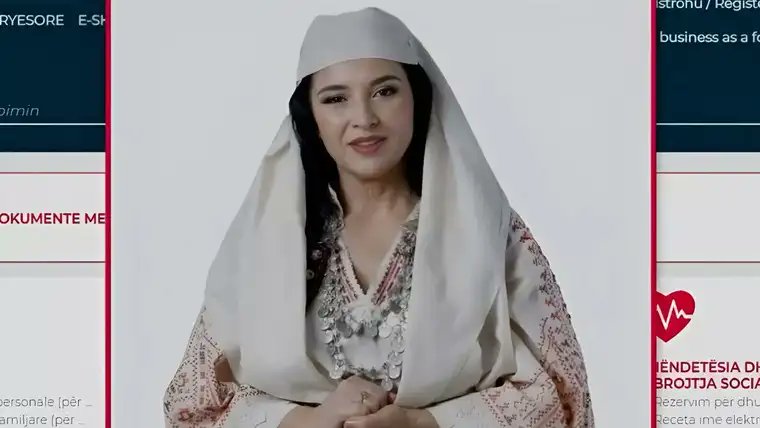
Albania has introduced Diella, the world’s first AI minister, to oversee public tenders and fight corruption with full transparency.
The initiative is significant because it reframes AI not simply as a tool of efficiency, but as a guardian of integrity and public trust.
1
1
104