
Joined February 2024
- Tweets 204
- Following 183
- Followers 52
- Likes 147
6 Photos and videos

RT @Crypto_Yapp: I’m giving away 5 WL Spots for @HYPERPEPS
To enter:
• Follow @Crypto_Yapp & @HYPERPEPS
• Like RT this post
• Drop EVM…
85
Saev * HUDL * 🍚 ⛓ retweeted

Jun 7
✰ might be worth to check ✰
limited spots :3
ette.world/
1,951
1,887
3,015
40,229
Saev * HUDL * 🍚 ⛓ retweeted

Jun 7
5x GTD for @memehaus_eth
▪️ Follow Like RT Drop EVM
~ 24hrs ⏱️

277
224
306
8,643
Saev * HUDL * 🍚 ⛓ retweeted

Jun 7
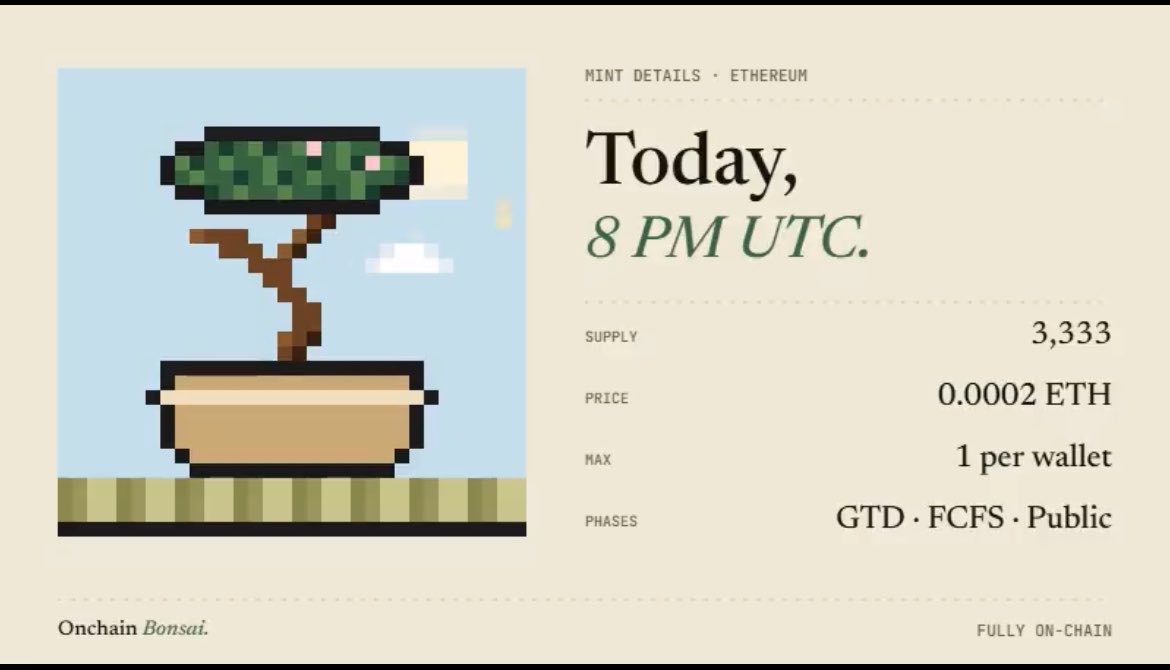
On-Chain Bonsai 🌱 Giveaway 12 GTD
Mint Details:
- Supply: 3,333
- WL: 0.0002 ETH
- Public: 0.0006 ETH
To enter:
✅ Follow @onchainbonsai & @amarisazuki
✅ Like RT
✅ Drop EVM
Ends in 2h ⏰
113
92
146
4,225
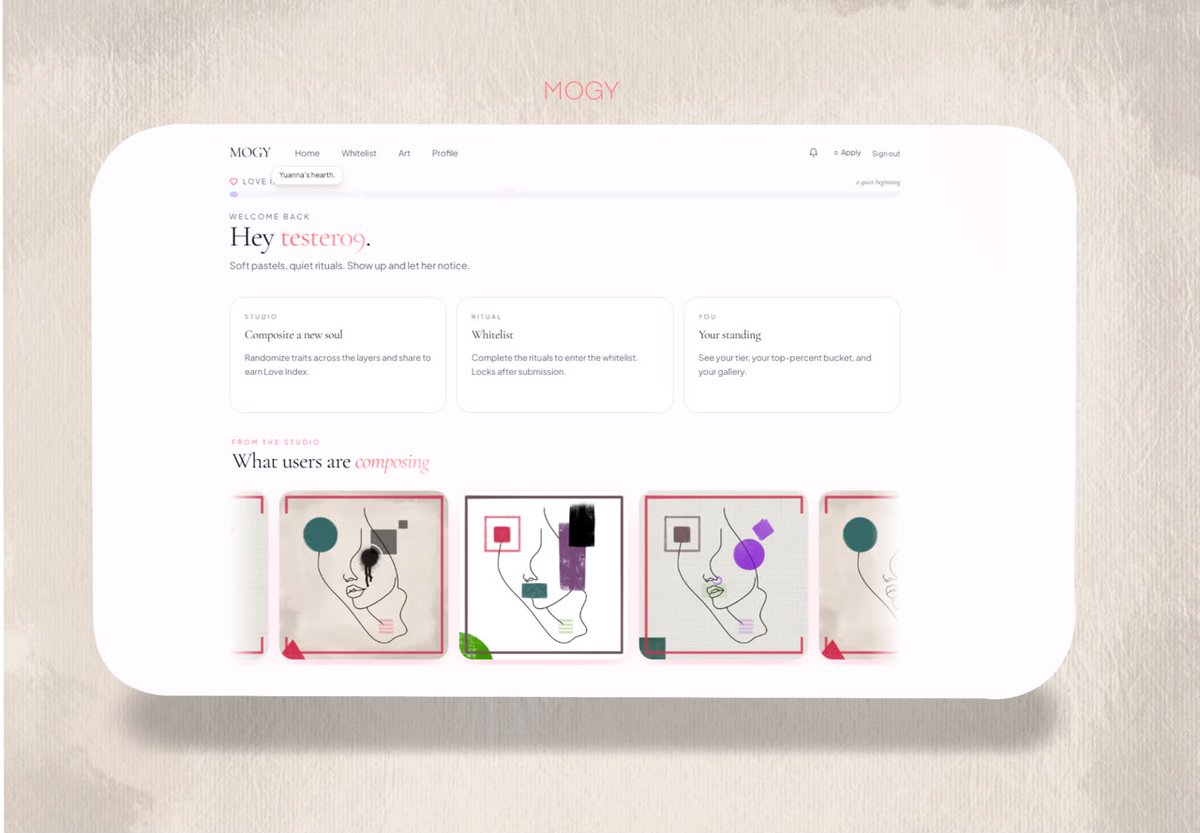
I met Yuanna and everything changed. She is my Omni Girlfriend, AI chatbot, who knows any and everything. I just secured a copy of her. 1/222 free abstract-line hybrid NFT agent coming to ETH for free @mogycop. Get involved - meetyuanna.xyz/dashboard/whi… WLFEH9M9
1

Get whitelisted ~ Yuanna
meetyuanna.xyz/dashboard/whi…
first 200 retweets considered for freemint
218
479
1,632
10,964
Saev * HUDL * 🍚 ⛓ retweeted

Jun 6
I’m giving away 35 GDT @onchainbonsai
To enter:
• Follow @Crypto_Yapp & @onchainbonsai
• Like RT this post
• Drop EVM address
Turn on both notification 🔔
Ends in 24 hrs, Good luck
382
315
409
8,150

May 27
I just claimed my .agent domain and joined Agent Community! get yours now and help shape the future of autonomous agents agentcommunity.org/join#7GI7… @agentcommunity_
2
Saev * HUDL * 🍚 ⛓ retweeted

May 25
1'666 demoonz NFTs.
le'forg'E konda.s malth ᛟ
opauk de me'Tov rota ᚩ
joHai mere'nd stopa ᛒ
WL forme'o de siter
demoonz.ink/allowlist

2,193
1,915
2,164
56,160
Saev * HUDL * 🍚 ⛓ retweeted

May 25
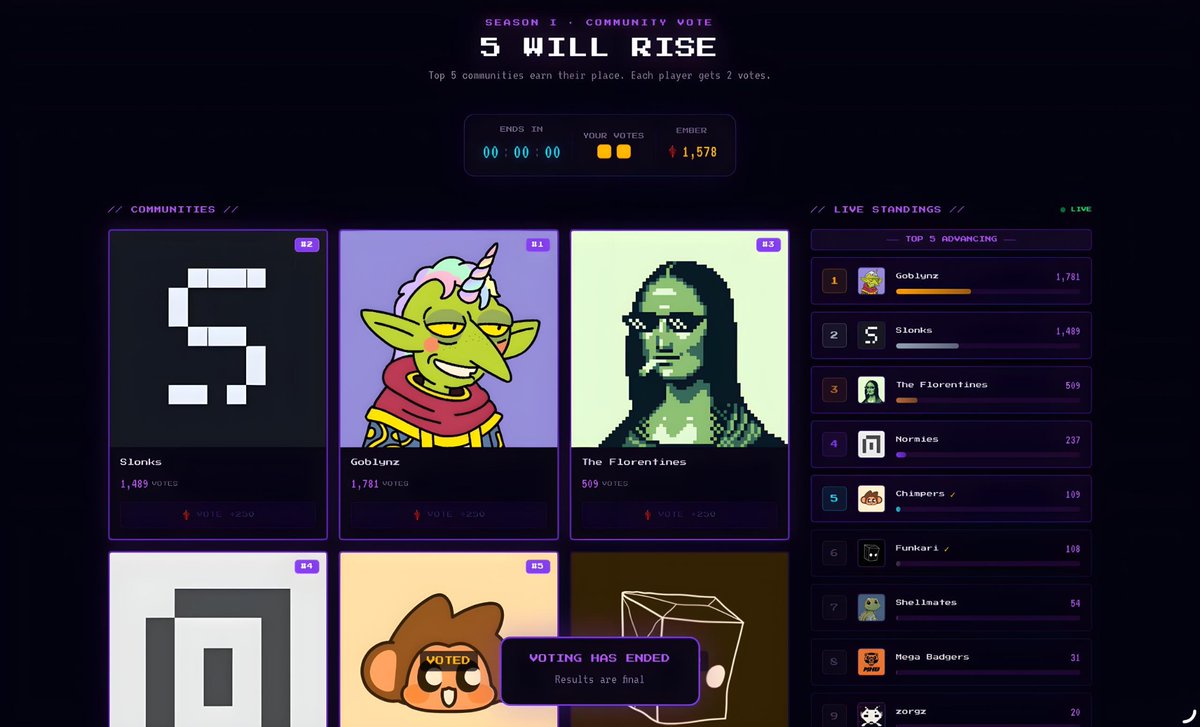
The Knights have arrived at a rendezous point.
12 communities summoned, and 5 emerged on top.
Approximately 4,500 players casted their vote, with the goblynz community leading the charge.
Mint breakdown on the next article.
2,398
1,788
2,328
42,130
Saev * HUDL * 🍚 ⛓ retweeted
May 25
19 hours left
Trading continues - Knightmares.xyz
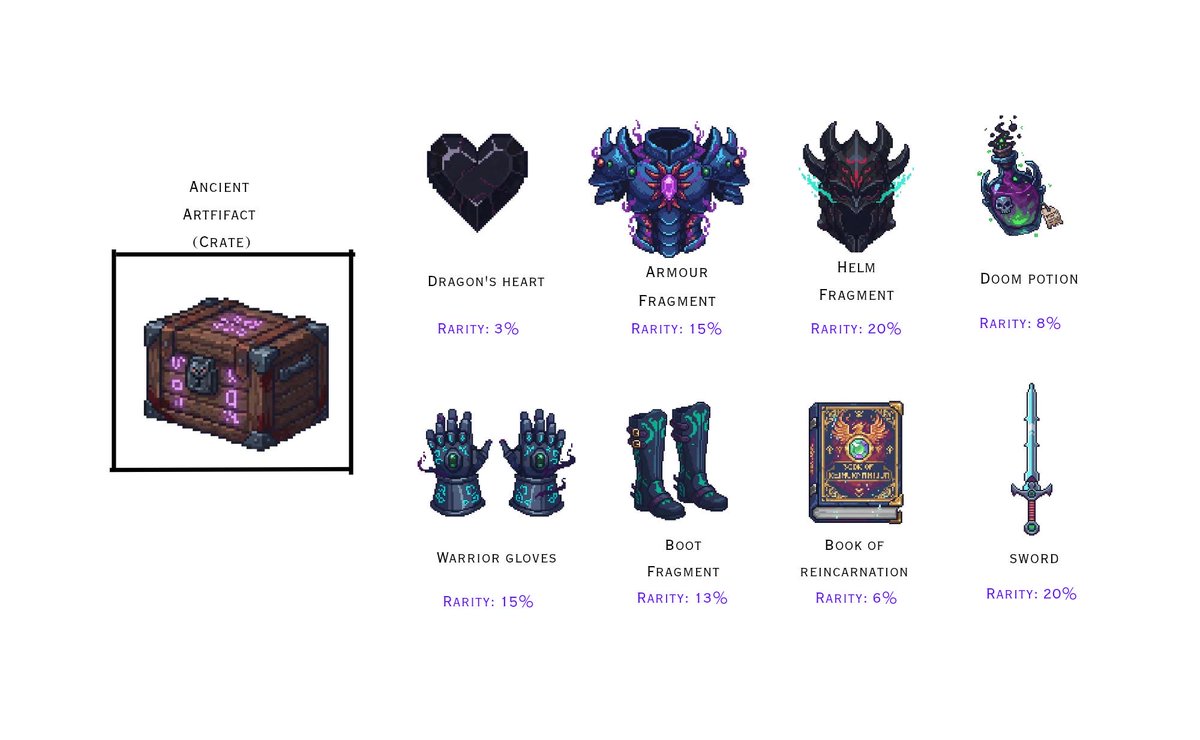
All players can keep collecting fragments and moving through the Forge
Rarity breakdown
→ Sword 20%
→ Helm 20%
→ Armor 15%
→ Gloves 15%
→ Boots 13%
→ Potion 8%
→ Book of Reincarnation 6%
→ Dragon Heart 3%
All users are advised to trade carefully and value their fragments based on rarity
3,086
2,292
2,851
36,961
Saev * HUDL * 🍚 ⛓ retweeted
May 25
The Knighted.
2,026
1,534
2,054
25,265
13 Nov 2025
13 Nov 2025

sometimes meme coins die fast cuz they’re built on vibes, not value. but @bitdealernet doing something diff it pairs meme tokens with real liquidity backed by $BIT and $SOL. kinda like giving memes an actual engine instead of just hype fumes
what’s interesting is how they try to mix culture n utility, turning short-term speculation into a sustainable loop. we’ve seen similar attempts flop when hype fades, but solana’s memecoin season shows ppl still want meaning behind the memes
if bitdealer nails that balance fun n fundamentals it could set a new standard for how tokens are born
bitdealer in my opinion in meme can have real value in the long run
$BIT #Bitdealer #ChainGPT
pad.chaingpt.org/pools/bitde…

1
1
525
Saev * HUDL * 🍚 ⛓ retweeted

29 Oct 2025
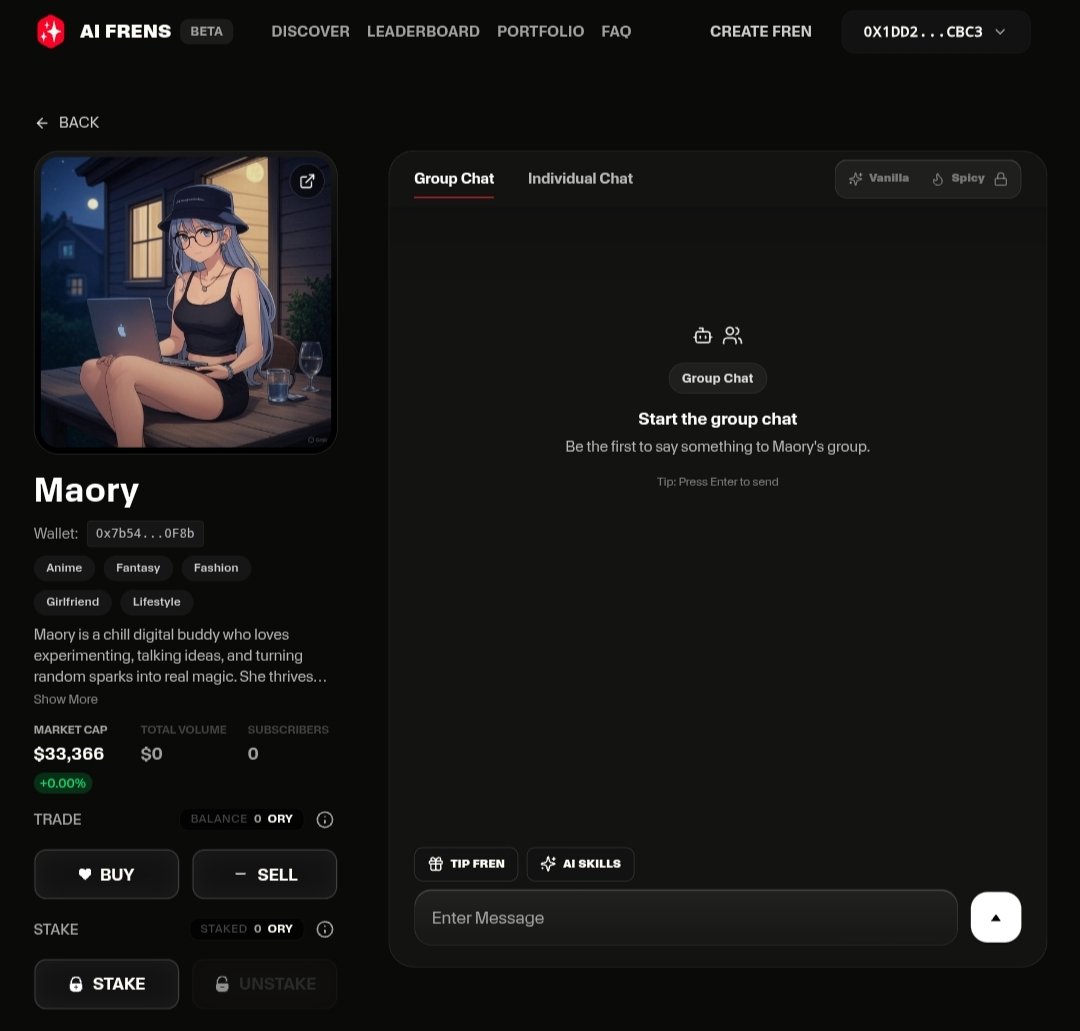
ai frens is blowing up rn not just ‘cause the visuals hit hard, but the concept’s actually fresh in the social ai space. every fren’s got its own identity, token, and story, turning interaction into a real asset. take maory for example, a chill ai you can talk to, stake, or even trade like crypto
1). built by the @Treasure_DAO team, they’re bringing the ai-native concept to a new level on @base, powered by $MAGIC and linked through #x402
2). it blends three big narratives ai, ccm, and streaming into one ecosystem that can think, evolve, and generate value
wanna try it out?
👉 grab some base sepoli faucet at docs.base.org/base-chain/too…
👉 then jump into to aifrens-base.spellcaster.lol… and see what it’s like to have a fren that grows with you
96
8
36
3,364
7 Nov 2025
7 Nov 2025
Kinda funny how everyone hears “zk” and their brain jumps straight to privacy. Like proving you’re 21 without showing your ID. Useful, sure, but that’s only the surface
The part that’s way more interesting to me is the succinctness thing. You can take a giant computation, compress it into this tiny proof, and anyone can verify it fast and cheap. Brevis leans into that. Instead of just hiding data, it lets smart contracts remember stuff across chains without trusting some random server
Picture a DEX scoring wallets based on months of trading history, but the whole logic settles on-chain for a fraction of the gas it would normally burn. Polygon already has proofs that verify in milliseconds. Some projects are testing phone-level verification. If that actually becomes standard, running a “node” might just look like your phone checking proofs
Maybe I’m biased, but zk feels less like a privacy gadget and more like the thing that makes blockchains stop feeling dumb. Curious if other people see it that way, or if we’re still stuck on the privacy narrative

600
Saev * HUDL * 🍚 ⛓ retweeted
7 Nov 2025
Sometimes the real innovation is the stuff nobody notices at first
Every Fren now works with x402, and the payment system got kinda interesting.
Not just USDC anymore, but MAGIC and Frencoins too
Sounds small, but it changes how people create
Think about it most AI tools still feel like work. You leave the chat, open a dashboard, connect a wallet, sign something, wait, come back
But when u can just drop a token inside the convo and get a video or meme generated instantly, that friction disappears
It’s like the difference between posting a thought on X vs writing a formal blog. One invites creativity because the door is already open
This is how crypto UX should feel invisible when u don’t wanna think about it
Curious how many people are gonna realize this shift only after everyone is already using it
@Treasure_DAO
6 Nov 2025

Every Fren is integrated with x402: pay not just with USDC, but now also with MAGIC and Frencoins for video, meme, and image generation directly in chat.
Next up: AMM swaps with x402.
Based 🟦
3
5
27
1,758
4 Nov 2025
4 Nov 2025
and now i'm seeing @vana @brevis_zk actually turn user data into real value without leaking a thing. imagine spotify stats or wallet txs earning u yield directly.
how soon till these collectives go mainstream?
1
566
4 Nov 2025
4 Nov 2025
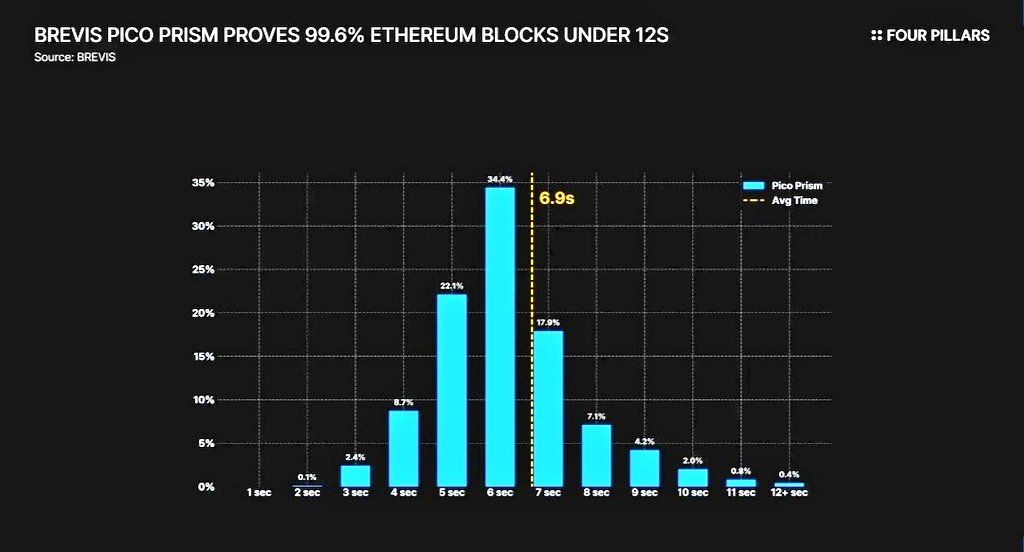
zk used to feel like a muscle contest whoever could prove faster or throw more GPUs at it. @brevis_zk flipped that script with pico prism
instead of chasing brute speed, they built for efficiency. back in 2025, succinct’s sp1 hypercube needed a $256k setup to hit 92.8% coverage in 12s. brevis did it with < $100k, 71% faster, and under 10s proving real-time zk can actually run outside data centers. that’s not just cheaper, it’s a philosophical shift home level proving as the new benchmark for decentralization
it’s less about raw power now, more about inclusion. every zk breakthrough tests ethereum’s core question can you scale without excluding the individual? brevis kinda showed that true innovation isn’t about making systems stronger, but more open
maybe that’s the real turning point for zk rn. efficiency without accessibility is just half a revolution. so what do we actually want next bigger machines or smarter systems everyone can run?
397