
Joined October 2021
- Tweets 2,252
- Following 75
- Followers 149
- Likes 1,107
294 Photos and videos



Pinned Tweet

Feb 27
Here is a closer look at #SriLanka #coal procurement for the #CEB's Lakvijaya Power Plant: tender delays, emergency procedures, supplier selection, and disputed coal quality.
This thread breaks down the timeline, decisions, and unanswered questions involving the Ceylon Electricity Board.
Operational Context
•The Lakvijaya Power Plant operates 3 × 300 MW units (total 900 MW installed capacity).
•Coal procurement typically supports annual seasonal shipping (approx. Sept–April).
•Annual requirement estimated at ~35–38 shipments
•Coal quality thresholds defined by calorific value and ash content (Main factors out of 7 or 8)
•Coal procurement handled through tenders under the #CEB.
Tender Planning Period (Expected vs Actual)
Expected timeline (standard practice)
•Tender preparation: April
•Tender closing: July
•Supply begins: September
Actual timeline stated
•Tender expected April 2025
•Reminders raised in Parliament in June, July, August
🔴No actions were taken despite so many reminders inside parliament and outside of it.
(Man made) Emergency Procurement Phase
August — Emergency tender called
•Classified as emergency procurement despite had been waiting for months delaying this process.
•Bid submission period reduced from typical ~42 days to ~21 days
🔴This caused elimination of reputed large scale suppliers who could supply high quality coal.
Tender Conditions and Eligibility Changes
During procurement:
🔴Supplier experience requirement reduced (1 million tons → 100,000 tons).
🔴 Significant eligibility change; requires comparison with official tender documents.
Minister Intervention
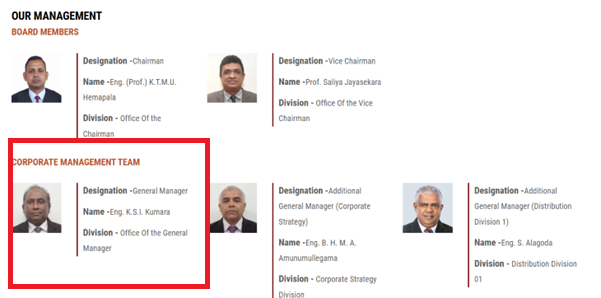
🔴Minister allegedly met a bidding company during evaluation period.
•Big NO, NO considering this is one of the biggest government procurement deal
Evaluation and approval stage
•Technical review expected within 1–2 weeks as this was supposed to be an emergency requirement.
🔴However, Cabinet approval reportedly granted after ~7 weeks.
🔴This contrasts with “emergency” framing and has serious concern whether government wanted to have a “desired” supplier by allowing them to get registered and have the bond ready.
Tender Award Phase
Mid-November
•Tender awarded to a company.
Reported concerns about selected supplier:
🔴Prior blacklisting in another import case in year 2016.
🔴Alleged financial misconduct history of the owners.
Earlier supply phases
Context
•Some shipments historically accepted with penalties when quality was marginally down
•Such cases were rare in the past.
Delivery schedule planned
•December: 3 ships
•January–March: 6 ships each month
•April: 4 ships
•Total planned: 25 ships
🔴 Lower than earlier stated annual requirement of 35–38 ships.
Early Warning Stage (First Shipments of Current Contract)
After first coal shipment used
•Power plant officials reported low generation performance to ministry.
•Performance concerns linked to coal quality
🔴 No actions were taken by Ministry but minister was in a hurry to defend the company in the Parliament
After second shipment
•A second report submitted stating quality did not meet standards
🔴Still No actions were taken by Ministry
Interpretation noted in report
🔴Tender could have been potentially cancelled based on these findings after first two shipments.
No such actions on warnings issued
Supply Phase (Continuation)
Actual delivery performance
•December deliveries incomplete only 01 arrived on time. Second one was delayed.
•Second shipment allegedly delayed beyond contractual interval.
🔴Contract could have been cancelled due to not meeting tender conditions at this time. Not done.
Quality Dispute
Testing and certification dispute
🔴Supplier relied on Indonesian lab testing instead of SGS port certification at the dispatching port ( which was easy to take than taking from elsewhere).
🔴Local testing reportedly found all 9 shipments below acceptable thresholds.
Operational performance observation
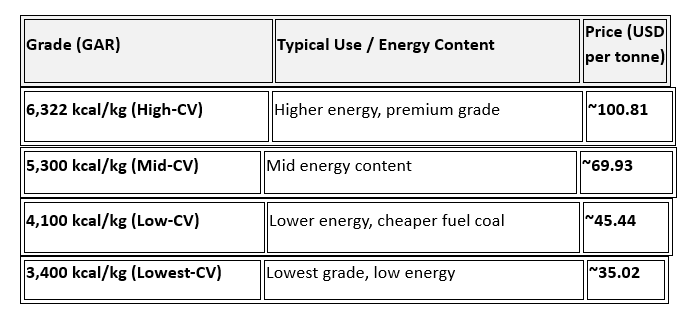
🔴Plant performance analysis suggested low calorific value coal < 5900 level. Determined through basic reverse engineering mechanism. This matches with the local lab test results perfectly.
🔴All 9 shipments are below standard as per the calculations so far.
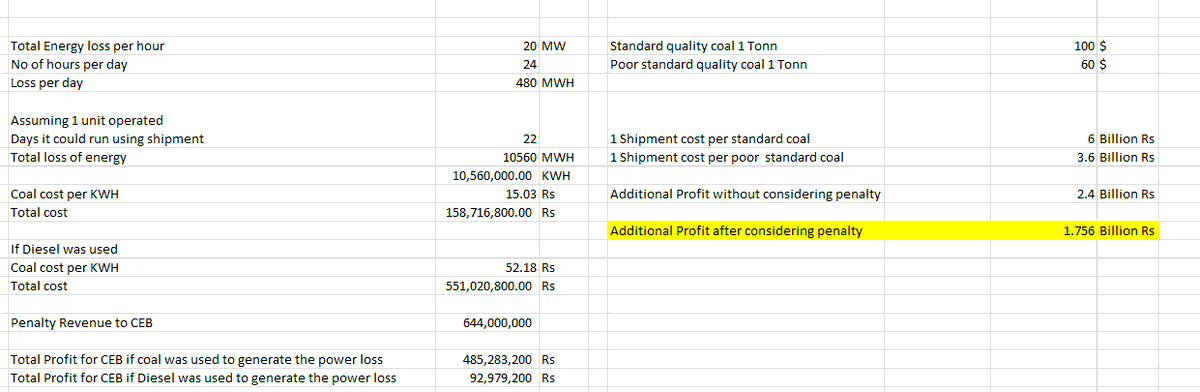
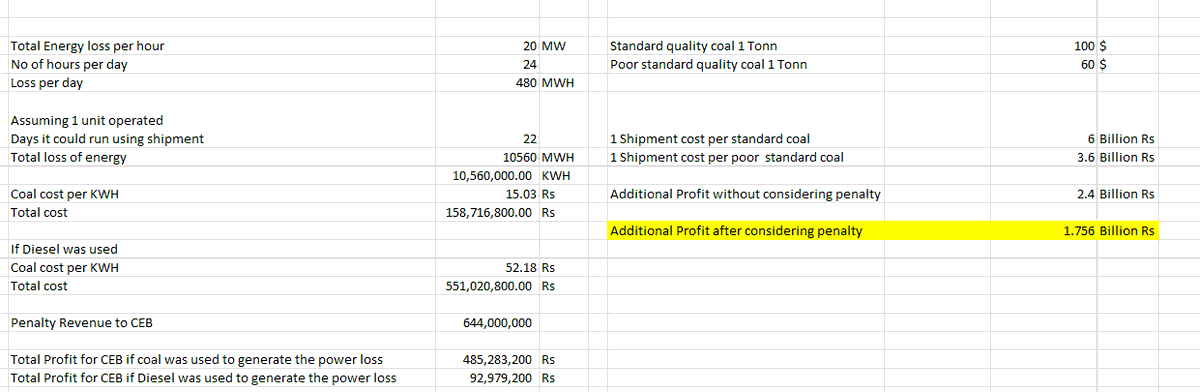
💲 Loss from 1st shipment: Rs. 595.1 million
💲 Loss from 2nd shipment: Rs. 288.5 million
💲 Loss from 3rd shipment: Rs. 1,047.4 million
💲 Loss from 4th shipment: Rs. 865.0 million
💲 Loss from 5th shipment: Rs. 1,144.2 million
💲 Loss from 6th shipment: Rs. 1,197.7 million
💲 Loss from 7th shipment: Rs. 974.9 million
💲 Loss from 8th shipment: Rs. 1,559.3 million
#NPP #Corruption
4
1
231
Jun 13
Impressed by this Moroccan side so far. Brazil seems to rattled a bit so far.
#fifawoldcup #WorldCom #brazilvsmorocco
30

May 22
THREE CUPS. ONE NATION. HISTORY CALLING. 🏆🏆🏆
For the first time ever, English clubs are on the brink of an UNPRECEDENTED TREBLE across Europe.
🔵 Champions League – The ultimate prize. 🔴 Europa League – The road to glory. 🟢 Conference League – The new dream.
Three different competitions. Three English teams. One legendary season could etch an era that will NEVER be forgotten. 😳🔥
THIS IS HISTORY IN THE MAKING.
Come on England. Let’s make football history! 🦁
#ThreeCupsOneNation #England #premierleauge
32
May 16
ලොකු පම්පෝරිකාරයෙකුයි පොර වටේ ඉන්න සෙට් එකකුයි හිත ඉන්නවා උන්ට වැඩ වැඩකාරයෝ ලංකාවේ කොහෙවත් නැහැ කියල..අවුරුදු හැටකටත් වඩා දේසපාලනේ ඉඳල ..ලොකු පම්පෝරිකාරය ගත්තොත් අවුරුදු 25කට , සියවස් කාලයකට වැඩ පාර්ලිමේන්තු ඉඳලා , කොවිඩ් වලටයි, ඒකට සමගමීවුනු ගොබ්බ ආර්ථික වැඩ පිළිවෙලක් නිසා රට බන්කොලත් උන වාතාවරණයක් නිසා ඔඩොක්කුවට කඩා පාත් උන බලය හින්ද පට්ට විදියට ඔලුව උදුම්මාගෙන ඉන්නේ සෙට් එක ..හෙන strategic move එකකින් බලය ගත්ත ගානට තමා හැසිරෙන්නේ ...
හලෝ මිනිස්සුන්ට එපා වෙලා චන්දෙ දුන්න නිසා මිසක් තමුන්ලට මේ කපේට බලය හම්බ වෙන්නේ නැහැ ..අති බහුතරය මේකටත් දීල බලමු කියන අදහසින් තමා චන්දෙ දුන්නේ ...එක තවත් තීව්ර කලා මහ චන්දෙදි වැඩේ ලේසි කරන්න ..බලාපොරොත්තු රොත්තක් එක්ක ...
හැබැයි දැන් මිනිස්සු දන්නවා අය්ය්ලගේ වැඩ කිරීමේ හැකියාව ..දශක ගානක් තිස්සේ කටින් බතල හිටවපු , ලෝකේ තියන ඕනේ ප්රශ්නයකට වේදිකාව උඩ විසදුම් තිබිච්ච කුමාරයා ඇඹරෙන විදිය දැක්කම දුක හිතෙනවා ..පොර ගැන නෙමේ රට ගැන ... .. ..
IMF frameowork ඇතුලේ යන ආර්ථික වැඩ පිළිවෙල, crisis එක කලේ ගිය ලක්ෂ 2ක් විතර ශ්රම බලකාය ඇතුළුව (නැතුව මේ ගොබ්බයො බලයට අවම ශාරමිකයෝ වැඩියෙන් සල්ලි එවලා නෙමේ) රට ශ්රමිකයන් එවන ප්රේෂණ , සංචාරක ව්යාපාරයෙන් එන අදායම නිසා තමන්ත් යන්තම් අපි මේකේ එල්ලලිලා ඉන්නවා ..මේගොල්ලෝ කලා වගේ විපක්ෂය පාරේ උදේ හවා උද්ගෝෂණය කලා නම් මේවත් අඩු වෙන්න තිබුණා ..
හැබැයි මෙතනින් එහාට යන්න කිසිම දැක්මක්, අත්දැකීමක් තියන කිසි ලෝන්තයෙක් මේ ආණ්ඩුවේ නැහැ ...මුන්ට උපදෙස් දෙන දම්මික ඉෂාර ගේ මොලෙන් රටක් ගොඩ දාන්න බැහැ ..මොකද රටක් කියන්නේ සමුහ ව්යාපාරයක් නොවන නිසා ..මේ අයගේ ලනු කාල තමා ගෝටට කෙල උනෙත් ....
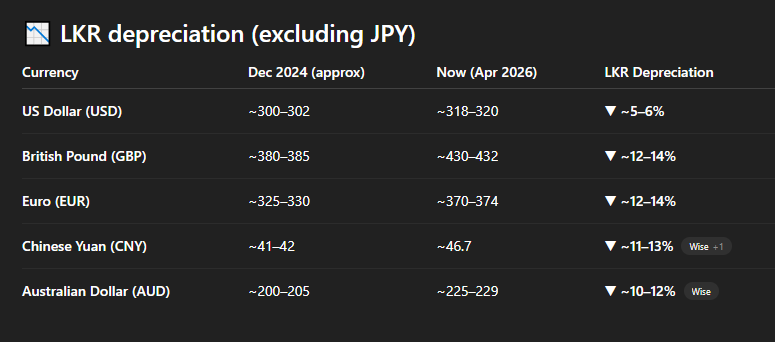
රුපියල අවප්රමාණය වීම සීග්ර වෙලා තියෙන්නේ .භාණ්ඩාගාර බිල්පත් ගනුදෙනු වලට ආයෝජකයන් සහභාගී වන ආකාරය මේකට හොඳම නිදසුනක් ..ඒක ඉස්සහරට වෙන්න තියන නස්පැත්තිය ගැන පුර්ව අදහසක් ගන්න පුළුවන් ..මේ හේතුවෙන් .රාජ්ය සුරැකුම්පත් වෙළඳපොළ තුළ විදේශ ආයෝජන ආපසු යමින් ඇති ආකාරය පහුගිය කාලේ දකින්න පුළුවන් ..විදේශිකයින් සතු වූ රුපියල් මිලියන 20,509ක මේවනවිටත් රටින් අරන් ගිහින් ..අවුරුද්ද අන්තිම වෙනකොට චීනෙන් ගත්තත් බිලියන 1.5 ආසන්න පරමනයත් ගෙවන්න ඕනේ ...ගොඩක් වෙලාවට චීනේ මේක rollover කරයි ..නැත්නම් බදඩු බනිස් ..මේ මිනිස්සු restructure කරපු ණය ගෙවන කලේ වෙනකන් හිටියොත් නම් මොනවයින් මොනවා වෙනවද දන්නේ නැහැ ..T B සරත් යුව රජතුමා කිව්වා වගේ IMF deal එකෙන් යන්න තමා වෙන්නේ ..හැබැයි එකේ සාර්ථකව නිමා කරලා නම් නෙමේ ...කොන්දේසි ඉටු කරන්න බැරිව ....
එතකොට රටේ ඉතුරු වෙලා ඉන්න වැඩක් කරන්න පුළුවන් මද්යම පන්තියේ ඉතුරු ටිකත් රටේ නැති වෙයි ..මොලේ කල්පනා කරන්න ..අවුරුදු දෙකක් කියන්නේ ලොකු කාලයක් ..ආණ්ඩුවේ කාලයෙන් 40% අසන්න කාලයක් ගිහින් ...ආර්ථික අර්බුදයෙන් පතුලේ ඉඳල ලිං ගැට්ට උඩට ඇවිල්ල තිබුන රට ආයිත් පතුලට වැටෙන්න නැති වෙන්න වේගයෙන් පියාඹන්න ඕනේ අවුරුදු දෙකක් ..අපි බඩ ගාන්නෙවත් නැහැ ..මේ මිනිස්සු මෙහෙම තව අවුරුදු දෙකක් බඩගෑවොත් අපිට මොකද වෙන්නේ කියල හිතල බලන්න ..උගත් මිනිස්සු නිශ්ශබ්දව සිටිය යුතු නැහැ තවත් ...අඩුම වශයෙන් හිතන්න පටන් ගන්න ...
#SriLanka #Economy #Future #NPP #LKA #Think
22
Sam I retweeted

May 4
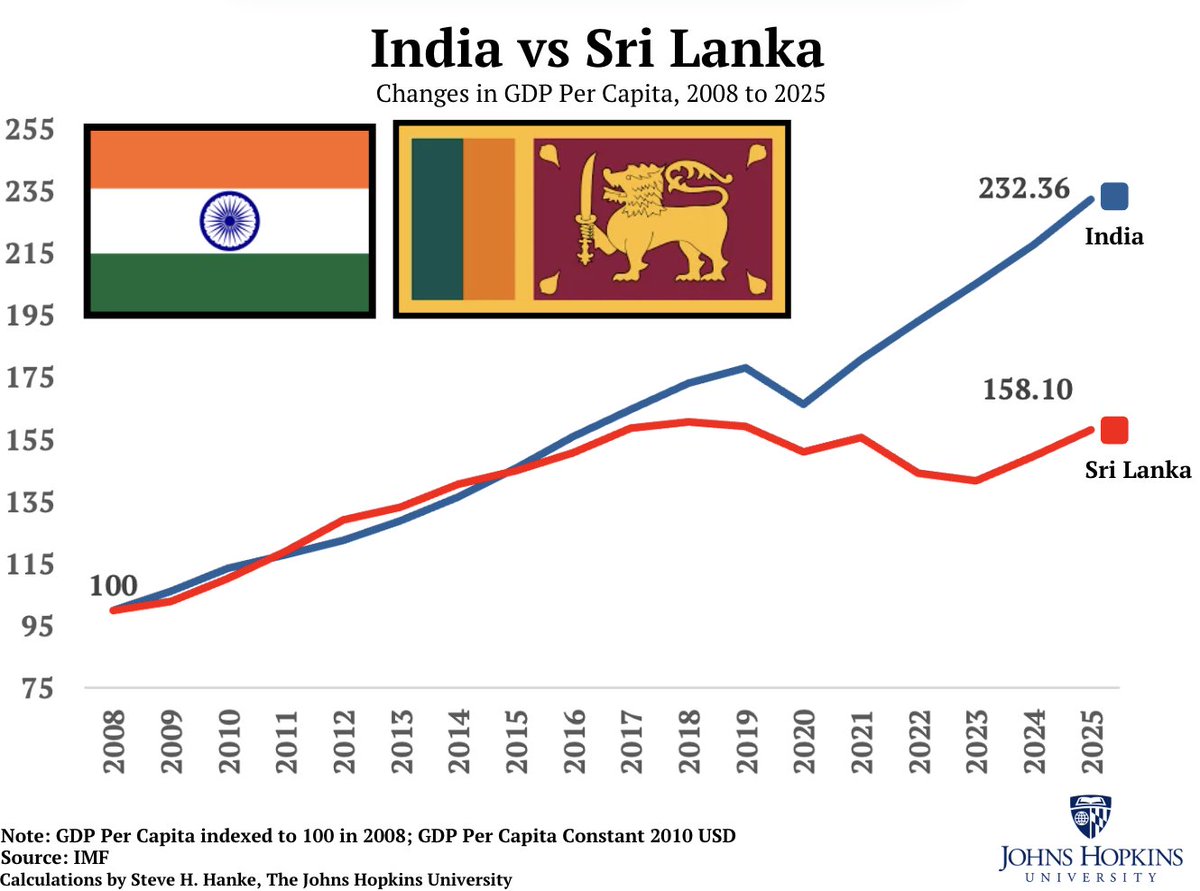
Until the currency crisis hit Sri Lanka in 2019, it was growing on par with India.
Contrary to reports in the Western media, since the crisis and the IMF’s intervention, the economy has never recovered.
45
76
348
33,176
Apr 19
Did anything happen on this investigation. #NPP should just stop making these statements if they cannot prove anything. Enough is enough. Just get on with the work you have to do. This ministers is one of biggest talkers with nothing to show
@RajapaksaNamal #Srilanka
18 Dec 2024

"Prove that I sat for the exam alone in a A/C room, and I will resign," MP Namal Rajapaksa challenges Minister Wasantha Samarasinghe, denying allegations that he received special treatment during the Law College examination.
1
2
82
Apr 3
Apr 1

🚨🇱🇰🇷🇺 Sri Lanka - Russia trade could surge through Vladivostok: Sri Lankan Minister of Transport
With top aviation links and major sea routes via Hambantota, Sri Lanka could boost Russian trade in Vladivostok.
"Vladivostok is not that much away from those countries, so we can use the established shipping routes," Bimal Niroshan Rathnayake Werakoon, Sri Lankan Minister of Transport, Highways, Ports and Civil Aviation, told Sputnik India.
51
Mar 27
This idiot still trying to wash this...Will summarize some serious concerns/misconducts/ stupid actions taken by the #NPP government on #coalgate issue
Key eligibility criteria were relaxed, allowing sub-standard suppliers to participate (e.g., removal of the requirement for prior supply of 1 million MTs).
The tender process was purposely delayed from April to several months later without clear justification. Allowing this corruption to happen
Minister Kumara engaged in discussions with a bidding company during the tender process, clearly violating established procurement best practices.
Supplier was permitted to submit quality reports from Indonesia while coal was sourced from South Africa, despite the availability of reputable testing facilities at the port. No questions has been asked by the governement so far on this.
The tender was awarded to a company that had previously been blacklisted . No due diligence done.
By January, there were indications that the coal quality was substandard, had cabinet meetings and already decided we should go for spot tenders but yet no apparent effort was made before the 31st deadline engage alternative bidders. had provisions in the tender do this. DID not do that purposely to provide advantage to the selected supplier.
When shipment delays occurred in late Dec, contractual provisions could have been utilized to cancel and reassign the contract, but this was not done.
Previously, contingency measures such as advance SPOT tenders were in place to mitigate issues we face in this situation. These were dropped, reducing flexibility in responding to issues. This stupid gov thought those are there for DEALS !
There was an opportunity to validate umpire samples using both dispatch and load port reports. However, this government purposely waited till 18th March until deadline expires so we could not use this report for further testing
The impact of substandard coal and alternative steps plant is undertaking to utlise this sub standard coal. Future impact to the equipment in the plant is yet to be know. There are standards for a reason. If there is low performance in coming years due to this I am sure idiots like this will start blaming Mahinda for building a low quality plant than admitting they did a huge blunder in their very first year. Idiocracy at best !!!
#Srilanka #Corruption #CoalScam #ගල්අගුරුවංචාව
Mar 27

I don't know what Bimal's statement is based on but apart from 1st shipment all other shipments are aligned with the agreement. Legally there is no ground to say coal is substandard. Calling names is easy. Hard thing is to explain the facts.
37
Mar 26
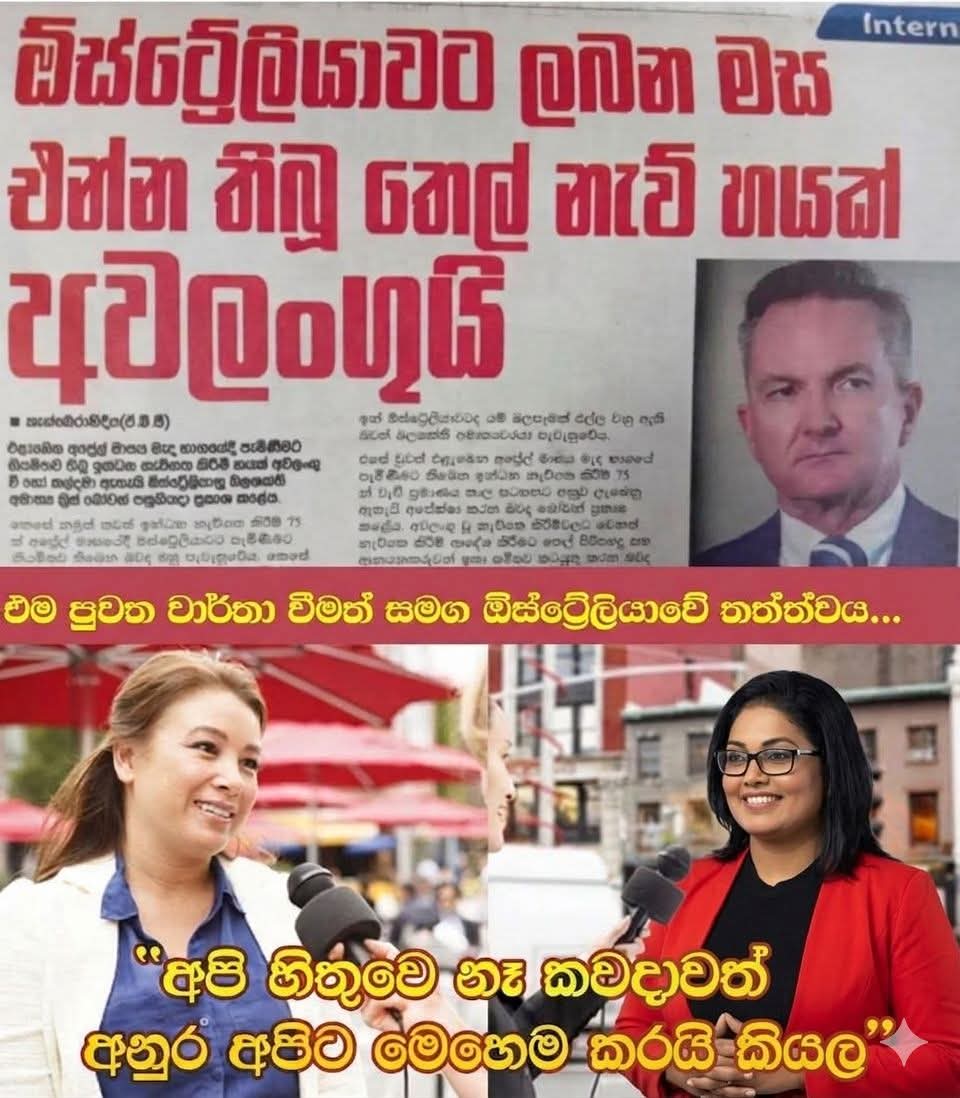
මුන් නම් අනුරට හරි යන ඩොබිල ..අරු eletric cars නිසා වැඩි පුර 300MW යනවා වගේ පච කියනකොට මු මේවගේ ඒවා share කරනවා ..
real story below...
The government has confirmed that while six shipments were cancelled or deferred, the majority of scheduled deliveries (around 75 ) are still proceeding as planned, and overall supply arrangements remain intact.
Officials have also indicated that replacement cargoes are being arranged by importers and refiners, meaning the cancelled shipments are not expected to create an immediate physical shortage.
The Energy Minister has emphasised that Australia is not currently facing fuel rationing or an immediate supply crisis
As a precaution, the government has also been taking broader steps to support fuel availability, including measures to ease fuel supply constraints and improve domestic distribution flexibility.
1
69
Sam I retweeted

Mar 23
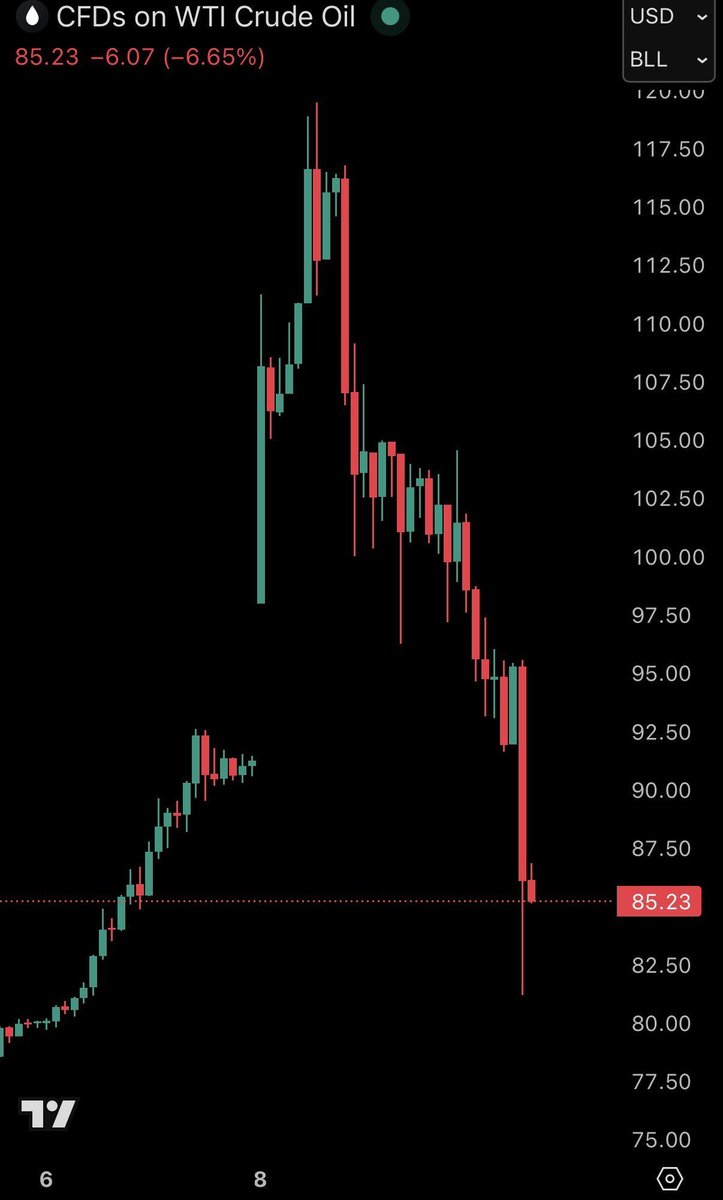
BREAKING: Just five minutes before Trump's announcement to halt the attacks on Iran, massive trades reportedly hit the market.
In one move, $1.5 billion in S&P 500 (ES) futures was bought while $192 million in oil (CL) futures was sold.
These orders were 4–6x larger than anything else at the time.
The trader seemingly made huge gains.
Unusual.
3,111
17,734
86,828
35,299,693
Feb 27
Here is a closer look at #SriLanka #coal procurement for the #CEB's Lakvijaya Power Plant: tender delays, emergency procedures, supplier selection, and disputed coal quality.
This thread breaks down the timeline, decisions, and unanswered questions involving the Ceylon Electricity Board.
Operational Context
•The Lakvijaya Power Plant operates 3 × 300 MW units (total 900 MW installed capacity).
•Coal procurement typically supports annual seasonal shipping (approx. Sept–April).
•Annual requirement estimated at ~35–38 shipments
•Coal quality thresholds defined by calorific value and ash content (Main factors out of 7 or 8)
•Coal procurement handled through tenders under the #CEB.
Tender Planning Period (Expected vs Actual)
Expected timeline (standard practice)
•Tender preparation: April
•Tender closing: July
•Supply begins: September
Actual timeline stated
•Tender expected April 2025
•Reminders raised in Parliament in June, July, August
🔴No actions were taken despite so many reminders inside parliament and outside of it.
(Man made) Emergency Procurement Phase
August — Emergency tender called
•Classified as emergency procurement despite had been waiting for months delaying this process.
•Bid submission period reduced from typical ~42 days to ~21 days
🔴This caused elimination of reputed large scale suppliers who could supply high quality coal.
Tender Conditions and Eligibility Changes
During procurement:
🔴Supplier experience requirement reduced (1 million tons → 100,000 tons).
🔴 Significant eligibility change; requires comparison with official tender documents.
Minister Intervention
🔴Minister allegedly met a bidding company during evaluation period.
•Big NO, NO considering this is one of the biggest government procurement deal
Evaluation and approval stage
•Technical review expected within 1–2 weeks as this was supposed to be an emergency requirement.
🔴However, Cabinet approval reportedly granted after ~7 weeks.
🔴This contrasts with “emergency” framing and has serious concern whether government wanted to have a “desired” supplier by allowing them to get registered and have the bond ready.
Tender Award Phase
Mid-November
•Tender awarded to a company.
Reported concerns about selected supplier:
🔴Prior blacklisting in another import case in year 2016.
🔴Alleged financial misconduct history of the owners.
Earlier supply phases
Context
•Some shipments historically accepted with penalties when quality was marginally down
•Such cases were rare in the past.
Delivery schedule planned
•December: 3 ships
•January–March: 6 ships each month
•April: 4 ships
•Total planned: 25 ships
🔴 Lower than earlier stated annual requirement of 35–38 ships.
Early Warning Stage (First Shipments of Current Contract)
After first coal shipment used
•Power plant officials reported low generation performance to ministry.
•Performance concerns linked to coal quality
🔴 No actions were taken by Ministry but minister was in a hurry to defend the company in the Parliament
After second shipment
•A second report submitted stating quality did not meet standards
🔴Still No actions were taken by Ministry
Interpretation noted in report
🔴Tender could have been potentially cancelled based on these findings after first two shipments.
No such actions on warnings issued
Supply Phase (Continuation)
Actual delivery performance
•December deliveries incomplete only 01 arrived on time. Second one was delayed.
•Second shipment allegedly delayed beyond contractual interval.
🔴Contract could have been cancelled due to not meeting tender conditions at this time. Not done.
Quality Dispute
Testing and certification dispute
🔴Supplier relied on Indonesian lab testing instead of SGS port certification at the dispatching port ( which was easy to take than taking from elsewhere).
🔴Local testing reportedly found all 9 shipments below acceptable thresholds.
Operational performance observation
🔴Plant performance analysis suggested low calorific value coal < 5900 level. Determined through basic reverse engineering mechanism. This matches with the local lab test results perfectly.
🔴All 9 shipments are below standard as per the calculations so far.
💲 Loss from 1st shipment: Rs. 595.1 million
💲 Loss from 2nd shipment: Rs. 288.5 million
💲 Loss from 3rd shipment: Rs. 1,047.4 million
💲 Loss from 4th shipment: Rs. 865.0 million
💲 Loss from 5th shipment: Rs. 1,144.2 million
💲 Loss from 6th shipment: Rs. 1,197.7 million
💲 Loss from 7th shipment: Rs. 974.9 million
💲 Loss from 8th shipment: Rs. 1,559.3 million
#NPP #Corruption
4
1
231
Mar 17
Adding to the list
x.com/nimilamalee/status/203…
Mar 17

Coalgate update from @TimesOnlineLK:
1) The price bids for Lanka Coal Company's (LCC) emergency tender were opened last Wednesday.
2) Surprise 1: Trident Chemphar, the current supplier of problematic coal, bid again, quoting US$20.6 per MT less than the next lowest bidder.
26
Mar 16
This SAGA does not seem to end any soon. Adding @RehanJayawick tweet so everything related to this deal is captured in one place ( for my reference)
x.com/RehanJayawick/status/2…
Mar 16

1/
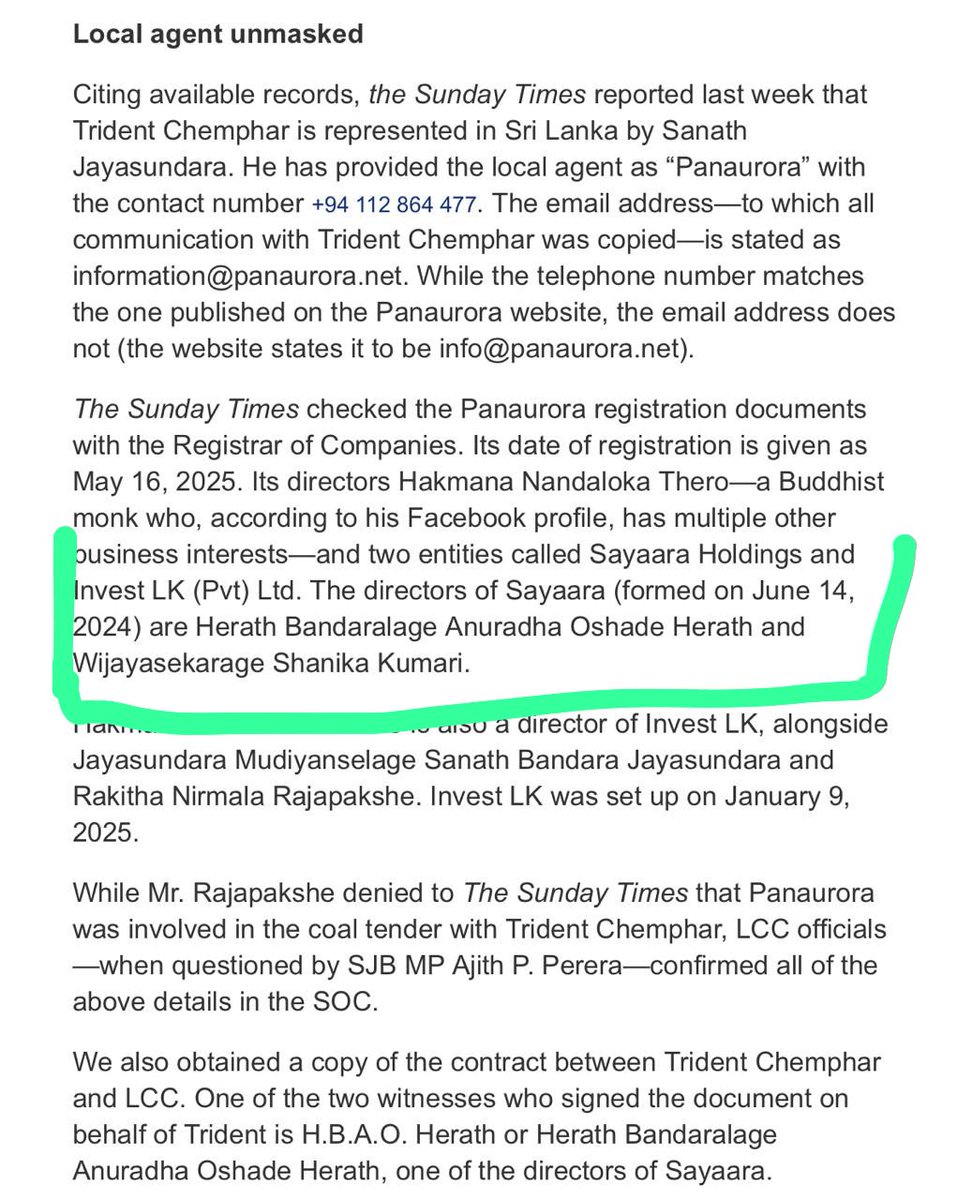
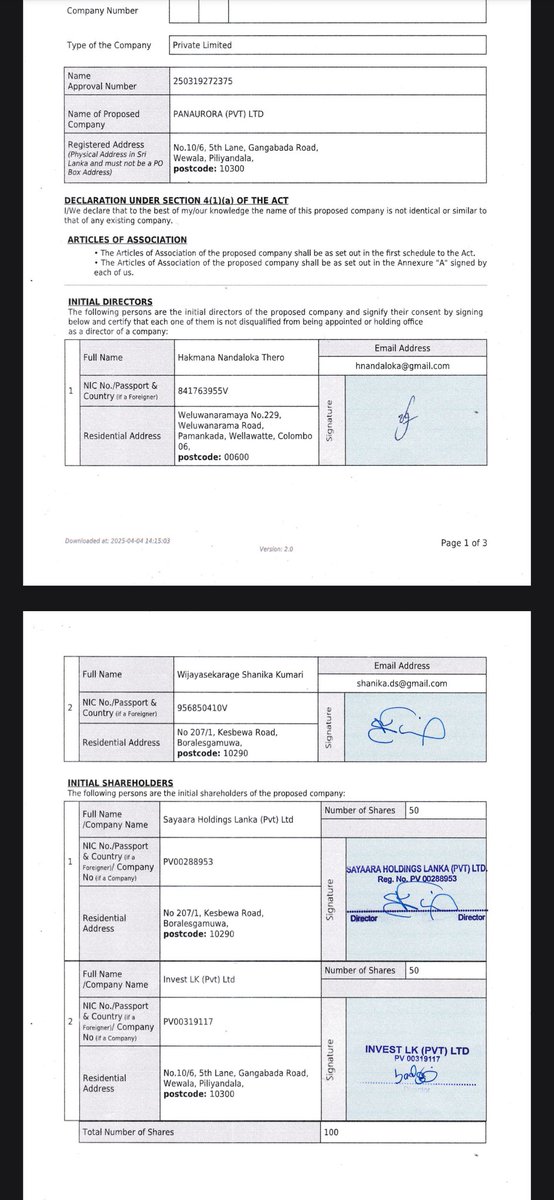
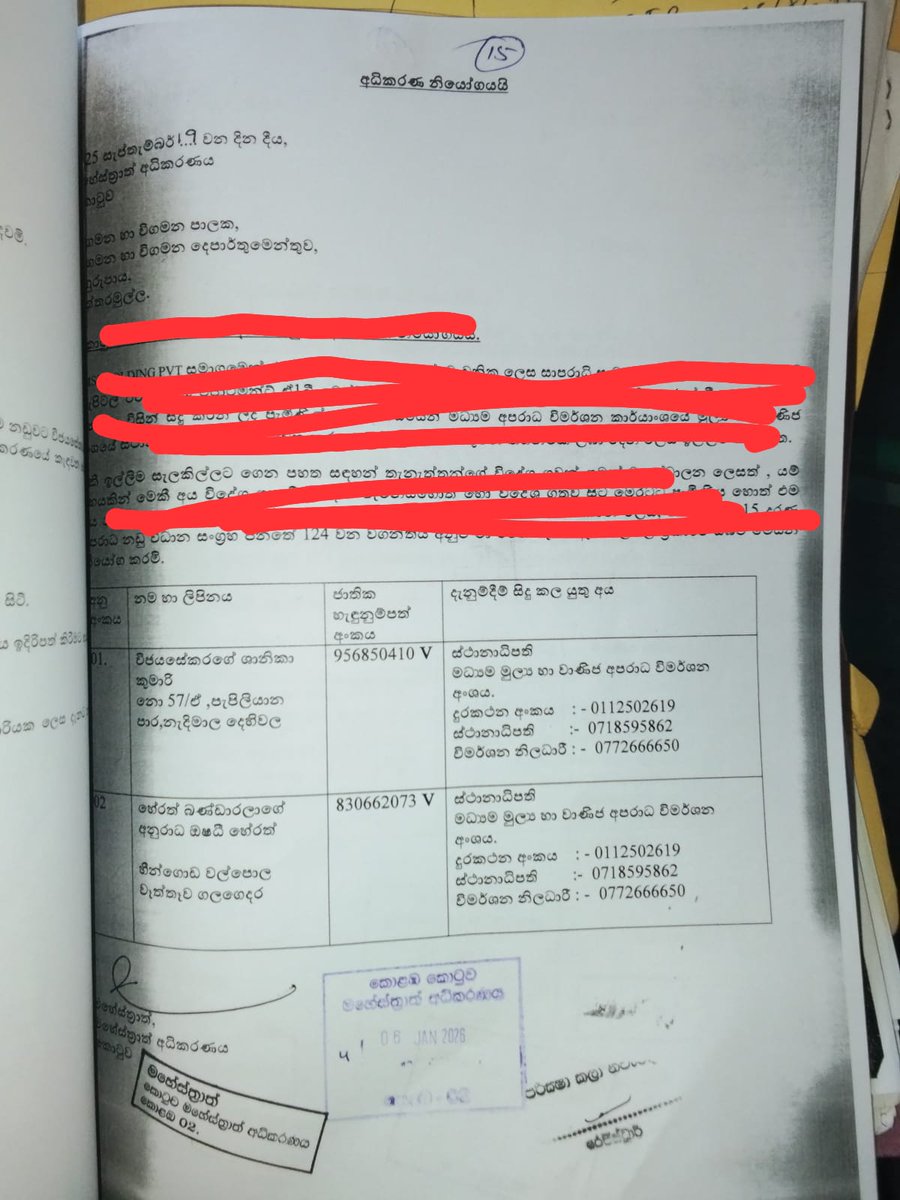
Interesting facts emerging about the company that awarded Sri Lanka’s controversial #Coalgate tender.
Two directors of the company were previously arrested over a fraudulent fertiliser investment scheme where business partners were allegedly duped and funds siphoned off.
38
Mar 15
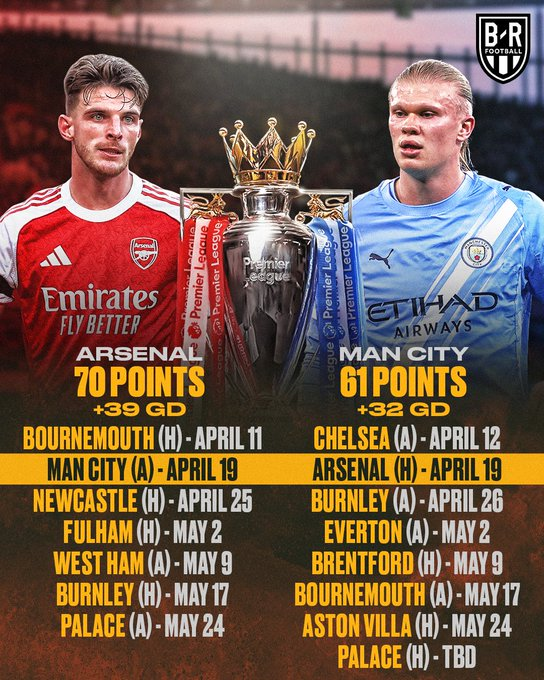
If #Arsenal win all their home games but lose all their away games, and #ManCity win all their remaining matches →
City win the title
Arsenal: 82 | City: 85
⚽️If Arsenal win all their home games, lose all away games, but draw against City, while City win every other match →
Points level → 83–83
The title would be decided by goal difference
⚽️ If Arsenal win all home games and one away match, but lose to City, while City win all remaining matches including that game →
Points level → 85–85
Again, it comes down to goal difference
⚽️If Arsenal win all home games and lose all away games, and City win all their matches but lose one other game (not Arsenal) →
Points level → 82–82.
⚽️If Arsenal win all home games, lose all away games, but beat City →
Even if City win the rest of their matches, Arsenal win the league.
Arsenal: 85 | City: 82
image source @brfootball
40
Mar 15
This is one of the best quote I saw in a newsletter today
"As long as we care more than anyone else, we will win"
As long as you care about your work more than an ordinary person you will win - sooner or later
If we care more about our country than people in other countries who care about theirs we could make the country better
Saul Bass, a famous American graphic designer, once said, “I want to make beautiful things, even if nobody cares.” What a great attitude to have.
#Win #GreatQuote #Positivethinking
18
Mar 12
It appears no ships have arrived since 01st of March .
Usually it takes about 6 days to unload one ship.
Even if ships resume to come from today they could unload only about 10-11 ships well short of required number.
23
Mar 12
Size of the damage gets only increased
Spot tender called, bids received
Most of the bids are over 142 USD
Only bid which is less than above number is from the current low quality coal supplier.
21
Mar 10
Sat in on an #AI working session today where a developer demonstrated how he uses AI to write code.
My initial takeaway:
#AI is already a powerful accelerator for #software development but there’s still a lot of work engineers must do to ensure the right code reaches production, especially in product environments where the IP is owned by a single company and not in public domain. At least in the short run.
AI can absolutely generate code. But unless you’re extremely skilled at prompt engineering clearly specifying features, edge cases, conditions, business rules, etc you won’t get 100% accurate code that will pass all the test cases. The tool will get you part of the way there, but it doesn’t remove the responsibility from engineers.
That means the entire codebase still needs proper review before production as you do not want to take a chance. AI may reduce the time required to produce code, but careful validation, testing, and design review remain critical steps in the development process.
In practice, this likely means the development phase becomes faster but not trivial. Engineers still need to spend meaningful time ensuring correctness, security, and alignment with the system architecture.
There’s also the enterprise setup challenge. Organisations will need to build guardrails team or enterprise-wide standards that ensure generated code meets security requirements, compliance rules, and internal coding standards. This won’t happen overnight.
It will be an evolving process that matures over time through company wide initiatives and governance.
Cost is another factor even though it is not a huge factor. The more tasks AI performs, the more usage costs accumulate. While this may still be significantly cheaper than equivalent human labor for certain tasks, it introduces a new operational cost model that teams need to manage. As more and more usage happens companies will explore the best practices in AI usage to ensure the cost is at check.
Where I see immediate and significant upside is maintenance work documentation, internal admin tooling, and routine updates. These are tasks developers often don’t enjoy but are essential for healthy systems. If AI can handle a large portion of this work, developers can spend more time on actual product development, which ultimately keeps teams more productive and motivated.
Bottom line: AI won’t replace engineers anytime soon at least in the companies like above, but it will change how engineering work is done. The real value will come from teams that learn how to combine human expertise with AI acceleration effectively at least until AI is going to replace them entirely ( if that happens) .
#AIAdoption #Technlogy #Innovation
36
Mar 10
Ultra-pure graphene (99.8%) production at scale by Canadian company “HydroGraph Clean Power” could be a game changer. Superior consistency plus great energy efficiency compared to traditional graphene. Proposed new facility in Texas to produce 350 MT annually that can be used for energy storage, electronics, semiconductors and health care applications.
#Energy #Innovation
141
Mar 8
Sustained investment in innovation and production is what drives long-term economic growth. The results rarely appear overnight, but they compound over decades.
Take DARPA’s early research in 1969 that laid the foundations for the internet. Nearly four decades later, technologies built on that groundwork powered devices like the iPhone. The lesson is simple: consistent investment in ideas today can shape entire industries tomorrow.
#Innovation #Technology #EconomicGrowth
17