
My child suffers from transgender ideation. Permanent sex trait modifications are not the answer. Affirmation undermines caution.
Joined August 2020
- Tweets 10,747
- Following 329
- Followers 568
- Likes 16,056
251 Photos and videos




Pinned Tweet

5 Feb 2021
If you tell your daughter who hates her body,”yes, of course you can be a boy”, you are telling her she is right to hate herself. That is not kind. That is not validating.
Those friends, teachers and other adults who say such things should be held to account.
2
39
190
SamJay-a-Saurus🦖🦕🐐🥷 retweeted

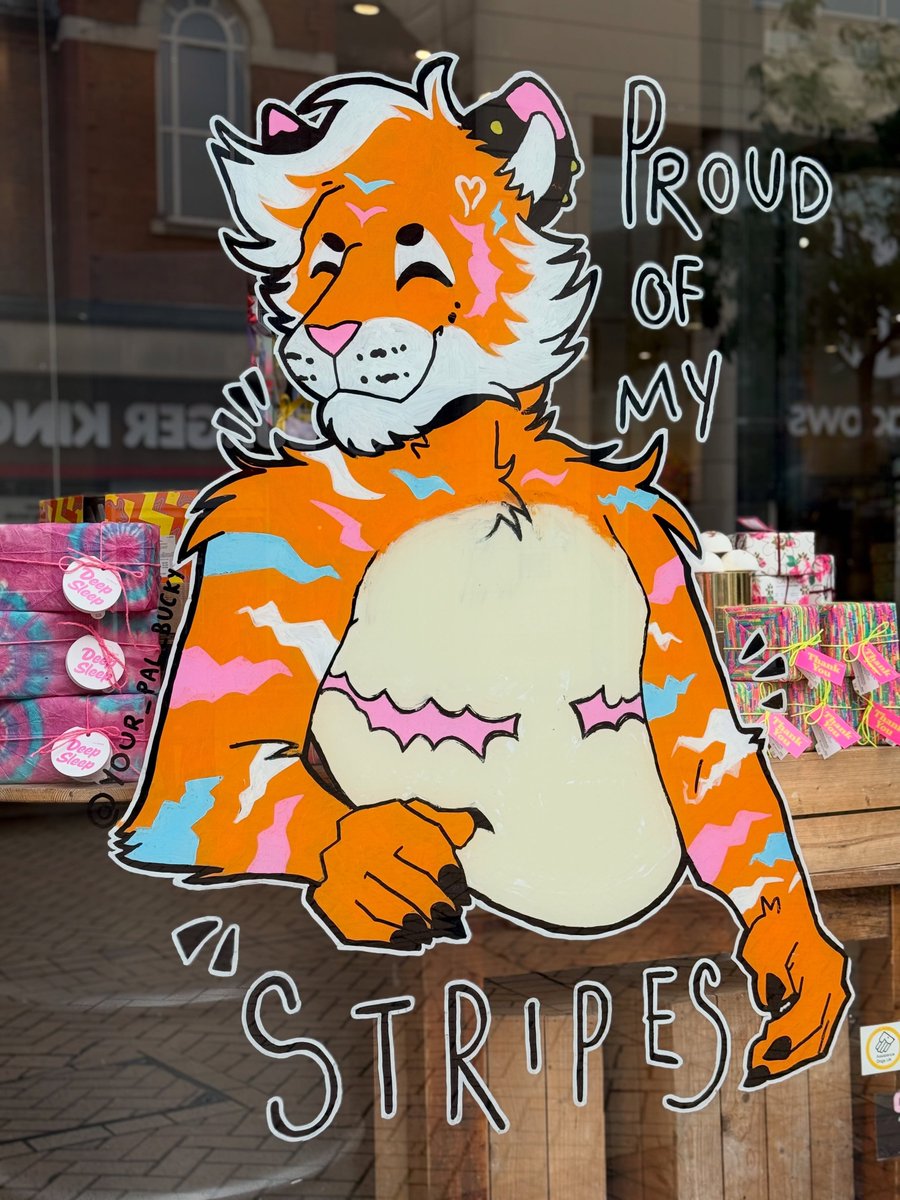
Adverts for cosmetic surgeries were banned from targeting under-18s in the UK in 2022.
So you won’t find promos for breast enhancements, nose jobs or even teeth whitening etc that will appeal to under-18s on TV and social media.
So I don’t buy that this is ‘healthy’ or ‘normal’ or ‘supportive’.
It’s something else, much darker.

28
184
948
14,007
SamJay-a-Saurus🦖🦕🐐🥷 retweeted

Feb 6
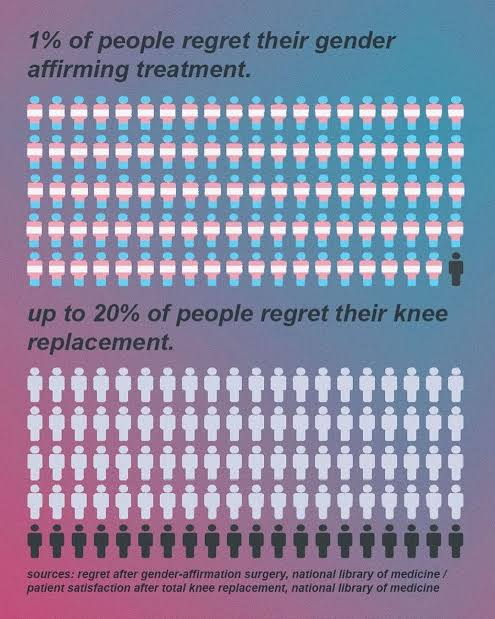
The 1% regret rate in gender medicine is the biggest red flag of all. The strongest possible indicator that research in the field is garbage.
Activists expect us to believe that a man having his penis inverted, which creates an open wound that must be dilated for the rest of his life, has a 1% regret rate.
That women who have appendages made out of their forearms sewn onto their groins — a surgery with astronomically high complication rates — has a 1% regret rate.
That adolescent girls having medically unnecessary bilateral mastectomies at an age when the desire to be a mother and breastfeed is incomprehensible has a 1% regret rate.
Absolutely impossible. Precisely zero chance this could ever be true.
The explanation is multi-fold.
First, no one loses all their friends and gets death threats for saying that they regret knee surgery.
Second, "gender affirming" clinicians do precisely zero follow-up. Just chop off healthy body parts and disfigure genitals and then send the person off on their way. No concern for what comes of them.
Then, there's the psychological factor. The power of irrevocability. When a decision cannot be undone, we are powerfully motivated to keep telling ourselves it was the right one. The self-deception is strong.
The Dutch noted this in their follow-up study of the first wave of men to partake in this experiment. In a 1988 paper, they observed that the men reported being happy even though no actual change in their life situation was observed.
This led the researchers to consider the possibility that in an effort to reduce cognitive dissonance, the participants “simply cannot accept the notion that all has been in vain. The self-reported happiness may have been distorted wishful thinking.”
But this wasn't enough to end the experiment. In fact, the failures noted in this study are what caused the Dutch to turn their attention to children in the hopes of producing more pleasing cosmetic results.
260
1,204
5,218
123,140
SamJay-a-Saurus🦖🦕🐐🥷 retweeted

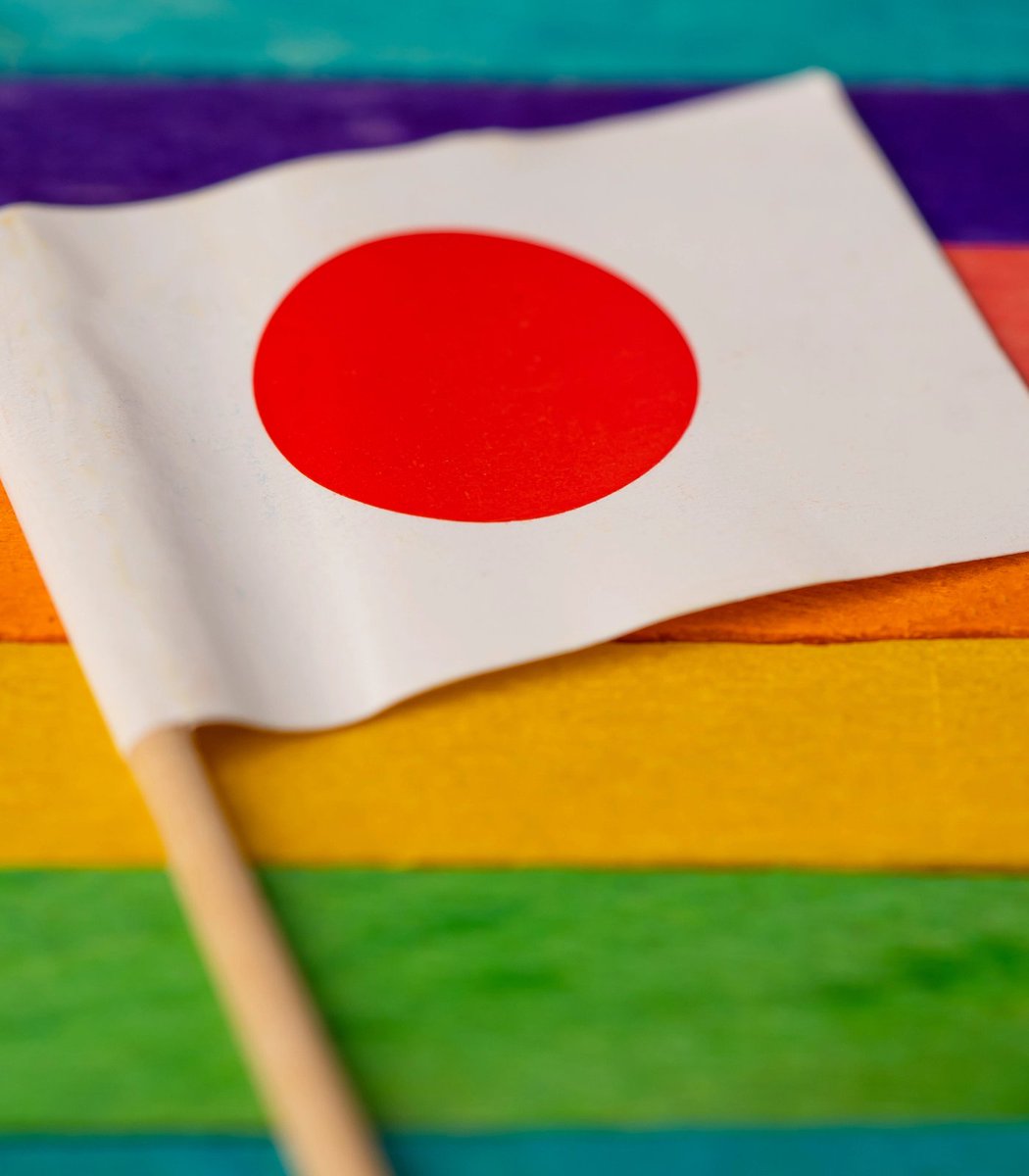
Japan Bros-this is bad. Very bad.

Japan is set to roll out nationwide LGBTQIA education programs in schools, universities, and workplaces.
The goal is for more people in Japan to understand sexual orientation and gender identity outside of cisgender, heterosexual norms.
1
2
26
531
SamJay-a-Saurus🦖🦕🐐🥷 retweeted

Jun 15
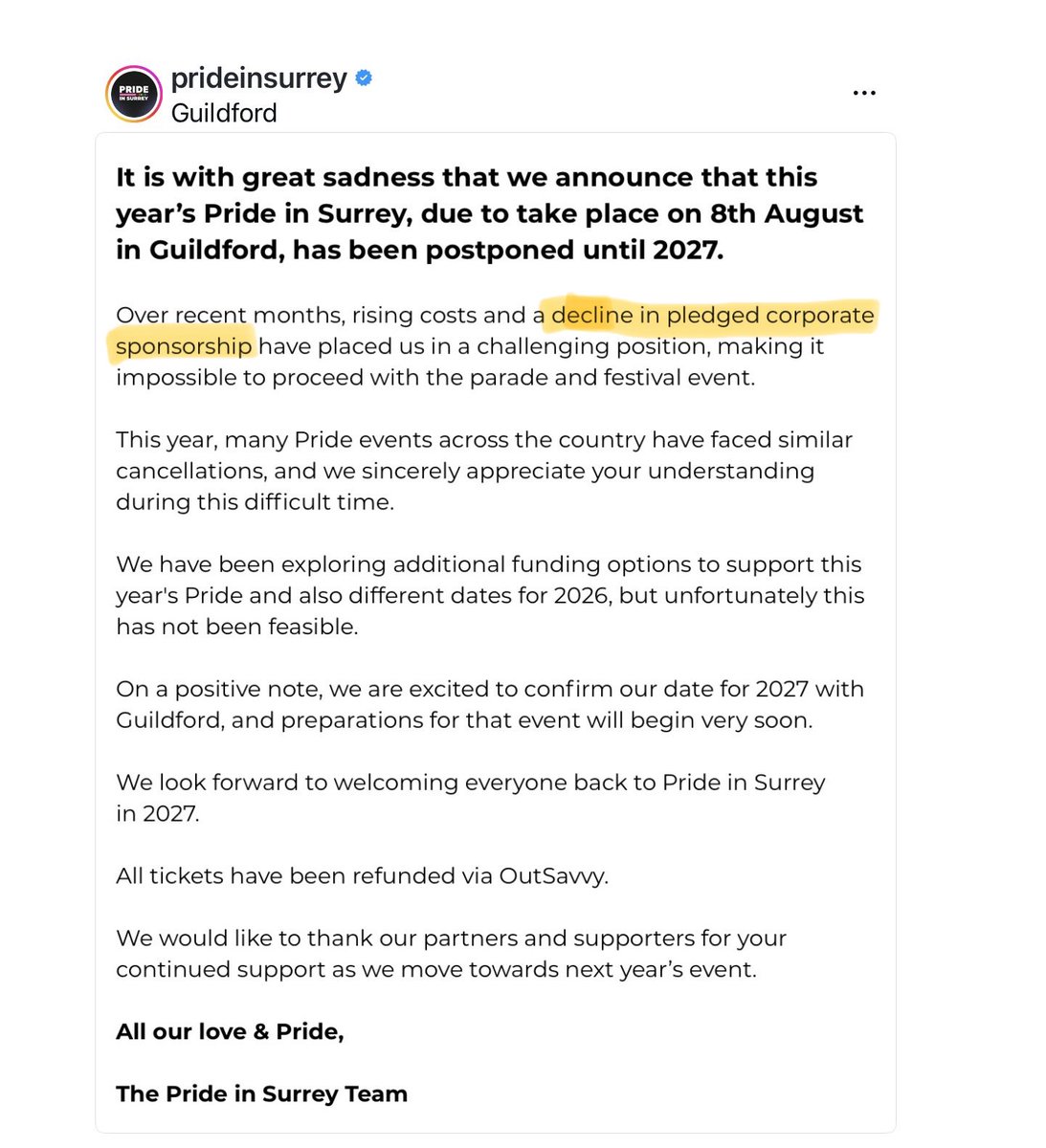
Pride in Surrey 2026 has been cancelled, citing rising costs and a loss of corporate sponsorship. With Surrey County Council’s review still unpublished, it’s no surprise sponsors are wary of an organisation whose founder is in prison for child s*x offences.
17
179
680
18,925

SamJay-a-Saurus🦖🦕🐐🥷 retweeted

Jun 15
Clearly many safeguarding failures.
I wonder if identity politics - i.e. two gay dads - played a part?
Were they a “sacred caste” so professionals didn’t examine them as closely as a straight couple?
Were diversity targets at play?
4
2
35
1,065
SamJay-a-Saurus🦖🦕🐐🥷 retweeted

Jun 15
You can't argue with people who are in a cult. The only thing you can do is laugh at them, without arguing, in the hope that one day they finally experience self-awareness
64
174
1,128
34,829
SamJay-a-Saurus🦖🦕🐐🥷 retweeted

Jun 12
Indeed.
It doesn’t matter if the fingers are male or female, it’s sexual assault.
And if people defend this as a normal thing in wrestling, then wrestling needs a hard drive check.
Jun 12

There is no sport in which any woman or girl consents to digital penetration of her vagina by an opponent. This decision is despicable.
59
802
5,215
78,317
SamJay-a-Saurus🦖🦕🐐🥷 retweeted

Jun 13
Always flying the flag, me 🇬🇧
1,341
310
8,591
564,731
SamJay-a-Saurus🦖🦕🐐🥷 retweeted

Jun 14
Giggle has applied to have Giggle v Tickle heard in the High Court.
“We have filed for special leave in the High Court… Because the federal court is saying men can be women in law & making women only spaces effectively unisex, we are going to the High Court to challenge that.”
182
1,713
11,405
146,921
SamJay-a-Saurus🦖🦕🐐🥷 retweeted

Jun 13
To people making videos talking about this so-called “gender debate”, here’s a tip.
Please understand that that the SECOND you use the word “cís”, every syllable that came before & uttered after, is rendered null & void.
How you haven’t grasped this by now is anyone’s guess…🤷
103
519
5,591
45,542
SamJay-a-Saurus🦖🦕🐐🥷 retweeted

Jun 13
WellBN clinic did not practise healthcare, they practised gender affirming care.
The reckless disregard for children's health and safety is a feature, not a bug, of the gender affirming care model.
transgendertrend.com/wellbn-…
11
143
441
45,482
SamJay-a-Saurus🦖🦕🐐🥷 retweeted

Jun 12
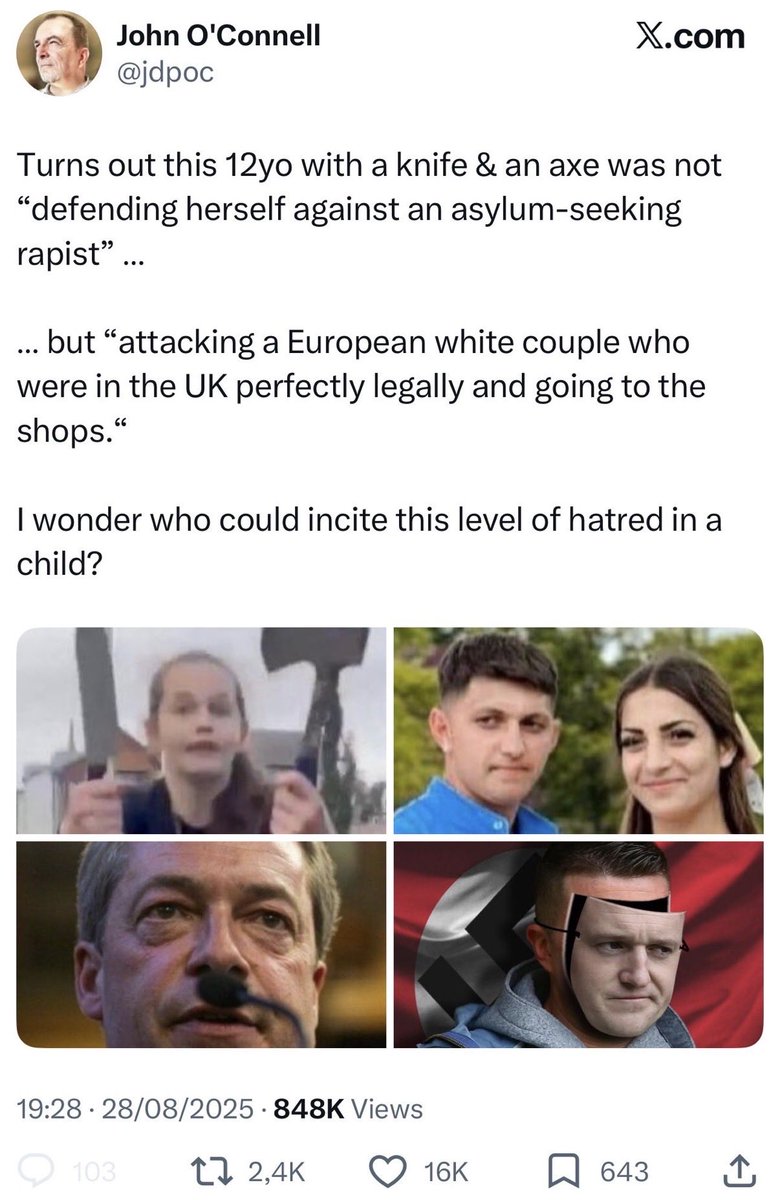
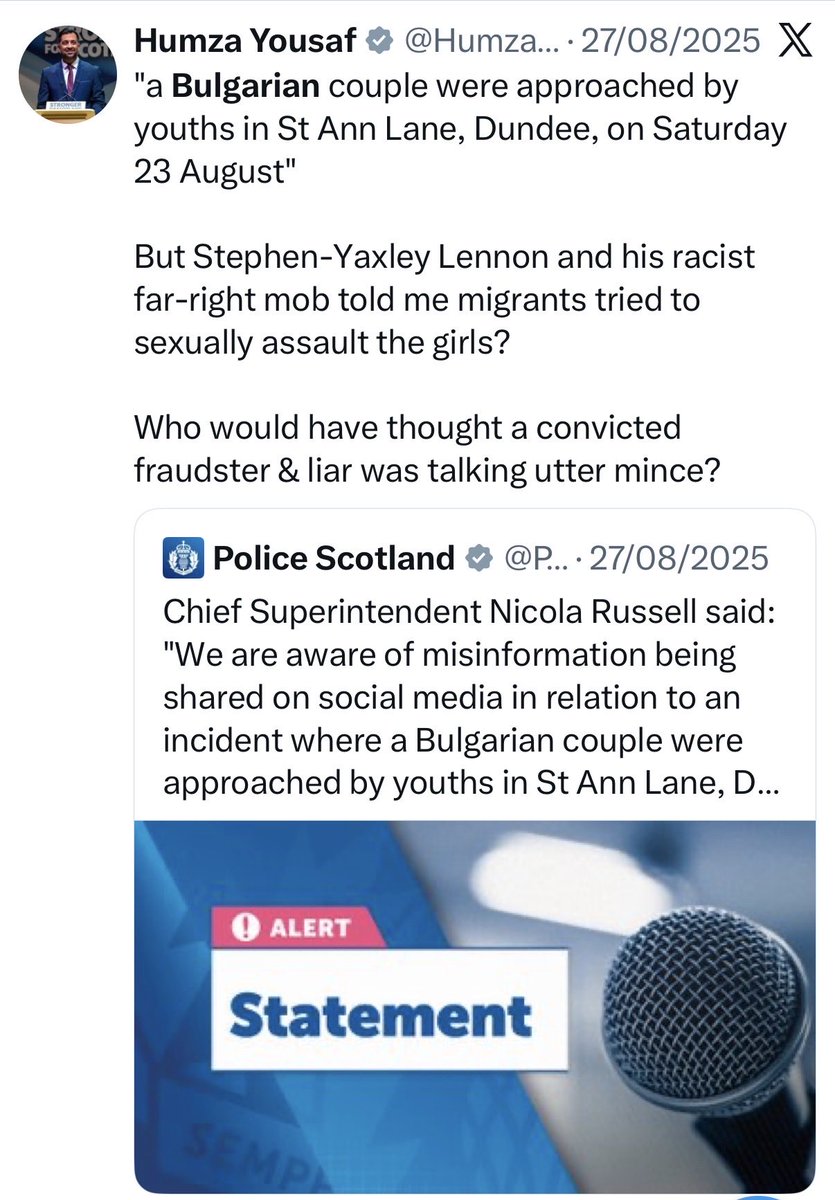
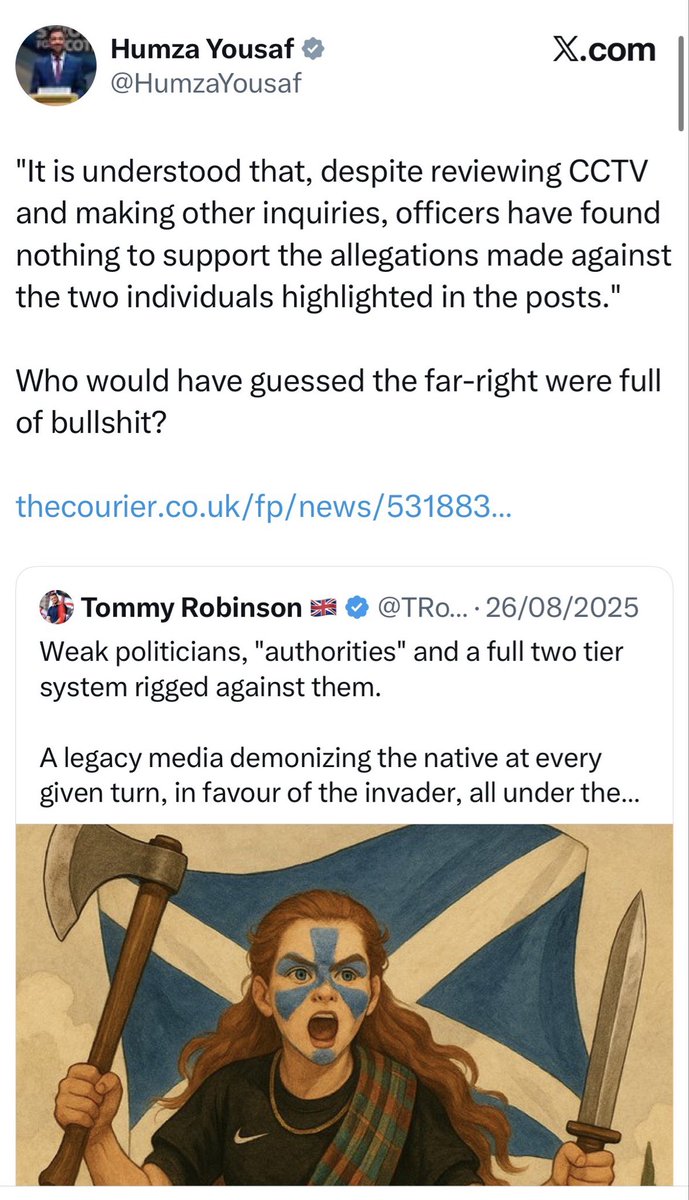
Last year, a video went viral of a scared, 12 year old girl in Dundee.
She was waving weapons, shouting at a migrant to leave her alone.
Almost immediately, many on the left were calling this girl a liar (and worse). They were saying the “far-right” were whipping up ‘anti-migrant hate’.
People like @HumzaYousaf & many more called it ‘bullsh*t’.
Many, including people like @jdpoc while calling her a liar & talking about her ‘hatred’, showed pictures of the little girl. Just to make sure everyone knew who the ‘liar’ they were talking about, was.
A fundraiser for the girl was mocked, suggesting she’d use the money to buy “machetes and IronBru”
She was a child. Their posts were seen by hundreds of thousands of people.
She wasn’t ‘hate-filled’, she was scared.
Yesterday, her version of events was proven to be true. She was sexually harassed by a migrant and another child physically assaulted too.
The man and his sister were prosecuted.
How shameful that children need to arm themselves for protection.
How shameful that adults will deny their reality.
How shameful that some people are so desperate to defend migration into this country, that they will literally mock children who are victims of their crimes.
Shame on you all.
I’ll be fascinated to see how many of you publicly apologise to the girl, in the same public way that you called her a liar.
I won’t hold my breath…
I hope this girl is ok.
belfasttelegraph.co.uk/news/…
552
6,362
24,971
307,765
SamJay-a-Saurus🦖🦕🐐🥷 retweeted

Jun 12
The safeguarding scandal at WellBN is yet another example where it has taken the tireless work of dedicated volunteers to bring the failings to light.
At the heart of that work are parents whose children have been failed by the professionals who should have been protecting them. Parents who are now dealing with the unimaginable fallout of those failings: "The children identified in the WellBN investigation cannot be given back the years in which these questions should have been asked."
And yet again there are serious questions about almost every institution that should have had child safeguarding at the heart of its mission: the NHS, the GMC, the CQC, and the local council, but also Brighton schools and others. Concerns about WellBN were raised for years, so why did it take so long to act?
pshebrighton.org/in-the-news…
17
25
295
SamJay-a-Saurus🦖🦕🐐🥷 retweeted

Last words from another of Guys LinkedIn posts as he prepares for a busy schedule
“younger ones need careful consideration….. … Hope you all enjoy your summer!”
Barely. Legal.
Barely. Legal.
1
1
1
45
SamJay-a-Saurus🦖🦕🐐🥷 retweeted

Jun 12
my healthy breasts were removed at 14 years old because I believed for a few years during middle and high school that I was a boy. here is a video of a gender specialist from Kaiser Permanente admitting that the clinic had performed a mastectomy on a healthy 12 year old girl. grabien.com/file?id=1601291
3
37
155
1,140
SamJay-a-Saurus🦖🦕🐐🥷 retweeted
The "top surgery" surgeon preying on vulnerable young adults
I’d just like to introduce you to “top” Plastic Surgeon Guy Sterne. All of this information is in the public realm so nothing to hide! His specialty is amassing an £800k fortune on “helping” barely legal young women remove their functioning breast tissue. But hey “ your body your choice”!
Obviously if you’re going to him because of cancer it’s a very different website. (He even boasts in an old YouTube about being listed in Tatler oh yah!).
But marketing to barely legal kids is very different to women dealing with cancer.
And I use the term barely legal because it’s a bit like those pornographers. Yes you’ve got them to sign the consent forms but does it make it right? Did they really fully comprehend the lifelong implications?
Lots and lots and lots of barely legal women rave about his services on Reddit, which acts as like a form of free advertising, and a funnel to his professional services.
You can just skip through the process even if you’re just Non Binary! He’ll do it! Just pop along to any of the many psychologists who specialise in a quickie dysphoria diagnosis and you can get approved! You even have a 2 week “cooling off” period. In that time you can go on Reddit and count down with all your “friends” the days until you can get booked in. It’s not so much cooling off as group affirmation and peer pressure....
.....Read link for more
mumsnet.com/talk/womens_righ…
@BayswaterSG @OurDutyUK @pittparents @Transgendertrd @AllianceLGB @bourne_beth2345 @nickwallis @jk_rowling @MumsnetTowers @NuffieldHealth
2
3
6
1,615
SamJay-a-Saurus🦖🦕🐐🥷 retweeted
Jun 12
The Law is already in force.
The Guidance is about how to navigate The Law.
If there is no The Guidance, The Law is still in force, but providers might not know how to navigate it.
How many hours of taxpayer money have you dedicated to this effort?
13
250
2,379
16,390
SamJay-a-Saurus🦖🦕🐐🥷 retweeted

Jun 12
Trans actress Elliot Page explains how she feels ‘healthy masculinity.’
“Healthy masculinity to me is…like leaning away from whenever there is some sort of impulse or expectation you’ve put on yourself to like shut down.”
3,479
145
1,547
5,189,667
SamJay-a-Saurus🦖🦕🐐🥷 retweeted

Jun 12
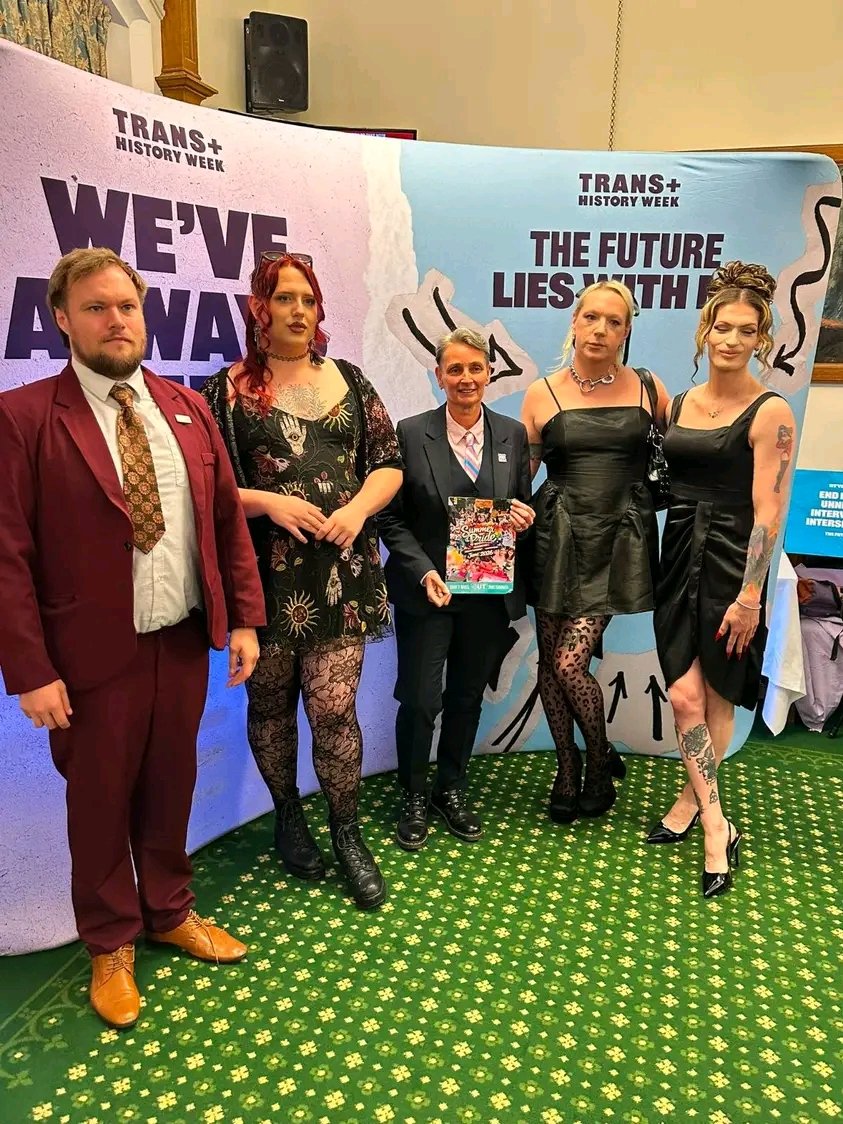
You'll NEVER be able to point out the woman in this photo...
235
230
1,747
85,291